


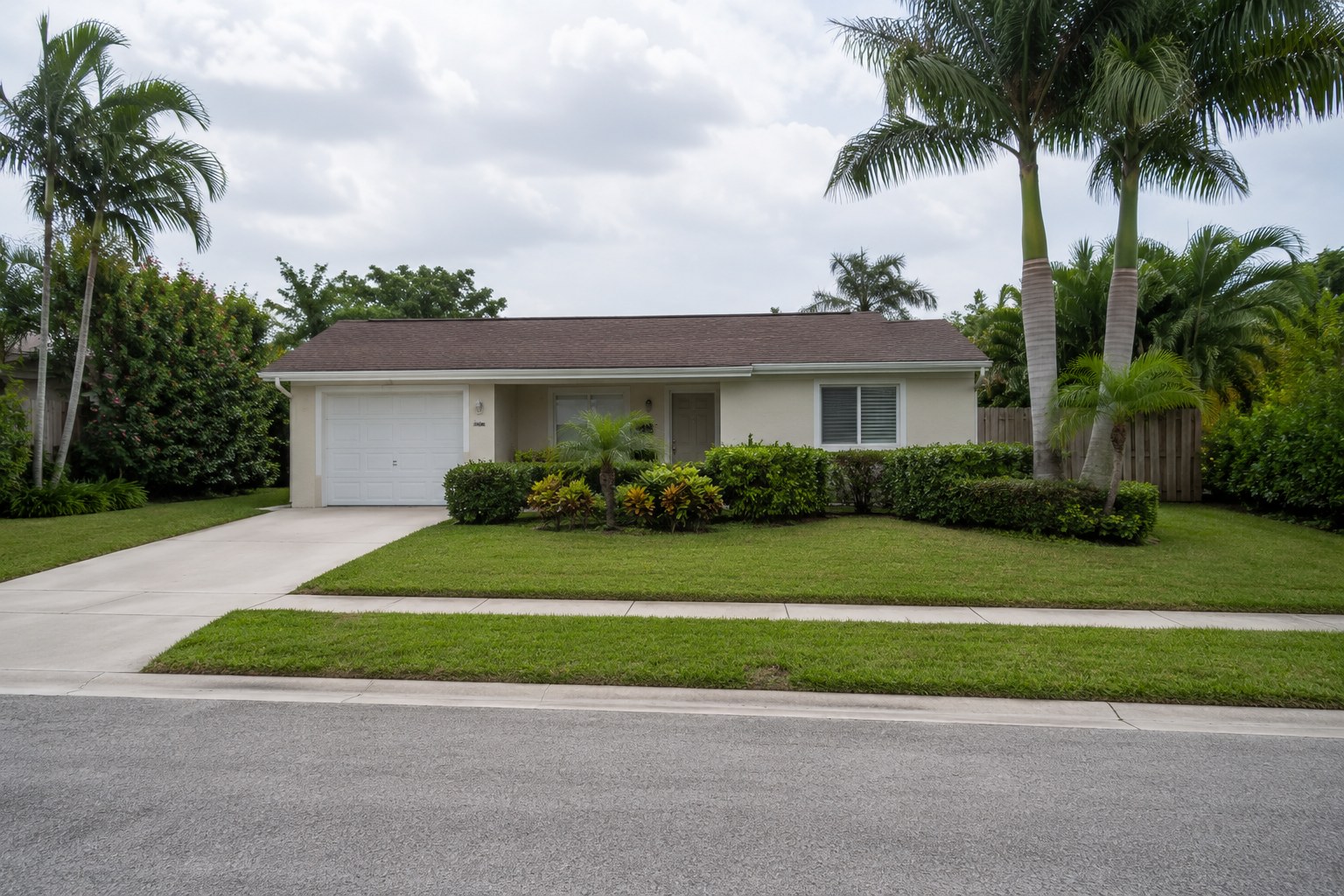
Downsizing to Release Home Equity Without Giving Up Homeownership
Downsizing is written about as though it were a single, well-understood move — smaller place, money left over, decision made. It is not one move. It is a direction, and there are at least six different things a household can actually reduce when it heads that way. They do not reduce together, they do not release capital in the same proportion, and choosing between them without knowing which is which is how a household ends up having moved without having achieved the thing it moved for.
It is also, and this matters more than the word suggests, an equity decision rather than a category of person. A household reduces what it owns because the position calls for it — capital tied up in a form that is not doing enough work, obligations that outgrew the reason for taking them on, a capital schedule arriving faster than expected. The wider set of routes, including those that involve no sale at all, sits in the discussion of what to do with significant home equity. This page is about what "smaller" can actually mean, and what each version of it does.
“Downsizing” Names a Direction, Not a Move
Two households can both say they are downsizing and be describing entirely different transactions. One is reducing floor area while keeping a detached parcel, a private pool, and every maintenance obligation it had before. The other is keeping roughly the same floor area but moving into a form where an association carries the envelope and the grounds. The first has less house and the same responsibilities. The second has the same house and fewer responsibilities. Both get called downsizing. They are not the same decision.
The confusion is not careless. It is that the word describes a feeling — less of something — without specifying which something, and the specification is where the whole outcome lives. Getting precise about it early costs nothing and changes what a household should be looking at.
What Is Actually Being Reduced
Six reductions are available. A move can combine several of them, but they are separable and worth separating before any property is looked at.
The Six Things “Downsizing” Could Mean
- Floor area. Fewer square feet to condition, furnish, clean and re-roof, and a smaller footprint to replace when the roof reaches the end of its life. This is what the word implies, and it is only one of the six.
- Land. Less ground to irrigate, drain and maintain. On unincorporated parcels such as those around Loxahatchee, reducing land can also mean leaving behind a private well and septic system the owner maintained directly.
- Structure and systems. Fewer components with independent lifespans — a shorter list of things that will each need replacing on their own schedule. This is the reduction that shortens a capital schedule, and it does not track floor area reliably.
- Responsibility. Who performs the work, as distinct from how much work exists. A household moving from a detached property in Boynton Beach into an association-governed form transfers the envelope and grounds to a board without necessarily occupying less space.
- Ownership form. What is legally held. Moving from a detached parcel to a unit with an undivided interest in shared components changes what the household owns, what its policy covers against what a master policy covers, and what it votes on rather than decides. In a Boca Raton condominium that distinction sits in the governing documents.
- The obligations attached to the location. Which assessments and service arrangements follow the parcel. A property inside Wellington's Acme Improvement District carries an assessment set by that district's own board on its own budget and method — a line that does not respond to how large the house is, and so is untouched by reducing floor area.
Which of the six are you actually trying to reduce?
The answer determines what kind of property to look at, and for some households it is a different answer than "a smaller one". Working it out is bounded, it commits you to nothing, and it is a great deal easier than reworking the decision after a move.
Why the Release and the Reduction Do Not Track Each Other
Here is the part that surprises people. The capital released by a move is a function of the price difference between two specific properties, net of both transactions — worked through in how equity release actually works on a trade-down. It is not a function of how much smaller the new place is. A substantial reduction in floor area can release very little if the destination sits where prices are firm. A modest change in form can release more.
The tax line behaves independently too. A long-held homestead in Lake Worth carries an accumulated difference between market and assessed value attached to the owner rather than the house; at a change of ownership the new assessed value is set by the new property's own market value, not scaled down from the old one because the house is smaller. Some portion of the accumulated difference can move to a new Florida homestead subject to a statutory cap and a limited window, claimable only by filing. Confirm how it applies with the Property Appraiser's office and a tax professional.
One pattern worth naming: a household can arrive having already decided that smaller means less expensive, and treat the search as a matter of finding the right smaller property rather than checking whether the reduction it has in mind produces the release it needs. When the two are examined separately, the destination it ends up looking for is often not the one it started with.
What Staying an Owner Preserves
The phrase "without giving up homeownership" is doing real work in the title, because reducing what you own and ceasing to own are different decisions that get discussed as though they were points on one line. They are not. Remaining an owner keeps a homestead position available, keeps the household's housing cost inside a structure it partly controls, and keeps the asset itself. Ceasing to own releases more capital and gives up all three. Which is right depends on the household, and the comparison is set out in the sell-and-rent versus sell-and-buy question.
Nothing here argues that reducing is better than staying put. A household that examines the six reductions and finds that none of them addresses what it actually wants to change has learned something worth knowing, and keeping the property is a complete outcome of that exercise. Working out that the answer is "stay" is as legitimate a result as working out which of the six to pursue.
The exercise also stops where other professions begin. What a move means for a tax position belongs with a CPA or tax adviser and the Property Appraiser's office; financing belongs with a mortgage professional or lender; anything touching title, estates or the interpretation of governing documents belongs with an attorney. Sorting the six reductions is a real-estate question; the tax, financing and legal consequences that follow from a chosen route are not, and should be put to the relevant professional directly.
Frequently Asked Questions
Does a smaller property always cost less to own?
No. Ownership cost is set by what a property is and where it sits rather than by its size — the assessments attached to the parcel, what the governing documents require, insurance characteristics, and the condition of the systems it contains. Two of the six reductions above (the location's obligations, and ownership form) can move independently of size altogether. What is true is that this is establishable in advance for a specific candidate property, which is a better position than assuming it either way.
Can I reduce responsibility without moving somewhere smaller?
Yes, and it is one of the more useful things to know about the six. Responsibility and floor area are separate axes. A household can transfer the exterior envelope, the grounds and the capital planning to an association while occupying comparable space, and for a household whose actual complaint is coordination rather than square footage, that is the reduction that matches the problem. The cost returns as an assessment set by a board rather than a quote the household approves, which is a real trade and worth entering deliberately.
How do I know which reduction I need?
Start from what has become difficult rather than from the housing. If the difficulty is capital tied up and unavailable, the release matters most and the form matters less. If it is the volume of work and coordination, responsibility and systems are the axes to move. If it is a capital schedule arriving faster than expected, reducing the number of independent components does more than reducing square footage. The property search follows from that answer instead of standing in for it.
What makes this worth slowing down for is that the reduction a household picks can end up being the one the word suggested rather than the one its situation called for. Smaller is the obvious interpretation, and for some households it is the right one — but it is one of six, and the other five are invisible unless someone names them. A move is expensive to reverse and the six do not all reappear as options once one has been chosen. Naming which reduction you are actually after is the cheapest part of this entire process and the part that determines whether the rest of it works. A Home Equity & Housing Strategy Analysis is the place to take that question next.
About the Authors
Chris and Sue Kull are South Florida real estate professionals working with homeowners on property decisions in Palm Beach County and the surrounding communities.