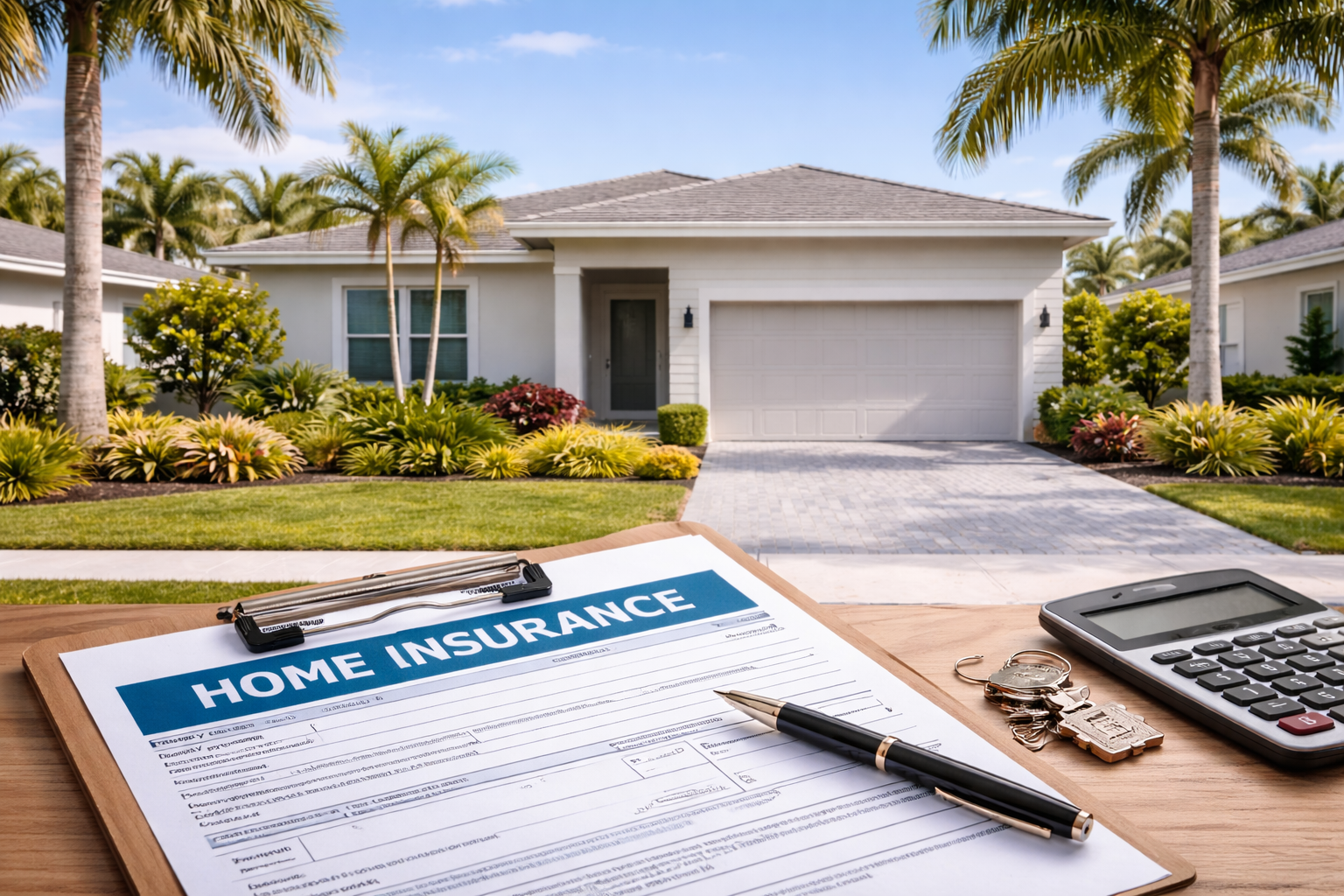
Why Florida’s Insurance Data Crackdown Could Reshape Homeownership Decisions
Homeowners insurance has quietly become one of the most important—and unpredictable—factors in real estate decisions across South Florida. While prices, inventory, and interest rates tend to dominate headlines, insurance costs are increasingly influencing whether deals move forward or fall apart. Now, a new nationwide effort to collect detailed insurance data could significantly change how this market operates.
Florida is at the center of this initiative, with regulators seeking deeper visibility into claims, cancellations, and policy trends. For buyers, sellers, and homeowners in Palm Beach County, this is more than a policy update—it’s a shift toward greater transparency in a part of the transaction that has often felt uncertain.
Understanding what’s changing—and how it affects real-world decisions—is becoming essential for anyone planning to buy or sell in today’s market.
A Closer Look at What Regulators Are Trying to Solve
The core issue driving this initiative is simple: insurance markets have become harder to predict. Rising storm risk, increased construction costs, and evolving underwriting standards have created inconsistencies across different areas—even within the same county.
To address this, regulators are now requiring insurers to provide detailed data on:
• Claims history and frequency
• Policy cancellations and non-renewals
• Active policies and coverage distribution
• Discounts tied to property improvements like storm mitigation
This information will be analyzed at a much more localized level, sometimes down to ZIP codes. That level of detail matters, especially in South Florida, where conditions can vary significantly between coastal and inland communities.
For example, a property in Wellington may be evaluated very differently from one closer to the coast in Boca Raton, even if home values are similar.
Start Comparing Homes That Actually Fit Your Criteria
If you're evaluating options in Palm Beach County or South Florida, browsing homes by city can help you quickly understand pricing, condition, and location tradeoffs.
Explore Homes by CityWhy This Data Matters More in South Florida Than Anywhere Else
South Florida has been one of the most affected regions when it comes to insurance instability. Premium increases, carrier exits, and stricter underwriting have all played a role in reshaping the market.
This new data collection effort is designed to identify patterns that weren’t previously visible at scale.
For instance:
• Are certain areas seeing more cancellations than others?
• Are claims increasing in specific types of properties?
• Are mitigation upgrades actually reducing risk and costs?
These answers could directly influence how insurers price policies and decide where to offer coverage moving forward.
For homeowners in Palm Beach County, this could mean clearer expectations over time—but also more precise risk-based pricing.
How Insurance Is Now Affecting Real Estate Transactions
In today’s market, insurance is no longer a back-end consideration. It is part of the initial decision-making process.
Buyers are increasingly asking:
• What will insurance cost on this home?
• Will the property qualify for coverage?
• Are there upgrades needed to secure a policy?
Sellers are facing a different set of challenges. Properties with older roofs, outdated systems, or limited mitigation features may encounter resistance—not because of the home itself, but because of the insurance implications.
This is especially relevant in South Florida, where inspection reports and insurance underwriting are closely tied.
The result is a shift in how properties are evaluated. Condition, age, and construction quality are now directly linked to marketability in ways that weren’t as prominent before.
What This Means for Buyers and Sellers in South Florida
For buyers, this increased transparency could be a positive development. More detailed data should lead to clearer expectations and fewer surprises during the transaction process.
However, it also means that risk will be assessed more precisely. Properties in higher-risk areas—or with features that increase exposure—may carry higher insurance costs.
For sellers, preparation is becoming more strategic. Homes that demonstrate resilience—such as updated roofs, impact windows, or other storm-resistant features—may have a measurable advantage.
This is not just about pricing anymore. It’s about positioning a property in a way that aligns with how insurers evaluate risk.
If you’re considering selling, understanding how your home will be viewed from an insurance standpoint is just as important as understanding its market value. You can start by reviewing your position here.
Get a Better Sense of What Your Home Could Command
If you’re starting to think about selling, checking your home’s current value can help you understand pricing expectations and how your property may fit today’s market.
Check Your Home ValueLooking Ahead: What to Expect Over the Next Few Years
The data being collected now will not produce immediate changes, but it will shape future decisions.
Regulators plan to analyze multiple years of data to identify trends and guide policy adjustments. A public report is expected in the coming years, which could influence everything from underwriting standards to legislative action.
For South Florida, this likely means:
• More defined pricing differences between areas
• Greater emphasis on property condition and mitigation
• Continued integration of insurance into real estate decisions
While this may add another layer of complexity, it also introduces more clarity into a system that has often felt unpredictable.
Conclusion: A More Transparent—but More Structured—Market
The push for deeper insurance data is ultimately about visibility. Regulators are trying to understand where risks are concentrated and how coverage is evolving.
For buyers and sellers in South Florida, that visibility will influence how decisions are made moving forward. Insurance is no longer a secondary factor—it is a core part of the transaction.
Those who understand how it impacts pricing, eligibility, and long-term ownership will be better positioned to navigate the market effectively.
As the data begins to shape policy and pricing, the real estate landscape in Palm Beach County will continue to evolve—becoming more structured, more data-driven, and more closely tied to risk than ever before.
Keep Exploring South Florida Real Estate
If you're comparing communities, researching home values, or trying to better understand the South Florida market, reviewing local resources can help put each city and neighborhood into context.
About the Authors
Chris and Sue Kull are South Florida real estate professionals with more than three decades of experience helping buyers, sellers, and property owners navigate real estate decisions throughout Palm Beach County and surrounding communities.
Their work emphasizes local insight, practical guidance, and clear information to help people make informed decisions at every stage of the process.
You can find additional community guides, search tools, and market resources at TheKullGroup.com.