


How Florida Property Tax Structure Shapes a Long-Held Position
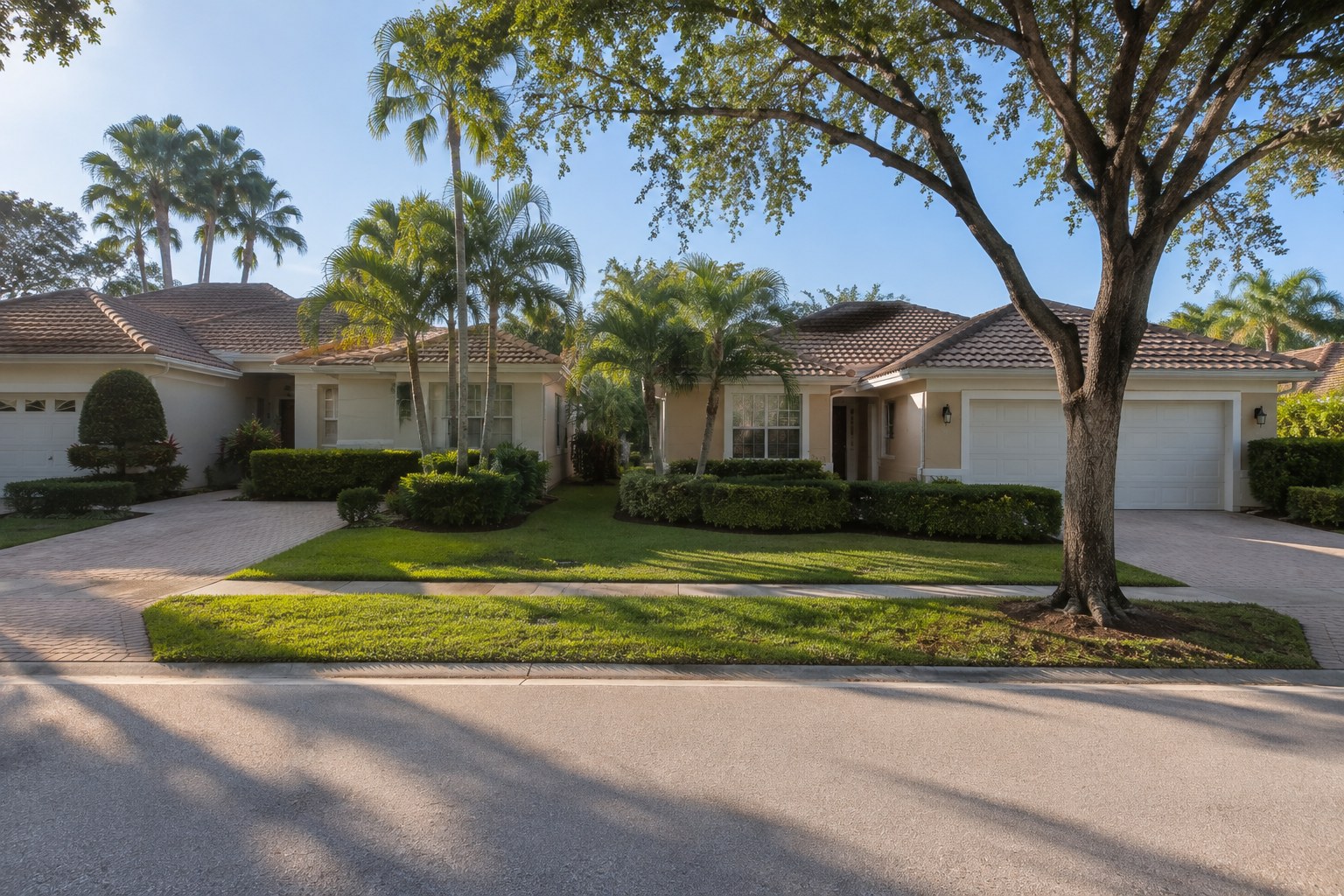
Two houses sit on the same street, similar in size, similar in condition. One has been in the same hands for twenty-two years. The other changed owners eighteen months ago. Their tax bills are not close, and nothing about that is an error or an oversight. It is the structure working exactly as designed.
For owners who have held a Palm Beach County property a long time, that structure is a real part of what the position is worth, and it is worth understanding rather than taking on faith. It matters here because it feeds directly into the money line of the total ownership load set out in what this property actually costs you to own, and because parts of it travel with you and parts of it do not.
Two things worth stating before anything else. Everything below is general structure, not advice about your parcel — what applies to your specific property, and what the current figures and time limits are, belongs with the Palm Beach County Property Appraiser's office and, where a transaction or a filing is involved, with a CPA or tax adviser. And the office that assesses is not the office that sets the rates, a distinction worth holding onto through everything that follows.
Assessed Value Is Not Market Value
Florida separates what a property is worth from what it is taxed on, and for homesteaded property the gap between the two can widen considerably over a long tenure.
The Property Appraiser establishes a market value — often called just value — for every parcel. For property with a homestead exemption, an assessment limitation then caps how much the assessed value can rise in a year: under the Save Our Homes provision of the Florida Constitution, the increase is limited to the lower of three percent or the change in the Consumer Price Index. Market value can move faster than that. Assessed value cannot. Year after year, the difference between them accumulates into what is usually called the assessment differential. The longer the tenure, and the faster market value has moved during it, the wider that differential can grow.
Two further details matter. There is a recapture provision, which means that in a year when market value falls, assessed value can still rise toward it until the two meet — the cap limits the climb, it does not freeze the number. And non-homestead property sits under a different, looser limitation that does not apply to school district levies, which is one reason a second home or a rental in the same neighbourhood behaves differently from an owner-occupied one.
One pattern we consistently observe: long-tenured owners describe their tax bill as low. What they are actually holding is a position that resets on transfer — and most have never priced what that position is worth until something forces the comparison.
Reading the Values on Your TRIM Notice
The Notice of Proposed Property Taxes — the TRIM notice — arrives each August. It sets out a sequence of values for the parcel, then shows, taxing authority by taxing authority, the value each authority is proposing to apply its millage to. The values are not interchangeable, and the last one in the sequence is not necessarily a single figure shared by every authority on the notice.
- Market value. The Property Appraiser's estimate of what the parcel is worth. Not a listing opinion and not a lender's figure — a separate measure for a separate purpose.
- Assessed value. Market value after the applicable assessment limitation. On a long-held homestead this is where the accumulated differential shows up.
- Exemption amount. The exemptions applied to the parcel, shown as an amount subtracted from assessed value. Homestead is the common one, and additional exemptions may apply. This is where the notice does something readers often miss: an exemption does not necessarily apply to every levy in the same amount. Florida's homestead exemption is structured so that part of it does not apply to school district levies, and other exemptions have their own eligibility and application rules. So the exemption amount shown against the school district line can differ from the amount shown against the county or municipal lines.
- Taxable value. Assessed value less the exemptions that apply to that particular levy. Because exemption treatment can differ between school and non-school levies, a homesteaded parcel commonly shows more than one taxable value on the same notice — one used by the school district, another used by the county, the municipality and other authorities. Each taxing authority applies its millage to the taxable value calculated for its own levy, not to a single universal figure. Where no exemption applies to a parcel at all, taxable value and assessed value are the same number.
Read the notice across a row rather than down a column: each taxing authority's line shows the value that authority is using and the rate it proposes to apply to it. If the taxable values on two lines differ, that is ordinarily exemption treatment doing its work rather than an error — though anything that looks wrong on your own notice is a question for the Property Appraiser's office, which administers the exemptions.
Non-ad valorem assessments also appear on the tax bill, but they are not part of this value sequence at all. They are not calculated from value, which means the homestead limitation does not restrain them. They are covered further below.
The notice also names the taxing authorities proposing rates — the county, the municipality where one applies, the school district and any special districts — along with the public hearing dates. A parcel inside an incorporated municipality such as Boynton Beach shows a municipal millage line among those authorities, set by that city's own budget process and hearings, in addition to the county and school district levies. Those bodies set millage. The Property Appraiser does not; that office administers assessments and exemptions. The Tax Collector, a third office again, bills and collects. And if you disagree with an assessment, the venue is the Value Adjustment Board rather than any of the three. The roles are separate, and which office to approach follows from which question is being asked: proposed rates belong at the taxing authority's public hearing, assessment and exemption questions at the Property Appraiser, billing and payment questions at the Tax Collector, and a disputed assessment at the Value Adjustment Board.
Do you know what your tax position is actually worth?
Pricing that position means putting three things on the same page as the rest of what the property costs: the current bill, the reset that would follow a transfer, and whatever portability would carry forward. That is a document exercise rather than an impression.
What Travels and What Resets
This is the part that bears most directly on anyone weighing the four ownership positions.
On a change of ownership, the assessment limitation on the property comes off and the assessed value resets toward market value for the new owner. The accumulated differential does not stay with the house. That is why the two homes on the same street carry differently, and why a long-held position is not simply a low bill — it is a low bill that exists because of tenure, and tenure does not transfer.
What can move is the owner. Florida's portability provision allows a homestead assessment difference to be transferred to a new Florida homestead, subject to a statutory cap on the amount that can be carried and a limited window of tax years in which the new homestead must be established. The specific cap and the specific window are set by statute and have been amended over time, so the figures that apply to a move made now are a question for the Property Appraiser's office rather than something to carry from a neighbour's experience a few years ago. Portability is also a filing — it is claimed, not applied automatically — so it has to be treated as a step with its own form and its own timing, confirmed with the Property Appraiser's office rather than assumed.
What this does to the Keep, Improve, Reposition or Sell question is specific rather than general. It does not make selling wrong; it makes the comparison require an extra step. A move within Florida that carries a differential forward is a different calculation from one that does not, and comparing a current bill against an unadjusted future one produces a distorted answer in both directions. Setting the two positions on the same terms is exactly the exercise in comparing keep against move.
The tax position is an easy thing to carry second-hand and a harder thing to confirm, because confirming it means going to the notice and to the Property Appraiser's office rather than to a recollection. On a long tenure it can be a substantial part of what a move would change, which is a reason to know the figure before it enters a decision as a vague sense that moving would be expensive.
The Part That Does Not Move With Value
Non-ad valorem assessments deserve their own attention, because they behave differently from everything above: they are not calculated from value, so they can move even in a year when assessed value does not.
These are charges for specific services or infrastructure, levied by the body providing them and collected on the same bill: solid waste, certain fire and rescue services, drainage and water control, street lighting, and district-level infrastructure. They are set by the levying body according to its own budget and method, not by applying a millage rate to a taxable value — which is precisely why the homestead assessment limitation gives no protection against them. A municipal charge structured as a flat service assessment rather than as a rate on value lands in this block as well, outside the reach of the limitation.
Where you own determines which apply. A parcel inside a special taxing or improvement district — Wellington's Acme Improvement District, for example — carries district assessments for the infrastructure that district administers. Even inside that boundary, responsibility for any one canal bank, culvert or easement may sit with the district, the county, a private party or a recorded easement holder, so it is worth confirming feature by feature rather than assuming the district maintains everything within its lines.
Service delivery follows its own map. Out around Loxahatchee, where parcels sit outside any municipal boundary, services a city would otherwise arrange come from the county instead, and whether a given charge arrives inside the county millage or as a separately levied service assessment depends on how the levying body funds it. Two parcels a short drive apart can therefore show different line items for what looks like the same service.
None of this is a comparison of which is cheaper — the point is structural. A property's bill is assembled from several independent bodies, only some of which are restrained by the assessment limitation, and that limitation reaches the ad valorem portion only, not the non-ad valorem charges sitting beside it on the same bill.
Common Questions
If I sell and buy again in Florida, do I lose my tax position entirely?
Not necessarily, but it does not follow automatically either. The assessment limitation on the property you leave comes off at transfer. Portability allows a homestead assessment difference to be carried to a new Florida homestead, subject to a statutory cap on the amount and a limited window in which the new homestead must be established — and it has to be claimed through a filing rather than applied for you. The current cap, the current window and how they would work for your specific circumstances are questions for the Palm Beach County Property Appraiser's office, and anything with a transaction attached is worth running past a CPA or tax adviser before you rely on it.
My market value went down but my assessed value went up. Is that a mistake?
Not on its face. Under the recapture provision, assessed value can continue rising toward market value even in a year when market value falls, until the two meet. The limitation caps how fast assessed value climbs; it does not hold it still and it does not track downward movement in step. If you believe the underlying assessment itself is wrong, the venue for challenging it is the Value Adjustment Board, and there is a filing deadline — the Property Appraiser's office can point you to the process.
Why does my notice show more than one taxable value?
Because exemptions do not necessarily apply to every levy in the same amount. Florida's homestead exemption is structured so that part of it does not apply to school district levies, and other exemptions carry their own eligibility rules. The result is that the school district line on a homesteaded notice can show a different taxable value from the county and municipal lines, with each authority applying its millage to the value calculated for its own levy. That is ordinarily the structure working rather than a mistake, but the office that administers exemptions and can confirm how yours have been applied is the Palm Beach County Property Appraiser.
Does improving the property affect any of this?
It can. Substantial improvements are generally added to the assessed value outside the annual limitation rather than being absorbed under it, which means a significant addition or renovation does not simply disappear beneath the cap. Ordinary maintenance and repair are treated differently from substantial improvement, and where the line falls is a question for the Property Appraiser's office rather than something to judge from a contractor's description of the work. This is worth checking before a large project rather than discovering it on the next notice.
What makes the long-held position unusual is that it is an asset without a statement. No balance arrives, nothing reports its value, nothing turns up to remind you it exists — there is only a bill that has stayed lower than it otherwise would have. The position is real, but nothing in the ordinary course of ownership puts a number on it. Weighing whether to stay or move means setting a measured current position against a priced future one, and the tax structure sits on both sides of that comparison. Neither side is knowable from a feeling about the tax bill; both come from figures — the current notice on one side, and on the other what the assessment would reset to and what portability would carry, confirmed with the Property Appraiser's office. Owners who want to take that step can start at the Ownership Sustainability Review page.
About the Authors
This article was written by Chris and Sue Kull of The Kull Group. Where it describes a pattern as one they observe, that is a first-hand professional observation from their own work with owners, offered as observation rather than as a measured or surveyed finding.