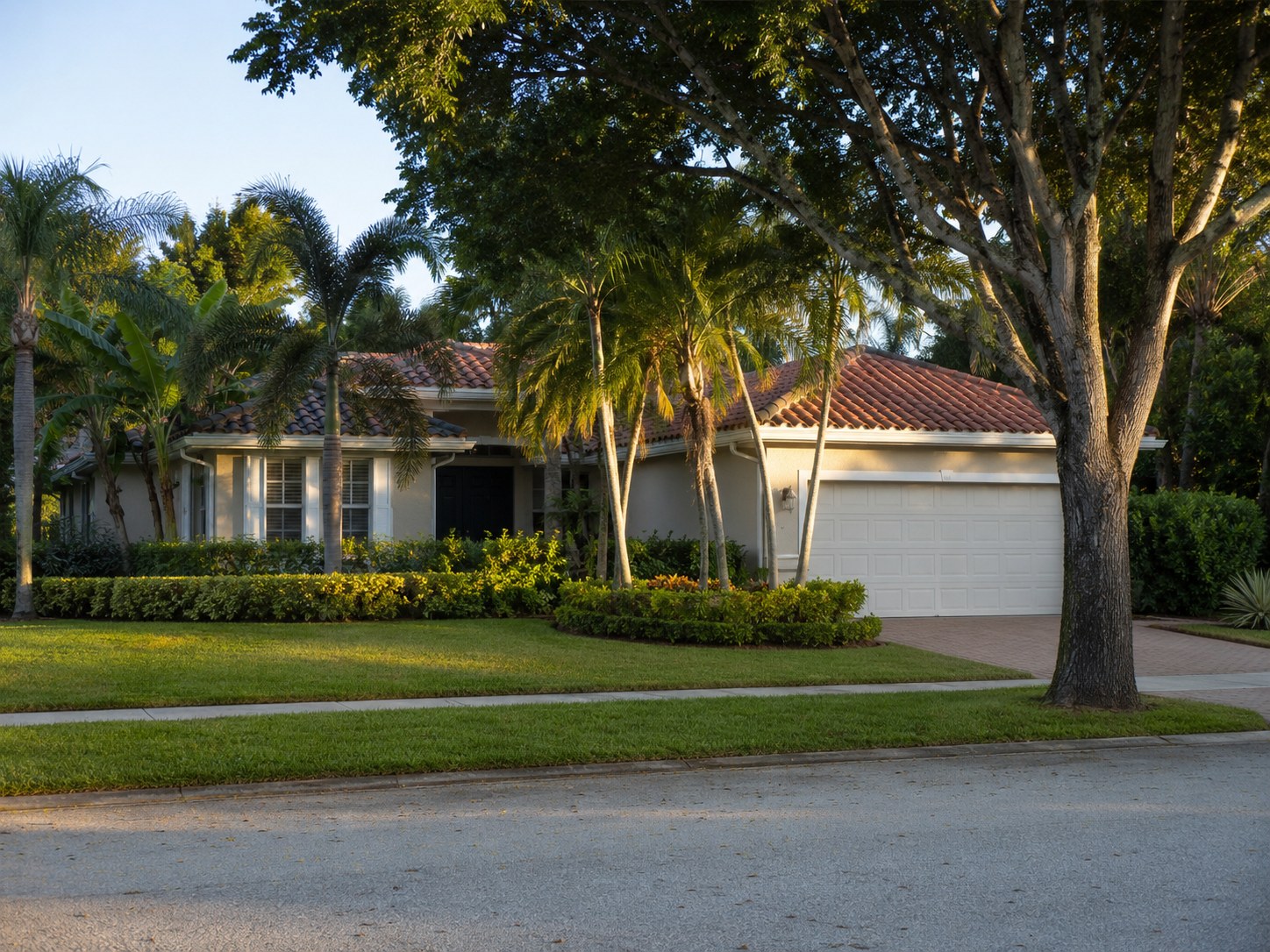
Home Equity vs. Usable Equity: How Much of Your Home's Value Could Actually Become Available?
A home equity figure is easy to assemble: an online estimate, or something a neighbor mentioned about a nearby sale, minus whatever is still owed on the mortgage. Once assembled, it gets used for real thinking — whether a move is possible, whether a project is affordable, whether staying is the sensible choice. What it is not is the number that would actually arrive in a household's hands.
That is not because the estimate is dishonest. It is because two different questions are being confused. Total equity describes a position on paper. Usable equity describes what a household could genuinely put to work, and getting from one to the other requires subtracting a specific set of things that an estimate has no way of knowing about. The distance between the two is not a rounding difference, and it is not a fixed proportion anyone can quote you. Working out where a household actually stands is the first step in the broader question of whether to keep, borrow against, or sell a home with significant equity — and it is the step that has to come first.
Which of those three a household is heading toward also changes what "available" means. A sale converts the position into cash and is the only route where every deduction below has to be cleared. Borrowing draws against the position on a lender's terms. Keeping leaves it in place. The gates that follow are worked through against the sale case first, because that is the one that can be measured end to end — and then set against what changes when the equity is reached another way.
What an Estimate Actually Is
An automated valuation is a model output. It is built from public records and from sales of properties the model considers comparable, and within those limits it can be genuinely useful as a starting reference. What it cannot do is see the property. It does not know that the roof was replaced or that it was not. It does not know how the floor plan actually functions, whether the pool equipment is working, whether the primary suite was reconfigured at some point, or whether the property sits in a position on its street that a buyer would pay attention to.
It also does not know what a buyer would agree to. A market value opinion produced by a licensed appraiser is a different instrument from an automated estimate, and both are different again from the assessed value the county Property Appraiser maintains for tax purposes. Those three figures serve three separate functions, and there is no reason built into any of them to expect the three to agree. Treating any one of them as "what the house is worth" starts the analysis on the wrong footing.
None of this necessarily surfaces early. Pressure on a housing decision does not always arrive all at once; it can accumulate, and by the time a household sits down to check the arithmetic, a decision may already be partway underway. An unexamined figure can sit unchallenged for years without anyone noticing that it has.
The Five Gates Between an Estimate and a Number
Between the figure on a screen and the figure a household could use, there are five gates. For a sale, none of them can be skipped. Most of what they turn on can be established well before anyone commits to anything — some of it as a settled fact, some of it only as a reasoned estimate until a specific buyer and a specific inspection are involved.
The Five Gates Between an Estimate and a Number
- The estimate is not a price. A price is what a specific buyer agrees to for a specific property in a specific condition. Establishing a realistic position means someone looking at the property rather than at a record of it.
- Payoff is not the balance you remember. The figure that matters is the payoff your lender states as of a specific date, not the balance recalled from a statement. A mortgage may also not be the only thing recorded against the property — a home equity line, a contractor's lien, a judgment, or another recorded encumbrance can also have to be dealt with before title transfers. Which items must be satisfied at closing, and how each one is handled, is determined by the title work and, where an instrument is disputed, by an attorney — not by assumption.
- The cost of transferring ownership. Brokerage, title-related charges, documentary stamps on the deed, recording fees. Some of these are set by statute; others — brokerage compensation among them — are negotiated between the parties, and which side pays a given charge can be allocated in the contract. What they have in common is that an automated estimate accounts for none of them, and the specific set that applies is a function of the transaction and of where the property sits.
- What is attached to the parcel rather than the person. Property taxes prorated to the closing date, non-ad valorem assessments, and — in association-governed ownership — dues and the estoppel figure. That last one matters more than its obscurity suggests: those figures sit with the association or its management company rather than with a public office, and the estoppel certificate it issues is what states the amount it claims is owed at transfer. It has to be requested rather than looked up.
- Condition, and the record of it. What the property needs in order to be sellable, and what a buyer raises after an inspection. Permit history belongs here, and it is one of the few items on this list an owner can check in advance for nothing but time. A permit pulled years ago and never finalized can remain open in the issuing jurisdiction's records until that jurisdiction's process resolves it, and what resolution requires is set by that department rather than by the owner. Whatever the parcel's record shows is checkable now, with the department that issued the permit, rather than a discovery that waits for a transaction.
Notice what is absent from that list: a percentage. We will not offer one, because any proportion quoted before those five gates have been worked through would be invented rather than calculated. It would also be the single most misleading thing on this page. The sale-side arithmetic is worth working through in its own right for exactly that reason.
Which Gates Apply Depends on How the Equity Would Be Reached
The five gates measure one thing precisely: what a sale would convert the position into. That is the benchmark case, because it is the pathway where every gate has to be cleared and the result arrives as a single figure. It is not the only pathway, and the constraints are not identical across the others.
If the intention is to sell. All five gates apply, and so does the comparison that sits outside them — what housing costs afterwards. This is the case the rest of this article is built around.
If the intention is to borrow against the position. Nothing transfers, so gate three and the replacement housing comparison fall away entirely. Gates one, two and four still describe the position honestly: what the property would realistically sell for rather than what a model reports, what is already recorded against it, and what the parcel itself carries. What the gates do not decide is how much a lender would advance. That is determined by that lender's underwriting, its own valuation and its own terms, and it is a question for a mortgage professional rather than for us. What the gates give a household is an accurate starting position to take into that conversation, instead of an estimate-based one.
If the intention is to fund a project, or simply to keep the property. Nothing is converted, so the figure is a measure of position rather than a disbursement — and that is still worth having, because it is what tells a household whether the options they believe they hold are the options they actually hold. Gates one, two and four do that work. Gate five changes character rather than disappearing: for an owner staying put, condition is a spending question on a schedule of the household's choosing rather than something a buyer raises at a deadline, and an unresolved permit on the parcel's record is still on that record whether or not anything is sold.
That is why the sections that follow matter on every pathway. What is attached to the parcel, and what the parcel's building record shows, are carried by the owner year to year — a sale only forces the reckoning; it does not create it.
Some Parcel Obligations Are Levied by a District Rather Than the County
Gate four cannot be worked through in the abstract, because the body that levies an obligation — and therefore the office that can state its current amount — changes with where the parcel sits. A parcel inside Wellington's Acme Improvement District carries a non-ad valorem assessment that appears on the same annual bill as the ad valorem taxes. It is levied through the improvement district rather than through the county's ad valorem millage process, and the homestead assessment limitation that restrains growth in the ad valorem portion does not restrain it. An owner reading the bill total and treating it as "the tax" is reading two different obligations as one. The current assessment for a specific parcel should be confirmed against the district and the Tax Collector's bill rather than recalled.
The Permit Record Sits With the Jurisdiction That Issued It
Gate five's checkable half is the permit history, and the department holding it follows the parcel's jurisdiction rather than its mailing address. Royal Palm Beach is an incorporated village, and for a parcel inside village limits the building and permit record is a village record rather than a county one. That matters when the question is whether a permit from a previous owner's renovation was ever closed out: the request goes to the village's building department, and any work required to close it runs through the village's process. Confirm with that department which records exist for the parcel before treating the history as clean.
Do you know your actual number, or the one you have been carrying?
Describing your equity and taking it through all five gates are two different exercises. The second is a bounded piece of work; it can be done without committing to anything, and it changes what every option after it looks like.
Where the Utilities Are Private, the Condition Gate Reaches Further
Much of the area addressed as Loxahatchee is unincorporated Palm Beach County rather than a municipality, while the Town of Loxahatchee Groves is separately incorporated — so establishing which jurisdiction a parcel is actually in comes before any records request, and for an unincorporated parcel the building record sits with the county's building division. Condition also reaches further on that land than it does on a parcel with municipal service: properties in the unincorporated acreage may be served by a private well and septic system rather than municipal utilities, and where they are, those systems are items an inspection reaches and a buyer asks about. Their condition sits inside the condition gate rather than beside it.
Why the Gap Widens Quietly
The five gates are not static. Assessments are reset by the bodies that levy them, on their own cycles. Association obligations change as governing documents are amended and as boards make decisions about shared components. Components age, and holding condition steady is a spending question rather than an assumption — in a coastal climate, salt air and humidity work on exterior components, hurricane preparation is an annual operational obligation rather than a weather event, and insurance is a recurring ownership cost that is worth pricing with your carrier or agent rather than carrying forward from memory.
One pattern we watch for: a remembered equity figure always has a date attached to it, even when nobody remembers what that date is. Between that date and today, the gates move. The revision then happens at the moment the figure needs to be reliable, which is when a decision is already underway. The gap does not open suddenly. It opens quietly, in the years when nobody was checking.
There is a second thing worth naming. Financial readiness and emotional readiness are not the same thing, and in the conversations we have with homeowners they do not always arrive together. The equity is there, the carrying costs are understood, and the decision stalls anyway — not because the arithmetic is wrong, but because something else is unresolved. A clear, honest number does not force the decision. It removes the excuse of not knowing, which is a different and more useful thing.
The Figure That Sits Outside the Subtraction
There is one more item, and it is deliberately not in the list of five, because it is not a subtraction at all. It is a comparison, and it belongs to the sale pathway specifically. Usable equity only means something once you know what the household would be paying for housing afterwards. The same net proceeds can represent a substantial improvement in position or a lateral move that costs money to execute, depending entirely on what comes next — which is why a sale cannot be evaluated on its own. That test has its own logic and is worked through in the replacement housing test.
One Florida-specific point belongs here, because it applies specifically to long-tenured owners. An owner who has held a Florida homestead for many years has accumulated a difference between the property's market value and its assessed value, since annual increases in assessed value on homesteaded property are limited. That accumulated difference is attached to the owner, not to the house. It is removed on a change of ownership, and assessed value resets toward market for the buyer. Some portion of it can move to a new Florida homestead, but subject to a statutory cap and a limited window, and it has to be claimed by filing rather than applied automatically. The current specifics have been amended over the years — confirm them with the Property Appraiser's office and with a tax professional rather than relying on any figure recalled from memory, including one read here.
Frequently Asked Questions
Roughly what percentage of my home's value would actually be available?
We will not give you one, and we would be skeptical of anyone who does before looking at the property. The five gates can differ substantially between two properties with identical estimates — one may have no association and a closed permit record, another may carry an estoppel figure, a district assessment and an open permit from a decade ago. A percentage quoted in the abstract is a guess dressed as a calculation. The alternative is not complicated: the actual items are checkable, and checking them produces a real figure instead of a plausible one.
Does any of this apply if I have no intention of selling?
Yes, though not all of it in the same way. Gate three and the replacement housing comparison only bear on a transfer of ownership; the rest describe the position whether or not it is ever converted. If the plan is to keep the property, the usable figure is what tells you whether the position is as strong as it feels and what would actually be available if circumstances changed. Keeping a property is a complete outcome of that conversation. Knowing the real number simply means the decision to keep is an informed one rather than an assumed one.
Can I work this out myself?
Parts of it, yes. The payoff comes from your lender. The tax and assessment picture is available from the Property Appraiser and Tax Collector. An association will supply its own figures on request, and a building department can tell you what its records show for the parcel. Where it gets harder is establishing a realistic price rather than an estimate, and anticipating which condition items a buyer is likely to raise — those come from someone examining the specific property and the market for it, rather than from a model. And where a question turns on lending terms, tax treatment, title, or estate consequences, it belongs with a mortgage professional, a CPA or tax adviser, or an attorney. We can help identify which of them a question belongs to; we would not answer it for them.
The thing worth sitting with is not the arithmetic. It is how easily a figure that was never verified becomes the basis for a significant decision — not out of carelessness, but because it felt close enough to be going on with. It may well be close enough, right up until the moment it is the number everything else depends on. The question is not only whether your position has changed. It is whether you have looked at it recently enough to know. If you want the full picture of what your options actually are, the four positions equity creates covers the ground, and a Home Equity & Housing Strategy Analysis works the gates through against your specific property.
About the Authors
Chris and Sue Kull write about home equity and housing decisions for homeowners in Palm Beach County and the surrounding communities. This article sets out the distinction their work starts from: the difference between the equity figure a household is carrying and the figure that could actually become available.