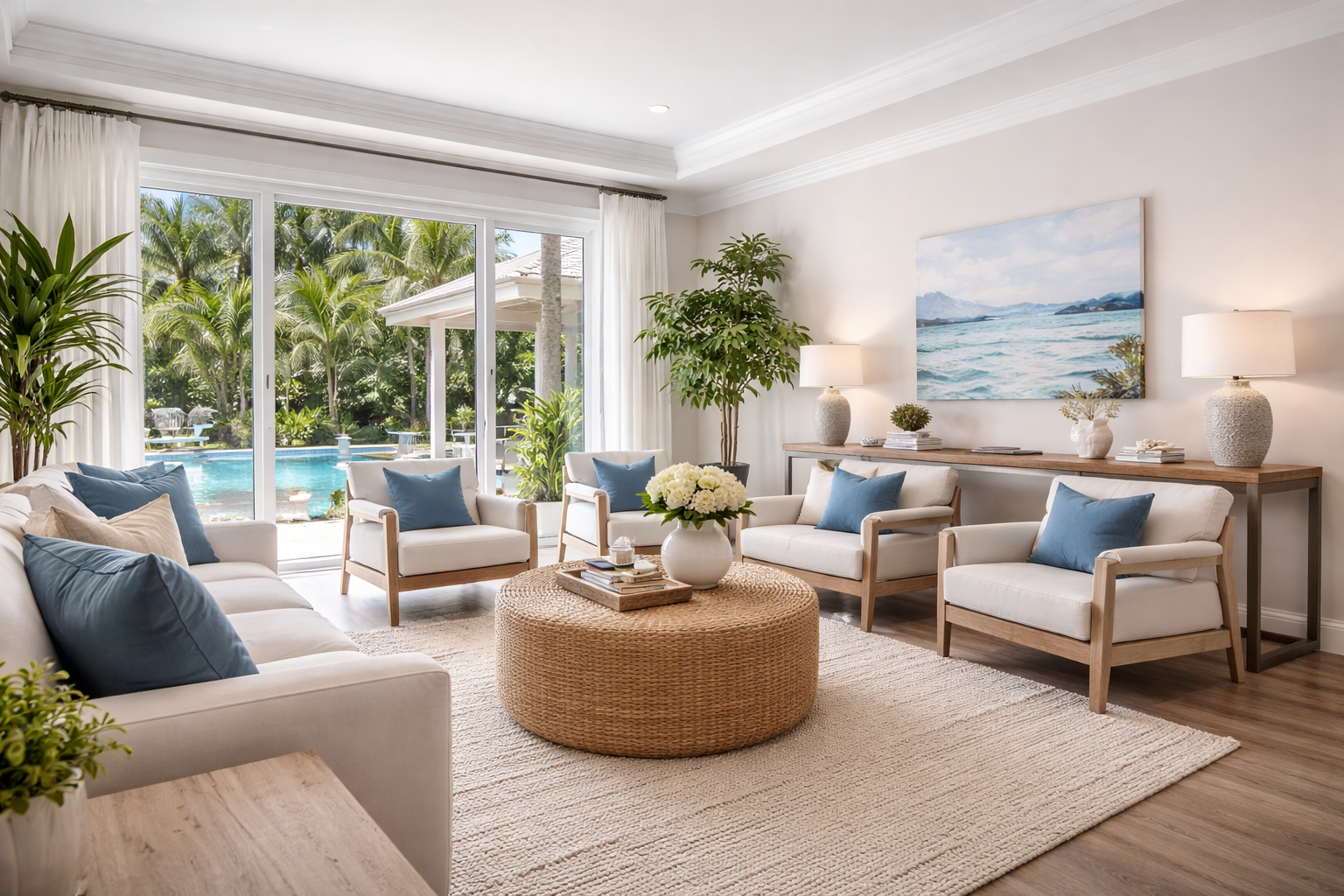
Why Some Homes Sit on the Market: The Staging Mistakes Sellers Don’t Realize They’re Making
In Palm Beach County, it’s not unusual to see two similar homes hit the market at the same time—yet one sells quickly while the other lingers.
Price matters, of course. Location always plays a role. But in many cases, the difference comes down to presentation.
Staging isn’t about decorating. It’s about positioning a home so buyers can instantly understand its value. When that positioning is off—even slightly—it can slow down showings, weaken offers, and ultimately impact the final sale price.
If you’re preparing to sell in Wellington or anywhere in South Florida, understanding what not to do is just as important as knowing what works.
The Real Purpose of Staging (And Where Sellers Get It Wrong)
Many homeowners think staging is about making a house look “nice.”
Buyers, however, are not evaluating “nice.” They are evaluating:
- Space
- Flow
- Condition
- Potential
Staging should remove friction from that evaluation process. When it doesn’t, buyers start questioning the home—even if nothing is actually wrong.
Start Comparing Homes That Actually Fit Your Criteria
If you're evaluating options in Palm Beach County or South Florida, browsing homes by city can help you quickly understand pricing, condition, and location tradeoffs.
Explore Homes by CityMistake #1: Designing for Taste Instead of Clarity
One of the most common issues is over-personalization.
Bold colors, unique furniture choices, or highly specific decor can make a home feel distinctive—but not always in a way that helps buyers connect.
What Actually Happens
Buyers walk through and start thinking:
- “This isn’t my style”
- “I’d have to redo this”
- “This feels like someone else’s home”
Once that happens, emotional detachment sets in.
What Works Better
Neutral, clean, and intentional spaces allow buyers to project themselves into the home. It’s not about removing personality—it’s about removing distraction.
Mistake #2: Leaving Too Much in the Space
In many Wellington homes, especially those with larger square footage, sellers assume more furniture helps fill the space.
In reality, it often has the opposite effect.
The Problem
Too much furniture:
- Shrinks perceived room size
- Disrupts flow
- Makes the home feel heavier and less open
What Buyers Notice
Even subconsciously, buyers start to feel like the home has less usable space than it actually does.
This is especially important in South Florida, where buyers are often prioritizing openness, light, and indoor-outdoor flow.
Mistake #3: Ignoring the First Impression
The moment a buyer pulls up to a home, the evaluation has already started.
In Palm Beach County, where landscaping and curb appeal are highly visible year-round, this matters more than many sellers expect.
Common Oversights
- Overgrown landscaping
- Faded paint or worn entryways
- Cluttered front areas
Why It Matters
If the exterior creates doubt, buyers walk in already looking for problems instead of focusing on positives.
Mistake #4: Poor Lighting (Especially in Florida Homes)
Natural light is one of the biggest advantages of South Florida homes—but it’s often underutilized.
Where Sellers Miss the Mark
- Keeping blinds closed
- Using outdated or dim fixtures
- Not layering lighting in darker areas
The Impact
A home that should feel bright and inviting can come across as flat or even dated.
Light influences perception more than most sellers realize.
Mistake #5: Trying to Hide Problems Instead of Addressing Them
Some sellers attempt to “stage around” issues like:
- Minor repairs
- Worn finishes
- Outdated fixtures
But buyers are quick to spot inconsistencies.
What Happens During Showings
Instead of focusing on the home’s strengths, buyers start mentally adding up future costs.
This often leads to:
- Lower offers
- Hesitation
- Longer time on market
In many cases, simple updates outperform staging alone.
Mistake #6: Not Accounting for How Buyers Actually View Homes
Today’s buyers don’t start with in-person showings—they start online.
The Reality
Your home is first experienced through:
- Photos
- Mobile screens
- Quick scrolling behavior
Where Staging Falls Short
A home might feel fine in person, but if it doesn’t translate well visually, it won’t generate interest.
This includes:
- Poor layout presentation
- Cluttered visual lines
- Lack of focal points
Staging needs to work for the camera, not just the eye.
Get a Better Sense of What Your Home Could Command
If you’re starting to think about selling, checking your home’s current value can help you understand pricing expectations and how your property may fit today’s market.
Check Your Home ValueMistake #7: Overlooking Outdoor Spaces
In Wellington and across South Florida, outdoor living is a major selling point.
But many sellers treat outdoor areas as secondary.
Missed Opportunities
- Empty patios
- Unused pool areas
- Lack of defined outdoor spaces
What Buyers Want to See
- Functional seating areas
- Clean, maintained surfaces
- A clear sense of how the space can be used
Outdoor areas are often emotional decision drivers—especially for relocation buyers.
Mistake #8: Staging Without Understanding the Target Buyer
Not every home should be staged the same way.
A family-oriented home, a seasonal residence, and a luxury property all attract different buyers—and those buyers respond to different cues.
What Goes Wrong
Generic staging can feel disconnected from the home’s likely buyer.
What Works Better
Staging should reflect:
- How the home will be used
- Who is most likely to buy it
- What features matter most in that price range
This is where strategy matters more than decoration.
What Actually Drives Results in the Wellington Market
From a real-world standpoint, the homes that perform best tend to have three things in common:
1. Clear Spatial Presentation
Buyers can immediately understand how each room functions.
2. Clean, Neutral Baseline
The home feels move-in ready, even if it’s not newly updated.
3. Strong First Impression (Online and In-Person)
Photos draw attention, and the in-person experience reinforces it.
When these align, homes tend to move faster—and with stronger offers.
The Cost of Getting Staging Wrong
Staging mistakes don’t just affect appearance—they affect outcomes.
Potential consequences include:
- Fewer showings
- Longer time on market
- Price reductions
- Increased negotiation pressure
In a market like Palm Beach County, where buyers have options, small presentation issues can create real financial impact.
A Smarter Approach to Preparing Your Home
Instead of thinking about staging as a checklist, it’s more effective to think in terms of buyer experience.
Ask:
- What does a buyer feel when they walk in?
- Is anything distracting from the home’s strengths?
- Does the space feel open, usable, and intuitive?
When those questions are answered well, staging becomes less about effort—and more about clarity.
Frequently Asked Questions
Do I need to fully stage my home before selling?
Not always. Many homes benefit from partial staging or strategic adjustments rather than a full setup.
Is staging worth the cost?
In many cases, yes—especially if it helps reduce time on market or improves offer quality.
Should I remove all personal items?
Not necessarily all, but minimizing personal elements helps buyers focus on the home itself.
Can I stage the home myself?
Yes, but it’s important to focus on layout and flow—not just decor.
Does staging matter in a strong market?
Even in strong markets, presentation can influence how quickly and how well a home sells.
What rooms matter most for staging?
Living areas, kitchens, and primary bedrooms tend to have the biggest impact.
Should I stage outdoor areas too?
In South Florida, absolutely. Outdoor space is a key part of the lifestyle buyers are looking for.
Keep Exploring South Florida Real Estate
If you're comparing communities, researching home values, or trying to better understand the South Florida market, reviewing local resources can help put each city and neighborhood into context.
About the Authors
Chris and Sue Kull are South Florida real estate professionals with more than three decades of experience helping buyers, sellers, and property owners navigate real estate decisions throughout Palm Beach County and surrounding communities.
Their work emphasizes local insight, practical guidance, and clear information to help people make informed decisions at every stage of the process.
You can find additional community guides, search tools, and market resources at TheKullGroup.com.