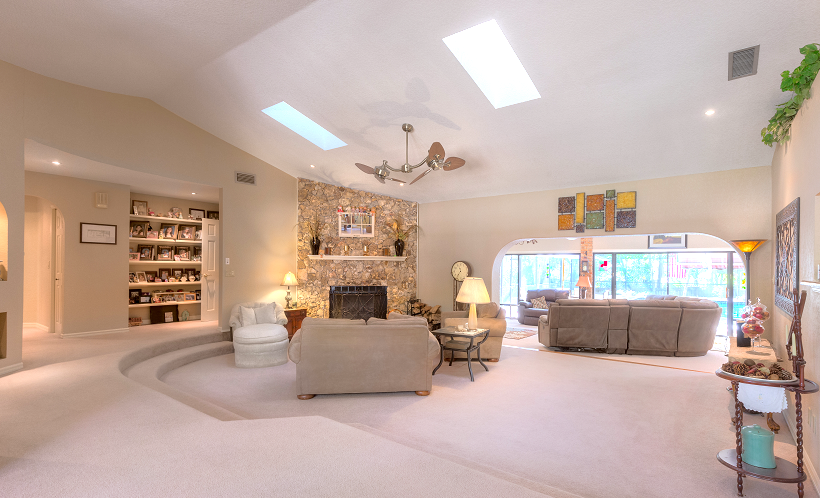
27 Things That Date a Palm Beach County Home — and What You're Actually Allowed to Change
Lists like this one usually present every update as equally available: pick the ones you like, spend a weekend, enjoy a fresher home. That framing works fine in most of the country. It works less well here, because a large share of Palm Beach County housing sits inside deed-restricted communities, and several of the most visible items on any list of this kind require someone else's approval before you touch them.
So the useful version of this list is not ranked by cost. It is sorted by what stands between you and doing it — nothing, an architectural review board, or a licensed trade. All 27 updates are here. They are just organized the way you would actually have to execute them.
One of them also carries a genuine safety condition that most versions of this article omit entirely. That one is covered separately below.
Tier One: Nothing Stands in Your Way
These are interior and cosmetic. In almost every situation you can do them this weekend without asking anyone, and collectively they carry more visual weight than their cost suggests.
- Lighting fixtures. Brass chandeliers and fluorescent kitchen boxes date a room faster than almost anything else. Flat LED fixtures or simple pendants modernize and cut energy use at once.
- Window treatments. Heavy drapes and vertical blinds close a room down. Cellular shades or light-colored curtains open it up — and in this climate they also help with solar heat gain, which your cooling bill will notice.
- Wall finishes. Wood paneling and dated wallpaper disappear under neutral paint. This remains the highest return per dollar on the entire list.
- Cabinet hardware. New knobs and pulls in brushed nickel or matte black update a kitchen for the cost of a dinner out.
- Interior door hardware. Replacing ornate or brass handles with streamlined versions is the same idea applied throughout the house.
- Ceiling fans. Worth doing here for reasons beyond appearance. Low-profile modern fans look better than bulky older units, and in a climate where fans run most of the year the efficiency difference is real rather than theoretical.
- Built-in entertainment centers. Large dated built-ins constrain how a room can be arranged. Removing or modifying them opens the space to more layouts.
- Thermostats and stray wall fixtures. A programmable or smart thermostat modernizes a wall and earns its cost back in a long cooling season. Remove obsolete wall-mounted hardware while you are at it.
- Switch plates and outlet covers. Yellowed and cracked covers read as neglect. Clean replacements cost very little and are noticed more than you would expect.
- Bathroom mirrors. A frameless builder mirror can be framed with a kit or swapped for a framed version. Small change, disproportionate effect.
- Caulking and grout. Discolored caulk and grout signal a home that has not been maintained, whether or not that is true. Refreshing them reads as care.
- Interior doors. Paint hollow-core doors, or replace them with panel or shaker styles. A whole-house change that stays affordable.
- Closet doors. Mirrored and louvered doors are era markers. Paneled sliders are not.
- Vent covers and registers. Rusted or painted-over registers are a small detail that inspectors and buyers both register.
- Flooring. Worn carpet and tired laminate are worth replacing, and luxury vinyl plank suits this region particularly well — it handles humidity and moisture better than carpet, which in a subtropical climate is a functional advantage and not only a stylistic one.
Decide Which Question You Are Answering First
These updates serve two different goals, and the right list changes depending on which one you have.
If you want to enjoy your home more, work down this list in whatever order appeals to you. Cost and taste are the only constraints, and everything in Tier One qualifies. If you are preparing to sell, the calculation is different: cosmetic updates help a home present well, but they are not the items that move an appraisal or an insurance quote in this market. Knowing which of the two you are doing prevents the common outcome of spending real money on updates that photograph beautifully and change the offer very little. If a sale is anywhere in your thinking, a current read on what your home is worth tells you how much of a budget the project actually justifies.
Tier Two: Check With Your Association First
Here is where generic advice becomes a problem. Most exterior updates on a list like this are visible from the street, and in a deed-restricted community that usually means architectural review. Many Palm Beach County associations maintain specific standards for exactly these items — approved styles, finishes, colors, sometimes a single approved supplier.
Doing any of these first and asking later is a genuinely common and entirely avoidable mistake. The association can require removal and reinstallation at your expense, and the fact that your version looks better is not a defense.
- House numbers. Frequently governed by community standards specifying font, size, material, and placement.
- Mailbox. Often standardized across an entire community, sometimes down to a required model. This one catches more owners than any other on the list.
- Doorbell. A video doorbell is a common upgrade and a common friction point, since some associations restrict street-facing cameras.
- Exterior lighting. Faded coach lights are worth replacing, but fixture style and finish are often specified.
- Exterior paint touch-ups. Approved color palettes are near-universal in deed-restricted communities. Coastal exposure means salt air and UV degrade finishes faster here, so touch-ups come around sooner than in most markets — which makes matching the approved color correctly worth confirming.
- Landscaping. Trimming, mulch, and seasonal color are usually unrestricted; removing or adding plant material and hardscape frequently is not. Florida-friendly and drought-tolerant plantings tend to be well received and hold up better through a dry season.
- Window screens. Repairing torn screens rarely requires approval, but replacing frames in a different color or style sometimes does.
None of this is an argument against doing them. It is an argument for reading your governing documents first, which takes an afternoon and is considerably cheaper than doing the work twice. If you cannot find the current architectural standards, the management company can provide them.
Tier Three: Bring in a Licensed Professional
These involve electrical or plumbing work. Florida requires licensed trades for much of it, and permits for some. The reason to care extends past safety: unpermitted work becomes a disclosure question when you sell, and it can complicate an appraisal or a buyer's inspection years after you have forgotten about it.
- Light switches and dimmers. Rocker switches and dimmers modernize a wall meaningfully. Straightforward work, but it is electrical work.
- Faucets and plumbing fixtures. Modern faucets in brushed nickel or matte black update a kitchen or bath immediately. A simple swap is often within homeowner scope; anything touching supply lines or valves is not.
- Showerheads. Usually the most homeowner-friendly item in this tier. Rainfall and handheld models are an inexpensive upgrade.
- Countertops. Dated tile counters with grout lines are a clear era marker. The original version of this advice suggested replacing them with laminate, and we would push back on that for anyone thinking about resale — solid surface or quartz costs more but is what buyers in this market now expect. Laminate solves the dated-tile problem and creates a different one.
The One That Needs Testing First
- Popcorn ceilings.
Textured ceilings are an unmistakable era marker, and plenty of Palm Beach County housing stock is old enough to have them. But the standard advice — scrape them, or keep them painted and maintained — skips something important.
Asbestos was commonly used in spray-applied ceiling texture through the 1970s. The Consumer Product Safety Commission restricted it in ceiling texture products in 1978, but existing stock was legally sold and applied for years afterward, so ceilings installed into the mid-1980s can still contain it. Visual inspection cannot tell you — the fibers are microscopic. Testing is the only way to know.
Intact, undisturbed material generally does not release fibers. The risk comes from disturbing it: scraping, sanding, drilling, or the surface prep that painting often involves. That is what makes the casual version of this advice a problem rather than merely incomplete.
If your home dates from before the mid-1980s and has original textured ceilings, have them tested before any work that would disturb them. If asbestos is present, removal is a job for a licensed abatement contractor, not a weekend project. Encapsulation or covering are sometimes options. This is well outside our expertise and outside a general contractor's — it belongs with a certified asbestos professional.
Explore South Florida Real Estate by City
If you're comparing areas, commute patterns, lifestyle differences, or long-term fit, exploring homes by city can help put those tradeoffs into clearer perspective.
What Actually Moves Value Here
Everything above improves how a home looks and feels. If your goal is enjoyment, that is the whole answer and you can stop reading. If your goal is a stronger sale, an honest counterweight is warranted.
In this market, the items that most affect what a buyer can pay are generally not cosmetic. Roof age and condition, impact-rated windows and doors, the electrical panel, and plumbing condition all feed into insurance pricing — and insurance pricing feeds directly into what a buyer can afford monthly. A beautifully staged home with a twenty-year-old roof and a stack of deferred systems presents well in photographs and negotiates poorly.
That does not make the 27 items pointless. Presentation genuinely affects how long a home sits and how buyers perceive its condition. It means the two categories do different jobs, and the mistake is assuming the cosmetic list substitutes for the structural one.
This plays out differently across the county. Older housing in Lake Worth Beach and parts of Boynton Beach and West Palm Beach is where the cosmetic list has the most to work with and where the systems question matters most, because both are functions of age. Wellington and Royal Palm Beach include newer inventory alongside deed-restricted communities with the most active architectural review, which shifts more of the list into Tier Two. Boca Raton's coastal exposure puts insurance considerations near the front. Buyers looking north along the corridor toward Port St. Lucie encounter newer construction where the dated-features problem is smaller and the relevant question becomes how well recent construction has been maintained.
Something we have watched repeatedly: owners who update cosmetically right before listing usually spend more than owners who addressed the same items gradually over the years they lived there — and enjoy none of it. The updates on this list are cheapest, and most rewarding, when they are not being done under deadline pressure. If you have been putting off a lighting swap for six years, doing it now means you get to live with it.
Talk Through Your South Florida Real Estate Options
Sometimes the hardest part of a real estate decision is simply understanding which direction makes the most sense before committing to anything. A conversation can often help create clarity around timing, strategy, and next steps.
Frequently Asked Questions
Which of these updates should I do if I'm selling in the next few months?
Prioritize the ones that read as maintenance rather than taste: paint over dated wall finishes, fresh caulk and grout, clean switch plates, working screens, and updated lighting. Buyers interpret these as a home that has been cared for. Avoid taking on anything requiring association approval or a permit on a short timeline, since either can outlast your listing window. And resist large cosmetic spends hoping to offset a deferred roof or aging systems — those get evaluated separately, and cosmetic work does not substitute.
Do I really need approval to change my own mailbox or house numbers?
In a deed-restricted community, frequently yes. Many Palm Beach County associations maintain standards for street-facing items including mailboxes, house numbers, exterior light fixtures, paint colors, and door hardware, and some specify an exact approved model. Approval is usually straightforward when you ask first and a genuine expense when you don't, because the association can require you to undo the work. Your governing documents or management company will have the current standards.
My ceilings are textured and my home is from the 1970s. Can I just paint them?
Have them tested first. Ceilings from that era may contain asbestos, and the surface preparation painting usually involves can disturb the material, which is precisely when fibers become airborne. Intact and undisturbed material is generally not releasing anything, so there is no cause for alarm — but there is cause to test before starting work. Testing is inexpensive relative to the alternative, and if the result is negative you can proceed with an ordinary project and no further concern.
About the Authors
Chris and Sue Kull are South Florida real estate professionals with more than three decades of experience helping buyers, sellers, and property owners navigate the housing market throughout Palm Beach County and surrounding communities.
Their work focuses on providing clear information, local market insight, and practical guidance so clients can make confident real estate decisions. Over the years they have built a trusted network of industry professionals—including lenders, inspectors, contractors, and legal specialists—to support every stage of the real estate process.
You can explore additional resources, community guides, and real estate tools at www.TheKullGroup.com, or reach out through our contact page.