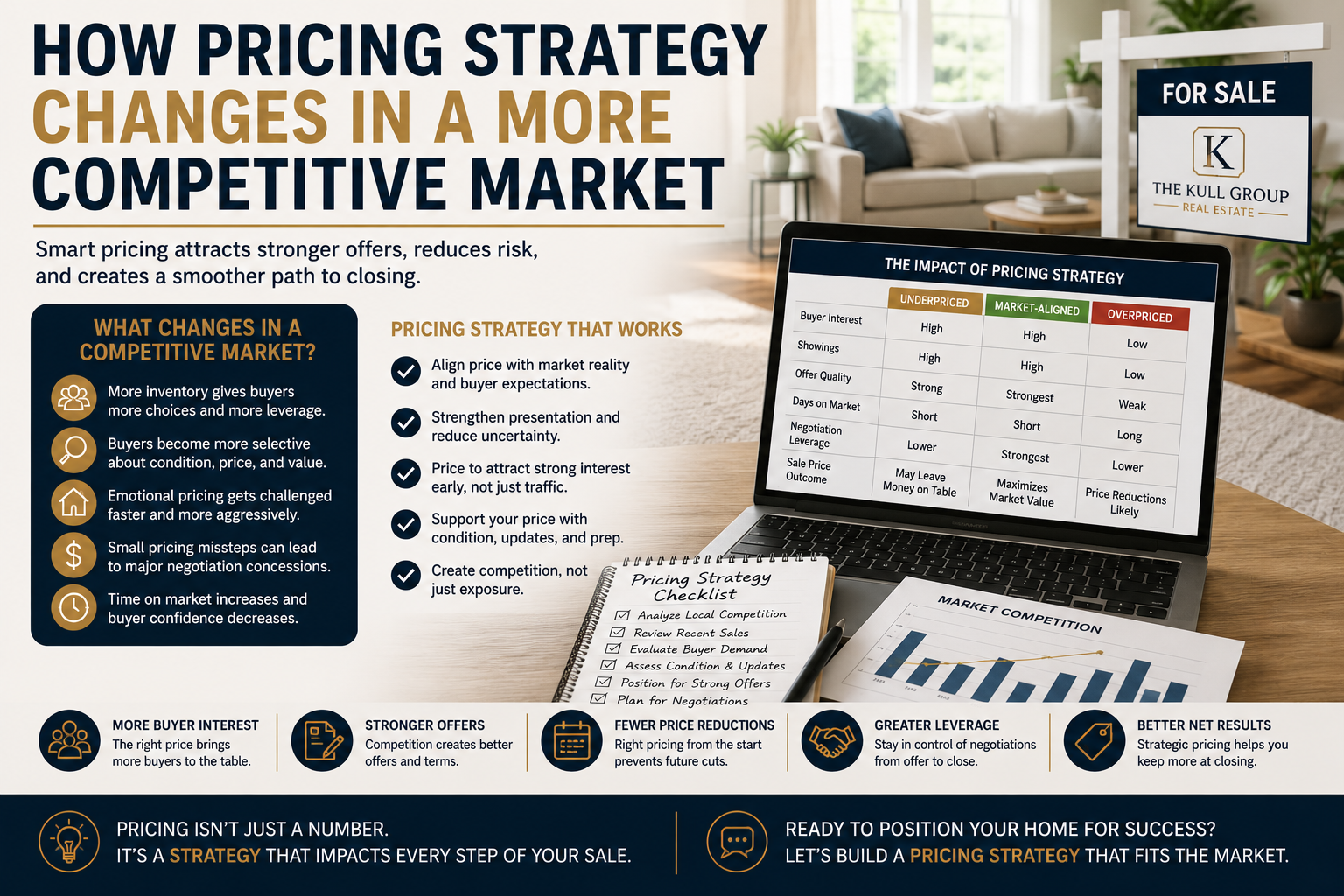
How Pricing Strategy Changes in a More Competitive Market
Many homeowners assume pricing is mostly about choosing a number based on nearby sales. In reality, pricing strategy changes significantly when buyers become more selective, inventory increases, or competing properties begin creating stronger comparison pressure.
In more competitive conditions, pricing is no longer simply about value. It becomes deeply connected to buyer psychology, presentation quality, preparation strategy, maintenance visibility, inspection expectations, and the emotional confidence buyers feel while evaluating the property.
A home may technically support a certain price range and still struggle if buyers believe competing options create less uncertainty, stronger presentation, or better overall positioning.
That is why pricing strategy must adapt to the market environment itself rather than relying only on historical sales data.
Buyers Compare Emotionally Before They Compare Mathematically
Many sellers think buyers evaluate homes through spreadsheets and exact pricing logic. Most buyers begin much earlier than that emotionally.
They compare:
- overall condition
- presentation consistency
- maintenance visibility
- layout functionality
- emotional comfort
- future repair exposure
- inspection risk perception
before they fully rationalize pricing differences.
This becomes especially important when buyers can easily compare multiple similar homes within the same market.
A property that feels overpriced relative to its condition often creates immediate emotional resistance. Once buyers begin viewing the listing through that lens, negotiations usually become more difficult later.
For homeowners trying to understand how preparation, inspections, leverage, and buyer psychology all connect before listing, our broader Seller Strategy and Execution guidance explains how those decisions influence pricing strength together.
Competitive Markets Punish Uncertainty More Aggressively
When buyers have more options, uncertainty becomes more expensive.
Visible deferred maintenance, inconsistent preparation, unclear pricing logic, aging systems, inspection-sensitive concerns, or emotional overpricing tend to create stronger resistance once buyers begin comparing alternatives.
In stronger seller markets, buyers sometimes tolerate those issues more easily because inventory pressure limits choice. In more competitive conditions, buyers often move toward whichever property feels:
- more stable
- better prepared
- less risky
- more realistically positioned
- emotionally easier to move forward with
That emotional comfort frequently affects negotiation behavior before formal negotiations even begin.
Pricing Too High Often Creates a Chain Reaction
Overpricing rarely affects only showing activity.
Once buyers believe a property is priced above its preparation level, maintenance condition, or competition, the listing often becomes emotionally vulnerable in several ways at once.
Buyers may:
- scrutinize defects more aggressively
- become more inspection-sensitive
- expect larger concessions
- compare the home more harshly against alternatives
- question seller motivation or realism
Even small maintenance concerns can feel amplified when pricing already feels emotionally uncomfortable to buyers.
That reaction is especially common in markets where newer inventory, renovated homes, or stronger presentation standards increase comparison pressure.
For sellers evaluating how buyer confidence influences negotiations later, it may also help to review how sellers lose leverage before the home even hits the market.
Pricing Strategy Must Reflect Preparation Reality
The strongest pricing strategy usually aligns honestly with the actual condition and preparation level of the property.
This does not mean sellers must underprice the home. It means pricing should acknowledge how buyers are likely to emotionally interpret the property once they compare it against nearby alternatives.
For example:
- a fully updated home may support stronger emotional pricing confidence
- a clean but older home may require stronger value positioning
- a property with visible deferred maintenance may require more pricing flexibility
- a highly prepared home may reduce negotiation sensitivity later
Pricing works best when the number feels emotionally believable to buyers the moment they walk through the property.
When pricing and condition feel disconnected, resistance tends to grow throughout the transaction.
Different Markets Create Different Pricing Pressures
Pricing sensitivity varies significantly across Palm Beach County and surrounding markets.
A buyer evaluating homes in Wellington may compare family functionality, property upkeep, layout flow, and neighborhood consistency differently than buyers searching in Stuart, where lifestyle positioning, coastal influence, and inventory variety may shape comparison behavior differently.
Likewise, acreage properties, luxury homes, older homes, and newer suburban inventory each create their own pricing dynamics.
That is why strong pricing strategy should remain:
- market-specific
- buyer-aware
- condition-aware
- competition-aware
- emotionally realistic
Generic pricing assumptions rarely hold up well once buyers begin comparing properties directly.
Inspection Expectations Quietly Influence Pricing Power
Pricing strength is often connected to how much risk buyers believe exists beyond the visible showing itself.
If buyers suspect future inspection problems, insurance concerns, or deferred maintenance exposure, they frequently build that uncertainty into how they evaluate price before making offers.
That is why inspection preparation matters even when discussing pricing.
Homes that feel:
- well maintained
- cleanly presented
- organized
- mechanically stable
- honestly positioned
often create stronger pricing confidence because buyers perceive less hidden risk.
Meanwhile, homes showing inconsistent care may create pricing resistance even when the asking price appears mathematically reasonable on paper.
For sellers trying to understand which maintenance concerns influence buyer psychology most, it may also help to review what buyers actually focus on during inspections.
Price Reductions Can Change Buyer Psychology
Once a property sits on the market longer than buyers expect, emotional interpretation often changes.
Buyers may begin asking:
- What is wrong with the property?
- Why has it not sold?
- Are inspection concerns likely?
- Is the seller unrealistic?
- Will additional price reductions happen later?
Even when those assumptions are inaccurate, they still affect behavior.
This is why early pricing strategy matters so much. Sellers who begin too aggressively sometimes spend months chasing the market downward while buyer confidence weakens gradually over time.
That does not mean pricing low automatically solves everything. It means emotional alignment between:
- price
- condition
- competition
- presentation
- buyer expectations
usually creates stronger transaction stability from the beginning.
Pricing Strategy Should Support Stability, Not Ego
Pricing conversations often become emotional because sellers naturally connect the home to years of ownership, memories, improvements, and financial expectations.
Buyers do not experience the property through that same lens.
They compare it against:
- available alternatives
- future ownership cost
- maintenance exposure
- inspection risk
- emotional comfort
- perceived long-term value
The strongest pricing strategies acknowledge that emotional difference without creating unnecessary conflict between seller expectations and buyer behavior.
When pricing feels realistic, preparation feels aligned, and the home creates confidence early, negotiations often become calmer throughout the transaction itself.
Build a Pricing Strategy That Matches the Market Reality
If you are preparing to sell in a more competitive environment, it can help to evaluate how buyers are likely to interpret pricing, condition, preparation, and comparison pressure before the home reaches the market. Strong pricing is not only about numbers. It is about buyer confidence.
- Review pricing strategy alongside preparation and condition
- Understand how buyers compare competing inventory emotionally
- Identify concerns that may weaken pricing confidence later
- Build a calmer negotiation position before listing begins
The strongest pricing strategies usually feel believable to buyers immediately.
Frequently Asked Questions About Pricing Strategy in a Competitive Market
Why does pricing strategy change when the market becomes more competitive?
When buyers have more options, they become more selective about condition, presentation, maintenance visibility, and perceived risk. Pricing must align more carefully with buyer expectations and competing inventory.
Can overpricing hurt negotiations even if the home eventually sells?
Yes. Overpricing often changes buyer psychology early. Buyers may become more inspection-sensitive, compare defects more aggressively, or expect larger concessions later in the transaction.
How does preparation affect pricing strength?
Preparation influences buyer confidence. Homes that feel well maintained, organized, and realistically positioned often create stronger emotional support for pricing than homes showing visible uncertainty or deferred maintenance.
Why do buyers react emotionally to pricing?
Buyers compare homes emotionally before they fully rationalize price mathematically. If a property feels overpriced relative to condition, preparation, or competition, hesitation often begins immediately.