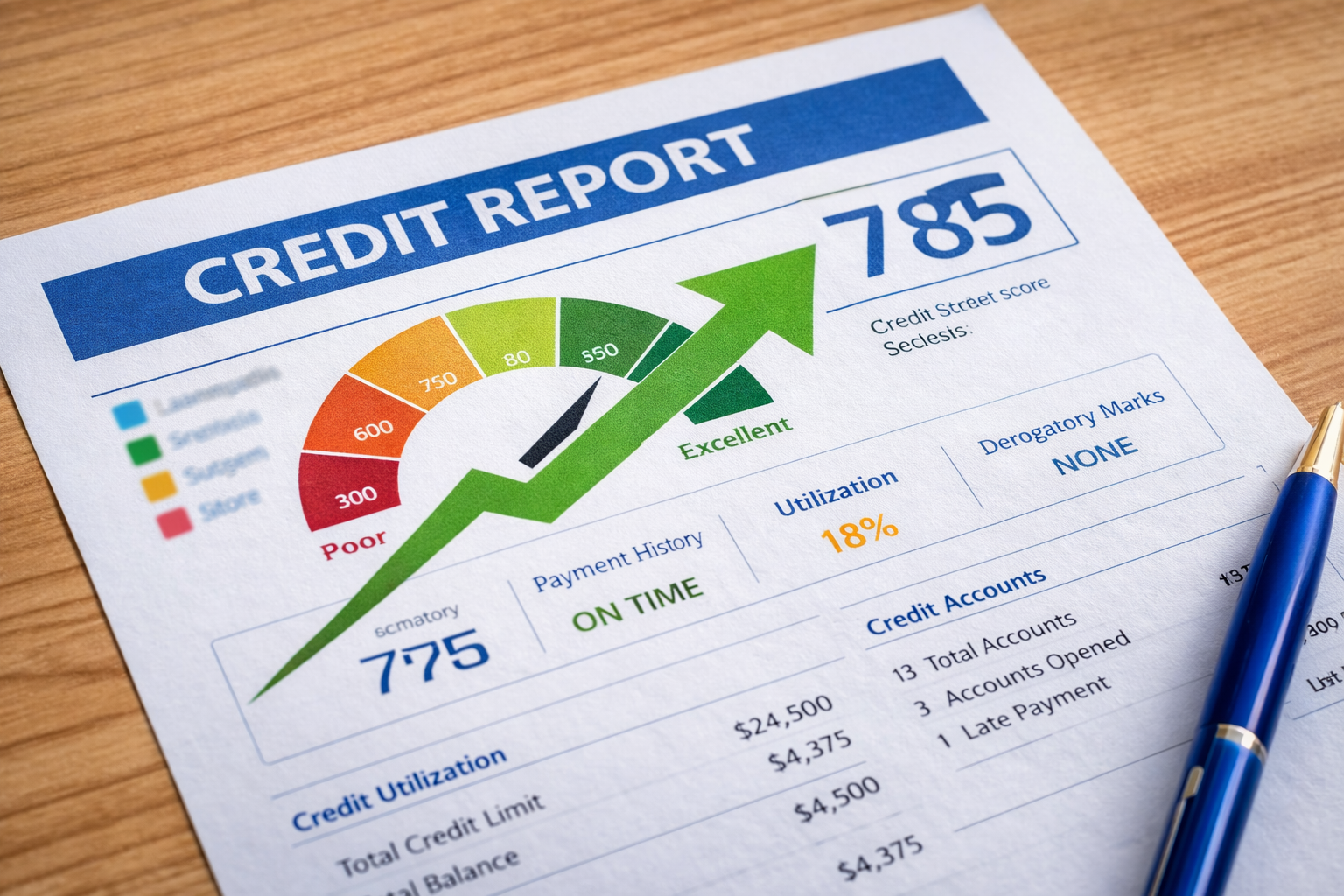
Credit Score Strategy: What Actually Moves the Needle Before Buying a Home in South Florida
If you’re thinking about buying a home in Palm Beach County, your credit score isn’t just a number—it’s one of the biggest factors shaping your monthly payment, loan options, and long-term financial flexibility.
What many people don’t realize is that improving credit isn’t about chasing a perfect score. It’s about understanding how lenders interpret your financial behavior and making targeted adjustments that produce real results—especially in a competitive South Florida market like Wellington, Lake Worth, or Boynton Beach.
Let’s break down what actually matters, what doesn’t, and how to position yourself for better financing.
Understanding What Lenders Are Really Looking At
A credit score is essentially a risk indicator. But lenders don’t just look at the number—they look at the story behind it.
There are several components that shape your score, but from a real estate standpoint, three areas tend to carry the most weight in underwriting decisions:
Payment Consistency
Late payments signal instability. Even one missed payment can have a disproportionate impact, especially if it’s recent.
Credit Utilization
This refers to how much of your available credit you’re using. High balances—even if you’re making payments—can suggest financial strain.
Credit Longevity
Long-standing accounts help demonstrate reliability over time. New credit lines don’t carry the same weight.
In practice, buyers in South Florida often get approved with a range of scores—but the difference between “approved” and “well-positioned” can mean tens of thousands of dollars over the life of a loan.
The Hidden Impact of Credit on Your Mortgage
Many buyers assume that once they qualify, their credit score doesn’t matter much. That’s not accurate.
A stronger credit profile can affect:
- Interest rate
- Loan program eligibility
- Down payment requirements
- Mortgage insurance costs
For example, in Palm Beach County, where home prices are higher than the national average, even a small rate difference can significantly change your monthly payment.
This is why credit strategy is often one of the first conversations worth having—before looking at homes.
Start Comparing Homes That Actually Fit Your Criteria
If you're evaluating options in Palm Beach County or South Florida, browsing homes by city can help you quickly understand pricing, condition, and location tradeoffs.
Explore Homes by CityPractical Ways to Strengthen Your Credit Position
Improving your credit isn’t about doing everything at once. It’s about focusing on the actions that create the most impact.
Audit Your Credit Profile First
Before making changes, you need a clear picture of what’s actually being reported.
Look for:
- Accounts you don’t recognize
- Incorrect balances
- Duplicate entries
- Old negative items that should have aged off
Errors are more common than most people think, and correcting them can sometimes produce quick improvements.
Prioritize Payment Timing
Consistency matters more than strategy here.
Set up:
- Automatic payments
- Calendar reminders
- Backup alerts
In real-world transactions, lenders often review the most recent 12–24 months closely. Even one recent late payment can raise concerns.
Reduce Revolving Balances Strategically
Not all debt is viewed the same way.
Credit cards (revolving debt) tend to impact your score more than installment loans like car payments.
If you’re carrying balances:
- Focus on lowering utilization below key thresholds (typically 30%, ideally lower)
- Spread balances across accounts if needed
- Avoid maxing out individual cards
This is one of the fastest ways to influence your score before applying for a mortgage.
Be Careful With New Credit Activity
Opening new accounts or applying for multiple lines of credit can temporarily lower your score.
This becomes especially important when you're preparing to buy a home.
In South Florida transactions, it’s not uncommon for deals to be delayed—or even fall apart—because a buyer opened a new credit card or financed furniture before closing.
Don’t Rush to Close Old Accounts
It may seem logical to clean up unused accounts, but closing them can actually reduce your available credit and shorten your credit history.
Both of those can negatively impact your score.
In most cases, it’s better to leave older accounts open, even if you rarely use them.
Address Collections Carefully
This is one of the most misunderstood areas.
Paying off a collection doesn’t always improve your score immediately—and in some cases, it can temporarily change how the account is reported.
Before taking action, it’s often worth:
- Reviewing the age of the account
- Understanding how it’s being reported
- Considering whether negotiation or professional guidance makes sense
This is especially relevant for buyers trying to qualify for specific loan programs.
Maintain a Balanced Credit Mix
Lenders prefer to see that you can manage different types of credit responsibly.
This might include:
- Credit cards
- Auto loans
- Installment loans
That said, this is not a reason to open unnecessary accounts. The goal is balance, not volume.
Get a Better Sense of What Your Home Could Command
If you’re starting to think about selling, checking your home’s current value can help you understand pricing expectations and how your property may fit today’s market.
Check Your Home ValueCommon Credit Mistakes That Can Cost You a Deal
Even well-qualified buyers can run into issues if they don’t understand how credit behavior affects a pending transaction.
Here are some of the most common missteps seen in Palm Beach County transactions:
Making Large Purchases Before Closing
Buying furniture, appliances, or even a car can shift your debt ratios and impact your approval.
Assuming “Paid Off” Means “No Impact”
Even after paying off debt, it can take time for updates to reflect in your score and credit report.
Ignoring Small Balances
A few small balances across multiple cards can still push utilization higher than expected.
Overcorrecting Too Quickly
Trying to fix everything at once—closing accounts, paying off everything, opening new credit—can create unintended consequences.
What Timing Really Looks Like
There’s no universal timeline for improving credit, but certain changes can produce noticeable results within a few weeks, while others take longer.
In real estate scenarios, here’s how timing typically plays out:
- Short-term adjustments (30–60 days): Lowering balances, correcting errors
- Mid-term improvements (2–4 months): Building consistent payment patterns
- Long-term strengthening (6+ months): Establishing deeper credit history
If you’re planning to buy in South Florida, even a small window of preparation can make a measurable difference.
Why This Matters More in Palm Beach County
South Florida is not a low-cost housing market.
Higher home values mean:
- Larger loan amounts
- Greater sensitivity to interest rates
- More competition among buyers
That combination makes credit optimization more impactful here than in many other parts of the country.
A slightly stronger credit profile can be the difference between:
- Competing confidently vs. struggling to qualify
- Securing favorable terms vs. stretching your budget
A More Strategic Way to Think About Credit
Instead of chasing a specific number, it’s more effective to think in terms of positioning.
Ask:
- Will this improve how a lender views my risk?
- Will this strengthen my loan options?
- Will this put me in a better position to compete?
That shift in thinking tends to produce better results than focusing on quick fixes alone.
Frequently Asked Questions
How high does my credit score need to be to buy a home in South Florida?
There’s no single number required. Many loan programs allow for a range of scores, but higher scores typically unlock better terms.
Can I improve my credit quickly before applying for a mortgage?
Some changes—like paying down balances—can have a faster impact, while others take more time.
Should I pay off all my credit cards before applying?
Lowering balances helps, but it’s not always necessary to pay everything off completely. Strategic reduction is often more effective.
Does checking my own credit hurt my score?
No. Personal credit checks are considered soft inquiries and do not impact your score.
Will closing credit cards improve my credit?
Not usually. In many cases, it can reduce your available credit and negatively affect your score.
How long do negative items stay on my credit report?
It depends on the type of item, but many remain for several years before aging off.
Can I still buy a home with past credit issues?
Yes. Many buyers successfully purchase homes with imperfect credit, but preparation and strategy become more important.
Final Thoughts
Improving your credit isn’t about perfection—it’s about understanding how small decisions add up over time.
In a market like Palm Beach County, where every advantage matters, taking a more intentional approach to your credit profile can directly impact your buying power and overall experience.
The key is not just improving your score, but improving how your financial profile is perceived when it matters most.
Keep Exploring South Florida Real Estate
If you're comparing communities, researching home values, or trying to better understand the South Florida market, reviewing local resources can help put each city and neighborhood into context.
About the Authors
Chris and Sue Kull are South Florida real estate professionals with more than three decades of experience helping buyers, sellers, and property owners navigate real estate decisions throughout Palm Beach County and surrounding communities.
Their work emphasizes local insight, practical guidance, and clear information to help people make informed decisions at every stage of the process.
You can find additional community guides, search tools, and market resources at TheKullGroup.com.