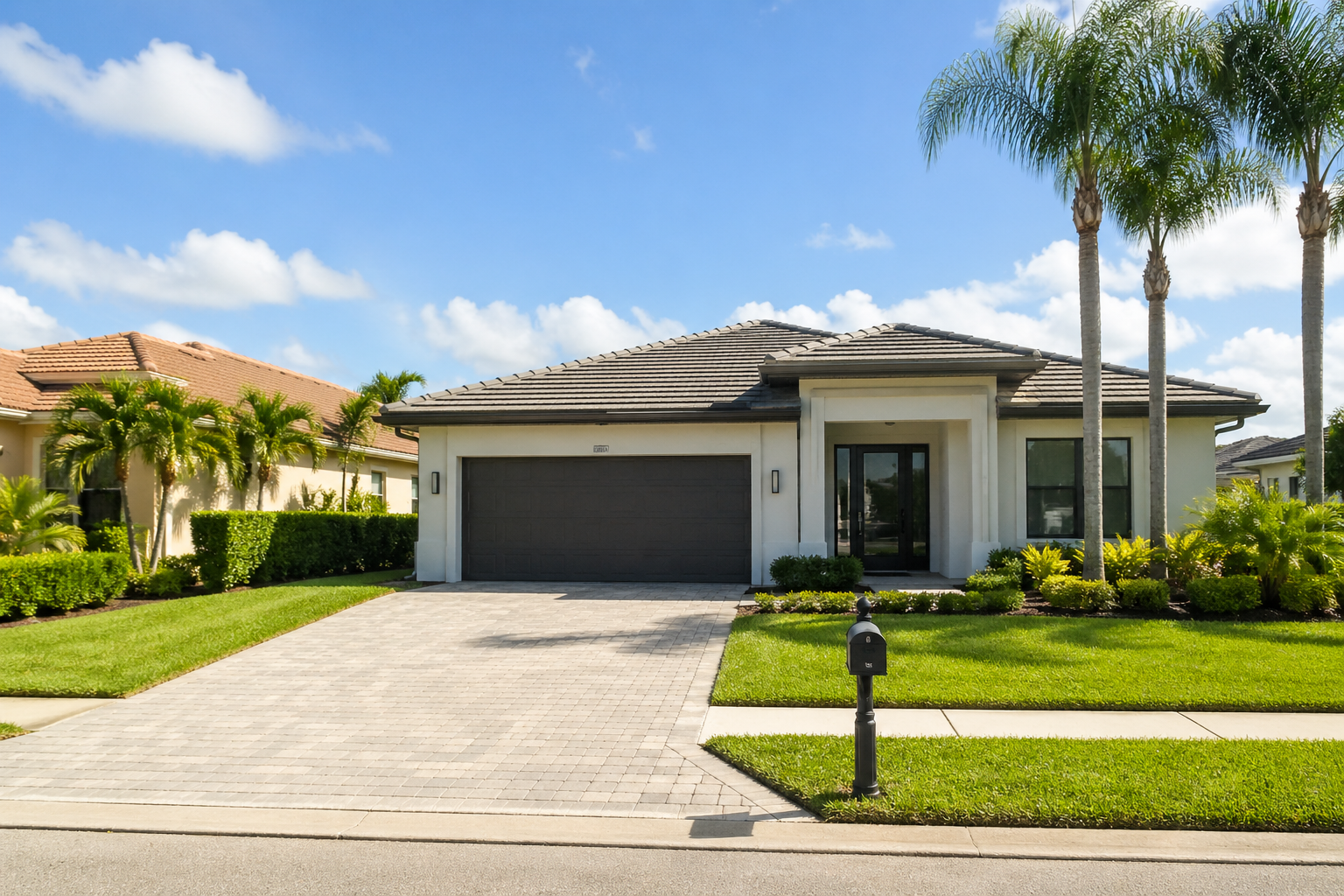
Can You Move Into a Newer Home Without Increasing Your Expenses?
Across South Florida, a quiet shift is happening. Homeowners in places like Lake Worth and Royal Palm Beach are starting to question whether staying put still makes financial sense. It’s not always about wanting more space or a different neighborhood—it’s often about reducing complexity, controlling long-term costs, and making smarter use of equity that’s already built up.
If you’ve owned your home for several years, there’s a good chance your property has appreciated significantly. At the same time, maintenance, insurance, and upkeep may be rising. That combination creates a very specific question: is it possible to move into something newer and easier without actually increasing your monthly financial burden?
The answer isn’t obvious—but in many cases, it’s more achievable than most homeowners think.
The Misconception That Keeps People Stuck
One of the most common assumptions is that moving into a newer home automatically means higher payments. That’s understandable—newer construction, updated finishes, and lower maintenance all sound like upgrades that come with a premium.
But that thinking ignores one critical factor: the equity you already have.
In areas like Lake Worth homes for sale, many homeowners are sitting on substantial gains without fully realizing how that equity can be repositioned. The conversation shifts when you stop looking at the purchase price alone and start evaluating the entire financial picture.
In practical terms, the right move isn’t about “buying more house.” It’s about reallocating your existing position into something that works better going forward.
Where the Opportunity Actually Comes From
The ability to move without increasing expenses comes from how the pieces interact—not from any single factor.
For example, selling a home that requires ongoing maintenance, aging systems, or higher insurance costs can eliminate unpredictable expenses. At the same time, moving into a newer property often brings improved efficiency, fewer repairs, and more stable long-term costs.
There’s also the structure of the transaction itself. Depending on timing, financing, and how much equity is applied, some homeowners find that their monthly payment remains very close—or in certain cases, even decreases.
This is why many people start by getting a clear understanding of their current position. A realistic valuation of your property is often the first step toward seeing what’s actually possible. You can get a more accurate picture here: check your home value.
Once those numbers are grounded in reality, the decision becomes far less abstract.
If You’re Thinking About Moving, It Usually Starts Here
Most homeowners don’t randomly decide to move. It builds over time. If you’re starting to think about selling and moving into something newer or easier to maintain, it usually comes down to one of these situations. Choose the one that feels closest to you.
Maintenance, repairs, or simply keeping up with everything may be taking more time and energy than you want to keep giving.
You’re trying to make a smarter financial move →You may be thinking about reducing expenses, using your equity differently, or moving into a home that fits your long-term plans better.
You want something newer, simpler, and easier to live in →Many homeowners reach a point where they want less maintenance, a more efficient layout, and a home that feels easier day to day.
Why “Newer” Often Means More Financial Control
There’s a subtle but important distinction between cost and control. Many homeowners focus strictly on the monthly payment, but overlook how unpredictable expenses shape the real financial experience.
An older home may have a lower fixed payment but comes with variable costs—repairs, insurance adjustments, system replacements—that are harder to plan for. Over time, those variables can create financial friction.
Newer homes tend to reduce that unpredictability. Updated construction standards, energy efficiency, and lower immediate maintenance needs create a more stable financial environment.
For homeowners transitioning out of properties in areas like Royal Palm Beach homes for sale, this shift isn’t about upgrading for the sake of it—it’s about simplifying the financial picture moving forward.
That stability is often what people are actually looking for, even if they initially frame it as wanting something “newer.”
The Moment Most People Realize It’s Possible
There’s usually a turning point in this process. It’s not when someone starts browsing listings—it’s when they see how the numbers align in a realistic scenario.
That might look like comparing their current total monthly cost (including maintenance and repairs) against a projected cost in a newer home. Or it could be seeing how much equity they could apply toward reducing a new loan balance.
At that point, the conversation changes from “Can I afford to move?” to “Does it make more sense to stay?”
For homeowners exploring that shift, the next logical step is understanding how timing, equity, and market positioning come together. This is where a more structured look at your situation becomes valuable: explore your financial move options.
Clarity tends to remove hesitation—and hesitation is often what keeps people in homes that no longer fit.
What This Means for Buyers and Sellers in South Florida
South Florida’s market dynamics create a unique window for this type of move. Long-term homeowners often have strong equity positions, while newer inventory in surrounding areas offers options that didn’t exist years ago.
For sellers, it means your current home may be working harder for you than you realize. That equity isn’t just a number—it’s leverage that can be redirected into a more efficient living situation.
For buyers—especially those transitioning from another home—it’s less about entering the market and more about repositioning within it. The goal isn’t simply to purchase something new, but to align your housing with your financial priorities.
That alignment is where better decisions tend to happen. Not rushed decisions, not emotional decisions—just clearer ones.
FAQ: Real Questions Homeowners Are Asking
Is it realistic to move into a newer home without increasing my monthly payment?
It can be, depending on your equity position, the type of home you move into, and how the transaction is structured. Many homeowners find that by applying equity strategically and choosing a property with lower maintenance and insurance costs, their overall monthly expense remains similar. The key is evaluating the full financial picture—not just the mortgage payment, but the total cost of ownership over time.
How do I know if staying or moving makes more financial sense?
The most effective way is to compare your current total costs against a realistic scenario for a potential move. This includes maintenance, insurance, taxes, and long-term expenses. When you see both sides clearly, the decision usually becomes more straightforward. Without that comparison, it’s easy to default to staying simply because it feels safer—even when it may not be the better financial choice.