Can You Move Into a Newer Home in South Florida Without Increasing Your Expenses?
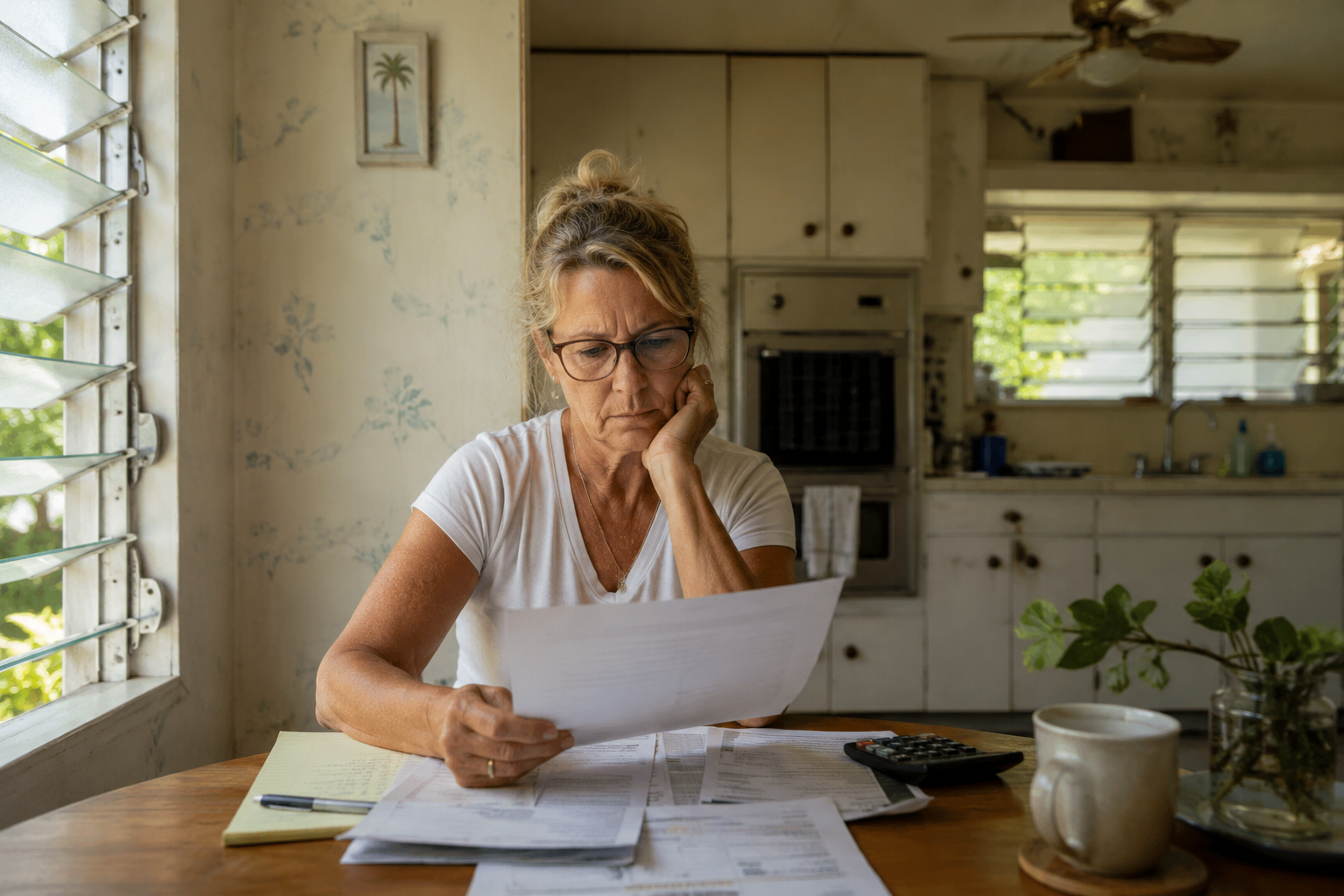
It's a question that doesn't always get asked out loud, but it surfaces quietly in a lot of conversations with long-term South Florida homeowners. The house is paid down — maybe paid off. The equity is real. But so are the insurance bills, the maintenance cycles, and the creeping awareness that the financial structure of staying is starting to feel less efficient than it once did. At the same time, moving feels risky. What if a newer home costs more to carry? What if the math doesn't work? That uncertainty is exactly why many homeowners sit with the question for months or years without actually running the numbers.
The financial case for staying put isn't always as strong as it looks on the surface. And the financial case for moving isn't always as complicated as it feels before you work through it carefully.
Why "Staying Is Cheaper" Isn't Always True Anymore
For a long time, the logic held. If you'd owned your South Florida home for fifteen or twenty years, you'd absorbed the price appreciation, locked in a manageable tax basis, and largely forgotten what it felt like to have a significant mortgage payment. That stability felt like financial efficiency. In many cases, it was.
The past several years have disrupted that assumption in ways that are still settling. Florida homeowners insurance has restructured in ways that have materially changed the monthly cost of ownership for thousands of households — not as a temporary spike but as a sustained new baseline. Older homes, particularly those built before modern wind-resistance code standards, tend to carry disproportionate insurance premiums relative to their value. A home in Lake Worth built in the 1970s and a newer home in a community with updated construction standards are not equivalent insurance risks, and the premium gap reflects that.
Add in property tax trajectory — especially for homeowners whose assessed value has climbed while Save Our Homes caps have deferred but not eliminated long-term exposure — and the actual monthly cost of staying in an older home starts to look different than the surface number suggests. This is one of the patterns we've observed repeatedly: homeowners who believe their costs are stable are often absorbing gradual increases in insurance, maintenance, and repair that don't arrive in a single bill but accumulate steadily across twelve months.
The financial efficiency of staying isn't measured by what you pay in mortgage principal. It's measured by total cost of ownership — and for many South Florida homeowners, that total has shifted more than they've fully accounted for.
How Equity Changes the Math on Moving
The amount of equity sitting in South Florida homes after the appreciation cycle of the past decade is significant for a meaningful portion of long-term owners. That equity is doing one thing right now: it's maintaining its value inside the home while the home continues to generate maintenance demands, insurance costs, and operational friction. For some homeowners, that's a reasonable arrangement. For others, it's capital that could be working differently.
One of the questions worth sitting with is whether a move — specifically into a newer, lower-maintenance property — could actually reduce monthly carrying costs rather than increase them. The intuition says no. The intuition assumes that moving means a larger mortgage, higher taxes, and increased expenses. That's sometimes true. It's not always true.
A homeowner with significant equity who sells and buys a newer home at a comparable or modestly higher price point may find that reduced insurance premiums on newer construction, lower near-term maintenance demands, and better energy efficiency in a modern home meaningfully offset any increase in mortgage payment. The net monthly cost — accounting for everything, not just principal and interest — is sometimes lower in a newer home than in an older one they believed was "affordable" to stay in.
If you haven't had a current estimate of your home's equity position in the past year, that's where the conversation usually needs to start. Knowing what your home is worth in today's Palm Beach County market is what makes the rest of the financial comparison possible. Without that number, everything else is approximation.
If You're Thinking About Moving, It Usually Starts Here
Most homeowners don't randomly decide to move. It builds over time. If you're starting to think about selling and moving into something newer or easier to maintain, it usually comes down to one of these situations. Choose the one that feels closest to you.
Maintenance, repairs, or simply keeping up with everything may be taking more time and energy than you want to keep giving.
You're trying to make a smarter financial move →You may be thinking about reducing expenses, using your equity differently, or moving into a home that fits your long-term plans better.
You want something newer, simpler, and easier to live in →Many homeowners reach a point where they want less maintenance, a more efficient layout, and a home that feels easier day to day.
The Cost Categories Most Homeowners Don't Add Up
The honest calculation requires more line items than most homeowners carry in their heads. Monthly mortgage or carrying cost is the number people cite. It's rarely the number that tells the complete financial story of a property.
Roof replacement cycles in South Florida are real. A home that needs a roof in the next three to five years is carrying a deferred liability that belongs in any financial comparison. Same with HVAC systems, electrical panels, plumbing infrastructure in older builds, and the cumulative cost of storm preparation — shutters, generators, the annual ritual of securing a property before a season that now feels longer and more intense than it did a decade ago.
Homeowners in communities like Royal Palm Beach or comparable established Palm Beach County neighborhoods sometimes find that their total annual ownership costs — when maintenance, insurance, deferred repairs, and updates are honestly counted — run considerably higher than the monthly mortgage payment implies. The gap between perceived cost and actual cost is one of the most consistent patterns in how South Florida homeowners evaluate their housing situation.
Newer construction sidesteps many of these deferred costs, at least in the near term. Modern wind-rated roofing systems, impact-resistant windows that satisfy current insurance requirements, updated electrical infrastructure, and energy-efficient HVAC equipment don't eliminate the need for maintenance — but they do reset the timeline and reduce the near-term financial exposure that older homes carry as background risk.
This isn't an argument that newer is always better. It's an observation that the financial comparison needs to account for what the current home will realistically require over the next five to ten years, not just what it costs today.
What the Move Actually Looks Like Financially
When a homeowner with meaningful equity runs a serious financial comparison — sale proceeds, closing costs, new purchase price, financing terms, insurance differential, and projected maintenance — the result is sometimes genuinely surprising. Not always in the direction they expected.
Some homeowners discover the move improves their monthly financial position. Others find it's essentially neutral with meaningfully improved livability. Some find the numbers don't support a move right now, but they have a clearer picture of when they might. All three of those outcomes are more useful than continuing to operate on assumptions that haven't been tested against real numbers.
The people who benefit most from working through this carefully are not homeowners who are certain they want to move. They're homeowners who are uncertain — who want to understand whether the financial logic supports a transition before they've committed emotionally to one direction or the other. Getting to a clear picture before making a decision is the entire point of the analysis. For homeowners in that position, understanding what a financially driven move in South Florida actually involves is a reasonable place to start building that clarity.
What This Means for Buyers and Sellers in South Florida
For homeowners considering a sale, the financial framing matters as much as the emotional one. Many sellers enter the process focused on what they'll net from the sale. The more complete question is what the net proceeds enable — and whether the housing situation on the other side of the transaction improves the total financial picture or simply shifts its components around.
Sellers who've owned for a long time frequently underestimate their negotiating position. Significant equity, a home in a desirable established neighborhood, and a motivated but patient approach to timing tend to produce better outcomes than sellers who feel urgency or who make decisions reactively. The financial case for moving is strongest when it's made from a position of clarity, not pressure.
For buyers transitioning from older homes, the new-construction and newer-resale market in Palm Beach County offers more options than it did three years ago. Inventory has shifted. Some communities that had little availability have opened up. Understanding what's genuinely available in the price range that your equity unlocks — and how the carrying costs of those homes compare to what you're paying now — is the core financial question that deserves a real answer before any other decision gets made.
The broader pattern we've observed is that homeowners who treat this as a financial analysis first — not an emotional decision about the house they've lived in, not a fear-based response to insurance costs, not a reactive move triggered by a bad storm season — tend to make transitions they feel more settled about twelve months later. The emotional elements matter. But grounding them in accurate financial comparison is what keeps the decision from feeling regrettable.
Frequently Asked Questions
Can moving into a newer home actually reduce my total monthly costs in South Florida?
It depends on the specific comparison, but for homeowners with significant equity in older properties, it's more common than most people expect. Newer construction often carries lower insurance premiums, reduced near-term maintenance demands, and better energy efficiency — which collectively offset part or all of any increase in mortgage payment. The calculation requires honest accounting of what your current home actually costs annually, including deferred maintenance and insurance trajectory, not just your current mortgage or carrying cost.
How do I know if my South Florida home equity is enough to make a financial move realistic?
Equity position is the starting point for any honest financial comparison, but the number that matters isn't just total equity — it's net proceeds after closing costs and any repairs, applied against the realistic purchase price of the property type you'd be moving into. Many homeowners are surprised to discover their equity position is more workable than they assumed. Getting a current home value estimate is what makes the rest of the analysis concrete rather than speculative.
Keep Exploring South Florida Real Estate
If you're trying to better understand whether staying, selling, or simplifying makes sense, exploring more South Florida real estate guidance can help create clarity before making a major decision.
About the Authors
Chris and Sue Kull are South Florida real estate professionals with more than three decades of experience helping homeowners, buyers, sellers, and relocating families navigate real estate decisions throughout Palm Beach County and surrounding communities.