


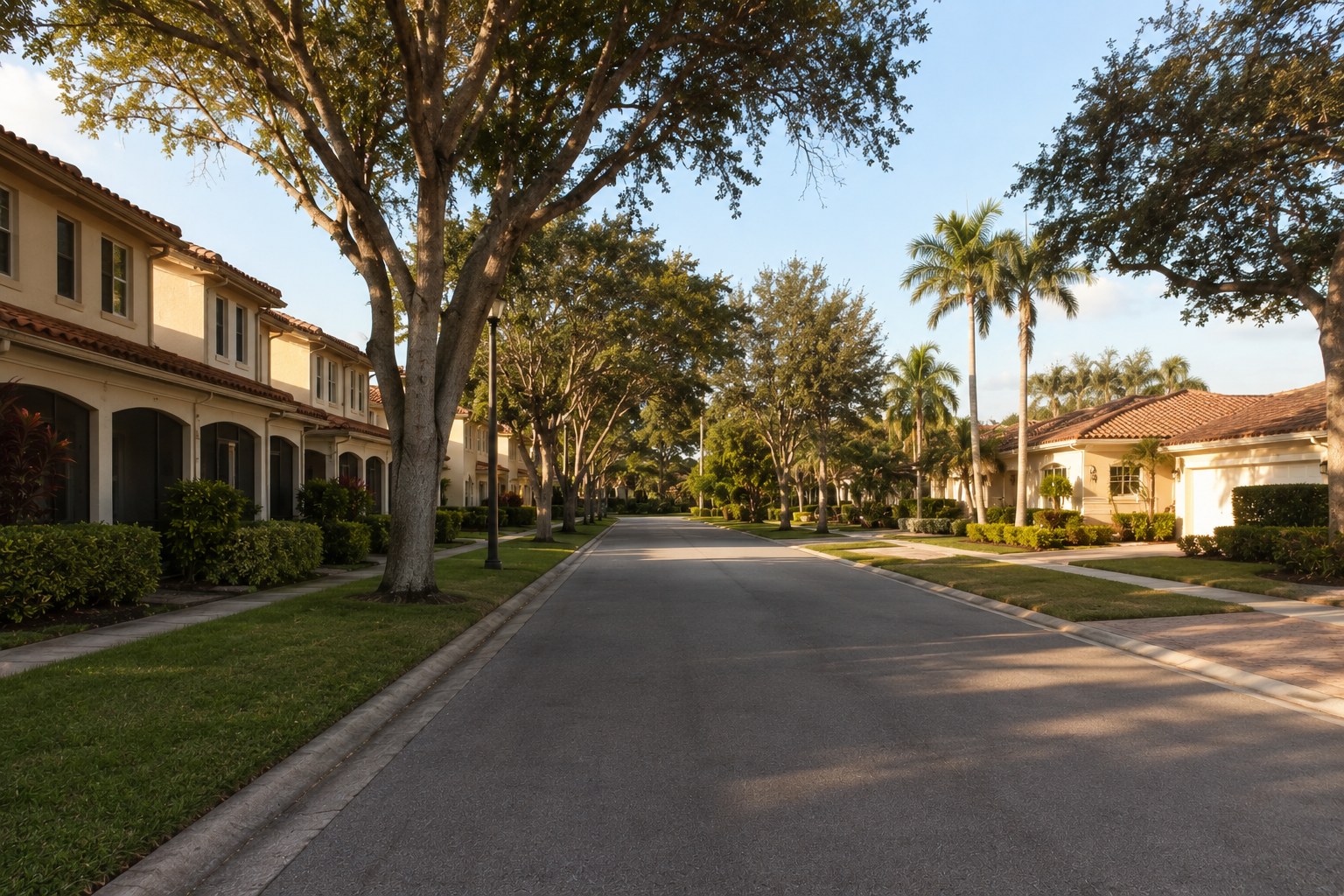
Changing What You Own Without Changing Where You Live
An ownership conversation turns difficult when two separate questions get folded into one: where do you want to live, and how much of a property do you want to be responsible for? Those two questions can have different answers, and merging them produces a false choice — stay exactly as you are, or leave.
Reposition is the position that lives in the gap. It means changing the obligation profile of what you own while staying where you are — same area, same routines, same people, different relationship to the building. It is one of the four positions in what this property actually costs you to own, and it is the one that disappears whenever the conversation is framed as staying or going.
Asked whether they are ready to leave the area, an owner may answer about leaving the house. Those are different questions with different answers, and only one of them was actually put.
Two Questions People Merge Into One
Attachment to a place and attachment to a parcel are different things, and they can run in opposite directions without anyone noticing.
The place is the part people describe when asked what they would miss: the roads they know, the routines, proximity to people who matter, the pace of the week. Very little of that list is generated by the specific structure — it is generated by where the structure sits. The parcel is the part that generates the work: the roof, the grounds, the equipment, the coordination, the background awareness that something is always pending.
When those get merged, an owner who is tired of the second concludes they must give up the first. The weight of a property is not only financial. When it becomes heavy enough to prompt the question, locating the source precisely — the building, or the place — is what determines whether leaving the area is the answer at all.
The Four Things That Can Transfer
- The exterior envelope and structure. Where a community's governing documents assign them, the roof, exterior walls and the building's structural elements sit with an association rather than with you, and the decisions about them do too.
- The grounds and shared infrastructure. Landscaping, irrigation, paving, drainage within a community — work that recurs continuously in this climate and that, where the documents place it with the association, somebody else can be doing.
- Capital planning. Where the governing documents assign a component to the association, planning and paying for that component's eventual replacement is handled at the association level rather than privately by you. How that is handled in a particular community — what is inventoried, whether a reserve study has been commissioned, how reserves are funded and to what level — is set by that association's documents, budget and current practice, and is something to establish for the specific community rather than assume from the ownership form.
- Vendor coordination. Finding, scheduling, admitting, checking and chasing. Where the governing documents assign a component to the association, the coordination for that component sits with the association rather than on your calendar.
Two things are not eliminated by any of this, and being clear about them is what separates a real assessment from a sales pitch. The cost does not disappear; in an association setting it changes form and arrives as an assessment set by a board rather than a quote you approve. And governance participation comes with it — documents to read, meetings that matter, decisions made by people you did not choose. That is a different kind of demand on your attention, not an absence of one.
Some obligations are attached to the parcel rather than to the ownership form, and those do not move simply because an association exists. Juno Beach is a small coastal municipality where a parcel's position matters more than its address: an oceanfront or Intracoastal parcel may carry structures an inland parcel in the same town does not — a seawall, a dock, a dune walkover — and where those exist, responsibility for their upkeep and permitting follows the deed, the governing documents and the applicable permitting authority rather than a general rule about coastal property.
Is it the area you want to keep, or the house?
That is the separation this article is about, and it is the one worth making before any decision about listing. Details of the Ownership Sustainability Review — what it involves and how to request one — are set out on its own page.
Moving Along the Ladder Without Moving Away
Ownership forms can be arranged by how much obligation sits with the owner, and in Palm Beach County several of those forms exist within the same areas rather than in separate parts of the county. That is the practical basis for repositioning here: the ladder runs through the area rather than out of it. Boca Raton is one of the county's larger incorporated cities, and an owner can move between ownership forms without leaving its limits — the municipality, and the services and permitting that come with it, stay constant while the association layer changes underneath.
At one end is single-family ownership without an association, where there is no association layer to take on any share of the property, so the systems, decisions and schedules that belong to the parcel itself sit with the owner. That is not the same as saying everything affecting the parcel does: utilities, drainage and other infrastructure may be administered by a municipality, the county, a utility provider or a special district, and what falls inside the owner's boundary is set by the deed, the plat and the applicable service and permitting authorities rather than by the absence of an association. In the unincorporated county — Loxahatchee and the surrounding acreage, for example — the owner's share can extend further still. Where a parcel there is served by a private well and septic system rather than by a utility, water supply and wastewater treatment, and the equipment that runs them, sit with the owner as well, with no association layer to absorb any of it.
Where an association exists, some portion of the exterior, the common areas and the capital planning may sit with the board instead — how much is set by that community's declaration and related documents rather than by the label on the housing type. Two communities of the same housing form can allocate differently, which is why the governing documents and the association's own financial position matter more as you move along, and why the allocation has to be read rather than inferred.
Some infrastructure sits with neither the owner nor a community association. Wellington is an incorporated village whose Acme Improvement District is a special district with certain infrastructure under its administration and its own assessment. Responsibility for any particular canal bank, culvert or easement there is worth confirming feature by feature with the district and the village rather than assumed from the district's existence.
No rung is better or worse than another. They are differently constituted, and the point of the ladder is not to climb it but to know which rung you are on and whether it still suits you.
What Repositioning Actually Costs
It is a transaction, and pretending otherwise would be useless to anyone weighing it.
There are transaction costs on both sides of it. There is the work of moving itself, which is worth costing out rather than assuming. There is a new load to inherit — an assessment, a reserve position, a set of documents — and inheriting it blind is how an owner trades one unexamined position for another. The governing documents, the association's current budget and financial records, and any reserve study that exists are where that examination starts, not where it ends: what a declaration actually binds you to is a legal question for an attorney, the association's current financial position is a question for its own records and whoever reviews them on your behalf, and a real estate assessment is not a substitute for either.
Which government a parcel answers to belongs on the same list, because it sets the permitting and services that come with the move. A Boynton Beach mailing address does not by itself establish that a parcel is inside the city limits; some parcels with that address are in unincorporated Palm Beach County, where the county rather than the city is the governing authority. That is worth confirming for a specific parcel rather than inferred from the address.
The tax position deserves its own line. On a change of ownership the assessment limitation generally comes off and assessed value resets toward market for the new owner, so a long-held position does not travel with the house. Portability can carry a homestead assessment difference to a new Florida homestead subject to statutory limits, and it has to be claimed rather than applied automatically — how Florida property tax structure shapes a long-held position goes through that. This is general information rather than tax advice, and what applies to a specific move is a question for the Property Appraiser's office or a tax professional.
And there is the part that is not financial at all. Financial readiness and emotional readiness are not the same thing and do not necessarily arrive together, and repositioning is a real move even when the postcode does not change. An owner weighing it may be working through more than the arithmetic. That is worth acknowledging rather than solving with arithmetic.
The separation that makes the decision workable is a written one: set down what you are keeping — the area, the routines, the proximity — and what you are handing over — envelope, grounds, capital planning, coordination — in specific terms, before anything is listed. A repositioning decision made without that list is a decision made about housing rather than about obligation.
Common Questions
Isn't this just downsizing?
Not quite, and the difference matters. Downsizing is about space — fewer rooms, less square footage. Repositioning is about obligation, and the two do not have to move together. It is entirely possible to reposition into something of similar size where a different share of the responsibility sits elsewhere, and equally possible to downsize into something smaller that still leaves every obligation with you. If the pressure you feel is coming from the work rather than the space, size is the wrong variable to be adjusting.
Would I be giving up control?
You would be exchanging one kind for another, and whether that is a good trade is genuinely personal. Direct control means every decision is yours and so is every task. Shared responsibility means the tasks reduce and the decisions become collective — a board, a budget, a set of rules you did not write. Some owners find that a relief and some find it intolerable, and both reactions are reasonable. The way to find out is to read a set of actual governing documents, and to have anything that would legally bind you reviewed by an attorney, rather than imagining how it would feel.
What if I actually enjoy looking after the property?
Then Keep is very likely the right position, and it is a complete outcome rather than a failure to act. Some owners work on a property because working on it is part of the pleasure of owning it, and no amount of ownership-economics framing improves on that. What is worth doing even then is knowing the schedule ahead of you, so the pleasure stays a choice rather than becoming an obligation that arrived without being agreed to.
The four positions are easily reduced to two: stay as you are, or sell and go. That framing is not anybody's fault — it is just what the conversation defaults to when the question is asked in the language of moving rather than the language of obligation. What sits in between is not a compromise or a half-measure. It is a different answer to a question most people were never asked precisely: not where do you want to be, but how much of this do you want to be holding. If you want to work through that distinction with someone, the Ownership Sustainability Review page explains how to start.
About the Authors
This article was written by Chris and Sue Kull of The Kull Group.