Saltwater vs. Chlorine Pools in Palm Beach County: What Matters When You're Inheriting One
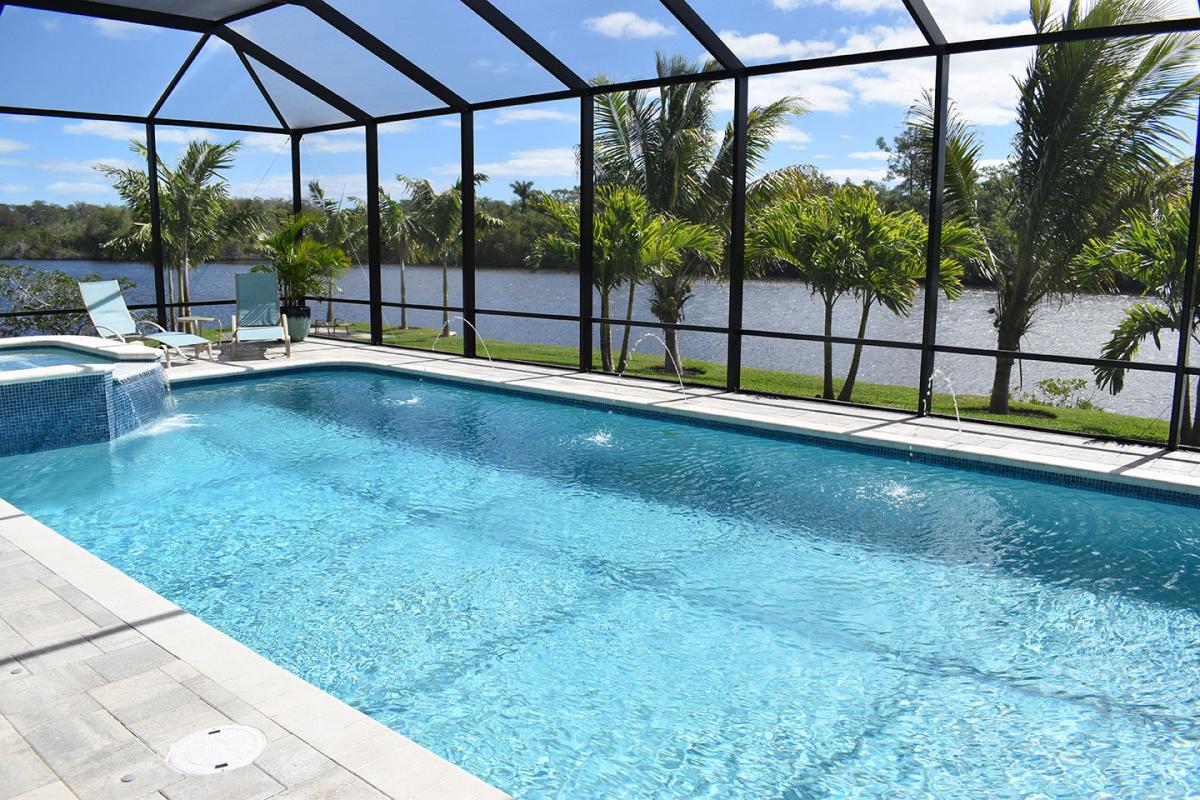
Articles on this subject are written for someone building a pool from scratch, weighing two options and picking one. That describes very few people in this county. Pools here are common enough that most Palm Beach County buyers do not choose a system at all — they inherit whatever the previous owner installed, along with its age, its condition, and its running costs.
Which changes the useful question. Not "which is better," but "what am I taking on, and what will it cost me to keep?" The comparison still matters, because it tells you what to expect from the system you are getting. It just is not a decision most readers are actually making.
How Each System Works
A saltwater pool is still a chlorine pool. This surprises people. A salt chlorine generator uses electrolysis to convert dissolved salt into chlorine continuously, then the chlorine reverts to salt and the cycle repeats. You are not swimming in a chemical-free pool; you are swimming in one that manufactures its own sanitizer instead of receiving it by hand.
That produces the qualities owners tend to like: water many people describe as softer on skin and eyes, a steadier sanitizer level than manual dosing achieves, less chlorine odor, and considerably less day-to-day chemical handling. The tradeoffs are equally real — higher upfront equipment cost, a generator cell that is a wear item with a finite life, ongoing electricity draw, and a corrosion risk to metal components that matters more here than almost anywhere.
A traditional chlorine pool takes chlorine directly as tablets, granules, or liquid, with regular testing and adjustment. Its virtues are simplicity and serviceability: low equipment cost, decades of established practice, easy shock treatment when something goes wrong, and troubleshooting that most pool technicians can do without specialized parts. The costs are recurring chemical purchases, more frequent attention, stronger odor from chloramines, more potential for skin and eye irritation, and the need to store pool chemicals safely.
Which Question Are You Actually Asking?
The right information depends on where you are standing, and these three situations lead in different directions.
Buying a home with an existing pool — the system type matters far less than equipment age, safety compliance, and running cost. Skip to what to inspect. Deciding whether to convert an existing chlorine pool to salt — a real option, and the honest answer is that it usually makes sense only if you are already replacing equipment. Wondering whether the pool is worth keeping at all — a more common question than people admit, and part of a larger one about whether it is time to move into a lower-maintenance home. A pool is one of the larger recurring obligations attached to a property, and there is no wrong answer about whether you want it.
The Three Things to Check on a Pool You're Buying
If a pool comes with the house, these decide what you are actually getting. The system type is a distant fourth.
The Safety Requirement Most Guides Skip
Florida's Residential Swimming Pool Safety Act, Chapter 515 of the Florida Statutes, requires that a residential pool have at least one qualifying safety feature. The statute lists several ways to satisfy it, and any one is sufficient:
- An enclosure isolating the pool from the home that meets the statute's barrier requirements
- An approved safety pool cover meeting the referenced ASTM standard
- Exit alarms on all doors and windows providing direct access from the home to the pool, rated at a minimum of 85 decibels at ten feet
- Self-closing, self-latching devices on all doors providing direct access, with the release mechanism placed no lower than 54 inches above the floor
- A pool alarm that sounds when it detects entry into the water
Where a barrier is used, the statute specifies its characteristics: at least four feet high measured from the outside, with no gaps, openings, indentations, or protrusions that would let a young child crawl under, squeeze through, or climb over. A wall of the dwelling can form part of the barrier only if it contains no door or window opening to the pool. And the barrier cannot be placed where permanent structures or equipment could be used to climb it — which is why a barrier that was compliant on installation can quietly stop being compliant when someone puts a storage bin or a planter next to it.
Failing to equip a pool with a required safety feature is a criminal violation under the statute, though it provides a cure period during which equipping the pool and completing a drowning prevention education program avoids the penalty.
For a buyer, the practical point is simpler: verify what the property actually has, and confirm it still complies rather than assuming it does because a pool exists and a fence is present. For a seller, an open compliance issue is far better resolved before listing than discovered during inspection — it sits in the same category as the other findings that shape what buyers notice during home inspections. We are not attorneys or code officials; a licensed inspector or your local building department is the authority on whether a specific installation complies.
What It Actually Costs Here
Published cost comparisons for pools almost always assume a seasonal pool — open in May, closed in September, dormant for half the year. That assumption does not hold in Palm Beach County, where a pool runs essentially year-round. Chemical consumption, pump electricity, and equipment wear all continue through months when a northern pool is covered and idle.
The consequence is that national annual estimates understate the real number here, sometimes substantially. Rather than repeat figures that were undated and built on a seasonal assumption, the more useful framing is where the costs sit:
- Saltwater: higher upfront equipment cost, low recurring chemical cost, ongoing electricity for the generator, and a periodic large expense when the cell needs replacing every three to seven years. Costs are lumpy — low most months, occasionally significant.
- Chlorine: low upfront cost, steady recurring chemical spending, minimal specialized equipment to replace. Costs are smooth and predictable.
Neither is reliably cheaper over a long hold; they distribute differently. Get current local quotes for chemicals, service, and cell replacement rather than trusting any published range, including a range in an article. And if you are buying, add the pool's running cost to your carrying-cost estimate alongside insurance and taxes — it belongs in the same conversation as the other rising costs reshaping South Florida housing decisions, and it is the one buyers most often leave out entirely.
Maintenance, Adjusted for This Climate
The general maintenance guidance in circulation is sound with one exception worth naming: advice to winterize the pool in colder months does not apply here. South Florida pools are not closed seasonally, which means the maintenance rhythm is continuous rather than cyclical.
Salt systems need salt levels kept in range, generator cell cleaning to prevent scale buildup, attention to pH drift, which these systems are prone to, and regular inspection of metal fittings, ladders, handrails, light housings, and enclosure fasteners for corrosion. That last item deserves more weight here than national guidance gives it, because coastal air is already hard on metal and the salt system compounds it.
Chlorine pools need weekly testing of chlorine and pH, periodic shocking, correct chemical storage in a cool dry place, brushing and vacuuming, and balancing of stabilizer, calcium, and alkalinity. Intense sun degrades chlorine quickly here, which is part of why stabilizer management matters more in this climate than in most.
How This Plays Across the County
Pools are close to standard in much of Palm Beach County, but what surrounds them varies, and that changes the calculation.
Coastal communities around Boca Raton, Delray Beach, and the barrier island areas carry the most salt-air exposure, which puts enclosure and hardware condition near the top of the list — especially on a salt system. Wellington, Royal Palm Beach, and Loxahatchee include larger lots where pools are frequently screened and where enclosure replacement is a meaningful expense on its own. Older Lake Worth Beach and West Palm Beach properties often have pools old enough that equipment and surface condition matter more than which sanitizer is used. Buyers moving north along the corridor toward Port St. Lucie tend to find newer pools with newer equipment, which shifts the question from replacement risk to running cost.
A pattern we see often enough to name: buyers overvalue the pool at purchase and undervalue it at resale. It reads as a lifestyle upgrade during a showing and as a maintenance obligation three years in — and at resale, a pool tends to narrow the buyer pool rather than widen it, since some buyers actively avoid them. That does not make a pool a bad thing to own. It means it should be bought because you will use it, not as an investment thesis.
Explore South Florida Real Estate by City
Because pool prevalence, lot size, and enclosure style vary so much by community, comparing what is actually available area by area gives a clearer picture than any general comparison can.
Talk Through Your South Florida Real Estate Options
Sometimes the hardest part of a real estate decision is simply understanding which direction makes the most sense before committing to anything. A conversation can often help create clarity around timing, strategy, and next steps.
Frequently Asked Questions
I'm buying a house with a saltwater pool. Should I be worried about corrosion?
Worth inspecting rather than worrying about. Salt systems do accelerate corrosion on metal components, and in a coastal county where salt air already does that, the effects compound. Have the inspector look specifically at the screen enclosure frame and fasteners, ladders and handrails, light housings, and any exposed equipment fittings. Enclosure replacement is expensive enough that its condition should factor into what you offer. A well-maintained salt pool with intact hardware is not a problem; one where nobody has looked in ten years is a question worth answering before closing.
Can I convert a chlorine pool to saltwater?
Yes, and it is a fairly common conversion — a generator is added to the existing plumbing and salt is dissolved into the water. The timing question matters more than the feasibility. Converting usually makes the most financial sense when you are already replacing equipment, since you are paying for installation labor either way. Converting a pool with healthy equipment mostly buys a change in water feel and daily routine at full cost. Also check whether existing metal fixtures and heater components are rated for a salt environment before committing.
Does a pool help or hurt when I sell?
In this market it is closer to neutral than most owners expect. Pools are common enough here that having one is not a strong differentiator, and it narrows the buyer pool somewhat because some buyers specifically avoid the maintenance and the safety considerations with young children. What genuinely helps is a pool in good condition with documented recent service, current equipment, and a compliant safety feature. What hurts is visible neglect or an open compliance issue, both of which invite buyers to wonder what else was deferred.
About the Authors
Chris and Sue Kull are South Florida real estate professionals with more than three decades of experience helping buyers, sellers, and property owners navigate the housing market throughout Palm Beach County and surrounding communities.
Their work focuses on providing clear information, local market insight, and practical guidance so clients can make confident real estate decisions. Over the years they have built a trusted network of industry professionals—including lenders, inspectors, contractors, and legal specialists—to support every stage of the real estate process.
You can explore additional resources, community guides, and real estate tools at www.TheKullGroup.com, or reach out through our contact page. If you currently own, understanding what your home is worth is a useful starting point.