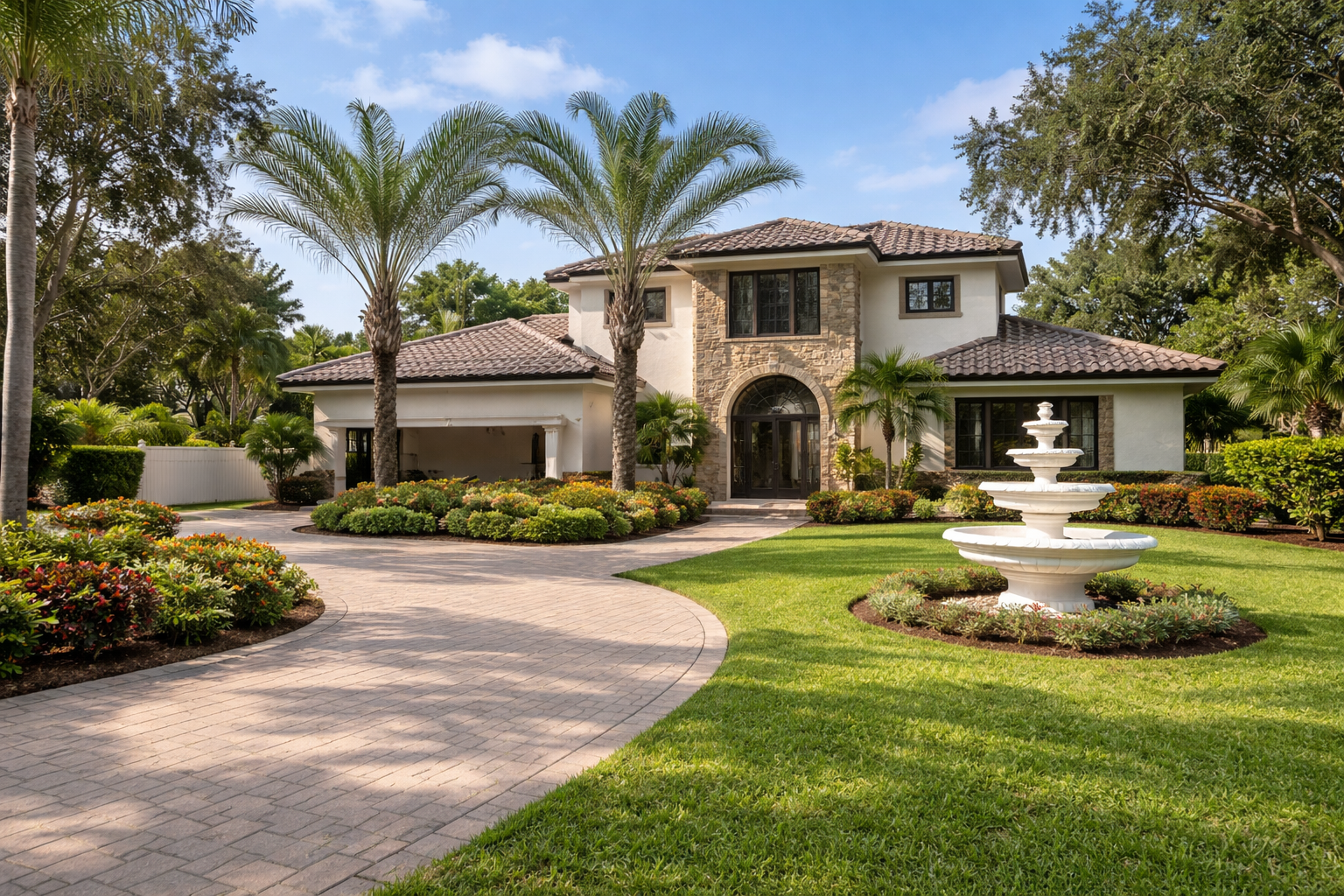
When a Wellington Seller Gets Multiple Offers, the Best Offer Is Not Always the Highest One
Multiple-offer situations sound simple from the outside. Sellers often assume more offers automatically mean a higher sale price and an easier transaction. Buyers often assume the highest number wins. In Palm Beach County and throughout South Florida, the reality is more complicated. When a home attracts several offers at once, the seller is not just choosing a price. They are choosing a risk profile, a timeline, and a level of certainty.
That is why multiple-offer situations matter so much. A seller can gain leverage quickly, but that leverage can also be mishandled. The strongest decision is usually the one that balances price with terms, financing strength, inspection exposure, appraisal risk, and the likelihood of actually reaching the closing table. In places like Wellington, where buyers can move fast and market conditions can intensify competition, understanding how multiple offers really work can help sellers avoid costly assumptions.
What Multiple Offers Really Mean for a Seller
Receiving multiple offers does not automatically mean a seller should accept the highest price on the page. It means the market is signaling that the home is desirable at its current positioning. That can happen because the price was attractive, the property showed well, inventory was tight, or buyer demand was concentrated in that segment of the market.
For sellers, this creates opportunity, but it also changes the decision framework. Instead of asking, “Which buyer is paying the most?” the better question is, “Which offer gives me the strongest overall chance of closing on favorable terms?” In many South Florida transactions, those two questions do not lead to the same answer.
A financed buyer offering more money may still create more uncertainty than a slightly lower offer with stronger underwriting, fewer contingencies, or more flexibility around timing. Sellers often discover very quickly that multiple offers are less about celebrating volume and more about sorting through competing versions of risk.
Start Comparing Homes That Actually Fit Your Criteria
If you're evaluating options in Palm Beach County or South Florida, browsing homes by city can help you quickly understand pricing, condition, and location tradeoffs.
Explore Homes by CityWhat Sellers Often Miss When Comparing Competing Offers
The easiest mistake is treating all offers as if they are mostly the same except for price. They rarely are. In a multiple-offer scenario, the supporting terms often matter just as much as the number itself. Financing type, appraisal exposure, inspection terms, deposit strength, occupancy flexibility, and closing date can all reshape what looks like the “best” choice.
For example, a buyer offering more but relying on aggressive financing and a minimal deposit may not be as attractive as a buyer offering slightly less with a stronger down payment and cleaner contract terms. A seller who needs time after closing may prefer flexibility over a marginal increase in price. A seller worried about appraisal issues may place more value on a buyer with extra cash reserves than on a buyer who simply stretched higher on paper.
That is why multiple offers are not really about selecting a number. They are about evaluating which path creates the strongest result with the fewest opportunities for the deal to weaken later.
Common Mistakes Sellers Make in Multiple-Offer Situations
Chasing the highest headline number
A higher purchase price can look strong at first glance, but if the offer carries more appraisal risk, financing uncertainty, or post-inspection exposure, the seller may end up giving back the difference later.
Assuming every buyer will stay engaged
Some sellers think they can push every party into repeated bidding rounds without consequence. In reality, buyers can withdraw, lose confidence, or become less cooperative if the process feels unstable.
Ignoring timing and logistics
Not every seller wants the same thing. A fast close, leaseback flexibility, or certainty around occupancy may outweigh a small price difference. Sellers who overlook their own priorities can select an offer that looks strong but feels burdensome later.
Failing to measure the full contract
Escrow amount, contingency periods, repair expectations, and financing detail all matter. Sellers who focus only on price often realize too late that they chose the most fragile contract, not the strongest one.
Misconceptions About “Highest and Best”
One of the biggest misconceptions is that every multiple-offer situation must lead to a highest-and-best round. That is one option, but not the only one. Some sellers choose to request improved terms from all buyers. Others negotiate with one buyer they believe is already closest to their goals. In some cases, a seller may simply accept one offer as written because it already fits what they want.
Another misconception is that buyers should only improve price in response to competition. In real transactions, better terms can be just as persuasive. A shorter inspection period, stronger deposit, or cleaner financing structure can make a meaningful difference.
Sellers also sometimes assume that broadcasting multiple offers automatically improves their position. Sometimes it does. Other times it causes weaker buyers to disappear and stronger buyers to harden their stance. The right approach depends on the offer mix, the property, and what the seller values most.
Before a seller decides how aggressive to be, it can help to see what your home may be worth relative to buyer demand and likely contract strength, not just list-price momentum.
What Actually Happens Once a Seller Starts Responding to Multiple Offers
This is where the situation becomes more tactical. A seller may respond in one of several ways. They may ask everyone for revised terms by a set deadline. They may counter a single offer they view as the strongest overall candidate. Or they may accept one offer without opening another round of negotiation. Each option sends a different signal to the market and to the buyers involved.
If the seller requests improved offers from all parties, the process becomes broader but less predictable. Some buyers improve meaningfully. Some barely move. Some step aside. If the seller counters one offer only, they gain focus but risk losing leverage with the rest of the field if the first negotiation fails. If they accept immediately, they reduce delay but may leave room on the table.
What matters most is that sellers understand the tradeoff. Multiple offers create leverage, but leverage is only useful when it is applied toward a clear goal. Without that clarity, the process can become emotional, improvised, and less effective than it appears from the outside.
The Seller and Pricing Section That Determines the Outcome
Price still matters, of course, but in multiple-offer situations, pricing and value start interacting with contract confidence. Sellers often receive clustered offers that are relatively close in number. That is usually where the non-price terms become decisive. If one offer is slightly higher but obviously more fragile, the seller may be choosing between a stronger-looking number and a stronger chance of closing.
This becomes especially relevant in Wellington and the broader Palm Beach County market, where appraisal support and financing structure can affect how much of the agreed price is actually attainable. A buyer who offers more than the market is likely to support may not truly be offering more if renegotiation is likely later. Likewise, a buyer with fewer contingencies may effectively be worth more to a seller than a buyer who offers a little extra but creates several reopening points in the contract.
Sellers who navigate multiple offers well usually think in terms of net strength, not just gross price. They look at how much certainty each offer brings, how much room exists for the contract to unravel, and which buyer seems best positioned to perform all the way through closing.
Get a Better Sense of What Your Home Could Command
If you’re starting to think about selling, checking your home’s current value can help you understand pricing expectations and how your property may fit today’s market.
Check Your Home ValueWhat This Means for Buyers and Sellers in South Florida
For sellers, multiple offers are a strong position to be in, but they still require disciplined decision-making. The best outcome usually comes from evaluating the entire contract, not just reacting to the biggest number. Price matters, but certainty, timeline, flexibility, and risk exposure matter too.
For buyers, this is a reminder that competing effectively often means strengthening the offer beyond price. Buyers who understand seller priorities, reduce uncertainty, and present clean terms often outperform those who simply add money and hope for the best.
In South Florida, where competitive conditions can intensify quickly, multiple-offer situations reward clarity more than excitement. The seller who knows what matters most usually makes the strongest decision.
Frequently Asked Questions About Multiple Offers
Does the seller have to disclose there are multiple offers?
Not necessarily. A seller can choose how much to disclose depending on strategy, local practice, and how they want to manage the negotiations.
Does the highest offer always win?
No. The strongest overall terms often matter just as much as price, especially when financing, inspections, and timing create different levels of risk.
Can a seller counter only one offer?
Yes. A seller may choose to negotiate with the offer they believe gives them the best overall chance of success.
Should sellers always ask for highest and best?
No. It can work well in some situations, but it is not always the right approach. Sometimes accepting or negotiating one strong offer is the better decision.
Why would a seller choose a lower offer?
A lower offer may come with better financing, fewer contingencies, a stronger deposit, or timing that better fits the seller’s needs.
Can buyers walk away during a multiple-offer process?
Yes. Some buyers do not want extended bidding or uncertainty and may decide not to continue if the process becomes too competitive or unclear.
Conclusion
When a Wellington seller receives multiple offers, the real question is not which offer looks best at a glance. It is which one delivers the strongest overall result with the clearest path to closing. That often means balancing price with certainty, flexibility, and contract quality.
In Palm Beach County and across South Florida, the sellers who handle multiple offers best are usually the ones who stay focused on the whole picture. Multiple offers can create excitement, but the most effective decisions are usually the most disciplined ones. A strong sale is not just about getting an offer accepted. It is about choosing the right buyer, on the right terms, for the right reasons.
Keep Exploring South Florida Real Estate
If you're comparing communities, researching home values, or trying to better understand the South Florida market, reviewing local resources can help put each city and neighborhood into context.
About the Authors
Chris and Sue Kull are South Florida real estate professionals with more than three decades of experience helping buyers, sellers, and property owners navigate real estate decisions throughout Palm Beach County and surrounding communities.