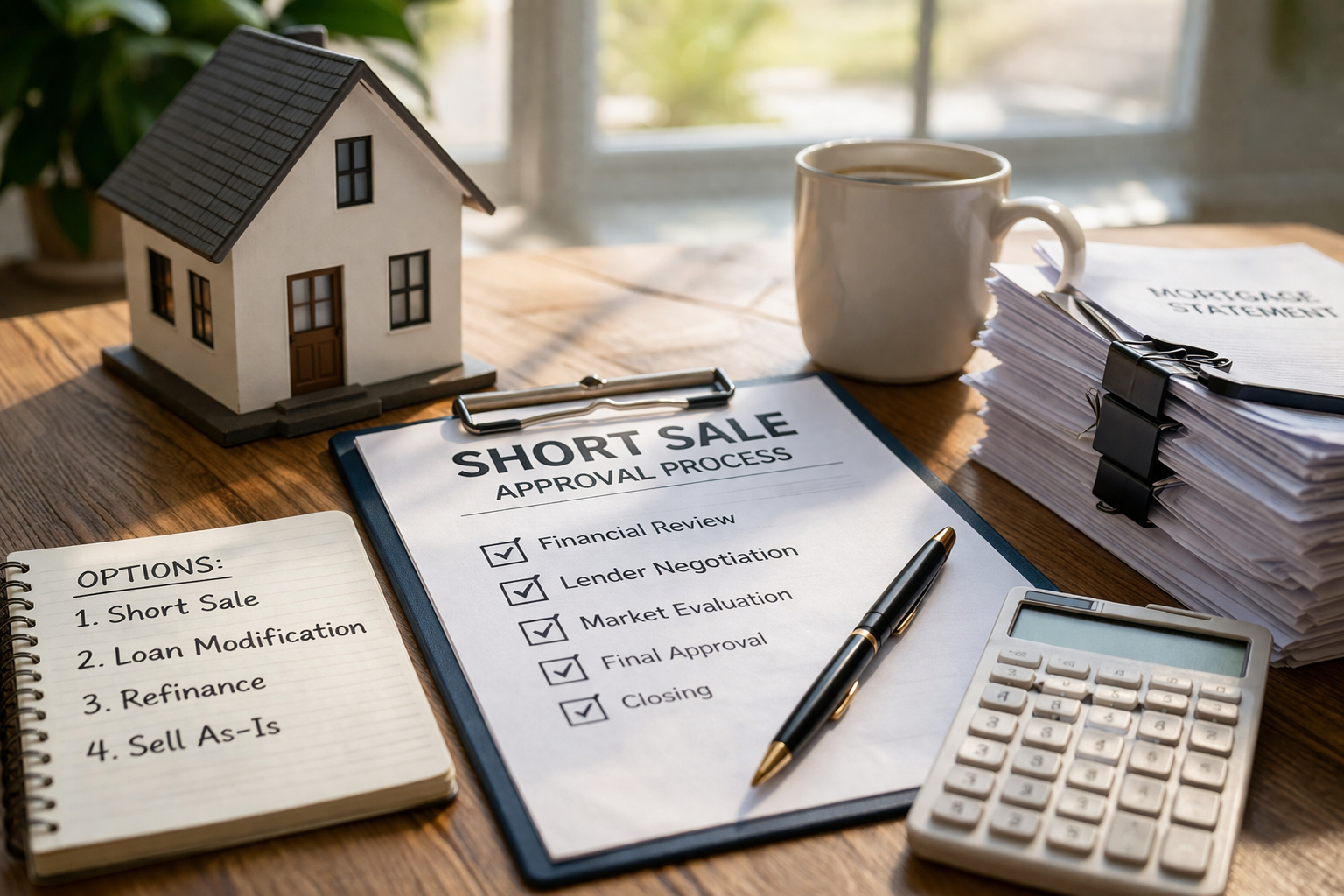
Short Sales in Wellington, Florida: What Homeowners Need to Understand Before Making a Decision
If you’re a homeowner in Wellington or anywhere in Palm Beach County and you’re facing financial pressure on your mortgage, the term “short sale” has likely come up.
It’s often presented as a solution—but in reality, it’s a process that comes with trade-offs, timelines, and outcomes that many sellers don’t fully understand upfront.
Before moving forward, it’s important to understand how short sales actually work in today’s South Florida market, when they make sense, and what alternatives may exist.
What a Short Sale Really Means (In Practical Terms)
A short sale occurs when a home is sold for less than the amount owed on the mortgage, and the lender agrees to accept that lower payoff.
But from a transaction standpoint, it’s not just a typical sale with a lower price.
It’s a negotiation between:
- The homeowner
- The buyer
- The lender (and sometimes multiple lenders)
The lender ultimately controls whether the deal is approved, which adds a layer of complexity that many sellers underestimate.
Start Comparing Homes That Actually Fit Your Criteria
If you're evaluating options in Palm Beach County or South Florida, browsing homes by city can help you quickly understand pricing, condition, and location tradeoffs.
Explore Homes by CityWhy Short Sales Still Exist in a Strong Market
Palm Beach County has experienced significant price growth in recent years, but short sales haven’t disappeared entirely.
They still occur in situations such as:
- Adjustable-rate mortgage increases
- Job loss or income disruption
- Divorce or major life changes
- Properties that were refinanced at higher leverage
Even in a strong market, individual circumstances can create situations where a homeowner owes more than the home can realistically sell for.
How the Short Sale Process Actually Works
Understanding the timeline and structure is critical.
Step 1: Financial Evaluation
The homeowner must demonstrate hardship to the lender. This typically involves documentation such as:
- Income statements
- Bank records
- Hardship letters
Step 2: Listing the Property
The home is listed like a traditional sale, but with the understanding that:
- The lender must approve the final price
- The timeline will be longer than a standard transaction
Step 3: Receiving an Offer
Once an offer is accepted by the seller, it is submitted to the lender for review.
This is where the process slows down.
Step 4: Lender Review and Approval
The lender evaluates:
- Market value
- Seller’s financial situation
- Net proceeds
They may:
- Approve the offer
- Counter the offer
- Reject the offer
Step 5: Closing (If Approved)
Only after lender approval can the transaction move forward to closing.
In Palm Beach County, this process can take several months, depending on the lender and complexity of the file.
The Biggest Misconception: “It’s Just a Regular Sale”
This is where many homeowners get caught off guard.
A short sale is not simply listing your home at a lower price.
Key Differences
- You cannot control final approval
- Timelines are extended and unpredictable
- Buyers must be patient and committed
- Negotiations involve third-party decision makers
Because of this, not every buyer is willing to pursue a short sale property.
Get a Better Sense of What Your Home Could Command
If you’re starting to think about selling, checking your home’s current value can help you understand pricing expectations and how your property may fit today’s market.
Check Your Home ValueFinancial Implications Sellers Should Know
Short sales can reduce financial burden—but they are not without consequences.
Credit Impact
A short sale will typically affect your credit, though often less severely than a foreclosure.
Deficiency Considerations
In some cases, lenders may pursue the remaining balance (deficiency), though this varies based on:
- Loan type
- Negotiation outcome
- Legal protections
Tax Implications
There may be tax considerations depending on how forgiven debt is treated.
This is an area where professional guidance is important.
Why Some Short Sales Never Get Approved
Not every short sale makes it to closing.
Common reasons include:
Unrealistic Pricing
If the home is listed too low or too high relative to market value, lenders may reject offers.
Incomplete Documentation
Missing or inconsistent financial information can delay or derail the process.
Buyer Drop-Off
Because of the timeline, buyers may walk away before approval is granted.
Market Changes
If market conditions shift during the process, lenders may reevaluate pricing expectations.
Alternatives to a Short Sale That Sellers Should Consider
Before committing to a short sale, it’s worth evaluating other options.
Traditional Sale
In many cases, especially in Wellington, homeowners may have more equity than they realize.
A standard sale could:
- Fully pay off the mortgage
- Avoid credit impact
- Provide more control over timing
Loan Modification
Some lenders offer restructuring options that can make payments more manageable.
Renting the Property
Depending on the situation, converting the home to a rental may provide temporary relief.
Strategic Sale with Investor Support
In some scenarios, working with buyers who specialize in distressed properties can create alternative solutions.
What Buyers Should Know About Short Sales
Short sales can present opportunities—but they come with conditions.
Longer Timelines
Buyers should be prepared for extended waiting periods.
Limited Negotiation Flexibility
Once an offer is submitted, changes may require lender approval again.
Property Condition
Short sale properties are often sold as-is, with limited repairs.
How Short Sales Fit Into Today’s Wellington Market
Compared to past market cycles, short sales are less common today—but they still play a role.
In Wellington, they tend to appear in:
- Specific financial hardship situations
- Properties with unique financing structures
- Cases where timing or circumstances create urgency
Because inventory is still competitive in many segments, properly handled short sales can attract strong interest—but execution is key.
The Most Important Decision Point
For homeowners, the biggest question isn’t “Can I do a short sale?”
It’s:
- Is this the best option for my situation?
- Are there alternatives that create a better outcome?
- What will this mean financially and long-term?
Short sales can be effective—but only when approached with a clear understanding of the process.
Frequently Asked Questions
How long does a short sale take in Florida?
It can take several months, depending on the lender and complexity of the situation.
Do I need lender approval before listing my home?
Not necessarily, but approval will be required before closing.
Will a short sale stop foreclosure?
It can, if completed in time, but timing is critical.
Can I buy another home after a short sale?
Yes, though there may be waiting periods depending on loan type.
Do all lenders approve short sales?
No. Approval depends on the lender’s evaluation of the situation.
Is a short sale better than foreclosure?
In many cases, it may have less severe long-term impact, but each situation is different.
Do I have to pay anything out of pocket?
In many cases, sellers do not bring funds to closing, but this depends on negotiations.
Keep Exploring South Florida Real Estate
If you're comparing communities, researching home values, or trying to better understand the South Florida market, reviewing local resources can help put each city and neighborhood into context.
About the Authors
Chris and Sue Kull are South Florida real estate professionals with more than three decades of experience helping buyers, sellers, and property owners navigate real estate decisions throughout Palm Beach County and surrounding communities.
Their work emphasizes local insight, practical guidance, and clear information to help people make informed decisions at every stage of the process.
You can find additional community guides, search tools, and market resources at TheKullGroup.com.