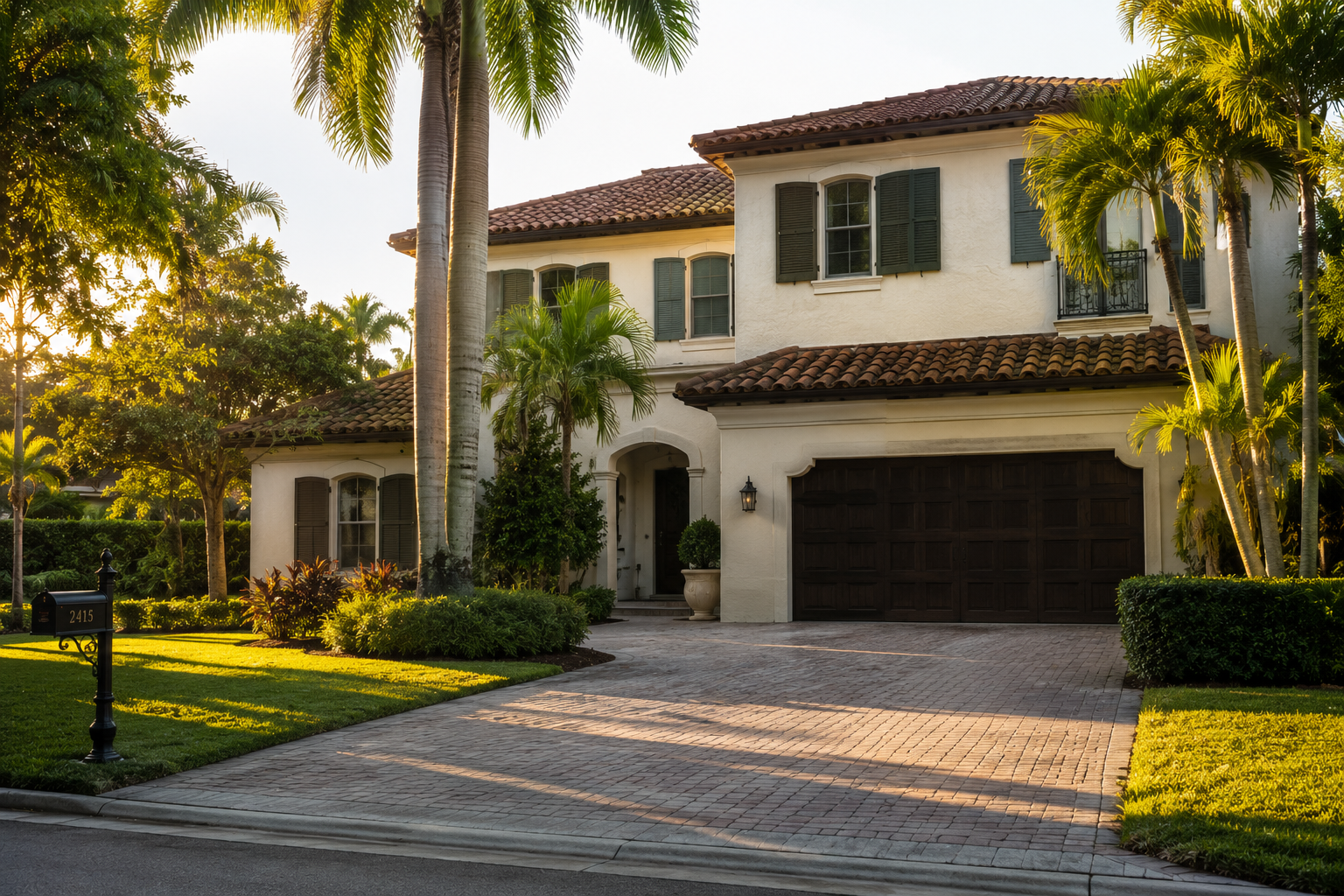
How South Florida Divorce Real Estate Differs From the Rest of the Country
Most people navigating a divorce assume the real estate part works the same way everywhere — one spouse keeps the house or you sell it and split what's left. That assumption holds reasonably well in many states. In South Florida, it doesn't hold particularly well at all. The combination of Florida equitable distribution law, a property insurance environment that has fundamentally changed over the past five years, and a local housing market with conditions unlike most of the country creates a divorce real estate situation that requires a more locally informed decision process. If you've been reading general information about how marital real estate gets handled in divorce and applying it to your Palm Beach County home, you may be missing the variables that matter most in this specific market.
A fuller picture of what the process looks like here is available through our divorce real estate resource for Florida homeowners — but the distinctions worth understanding first are the ones that separate this market from everywhere else.
Florida's Equitable Distribution Framework and What It Actually Means at Closing
Florida is an equitable distribution state — not a community property state. The distinction is meaningful. Community-property states generally begin from an equal-division framework for property classified as marital or community property, although the applicable rules and exceptions vary by state. Florida's equitable distribution standard requires the division to be equitable, which in practice means fair but not necessarily equal, and what's fair is determined by a range of factors that courts weigh case by case.
For real estate, that distinction matters most when the equity isn't straightforward. A home that one spouse owned before the marriage, a home that received significant improvements paid for with marital funds, or a property with a valuation that the two parties dispute — each of these creates complexity that a simple equal-division framework doesn't prepare people for. Florida courts can and do assign different equity portions based on contribution history, financial circumstances, and the particular circumstances of the marriage. That means a sale in Palm Beach County may not close with a clean fifty-fifty split even when both spouses expect it to.
The legal determination of what equitable means in your specific circumstances belongs to your divorce attorney. What we navigate is the real estate transaction that follows from that determination.
The more common complication we see is timing. Equitable distribution is a legal determination. The real estate sale is an operational one. These processes don't always move on the same timeline, and when a marital home goes to market before the distribution terms are finalized, the transaction can create pressure on negotiations that both parties underestimated. Understanding that these are two separate processes — and that each requires its own navigation — is the first structural difference between handling divorce real estate in Florida and handling it almost anywhere else.
The Insurance Variable That Most Divorce Timelines Don't Account For
South Florida's property insurance environment has changed materially. Many longtime homeowners in Wellington, Boynton Beach, Royal Palm Beach, and surrounding communities are now managing insurance carrying costs that bear little resemblance to their earlier ownership costs. In our experience working with Palm Beach County homeowners through this transition, some have seen premiums double or triple within a single renewal cycle. Others have been dropped by carriers and obtained coverage through Citizens Property Insurance or a surplus-lines carrier, introducing additional insurance considerations when the property is sold.
In a divorce real estate situation, this creates a specific problem that doesn't appear in national divorce real estate guidance: the cost of maintaining the marital home during the transition period may be significantly higher than either spouse anticipated. If one party is temporarily occupying the property while the legal process resolves, they may be absorbing insurance costs, hurricane preparedness expenses, and maintenance vendor costs in a climate in which heat, humidity, salt exposure, and severe weather can accelerate property deterioration. An HVAC system that was five years old at the time of separation may reach end of useful life before the property closes.
After working with Palm Beach County homeowners through divorce transitions for more than three decades, one pattern appears consistently: we often find that the full cost of delay was not calculated at the outset. Not because the parties are careless, but because South Florida's ownership carrying costs are genuinely difficult to project. The combination of insurance volatility, seasonal maintenance requirements, and aging system replacement cycles means that the home's true carrying cost during a contested or prolonged transition can differ materially from what either party calculated at the outset.
Are you and your spouse still co-owners while the legal process continues?
The carrying cost picture in South Florida changes meaningfully depending on how long the property sits in transition. Understanding what the home actually costs to hold — insurance, maintenance, and system exposure — often changes the timeline conversation significantly.
See how we work with both parties through the full transaction process.
Market Conditions That Create Different Decisions Than the National Picture Suggests
National divorce real estate advice tends to treat "sell the house" as a financially neutral decision relative to "keep the house." In Palm Beach County and the surrounding communities, that framing can be misleading in both directions.
Owners who have held homes for a decade or more are frequently sitting on equity positions substantially larger than at purchase. A home in Boca Raton or Lake Worth that carried a modest equity position in 2012 may have appreciated significantly enough that the equitable distribution of that marital home equity becomes one of the more substantive financial decisions either party makes during the divorce. The decision of whether to sell, refinance, or structure a buyout — whether one spouse retains the marital residence or both parties liquidate and divide — isn't just a real estate decision. It's a capital allocation decision with long-range implications for both parties' financial situations post-divorce.
What we observe repeatedly is that equity-rich owners approach this decision more slowly than the financial picture warrants — not because the numbers are unclear, but because the emotional weight of the decision and the financial weight of the decision operate on different timelines. The home may represent the most valuable single asset in the marriage. Deciding what to do with it requires resolving something that isn't purely financial. Recognizing that gap — and not pushing past it before both parties are actually ready — is part of what makes the process work. In our experience, transactions that close without that resolution can produce complications that may have been avoided if the decision had been given the time it actually required.
What This Means for You
If you are navigating a divorce in Palm Beach County, the questions worth asking are more specific than the general guidance suggests. Not "should we sell the house?" but "what is this house actually costing us to hold right now, given the insurance environment, and what does that cost trajectory look like over the next six to twelve months?" Not "how do we split the equity?" but "what does equitable distribution actually mean for this specific property, given how it was purchased and improved?" Not "who keeps the house?" but "what does the person who keeps it need to qualify for a refinance after divorce, and is that realistic given current lending conditions?"
These are South Florida questions. They are Palm Beach County questions about co-owned property, marital home equity, and divorce property settlement — questions that don't have generic answers because the market conditions, the legal framework, and the carrying cost structure here are genuinely different from most of the country. A real estate process that treats this transaction as a standard home sale will miss the variables that matter most.
The decisions that produce the cleanest outcomes are the ones made with a clear picture of all the operational realities — not just the legal ones. That requires someone who has navigated enough of these situations in this specific market to know where the complications tend to emerge before they emerge. That is a different thing than general transaction experience, and it is worth looking for specifically.
Does Florida's equitable distribution law automatically apply to the marital home, or can spouses negotiate their own arrangement?
Florida's equitable distribution statute establishes the legal default, but spouses have considerable room to negotiate their own settlement terms — including terms that differ from what a court would assign. Many divorce real estate resolutions in Palm Beach County are reached through negotiated agreement rather than court determination. The legal framework matters most when the parties cannot reach agreement on the marital residence. When they can, the distribution of real estate equity and the structure of any buyout or refinance after divorce is often shaped by both parties' practical priorities rather than a strict legal formula. Legal strategy in any of these scenarios belongs to your divorce attorney.
How does the current insurance environment in South Florida affect a spouse who wants to keep the marital home after divorce?
A refinance that allows one spouse to retain the property requires qualifying for a new mortgage based on that individual's income and credit profile — under current lending conditions. But it also means that spouse absorbs the full carrying cost of the home going forward, including an insurance environment that has become significantly more expensive across Palm Beach County, Wellington, and surrounding communities. In some cases, what looks like a desirable outcome at the time of divorce creates a financial pressure point within the first two or three years of solo ownership that neither party anticipated. Understanding the full forward-looking cost picture before agreeing to a buyout or refinance after divorce is essential.
What does a real estate agent working with both co-owners do during a divorce-related sale?
In situations where co-owners are navigating a divorce, operational precision matters more than any amount of interpersonal management. Both parties need to know exactly what happens next at every stage — what documents are required, when decisions need to be made, what the timeline looks like, and how communications are structured. The transactions that proceed most smoothly are those where the process is clear enough that neither party has reason to distrust the mechanics, even when they cannot agree on much else. That clarity is something an agent with experience in divorce home sale situations can provide from the first conversation — though brokerage duties, representation, and all legal decisions remain governed by the appropriate professionals.
The full picture of how we work with Palm Beach County homeowners through divorce real estate is outlined at our Florida divorce real estate resource. If understanding what your home is currently worth is a useful starting point, our Palm Beach County home value tool provides a current equity position without any obligation to act on it. For those ready to discuss the process directly, our consultation request is available at any stage of the legal process.