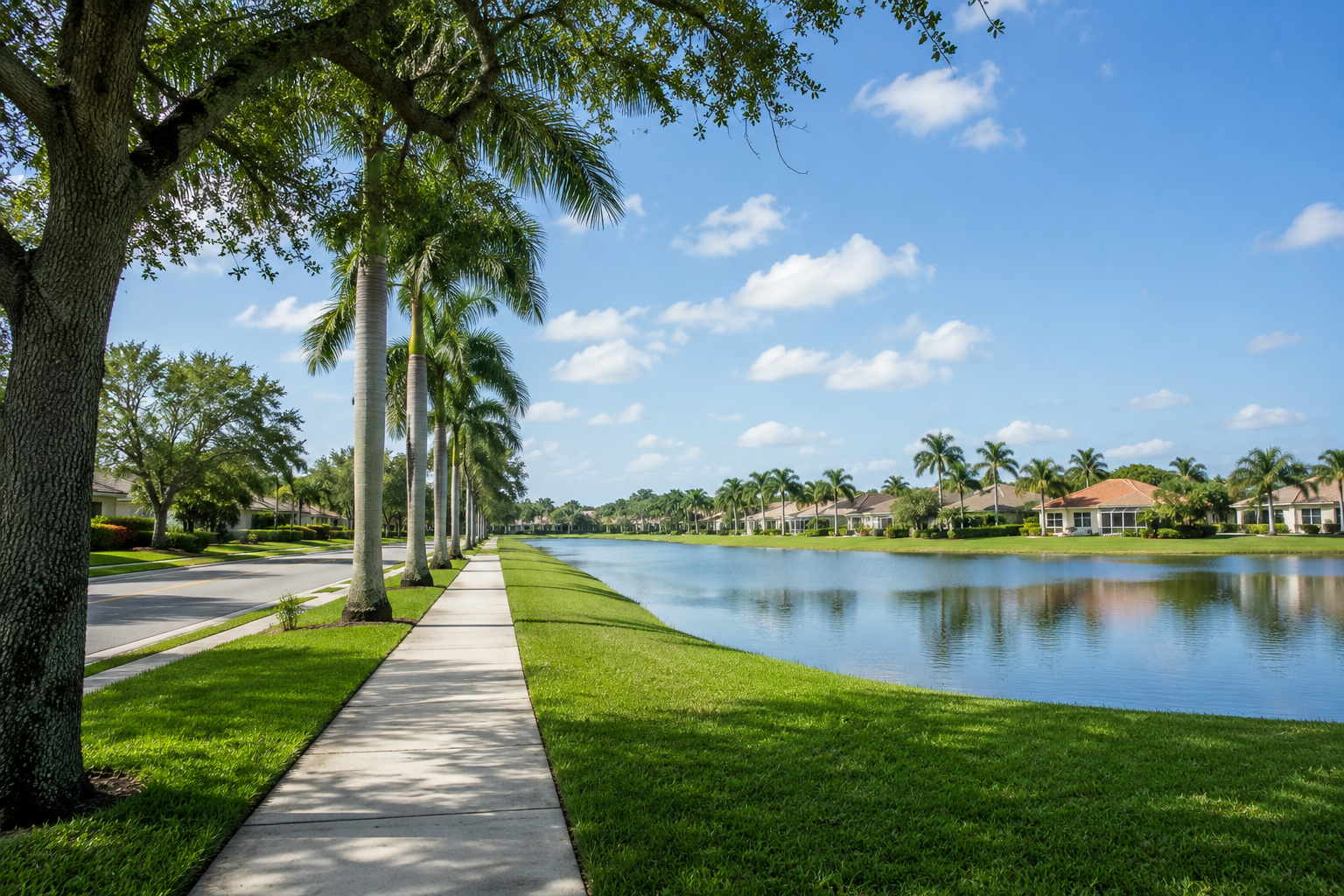
What It’s Really Like to Live in Wellington, FL
People asking what is it like to live in Wellington FL are usually trying to answer something more personal than a map question. They are often trying to understand whether daily life there would feel calmer, easier to manage, more family-oriented, more structured, or more isolating than where they currently live. Wellington tends to attract buyers who are looking for predictability in routine without wanting to feel disconnected from the rest of Palm Beach County. That distinction matters because the experience of living there is less about spectacle and more about rhythm.
Compared to denser coastal environments farther east, Wellington often feels more intentionally spaced out. Roads are wider. Residential areas feel more buffered from commercial activity. Daily errands usually involve driving, but the tradeoff is a greater sense of separation between work, traffic, schools, shopping, and home life. For some people, that feels grounding. Others quickly realize they miss the spontaneity and walkability they were used to elsewhere.
The Pace of Daily Life Feels More Structured Than Spontaneous
One of the clearest aspects of the Wellington FL lifestyle is how routine-oriented the environment feels once someone actually lives there. Mornings tend to start earlier than in some neighboring areas because school schedules, commuting patterns, youth sports, equestrian activity, and family logistics shape much of the city’s movement. Residential streets often quiet down earlier at night than newer buyers initially expect.
That appeals strongly to buyers who want consistency. Parents juggling multiple schedules often describe Wellington as easier to operationally manage than some faster-moving coastal areas. Traffic can still build at certain intersections and during seasonal population increases, but the overall environment tends to reward planning and predictability rather than spontaneity.
Some buyers discover they enjoy having more physical separation between home and entertainment districts. Others realize the opposite. People accustomed to being able to leave their house and immediately access restaurants, nightlife, or dense mixed-use environments sometimes feel disconnected after moving farther west into Wellington.
For homeowners prioritizing space, parking, quieter residential streets, or larger lot configurations, the tradeoff often feels worthwhile. Buyers searching for Wellington homes for sale are frequently balancing lifestyle structure against convenience density, even if they do not initially describe it that way.
Ownership Expectations Shift Once People Spend Time There
Wellington can appear deceptively straightforward during short visits. Streets are clean. Landscaping is maintained. Residential communities often look visually organized from the outside. What many buyers do not fully understand until after moving is how much ownership experience in Wellington depends on maintenance tolerance and routine management.
Homes with larger outdoor spaces, pools, mature landscaping, or community requirements create a more hands-on ownership experience than some buyers are prepared for. Seasonal weather patterns in South Florida also affect how properties age. Roof timelines, drainage behavior, irrigation systems, insurance costs, and exterior upkeep all become more relevant over time than they initially appear during the buying process.
That does not necessarily discourage buyers. In many cases, it attracts them. People relocating from denser urban environments often appreciate having more physical space around them and more control over how their property functions. Still, Wellington tends to reward buyers who think operationally rather than emotionally when evaluating homes.
Some homeowners also begin reassessing equity differently after living there several years. A property that originally felt like a long-term destination may eventually become a stepping stone toward a different lifestyle phase. Buyers occasionally use tools like a home value estimate not because they are ready to sell immediately, but because they want clarity about future flexibility.
People Often Underestimate How Geography Changes Their Routine
The farther west someone lives in Palm Beach County, the more geography starts influencing behavior patterns. Wellington residents often become more intentional about where they shop, where they schedule appointments, and how they structure weekdays because driving patterns matter more there than they do in tighter coastal corridors.
That shift feels manageable for some households and frustrating for others. Buyers moving from large suburban environments frequently adapt quickly because the layout already feels familiar. Buyers relocating from highly walkable cities sometimes struggle with how frequently driving becomes part of ordinary routines.
The emotional side of this is important. Certain people experience Wellington as peaceful because the environment creates separation from noise and congestion. Others quietly interpret the same environment as isolating after the novelty wears off. Neither reaction is wrong. The city simply fits certain behavioral preferences more naturally than others.
It also changes how people think about nearby alternatives. Buyers comparing Wellington with more coastal areas occasionally begin looking at Boynton Beach homes for sale after realizing they want quicker access to restaurants, waterfront areas, or denser commercial activity while still remaining inside Palm Beach County.
Explore Homes by City
If you're comparing areas, home types, or neighborhood environments, browsing homes by city can help put pricing and location tradeoffs into perspective.
Explore Homes by CityWellington Often Attracts Buyers Looking for Stability Rather Than Excitement
There is a reason many residents remain in Wellington for long periods even after their original motivations change. The city tends to support continuity well. People establish routines there relatively quickly. Friend groups often become tied to schools, sports schedules, equestrian activity, or neighborhood patterns. Over time, daily life can start feeling highly systemized.
That consistency creates emotional comfort for many households. It also explains why some buyers moving into Wellington are less focused on maximizing short-term appreciation and more focused on reducing uncertainty in everyday life.
At the same time, some residents eventually feel constrained by that same predictability. Buyers entering different life stages occasionally discover they want:
- shorter commutes
- more nightlife access
- smaller maintenance obligations
- more walkability
- less dependence on structured scheduling
Those transitions do not necessarily reflect dissatisfaction with Wellington itself. They often reflect changing behavioral needs over time. That is why the city tends to appeal most strongly to people whose routines already align with the environment rather than people hoping the environment will completely change their lifestyle.
What This Means for Buyers and Sellers in South Florida
Buyers entering the South Florida market today are generally more cautious than they were several years ago, particularly in suburban family-oriented areas where ownership costs have become more layered. Insurance, maintenance expectations, commuting patterns, HOA structures, and long-term livability are influencing decisions more heavily than simple square footage comparisons.
That has changed how people evaluate Wellington specifically. Buyers tend to spend more time considering whether the city actually matches their day-to-day behavior instead of simply reacting to appearance or school reputation. The emotional side of relocation decisions has become more visible. People are asking more practical questions about routine compatibility, seasonal traffic tolerance, work flexibility, and long-term ownership pressure.
Sellers are adapting as well. Presentation still matters, but buyers now spend more time analyzing operational realities behind the property itself. Homes that feel easy to maintain, functionally organized, and realistically aligned with current buyer expectations often create stronger emotional confidence than homes relying primarily on cosmetic appeal.
That broader shift across Palm Beach County is creating a more behaviorally driven market. Buyers increasingly want environments that reduce friction in everyday life. Sellers who understand that psychological component tend to position their homes more effectively because they are responding to how people actually live rather than how listings are marketed.
Long-Term Livability Depends on Behavioral Compatibility
Some cities create strong first impressions that slowly fade once daily logistics set in. Wellington usually works in the opposite direction. Many residents feel more attached to it after establishing routines because the city begins functioning more efficiently once people understand how to navigate it operationally.
That long-term compatibility is highly dependent on personality and life structure. Buyers who value calm residential patterns, organized routines, larger homesites, and family-centered scheduling often adapt well. Buyers seeking high spontaneity, dense activity, or constantly changing social environments may eventually feel limited there.
Neither perspective makes the city objectively better or worse. It simply reinforces that behavioral fit matters more than many relocation conversations initially acknowledge. The experience of living in Wellington is not defined only by the homes themselves. It is shaped by how the environment interacts with someone’s routines, expectations, stress tolerance, and long-term lifestyle priorities.
FAQs About Living in Wellington, FL
Does Wellington feel isolated compared to other parts of Palm Beach County?
For some residents, Wellington feels quieter and more separated from the faster pace found closer to the coast. That separation can feel calming for households prioritizing structure, residential space, and routine consistency. Others eventually realize they miss having restaurants, nightlife, or waterfront access closer to home. The experience depends heavily on how much someone values convenience density versus quieter suburban spacing.
Is Wellington better suited for long-term homeowners or short-term relocations?
Wellington often works best for buyers planning to settle into consistent routines over several years. The city tends to reward people who value stability, larger residential environments, and long-term lifestyle predictability. Short-term residents can still enjoy the area, but buyers seeking constant activity or rapidly changing environments sometimes find the city feels more operationally structured than they originally expected.
Keep Exploring South Florida Real Estate
If you're comparing communities, evaluating lifestyle tradeoffs, or trying to better understand how different parts of South Florida align with your long-term goals, reviewing additional local resources can help create clearer perspective.
About the Authors
Chris and Sue Kull are South Florida real estate professionals with more than three decades of experience helping buyers, sellers, and property owners navigate real estate decisions throughout Palm Beach County and surrounding communities.