What Today’s Market Conditions Really Mean for Everyday Homeowners
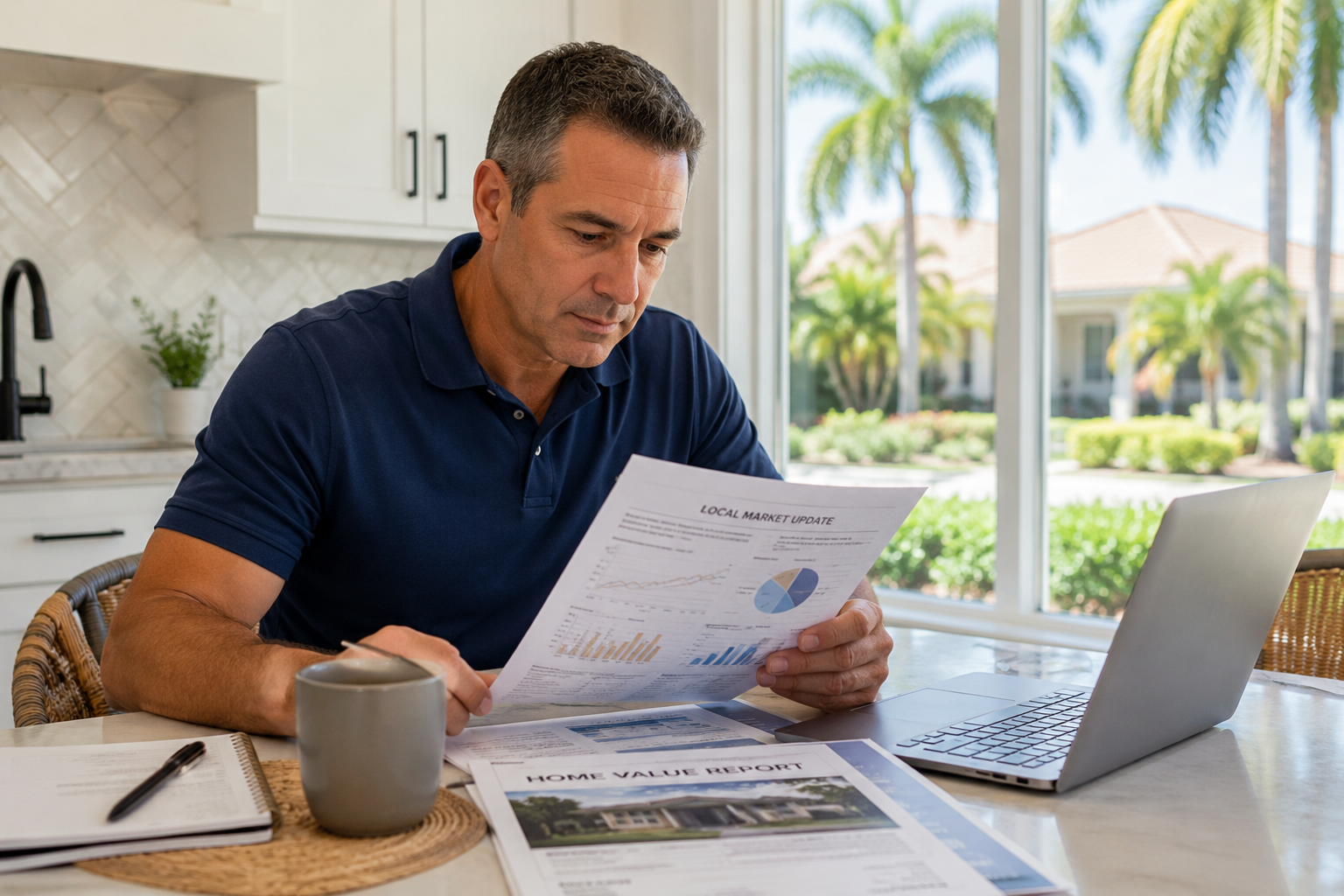
Market conditions sound abstract until they begin affecting ordinary homeowner decisions. In South Florida, those decisions rarely happen in a clean, logical order. A homeowner notices insurance rising. Then property taxes feel heavier. A neighbor sells. Inventory shifts. A buyer hesitates. A repair quote arrives higher than expected. Suddenly the market is not just something happening “out there.” It starts shaping whether staying feels smart, whether selling feels possible, and whether buying another home feels manageable. That is the part many homeowners quietly struggle to interpret. Market conditions are not only about prices, interest rates, or headlines. They affect timing, confidence, leverage, and emotional bandwidth. For Palm Beach County homeowners, the real question is often not whether the market is good or bad. It is whether the current conditions support the decision they are already starting to consider.
The Market Feels Different When You Own the House
People talk about the housing market as if it is one shared experience. It is not.
A buyer feels the market through monthly payment pressure, interest rates, inventory choices, and the fear of overpaying. A seller feels it through pricing expectations, property condition, buyer hesitation, and the worry that waiting too long may reduce flexibility. A homeowner who is not actively moving may still feel the market through insurance renewals, maintenance costs, tax assessments, and the question of whether their equity is still useful.
That is why broad market commentary often misses the homeowner’s reality.
A headline may say inventory is improving, prices are shifting, or buyers are cautious. But the practical meaning depends on the person reading it. For one homeowner, more inventory may create the confidence to sell because there are more places to go next. For another, it may mean their own property needs sharper pricing and cleaner preparation to stand out.
The market does not hand every homeowner the same message.
Cost Pressure Has Changed the Way People Interpret Value
In South Florida, value is no longer just about what a home might sell for. It is also about what the home costs to keep.
Insurance, HOA fees, taxes, repairs, roof age, flood considerations, and storm preparation all affect how homeowners feel about their current position. A house can appreciate and still feel less comfortable to own. That contradiction is becoming more common.
Some homeowners are sitting on meaningful equity but feel increasingly cautious. They are not necessarily unhappy with the home. They are tired of the unpredictability around it.
That changes the decision.
Instead of asking only, “What could I sell for?” homeowners are asking, “What does staying continue to require?” The difference matters because a strong sale price may not be enough if the next move is unclear, the current home needs work, or the cost of ownership keeps absorbing more financial energy.
For many owners, checking the current value of the property through a local home value review is not about curiosity. It is a way to understand whether their options are expanding or narrowing.
Understand What Your Home May Be Worth
If this topic is making you think about your own property, checking your home’s current value can help put the local market into perspective.
Check Your Home ValueBuyer Caution Is Not the Same as Buyer Disinterest
One of the easiest mistakes sellers make is assuming cautious buyers are not serious. In many cases, they are serious. They are simply more careful.
Today’s buyers are calculating more than the purchase price. They are looking at insurance, taxes, repair exposure, roof condition, association costs, commute patterns, and the possibility that future expenses may change. In South Florida, that kind of caution is not irrational. It is part of the ownership environment.
This is especially important in communities where lifestyle appeal is strong but carrying costs vary widely. A buyer comparing Wellington homes for sale may be weighing more than neighborhood preference. They may be comparing HOA expectations, property size, roof age, insurance comfort, school-year routines, commute patterns, and whether the home feels manageable beyond the closing date.
That changes how sellers should think about preparation.
A clean, well-presented home still matters. But clarity matters just as much. Buyers want to understand what they are stepping into. If too much feels uncertain, they may hesitate even when they like the property.
What This Means for Buyers and Sellers in South Florida
For sellers, current market conditions make discipline more important. The days when strong demand could cover every pricing mistake, property issue, or weak presentation are less reliable. Buyers may still want the home, but they need enough confidence to act.
That confidence comes from realistic pricing, strong preparation, clear property information, and an honest understanding of how buyers are evaluating risk.
For buyers, the market requires patience without paralysis. Waiting for perfect conditions can become its own problem. Interest rates, insurance costs, inventory, and prices rarely align neatly. A buyer may need to focus less on finding a perfect market and more on finding a property that fits their financial life, maintenance tolerance, and daily routine.
Everyday homeowners sit between those two pressures.
They may not be active buyers or sellers yet, but they are watching the market because it affects their next decision. Should they stay and keep improving the home? Should they sell before another repair cycle begins? Should they move while equity still gives them flexibility? Should they wait for more certainty?
The market rarely answers those questions directly. It creates conditions. The homeowner has to interpret what those conditions mean for their own life.
Explore South Florida Real Estate by City
If you're comparing areas, home types, or market conditions, browsing homes by city can help put local pricing and location tradeoffs into perspective.
Explore Homes by CityThe Hidden Decision Is Usually About Timing
Most homeowners do not wake up one morning and decide the market suddenly matters. They notice it slowly.
A conversation with a neighbor. A news story. A renewal notice. A repair estimate. A listing that sells faster than expected. Another one that sits. These small signals begin to accumulate, and eventually the homeowner starts wondering whether the timing of their own decision has changed.
Timing is not only about catching the highest price. That is too narrow.
Good timing means making a move while the decision still feels voluntary, while the home can be prepared thoughtfully, and while the next step can be evaluated without panic. Poor timing often happens when the decision gets delayed until stress forces it: a major repair, a cost increase, a health change, a family transition, or a sudden need to move.
South Florida makes timing more layered because ownership itself can shift quickly. Insurance rules, storm seasons, maintenance demands, and buyer expectations can all affect how a property feels from one year to the next.
The homeowner who understands this does not need to rush. But they should avoid pretending that waiting is always neutral.
Market Conditions Are Personal Before They Are Strategic
There is a reason market uncertainty feels exhausting. It asks people to make personal decisions using imperfect information.
Should I sell now?
Can I afford to buy again?
Will my home still feel manageable in three years?
Is my equity helping me, or is it just sitting inside a property that keeps getting more expensive to own?
These are not purely financial questions. They are life-structure questions. A homeowner may be trying to reduce maintenance, move closer to family, prepare for retirement, change school zones, simplify after years of upkeep, or stop carrying a home that no longer fits the way life actually works.
That is why today’s market conditions should be interpreted through the owner’s real situation, not through headlines alone. A market that feels uncertain for one person may create opportunity for another. A seller with strong equity and a well-prepared home may have options. A buyer with clear priorities may still make a smart purchase. A homeowner who is tired of increasing costs may discover that doing nothing has become the most expensive choice emotionally, even if it feels safe on paper.
Frequently Asked Questions
How should South Florida homeowners interpret today’s market conditions?
Homeowners should interpret market conditions through their own timing, equity, carrying costs, and long-term plans. A broad market update may not explain whether staying, selling, or buying makes sense for one household. In South Florida, insurance, taxes, maintenance, HOA fees, and property condition can change the meaning of the market for each homeowner.
Does buyer caution mean it is a bad time to sell?
Buyer caution does not automatically mean it is a bad time to sell. It means sellers need stronger pricing discipline, clearer property preparation, and more realistic expectations. Serious buyers are still making decisions, but many are evaluating insurance exposure, repairs, roof age, monthly costs, and long-term ownership comfort more carefully than before.
Keep Exploring South Florida Real Estate
If you're researching market trends, comparing communities, or trying to better understand how broader real estate topics affect local decisions, reviewing more South Florida resources can help put the market into context.
About the Authors
Chris and Sue Kull are South Florida real estate professionals with more than three decades of experience helping buyers, sellers, and property owners navigate real estate decisions throughout Palm Beach County and surrounding communities.