 What Your Home Equity Really Allows You to Do Right Now
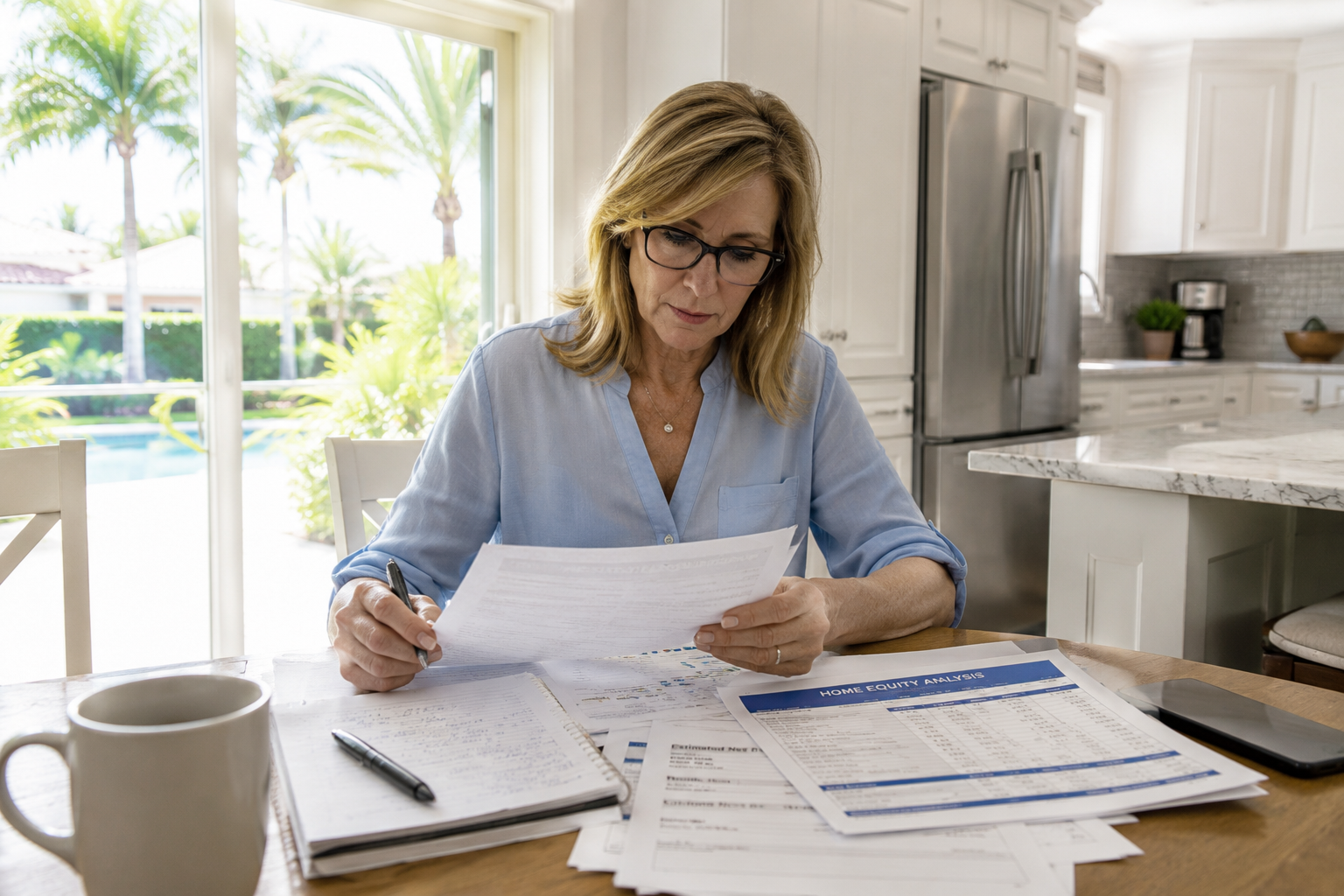
Home equity can look comforting on paper and still feel confusing in real life. Many South Florida homeowners know their property may be worth more than it was years ago, but they are less certain about what that actually gives them permission to do. Stay longer? Sell while the value is strong? Move into something newer? Reduce monthly pressure? Use the equity to reposition before insurance, taxes, maintenance, or future repairs absorb more of the benefit? That is where the decision becomes more emotional than most people expect. Equity is not just a number. It can become a doorway, a safety buffer, or a missed opportunity depending on timing, costs, and the home someone wants to live in next. For many Palm Beach County homeowners, the real question is no longer simply, “What is my home worth?” It is, “What does that value allow me to change?”
Equity Only Matters If It Improves the Next Decision
There is a difference between having equity and using equity well.
A homeowner may have built meaningful value over time, especially in areas where prices rose sharply during the past several years. That can feel reassuring. But equity does not automatically create clarity. It has to be compared against the cost of staying, the cost of selling, the cost of buying again, and the quality of life the next home would actually provide.
Some homeowners assume equity means they are in a strong position no matter what. Others assume moving will be too expensive before they have done the math. Both reactions can lead to hesitation.
The more useful question is narrower: would using the equity create a better ownership structure than the one you have now?
That may mean reducing repairs. It may mean moving into a newer home with fewer immediate projects. It may mean choosing a location with a different cost profile. It may mean keeping a mortgage but lowering the amount of stress attached to the home itself.
Equity is not the finish line. It is leverage. What matters is whether that leverage creates a more sustainable life after the move.
In South Florida, the Cost of Staying Changes the Math
Many homeowners evaluate their home equity without fully weighing what the current home may continue to require. That is especially important in South Florida, where insurance pressure, roof age, storm preparation, property taxes, HOA fees, and maintenance demands can quietly change the value of staying put.
A home can be worth more and still feel financially inefficient.
That is the part people often miss. Strong equity does not always mean the best move is to remain in place indefinitely. If the home is older, expensive to insure, costly to maintain, or larger than the owner still needs, the equity may be useful because it creates options before those pressures become heavier.
For someone in Wellington, the conversation may begin with property value, but it rarely ends there. A homeowner reviewing Wellington homes for sale may be comparing not only prices, but also the kind of ownership experience they want next: newer construction, smaller maintenance footprint, different HOA environment, or a layout that fits better now than it did ten years ago.
That is why equity should be read alongside future costs, not separately from them.
If You’re Thinking About Moving, It Usually Starts Here
Most homeowners don’t randomly decide to move. It builds over time. If you’re starting to think about selling and moving into something newer or easier to maintain, it usually comes down to one of these situations. Choose the one that feels closest to you.
Maintenance, repairs, or simply keeping up with everything may be taking more time and energy than you want to keep giving.
You’re trying to make a smarter financial move →You may be thinking about reducing expenses, using your equity differently, or moving into a home that fits your long-term plans better.
You want something newer, simpler, and easier to live in →Many homeowners reach a point where they want less maintenance, a more efficient layout, and a home that feels easier day to day.
The Hidden Question Is Whether Your Equity Buys Relief
Some people think about equity as profit. That is understandable, but it can be incomplete.
Equity may also buy relief.
Relief from a home that needs constant attention. Relief from a layout that no longer fits. Relief from a property that feels expensive to protect, repair, insure, or manage. Relief from wondering whether the next major project will erase part of the advantage gained through appreciation.
This is where the decision becomes personal. A homeowner may not be desperate to sell. They may even like the home. But liking a home and wanting to keep carrying it are not the same thing.
For many South Florida owners, equity creates the possibility of moving before frustration becomes urgency. That timing matters. Decisions made from strength usually feel different from decisions made after a repair problem, insurance surprise, or financial squeeze forces the conversation.
A current property value review through your home value can help put the question into clearer perspective, but the number is only the beginning. The better conversation is what that number can realistically do for you.
Comparing Areas Means Comparing Ownership Structures
Moving from one South Florida home to another is not only a location decision. It is a financial structure decision.
A homeowner may be comparing Palm Beach County equity against options in another market, another neighborhood, or another type of home. The appeal may be a newer roof, lower maintenance, more predictable expenses, or a property that better matches the next stage of life. The address matters, but the ownership experience matters more.
This is why comparing nearby markets requires more than looking at asking prices. A home in Boynton Beach may offer a different lifestyle pattern, access point, housing mix, or cost profile than a home farther west. Someone reviewing Boynton Beach homes for sale may not be looking for the same day-to-day experience as someone focused on Wellington, Port St. Lucie, or another inland option.
Equity can open choices, but choices still need discipline.
A lower purchase price does not automatically mean a better financial move. A newer home does not automatically mean lower total cost. A different city does not automatically solve ownership stress. The right move is the one where the equity, carrying costs, lifestyle, and long-term maintenance picture work together instead of fighting each other.
What This Means for Buyers and Sellers in South Florida
For sellers, equity can create room to think more strategically. It may allow them to sell before the current home needs another round of major investment. It may create flexibility to move into a home that is easier to maintain or better aligned with future expenses. It may also allow them to reposition into a market where their dollars stretch differently.
But equity can also create false confidence.
A seller may focus on the top-line value and underestimate transaction costs, repairs, buyer expectations, insurance concerns, or what they will need to spend on the next home. In South Florida, where roof condition, wind mitigation, flood considerations, and maintenance history can influence buyer confidence, the quality of the property matters as much as the strength of the market.
For buyers, equity from a prior home can be powerful because it may reduce the pressure of the next purchase. It can help with down payment strength, cash positioning, or choosing a home that fits long-term costs better. Still, buyers need to be careful not to use equity simply to afford more house if the goal is actually to create a more sustainable ownership life.
The strongest decisions usually come from matching the financial move to the emotional problem. If the current home feels expensive, unpredictable, or harder to manage, the next home should not recreate the same pressure in a different form.
Using Equity Well Requires an Honest Look at Timing
Timing is rarely perfect. Waiting can feel safe because it avoids disruption. Moving can feel risky because it forces decisions into the open.
Still, doing nothing is also a decision.
If ownership costs are rising, if maintenance is accumulating, or if the home no longer fits the way life works now, waiting may have a cost that is harder to see. It may mean another insurance renewal, another repair cycle, another season of upkeep, or another year of equity tied to a home that feels less aligned with the future.
For some homeowners, the financial lane becomes clear only after they admit that the current home is not necessarily wrong. It is just no longer efficient.
That distinction matters because it removes shame from the decision. Selling a home with strong equity does not mean abandoning something good. It can mean using what the home has built to create a better next chapter.
If the goal is to make a more financially thoughtful move, the next step is not pressure. It is clarity. A focused look at using equity to make a smarter South Florida move can help connect the current value of the home to the kind of ownership structure that may make more sense now.
Frequently Asked Questions
How do I know if my equity is enough to make a move worthwhile?
Equity becomes meaningful when it creates a stronger next position after selling costs, moving expenses, the next purchase price, and future ownership costs are considered. The question is not only how much value you have built, but whether using that value could reduce financial pressure, improve predictability, or help you move into a home that fits your life better now.
Can using home equity help reduce long-term ownership stress?
It can, but only if the next home is chosen carefully. Equity may help you move into a newer, easier, or more financially manageable property, but it should not simply be used to buy a more expensive version of the same problem. The goal is to compare total ownership costs, maintenance expectations, insurance exposure, and lifestyle fit before deciding.
Keep Exploring South Florida Real Estate
If you're trying to better understand whether staying, selling, or simplifying makes sense, exploring more South Florida real estate guidance can help create clarity before making a major decision.
About the Authors
Chris and Sue Kull are South Florida real estate professionals with more than three decades of experience helping homeowners, buyers, sellers, and relocating families navigate real estate decisions throughout Palm Beach County and surrounding communities.