When Selling and Buying Again Actually Makes Financial Sense
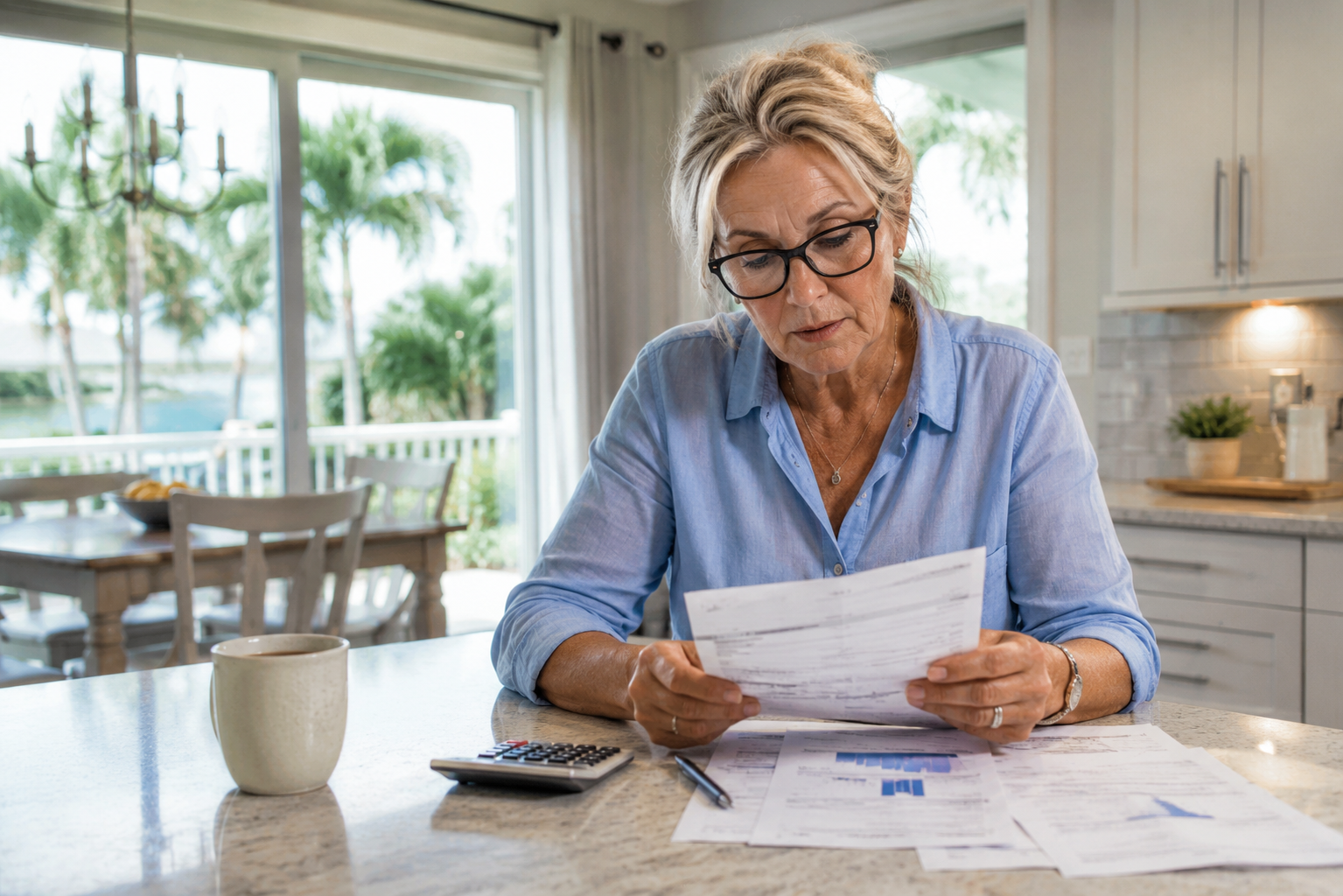
There is a point when a South Florida homeowner stops asking whether the house is still beautiful and starts asking whether it still makes financial sense. The shift is often quiet. Insurance renewals arrive higher than expected. Maintenance costs feel less predictable. Taxes, repairs, storm preparation, and older-home inefficiencies begin to compete with the lifestyle the home was supposed to support.
That does not automatically mean selling is the right move.
It does mean the decision deserves a more complete look than a simple estimate of what the home might sell for. For many Palm Beach County homeowners, the real question is whether selling and buying again could create a more sustainable ownership structure. Not a cheaper life in every category. Not a perfect reset. A smarter alignment between equity, monthly costs, future risk, and how the homeowner actually wants to live next.
The Financial Question Is Usually Bigger Than the Sale Price
Many homeowners begin with one number: what their home may be worth. That number matters, but it rarely tells the full story. A strong sale price can still lead to a poor move if the next purchase creates higher monthly pressure, weaker flexibility, or a less stable long-term cost structure.
The better question is not only, “What can I sell for?” It is, “What does this home cost me to keep, and what would ownership look like if I repositioned my equity?”
In South Florida, that calculation has become more layered. Insurance is no longer a background expense for many owners. Roof age, wind mitigation credits, flood considerations, carrier changes, and deductibles can influence the real cost of staying. Older systems may still function, but they can carry uncertainty. A home can feel financially comfortable on paper while still creating a growing sense of exposure.
That is why homeowners in coastal and established areas often start comparing current ownership against newer or more predictable options. For someone reviewing the numbers around homes for sale in Delray Beach, the question may not be whether Delray remains desirable. It may be whether the next version of ownership offers better cost control than the current one.
Equity can be useful, but trapped equity does not always improve daily life. If a homeowner has substantial value in a property but is carrying rising upkeep, increasing insurance, or looming repair decisions, the equity may be doing less than it could. Selling and buying again starts to make sense when the move improves the relationship between value, stability, and future financial breathing room.
When the Current Home Starts Creating Financial Drag
Financial drag does not always feel dramatic. It often shows up as a pattern of small decisions that become harder to ignore. A repair is postponed because the quote feels high. An insurance premium renews higher than expected. A roof conversation moves from “someday” to “soon.” A homeowner begins wondering whether the next five years will be more expensive than the last five.
This is where many owners get stuck. The home may be paid down. The neighborhood may still be good. The memories may be meaningful. From the outside, moving can look unnecessary.
Inside the decision, though, the math feels different.
Carrying an older home in South Florida can involve more than mortgage payments. There may be pool upkeep, landscaping, storm preparation, aging HVAC systems, older windows, higher insurance scrutiny, larger utility usage, and the unknown cost of deferred maintenance. None of these automatically justify selling. Together, they may change the financial character of the home.
For homeowners comparing established Palm Beach County locations with smaller or more efficient alternatives, a realistic starting point is understanding both current value and next-step affordability. Reviewing what your home may be worth in today’s market can help frame the conversation, but it should be paired with a clear look at replacement costs, taxes, insurance, and the type of home that would actually reduce pressure.
If You’re Thinking About Moving, It Usually Starts Here
Most homeowners don’t randomly decide to move. It builds over time. If you’re starting to think about selling and moving into something newer or easier to maintain, it usually comes down to one of these situations. Choose the one that feels closest to you.
Maintenance, repairs, or simply keeping up with everything may be taking more time and energy than you want to keep giving.
You’re trying to make a smarter financial move →You may be thinking about reducing expenses, using your equity differently, or moving into a home that fits your long-term plans better.
You want something newer, simpler, and easier to live in →Many homeowners reach a point where they want less maintenance, a more efficient layout, and a home that feels easier day to day.
The Move Has to Work After the Closing
A move can look smart at the closing table and still feel wrong six months later if the next home was not chosen carefully. This is especially true when homeowners focus only on lowering one expense while ignoring the full ownership picture.
Buying again makes financial sense when the next home improves predictability. That may mean newer construction, lower maintenance exposure, a smaller footprint, better insurance characteristics, newer mechanical systems, or a location where the homeowner’s equity stretches further. It may also mean accepting that the next home is not necessarily less expensive in every visible way, but better structured for the years ahead.
That distinction matters.
A homeowner moving from an older coastal-area property into a newer, more efficient home may not simply be chasing a lower price. They may be reducing repair uncertainty. They may be moving away from a property that demands constant attention. They may be choosing a home where the next five years feel more financially manageable than the last five.
For some owners, that comparison includes nearby communities that offer different price points, home ages, or cost structures. Looking at available homes in Lantana can reveal how much variation exists even within a relatively small part of Palm Beach County. A financially smart move is rarely about one city being universally better. It is about whether a specific home, at a specific price, with specific carrying costs, fits the next stage of ownership.
Equity Can Create Options, but Only If the Move Is Structured Carefully
Home equity can feel reassuring. It can also create a false sense of clarity. A homeowner may know they have gained value, yet still be unsure whether selling would actually improve anything.
The key is not just how much equity exists. It is what that equity can do.
Could it reduce or eliminate a mortgage payment? Could it allow a move into a newer home with less repair exposure? Could it lower financial stress by creating reserves after the purchase? Could it support retirement planning, simplify monthly obligations, or reduce the pressure of maintaining a home that no longer fits?
There is also a quieter issue: some homeowners keep absorbing rising costs because they do not want to make a mistake. They worry about selling too soon, buying too high, losing a familiar location, or underestimating the next home’s expenses. Those concerns are reasonable. A rushed move can damage financial stability. So can staying too long in a property that keeps pulling more money, energy, and uncertainty from the household.
The realization often comes when the homeowner stops seeing the choice as “stay or sell” and starts seeing it as “which ownership structure gives me the strongest position over the next several years?” At that point, exploring whether a financial move to Port St. Lucie or another lower-pressure market makes sense can help turn a vague thought into a more practical comparison.
What This Means for Buyers and Sellers in South Florida
For sellers, the financial decision starts before the home goes on the market. The condition of the property, the likely buyer pool, insurance-related objections, inspection concerns, and pricing strategy all influence how much usable equity remains after the sale. A home that sells for a strong number but requires heavy concessions may not create the same financial outcome as a home that is prepared and positioned carefully.
For buyers, the issue is different. The next home must be evaluated as a cost structure, not just a property. Monthly payment, insurance, taxes, HOA fees, age of major systems, roof condition, location, commute, maintenance needs, and resale flexibility all matter. A newer home can still be financially wrong if the total obligation is too tight. An older home can still be smart if the price, condition, and long-term exposure make sense.
South Florida adds its own pressure points. Insurance can vary sharply from one home to another. Flood zones, roof age, wind mitigation, construction type, and location all affect the conversation. Taxes can reset after purchase. HOA fees can be helpful in one community and burdensome in another. None of these details should be treated casually when the goal is a more sustainable move.
The best decisions usually come from comparing the current home against realistic next-home options before emotions take over. That does not remove uncertainty, but it reduces guesswork. It helps homeowners see whether selling and buying again is likely to create more control, or whether staying and improving the current home remains the stronger financial choice.
The Emotional Side of a Financial Decision
Financial decisions are rarely only financial. A homeowner may feel relief imagining a simpler cost structure, then guilt about leaving a home they have owned for years. They may feel excited about using equity differently, then anxious about buying again. They may know the current home is becoming less efficient, yet still hesitate because moving feels like a major life disruption.
That emotional friction is normal.
In fact, it is often a sign that the decision matters. Selling a home in South Florida is not just a spreadsheet exercise. It can involve identity, routine, family history, neighborhood attachment, and fear of making the wrong next move. A good financial decision should respect those realities instead of brushing them aside.
The goal is not to force certainty before the homeowner is ready. The goal is to create enough clarity that the decision no longer feels like a fog. When the current costs, likely sale outcome, next-home options, and emotional priorities are viewed together, the right direction usually becomes easier to see.
When Selling and Buying Again May Be the Smarter Path
Selling and buying again may make financial sense when the current home is absorbing more money than the lifestyle justifies, when equity could be used more effectively, or when the next home offers better predictability for the years ahead. It may also make sense when the homeowner wants to reduce exposure to major repairs, insurance uncertainty, or ownership responsibilities that no longer feel proportionate.
It does not make sense simply because prices are high, neighbors are selling, or someone says the market is favorable. A smart move has to hold up after the excitement fades. The next home must fit the homeowner’s budget, risk tolerance, lifestyle needs, and long-term plans.
The most useful first step is often not listing the home. It is comparing scenarios. What happens if you stay? What repairs are likely? What costs may rise? What could the home realistically sell for? What would buying again require? What would improve, and what would simply change?
That kind of comparison turns an emotional decision into a more grounded one.
FAQ
How do I know if selling and buying again is financially smarter than staying?
Selling and buying again may be financially smarter if your current home is creating rising costs, repair uncertainty, insurance pressure, or maintenance obligations that no longer match your long-term plans. The decision should compare your likely sale proceeds, remaining equity, next-home purchase costs, taxes, insurance, monthly payment, and future repair exposure. Staying may still be the better choice if the current home remains affordable and manageable. The clearest answer usually comes from comparing both paths side by side.
Should I sell first or find the next home first?
The right order depends on your equity position, financing needs, comfort with timing, and how specific your next-home requirements are. Some homeowners need to sell first to understand their available funds clearly. Others can shop first if they have flexibility, strong financing, or enough reserves to handle overlap. In South Florida, timing should also account for inspection issues, insurance approvals, appraisal risk, and the availability of suitable replacement homes before making a firm decision.
Keep Exploring South Florida Real Estate
If you're trying to better understand whether staying, selling, or simplifying makes sense, exploring more South Florida real estate guidance can help create clarity before making a major decision.
About the Authors
Chris and Sue Kull are South Florida real estate professionals with more than three decades of experience helping homeowners, buyers, sellers, and relocating families navigate real estate decisions throughout Palm Beach County and surrounding communities.