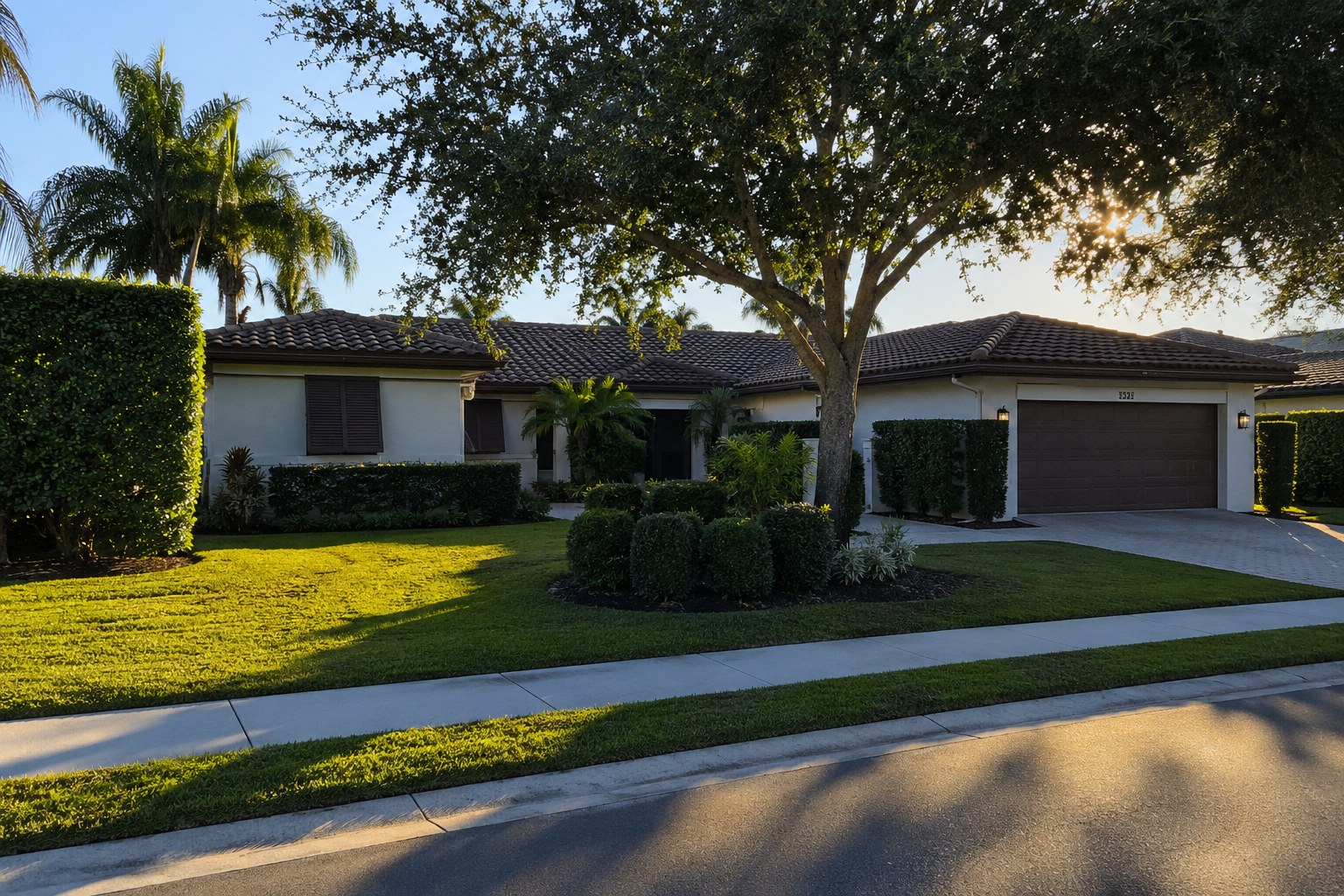
Why the 90-Day Preparation Window Changes Everything for Palm Beach County Sellers
The gap between a 10-day preparation window and a 90-day one is not just a matter of how much gets done. It is a matter of what kind of decisions get made. Sellers who compress that window into the final weeks before listing aren't making worse versions of the same decisions — they are making fundamentally different ones, driven by urgency rather than judgment. And in a market like Palm Beach County, where ownership costs have shifted materially over the past several years and buyers are reading every deferred signal with increasing scrutiny, the quality of those pre-listing decisions can show up in the final number.
If you are beginning to think seriously about selling — even if the timeline still feels uncertain — the most useful place to start is understanding what the preparation window actually controls. The answer is not what most sellers expect. More on that at The Kull Group's seller strategy resource for Palm Beach County.
What the Preparation Window Actually Controls
Most sellers assume the 90-day window is about completing more repairs. That is part of it, but it is not the primary variable. The more significant difference is that 90 days gives a seller time to make sequenced decisions instead of compressed ones.
When the window collapses to 10 days, the contractor who is available is not always the one who should be doing the work. The repair that gets prioritized is the one that is most visible — not necessarily the one that will surface in inspection or the one that is moving a buyer's perception. Paint gets applied over surfaces that needed preparation. Landscaping gets addressed but the irrigation system that hasn't been properly functioning for two seasons gets ignored because there isn't time to diagnose it.
In Wellington and across western Palm Beach County, some of the homes that were built or substantially renovated between 2000 and 2008 are now approaching a point where several major systems are reaching replacement age within a similar window — HVAC equipment, water heaters, pool pumps, and roofing can converge around the same 18-month period on a given property. A seller who discovers this two weeks before listing has very few good options. A seller who discovers it three months out has the time to decide which items to address, which to price for, and how to frame the ones that remain — in a way that doesn't invite buyers to discount the entire property.
That sequencing is what 90 days actually controls. Not just the quantity of preparation. The quality of the decision-making inside it.
Why This Plays Out Differently in South Florida Than in Other Markets
The standard advice about seller preparation — declutter, neutralize, address deferred maintenance — applies here. But the specific conditions of South Florida ownership create pressure points that don't exist at the same intensity in other markets, and they can surface precisely at the moment a property is being evaluated by buyers.
Salt air and sustained humidity are relentless on exterior surfaces in ways that can accelerate wear beyond what sellers typically expect. A home in Boca Raton or Boynton Beach that has gone two seasons without exterior repainting may look acceptable to an owner who has adjusted to it gradually. It reads very differently to a buyer seeing it for the first time, and it reads differently still to an inspector who is documenting condition rather than impressions. The same applies to roof surfaces, gutters, pool coping, and landscaping systems that have been managed reactively rather than on a consistent schedule.
Insurance has become a structural part of the pre-listing conversation in a way it was not five years ago. Many Palm Beach County homeowners are currently carrying a policy shaped by underwriting conditions that have shifted since they purchased, and wind mitigation documentation, roof age, and claims history are all now active variables in how buyers and their insurers calculate carrying costs. A seller who has 90 days can pull their wind mitigation report, understand what it reflects, and get a property-specific sense of how that documentation compares to what a buyer might be quoted — rather than assuming a specific dollar relationship between the two policies. A seller with 10 days doesn't have that same room to work with.
Hurricane preparation is an annual operational cycle here, not a weather event — and buyers relocating from other markets increasingly ask specific questions about what that cycle costs and what it requires. Shutters, impact windows, generator capacity, propane or transfer switch installation — these are not curb appeal items. They are practical questions that informed buyers raise, and a seller who has thought through those answers in advance is in a different position than one who hasn't.
A question worth sitting with: If your preparation window started today, would the next 90 days produce different decisions than the next 10? If the answer is yes — even quietly — that gap is where the outcome lives.
What We Observe Repeatedly Across Palm Beach County Listings
After working with Palm Beach County homeowners for more than three decades, one pattern we've noticed often among sellers who feel they left money on the table: the issue often isn't the property itself. It's the preparation window.
We've seen well-maintained, genuinely ready properties in Royal Palm Beach and Lake Worth where the listing came together quickly, and the seller was left wondering afterward whether more preparation time would have changed the outcome. Often, the decisions that shape buyer perception — which items to repair, which to disclose and price for, how to present the property's condition story honestly and strategically — get made in a compressed window driven by urgency rather than judgment, and that can affect how buyers respond.
There is a second pattern that surfaces often, and it is harder to name but worth naming: sellers who compress the preparation window often do so because the decision to sell arrived alongside something else. A retirement conversation that accelerated. An insurance renewal that came in sharply higher. A life-stage shift — children leaving, a health development, a change in how the property is actually being used — that made staying feel less obvious than it once did. In our experience, financial pressure and life-stage questions often arrive around the same time, and when they do, the impulse is to move quickly. That impulse is understandable. But it is also where preparation time can get sacrificed.
The sellers we've seen navigate this well aren't necessarily the ones with the best properties. Often, they're the ones who started the preparation conversation early enough that judgment — not urgency — was driving the decisions. More on how that preparation process works is available at Should You Repair Your Home Before Selling in Palm Beach County.
What This Means for You as a Palm Beach County Seller
If you are reading this and the timeline still feels uncertain — if you are thinking about selling but haven't committed to a specific window — that uncertainty is actually an asset. It means you still have the preparation window available to you. The question is whether you will use it deliberately or let it compress by default.
The practical implication is not that you need to begin repairs immediately. It is that the decisions you make in the next 90 days will often be different from the decisions you would make in the final 10. Knowing which systems are approaching replacement before they become a buyer's discovery. Understanding what your current insurance documentation reflects and whether it serves you in a listing context. Having time to get multiple contractor estimates rather than accepting whoever is available on short notice.
There is also a less visible dimension worth naming. Many Palm Beach County homeowners find that the preparation process itself clarifies the decision. The act of walking through a property with a strategic eye — understanding what it would take to present it well, what the carrying costs actually look like, what a buyer is going to experience — often resolves some of the ambivalence that has been making the decision feel harder than it is. The equity question becomes more concrete. The ownership burden question becomes easier to answer honestly.
If the timeline is 90 days out or further, the most useful thing you can do right now is understand what your preparation window should contain — not what the market requires, but what your specific property and situation call for. That conversation is what The Kull Group's seller strategy process is designed to support. And if you want to know where your property stands as a starting point, a current value assessment gives you the baseline the preparation conversation needs.
Frequently Asked Questions
What actually takes 90 days — can't most preparation be done in a few weeks?
Physically, yes — many of the tasks can be completed in a compressed window. But the preparation window is not primarily about task completion. It is about decision quality. Ninety days gives a seller time to get multiple contractor estimates, sequence repairs in the right order, understand what the inspection process is likely to surface before buyers do, and make strategic decisions about what to repair, what to disclose, and how to price for what remains. Decisions made under urgency can look different — and less favorable — than the same decisions made with adequate time. In South Florida specifically, lead times for roofing contractors, HVAC service companies, and pool equipment vendors have often extended in recent years, and a compressed window can mean accepting whoever is available rather than whoever is right for the work.
Does starting preparation earlier mean I'm committing to a specific listing date?
No. Starting the preparation conversation 90 days out does not lock in a timeline. In many cases, it clarifies one. Sellers who begin the process early often find that the act of assessing the property strategically — understanding what needs attention, what the current value picture looks like, what the carrying cost reality is — helps resolve some of the ambivalence that has been making the decision feel uncertain. The preparation window is not a commitment. It is the process by which a vague intention becomes a clear decision, made on your terms rather than under external pressure.
Are buyers in Wellington and Palm Beach County actually noticing preparation quality, or is it more about price?
Both matter, and preparation quality and price aren't fully independent in this market. A well-prepared property that presents cleanly, has documented condition, and doesn't invite inspection surprises can help buyers make decisions from a position of confidence rather than concern. Buyers who feel uncertainty about a property's condition often either discount more aggressively or walk away. What we observe often is that the gap between a property that was prepared thoughtfully and one that was listed quickly isn't always visible in the asking price — it can show up in negotiation, inspection, and what buyers are willing to accept on the back end of the transaction.
Starting the Conversation at the Right Moment
The sellers who look back on a transaction feeling genuinely satisfied — not just closed, but well-served by the process — often started earlier than they thought they needed to. Not because the market demanded it, but because the decisions that get made with adequate time are simply different from the ones made under pressure, and those decisions are often where the outcome lives.
If you are somewhere in the middle of thinking this through — not decided, but not not-decided — the most useful next step is a conversation about what your specific preparation window should contain. Start that conversation with The Kull Group here. For a broader look at how we approach the seller process in Palm Beach County, the seller strategy hub is the right place to begin.