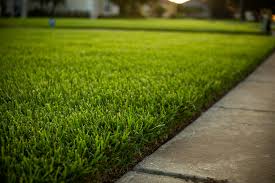
Artificial Grass in Palm Beach County: Whether You're Allowed, and Whether It Works Here
The appeal is easy to understand. Watering days are restricted, fertilizer is blacked out for a chunk of the year, St. Augustine browns in the dry season, and the mowing never stops. Synthetic turf promises to end all of it at once.
Before the pros and cons, though, two questions decide this for a Palm Beach County homeowner, and neither appears in national coverage. Whether you are permitted to install it — where Florida law changed materially in May 2026, and where the answer now depends on which authority is objecting. And whether it stays usable in full South Florida sun, which is a real constraint rather than a footnote.
The Permission Question Runs on Two Separate Tracks
Two different authorities can say no to synthetic turf, and Florida law now treats them very differently. Your municipality or county is one. Your homeowners' association is the other. As of 2026 the first has been largely preempted for typical residential lots; the second has not.
Track One: Local Government — Preempted Since May 2026
Section 125.572 of the Florida Statutes, enacted in 2025, directed the Department of Environmental Protection to adopt minimum standards for installing synthetic turf on single-family residential properties of one acre or less. The statute provides that once those rules are adopted, a local government may not adopt or enforce any ordinance, resolution, order, rule, or policy that prohibits an owner from installing compliant turf on covered property, or that regulates it inconsistently with the state standards.
That condition has been met. DEP's implementing rule, Chapter 62-308.100, Minimum Standards for the Installation of Synthetic Turf on Specified Properties, took effect on 19 May 2026. The preemption is live, not pending.
The statute required the standards to address material type, colour, permeability, stormwater management, potable water conservation, water quality, and proximity to trees and other vegetation. Two material requirements surfaced during rulemaking that matter when you are choosing a product: turf materials must be lead-free and must be disposable under normal conditions at a Florida landfill, and rubber cannot be used as infill.
Three limits worth holding onto. It covers single-family residential property of one acre or less — larger parcels fall outside it. It protects compliant installations, so meeting the DEP standard is what carries the protection, which is a reason to keep product documentation. And a municipality may still require a permit so staff can verify what you installed meets the state standard — verification is not prohibition.
This shift is recent enough that enforcement is still catching up. A West Palm Beach code case over front-yard turf was continued into 2026 specifically to wait for the DEP rules, with the city arguing that owners had no statutory protection until the standards were adopted. That argument no longer holds, but local staff and ordinances will not all have been updated yet, so having the statute and rule citation to hand is practical rather than academic.
Track Two: Your Association — Still a Gray Area
Section 125.572 constrains local governments. It does not address homeowners' associations, and here the picture is genuinely unsettled.
What the law does say. Section 720.3075 of the Florida Statutes provides that homeowners' association documents may not prohibit, or be enforced so as to prohibit, a property owner from implementing Florida-Friendly Landscaping as defined in Section 373.185. A covenant attempting to do so is void as against the public policy of the state. Section 373.185 defines Florida-Friendly Landscaping as quality landscapes that conserve water, protect the environment, are adaptable to local conditions, and are drought tolerant.
Where turf sits in that. The statute does not mention artificial turf. A Florida Attorney General opinion addressing the question concluded that while there is no express mention of artificial turf in the statute, it does not appear to preclude its use as a component of a landscape plan — noting the statute contemplates non-living materials such as rock, mulch, sand, and decorative paving as parts of a Florida-Friendly landscape.
Read that carefully, because the distinction matters. "Not precluded as a component of a landscape plan" is a considerably weaker statement than "your association cannot say no to a synthetic lawn." The definition itself is a four-part test, and while turf plainly conserves water, whether it protects the environment is contestable — which is exactly the ground an association would argue on.
What associations retain regardless. The protections do not remove architectural review. University of Florida extension guidance is direct about this: the law does not mean a homeowner can redo their landscaping without permission, and an architectural review board can still assess whether a proposed modification fits the community's aesthetic standards where the governing documents establish that process. Associations may also require pre-approval, apply reasonable appearance standards, and set edging and placement requirements.
Some declarations address synthetic ground cover explicitly. Guidance for buyers reviewing association disclosure packets flags exactly that language as something to look for — a prohibition on rock, gravel mulch, or synthetic ground cover.
The practical instruction. Submit for approval and get the answer in writing before anyone orders material. A verbal yes from a board member is not approval, and removal at your expense is the outcome you are protecting against. We are real estate professionals, not attorneys — how the statute applies to a specific declaration is a legal question, and on a project at this cost it is worth an hour of a Florida attorney's time.
The Heat Question
National coverage lists surface heat as one con among several, described as "uncomfortably hot." In a climate with this much direct sun, that undersells it.
Synthetic turf absorbs and holds solar heat in a way living grass does not, and a surface that is pleasant in March can be genuinely unusable at midday in July. That matters most for the applications people install turf for — children's play areas, dog runs, poolside. Bare feet and paw pads are the exposure, and afternoon is when a backyard actually gets used.
Mitigations exist and are worth asking installers about specifically: lighter-coloured fibre, cooling infill products, shade from trees or structures, and rinsing before use. None of them make turf behave like grass under sun. Plan the installation where shade exists, or accept that the space works morning and evening.
Drainage, Which Is a Design Requirement Rather Than a Feature
Standard turf marketing lists improved drainage as a benefit — modern systems prevent puddles and dry quickly. That is true of a correctly built installation and not automatic.
South Florida combines intense rainfall with a high water table, and what sits under the turf does the work: base preparation, permeable backing, and grading that sends water somewhere sensible. A poorly built installation in this climate produces standing water, and standing water under synthetic turf produces odour and biological growth rather than a brown patch you can reseed.
Ask any installer how the base is built, where water is being directed, and how the installation meets the DEP permeability and stormwater provisions — that compliance is what carries your protection from local prohibition, so it is worth having documented. An installer familiar with the state standard and with Florida drainage conditions is the qualification that matters here, more than fibre brand.
What Turf Is, and Which Type
Artificial grass is a synthetic surface — fibres stitched into a backing, infilled with sand, cork, rubber, or coated alternatives to hold blades upright and provide cushioning. Originally a sports-field product, now a residential landscaping option.
The three common fibre types, kept from standard guidance because the distinctions hold:
- Nylon — the stiffest of the three, and the most resistant to wear. Sports and heavy-traffic applications. Costs more and feels less soft underfoot.
- Polyethylene — soft and realistic, durable enough for residential lawns, backyards, and pet areas. Wears faster in concentrated-traffic zones.
- Polypropylene — the cheapest and the least durable. Decorative and low-traffic use. A poor choice for pets or anywhere with real foot traffic.
The Honest Pros and Cons
What holds up: no mowing, edging, watering, or fertilising — which in this county also means no watering-day restrictions and no fertiliser blackout to work around. Consistent appearance through the dry season. No pollen from the lawn itself. A cushioned surface for play areas. And for households where the yard has become a chore rather than a pleasure, a genuine reduction in the work of owning the property — the same motivation behind moving to a lower-maintenance home, applied to the yard rather than the house.
What needs qualifying. Two of the standard claims deserve correction.
The pet-friendly claim is overstated, and the standard advice contradicts itself — turf is listed as resistant to odours in the pros, then the maintenance section tells you to rinse urine spots and clean pet odours. The accurate version: solids come off easily and liquid passes through, but urine residue accumulates in infill and heat accelerates the smell. It is manageable with the right infill and regular rinsing. It is not odour-proof, and a dog run in full sun is the hardest case.
The cost figures circulating for installation are undated and vary widely by product, base preparation, and site conditions. Get current local quotes on your actual yard rather than budgeting from a published range.
What is genuinely against it: substantial upfront cost, heat, vulnerability to grills, fire pits, fireworks, and reflected sun from low-E windows, a plastic product that does not biodegrade, disruptive installation, and a lifespan after which the whole thing gets replaced and disposed of. It is also not maintenance-free — brushing, debris removal, rinsing, weed control at seams and edges, and infill top-ups are all real ongoing tasks.
Safety and Materials
Some of this is now settled by rule rather than left to the buyer. For installations covered by the state standard, turf materials must be lead-free and landfill-disposable under normal conditions, and rubber may not be used as infill — which removes crumb rubber, the infill that had drawn scrutiny over volatile organic compound emissions, from the covered-product picture. Sand, cork, and coated alternatives remain available.
PFAS compounds have been a documented concern in some synthetic turf products, and that is not addressed by the material provisions above.
The practical response is to shift the burden to the supplier: ask for product safety certifications and testing documentation in writing before purchase, ask specifically what the infill is, and ask for written confirmation that the product and installation meet the DEP standard. Keep all of it — that paperwork is both your materials assurance and the evidence of compliance that carries the statutory protection. A supplier who cannot produce documentation has answered the question.
What It Does to Resale
The standard closing claim — that turf boosts curb appeal and resale value — is not supported, and the honest picture is more mixed.
Turf appeals strongly to buyers who want the maintenance gone, and it is a negative for buyers who want a natural lawn, have concerns about heat or materials, or simply do not like the look. That narrows the buyer pool rather than widening it, which is the same dynamic behind other improvements that suit the owner more than the market — the distinction drawn in updates that build buyer confidence versus over-improving.
Three things protect your position. Get association approval in writing and keep it, because an unapproved installation becomes the buyer's problem and therefore your negotiation. Keep the installation documentation and any warranty. And consider zoning it — turf in a defined area such as a dog run or a play space reads as a feature, while a fully synthetic front yard is a stronger statement that a buyer either wants or does not.
How This Varies Across the County
Where you are shapes both the permission question and the practical one.
Boca Raton and Delray Beach are where architectural review engages hardest, and the front-yard version of this project is where declarations and boards engage hardest. Royal Palm Beach and Greenacres bring uniform streetscape standards across tract communities, where consistency of appearance is the stated concern and a single synthetic yard stands out by design. Newer covenants along the corridor toward Port St. Lucie are more likely to address synthetic ground cover explicitly, one way or the other, simply because they were written recently enough to anticipate the question.
Older neighbourhoods around Lake Worth Beach and parts of West Palm Beach include a good deal of housing outside any association, where municipal landscape and stormwater code becomes the constraint instead. Wellington, Loxahatchee, and the acreage communities sit outside the new state protection in a way worth knowing: it covers single-family parcels of one acre or less, so a larger lot does not get it and local regulation continues to apply in full. Full-yard turf rarely pencils out on that much land in any case — the application that works is a defined zone: a dog run, a play area, a heavily shaded strip where nothing grows.
A pattern worth naming: homeowners reach for turf after losing a specific fight — a shaded strip that will not grow, a dog run worn to dirt, a side yard that stays muddy. Turf solves those defined problems well. The whole-yard version is a different decision with a different cost, a different approval path, and a different effect at resale. Solving the actual problem can cost considerably less than replacing the entire lawn.
If the underlying frustration is the watering and fertilising rules rather than the grass itself, those are worth understanding before you spend anything — they are covered in the rules that govern lawn care here.
Wondering How This Lands With Buyers in Your Area?
Send us your community and what you're considering. We can tell you how synthetic turf tends to be received in that specific market, what your declaration is likely to require, and whether a zoned installation makes more sense than a full replacement.
Curious What Your Home Is Worth Before You Spend?
A landscaping project of this size is worth sizing against your property's current position — the budget that makes sense at one value makes little sense at another.
Frequently Asked Questions
Can my city or my HOA stop me from installing artificial grass?
Different answers, and the distinction now matters. Your city or county largely cannot, for a compliant installation on single-family property of an acre or less: Section 125.572 preempts local prohibition once DEP adopts standards, and DEP's rule 62-308.100 took effect 19 May 2026. A municipality can still require a permit to verify compliance, and larger parcels fall outside the protection. Your association is a separate question and genuinely unsettled — Section 720.3075 bars associations from prohibiting Florida-Friendly Landscaping as defined in Section 373.185, but that statute does not mention artificial turf, and a Florida Attorney General opinion concluded only that it is not precluded as a component of a landscape plan. Associations also retain architectural review. Submit for approval, get the answer in writing, and take a specific declaration to a Florida attorney.
How hot does artificial turf actually get here?
Hot enough to matter for the uses people install it for. Synthetic fibre absorbs and holds solar heat in a way living grass does not, so a surface that is comfortable in cooler months can be unpleasant or unusable at midday in summer — which is a problem when the intended use is a play area, a dog run, or poolside. Lighter fibre colours, cooling infill products, shade, and rinsing before use all help without eliminating the effect. Where shade is available, plan the installation around it.
Will artificial grass help or hurt when I sell?
It splits buyers rather than adding value. Some want the maintenance gone; others want a natural lawn or have reservations about heat and materials, which narrows the pool. Three things protect you: written association approval kept on file, since an unapproved installation becomes a negotiation item; installation and warranty documentation; and zoning the turf to a defined area such as a dog run or play space, which reads as a feature, rather than converting the entire front yard, which is a stronger statement a buyer either likes or does not.
About the Authors
Chris and Sue Kull are South Florida real estate professionals with more than three decades of experience helping buyers, sellers, and property owners navigate the housing market throughout Palm Beach County and surrounding communities.
Their work focuses on providing clear information, local market insight, and practical guidance so clients can make confident real estate decisions. Over the years they have built a trusted network of industry professionals—including lenders, inspectors, contractors, and legal specialists—to support every stage of the real estate process.
Nothing here is legal advice. How a statute applies to a specific declaration is a question for a Florida attorney, and landscape and stormwater requirements come from your municipality. You can explore additional resources at www.TheKullGroup.com, or reach out through our contact page.