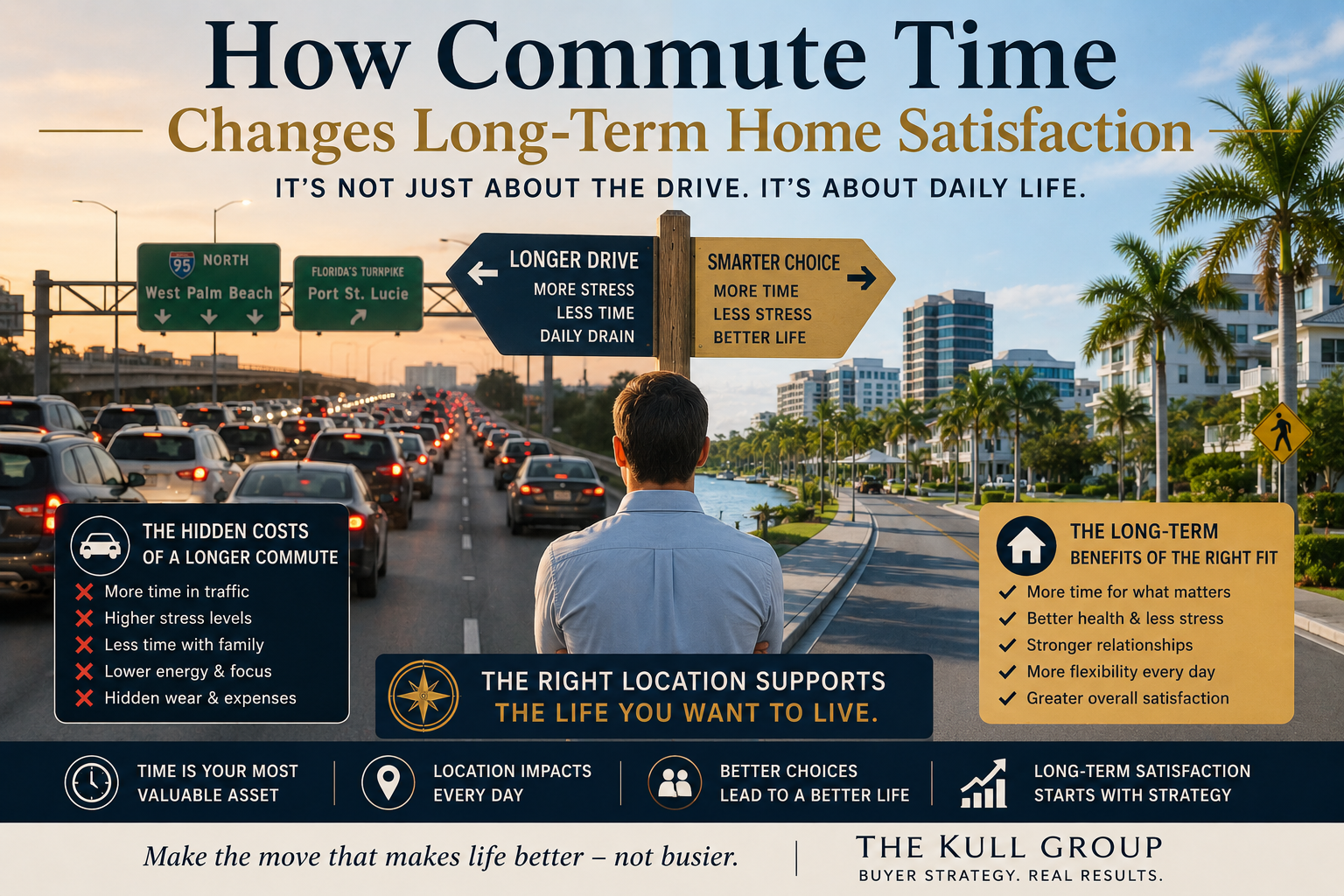
How Commute Time Changes Long-Term Home Satisfaction
Many buyers calculate commute time during the search process. Far fewer calculate what that commute will feel like emotionally six months or three years after closing.
That difference matters more than many homeowners initially expect.
A longer drive may appear manageable during occasional test runs or weekend showings. But ownership is experienced through ordinary repetition. The route becomes part of daily energy management, scheduling flexibility, stress levels, family routines, and emotional recovery time.
Some buyers happily trade commute efficiency for additional space, affordability, privacy, or lifestyle decompression. Others slowly realize the drive is affecting their quality of life far more than the extra square footage or lower purchase price is improving it.
The issue is not whether a longer commute is “good” or “bad.”
The issue is whether the ownership tradeoff genuinely aligns with how the buyer wants daily life to function long term.
The strongest ownership decisions usually happen when buyers evaluate commute patterns as part of lifestyle sustainability — not just transportation logistics.
Commute Time Affects More Than Driving
Many buyers evaluate commute distance in terms of mileage or estimated travel time. But the real effect of commuting is usually cumulative.
Over time, commute patterns influence:
- energy levels
- stress recovery
- family time
- schedule flexibility
- morning routines
- social availability
- exercise habits
- weekend recovery patterns
Some homeowners adapt extremely well to longer drives because they prioritize other ownership advantages more heavily. Others eventually realize the additional movement changes how daily life feels in ways they underestimated initially.
The strongest ownership outcomes usually happen when buyers evaluate not only whether the drive is possible, but whether the lifestyle surrounding the drive feels sustainable.
Different Buyers Experience Commutes Very Differently
One reason commute decisions can become complicated is because different buyers tolerate movement differently.
Some buyers naturally prioritize:
- larger homes
- larger lots
- more privacy
- quieter ownership environments
- newer construction
- greater affordability flexibility
Others prioritize:
- reduced driving
- walkability
- daily convenience
- professional access
- social connectivity
- schedule efficiency
Neither preference is automatically correct.
The problem usually appears when buyers choose a lifestyle structure that conflicts with how they naturally manage time, energy, and stress.
Buyers evaluating those ownership tradeoffs may also benefit from reviewing how buyers sometimes choose the wrong area for their lifestyle.
Compare Commute Tradeoffs Before Comparing Homes
One of the most effective ways to evaluate ownership fit is to compare how different locations affect ordinary daily movement.
Some buyers eventually realize they should have compared:
- space versus commute efficiency
- newer homes versus central access
- quiet residential environments versus convenience
- larger lots versus reduced driving time
- lower pricing pressure versus daily movement demands
- suburban decompression versus professional accessibility
Once buyers understand which tradeoffs genuinely matter most to them, the home search itself becomes far more focused.
West Palm Beach Often Appeals to Buyers Prioritizing Accessibility
For many buyers, West Palm Beach creates long-term value because of convenience and connectivity rather than maximum square footage.
The area often appeals to buyers prioritizing:
- reduced commute pressure
- professional access
- airport proximity
- walkability in certain districts
- healthcare access
- greater scheduling flexibility
For some homeowners, reducing daily movement creates a measurable improvement in overall lifestyle sustainability.
Buyers evaluating those accessibility patterns may also benefit from exploring West Palm Beach buyer strategy guidance.
Longer Commutes Can Feel Different Over Time
Some buyers initially tolerate longer drives very comfortably because the ownership advantages feel exciting during the purchase phase.
Over time, however, repetitive movement patterns can begin affecting:
- morning stress
- time availability
- energy management
- traffic frustration
- family interaction
- schedule flexibility
- overall emotional bandwidth
That does not mean longer commutes are automatically negative. Some buyers remain extremely happy with larger homes, quieter environments, acreage properties, or newer construction farther from activity centers.
The strongest ownership decisions usually happen when buyers evaluate whether the long-term tradeoff genuinely supports how they want ordinary life to feel.
Port St. Lucie Often Represents a Space Versus Proximity Tradeoff
Port St. Lucie is a strong example of how commute patterns interact with ownership goals.
Many buyers moving north prioritize:
- larger homes
- newer construction
- greater affordability leverage
- more physical space
- lower pricing pressure
For some homeowners, those advantages outweigh additional driving comfortably.
For others, the longer movement patterns eventually affect lifestyle satisfaction more heavily than expected.
The correct answer depends entirely on how the buyer prioritizes:
- space
- time
- privacy
- energy management
- financial flexibility
- daily convenience
Buyers evaluating those tradeoffs may also benefit from exploring Palm Springs buyer strategy guidance.
Remote and Hybrid Work Have Changed Commute Psychology
One reason commute tradeoffs feel different today is because remote and hybrid work have changed how buyers experience movement.
Some buyers now tolerate longer distances more comfortably because they:
- commute less frequently
- control their schedules more flexibly
- prioritize home environment over daily movement
- travel during non-peak hours
Others still require:
- consistent office access
- frequent travel
- healthcare-system proximity
- client-facing mobility
- daily regional movement
That difference significantly affects which ownership environments feel sustainable long term.
Buyers evaluating those flexibility patterns may also benefit from reviewing how ownership costs and long-term practicality shape lifestyle sustainability.
The Right Commute Usually Feels Emotionally Sustainable
One of the strongest indicators of ownership fit is whether the movement pattern feels emotionally manageable after ordinary life resumes.
The right ownership environment usually supports:
- reasonable recovery time
- schedule flexibility
- manageable stress levels
- consistent routines
- energy sustainability
- long-term lifestyle balance
The wrong movement pattern often creates subtle ongoing pressure that gradually affects overall satisfaction even when the home itself remains attractive.
That difference becomes more important over time because commuting is not experienced occasionally. It becomes part of the structure of daily life itself.
Trying to Balance Commute Efficiency With the Lifestyle You Actually Want?
If you are comparing different Palm Beach County ownership environments, a buyer strategy consultation can help clarify how commute patterns, lifestyle pace, space requirements, maintenance expectations, and long-term ownership priorities may affect daily life after closing.
- Compare commute tradeoffs realistically before purchasing
- Evaluate convenience versus space and affordability priorities
- Understand how different ownership environments affect daily routines
- Clarify which movement patterns feel sustainable long term
No pressure. Just practical guidance designed to help buyers choose ownership environments that support long-term lifestyle sustainability.
Frequently Asked Questions About Commute Time and Home Satisfaction
Why does commute time affect long-term home satisfaction so much?
Commute patterns affect daily energy levels, scheduling flexibility, stress management, family time, and overall emotional sustainability. Over time, those repetitive movement patterns can significantly shape how ownership feels.
Is a longer commute always a bad decision?
No. Some buyers happily trade commute efficiency for additional space, newer homes, affordability flexibility, or quieter ownership environments. The strongest decision depends on the buyer’s personal priorities and lifestyle structure.
How does West Palm Beach appeal to buyers concerned about commute pressure?
West Palm Beach often appeals to buyers prioritizing professional accessibility, reduced driving, airport proximity, healthcare access, and greater scheduling flexibility.
Why do some buyers underestimate commute stress during the search process?
Many buyers evaluate the commute emotionally during the excitement of the purchase process instead of evaluating how repetitive movement patterns may feel after ordinary routines return.
What is one of the best ways to evaluate commute fit before buying?
One of the strongest approaches is to evaluate how the movement pattern supports ordinary daily life, not just whether the drive itself is technically manageable.