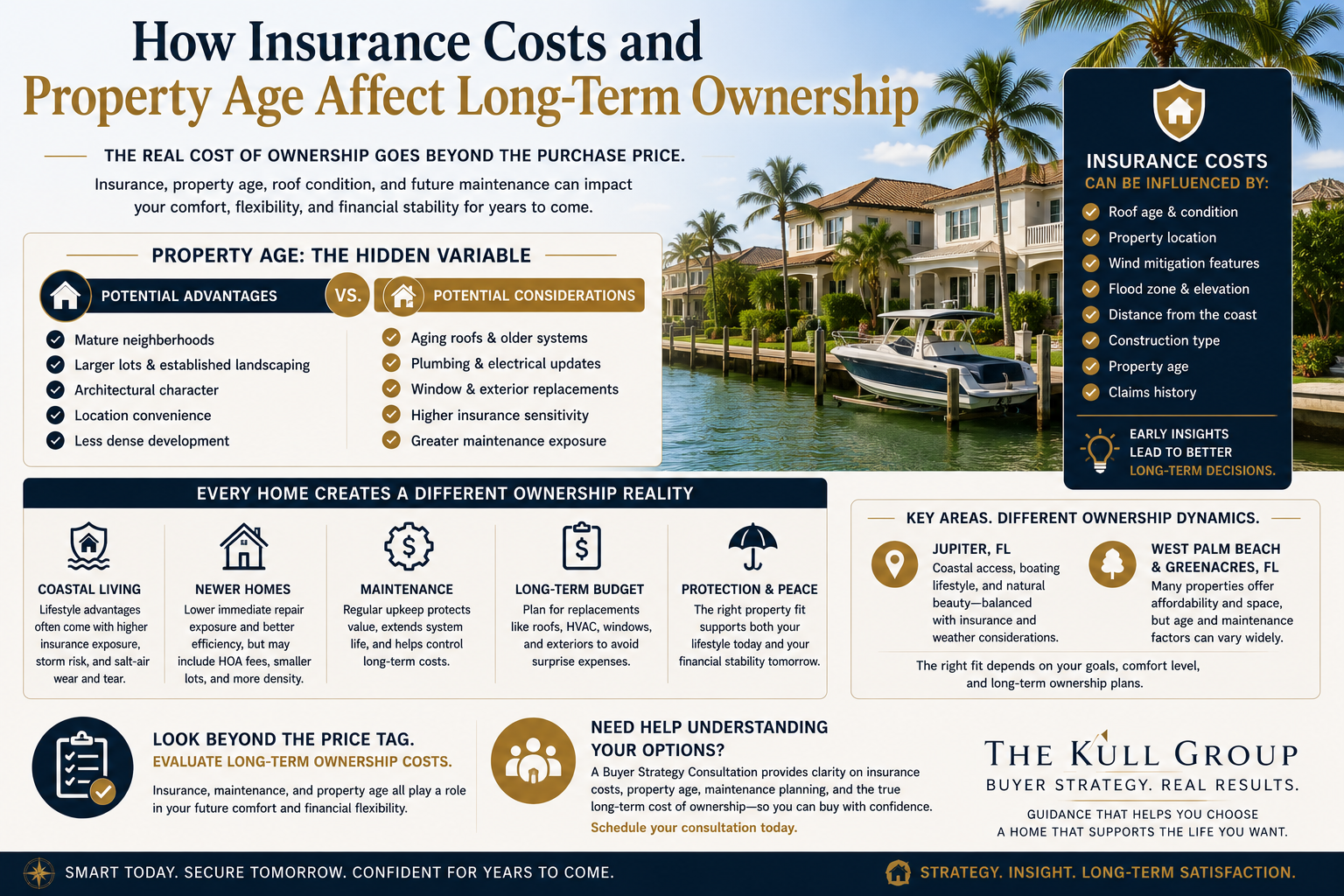
How Insurance Costs and Property Age Affect Long-Term Ownership
Many buyers focus heavily on purchase price during the home search process. Far fewer evaluate how insurance costs, property age, roof condition, system age, and long-term replacement planning may affect ownership years after closing.
That difference can significantly change how sustainable a home feels over time.
Two homes may appear similarly attractive during the buying process while creating completely different long-term ownership experiences once insurance premiums, maintenance exposure, weather vulnerability, and aging systems begin affecting the monthly reality of ownership.
The issue is not simply affordability.
It is ownership sustainability.
The strongest ownership decisions usually happen when buyers evaluate not only what a home costs to purchase, but what it may realistically cost to operate, insure, maintain, and protect over time.
Property Age Often Changes Ownership Dynamics
Older homes can offer meaningful advantages:
- mature neighborhoods
- larger lots
- architectural character
- established landscaping
- location convenience
- less dense development patterns
For many buyers, those qualities are highly attractive.
But older homes may also involve:
- aging roofs
- older plumbing systems
- electrical updates
- window replacement planning
- higher insurance sensitivity
- greater long-term maintenance exposure
None of those realities automatically make older homes a poor decision. The key is understanding how the ownership structure fits the buyer’s comfort level, financial flexibility, and long-term plans.
Insurance Costs Can Affect Lifestyle Flexibility
Insurance is often treated as a closing detail during the search process. In reality, it can become one of the largest ongoing ownership expenses over time.
Insurance exposure may be influenced by:
- roof age
- property location
- wind mitigation features
- flood exposure
- distance from the coast
- construction type
- property age
- claims history
For some buyers, those costs remain manageable relative to the lifestyle advantages the property provides.
For others, the long-term ownership pressure eventually feels heavier than expected.
The strongest ownership outcomes usually happen when buyers evaluate insurance sustainability early rather than treating it as an afterthought.
Buyers evaluating those operational realities may also benefit from reviewing how ownership tradeoffs affect long-term lifestyle satisfaction.
Compare Ownership Costs Alongside Homes
One of the strongest ways to avoid long-term ownership pressure is to compare not only the homes themselves, but the operational realities attached to them.
Some buyers eventually realize they should have compared:
- older homes versus newer construction
- coastal access versus insurance exposure
- larger properties versus maintenance costs
- lower HOA environments versus higher owner responsibility
- property character versus long-term operational simplicity
- short-term affordability versus long-term sustainability
Once buyers understand how operational costs interact with lifestyle goals, the search process becomes far more realistic and useful.
Coastal Ownership Often Creates Different Insurance Considerations
Many buyers are naturally drawn toward coastal communities because of lifestyle access, walkability, water proximity, boating culture, and outdoor living.
Those advantages can create an exceptional ownership experience for the right buyer.
But coastal ownership may also involve:
- higher insurance exposure
- salt-air wear
- storm vulnerability
- higher maintenance frequency
- flood-zone considerations
- greater long-term exterior upkeep
Some buyers happily accept those realities because the lifestyle fit feels worthwhile. Others eventually realize the operational pressure affects long-term comfort more than expected.
The strongest decisions usually happen when buyers evaluate both the emotional appeal and the ownership realities together.
Buyers evaluating those coastal ownership patterns may benefit from exploring Jupiter buyer strategy guidance.
Newer Homes Often Create Different Ownership Advantages
Many buyers prioritize newer homes because they expect:
- lower immediate repair exposure
- better energy efficiency
- updated construction standards
- newer roofs and systems
- potential insurance advantages
- simpler maintenance planning
Those advantages can significantly improve ownership comfort for some buyers.
At the same time, newer communities may also involve:
- higher HOA structure
- smaller lots
- greater density
- ongoing nearby development
- less mature landscaping
- less property individuality
The strongest ownership fit depends on which tradeoffs support the buyer’s actual lifestyle priorities.
Buyers evaluating those maintenance and flexibility tradeoffs may also benefit from reviewing how long-term lifestyle fit affects ownership decisions.
West Palm Beach and Greenacres Can Create Different Ownership Patterns
Different Palm Beach County areas often create different operational ownership realities.
For example, buyers comparing West Palm Beach and Greenacres may encounter very different combinations of:
- property age
- insurance exposure
- HOA structure
- maintenance responsibility
- density
- property style
- replacement planning
Neither environment is automatically better.
The strongest ownership outcomes usually happen when buyers evaluate which operational structure feels sustainable financially and emotionally over time.
Buyers comparing those ownership environments may benefit from exploring West Palm Beach buyer strategy guidance.
Roof Age Often Matters More Than Buyers Expect
One of the most important ownership variables in Florida is roof condition.
Roof age may affect:
- insurance availability
- premium pricing
- future replacement planning
- wind mitigation credits
- long-term budgeting
- overall ownership stability
Many buyers focus primarily on aesthetics during showings and underestimate how much roofing condition may affect ownership years later.
The strongest decisions usually happen when buyers evaluate both visible appeal and structural longevity together.
Operational Simplicity Creates Emotional Stability
One of the most overlooked parts of homeownership is how operational pressure affects emotional comfort.
For some buyers, ownership feels most comfortable when:
- maintenance is manageable
- insurance feels sustainable
- replacement planning feels realistic
- monthly ownership pressure stays controlled
- unexpected costs feel less disruptive
For others, a more complex property still feels worthwhile because the lifestyle fit outweighs the operational demands.
The right ownership decision depends on whether the buyer’s financial structure, maintenance tolerance, flexibility goals, and long-term plans align with the property’s ongoing realities.
Buyers wanting a broader ownership-fit framework may also benefit from reviewing buyer strategy and area fit guidance for Palm Beach County.
Trying to Understand How Long-Term Ownership Costs May Affect Your Lifestyle?
If you are comparing older homes, newer construction, coastal properties, suburban communities, or different Palm Beach County ownership environments, a buyer strategy consultation can help clarify how insurance exposure, property age, maintenance planning, and long-term operational costs may affect ownership comfort after closing.
- Compare older homes with newer construction realistically
- Evaluate insurance exposure and long-term maintenance planning
- Understand how operational costs affect lifestyle sustainability
- Clarify which ownership structure feels financially and emotionally manageable long term
No pressure. Just practical guidance designed to help buyers choose ownership environments that remain sustainable well after the excitement of the purchase fades.
Frequently Asked Questions About Insurance Costs and Property Age
Why does property age affect long-term ownership costs?
Older homes may involve aging roofs, plumbing systems, electrical systems, windows, and long-term maintenance planning that can affect insurance costs, repair exposure, and operational budgeting over time.
Do newer homes always create lower ownership costs?
Not always. Newer homes may reduce immediate repair exposure and improve energy efficiency, but buyers should still evaluate HOA structure, density, future development, and long-term ownership flexibility.
Why do coastal homes often involve different insurance considerations?
Coastal properties may involve greater storm exposure, flood-zone considerations, salt-air wear, and higher insurance sensitivity compared to inland ownership environments.
How important is roof age when buying a home in Florida?
Roof age can significantly affect insurance availability, premium pricing, replacement planning, wind mitigation credits, and overall ownership stability long term.
What is one of the biggest mistakes buyers make regarding ownership costs?
Many buyers focus heavily on purchase price while underestimating how insurance, maintenance planning, replacement costs, and operational sustainability may affect daily life after closing.