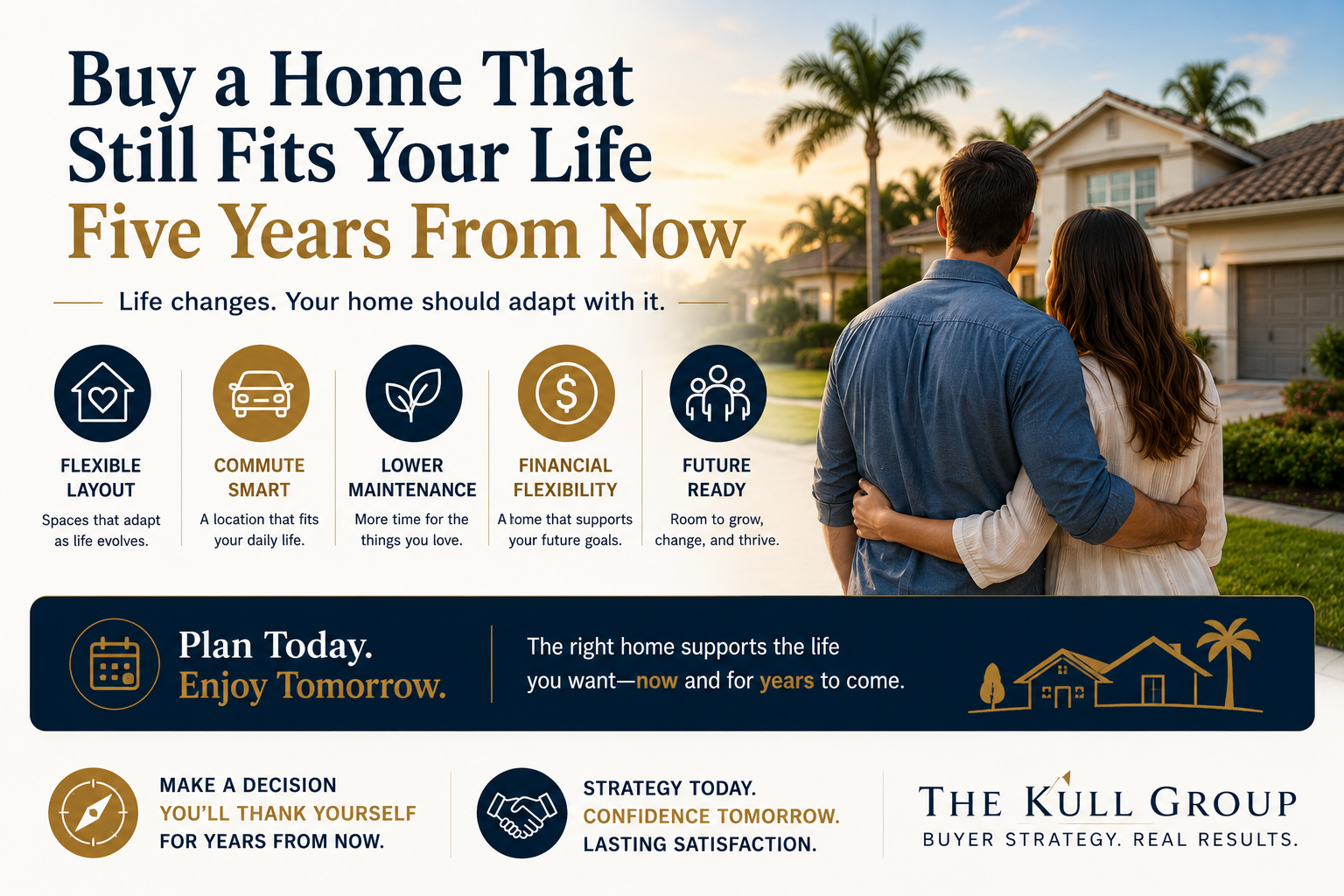
How to Buy a Home That Still Fits Your Life Five Years From Now
Many buyers search for a home based primarily on current needs. The challenge is that life rarely stays exactly the same after closing.
Work changes. Families evolve. Schedules shift. Commute patterns adjust. Financial priorities move. Children grow. Maintenance tolerance changes. Travel habits evolve. Health considerations become more important. Lifestyle expectations mature.
A home that fits perfectly today may feel limiting later if the ownership structure cannot adapt alongside life itself.
That is why some of the strongest buying decisions come from evaluating not only immediate comfort, but long-term flexibility.
The strongest ownership decisions usually happen when buyers choose homes that support both current life and future adaptability.
Most Buyers Underestimate How Much Life Changes
During the search process, buyers often focus on visible features:
- bedroom count
- square footage
- upgrades
- community appearance
- amenities
- price
Those details matter.
But over time, many buyers realize that long-term satisfaction is often shaped more heavily by:
- layout flexibility
- commute sustainability
- maintenance demands
- financial comfort
- future adaptability
- daily operational simplicity
- lifestyle alignment
The strongest ownership environments tend to adapt with life instead of forcing life to constantly adapt around the property.
Flexibility Often Matters More Than Perfection
Many buyers search for the “perfect” home. In reality, long-term satisfaction usually comes from flexibility rather than perfection.
A home that adapts well over time may support:
- remote work changes
- family growth
- downsizing transitions
- aging-in-place considerations
- financial shifts
- future resale flexibility
- schedule changes
- healthcare access
A home that looks ideal today but creates rigidity later may eventually feel more stressful than expected.
The strongest buying decisions often come from choosing a home that remains supportive as life evolves.
Buyers evaluating those long-term tradeoffs may also benefit from reviewing how daily life differs across Palm Beach County communities.
Compare Homes Based on Long-Term Lifestyle Sustainability
One of the strongest ways to avoid future ownership frustration is to compare homes through the lens of adaptability rather than only immediate excitement.
Some buyers eventually realize they should have compared:
- future flexibility versus maximum square footage
- maintenance simplicity versus property size
- commute sustainability versus purchase price alone
- layout functionality versus cosmetic upgrades
- operational simplicity versus emotional impulse
- long-term adaptability versus short-term excitement
Once buyers understand which ownership structure can realistically support future life changes, the search process becomes much more strategic.
Port St. Lucie Often Appeals to Buyers Seeking Long-Term Flexibility
Many buyers exploring Port St. Lucie are evaluating more than immediate affordability.
They may also be prioritizing:
- newer construction
- future room to grow
- larger homes
- greater financial flexibility
- lower pricing pressure
- longer-term ownership sustainability
For some buyers, that ownership structure creates valuable breathing room both financially and operationally.
For others, the longer commute patterns or distance from core activity centers may eventually outweigh the space advantages.
The strongest decisions usually happen when buyers evaluate how the ownership environment may feel years later instead of focusing only on present-day excitement.
Buyers evaluating those tradeoffs may benefit from exploring Port St. Lucie buyer strategy guidance.
Layout Functionality Often Matters More Over Time
Some of the most important ownership features are not always obvious during the showing process.
Over time, buyers may care far more about:
- how the home flows daily
- privacy between rooms
- workspace flexibility
- guest accommodations
- future aging considerations
- maintenance accessibility
- storage functionality
- how adaptable the space feels
Cosmetic finishes may feel emotionally exciting during the purchase process, but layout functionality often shapes long-term comfort more heavily once ordinary life resumes.
Buyers evaluating those ownership patterns may also benefit from reviewing how maintenance expectations affect long-term ownership comfort.
Future Financial Flexibility Matters Too
A home that stretches a buyer financially during the purchase phase may reduce flexibility later.
That pressure can affect:
- travel flexibility
- career choices
- family planning
- maintenance planning
- retirement goals
- stress levels
- unexpected life changes
That does not mean buyers should avoid meaningful investments in their lifestyle or long-term goals.
But sustainable ownership usually feels emotionally calmer because the property supports life rather than constantly pressuring it.
Stuart Often Appeals to Buyers Prioritizing Lifestyle Pace
Some buyers eventually realize they are not only searching for a home. They are searching for a different pace of life.
Stuart often appeals to buyers who prioritize:
- slower lifestyle rhythm
- water-oriented living
- smaller-community feel
- reduced intensity
- greater decompression
- long-term lifestyle sustainability
For the right buyer, that environment can create strong long-term ownership satisfaction.
For another buyer, greater distance from Palm Beach County activity centers or professional infrastructure may feel limiting over time.
The strongest ownership decisions usually happen when buyers evaluate whether the lifestyle environment will still feel supportive years later.
Buyers evaluating those lifestyle patterns may benefit from exploring Stuart buyer strategy guidance.
Future Maintenance Tolerance Should Be Considered Early
One of the biggest ownership changes many buyers experience over time is maintenance tolerance.
A property that feels exciting today may feel exhausting later if it requires:
- constant upkeep
- heavy landscaping
- large exterior maintenance
- ongoing repair management
- high operational involvement
Some buyers genuinely enjoy hands-on ownership. Others eventually prioritize simplicity, travel flexibility, lower maintenance pressure, or easier daily management.
The strongest ownership structures usually align with how the buyer expects life to evolve over time.
Buyers evaluating those flexibility patterns may also benefit from reviewing how lifestyle flexibility shapes long-term ownership satisfaction.
Homes Should Support Life — Not Limit It
At its core, long-term ownership fit is about support.
The home should support:
- daily routines
- future adaptability
- financial comfort
- emotional sustainability
- changing family needs
- career flexibility
- maintenance tolerance
- future life stages
That does not require predicting the future perfectly.
It simply requires choosing an ownership structure flexible enough to evolve alongside life instead of becoming restrictive as circumstances change.
Buyers wanting a broader ownership-fit framework may also benefit from reviewing buyer strategy and area fit guidance for Palm Beach County.
Trying to Choose a Home That Will Still Support Your Life Years From Now?
If you are comparing different ownership environments, maintenance structures, commute patterns, layout styles, or long-term flexibility priorities, a buyer strategy consultation can help clarify which ownership structure may continue fitting your lifestyle well after the purchase itself.
- Compare homes based on long-term adaptability and sustainability
- Evaluate future flexibility alongside current lifestyle needs
- Understand how ownership structure affects future life stages
- Clarify which environments may support long-term comfort and stability
No pressure. Just practical guidance designed to help buyers choose ownership environments that remain supportive as life evolves over time.
Frequently Asked Questions About Long-Term Home Fit and Future Flexibility
Why do buyers often outgrow homes emotionally even if the house itself is still attractive?
Life changes over time. Commute patterns, maintenance tolerance, work structure, financial priorities, family needs, and lifestyle expectations may evolve in ways the original ownership structure no longer supports comfortably.
Why is flexibility more important than perfection when buying a home?
Flexible homes adapt more easily to changing work patterns, family structures, financial conditions, travel habits, and long-term lifestyle shifts. Perfect homes on paper may become restrictive later if they lack adaptability.
How does Port St. Lucie appeal to buyers thinking long term?
Port St. Lucie often appeals to buyers seeking newer homes, affordability flexibility, more space, and long-term ownership sustainability, though commute tradeoffs still need to be evaluated realistically.
Why does layout functionality matter more over time?
Layout affects how comfortably the home supports daily life, privacy, work-from-home needs, storage, aging considerations, maintenance accessibility, and long-term adaptability after the excitement of closing fades.
What is one of the best ways to evaluate whether a home will still fit years later?
One of the strongest approaches is to evaluate whether the ownership structure supports future flexibility, maintenance sustainability, financial comfort, and realistic lifestyle adaptability instead of focusing only on current emotional excitement.