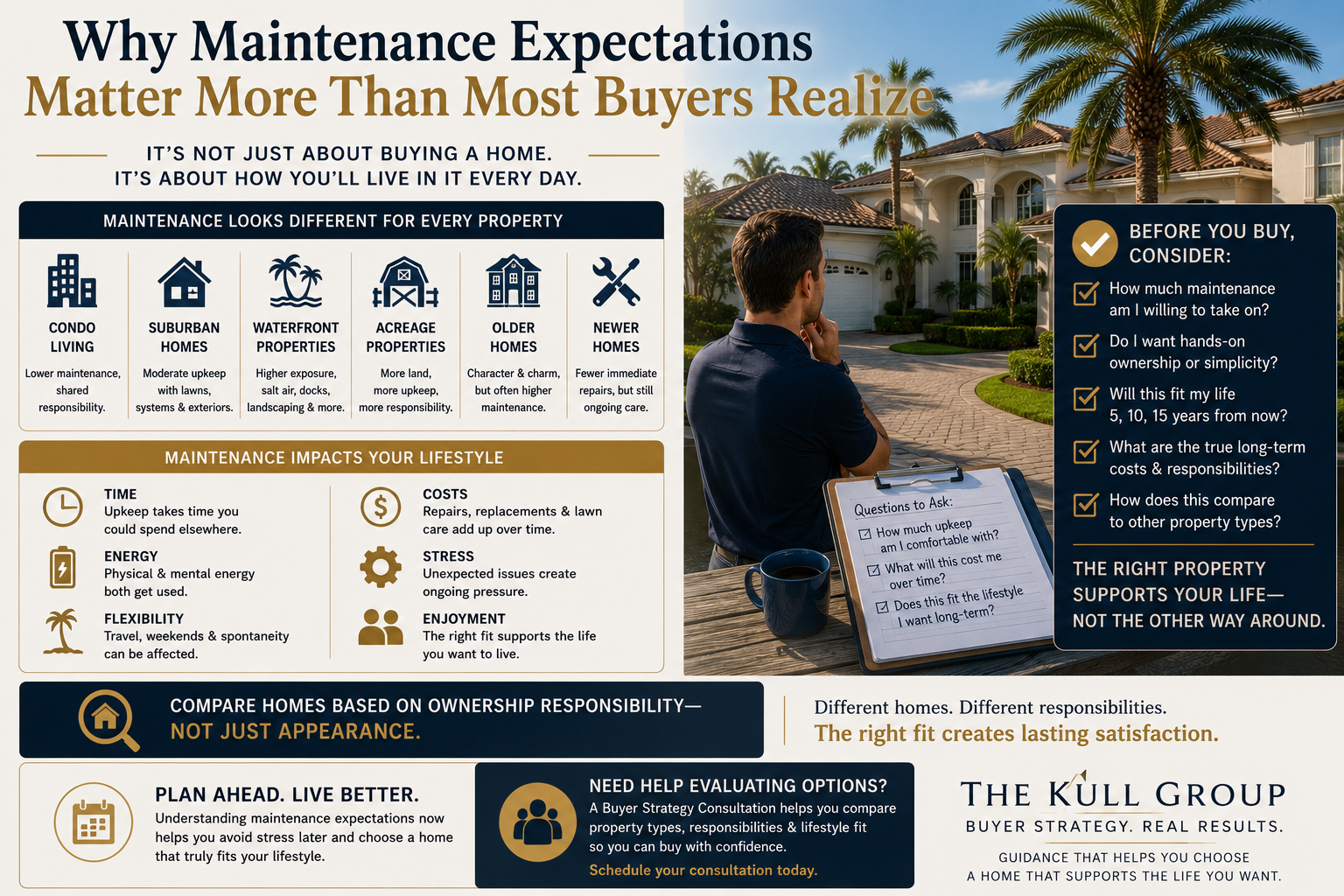
Why Maintenance Expectations Matter More Than Most Buyers Realize
Many buyers evaluate a home based on how it looks during the showing process. Far fewer evaluate what it will actually require to maintain over the next five, ten, or fifteen years.
That gap creates more ownership stress than many people expect.
A property can feel exciting during the purchase phase and slowly become emotionally draining once the realities of upkeep, repairs, landscaping, aging systems, exterior exposure, or ongoing maintenance begin affecting ordinary life.
For some homeowners, those responsibilities feel rewarding. For others, they quietly consume time, energy, weekends, and financial flexibility in ways that were never fully evaluated before closing.
The issue is not whether maintenance is good or bad.
The issue is whether the ownership responsibility matches the lifestyle the buyer actually wants long term.
The strongest ownership decisions usually happen when buyers evaluate maintenance tolerance honestly instead of assuming they will “figure it out later.”
Different Properties Create Very Different Ownership Demands
Not all homes require the same level of ongoing attention.
A buyer comparing:
- a condo
- a townhome
- a newer suburban home
- a waterfront property
- an acreage property
- an older character home
…is not simply comparing square footage or aesthetics.
They are comparing entirely different ownership responsibilities.
Some homes create:
- larger landscaping obligations
- more exterior upkeep
- greater weather exposure
- higher system replacement costs
- drainage management concerns
- more cleaning and maintenance labor
Others create:
- lower maintenance intensity
- shared maintenance structures
- reduced exterior responsibility
- simpler day-to-day ownership
- greater schedule flexibility
The strongest ownership outcomes usually happen when buyers understand which version of ownership actually fits how they want life to operate after closing.
Some Buyers Enjoy Hands-On Ownership
One of the most important realities in homeownership is that maintenance tolerance varies dramatically from one buyer to another.
Some homeowners genuinely enjoy:
- yard projects
- landscaping
- outdoor upgrades
- property improvement projects
- managing acreage
- maintaining larger homes
For those buyers, maintenance may feel satisfying rather than stressful.
Other buyers prioritize:
- travel flexibility
- simpler routines
- reduced upkeep
- less operational responsibility
- more schedule freedom
- lower ongoing property management
Neither approach is better.
The problem appears when buyers purchase a level of responsibility that conflicts with how they actually prefer to live.
Buyers evaluating those lifestyle patterns may also benefit from reviewing how daily life differs across Palm Beach County communities.
Compare Homes Based on Ownership Responsibility — Not Just Appearance
One of the strongest ways to avoid ownership stress later is to compare homes based on how much responsibility they create after closing.
Some buyers eventually realize they should have compared:
- maintenance-light ownership versus hands-on ownership
- condo living versus single-family upkeep
- larger lots versus reduced maintenance
- newer systems versus older property character
- waterfront exposure versus simplified ownership
- privacy versus operational simplicity
Once buyers understand the type of ownership responsibility they are genuinely comfortable managing, the search process becomes significantly more effective.
The Acreage and Loxahatchee Are Strong Examples of Maintenance Reality
Many buyers are naturally attracted to The Acreage and Loxahatchee because of:
- space
- privacy
- reduced density
- larger lots
- rural decompression
- greater property flexibility
For the right buyer, those environments can create an outstanding ownership experience.
But they also often require:
- more landscaping management
- drainage awareness
- larger exterior upkeep
- equipment management
- more hands-on ownership involvement
- greater long-term maintenance planning
Some buyers thrive in that environment because they enjoy managing space and independence. Others eventually realize the operational demands are heavier than expected.
The strongest decisions usually happen when buyers evaluate both the emotional appeal and the ongoing responsibility honestly.
Buyers evaluating those ownership environments may benefit from exploring The Acreage buyer strategy guidance.
Older Homes Can Create Different Maintenance Patterns
Some buyers are naturally drawn toward older homes because of character, architecture, mature neighborhoods, or location advantages.
Those properties can create highly rewarding ownership experiences.
But buyers should still evaluate:
- roof age
- plumbing systems
- electrical systems
- window condition
- drainage
- foundation movement
- insurance implications
- future replacement planning
Older homes do not automatically create problems. But they often require more long-term ownership awareness than buyers initially expect.
Buyers evaluating those long-term ownership realities may also benefit from reviewing how property age affects ownership costs and insurance considerations.
Maintenance Pressure Can Affect Lifestyle Satisfaction
Many buyers think about maintenance financially but underestimate the emotional side of ownership responsibility.
Over time, constant upkeep can affect:
- weekend flexibility
- stress levels
- travel freedom
- schedule management
- energy recovery
- overall emotional comfort
For some buyers, maintaining a larger or more complex property feels rewarding and grounding.
For others, it eventually feels like the home is controlling their time instead of supporting their life.
The strongest ownership environments usually feel sustainable emotionally, not just affordable financially.
Newer Homes Often Create Different Tradeoffs
Many buyers prioritize newer homes because they expect:
- fewer immediate repairs
- newer systems
- lower maintenance pressure
- better energy efficiency
- simpler ownership
Those advantages can be meaningful.
But newer homes may also involve:
- HOA restrictions
- smaller lots
- less mature landscaping
- higher density
- future development nearby
- less property flexibility
The right ownership fit depends on which tradeoffs matter most to the buyer’s lifestyle priorities.
Buyers evaluating those flexibility patterns may also benefit from reviewing how lifestyle flexibility affects long-term ownership satisfaction.
Maintenance Fit Is Really a Lifestyle Fit Question
At its core, maintenance tolerance is not simply a financial issue.
It is a lifestyle issue.
Buyers should ask themselves:
- How much time do I realistically want to spend managing property?
- Do I enjoy hands-on ownership or prefer simplicity?
- How important is flexibility and travel freedom?
- Do I want more space even if it creates more responsibility?
- Will this ownership structure still fit my life years from now?
The strongest ownership outcomes usually happen when buyers choose the level of responsibility that genuinely supports the way they want to live after closing.
Buyers looking for a broader ownership-fit framework may also benefit from reviewing buyer strategy and area fit guidance for Palm Beach County.
Trying to Decide How Much Ownership Responsibility Actually Fits Your Lifestyle?
If you are comparing condos, newer suburban homes, waterfront properties, acreage homes, or larger-lot ownership environments, a buyer strategy consultation can help clarify how maintenance expectations may affect daily life, flexibility, stress levels, and long-term ownership satisfaction.
- Compare maintenance-light ownership with hands-on property environments
- Evaluate how upkeep responsibilities affect long-term lifestyle fit
- Understand the operational realities behind different property types
- Clarify how much ownership responsibility feels sustainable for your life
No pressure. Just practical guidance designed to help buyers avoid choosing a property structure that creates more long-term responsibility than they truly want.
Frequently Asked Questions About Maintenance Expectations Before Buying a Home
Why do maintenance expectations affect long-term home satisfaction?
Maintenance responsibilities affect daily routines, flexibility, stress levels, travel freedom, energy management, and overall ownership comfort. Over time, those operational demands can shape how sustainable ownership feels.
Do larger homes always create more maintenance responsibility?
Not always, but larger homes, larger lots, waterfront properties, acreage environments, and older homes often involve greater upkeep, exterior maintenance, and long-term operational responsibility.
Why are The Acreage and Loxahatchee important examples of maintenance reality?
Those areas often provide space, privacy, and flexibility, but they may also require more landscaping management, drainage awareness, equipment upkeep, and hands-on ownership involvement than buyers initially expect.
Do newer homes automatically eliminate maintenance concerns?
No. Newer homes may reduce immediate repair exposure, but buyers should still evaluate HOA structure, future development, density, lot size, long-term maintenance planning, and overall ownership flexibility.
How should buyers evaluate whether a property’s maintenance level fits their lifestyle?
Buyers should honestly evaluate how much time, responsibility, flexibility, and operational involvement they want their ownership environment to require after closing.