


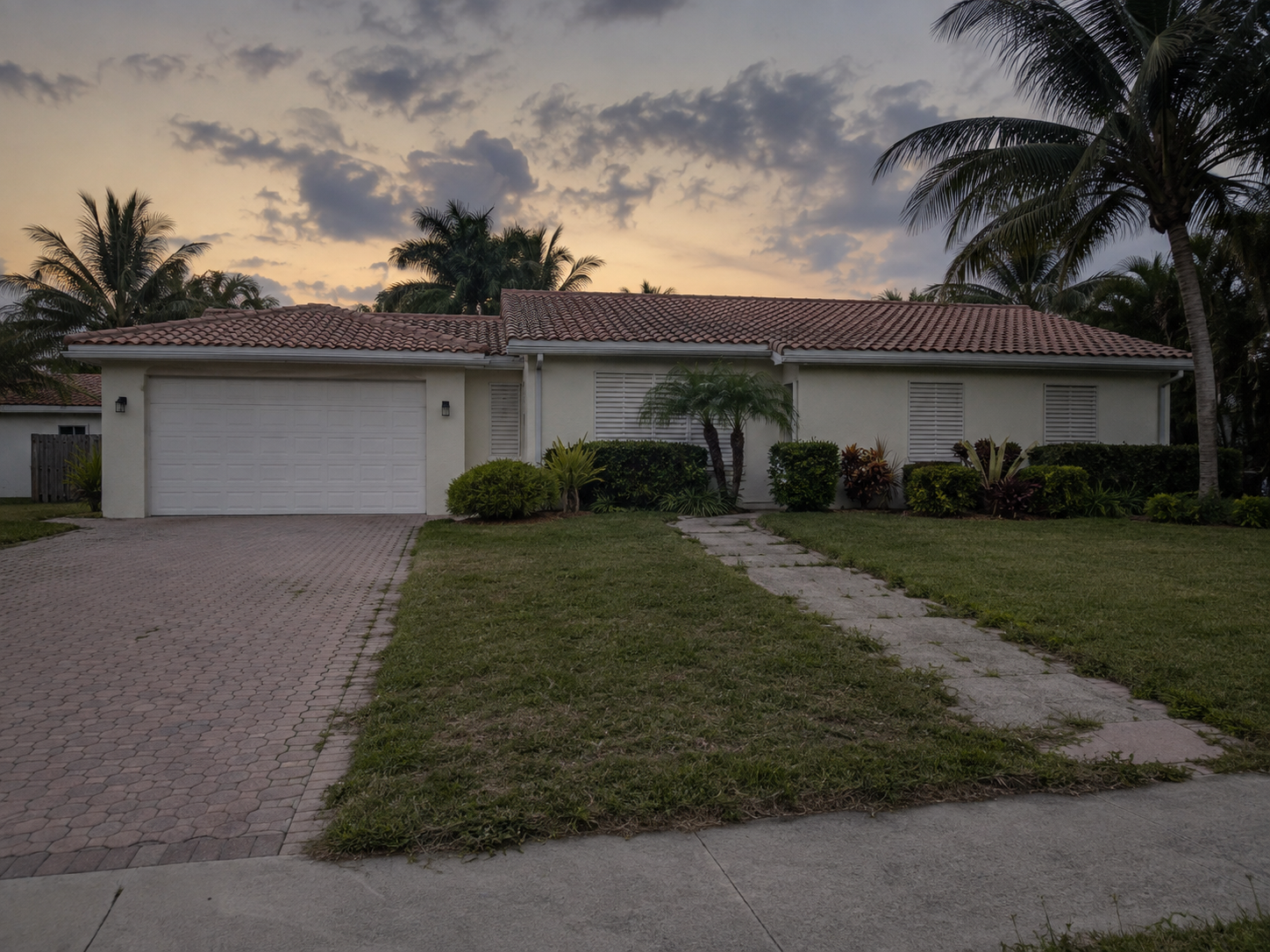
How Multi-Heir Probate Properties Create Real Estate Coordination Challenges
In a multi-heir probate sale, the property is only one of the two things that has to work. The other is coordination — the layer that forms once more than one heir holds a stake in the outcome. Heirs may come to the sale with different relationships to the property, different financial situations, different timelines, and different emotional postures toward selling. The real estate work sits underneath all of that. This article treats those two things as separable layers: the property work is one set of tasks, and the coordination among the people entitled to decide is another, with its own distinct pressure points.
For attorneys managing Florida estates with real property, coordination is an operational variable rather than a theoretical one. Where those pressure points can form — and how a real estate advisor can absorb them instead of routing them back to the attorney — is the question this piece addresses. What follows is a coordination framework applied to Florida probate real property; the legal determinations referenced throughout remain with the estate's attorney and the court. Probate for a decedent domiciled in Palm Beach County is administered in Florida's Fifteenth Judicial Circuit, and the real property inside those estates sits across municipalities and unincorporated county areas whose governing conditions are not interchangeable; several of those differences are identified below. The probate real estate support page for attorneys sets out how the support role discussed here is defined.
Where Coordination Breaks Down
Coordination difficulty does not wait for the closing table. It can surface before a listing agreement is signed — sometimes before a real estate advisor has been engaged at all. The breakdown points below are the ones this framework treats as worth checking at intake, while there is still room to plan around them.
The first pressure point this article addresses is property condition. Heirs who live locally, or who have visited recently, may have a working sense of what the property looks like now and what it needs. Heirs who are out of state, or who associate the property with the version of it they knew years ago, may carry an image that no longer matches. Where that gap exists, what presents as a valuation disagreement may instead be a difference in what the heirs believe the property's current condition to be — though price expectations among heirs can also diverge for reasons that have nothing to do with condition. When one heir believes the property is worth materially more than the market evidence supports, the early conversation can turn into a negotiation about the property's condition rather than a planning conversation about how to proceed.
Current condition is established through a formal inspection and, where a buyer is financing or insuring the purchase, through the insurer's underwriting review — not through recollection of an earlier visit. Where the property sits also shapes what that review has to cover.
Where the estate property is in Wellington, an incorporated village with a designated Equestrian Preserve Area, the asset may be an acreage parcel with equestrian improvements — barns, paddocks, arenas, or accessory structures — rather than a standard subdivision home. Those improvements widen the scope of an inspection, and permitted uses and structures are governed by the Village's land development regulations. Whether an accessory structure was permitted is a question for the Village's building records rather than for family recollection.
Royal Palm Beach is a separate incorporated village, and a Royal Palm Beach mailing address does not by itself establish that a parcel sits inside the village limits. Other parcels in that part of central Palm Beach County lie in unincorporated county area, where permitting and code enforcement run through the County rather than a municipality, and where a property may be served by private well and septic rather than a public utility connection. For an estate, that distinction determines which records the advisor pulls and which systems an inspection needs to reach.
The second early pressure point is decision authority. Who holds authority to act for the estate is determined by the will, the letters issued by the court, the form of administration, and applicable Florida law — determinations that belong to the estate's attorney and the court, not to a real estate advisor. At the real estate level, legal clarity on that question does not by itself produce operational clarity. Where co-personal representatives are named, where heirs are not in regular communication with each other, or where the difference between who may authorize and who must be consulted is not understood by everyone involved, a showing request, a repair authorization, or a counter-offer response can each become a coordination cycle rather than a single decision. Those cycles are where questions can start returning to the attorney's office that might have been resolved at the real estate level.
The Signals Worth Checking at Intake
Several case characteristics can be identified at intake, before a listing strategy is set. They are operational rather than legal, and confirming them early can allow the timeline to be built on information that has been verified rather than revised as information arrives.
Out-of-state heirs who have not seen the property recently are one such characteristic. A gap between assumed condition and actual condition that is identified before listing can be addressed without a contract timeline running; the same gap discovered mid-transaction has to be addressed inside one. Closing that gap is largely a matter of putting current photographs, an inspection report, and comparable market evidence in front of everyone at the same time.
Association-governed property is another. Where the estate asset sits in a community with a homeowners or condominium association, unpaid assessments, fines, estoppel requirements, and transfer-approval provisions can all become part of the closing path. What must be satisfied before closing, in what order, and out of which funds is governed by the association's recorded documents, applicable Florida law, and the closing agent's requirements — questions for the estate's attorney and the title or closing agent rather than for the real estate advisor. What the advisor can do at intake is confirm whether an association exists, request the estoppel information, and identify the association's approval process so the timeline reflects it.
The shape of that requirement is not uniform across the county. In Boynton Beach, an estate property may sit in an age-restricted community; where it does, the community's occupancy and approval provisions may bear on who can occupy the unit during administration and on who is eligible to purchase it, and those provisions are read out of the recorded documents with counsel rather than assumed. In Boca Raton, where the estate asset is a condominium unit, the declaration's transfer-approval provisions and the association's estoppel certificate sit directly in the closing path, and the association's review timing is set by its documents and applicable law rather than by the parties to the contract.
Utility jurisdiction is a smaller item that can still hold up an inspection. Lake Worth Beach operates its own municipal electric utility, so a vacant estate property inside that city's limits is served by the city rather than by the regional provider serving surrounding areas — which matters when service has lapsed and power has to be restored before an inspection or an appraisal can be completed. A Lake Worth mailing address, by itself, does not establish that a property is inside the city limits of Lake Worth Beach; parcels carrying that mailing address may lie in unincorporated Palm Beach County.
Estates with multiple personal representatives who are not in active communication with each other can produce decision friction at every step. This is not necessarily a legal problem — the authority may be clearly established — but the practical result can be that each decision requires a coordination cycle among people who may have different levels of engagement, different time zones, and different readiness to move forward.
Insurance status belongs on the same intake list. A property that has been held in an estate without active management may have a coverage gap, a lapsed or non-renewed policy, or open underwriting questions relating to roof age or condition documentation. Where a buyer's insurer raises a question the estate had not anticipated, the closing timeline can shift in ways that affect everyone's planning, including the attorney's.
Is the estate you are managing carrying real estate coordination complexity that hasn't been fully mapped yet?
If you are managing a multi-heir estate with Florida real property, the coordination variables in that specific file — heir count and location, what is actually known about property condition, association status, insurance, title, and the authority structure the court has established — can be reviewed before they reach the listing decision. A brief case-specific conversation is a reasonable first step.
What This Means for Attorneys Managing These Cases
For attorneys, the real estate coordination challenge in a multi-heir probate is fundamentally a capacity question: how much of this does the attorney absorb, and how much of it is kept off the attorney's desk by the real estate advisor handling the property?
The referral decision — which agent handles this estate's real property — is not simply a professional courtesy. It is a case management decision. An agent unfamiliar with Florida probate process, with association estoppel and approval requirements, with communicating across heirs in different states and different emotional states, or with the underwriting questions insurers raise on Palm Beach County property may generate work that returns to the attorney: questions routed upward that belong at the real estate level, timelines represented on assumption rather than on confirmation, and heirs calling the attorney's office about matters the advisor could have addressed.
The distinction this framework treats as most useful here is not between simple estates and complex ones. It is between estates where the coordination layer is being actively managed and estates where it is not. Complexity at the legal level and complexity at the coordination level are separate variables, and an estate can carry one without carrying the other: a legally intricate estate may have a coordination layer that is already organized, and a legally straightforward one may have a coordination layer that is not. That is the layer this article is describing, and it is separable from the legal layer sitting above it.
The practical implication for an attorney reviewing a new estate file with real property is that a defined set of variables can be surfaced at the outset rather than discovered later: how many heirs there are and where they are located; what is actually known — as opposed to assumed — about the property's condition; whether an association governs the property and what its documents require; whether insurance is in force and what an insurer is likely to ask; what the title work shows; and how decision authority is structured under the letters the court has issued. A reasonable expectation to set with a real estate advisor is that they can walk through that list and state plainly which items are confirmed and which are still assumptions, so the case timeline is built on the confirmed ones.
One structural feature of multi-heir estates is worth naming because it shapes how the engagement is set up: practical access can concentrate coordination work on whichever heir lives closest to the property. Where that happens, that heir may end up functioning as the de facto property manager, the scheduling contact, and the person fielding calls from relatives who are less engaged day to day. Where that pattern is present, structuring the real estate engagement around it — a defined point of contact, scheduled group updates, shared access to the same condition and market information — is one way to distribute the work more deliberately rather than leaving it to fall where geography puts it.
Frequently Asked Questions
What happens when heirs cannot agree on a listing price in a Florida probate sale?
When heirs hold materially different price expectations, the listing decision can stall. An appraisal obtained early in the process can give the conversation an objective reference point, though it does not resolve underlying disagreement about what the property means to the family or what the family should do. Where heirs remain unable to agree, the matter may require attention at the legal level. The real estate advisor's role is to ensure that the market evidence is clearly presented and that heirs who are not local have access to the same property condition and valuation information as those who are. Whether legal intervention is appropriate or necessary in a specific case is a determination that belongs with the probate attorney and, if applicable, the court — not with the real estate advisor.
How do HOA delinquencies affect the timeline of a probate sale in Palm Beach County?
Whether an outstanding association balance must be satisfied before a probate sale can close, and out of which funds, is governed by the association's recorded documents, applicable Florida law, and the closing agent's requirements. Those are questions for the estate's attorney and the title or closing agent rather than for the real estate advisor. Operationally, the variables that affect timing are how quickly the association issues an estoppel certificate, whether the governing documents impose a transfer-approval or interview step, and whether the balance itself is disputed. Association review timing varies by community. Association status confirmed at intake can be sequenced alongside the rest of the timeline as a planning item; the same requirement surfacing close to a scheduled closing may leave less room to absorb it and can move the date. An attorney managing estate property in an association-governed community has reason to confirm that status early, and the real estate advisor should raise the question at engagement.
Can a personal representative authorize a real estate sale without the agreement of all heirs?
Authority in Florida probate real estate sales depends on the terms of the will, the letters testamentary or letters of administration issued by the court, and whether the estate is being administered through formal or summary administration. In some circumstances, the personal representative holds authority to act without unanimous heir agreement. In others, court approval or heir consent may be required. These are legal determinations that depend on the specific facts of the estate and the applicable provisions of Florida probate law — not real estate determinations. An attorney handling the estate is the appropriate source of guidance on this question. The real estate advisor's role is to understand the authority structure that the attorney has established and to operate within it cleanly.
The coordination layer described here is where a multi-heir probate sale is either managed deliberately or left to resolve itself. The probate real estate support page for attorneys describes how that support role is structured. For an attorney managing an active file with Florida real property, the attorney consultation request is the direct path to a case-specific conversation. And because operational coordination depends on knowing who is authorized to act, the related resource on who holds authority to sell probate property in Florida covers the authority and decision structure sitting behind it.