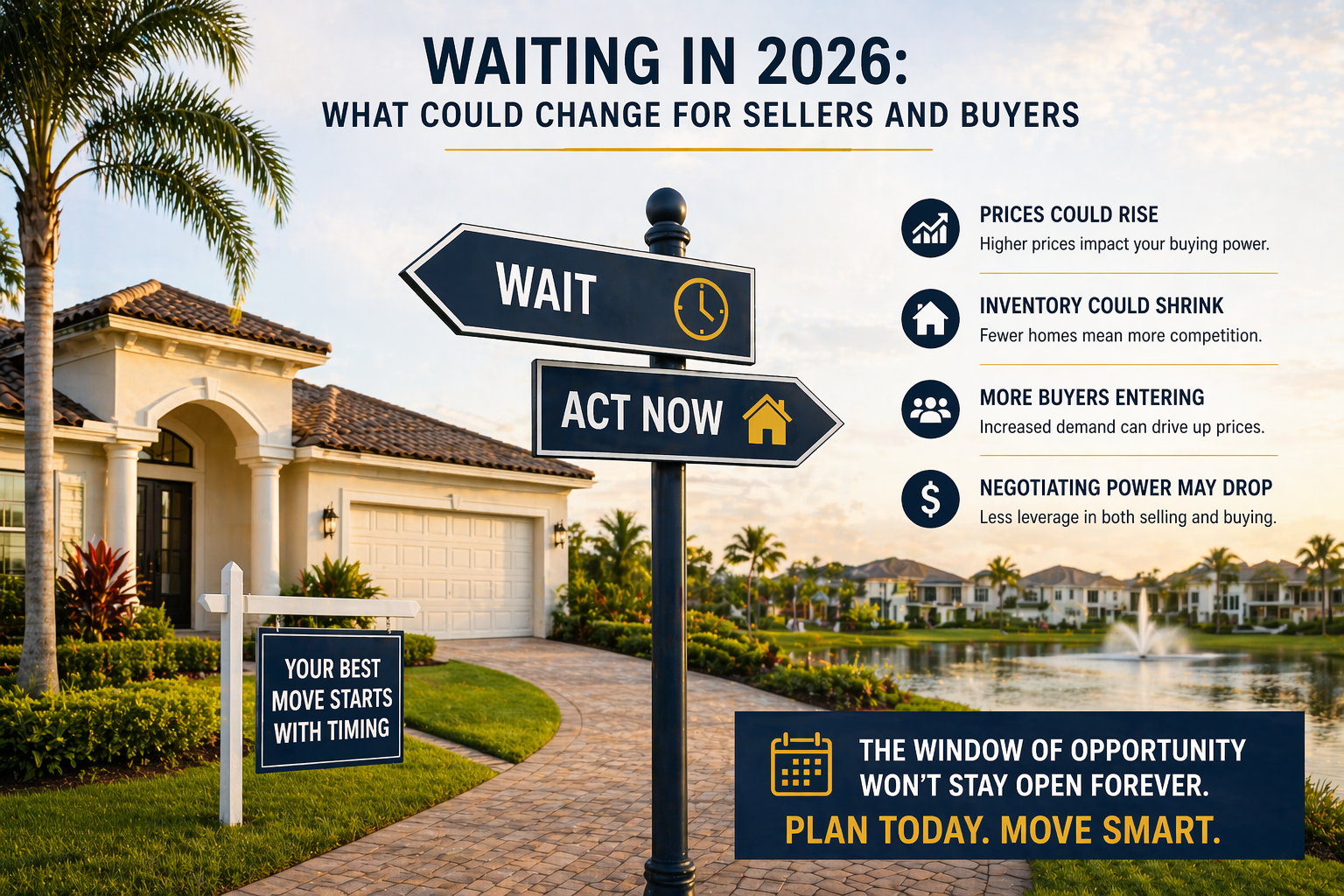
What Happens If You Wait to Sell and Buy in 2026?
Waiting can feel responsible.
It gives you time to watch the market, avoid rushing, and hold onto a position that already feels familiar. For many homeowners, delaying the move feels safer than acting while conditions are still shifting.
But markets do not pause while you wait.
The important question is not whether your home will still have value later. The question is whether the relationship between your sale and your next purchase will still work the same way.
Waiting Does Not Preserve the Same Opportunity
Many homeowners think about waiting as if it freezes their current position.
It does not.
Your current home may still appreciate or remain desirable, but the strength of your position depends on what is happening around it. If inventory increases, buyer urgency slows, or competition between sellers grows, the leverage attached to your home can begin changing even while the property itself still feels strong.
That is why understanding whether Palm Beach County sellers still have timing on their side matters before assuming later will automatically create a better outcome.
The Buy Side Often Changes Faster Than Sellers Expect
The purchase side of the move is where many homeowners underestimate risk.
Waiting to buy does not simply create more time to think. It can also reduce flexibility when you are finally ready to move.
As inventory tightens in northern markets connected to Port St. Lucie and the Treasure Coast, buyers may face:
- Fewer desirable options
- More selective sellers
- Less negotiation flexibility
- Greater competition for well-positioned homes
The danger is not usually that homes disappear entirely.
The danger is that the quality of the opportunity changes before your equity is repositioned.
The Real Risk Is the Double Shift
The most important change is not what happens to one side of the move.
It is what happens when both sides move at the same time.
Over time:
- Your current market can become more competitive for sellers
- Your next market can become more restrictive for buyers
That combination is what narrows flexibility.
The mechanics behind that transition become much clearer when you understand how inventory is tightening across both markets.
The numbers may still look strong later.
But what those numbers can actually accomplish may become smaller.
Why Waiting Feels Safer Than It Actually Is
Waiting often feels protective because it avoids immediate action.
But avoiding action is not the same as reducing exposure.
In some situations, waiting absolutely may still be the correct decision. The mistake is assuming waiting is neutral.
A delayed move can quietly create:
- More seller competition
- Fewer buying choices
- Higher replacement costs
- More pressure during the transition
Those changes usually happen gradually, which is why homeowners often do not recognize the shift until flexibility has already narrowed.
How This Can Affect a Market Like Greenacres
For homeowners in Greenacres, the decision often centers around how efficiently today’s equity can be converted into a stronger next position.
The home may still hold value later.
But if selling conditions soften while buying conditions tighten, the same amount of equity may create fewer useful options when the move finally happens.
That is the part many homeowners miss.
The issue is rarely whether equity still exists.
The issue is whether the market still allows that equity to work efficiently.
What Strategic Homeowners Are Actually Watching
The strongest decisions are usually not based on predicting the market perfectly.
They are based on understanding what the current timing window still allows.
That means evaluating:
- How your current home would likely perform today
- How much usable equity would remain after costs
- What purchase flexibility still exists in the next market
- How much negotiation leverage may narrow over time
The goal is not to move quickly.
The goal is to avoid confusing delay with protection.
How This Fits Into the Larger Sell High, Buy Smart Strategy
A successful move depends on both sides working together.
The broader Sell High, Buy Smart strategy is built around the current imbalance between stronger Palm Beach County selling conditions and still-flexible buying opportunities farther north.
That imbalance is the opportunity.
If the gap narrows:
- The sale may still happen
- The purchase may still happen
- But the overall leverage between the two may weaken
That is why timing matters more than many homeowners initially realize.
What This Decision Really Comes Down To
The better question is not whether waiting is always wrong.
The better question is whether waiting improves your position—or simply delays the move until it becomes harder to structure efficiently.
Right now, some homeowners can still:
- Sell from relative strength
- Buy before northern flexibility tightens fully
- Coordinate the transition without unnecessary pressure
That combination is what creates the current window.
Before You Decide to Wait
Every situation depends on equity, timing, financing flexibility, and the type of move you are trying to create.
Before deciding to delay the move, it helps to understand what waiting is likely to change—not in theory, but within your specific position.
The strongest decisions come from knowing how much leverage you still have, how much flexibility still exists, and whether the next version of the market is likely to improve your options or narrow them.
This Window Will Not Stay Open Forever
Right now is one of the few times where both sides of this move may still work in your favor.
- Why Palm Beach County sellers still hold leverage
- Where Port St. Lucie buyers still have flexibility
- What changes could narrow the gap
- How to avoid losing positioning during the transition
No pressure. Just clarity before you make a move.
Frequently Asked Questions
Is waiting to sell always a bad decision?
No. Waiting can absolutely make sense in certain situations. The important part is understanding how delaying the move may affect both your selling leverage and your future buying flexibility before assuming the same opportunity will still exist later.
What is the biggest risk of waiting to sell and buy?
The biggest risk is the market shifting on both sides at once. Your current sale may become more competitive while your next purchase becomes less flexible, reducing the overall advantage your equity can create.