


What Out-of-State Heirs Get Wrong About Florida Probate Real Estate
If you are managing an inherited property in Palm Beach County from another state, the assumptions you brought with you — about how long this takes, what the property is worth, what condition it is in, and who has authority to act — may not match what you find here. That is not a criticism. An out-of-state heir reasonably arrives with a framework built from the real estate market they know, and Florida probate operates according to conditions that can differ from that market. That framing is interpretation offered as a starting point, not a finding about any particular estate. This article is about that misalignment between expectation and encounter, and what to do about it on the real estate side.
Where those misalignments appear is the subject of this article. The rest of the process has its own professionals — attorneys, courts, accountants — and the real estate dimension is the part addressed here. Throughout, the distinction is kept visible: propositions that can be confirmed from a document, a public record, or a licensed professional are identified with the source that settles them, and anything that is interpretation, professional observation, or recommendation is labeled as such. For a broader orientation to what probate real estate decisions look like in this market, the probate and inherited property resource for Palm Beach County is a useful starting point.
The Condition Assumption Is Worth Testing Early
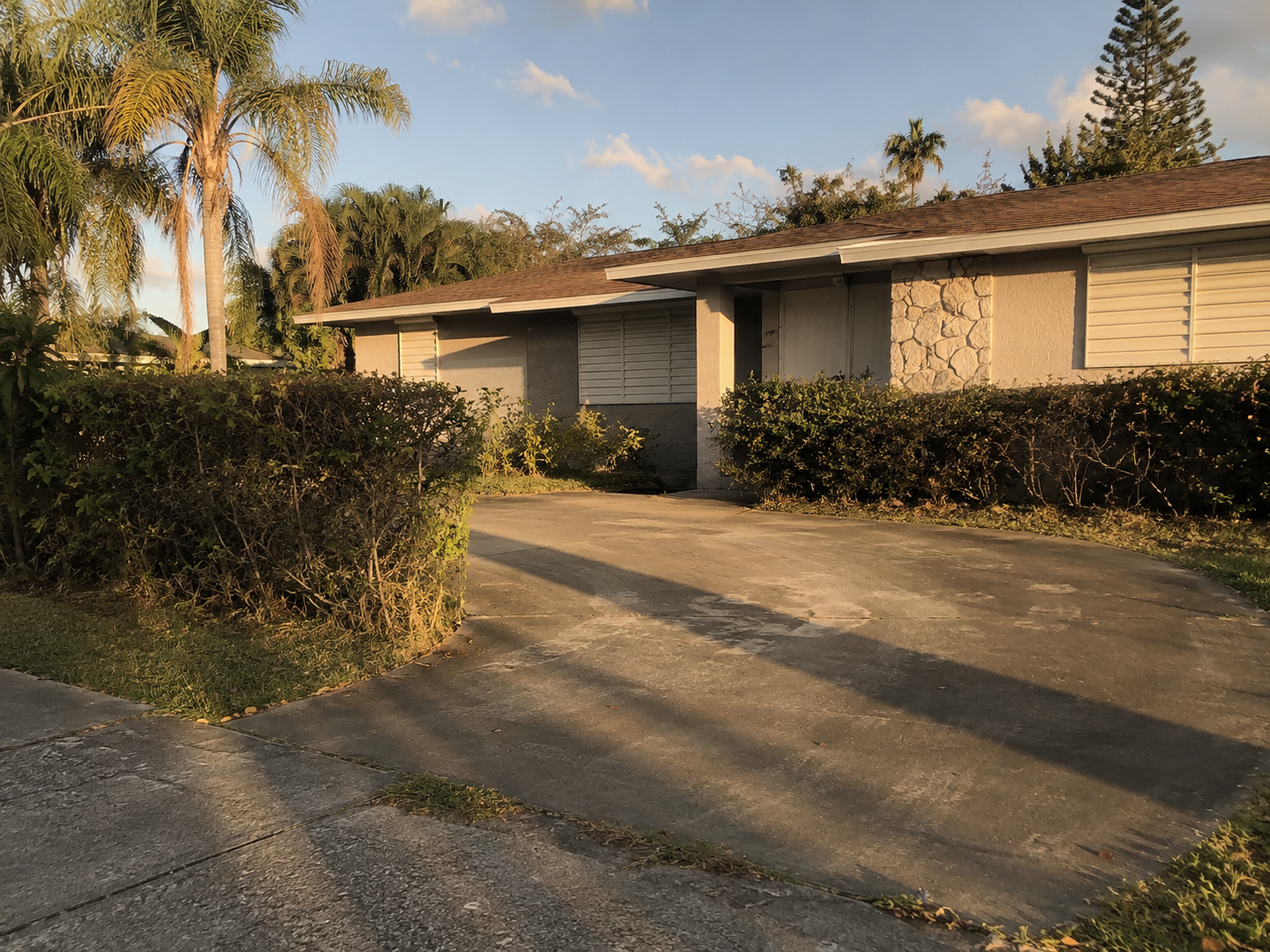
An out-of-state heir may form an impression of the property's condition from memory — from visits that may be years old, from conversations with the deceased, or from the fact that the home was recently purchased or built. What that impression may not account for is what South Florida's climate does to structures between those reference points. That is interpretation — a way of locating where expectation and encounter can separate — rather than a statement about any specific property.
Salt air, sustained humidity, and heat cycles are recognized factors in building deterioration in coastal South Florida. That is a general characteristic of the coastal environment, not a TKG assessment of any particular home; what those conditions have actually done to a specific structure is what an inspection establishes. Roof systems, HVAC equipment, pool mechanicals, exterior paint, and irrigation components are all exposed to those conditions. The recommendation that follows is a simple one: treat remaining service life as an inspection question rather than an assumption. Read the rest of this as interpretation of how exposure works rather than a prediction about a given address — a home that looked fine during a holiday visit three years ago may be showing wear today, not necessarily because of neglect, but because condition here is a function of exposure as well as care.
Where the property sits can also affect how much of the condition picture is retrievable from records. Lake Worth Beach, an incorporated city on the county's eastern side, includes neighborhoods built well before the county's later suburban expansion, and the city maintains locally designated historic districts. Both of those are matters of public record and are confirmable from the city rather than from memory. For an heir working from a distance, that points to two questions answerable from documents: the actual replacement dates for the roof and the mechanical systems, and whether the address falls within a designated historic district, since district designation can add a review step to exterior work. What that review actually requires for a particular address is determined by the city's ordinances and its staff, not by a real estate reading of them. As a recommendation on sequencing: that second question is better answered before pre-sale repairs are scheduled than after a contractor is booked.
Insurance is a related variable. Coverage terms, underwriting requirements, deductible structures, and premiums for a Florida property are set by the carrier and are verifiable from the policy itself, and the terms that applied to the original owner's policy are not automatically the terms that will apply going forward. What that means for a specific property — including whether coverage can continue or must be rewritten, and what roof documentation a carrier asks for — is a question for the carrier or a licensed insurance professional rather than something that can be assumed from the prior policy or determined here.
As a recommendation: establish condition from current documentation — inspection reports, contractor assessments, actual replacement dates for major systems — rather than from the property's build year, purchase year, or general impression. These are different things, and conflating them can create problems later.
The Timeline Is Set by the Process, Not by the Heirs
An out-of-state heir may arrive expecting the process to move at a pace their schedule can accommodate. Florida's formal probate process operates on its own timeline, and real estate decisions inside that process — who has legal authority to act, when a sale can proceed, what approvals are required — are governed by the court and by Florida probate law, not by the heirs' preference for efficiency. That allocation of authority is a matter of Florida law and court process; how it applies to a particular estate is the estate attorney's determination rather than a real estate judgment.
Interpretation, offered because it has practical consequences: decisions made before authority is clearly established can create complications that take time to unwind. The groundwork that has to happen in the meantime is where local conditions enter. Royal Palm Beach, an incorporated village in the county's western communities, was developed as a planned community rather than growing outward from an older town center — background context rather than a rule about any address. What governs a particular property there is the recorded documentation for that address: whether it is subject to a homeowners' association, and if so, what approval, notice, or estoppel steps that association requires when a property changes hands. Those are answerable from the recorded documents rather than from an assumption in either direction. As a professional observation from the real estate side rather than a claim about associations generally: an heir in another state would not necessarily think to ask, and finding out late can add steps at the point when authority has finally been established and everyone is ready to move.
For heirs who want a clearer picture of how authority works in Florida probate real estate, this resource on who has authority to sell a probate property in Florida addresses that question directly. Reviewing it early rather than at the point when a decision is already in motion is a recommendation, not a requirement of the process.
The legal and procedural determinations involved in Florida probate — timelines, authority, court approvals — belong to the estate attorney managing the process. The real estate dimension operates within whatever framework the probate establishes. Understanding where one ends and the other begins can save heirs a considerable amount of confusion.
Are you managing a Florida inherited property from out of state and trying to understand what actually applies to your situation?
If your questions have become specific to this property and this estate rather than general, a direct conversation is the practical next step. Connect with The Kull Group for a probate property consultation.
Multi-Heir Coordination Is Its Own Work
What follows in this section is analytical framing rather than a description of any particular family. For an out-of-state heir, the property questions are the answerable ones — condition, market context, what preparation would cost. Each of them has a documentary or professional source that can settle it. Coordination among the heirs themselves has no comparable source, which is what makes it a different kind of problem.
Consider an illustration. Three siblings inheriting a property — each living in a different state, each carrying a different financial situation, each holding a different sense of what the right timeline looks like — are not only dealing with a real estate problem. They are dealing with a decision problem. The property is the subject. The coordination is the work.
The recommendation that follows from that framing is to work on the information rather than on the disagreement. When heirs are working from different assumptions about what the property is worth, what it would cost to prepare for sale, what carrying costs look like during a probate process, or what the realistic timeline is, the disagreement has more places to hide. Bringing those variables into alignment addresses a source of friction that arguing about the right decision does not reach.
The emotional dimension of this deserves recognition, and what follows is a professional observation about the decision process rather than a clinical or psychological judgment. An heir may be managing not only a transaction but significant financial decisions that follow the death of someone they were close to, often at a distance and without the time to be physically present. Financial readiness to act and emotional readiness to act do not always arrive on the same schedule. That gap is worth acknowledging within the decision process rather than working around it.
What This Means for Heirs Managing Florida Property From a Distance
The practical implications are fairly direct, and they begin with the property's own setting. Wellington, an incorporated village in the county's western communities, maintains a designated Equestrian Preserve Area, and property inside that area is subject to land-use provisions that do not apply village-wide. That designation, its boundary, and the provisions attached to it come from the village's land-use regulations and are confirmable from village records; how they apply to a particular parcel is the village's to determine. As a recommendation: if the inherited property is in Wellington, confirm from the village's records whether it sits inside that area, and gather any association documents that apply to it, before value or timing gets discussed. Wherever the property sits in Palm Beach County, the questions below are recommendations worth sitting with rather than steps imposed by any authority.
Do you have current documentation of the property's condition, or are you working from an older reference point? The answer to that question determines whether your assumptions about value, preparation cost, and buyer expectation are grounded or constructed from outdated information.
Is the authority question settled? Not assumed — settled. Do you know who is legally authorized to make real estate decisions for this estate at this stage of the probate process? If the answer is uncertain, that uncertainty should be resolved with the estate attorney before real estate conversations go further.
Are all heirs working from the same information? If different parties hold different assumptions about what the property is worth or what it would cost to sell, the disagreement that follows may be about those assumptions rather than about the underlying question of what to do. Shared, accurate information gives the coordination something firm to stand on.
The through-line across these questions is interpretation rather than a rule: the condition picture, the authority question, and the information alignment are all things that can be addressed early rather than discovered late. Each one, left unresolved, can surface at a decision point — an inconvenient moment for it to surface.
Carrying costs in this market — insurance, property taxes, any association fees, maintenance vendor costs, hurricane preparation — continue accumulating during the probate period regardless of where the heirs are located or what decisions are pending. Which of those categories apply to a given property, and at what amounts, is verifiable from the tax bill, the policy, the vendor invoices, and any association documents. As a recommendation: factor that into how urgently the early groundwork gets done, particularly when the timeline stretches.
What authority does an out-of-state heir actually have over a Florida probate property?
Authority over a Florida probate property is determined by the court and the governing documents of the estate — not by the heir's relationship to the deceased or their share of the inheritance. A personal representative or executor named in the will and appointed by the court is generally the party who holds authority to manage the property and authorize a sale. Heirs who are not named in that role generally do not have independent authority to act on the property during the probate process, regardless of their beneficial interest in the estate. That general structure comes from Florida statute and the court's appointment order rather than from real estate practice, and the specifics of any individual estate situation are a legal matter that belongs with the estate attorney managing the process.
Does it matter that the property has been vacant during the probate period?
As an interpretation of what matters on the real estate side: in South Florida's climate, vacancy duration is a variable worth attention. Properties that sit unoccupied for extended periods — without regular HVAC operation, pest management, and periodic inspection — can accumulate condition issues that are not always immediately visible, and whether that has happened at a given address is what a current inspection establishes. Insurance coverage for a vacant property may also be subject to different terms than coverage for an occupied one, and terms or requirements may change once a property has been vacant beyond a carrier's stated threshold; the applicable terms are set by the policy and the carrier and are verifiable from those sources rather than assumed here. As a recommendation: if the property has been vacant for several months or longer, prioritize both a current condition assessment and a conversation with the insurance carrier or a qualified insurance professional. The carrying cost and the condition picture for a vacant property in this market each deserve their own evaluation.
How does having multiple heirs across different states affect the sale of a Florida probate property?
The legal authority to sell rests with whoever the court has designated — typically the personal representative — and that designation does not change based on how many heirs exist or where they live; that is a matter of the court's order and Florida law rather than of real estate practice. The practical coordination challenge, as an observation from the real estate side, is a separate thing. When heirs hold different assumptions about timing, value, or what preparation the property requires, those differences can surface at decision points and delay the process. The recommendation that follows is informational rather than legal: when every party is working from the same current information — condition documentation, carrying costs, market context — the conversation rests on documented facts rather than on differing assumptions. The legal mechanics of a multi-heir situation are the estate attorney's territory; the real estate and market context is a separate dimension addressed alongside it.
If you are an out-of-state heir trying to understand what this process looks like from the real estate side, the probate and inherited property resource for Palm Beach County covers the landscape in more detail. When you are ready for a conversation about the specific property and situation, a probate property consultation is the practical next step. If you are also thinking about what the property might be worth in the current market, a current value estimate is available as a starting reference point.