Hospital Growth Is Quietly Reshaping Home Prices in Palm Beach County — And Most Buyers Don’t Realize It Until They’re Already Behind
Most people think home prices move because the market gets “hot.”
That explanation misses what is actually happening underneath the surface.
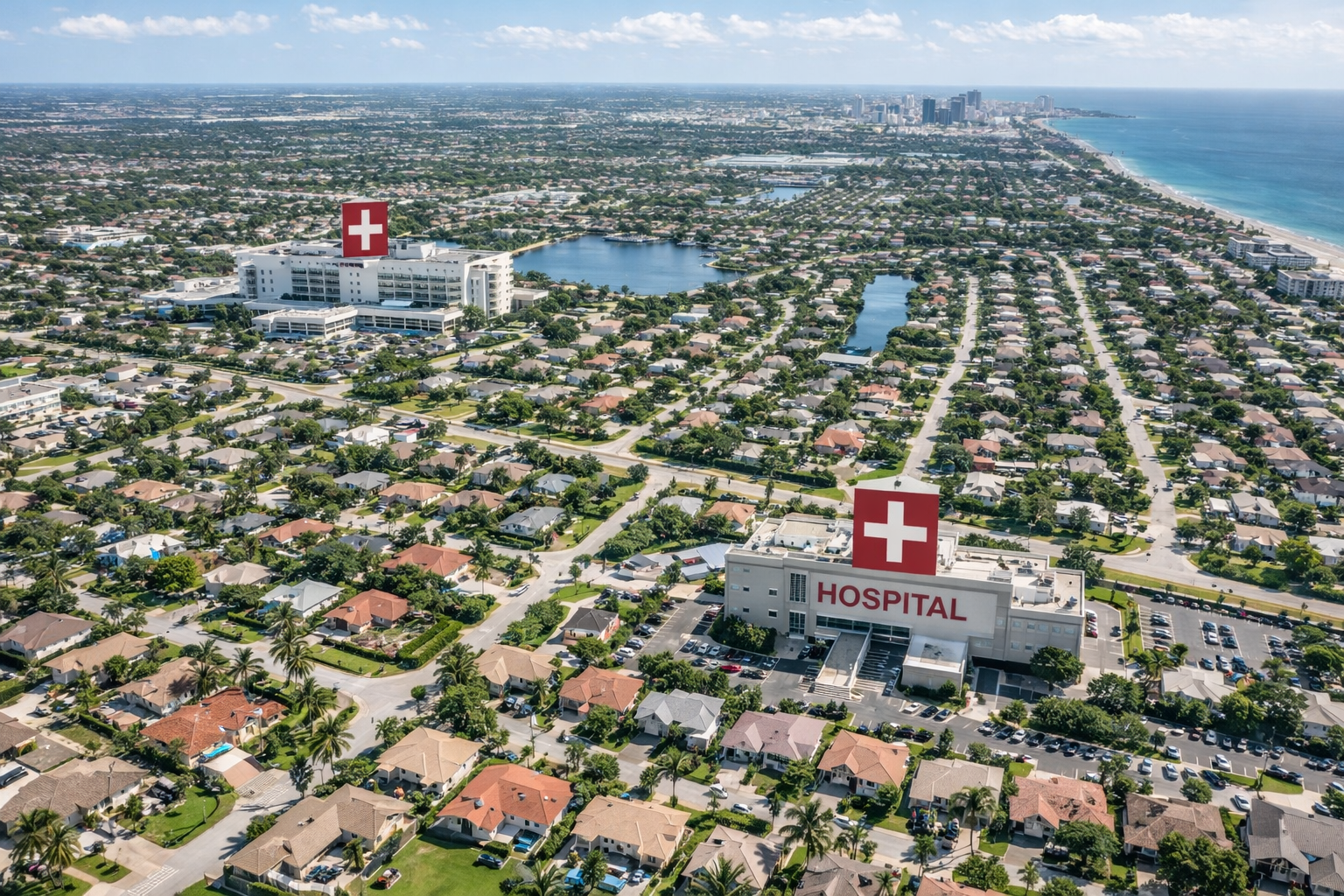
Across Palm Beach County, healthcare expansion is quietly restructuring housing demand in ways many buyers do not recognize until competition tightens around them. New facilities, expanding hospital systems, specialty care growth, and increased healthcare hiring are not just changing employment patterns — they are changing where buyers concentrate, how quickly certain areas compress, and which locations begin losing flexibility first.
The shift does not announce itself all at once. It builds gradually through movement patterns, commute decisions, and repeated housing demand surrounding medical corridors.
This Is Not Just a Housing Story
Hospital growth affects housing because healthcare jobs behave differently from many other industries.
Schedules are demanding. Shift timing matters. Recovery time matters. Daily reliability matters.
That changes how healthcare professionals evaluate where they live.
Instead of spreading evenly across the county, demand begins clustering around locations that reduce commute friction, simplify routines, or create stronger long-term stability outside of work.
Once those patterns establish themselves, they tend to strengthen instead of reversing.
Why Certain Areas Tighten First
Healthcare-related housing pressure rarely builds randomly.
Areas connected to central medical corridors usually experience the earliest compression because they solve operational problems that healthcare professionals deal with every week.
For example, West Palm Beach real estate for healthcare professionals continues attracting strong interest because proximity reduces commute exposure and simplifies access to major hospital systems.
As those areas become more competitive, buyers begin expanding outward into alternatives that still preserve enough practicality to support demanding schedules.
That is part of why Royal Palm Beach housing options for healthcare professionals and Wellington real estate for healthcare professionals continue entering more healthcare relocation conversations despite requiring more commute planning.
The movement is not emotional. It is structural.
The Market Usually Looks “Normal” Until It Doesn’t
This is where many buyers misread the situation.
Housing demand tied to healthcare growth often develops quietly at first because inventory still exists and pricing changes appear gradual. The market can look stable on the surface while pressure builds underneath.
Then the behavioral shift starts showing up:
- Homes near major corridors move faster
- Buyers become less flexible on location
- Competition increases around practical commute patterns
- The margin for hesitation narrows
By the time those signals become obvious publicly, the underlying demand pattern has usually been building for a while.
Why Commute Reality Is Now Driving More Decisions
As healthcare systems expand, proximity becomes more valuable because time becomes more valuable.
A commute that once felt manageable can become exhausting when repeated through overnight shifts, early-morning arrivals, staffing shortages, or unpredictable scheduling.
That is why healthcare professionals increasingly evaluate housing through operational sustainability rather than pure home preference.
The commute analysis for healthcare professionals explains why repeated drive patterns affect long-term satisfaction more than buyers initially expect.
What looks acceptable on paper often feels completely different after months of repetition.
Why Some Buyers Move Farther Out Anyway
Not every healthcare professional chooses proximity first.
As pricing pressure builds around central corridors, some buyers prioritize space, newer homes, or long-term affordability instead.
That is part of why areas like Port St. Lucie housing for healthcare professionals continue attracting attention from buyers willing to exchange convenience for buying power.
The important part is understanding the tradeoff clearly before making the move.
When buyers understand exactly what they are gaining — and exactly what daily friction they are accepting — the decision becomes far more stable long term.
What This Means If You’re Relocating for a Healthcare Role
If your career is connected to healthcare expansion in Palm Beach County, this trend becomes part of your housing decision whether you actively plan for it or not.
Demand growth influences:
- How quickly inventory tightens
- How flexible your search remains
- How pricing behaves near major corridors
- Which locations remain sustainable for your routine
This analysis of why healthcare professionals are moving into Palm Beach County explains how employment growth, relocation patterns, and housing demand are becoming increasingly connected.
For the broader countywide perspective, the Palm Beach County healthcare relocation guide shows how commute structure, lifestyle, housing type, and long-term planning should align before choosing where to live.
Why Waiting Without a Strategy Becomes Riskier
This does not mean every healthcare professional should rush into buying.
It means waiting without understanding how demand is shifting can quietly reduce future flexibility.
As hospital expansion continues, certain areas may become harder to access at the same pricing levels or with the same amount of inventory choice.
That matters because healthcare relocation decisions are rarely just financial. They are operational decisions tied directly to time, stress, and sustainability.
The rent versus buy analysis for healthcare professionals helps explain when waiting creates clarity — and when it simply creates delay while the market continues tightening around key locations.
The Real Shift Happening Underneath the Market
Hospital growth is not just influencing home prices.
It is reshaping where healthcare professionals compete, how housing decisions are evaluated, and which parts of Palm Beach County become more difficult to enter over time.
The buyers who understand that early usually make calmer, clearer decisions because they recognize the market is no longer moving randomly.
It is moving around where healthcare demand is growing strongest.
Frequently Asked Questions
How does hospital growth affect home prices in Palm Beach County?
Hospital growth increases demand from healthcare professionals relocating into the area, especially near major medical corridors. That demand can tighten inventory, increase competition, and place upward pressure on pricing in locations tied closely to healthcare infrastructure.
Should healthcare professionals buy sooner if healthcare expansion is increasing demand?
Not automatically. The better approach is understanding how growth is affecting specific locations connected to your schedule and routine. Expansion can reduce future flexibility in certain areas, but the right decision still depends on commute sustainability, financial positioning, and long-term fit.
Trying to understand how healthcare growth is changing housing decisions across Palm Beach County?
Explore how commute patterns, hospital expansion, pricing pressure, and relocation strategy connect before choosing where to live.