Living in Wellington FL: What the Community Actually Feels Like Over Time
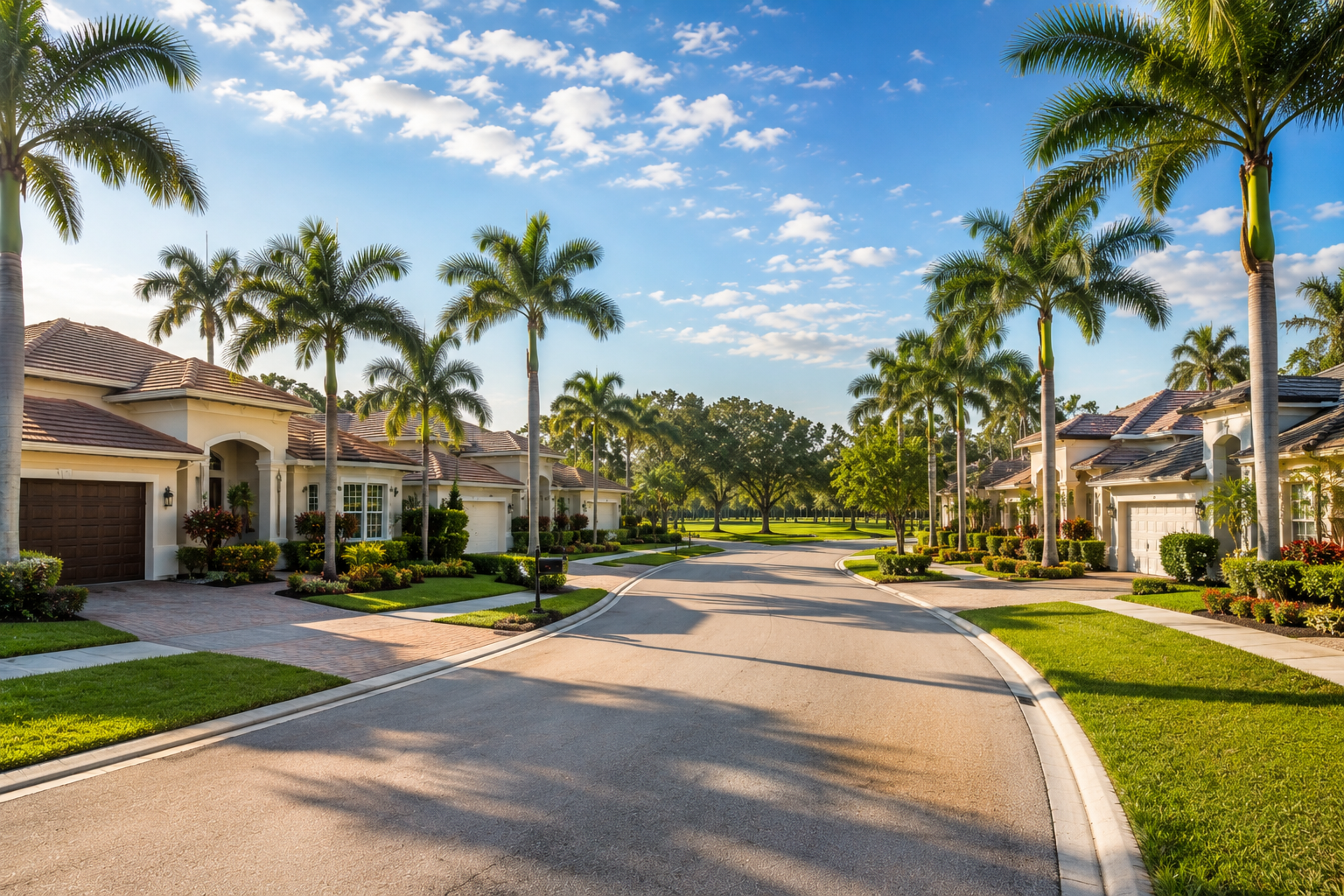
Wellington doesn't announce itself the way coastal Palm Beach County communities do. There's no ocean view, no beachside restaurant strip, no obvious landmark that makes someone stop and say they've arrived somewhere. What Wellington has instead is harder to photograph and easier to feel after six months of living there: a particular rhythm. Quiet enough to decompress in, structured enough to stay active, and organized around a kind of outdoor life that doesn't require leaving the community to access it. For buyers trying to understand what daily life actually looks like in western Palm Beach County — not the listing descriptions, not the lifestyle photography, but the morning routine and the evening drive and the question of whether this place will still feel right three years from now — that rhythm is the thing worth understanding first.
The Geographic Reality and What It Changes
Wellington sits inland, roughly ten miles west of the coast, and that distance does more than affect the drive to the beach. It changes the insurance profile. It changes the flood zone picture for many properties. It changes the heat, the wind exposure, and the kind of maintenance cycle a homeowner lives inside. Buyers relocating from northern states sometimes underestimate how much the inland location shapes the ownership experience — not negatively, but differently than they expected.
The trade is a real one. You give up the immediate proximity to the water that communities like Palm Beach, Delray, or Boynton offer. What you gain is more land per dollar, newer infrastructure in many areas, and a community that was largely built out in a controlled way rather than layered across decades of unplanned growth. The street grid is legible. The neighborhoods have an internal logic. That doesn't make Wellington better than its coastal neighbors — it makes it distinct, and distinction matters when buyers are trying to figure out where they actually fit.
The western edge of Wellington bleeds into Loxahatchee, and that boundary matters for buyers comparing the two. Homes for sale in Loxahatchee often come with larger lot sizes and a more rural character — fewer HOA structures, more land, less community programming. Wellington itself is more organized, more amenitized, and more oriented around established neighborhood associations. Neither is a better answer. They attract genuinely different buyers, and someone who thrives in one can find the other frustrating for reasons they didn't anticipate before moving.
What Daily Life Actually Looks Like
The equestrian identity is real, but it isn't the whole story. Wellington is home to the Winter Equestrian Festival and carries a significant horse community that shapes the land use, the road patterns, and the seasonal population in ways that non-equestrian residents notice even if they're not participating. January through April, the population density increases. Traffic on Pierson Road and South Shore Boulevard changes. The character of the community shifts slightly toward the seasonal and the transactional, then settles back after spring.
For year-round residents, the rhythm is more domestic than that. Wellington Regional Medical Center anchors the healthcare side. The school system — served by the Palm Beach County School District — draws families who've done the research and landed here deliberately, often comparing Wellington to communities further north or east before committing. The grocery infrastructure is solid. The commute to downtown West Palm Beach runs twenty to thirty minutes depending on direction and time of day, which is manageable but not trivial for someone doing it five days a week.
What the community does particularly well is make the outdoors accessible without requiring a car trip to get there. The trail system, the community parks, the tennis and pickleball facilities, the proximity to conservation areas on the western edge — these aren't amenities people use once and forget. They're the reason residents describe Wellington as a place that supports an active daily life in a way that feels structural rather than incidental. That matters over time in a way it's hard to appreciate from a listing description.
The Ownership Experience Over Time
Wellington's housing stock is predominantly single-family, with a significant portion of that inventory sitting inside HOA-governed communities. That's not unusual for South Florida, but the HOA environment in Wellington is worth understanding before purchase rather than after. Communities here vary significantly in what they govern, what they cost, and how actively they enforce standards. An established community like Olympia — one of Wellington's larger and more amenitized neighborhoods — carries a full HOA structure with its own rules, fees, and approval processes that shape ownership in ways that go well beyond the monthly number on a listing. A buyer moving from a state where HOA living is uncommon can find the adjustment meaningful — not just financially, but in terms of what they can do with the property, when they can do it, and what that governance feels like year after year.
The roof age conversation that runs through most of South Florida applies here too. Properties built in the 1990s and early 2000s — which represents a significant portion of Wellington's inventory — are hitting the age window where insurance carriers are asking harder questions. A buyer who falls in love with a home in that vintage range should understand what a roof replacement costs in the current contractor market, what it means for insurance continuity, and how it affects their carrying cost calculation. This isn't Wellington-specific. It's a South Florida reality. But in a market where a lot of the inventory falls in a particular age band, it comes up more often than buyers expect.
Sellers in Wellington are navigating a buyer pool that is more cost-literate than it was three years ago. The buyers looking at homes for sale in Wellington FL today are asking about wind mitigation reports, HOA reserve health, and insurance quotes before making offers — not as afterthoughts. Properties that are prepared for that scrutiny move. Properties that aren't tend to sit longer than sellers expect, often for reasons that have nothing to do with price.
What This Means for Buyers and Sellers in South Florida
For buyers, Wellington presents a specific kind of value proposition that requires honest self-assessment. The community works exceptionally well for families with school-age children, for equestrian households, for people who want an active outdoor lifestyle without the premium of coastal proximity, and for buyers who prioritize newer infrastructure and planned community design over the character and variability of older neighborhoods. It works less well for buyers who will feel the coast's absence acutely, who find HOA governance constraining, or who are commuting eastward daily and underestimating what that drive adds up to across a year.
The price per square foot in Wellington has historically offered more space for the dollar than comparable coastal communities, and that gap has attracted buyers who stretched their budget to get a larger home. The risk in that trade is that ownership costs — insurance, HOA, maintenance on a larger property — can compound in ways that make the monthly picture look different than it did at closing. Buyers who run the full cost calculation before committing, rather than after, tend to have a more stable ownership experience over time.
For sellers, Wellington's strongest asset is the depth and specificity of its buyer pool. People who want this community tend to want it deliberately — they've compared it against Royal Palm Beach, against Boca Raton's western communities, against the closer-in suburbs of West Palm. That deliberateness means motivated buyers when the property is right. It also means that buyers who've done the research will notice quickly when something doesn't add up — a deferred roof, an HOA with thin reserves, a flood zone designation that wasn't disclosed clearly. Preparation matters here more than in markets where buyers are making faster, more emotional decisions.
Explore Homes by City
If you're comparing areas, home types, or neighborhood environments, browsing homes by city can help put pricing and location tradeoffs into perspective.
Explore Homes by CityWho Wellington Is Actually Built For
The community attracts a particular kind of buyer consistently enough that the pattern is recognizable. Families who've prioritized school quality and outdoor space over proximity to the coast. Equestrian households for whom the land use and facility access justify every other tradeoff. Retirees and pre-retirees who want an active community with genuine infrastructure — medical, recreational, social — without the density and noise of urban Palm Beach County. Remote workers and dual-income households who can absorb the inland location because they're not commuting daily.
It tends to work less well for buyers who romanticize the idea of western Palm Beach County without fully accounting for what they're trading. The heat is real in summer. The drive to the beach is real year-round. The HOA environment is real in ways that show up in daily decisions, not just annual fees. None of that is disqualifying — but it matters enough that buyers who discover it after closing rather than before tend to recalibrate their satisfaction with the decision.
Wellington also attracts a meaningful number of buyers who come for a season and decide to stay. The Winter Equestrian Festival draws a temporary population every year that overlaps significantly with a buyer population — people who spend January through April here, fall in love with the pace and the access, and start making permanent plans. That seasonal-to-permanent pipeline has shaped the community's ownership culture in ways that make it feel more intentional than accidental. People here chose it. That tends to produce neighbors who maintain their properties, engage with their communities, and take the long view on what the area is worth protecting.
The Long-Term Livability Question
Ten years into Wellington ownership, the things people describe as having held up are almost always the same: the school system, the outdoor access, the relative quiet, and the sense that the community was built to function rather than just to sell. The things that surprise people — on the difficult side — are the compounding costs of maintaining a larger home in a South Florida climate, the seasonal rhythm that changes the community's character for four months of the year, and the commute that felt manageable at the time of purchase and less manageable after five years of doing it.
None of that is unique to Wellington. South Florida ownership has its own cost structure regardless of which community a buyer chooses. What's worth knowing is that Wellington tends to reward buyers who thought carefully about long-term fit before committing — and produces friction for buyers who made the decision quickly based on what the house looked like rather than what the life would feel like.
That's not a small distinction. Most people who ended up in the wrong community for the wrong reasons knew something felt off before they closed. They just didn't have language for it yet — and didn't slow down long enough to find out.
Frequently Asked Questions
Is Wellington FL a good place to live if you're not involved in the equestrian community?
Yes — the equestrian identity shapes the land use and seasonal character of Wellington, but the majority of year-round residents have no direct connection to the horse community. The schools, parks, recreational facilities, and neighborhood infrastructure function independently of equestrian activity. What non-equestrian residents notice most is the seasonal population increase from January through April and the land-use decisions that preserve open space throughout the community. For families, active households, and remote workers, Wellington's livability doesn't depend on equestrian participation.
How does Wellington compare to nearby communities for long-term ownership value?
Wellington tends to offer more square footage per dollar than coastal Palm Beach County communities, with a trade-off of increased distance from the water and a more HOA-structured ownership environment. Compared to Loxahatchee immediately to the west, Wellington carries more community infrastructure and amenities but less land per property and more governance. The long-term value case is strongest for buyers who use what Wellington offers — the schools, the outdoor access, the organized community environment — rather than buyers treating it primarily as a price-driven compromise on their way to somewhere else.
Keep Exploring South Florida Real Estate
If you're comparing communities, evaluating lifestyle tradeoffs, or trying to better understand how different parts of South Florida align with your long-term goals, reviewing additional local resources can help create clearer perspective.
About the Authors
Chris and Sue Kull are South Florida real estate professionals with more than three decades of experience helping buyers, sellers, and property owners navigate real estate decisions throughout Palm Beach County and surrounding communities.