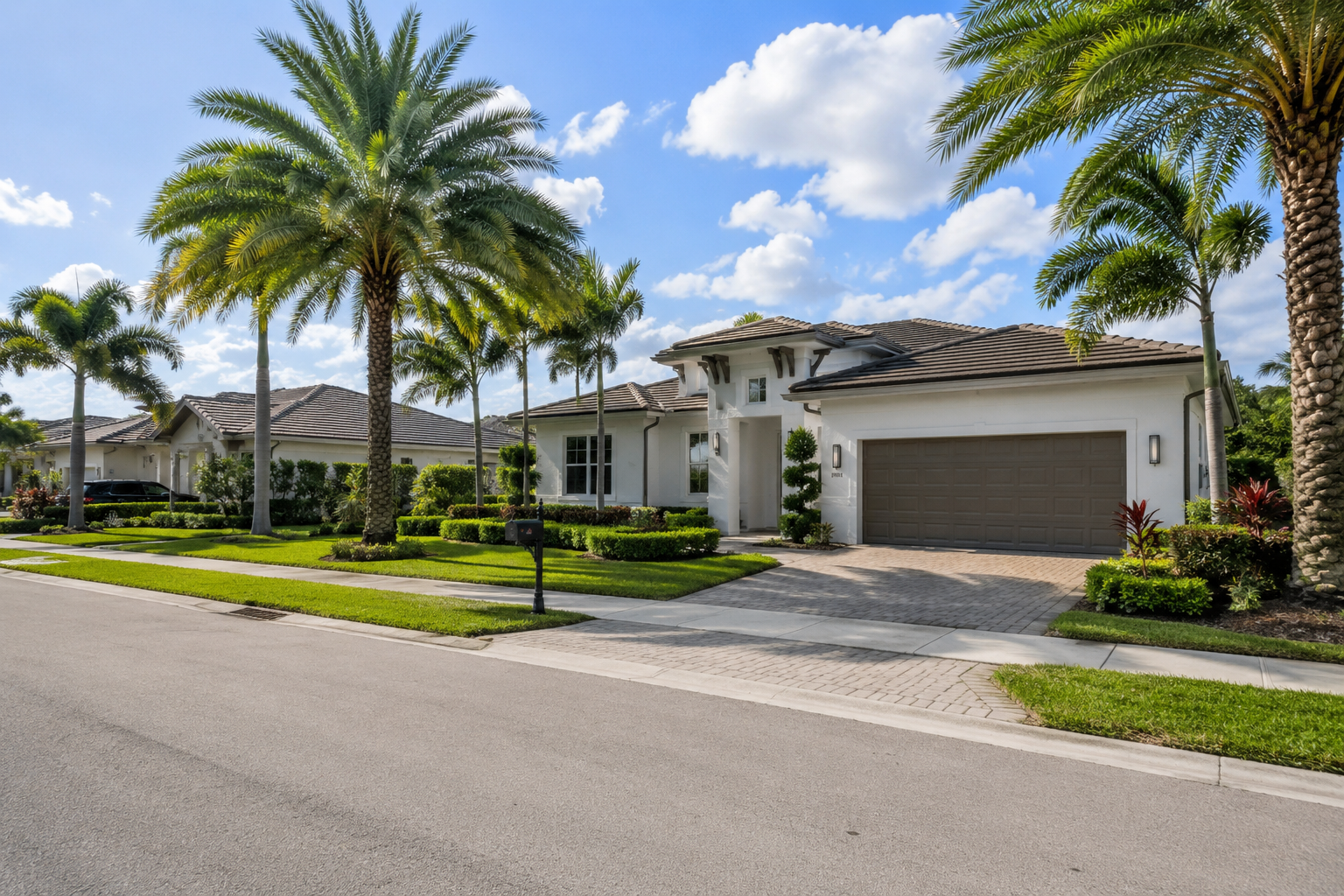
What a Lower-Maintenance Life Actually Looks Like in Port St. Lucie
Most people who begin thinking about a move to Port St. Lucie are not thinking first about square footage or amenities. They are thinking about Saturdays. They imagine waking up without mentally reviewing a list of home projects—the fence that shifted after the last storm, the irrigation head spraying sideways, the pool equipment that needs another repair, or the landscaping that never quite stays finished. For many long-term Palm Beach County homeowners, that constant background calculation has become so familiar they no longer recognize how much energy it consumes.
"Lower-maintenance living" is one of the most overused phrases in real estate. It often gets reduced to newer homes, smaller lots, or HOA communities. In reality, it means something much more significant: reducing the ongoing operational responsibility of homeownership. Understanding that difference is where many homeowners gain clarity about whether simplifying their next chapter truly makes sense.
If you're evaluating what this transition would actually involve—financially, logistically, and emotionally—the Sell High Buy Smart framework explains the complete Palm Beach County to Port St. Lucie strategy in greater detail.
The Operational Reality Is Different From the Marketing Version
Real estate marketing often presents lower-maintenance living as a lifestyle image: coffee on a screened lanai, perfectly maintained landscaping, and carefree weekends. While that picture may be accurate, it rarely explains why the experience feels different after the move.
Many homeowners in Wellington, Royal Palm Beach, Palm Beach Gardens, Jupiter, Boynton Beach, and throughout western Palm Beach County own homes built during the 1980s and 1990s. Those homes were ideal for raising families and enjoying larger properties. Decades later, the same features often create an entirely different experience. Larger lots require ongoing care. Pools demand regular attention. Mature landscaping grows into a continual maintenance project. Weekend ownership slowly becomes weekend management.
Newer Port St. Lucie homes change that equation in practical ways. A home built in 2018 or 2022 is typically many years away from major roof replacement, HVAC replacement, or other high-cost system upgrades. Impact-rated windows, newer construction standards, and modern building codes reduce both maintenance demands and many of the concerns that accompany older South Florida homes. These differences are not simply amenities—they affect carrying costs, maintenance planning, insurance conversations, and the number of decisions required throughout the year.
Florida's climate remains demanding regardless of location. Heat, humidity, storms, and salt air continue to age every structure. The advantage of newer Port St. Lucie housing is not that it avoids those conditions—it simply hasn't spent thirty years enduring them.
A situation we encounter frequently illustrates this perfectly. A Wellington homeowner who had lived in the same property for more than twenty years reached out after replacing pool equipment, repairing fencing after storm season, and receiving another insurance renewal that prompted discussion about the roof. None of those events alone created the desire to move. Together, they revealed something larger: the home no longer matched how they wanted to spend their weekends. What began as a conversation about maintenance gradually became a conversation about freedom, flexibility, and designing the next stage of life around experiences rather than property management.
What HOA Management Actually Eliminates
One of the most overlooked benefits of many Port St. Lucie communities is not simply that lawn care is included. It is the amount of mental energy that disappears when homeowners are no longer responsible for coordinating every aspect of property maintenance.
Long-term Palm Beach County homeowners often spend years building relationships with landscapers, pool companies, pest control providers, irrigation specialists, pressure washing crews, and repair contractors. Every vendor requires scheduling, follow-up, evaluation, and occasional replacement. None of these responsibilities feels overwhelming on a given week, but together they create a steady background demand on time and attention.
In many HOA-managed communities, much of that coordination simply disappears. Exterior maintenance, landscaping, and common-area management become part of the community structure instead of the homeowner's weekly responsibility. What many people describe six months after moving is not relief over one specific task. It is the absence of the constant awareness that something around the house always needs attention.
A question worth considering: If the operational burden of your current home disappeared tomorrow—the contractor calls, seasonal preparation, deferred maintenance, and vendor coordination—would the home itself still fit the way you want to live?
That question often becomes the turning point. The Sell High Buy Smart framework is designed to help Palm Beach County homeowners answer it with real numbers, practical sequencing, and a clear understanding of what comes next.
The Pattern Behind the Timing
After helping Palm Beach County homeowners navigate these transitions for more than three decades, one pattern appears repeatedly. People rarely begin the conversation because of a single repair bill. More often, one repair simply makes the next ten years visible.
A roof estimate, an insurance renewal, another hurricane season, or replacing aging pool equipment rarely creates the decision by itself. Instead, it becomes the moment when homeowners recognize that the property's ongoing demands no longer match the life they want to live. Once that realization takes hold, the conversation shifts from today's expense to tomorrow's quality of life.
Another pattern appears just as consistently: financial readiness and emotional readiness almost never arrive at the same time. Homeowners in Boca Raton, Lake Worth, Wellington, Palm Beach Gardens, Jupiter, and surrounding Palm Beach County communities often build substantial equity years before they feel prepared to make a change. Understanding that those two timelines operate independently frequently provides the clarity needed to begin planning rather than simply postponing.
What Daily Life Often Looks Like After the Move
The Lower-Maintenance Living Shift
- Weekends return to discretionary time instead of property management.
- Landscaping and exterior upkeep are often handled through the HOA.
- Newer construction delays many major replacement cycles.
- Modern building standards can simplify insurance and maintenance planning.
- Smaller lots reduce ongoing exterior work without sacrificing comfortable living space.
- Storm preparation is often simplified through newer roofs, windows, and construction methods.
- The constant awareness that something around the property needs attention begins to fade.
These changes are not theoretical. They reflect what homeowners frequently describe after living in their new Port St. Lucie home for several months. Few describe the move as simply owning a newer house. Most describe having more time, fewer decisions, and less mental energy devoted to maintaining the property.
That does not make one community inherently better than another. Palm Beach County remains an outstanding place to live. The question is whether your current home still aligns with the stage of life you are entering. For many homeowners, Port St. Lucie's newer housing inventory and lower-maintenance communities provide a better operational fit for the years ahead.
How is Port St. Lucie different from Palm Beach County for homeowners looking to simplify?
The biggest differences are structural rather than lifestyle-driven. Newer housing stock means many homes have not yet entered expensive replacement cycles for roofs, HVAC systems, and other major components. Modern building codes, impact-rated materials, and HOA-managed communities reduce both maintenance responsibilities and the day-to-day coordination that many long-term homeowners have quietly managed for years.
What should Palm Beach County homeowners expect during the transition?
For most homeowners, the greatest concern is not financial—it is sequencing. Selling one home while purchasing another requires careful planning, appropriate contingencies, and a strategy that minimizes unnecessary stress. When the process is structured correctly before the home is listed, most families find the transition far smoother than they initially expected.
How do you know whether lower-maintenance living is actually the right choice?
The answer usually comes from understanding what is driving the decision. Homeowners moving toward a clearer vision of how they want to live generally experience a smoother transition than those simply trying to escape ongoing maintenance frustrations. An experienced advisor can help distinguish between those motivations and build a plan that fits both your financial goals and your lifestyle.
Many homeowners believe there will be a single moment when they simply "know" it is time to simplify. More often, the decision develops quietly over several years through accumulated repairs, changing insurance costs, and weekends increasingly devoted to managing the property instead of enjoying it.
Simplifying your life rarely begins with finding the next house. It begins with honestly asking whether the one you own still supports the way you want to live over the next decade. Once that question becomes clear, the real estate decisions usually become much clearer as well.
If you're ready to explore what that transition could look like, the Sell High Buy Smart framework provides a practical roadmap before you make any commitments. And if understanding your current equity is the logical first step, you can request a current home value estimate here.