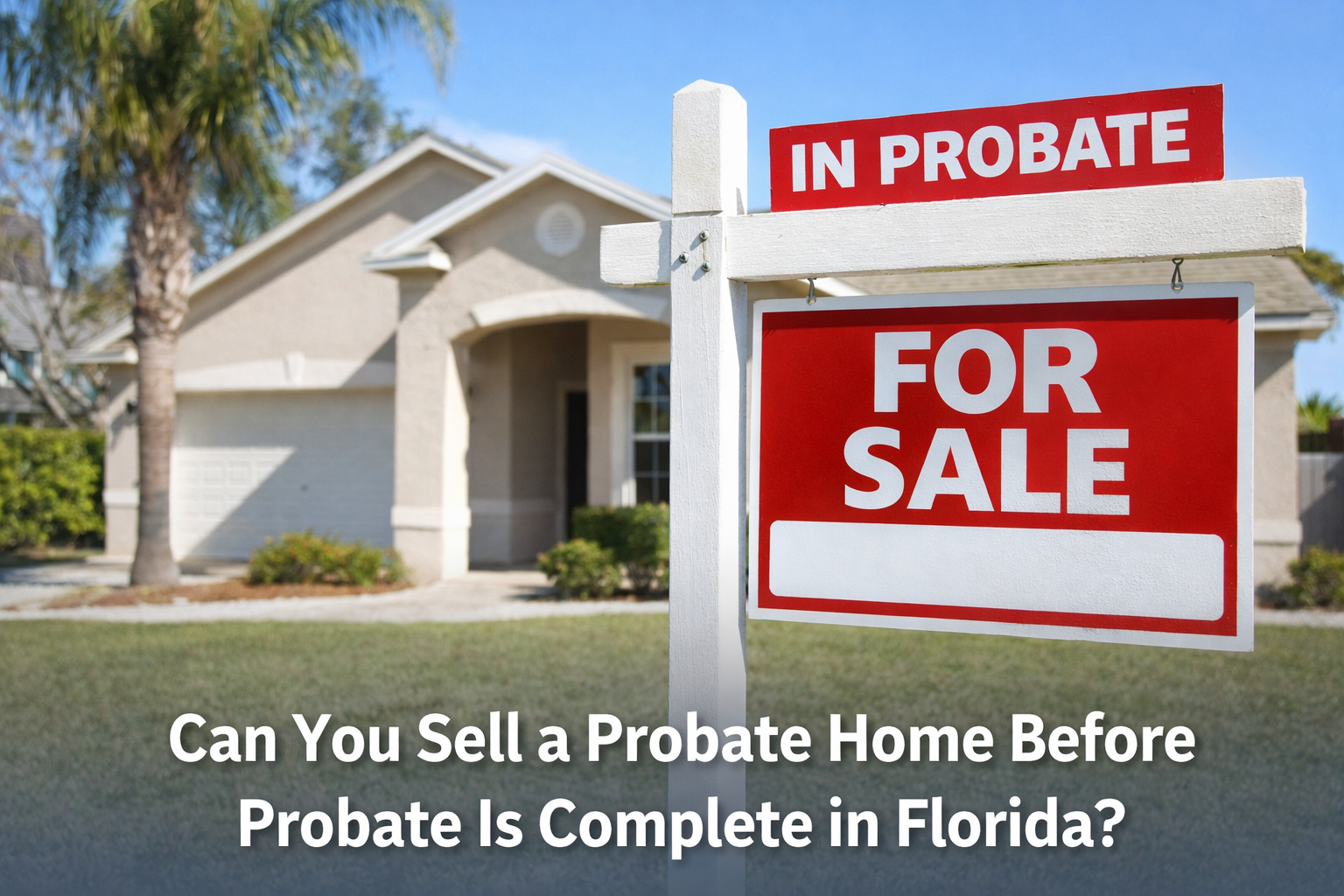
Can You Sell a Probate Home Before Probate Is Complete in Florida?
One of the first questions families ask after inheriting a property is whether the home can be sold immediately or whether everything has to wait until probate is fully finished.
That question usually appears long before the family feels organized.
The home may still contain personal belongings. Insurance, utilities, taxes, or maintenance costs may still be active. Heirs may be in different states. Someone may already be asking whether the property should be cleaned out, repaired, sold as-is, or held temporarily.
At the same time, the probate process is still establishing legal authority.
That creates a situation where families often feel caught between two timelines — the legal process and the practical reality of managing the property itself.
The Short Answer Is More Nuanced Than Most Families Expect
In most Florida probate situations, a property sale generally cannot fully close until a personal representative has been formally appointed and granted authority through the probate process.
That authority is what allows contracts, negotiations, and closing decisions to move forward properly.
But that does not mean families should wait passively until probate is completely finished before addressing the property.
In many inherited-property situations, the most important operational decisions happen before final probate authority is fully completed.
Why Waiting Too Long Creates Problems Later
Many families assume nothing should happen with the property until probate is finalized.
The result is often the same:
- the property sits untouched
- maintenance issues continue growing
- vacant-home concerns increase
- family communication becomes more strained
- decisions pile up all at once later
Once probate allows movement, the family suddenly has to make fast decisions regarding pricing, repairs, clean-outs, inspections, preparation, vendor coordination, and sale timing.
That is when inherited-property decisions begin feeling rushed.
The strongest probate outcomes are usually not the fastest ones. They are the ones where the family used the waiting period to reduce uncertainty before pressure started building.
What Families Can Often Begin Doing Early
Even if the property cannot immediately close, many inherited-property situations still allow important preparation steps to begin early.
That may include:
- evaluating the condition of the property
- reviewing insurance or maintenance concerns
- coordinating clean-outs or estate sales
- arranging handyman or contractor walkthroughs
- understanding likely buyer expectations
- reviewing valuation and pricing considerations
- comparing as-is versus preparation strategies
- organizing communication between heirs
Those steps are not about rushing the process.
They are about preventing the property from becoming more difficult to manage later.
The Real Decision Usually Isn’t “Can We Sell Yet?”
Families often frame this as a yes-or-no timing question:
“Can we sell now, or do we have to wait?”
But the more useful question is usually:
“What should we organize now so the property does not become more stressful once probate allows movement?”
That shift changes the entire process.
Instead of waiting passively, the family can begin understanding:
- what the home may realistically need
- which repairs matter and which do not
- whether preparation would improve the outcome
- what buyer response may look like
- whether a simpler as-is path makes more sense
- how timing may affect costs and leverage
The goal is not to force action too early. The goal is to reduce confusion before decisions become urgent.
Preparation and Legal Authority Are Not the Same Thing
This is where many inherited-property situations become misunderstood.
Probate authority determines when certain legal actions can happen.
Preparation determines whether the family is ready once those actions can move forward.
Those are two separate things.
For example, families often use this period to:
- coordinate vendor access
- remove personal belongings
- review inspection concerns
- compare investor and traditional sale options
- identify deferred maintenance
- evaluate contractor estimates
- review whether selective preparation may improve the final outcome
Some homes benefit from preparation. Others are better suited for a cleaner as-is strategy. The important part is understanding the difference before pressure forces a rushed decision later.
Should you sell a probate property as-is or prepare it first?
How Timing Pressure Commonly Appears in Palm Beach County
In Palm Beach County, inherited-property timing issues often become more noticeable when the property is vacant, outdated, carrying substantial expenses, or owned by heirs living in different locations.
A larger home in Wellington or Boca Raton may involve landscaping obligations, insurance concerns, roof issues, or deferred maintenance that continue becoming more expensive while decisions are delayed.
In other cases, the home may still contain decades of personal belongings, unresolved repairs, or preparation needs that cannot realistically be solved in a single weekend once probate is complete.
Local market expectations matter as well. Some buyers expect updated condition before paying premium pricing, while other situations may support a simpler as-is approach depending on location, timing, and property condition.
If the property is located locally, these city-specific inherited-property guides may help explain how buyer expectations and preparation strategies differ across markets.
Wellington inherited property guidance
West Palm Beach inherited property guidance
Authority and Timing Usually Work Together
Understanding probate timing becomes much easier once the family understands who is actually responsible for making decisions as the process moves forward.
That authority structure often determines:
- who can coordinate preparation
- who can approve repairs
- who can review offers
- who communicates with vendors
- how disagreements between heirs are handled
- when the property can formally move toward closing
If authority is still unclear, it may help to review how probate sale authority usually works in Florida.
Who has the authority to sell a probate property in Florida?
Understand the Property Timeline Before Pressure Builds
If your family is trying to determine what can happen now, what should wait, and how to avoid rushed inherited-property decisions later, a structured conversation can help separate legal timing from property preparation.
- Review property condition and preparation considerations
- Compare as-is, preparation, and timing strategies
- Identify issues that could create delays later
- Coordinate real estate questions alongside the probate attorney
A calm review can help separate what needs attention now from what can wait.
Continue With the Questions That Shape the Process
Timing is only one part of inherited-property planning. These guides explain how authority, family coordination, costs, and preparation decisions often connect together during probate real estate situations.
- Who actually has authority to sell the property?
- Do all heirs have to agree before selling?
- How long does probate property usually take to sell?
For a broader overview of inherited-property guidance, attorney coordination, preparation strategy, and local market considerations, you can also return to the main inherited-property hub.
Back to the Inherited Property Guidance Hub
Frequently Asked Questions
Can a probate property be listed before probate is fully complete?
Some probate situations allow certain marketing or preparation steps before final probate completion, but the ability to fully execute and close a sale depends on the authority granted through the estate process. Families often benefit from organizing the property side early so fewer decisions become rushed later.
What should families do while probate is still in progress?
Many families use this time to evaluate property condition, coordinate clean-outs, review inspection concerns, compare repair versus as-is strategies, organize communication between heirs, and understand likely buyer expectations before the property formally moves toward sale.