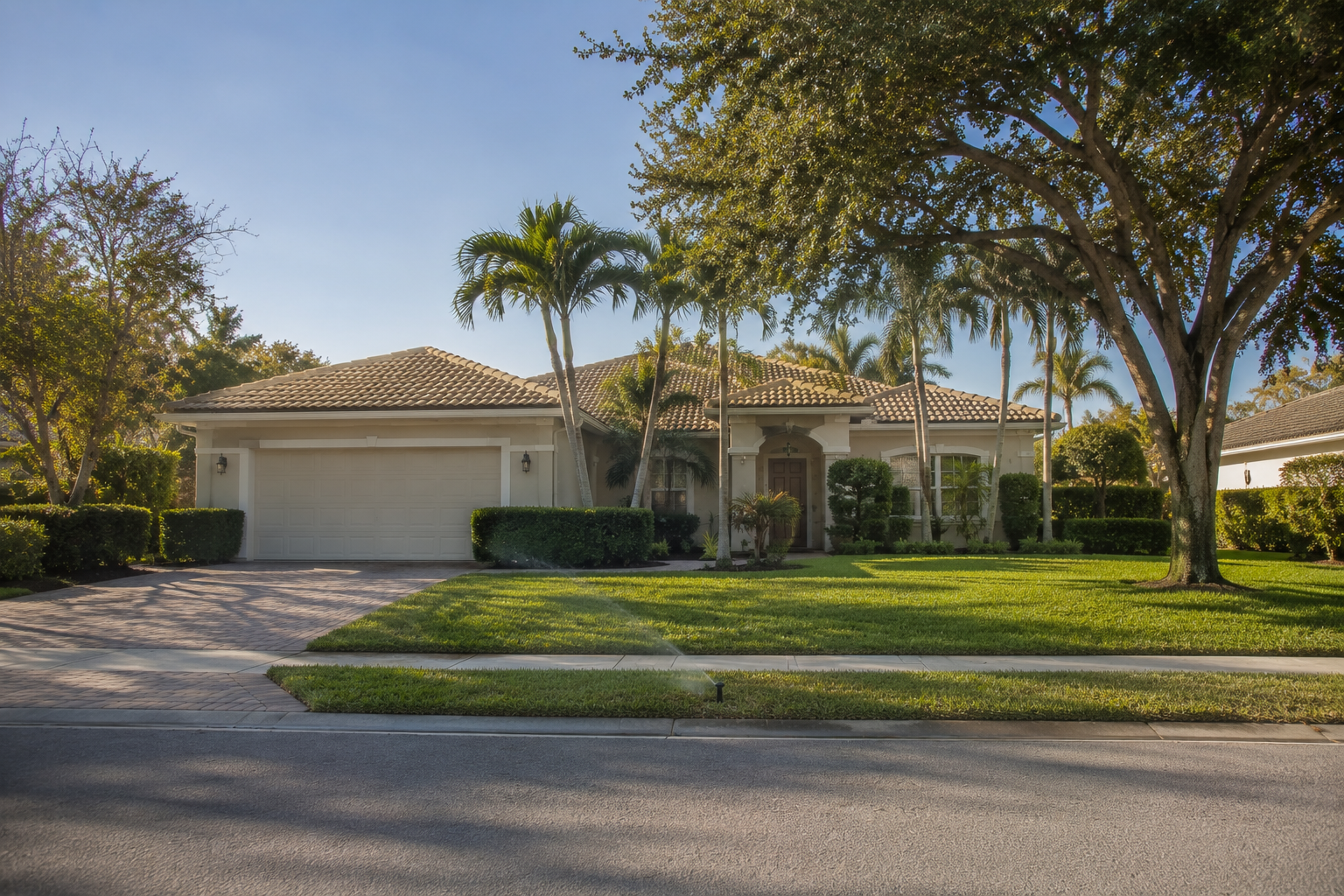
The Townhome-to-Single-Family Jump: What Actually Changes
The move from a townhome to a single-family home usually gets described in terms of what you gain. More space, a yard, no shared wall, somewhere to put the things that have been living in the garage. All of that is real. But the change that surprises people afterward is rarely about space. It is about where the line sits between what you are responsible for and what someone else handles.
In many attached-housing communities, a portion of that responsibility sits with an association. In a detached single-family home, more of it — sometimes nearly all of it — sits with you. That shift is manageable and entirely ordinary. It is just worth understanding before closing rather than in the first summer. If you are also weighing who to involve in the move itself, our guide to choosing the right real estate professional covers that separately.
"Townhome" Describes the Building, Not the Ownership
This is the distinction that clears up most of the confusion, and it is worth getting straight before comparing anything.
A townhome is a building form — attached units, shared walls, usually multi-story. It is not an ownership form. In Florida a townhome may be a condominium unit, where you own the interior and an undivided share of the common elements, or it may be a fee-simple lot with a homeowners association, where you own the structure and the land beneath it and the association governs shared areas. Two communities that look identical from the street can be structured entirely differently.
What that means practically: what your association currently maintains is defined in your community's declaration and governing documents, not by the fact that your home is attached. Some communities maintain roofs, exterior paint and landscaping. Others maintain almost nothing beyond shared amenities and common areas. Before you can assess what changes in a single-family home, you need to know what you actually have now — which is a document question, not a memory question.
Some owners tell us they were surprised to find their association handled less than they assumed, or more. Either way, the comparison only becomes useful once the current arrangement is established from the documents rather than from impression.
What Moves Onto Your Side of the Line
Assuming your current community handles some exterior responsibility and your next home is detached, here is what tends to change hands.
The Responsibility Transfer
- The roof. Where an association maintains and eventually replaces roofing on attached units, that becomes an owner obligation on a detached home — including timing the replacement, selecting a contractor, and permitting.
- Exterior surfaces. Paint, stucco, soffit and fascia, and the cycle on which they need attention in this climate. Salt air, humidity and sun run those cycles faster here than in most markets.
- Landscaping and irrigation. Where community landscaping was included, you now hold the lawn, the beds, the trees, and an irrigation system with its own controller, valves and repair history.
- Pest, pressure washing and gutters. Small individually, and they arrive as a set of recurring vendor relationships rather than a line on a statement.
- Anything shared that is no longer shared. A driveway, a fence, a pool if there is one. Each becomes a scheduling and budgeting item that used to be someone else's.
None of these is difficult on its own. What changes is that you become the coordinator — the person who notices something needs attention, finds the vendor, schedules it and checks the work. In our experience that coordination load is a bigger adjustment for some households than the dollar cost attached to it.
Do you know what your current association actually maintains?
The honest comparison starts there, and the answer is in your governing documents rather than in what you have gotten used to. It is a short piece of reading that changes how the next house looks.
The Insurance and Reserve Picture Changes Shape
Two financial structures change in ways that are easy to miss because the monthly figures can look similar.
Insurance is structured differently between the two situations. A condominium unit owner typically carries a policy covering interior finishes, personal property and betterments, while the association's master policy covers structural elements to whatever extent the declaration specifies. A detached single-family owner generally carries a policy covering the full structure. Those are different products with different scopes, and the premium comparison is not apples to apples — one of them was partly being paid through your association dues. Underwriting on the new home turns substantially on construction age, roof age and covering, and wind mitigation features, so the figure has to be quoted on the specific property rather than estimated from what you pay now.
Reserves change shape too. In an attached community, reserve funding for shared components is handled at the association level, with the requirements governing those reserves varying by association type and by applicable law — what applies to a particular community is set out in its documents and the governing statutes. In a detached home, the reserve is yours to hold. There is no schedule, no assessment, and no one else noticing that the roof is approaching the end of its service life. That is more control and more responsibility in the same package.
What we've seen repeatedly across townhome-to-single-family moves: a recurring source of difficulty in the first couple of years is not the size of the new obligations but the absence of a mechanism for them. In an association, the reserve gets funded whether or not anyone thinks about it. On your own, the funding only happens if you build the habit deliberately — and households that set that up before closing tend to find the transition uneventful.
What the First Year Tends to Look Like
A few things are worth expecting rather than discovering.
The vendor list builds itself over the first year. Lawn, pest, air conditioning service, a roofer you trust, someone for pressure washing. Households moving from a community where those were handled often find the first year involves more sourcing than the years after it.
Permitting becomes your responsibility for work on your own structure. Exterior and structural work generally requires permits through the municipality or county building department, and if the new home sits in an association, architectural review may apply as a separate approval with its own standards and timeline. Those are two distinct processes administered by different bodies — one governmental, one private — and satisfying one does not satisfy the other.
And there is a caution worth carrying into the inspection: the year a house was purchased tells you very little about when its roof or HVAC was actually installed. Components get replaced before and after a purchase, and deferred past their expected cycles. If you are estimating what the first few years hold, installation dates and permit history are what to check — not the closing date on the last sale.
The verification work does not change much by location. A household moving within Wellington, Boca Raton, Boynton Beach, Lake Worth or Royal Palm Beach faces the same sequence — read the current declaration, read the prospective community's documents if there is an association, quote insurance on the specific address, check installation dates and permit history — even though what those checks return will differ property by property.
Several parties hold their own pieces of this: an insurance agent for quotes and coverage structure, an inspector for condition, the building department for permit history, and association management for governing documents. What helps is having someone who can keep those threads connected and identify early where a given question belongs. Our overview of the professionals involved in a real estate decision covers who does what, and the preparation that comes before listing covers the selling side of the move.
Frequently Asked Questions
What changes when moving from a townhome to a single family home?
The clearest change is where responsibility sits. Depending on what your current association maintains, the roof, exterior surfaces, landscaping, irrigation and any shared elements can move onto your side of the line — along with the coordination those require. Insurance changes structure rather than simply changing price, since a unit-owner policy and a full-structure policy cover different things. And reserve funding shifts from an association mechanism to a habit you maintain yourself. Establish what your current documents actually provide before comparing, because communities that look alike can be structured very differently.
Is a single-family home more expensive to own than a townhome?
Not necessarily, and the comparison is easy to get wrong. Some costs that appeared as association dues simply reappear as direct expenses, sometimes lower and sometimes higher. What changes more reliably is the shape of the spending: association obligations arrive as predictable periodic amounts, while ownership costs on a detached home arrive irregularly and in larger pieces when a system reaches end of life. Two households with similar totals can experience those totals very differently. The useful exercise is to compare the full carrying picture on a specific property against what you pay now, including a reserve for the systems you would be taking on.
The instinct when moving up is to picture the finished version — the house settled, the boxes gone, the yard the way you want it. What tends to be underestimated is the interval before that, when a set of responsibilities that used to be invisible becomes visible all at once. It is not harder than it looks. It is just less automatic, and knowing that in advance turns the first year into something you planned for rather than something that happened to you. If you would like to work through what the shift would look like in your situation, a practical conversation is a reasonable place to start.
Resources Directory
Related reading
- Not Every Real Estate Professional Works the Same Way—Here's Why That Matters
- The Difference Between Selling a Home and Helping Someone Make the Right Decision
- Questions Every Buyer and Seller Should Ask Before Choosing a Real Estate Professional
- Why Major Life Transitions Require More Than a Real Estate Transaction
- The Best Real Estate Decisions Begin Long Before a Home Goes on the Market
- What Does a Trusted Real Estate Advisor Actually Do?
- The Professionals Behind Great Real Estate Decisions
- Your Real Estate Decision Doesn't End at Closing—and Neither Should Your Representation
Communities we serve
- Wellington
- Boca Raton
- Lake Worth
- Boynton Beach
- Royal Palm Beach
- Loxahatchee
- Palm Beach Gardens
- Delray Beach
- Jupiter
- Greenacres
- West Palm Beach
- Palm Springs
- Juno Beach
- Port St. Lucie
- Stuart
- The Acreage
About the Authors
Chris and Sue Kull have spent more than three decades working with South Florida families through property decisions across Palm Beach County and the surrounding communities. Their focus is on making the practical shape of a decision visible early, so the household weighing it can plan rather than react.