What Deferral Actually Costs
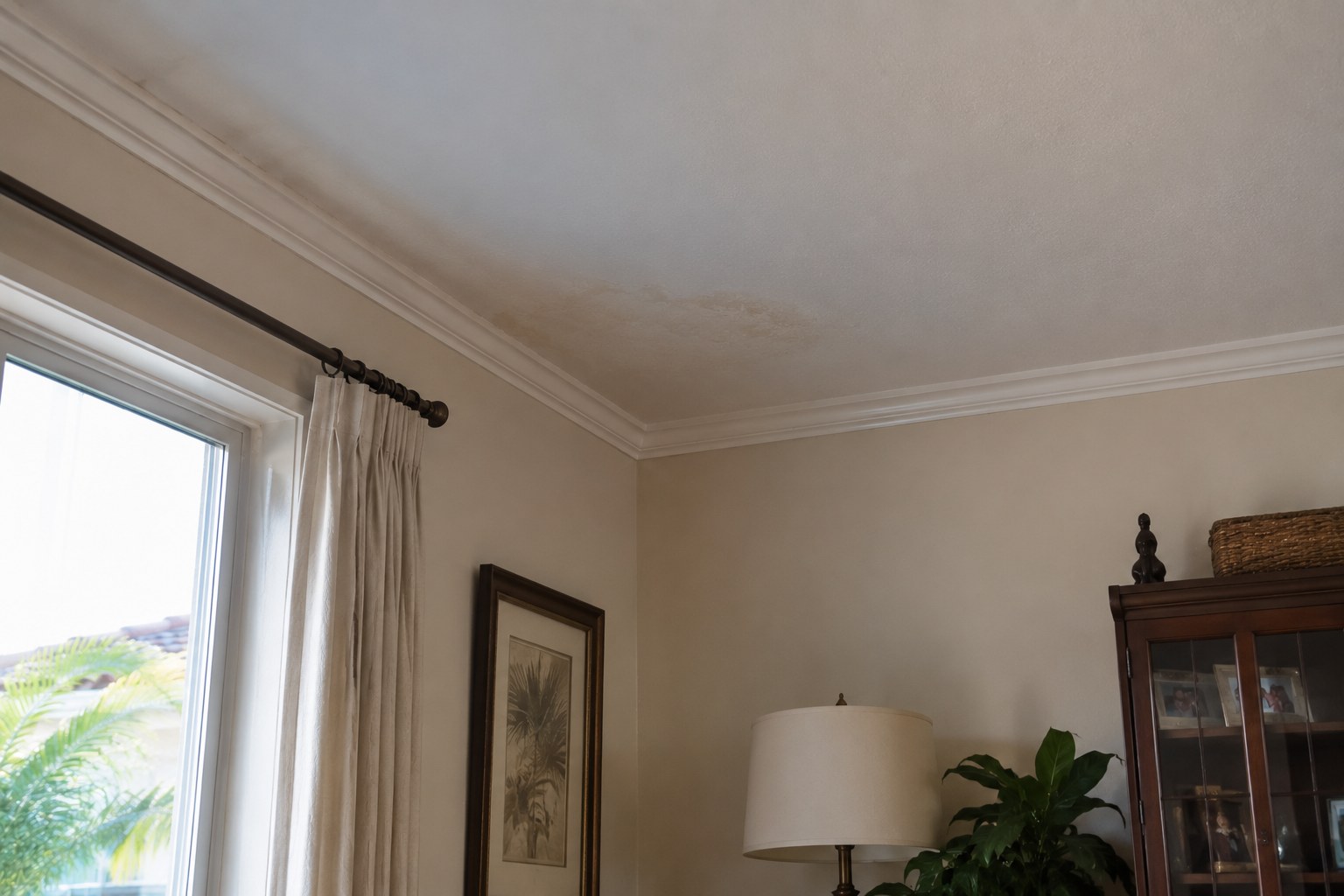
Nobody writes down the decision to put something off. There is no moment where you sit at the table and resolve to leave the stain on the ceiling for another season. It happens in a doorway, in about four seconds, and the reasoning is entirely sound: it is not leaking now, the quote was more than expected, and there are three other things ahead of it.
That is still a decision. It has a price, it is being paid, and it is mostly not the price people think it is. Understanding what deferral does to a position is one of the more useful pieces of the total ownership load set out in what this property actually costs you to own — because deferral is a lever any owner can pull, and it is easily pulled without registering that it has been pulled.
This is not an argument that everything should be done immediately. Sometimes deferring is the right call, and further down there is an honest account of when. It is an argument for knowing what you are buying when you buy time.
Deferral Is a Decision, Not an Absence of One
The reason deferral feels different from other spending decisions is that nothing happens. No money leaves. No van arrives. The week proceeds. Whatever is wrong stays exactly as wrong as it was, which reads as stability.
What is actually happening is that a position has been chosen: this item will be resolved later, under conditions not yet known, at a scope not yet fixed. That is a materially different thing from resolving it now at a scope you can see, and the difference is invisible precisely because nothing visible occurs.
Climate does some of the work here that owners in other markets do not have to think about. Water finds paths. Sealant fails progressively rather than suddenly. Salt-laden air works on fasteners and coils continuously, and a small compromise in a building envelope does not hold still while you decide. Hurricane season also imposes a calendar nobody negotiates with: an item that would be an inconvenience in April is a different item in September.
Palm Beach County makes that point concrete faster than the distances suggest, because exposure here changes over a very short run of geography. A near-ocean position in a town like Juno Beach — a narrow barrier stretch where the Atlantic and the Intracoastal are only blocks apart — keeps a deferred envelope joint, fastener or condenser coil in the salt front more or less continuously, and does it from both sides of the house rather than one. Take the same house west of the Intracoastal, then west of the coastal ridge toward the county's inland communities, and the salt loading falls away while other conditions move to the front: equipment carrying a heavier summer load, drainage across flatter ground, and — where a property sits outside central water and sewer service, as it may in the western unincorporated parts of the county — a deferred well or septic component with no municipal system standing behind it. Same age, same builder, same deferred item, two different deferral risks, separated largely by which side of the waterway the property sits on. That is why "is it safe to wait" is not answerable from the item alone in this county. It is answerable from the item and the position together.
The governing calendar is local too, and it is not only the storm calendar. Juno Beach is an incorporated town with its own building department; a property a few miles inland may sit in unincorporated Palm Beach County and be reviewed by the county instead, and the neighbouring municipalities each run their own permitting. Which authority has jurisdiction over the eventual work is worth establishing before the work is urgent — with that building department rather than from a general assumption — because deferral stays cheap only while the repair is elective. Once an item fails, it becomes permitted, scheduled work, and in our experience with owners here the hardest window in the year to get a trade booked and an inspection scheduled is the one immediately after a storm has moved through the county. Deferring an item into that window is a different decision from deferring it away from it. The same is true of occupancy: where an owner is only in residence for part of the year, the deferred item sits unwatched through precisely the months — heat, humidity, storm season — that do the most work on it.
One pattern we observe: owners describe deferral as saving money and describe living with it as something that stays in mind. The money gets postponed. The attention does not.
The Three Prices
The Three Prices of Deferral
- The scope price. The work itself can grow. A repair becomes a replacement; a contained problem reaches something adjacent; a component that could have been serviced reaches a state where it cannot. This is the familiar one, and on its own it is not a certainty — sometimes it does not materialise at all.
- The option price. Deferral can narrow what you are able to choose later, depending on the item and its condition. Condition can bear on what a carrier is willing to write and on what terms, which is a question for a licensed insurance professional rather than something to assume. Depending on the property and the loan, it can be a factor in how a lender treats it. And where an item is visible at a sale, it can become a subject of negotiation rather than a settled point. None of that is automatic, and none of it is a rule that applies to every item or every property. The point is narrower: these are options that can close quietly, while nothing appears to be happening.
- The attention price. An unresolved item does not stop consuming the monitoring line. It sits in the background, gets re-noticed, gets re-decided, and re-enters the conversation every time something else goes wrong. Unlike the other two, it is not held over to a future event: where it is felt, it is felt in the present rather than at the eventual moment of repair.
In the conversations we have with owners, the third is the one that tends to go unnamed until it is asked about — and the one described most vividly once it is. Some homeowners tell us the emotional weight of a property became more significant than the financial weight — and a substantial part of that weight is a list of unresolved items that each cost nothing this month.
How much of your load is deferred rather than resolved?
That question is easier to answer on paper than in a doorway. If you would like to work through it with us, you can start here.
When Deferring Is the Right Call
There are real cases where it is, and pretending otherwise would be dishonest about how ownership actually works.
Deferral is sound when the component is genuinely functioning and simply older than you would like — age alone is not a condition assessment, and replacing something that is working because a number felt uncomfortable is its own kind of waste. It is sound when sequencing demands it: if two capital events would otherwise land together, moving one deliberately is scheduling rather than avoidance, which is the distinction drawn in maintenance as a budget and replacement as a capital event. It is sound when cash is genuinely constrained, because a deferral you chose is better than a commitment you cannot meet. And it can be sound ahead of a sale, where a buyer may reasonably prefer a credit and their own contractor to your choice of finish.
Where a property sits inside an association-governed community, there is a further wrinkle: some of what would otherwise be your deferral decision may not sit with you. Which components an owner maintains and which the association handles is set by that community's governing documents and applicable law, and those allocations vary from one community to another — so this is territory to read in your own documents and, where the answer matters, to review with your association and, if needed, an attorney rather than to assume from a general rule. Where a component is association-maintained, an owner's exposure tends to arrive through assessments rather than through a quote, which is why the reserve position and the governing documents are worth reading together rather than separately.
What separates a sound deferral from the other kind is not the outcome. It is whether it was chosen.
How to Defer Deliberately
If the answer is not now, the answer is not nothing. Four things convert a drift into a decision.
Get the assessment even if you will not do the work. Knowing what a licensed inspector or the relevant trade actually sees turns an anxiety into an item you can price and decide about. Where the finding is undocumented history rather than visible condition, leave it recorded as unknown rather than guessing — the purchase year of the property establishes when you took ownership and nothing about when anything was installed.
Write the trigger. Deferral without a trigger condition is not deferral, it is forgetting. The trigger can be a date, a season, a threshold — after the next inspection, before the next renewal, if it recurs twice. Something that will actually fire.
Record it where you will find it. The deferred list belongs in the ownership file alongside everything else, because an item nobody has written down is an item nobody is deciding about.
And keep the insurance dimension in view without over-reading it. Condition can bear on what a carrier is willing to underwrite and on what terms; what that means for your specific policy is between you, the carrier and a licensed insurance professional, and that conversation is worth having before a renewal rather than during one. When insurance becomes the deciding line covers how that line behaves.
What distinguishes a managed deferral from an unmanaged one is not the size of the item. It is whether an assessment, a trigger and a record exist for it. Without them, the item is not really being deferred; it is simply waiting, and if it surfaces it surfaces on someone else's schedule rather than on yours.
Common Questions
How do I tell an acceptable deferral from a risky one?
Ask what happens to the scope if you wait, and get that answer from someone who has looked at the component rather than from a general rule. Items where waiting changes the eventual work — anything involving water finding a path, anything structural, anything where a failure would take an adjacent system with it — carry a different risk from items where waiting mostly just delays a bill. In a property where several systems went in at the same time and have not been replaced since, that assessment is worth doing across the whole set rather than item by item.
If I am selling soon, should I just leave everything?
Sometimes, and it depends on what the item is. A buyer may genuinely prefer a credit and their own contractor for a finish decision. What travels less easily is anything a buyer's inspector will find that raises a question about condition or about what a carrier will write — that can become a subject of negotiation, and negotiation is where an unresolved item is priced by somebody with no attachment to the property. That is a conversation to have specifically rather than by rule, because it turns on the item, the timing and what the documentation supports.
We have deferred a lot. Is it too late to get ahead of it?
No. The first move is not spending; it is converting the list from a background weight into a set of items with assessments and triggers attached — a change in your position rather than a change in your spending. From there some things will turn out to be genuinely fine, some will need sequencing, and a few will need doing. The purpose of doing it now is to reach the items while the full range of responses is still open rather than after it has narrowed. Whether your property is anywhere near that point is not something an article can tell you; it is what an assessment of the specific items is for.
What makes deferral so easy is that it never presents itself as a choice. Every other decision about a property announces itself: a quote to approve, a contract to sign, a date to hold. Deferral just happens, in doorways, and then keeps happening by default until something forces the issue. The owners who handle this well are not the ones who fix everything immediately. They are the ones who noticed they were deciding, and decided on purpose. If you would like to work through your own deferred list with us, you can ask us about an Ownership Sustainability Review.
About the Authors
Chris and Sue Kull write about what a property is actually asking of an owner before deciding what to do about it.