Why Probate Real Estate Takes Longer Than Heirs Expect in Florida
Most heirs arrive at the probate process with a working assumption that feels reasonable on the surface: handle the legal formalities, settle the estate, sell the property, close the chapter. What they find instead is a process that expands in ways they didn't anticipate — not because something went wrong, but because the gap between how long probate looks like it should take and how long it actually takes in Florida is wider than almost anyone expects going in. That gap is where most of the frustration lives. And understanding what fills it rarely makes the process faster, but it almost always makes it more navigable.
If you are managing an inherited property in Palm Beach County, the Kull Group's probate resource hub covers the full range of what heirs typically encounter in this market — from legal coordination to property decisions to the timeline pressures that come with carrying a home through a Florida estate.
Florida Probate Is Not Slow Because It Is Broken
There is a version of this conversation that frames probate delays as administrative failure — courts that move too slowly, paperwork that gets lost, attorneys who aren't responsive. Those things happen. But they are not the primary reason probate real estate consistently takes longer than heirs expect.
Florida's probate process has its own structural timeline. Formal administration — the process that applies to most estates with real property — requires a minimum period for creditor claims that runs four to six weeks from the date of publication alone. That window exists regardless of how organized the estate is, how cooperative the heirs are, or how motivated everyone is to move quickly. It is not an inefficiency. It is a legal requirement that the process cannot compress around.
Beyond that minimum, the court's scheduling calendar, the complexity of the estate's assets, and the responsiveness of all required parties each add time that compounds rather than adds. A probate that looks like it should take three months from the outside often takes six to nine months in practice — not because anything went wrong, but because the procedural minimums are longer than most heirs realize and every additional variable adds to them.
After working with Palm Beach County families through probate for more than three decades, one pattern appears consistently: the heirs who handle the timeline best are not the ones who found a way to make it move faster. They are the ones who understood early what the process actually required — and built their decisions around that reality rather than against it.
The Property Doesn't Wait for the Process
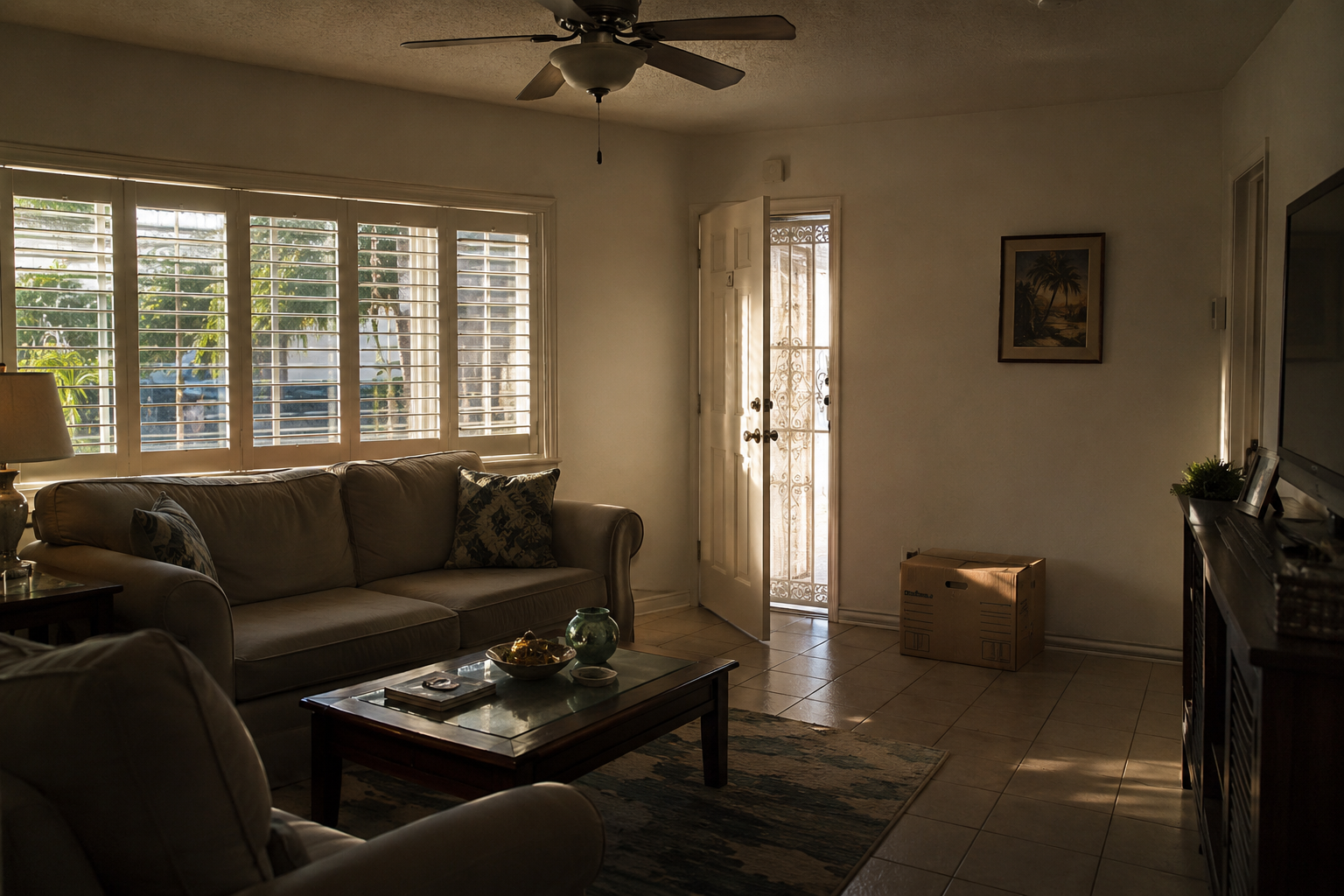
One dimension of Florida probate that heirs consistently underestimate is what happens to the property during the timeline. In most markets, a house that sits vacant for several months is a house that waits. In South Florida, a house that sits vacant for several months is a house that accumulates.
The climate is structurally demanding in ways that don't pause for estate proceedings. Humidity penetrates crawl spaces and attic decks. HVAC systems that aren't running regularly develop mold and mechanical issues faster here than in most other regions. Pool equipment left unmaintained through a Florida summer deteriorates in ways that can produce repair costs that rival the equipment's replacement value. Landscaping doesn't observe a holding period — it overtakes quickly in the heat, and restoration costs are not trivial.
For inherited properties in communities across Boynton Beach, Lake Worth, and Royal Palm Beach — particularly homes built in the 1990s and early 2000s — there is often a compounding problem. Many of those properties are approaching the end of multiple system life cycles simultaneously. A roof installed during original construction, an HVAC system that has run through twenty South Florida summers, pool equipment that has never been replaced — these are not deferred maintenance items that wait politely. They are conditions that can shift materially during a six-to-nine-month probate window.
Insurance is another pressure that heirs often don't anticipate fully. A property that transitions from owner-occupied to vacant status frequently triggers a coverage change that affects both availability and cost. In the current Florida insurance environment — which has been materially different for the last several years than what many original owners purchased into — carrying an inherited property through a full probate cycle carries costs and risks that weren't part of the original ownership experience.
Managing an inherited property in Palm Beach County while the estate moves through probate?
The decisions made during the probate window — about maintenance, insurance, timing, and coordination — often have more impact on the final outcome than the sale itself. Understanding what those decisions are before they become urgent is where the real value of early guidance lives.
Schedule a probate property consultation with The Kull Group.
When Multiple Heirs Are Involved, the Timeline Becomes a Coordination Problem
Florida probate with a single heir and a clear will moves through its required procedural steps with relative predictability. Florida probate with multiple heirs — each in a different life situation, often in different states, each carrying different financial pressures and different emotional relationships with the property — is a different category of experience entirely.
What we observe repeatedly is that the legal process is rarely the primary source of delay in multi-heir estates. The coordination is. Every decision that requires agreement among heirs — whether to sell, when to sell, how to price, what to do about repairs, whether to clean out personal property before or after listing — creates a point where the process can stall while the conversation catches up.
We worked with a family who inherited a property in Lake Worth — three siblings, all living in different states, all with different financial situations and different ideas about what the property represented to them. The house itself was in manageable condition. The coordination between them was the real work. What we found in that situation — and in many others like it — is that the most useful thing isn't pushing a timeline. It's giving everyone the same clear, grounded information so that disagreements have fewer places to hide. When the facts are shared and understood, most families find their way to a workable decision. It's the information gaps that tend to sustain the impasse.
The emotional dimension is also real and deserves to be named. Heirs are often managing grief, family dynamics, and financial pressure simultaneously. The financial readiness to make a decision — understanding the equity, the carrying costs, the market — often arrives well before the emotional readiness to act on it. That gap is not a flaw in the process. It is a feature of how people actually navigate inherited property decisions. The timeline that feels like a problem from the outside is often the time a family needs to arrive at a decision they can all live with.
What This Means for Inherited Property Owners in Palm Beach County
Understanding why probate takes longer than expected matters most not as an explanation, but as a planning framework. The heirs who navigate the process with the least friction are not the ones who found shortcuts — they are the ones who understood the actual timeline early enough to make decisions that aligned with it rather than against it.
In practical terms, that means a few things worth thinking about now rather than later.
The property needs active management during the probate window, not passive maintenance. In the South Florida climate, passive maintenance is a category that doesn't really exist — things either receive attention or they deteriorate. Understanding what the property needs during a six-to-nine-month holding period, and what those carrying costs actually look like against the estate's equity position, is a calculation worth doing early.
If multiple heirs are involved, the coordination framework matters as much as the legal framework. Establishing how decisions will be made — who communicates with whom, how disagreements get resolved, what information everyone agrees to work from — is unglamorous groundwork that saves months. We've seen families in Wellington and Boca Raton resolve inherited property decisions in a fraction of the time because someone established that framework early. We've also seen simpler estates take twice as long because no one did.
The question of when to list relative to where the estate is in its legal process is one that doesn't have a single right answer — it depends on the estate's specific circumstances, the property's condition, and what the heirs need from the outcome. But it is a question that benefits from being asked well before the estate is ready to close, not after.
Why does Florida probate take longer than probate in other states?
Florida's formal probate administration process includes a mandatory creditor claim period — typically three months from the date of publication — during which the estate cannot be fully closed regardless of other factors. Florida also requires court approval for certain actions, including the sale of real property, which adds procedural steps that some other states handle outside of court. The combination of required minimums, court scheduling, and the complexity of individual estates means that timelines in Florida are typically longer than heirs expect even when everything proceeds without complications.
Can an inherited property be sold before probate is complete in Florida?
In some circumstances, yes — but it depends on the specific structure of the estate and how the property is titled. Properties held in a trust may transfer outside of probate entirely. In formal probate administration, the personal representative has authority to sell real property with court approval, which can occur before the estate is formally closed. Whether selling before probate completion makes sense depends on the estate's circumstances, the property's condition, and the heirs' timeline. This is a question worth discussing with the estate's attorney and a real estate advisor who has experience with Florida probate transactions specifically.
What happens to a vacant inherited property during a long probate in South Florida?
Vacancy in South Florida carries specific risks that don't apply equally in other markets. Humidity, heat, and the absence of regular HVAC operation create conditions for mold growth that can develop within weeks. Pool and irrigation systems require active management to avoid equipment failure. Many insurance carriers treat vacant properties differently than owner-occupied properties, and coverage gaps can emerge if the transition isn't managed carefully. For properties in communities across Palm Beach County — particularly older housing stock in areas like Lake Worth and Royal Palm Beach where original systems are approaching end-of-life — the cost of deferred attention during a probate holding period can be significant.
If you are navigating an inherited property in Palm Beach County, the Kull Group's probate resource hub covers what heirs in this market most commonly face — from the legal coordination layer to the property decisions that need to be made during the process. For families who want to understand the property's current position and what the options look like from here, a probate property consultation is where that conversation usually starts. And if authority over the estate is still being established, our overview of who has authority to sell probate property in Florida addresses that question specifically.