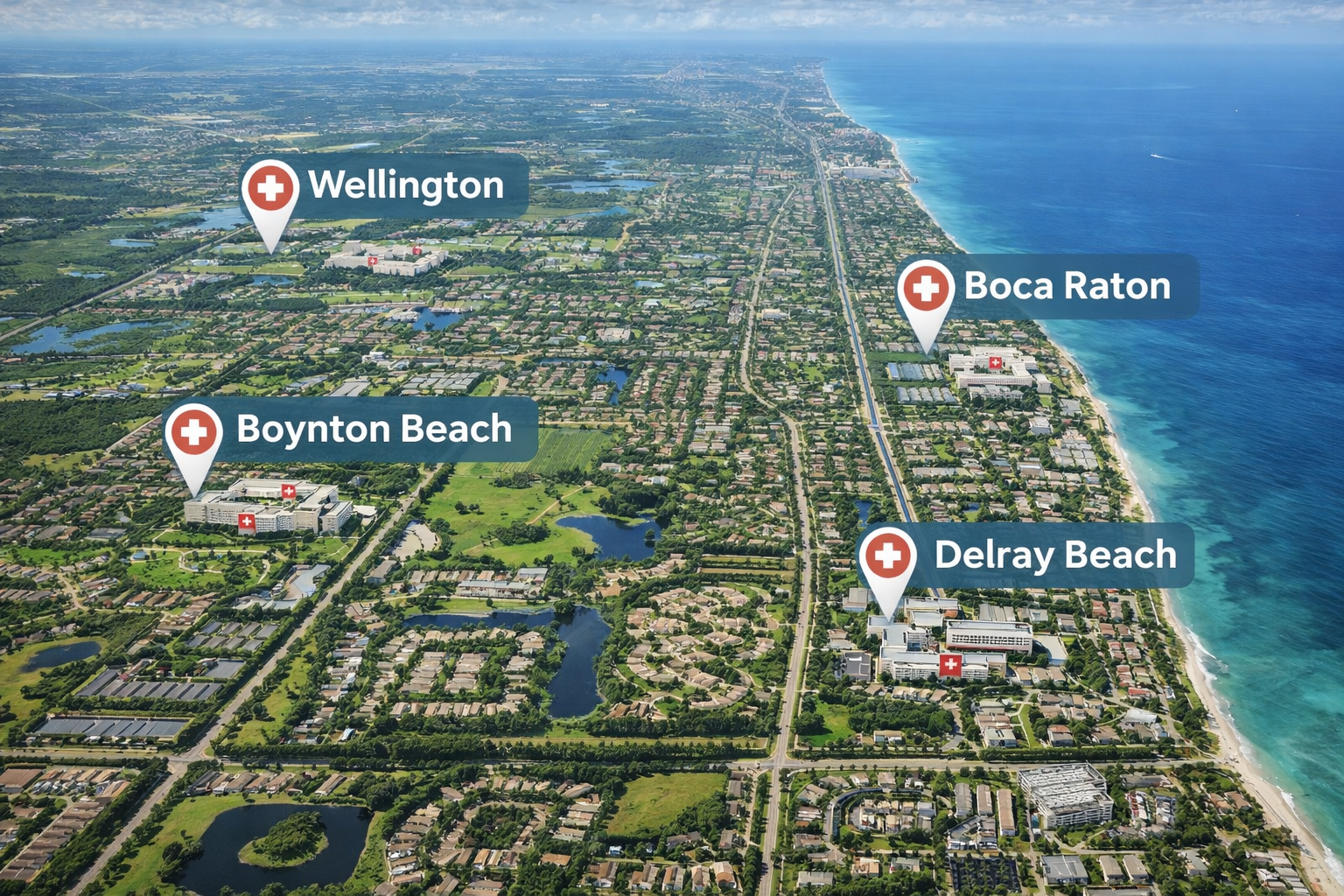
Insights, strategy, and real estate guidance across Palm Beach County.

April 15, 2026

Rent vs Buy in Palm Beach County for Healthcare Professionals

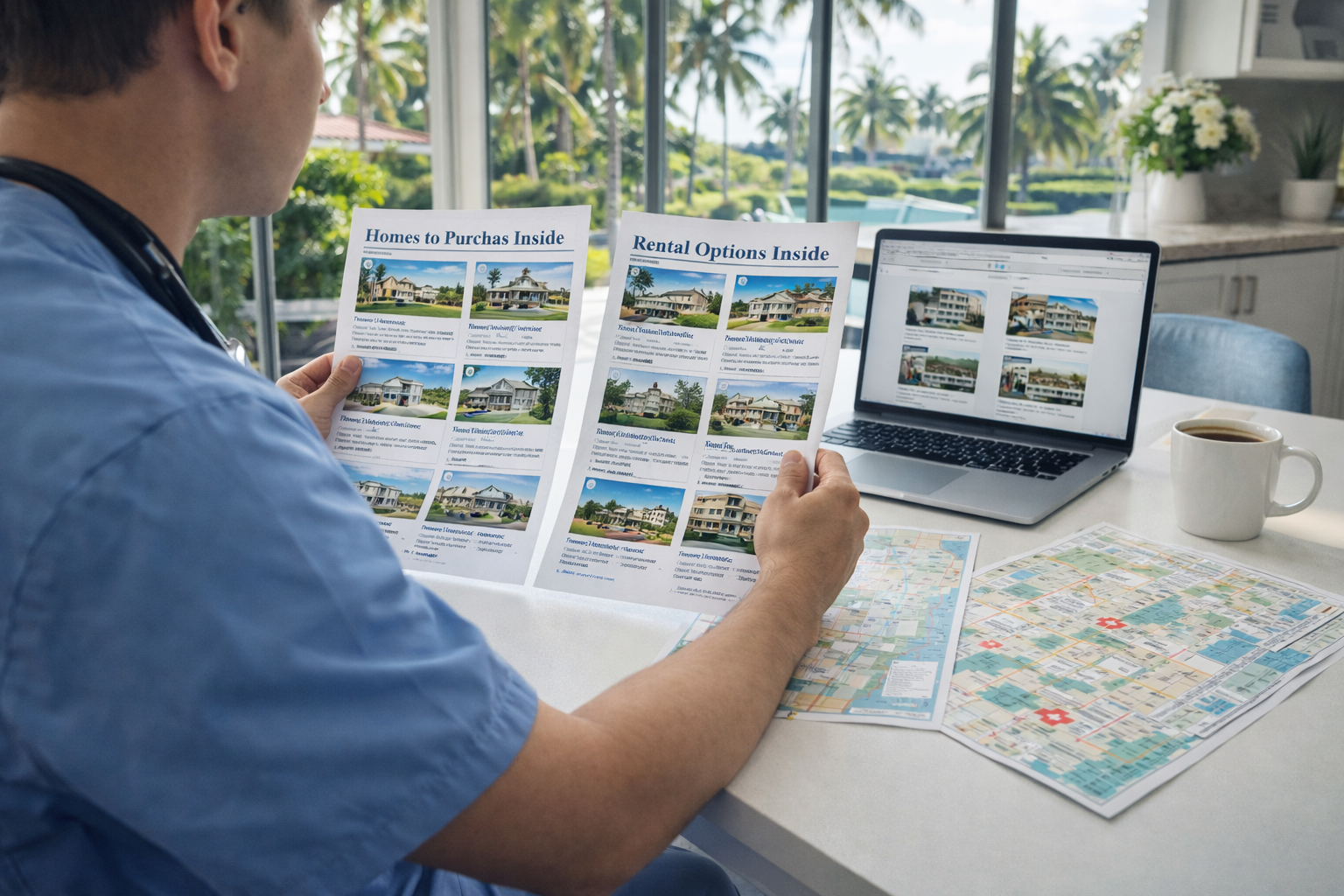
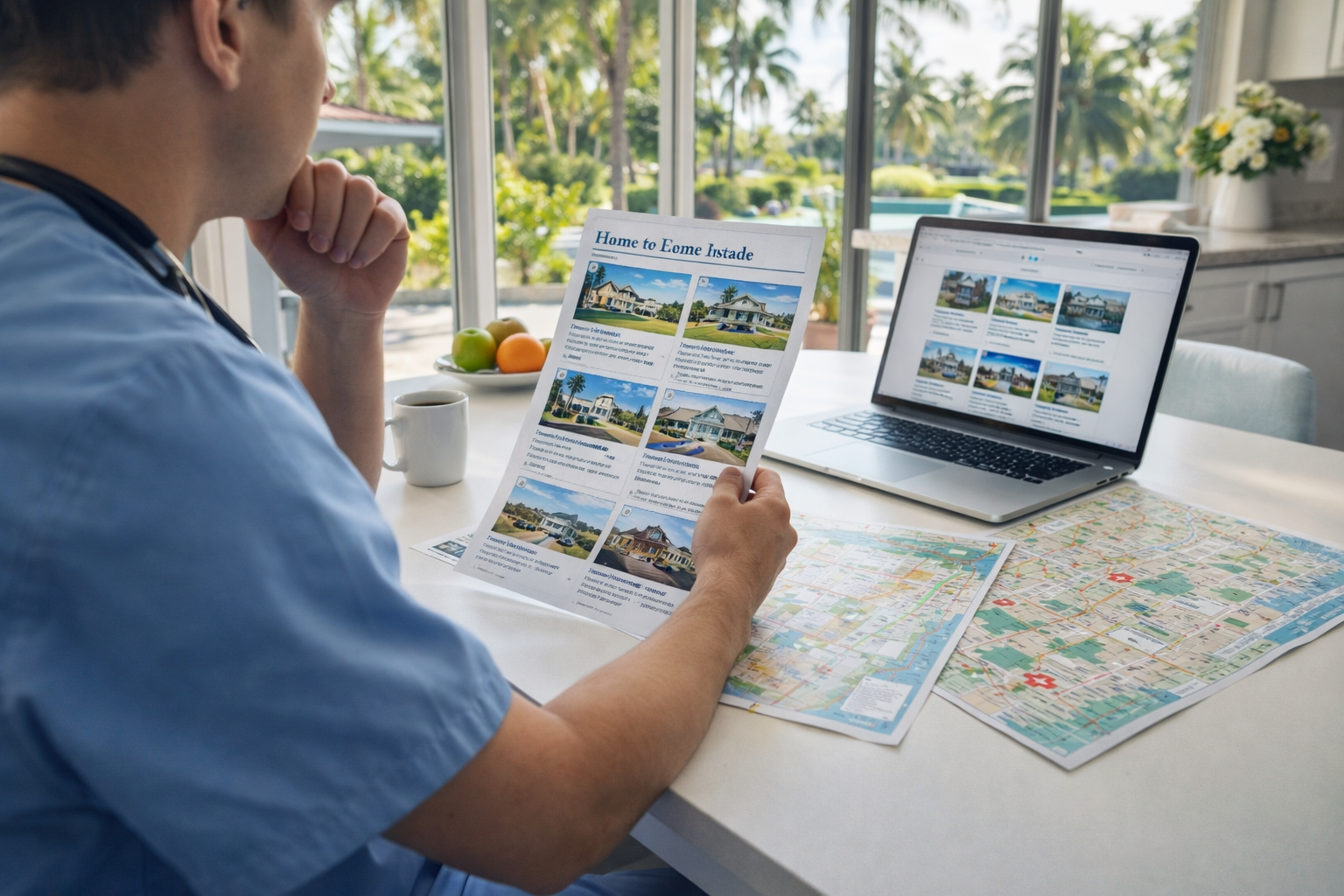
healthcare professional comparing renting and buying options in palm beach county

Rent vs Buy in Palm Beach County: The Decision Most Healthcare Professionals Miscalculate at the Beginning

From the outside, the rent-versus-buy decision looks financial.

Mortgage rates. Monthly payments. Down payment size. Market timing. Future appreciation.

Those numbers matter — but for healthcare professionals relocating into Palm Beach County, they usually are not the part that creates long-term clarity.

The real variable is whether your life here has become predictable enough to support permanence.

Without that stability, even the “right” financial decision can quietly become the wrong lifestyle decision after the move.

The Decision Changes Once the Routine Becomes Real

Before relocating, most healthcare professionals evaluate housing through projection.

They estimate commute times. Assume schedules will stabilize. Imagine how the week will function once everything settles down.

Then the actual routine begins.

The drive feels longer after consecutive shifts. Certain routes become exhausting. Recovery time matters more than expected. Some locations feel supportive while others slowly create friction that never appeared during the search.

That is why the rent-versus-buy decision cannot be separated from how daily life actually behaves after the move.

Why Palm Beach County Makes the Decision More Complex

Palm Beach County does not operate like one unified housing market.

Different areas solve different problems for healthcare professionals.

For some buyers, Greenacres housing for healthcare professionals may create the right balance between affordability, central access, and manageable commute patterns.

Others begin exploring Lake Worth real estate for healthcare professionals because it offers flexibility between renting, buying, and staying connected to multiple hospital corridors.

Meanwhile, professionals prioritizing long-term residential stability may lean toward entirely different environments such as Wellington, Jupiter, or Palm Beach Gardens.

The answer changes depending on how your work schedule interacts with where you live.

The Question Most Buyers Never Ask Themselves

Most people ask whether they can afford to buy.

The more important question is whether they understand their routine well enough to commit to it.

That includes:

  • Your actual commute after difficult shifts
  • The routes you repeatedly rely on
  • How much recovery time your schedule requires
  • What kind of environment helps you reset outside of work
  • Whether your current role is stable long term

When those answers are still unclear, renting can preserve flexibility while you learn how life here actually functions.

When those answers become predictable, buying often becomes far easier to evaluate confidently.

Why Commute Changes the Financial Equation

Healthcare professionals often underestimate how strongly commute behavior affects housing satisfaction.

A home can feel financially “smart” while creating daily exhaustion that slowly changes the entire experience of living there.

Likewise, a rental that initially feels temporary can become valuable because it allows you to test your actual routine before locking into a long-term decision.

This is why commute evaluation belongs inside the financial discussion instead of outside of it.

The commute analysis for healthcare professionals explains why repeated drive patterns affect long-term sustainability more than most buyers initially expect.

The numbers on paper rarely capture how the routine actually feels.

When Buying Starts Becoming the Better Decision

Buying tends to make more sense once uncertainty begins disappearing from the routine.

You know which routes you rely on. Your work environment feels stable. Your shift structure is consistent enough to plan around. The area no longer feels experimental because you understand how your life operates inside it.

At that point, ownership often stops feeling risky and starts feeling stabilizing.

The decision becomes less about guessing and more about execution.

The home buying guide for healthcare professionals in Florida explains how that transition usually happens once routine clarity replaces uncertainty.

Why Renting Is Sometimes the More Strategic Move

Renting is not automatically hesitation.

For many healthcare professionals entering Palm Beach County, renting creates an adjustment period that protects against making a premature long-term decision.

That flexibility can be especially valuable when:

  • You are new to the hospital system
  • Your shifts are still changing
  • You have not tested commute routes consistently
  • You are still learning how different parts of the county feel after work

The mistake is not renting.

The mistake is treating flexibility as failure instead of strategy.

Where This Fits Inside the Larger Relocation Decision

Renting versus buying should never be evaluated in isolation.

The decision belongs inside the larger relocation framework:

  • Work location
  • Commute sustainability
  • Housing environment
  • Recovery space
  • Long-term career plans
  • Lifestyle stability

The Palm Beach County healthcare relocation guide connects those pieces so the housing decision supports the routine instead of creating pressure against it.

What Usually Causes the Wrong Decision

Most rent-versus-buy mistakes come from trying to force certainty too early.

Buying before the routine is tested can lock you into a pattern that slowly becomes exhausting.

Waiting too long after stability is already clear can keep you sidelined while the right opportunities become harder to access.

Both mistakes usually come from the same issue:

The decision was made before fully understanding how daily life actually functions in Palm Beach County.

The Real Answer

There is no universal formula that tells every healthcare professional whether to rent or buy.

There is only the answer that matches your current level of routine certainty.

When life here still feels transitional, flexibility often has more value than permanence.

When your schedule, commute, and lifestyle patterns become predictable, ownership usually becomes much easier to evaluate with confidence.

The housing decision becomes clearer once the routine becomes real.

Frequently Asked Questions

Should healthcare professionals rent or buy when moving to Palm Beach County?

The decision should depend on how stable your work location, commute, schedule, and daily routine are. Renting can preserve flexibility during transition periods, while buying often makes more sense once the routine becomes predictable and sustainable.

What is the biggest mistake healthcare professionals make when deciding whether to rent or buy?

The biggest mistake is committing to a long-term housing decision before understanding how life actually functions after the move. A routine that looks manageable during the search can feel very different after repeated shifts and real commute patterns begin.

Trying to decide whether renting or buying fits your healthcare relocation?

See how commute structure, schedule stability, housing location, and long-term planning connect before making a permanent decision in Palm Beach County.

Explore the Full Healthcare Relocation Guide

April 15, 2026

Buying a Home as a Healthcare Professional in Florida

healthcare professional reviewing homes for sale in palm beach county while planning purchase timing

Buying a Home as a Healthcare Professional in Florida Usually Fails for One Reason Nobody Talks About Early Enough

The decision to buy often feels clear long before the timing actually is.

The job is secured. The move is happening. The search begins to narrow. At that point, most healthcare professionals assume the difficult part is finding the right property.

What quietly creates problems instead is timing pressure.

Not market timing in the traditional sense. Personal timing. Schedule timing. Decision timing. The point where a demanding healthcare role collides with a process that rewards speed, responsiveness, and mental bandwidth.

The Process Is More Demanding Than Most Buyers Expect

Buying a home in Palm Beach County is not just about qualifying financially.

It requires attention at specific moments. Showings become available unexpectedly. Negotiations move quickly. Inspection periods create deadlines. Decisions rarely arrive when a healthcare professional conveniently has time to stop and evaluate everything calmly.

That is where the process begins breaking down for many buyers.

Not because they are unqualified. Because their schedule does not leave enough room to absorb the pace without added stress.

Why Timing Feels Different for Healthcare Professionals

Most industries allow some degree of predictability during major decisions.

Healthcare schedules often do not.

Long shifts, overnight rotations, on-call responsibilities, early starts, and emotional fatigue change how available you actually are during the process. Even highly organized buyers can feel reactive when the home search begins competing against real work demands.

That tension is usually invisible at the beginning. It shows up once decisions start requiring immediate attention.

Location Changes the Pressure Level

Different parts of Palm Beach County create different buying conditions.

For example, Wellington real estate for healthcare professionals often attracts buyers focused on long-term stability, structured neighborhoods, and residential consistency. The pace can feel more measured depending on inventory and timing.

Meanwhile, Palm Beach Gardens housing for healthcare professionals may create stronger timing pressure because demand, competition, and inventory movement can compress decision windows more aggressively.

Understanding how different markets behave matters because the process itself changes depending on where you search.

The Most Important Question Usually Gets Ignored

Most buyers ask whether they are financially ready to purchase.

The better question is whether their current routine can support the process without creating unnecessary instability.

Can you realistically coordinate showings around your schedule?

Can you respond quickly when a strong opportunity appears?

Can you manage negotiations, inspections, and deadlines without constantly feeling interrupted by work?

When those answers are unclear, the process starts becoming reactive instead of controlled.

Why Commute and Timing Are Connected

The home itself is only part of the decision.

The daily structure surrounding the home matters just as much.

A healthcare professional who chooses a location without fully understanding commute behavior may discover later that the schedule becomes harder to sustain than expected. That stress compounds during the buying process because every decision begins carrying more pressure.

The commute analysis for healthcare professionals explains why repeated travel patterns often shape long-term satisfaction more than buyers initially expect.

Where the Rent Versus Buy Decision Reappears

Sometimes the smartest decision is not delaying ownership forever.

It is delaying it long enough for your routine to stabilize.

If your work location, shift structure, or long-term plans still feel uncertain, forcing a permanent housing decision can create unnecessary friction. That does not mean buying is wrong. It means the timing may still be developing.

The rent versus buy guide for healthcare professionals explains how routine stability often determines which decision actually creates more long-term control.

What Changes Once Timing Finally Aligns

When schedule stability and market timing finally support each other, the process feels very different.

Decision-making becomes clearer. Showings feel intentional instead of rushed. The focus shifts away from logistical survival and toward choosing the environment that actually supports life outside of work.

That is usually when buyers begin paying attention to what truly matters after the move: recovery space, layout flow, noise levels, privacy, commute sustainability, and how the home supports the routine emotionally as well as practically.

The guide to what healthcare professionals prioritize in a home explains why those factors tend to matter more after the move than buyers realize beforehand.

What Timing Problems Actually Look Like

Most timing problems do not appear dramatic while they are happening.

They look like:

  • Missing strong opportunities because schedules conflict
  • Feeling rushed during negotiations
  • Making decisions while mentally exhausted
  • Choosing convenience over long-term fit simply to end the process

None of those problems come from the property itself.

They come from trying to force a high-pressure process into a schedule that cannot support it comfortably.

The Real Advantage

The buyers who usually feel best about their decisions are not always the fastest.

They are the ones whose timing, schedule, and daily routine support the process well enough to make deliberate decisions without constant operational strain.

That is where confidence starts replacing pressure.

Frequently Asked Questions

When is the right time for healthcare professionals to buy a home?

The right time is when your work schedule, commute structure, financial position, and availability are stable enough to move through the process without constant disruption or pressure.

Why does buying a home feel more difficult for healthcare professionals?

Healthcare schedules often create limited flexibility during a process that depends on timing, responsiveness, and rapid decision-making. That mismatch can make even qualified buyers feel reactive if the timing is not aligned properly.

Preparing to buy a home in Palm Beach County as a healthcare professional?

See how timing, commute patterns, location strategy, and lifestyle fit connect before making a long-term housing decision.

Explore the Healthcare Relocation Guide

April 15, 2026

The Commute Decision Healthcare Professionals Underestimate

healthcare professional driving to work in palm beach county considering commute distance and housing location

The Commute Decision Healthcare Professionals Usually Underestimate Until It Starts Reshaping Their Entire Routine

At the beginning, the drive rarely feels like the deciding factor.

The route looks manageable. The estimate seems reasonable. The focus stays on the home itself because that feels more permanent and more important.

Then the schedule becomes real.

The drive repeats before sunrise. It repeats after exhausting shifts. It repeats when energy is already low and the margin for disruption disappears. That is usually the point where healthcare professionals realize the commute was never just a transportation detail.

It was part of the lifestyle decision the entire time.

Why Commute Time Is Experienced Differently in Healthcare

Most people evaluate a commute once.

Healthcare professionals live it under stress, fatigue, changing shift conditions, and irregular timing patterns. That changes how the same drive actually feels over time.

A route that looks acceptable on paper can become draining when repeated four or five times a week around demanding schedules. A drive that initially seemed minor can start influencing sleep patterns, recovery time, and how sustainable the entire routine feels.

The issue is rarely one difficult commute.

It is the accumulation of repeated friction.

Why Palm Beach County Magnifies the Problem

Palm Beach County does not operate as one unified commuting environment.

Different parts of the county create entirely different daily experiences depending on hospital location, route dependency, traffic variability, and how much schedule flexibility a healthcare professional actually has.

For example, West Palm Beach real estate for healthcare professionals often reduces commute variability because of direct access to major medical corridors and primary roadway systems.

Meanwhile, Boynton Beach housing for healthcare professionals may introduce more variation depending on route timing, traffic patterns, and where the worksite sits relative to the commute flow.

The difference is not just measured in minutes.

It is measured in consistency.

What Buyers Usually Measure Incorrectly

Most buyers evaluate commute length.

What actually shapes long-term satisfaction is commute behavior.

Does the route remain predictable?

Does it require constant adjustment?

Does it drain energy before the shift even begins?

Does it create tension at the end of an already demanding day?

A slightly longer commute can feel sustainable if the pattern remains stable. A shorter drive can feel exhausting if traffic, timing, and route pressure constantly fluctuate.

That distinction usually becomes obvious only after the move.

Where the Commute Quietly Starts Affecting Everything Else

Once the drive becomes part of the routine, it starts influencing decisions outside of work.

Sleep timing changes.

Recovery time changes.

Errands begin getting postponed.

Time at home feels compressed.

What initially looked like a housing decision slowly becomes a lifestyle structure built around movement.

That is why commute planning cannot be treated as a secondary consideration during relocation.

How Location Strategy Starts Changing

Once healthcare professionals begin evaluating how the commute actually feels instead of how it looks on a map, location priorities usually shift.

The search becomes less focused on isolated home features and more focused on which areas support a sustainable routine over time.

The guide to the best areas for healthcare professionals in Palm Beach County explains how different locations support entirely different schedule patterns, commute structures, and recovery environments.

For a broader understanding of how housing, commute, and lifestyle decisions connect together before the move, the Palm Beach County healthcare relocation guide provides a larger framework for evaluating those tradeoffs clearly.

Where the Financial Tradeoff Starts Appearing

Eventually, most healthcare professionals reach the same practical question:

Is paying more for proximity actually worth it?

That answer depends less on the number itself and more on what the commute costs over time in energy, consistency, and quality of life.

A less expensive home farther away may create a routine that becomes difficult to sustain. A more expensive home closer to work may simplify the entire structure of the week.

This is where financial strategy and commute strategy stop being separate decisions.

The rent versus buy guide for healthcare professionals explains how commute behavior and housing decisions begin overlapping financially as routines stabilize.

Why the Problem Usually Appears Late

The commute rarely feels problematic during the search process because the drive has not become repetitive yet.

It still feels temporary.

Once the move is complete, the repetition begins exposing the reality of the decision. That is when healthcare professionals start realizing whether the route supports their life or competes against it.

The difference becomes visible gradually, not immediately.

The Practical Reality

A commute is not just a travel estimate.

It becomes part of how your day begins, how your shift ends, and how much energy remains available outside of work.

That makes it one of the most important variables in the relocation decision even though it is often treated like a secondary detail at the start.

The professionals who usually feel best about where they live are not always the ones with the shortest drive.

They are the ones whose commute fits the rhythm of how they actually live.

Frequently Asked Questions

How much commute time is too much for healthcare professionals?

The limit depends less on the number of minutes and more on how the commute affects energy, recovery, consistency, and long-term sustainability around demanding work schedules.

Why do commute decisions affect housing satisfaction so much?

Because the commute repeats constantly. Over time, it shapes daily routine, stress levels, recovery time, and how sustainable life feels outside of work.

Trying to balance commute, housing, and schedule stability as a healthcare professional?

Understand how commute patterns, pricing, lifestyle fit, and location decisions connect before choosing the wrong setup.

Explore the Healthcare Relocation Guide

April 15, 2026

Best Areas in Palm Beach County for Healthcare Professionals

map of palm beach county showing top areas for healthcare professionals to live based on commute and lifestyle

Choosing the Right Area in Palm Beach County Has Almost Nothing to Do With Price—And Almost Everything to Do With This Tradeoff

Most healthcare professionals begin the search the same way.

Price range. Property type. Bedrooms. Commute estimate.

At first, it feels organized.

Then the search expands across Palm Beach County and clarity starts disappearing instead of improving. More options appear. More locations get added. More homes seem possible.

But the decision becomes harder, not easier.

That usually happens because the search is still being filtered by features instead of by lifestyle structure.

The Decision Is Really About One Core Tradeoff

Every area in Palm Beach County forces some version of the same question:

Do you want to stay closer to work, or farther away from it?

That tradeoff shapes almost everything else.

Areas closer to major medical corridors usually improve access, reduce commute variability, and simplify daily movement. Areas farther away often provide more space, more separation, quieter environments, and a stronger feeling of disconnecting after work.

The mistake happens when buyers try maximizing both equally.

That usually creates a search without direction.

How the Tradeoff Actually Appears Across the County

Different areas lean heavily toward different versions of daily life.

For example, West Palm Beach housing for healthcare professionals often prioritizes access, commute efficiency, and proximity to major hospital systems. The environment moves faster, but the operational side of life can become simpler.

Meanwhile, Wellington real estate for healthcare professionals shifts the balance toward structure, residential stability, and a more controlled environment outside of work hours, even if commute planning becomes more important.

Neither approach is universally better.

They simply solve different problems.

Why “Best Areas” Lists Usually Create More Confusion

Most rankings assume buyers share the same priorities.

Healthcare professionals usually do not.

A physician working unpredictable hospital hours may evaluate locations completely differently from someone with a fixed outpatient schedule. A buyer prioritizing recovery and quiet may reject areas another professional views as perfectly efficient.

That is why generalized “best places to live” advice tends to fall apart quickly once real schedules and real routines enter the conversation.

The definition of “best” changes depending on how life actually functions outside of work.

When the Tradeoff Stops Feeling Theoretical

At the beginning of the search, the tradeoff feels abstract.

Later, it becomes operational.

The commute starts repeating under real conditions. Recovery time becomes measurable. The difference between a peaceful home environment and a highly active one starts affecting how sustainable the week feels.

That is usually when buyers realize they were never just choosing an area.

They were choosing how daily life would operate.

The commute analysis for healthcare professionals explains how those patterns begin influencing long-term satisfaction more than buyers initially expect.

Where Property Preferences Finally Start Making Sense

Once the location tradeoff becomes clear, the property search becomes dramatically easier.

The focus shifts away from random features and toward whether the home supports the lifestyle structure you are actually building.

Layout begins mattering differently.

Noise levels matter differently.

Privacy, recovery space, maintenance requirements, and overall environment become easier to evaluate because they now exist inside a clearly defined routine.

The guide to what healthcare professionals prioritize in a home explains why these factors usually matter more after the move than buyers expect beforehand.

What Happens When the Tradeoff Never Gets Defined

Without a clear direction, the search keeps expanding.

More areas get added.

More compromises appear.

The decision becomes increasingly reactive because every option solves one problem while creating another.

Eventually, buyers start evaluating homes individually without understanding whether the surrounding location actually supports their routine.

That is usually when the process starts feeling exhausting instead of clarifying.

The Practical Way to Narrow the Search

Instead of starting with price, start with operational priorities.

Do you need proximity to reduce schedule pressure?

Do you need separation from work to improve recovery and consistency outside of shifts?

Do you value efficiency more than space?

Or does the home environment itself matter more than minimizing drive time?

Once those answers become clear, most of Palm Beach County stops being relevant—and the correct areas begin standing out much faster.

What This Decision Really Controls

The area you choose shapes more than where you live.

It influences how much energy remains outside of work. It affects how sustainable your routine feels. It changes how much of your life gets spent moving between responsibilities versus recovering from them.

That is why this decision usually feels bigger than buyers initially expect.

Because it is.

The Real Answer

There is no universally “best” area for healthcare professionals in Palm Beach County.

There are only locations that align more accurately with how you need your life to function.

Once that alignment becomes clear, the search stops feeling broad.

It starts feeling specific.

Frequently Asked Questions

What is the most important factor when choosing where to live as a healthcare professional?

The most important factor is how the location balances proximity to work with the type of home environment and recovery space you need outside of your schedule.

Why do “best places to live” lists fail healthcare professionals?

Because they ignore how different schedules, commute patterns, stress levels, and recovery needs change what actually feels sustainable in daily life.

Trying to decide where to live in Palm Beach County as a healthcare professional?

Understand how commute structure, lifestyle priorities, recovery space, and location strategy connect before choosing the wrong area.

Explore the Healthcare Relocation Guide

April 15, 2026

Moving to Palm Beach County for a Healthcare Career

healthcare professional relocating to Palm Beach County reviewing neighborhoods and housing options

Moving to Palm Beach County for a Healthcare Career Feels Like the Right Decision—Until Daily Life Starts Working Against You

At first, the move feels obvious.

The position is stronger. The opportunity feels meaningful. Palm Beach County offers long-term healthcare demand, career growth, and a market large enough to create real professional stability.

Then the logistics begin.

The housing search expands. The commute becomes harder to evaluate. Entire areas start blending together. Suddenly the decision no longer feels centered around the job itself.

It starts revolving around how life will actually function once the role becomes real.

The Career Move and the Lifestyle Move Are Not the Same Decision

Accepting a healthcare opportunity solves one problem.

Building a sustainable daily routine around it solves another.

That distinction matters more than most professionals expect before relocating.

A strong position does not automatically create the right living environment. A shorter commute does not automatically create balance. A beautiful home does not automatically support recovery after demanding shifts.

The move only feels successful long-term when the housing decision aligns with how the career actually affects daily life.

Why Palm Beach County Keeps Pulling Healthcare Professionals Into the Market

The movement into Palm Beach County is not accidental.

Healthcare expansion, population growth, hospital investment, and long-term demand continue pulling physicians, nurses, specialists, administrators, and healthcare support staff into the region.

But those professionals are not all solving the same lifestyle problem.

For some, Delray Beach real estate for healthcare professionals creates the right balance between activity, access, and lifestyle energy outside of work.

Others evaluate Lake Worth housing for healthcare professionals because it allows commute flexibility, value alignment, and practical access to multiple corridors throughout the county.

Neither choice is universally correct.

They simply support different versions of how life operates after the shift ends.

The One Detail That Quietly Changes Everything

The detail most people overlook is alignment.

Not alignment with the market.

Alignment with the routine your career is about to create.

That includes:

  • How the commute behaves under real shift timing
  • Whether the environment helps you recover outside of work
  • How much daily friction exists between responsibilities
  • Whether your location simplifies life—or constantly competes with it

These factors usually determine whether the move feels stable six months later.

Not the countertops.

Not the square footage.

Not the listing photos.

What Becomes Clear After the Move Actually Starts

Once the new routine begins, different questions start mattering.

  • Does the commute still feel manageable after repeated shifts?
  • Does the home environment help you decompress—or keep you overstimulated?
  • Does the location reduce stress—or create small operational problems every day?
  • Does the routine feel sustainable once the excitement of the move wears off?

That is when the difference between a “good move” and a “workable lifestyle” becomes visible.

Because they are not always the same thing.

Why Broad Home Searches Usually Create More Confusion

Most relocation searches start too wide.

Entire sections of Palm Beach County get grouped together even though they create completely different daily experiences.

Some locations prioritize efficiency and proximity to major healthcare systems.

Others prioritize space, separation, residential quiet, or coastal lifestyle.

Without defining what matters most first, buyers end up comparing areas that are solving entirely different problems.

The Palm Beach County healthcare relocation guide explains how commute structure, housing priorities, and routine alignment should be clarified before narrowing into specific locations.

What Is Quietly Driving Competition Behind the Scenes

Healthcare relocation is not happening in isolation.

As healthcare systems expand across Palm Beach County, demand moves outward into housing markets connected to those systems.

That affects:

  • Pricing pressure
  • Competition levels
  • Commute corridors
  • Inventory movement
  • Where professionals begin concentrating geographically

The analysis of hospital growth and housing demand in Palm Beach County explains how healthcare expansion continues influencing real estate decisions throughout the region.

Where Relocation Decisions Usually Start Breaking Down

The move itself is rarely the problem.

The breakdown usually happens when the routine surrounding the move was never fully evaluated.

The opportunity may still be excellent professionally.

But if the commute drains energy, the location creates friction, or the environment never supports recovery outside of work, the move begins requiring constant adjustment.

That tension builds slowly.

And most professionals do not notice it until they are already living inside the pattern they created.

The Real Decision

Moving to Palm Beach County for a healthcare career can absolutely be the right move.

But the long-term outcome depends on more than accepting the right position or finding the right house.

It depends on building a routine that supports the life your career is about to create.

That is what ultimately determines whether the move feels sustainable—or whether it constantly feels like something still needs to be adjusted.

Frequently Asked Questions

Why are healthcare professionals continuing to move to Palm Beach County?

Healthcare professionals continue relocating to Palm Beach County because of healthcare expansion, long-term job demand, population growth, and the region’s increasing importance as a major healthcare corridor in South Florida.

Why do relocation decisions sometimes feel harder after the move is complete?

Because the real impact of commute patterns, shift timing, recovery space, and daily routine usually becomes visible only after the new work schedule begins repeating consistently.

Planning a move to Palm Beach County for a healthcare position?

Understand how location, commute structure, housing decisions, and lifestyle alignment work together before committing to the wrong setup.

Explore the Healthcare Relocation Guide

April 14, 2026

Is Now Still the Right Time to Buy a Home in South Florida?

Modern South Florida home exterior with palm trees representing timing and opportunity in today’s real estate market

Is Now the Right Time to Buy a Home in South Florida?

For many buyers across South Florida, the question isn’t whether they want to own a home—it’s whether now is the right time to move forward. With shifting interest rates, evolving inventory levels, and ongoing demand throughout Palm Beach County, the decision has become more nuanced than it was just a few years ago. Buyers are no longer operating in a fast, reactive market, but they’re also not seeing a full reset in pricing. That middle ground is where uncertainty tends to grow. The reality is that timing a real estate market perfectly is rarely achievable. What matters more is understanding how today’s conditions affect your specific situation—and whether waiting actually improves your position or simply delays progress.

The Market Has Shifted—But Not in the Way Many Expected

There’s a common assumption that higher interest rates would lead to a significant drop in home prices. While that dynamic has played out in some markets nationally, South Florida has behaved differently. Limited inventory and sustained demand have prevented the kind of broad price declines many buyers anticipated.

Instead, what we’re seeing is a market that has normalized. Homes are taking longer to sell compared to peak years, and buyers have more room to evaluate options. However, well-positioned properties—those priced correctly and presented effectively—continue to move. This creates a split environment where opportunity exists, but only for buyers who are prepared to act decisively when the right property appears.

Start Comparing Homes That Actually Fit Your Criteria

If you're evaluating options in Palm Beach County or South Florida, browsing homes by city can help you quickly understand pricing, condition, and location tradeoffs.

Explore Homes by City

Waiting for Rates to Drop May Not Deliver the Outcome You Expect

One of the most common strategies buyers consider is waiting for interest rates to come down. On the surface, that seems logical—lower rates improve affordability. But there’s a second layer that often gets overlooked.

When rates decline, more buyers re-enter the market. That increased demand tends to place upward pressure on pricing, particularly in desirable areas like Wellington. The result is that while your monthly payment might improve slightly due to a lower rate, the purchase price may increase, offsetting that benefit.

This doesn’t mean rates are irrelevant—they absolutely matter. But the decision to wait should be weighed against what happens when more competition returns. In many cases, buyers trade one advantage for another rather than gaining a clear benefit.

Inventory Levels Are Creating Selective Opportunities

Another important factor is inventory. While supply remains constrained overall, there are segments of the market where buyers have more leverage than they did previously. Homes that are outdated, overpriced, or poorly marketed are sitting longer, which opens the door for negotiation.

In areas like Boynton Beach, this is especially noticeable. Buyers who are willing to look beyond surface-level presentation or who understand renovation potential are finding opportunities that weren’t available during more competitive periods.

The key here is selectivity. Not every property represents value, but the ones that do are often overlooked by less prepared buyers. That creates a window for those who are informed and patient.

Affordability Is Personal—Not Just Market-Driven

Market conditions matter, but affordability ultimately comes down to your individual financial position. Income stability, long-term plans, and how long you intend to hold the property all play a role.

For some buyers, purchasing now and refinancing later can be a practical strategy. For others, waiting may make sense if there are upcoming financial changes that would improve their position. The mistake is treating the market as the only variable when personal timing is just as important.

Understanding both sides—market dynamics and personal readiness—creates clarity. Without that, it’s easy to remain in a holding pattern indefinitely.

What This Means for Buyers and Sellers in South Florida

For buyers, today’s market offers a level of balance that hasn’t been present in recent years. There is more time to evaluate decisions, more opportunity to negotiate, and less pressure to act immediately. However, that doesn’t eliminate competition entirely. The best properties still attract attention, and hesitation can result in missed opportunities.

For sellers, pricing and presentation have become more critical. The market is no longer forgiving of overpricing, and buyers are more discerning. Understanding your property’s true position—based on condition, location, and current demand—is essential. Reviewing your home value in the context of active competition provides a more accurate picture than relying on past peak pricing.

Overall, both sides are operating in a more informed environment. Decisions are being made with greater consideration, which tends to favor those who approach the process strategically rather than emotionally.

The Right Time To Buy Depends on Your Position—Not Headlines

There isn’t a universal answer to whether now is the right time to buy. Market headlines often oversimplify a complex situation. What matters is how current conditions align with your goals.

If you’re financially prepared, plan to stay in the home for several years, and find a property that fits your needs, the timing may already be right. If key pieces are missing, waiting can be justified—but it should be intentional, not reactive.

In South Florida, where demand remains consistent and inventory is selective, the buyers who succeed are those who understand their position and act when the opportunity aligns. The decision isn’t about predicting the market—it’s about recognizing when the conditions work in your favor.

Keep Exploring South Florida Real Estate

If you're comparing communities, researching home values, or trying to better understand the South Florida market, reviewing local resources can help put each city and neighborhood into context.


About the Authors

Chris and Sue Kull are South Florida real estate professionals with more than three decades of experience helping buyers, sellers, and property owners navigate real estate decisions throughout Palm Beach County and surrounding communities.

April 14, 2026

How to Put Your Home Equity to Work in Today’s South Florida Market

South Florida home with financial documents representing home equity strategies and property value growth

How to Put Your Home Equity to Work in Today’s South Florida Market

Home equity has quietly become one of the most powerful financial tools for homeowners across South Florida. Over the past several years, rising property values in Palm Beach County and surrounding areas have created a situation where many owners are sitting on substantial untapped wealth. The challenge isn’t whether that equity exists—it’s understanding how to use it strategically. Whether you’re considering selling, reinvesting, or simply strengthening your financial position, knowing your options matters now more than ever. Market conditions are shifting, inventory remains tight in key areas, and buyer demand is still active. That combination creates opportunity—but only if you approach it with clarity and purpose.

Equity Is Not Just a Number—It’s Leverage

For many homeowners, equity feels abstract. It shows up in a statement or an estimate, but it doesn’t always feel actionable. In reality, equity is leverage—one that can be used to reshape your financial position without necessarily disrupting your lifestyle.

In South Florida, this becomes especially relevant because price appreciation hasn’t been uniform. Some neighborhoods have seen sharper increases than others, and property condition plays a significant role in perceived value. That means two homes on the same street can carry very different equity positions depending on updates, maintenance, and timing.

When approached correctly, equity gives you options: repositioning into a more desirable property, unlocking capital for investment, or reducing long-term financial pressure. The key is aligning that equity with a specific objective rather than treating it as passive value.

Start Comparing Homes That Actually Fit Your Criteria

If you're evaluating options in Palm Beach County or South Florida, browsing homes by city can help you quickly understand pricing, condition, and location tradeoffs.

Explore Homes by City

Using Equity to Move Without Starting Over

One of the most practical uses of equity is facilitating a move without feeling financially reset. Many homeowners hesitate to relocate because they assume they’ll lose the advantage they’ve built over time. In reality, equity can be the bridge that makes a move smoother—not riskier.

For example, a homeowner in Wellington may find that their current home has appreciated enough to allow them to step into a more updated or better-located property without a dramatic increase in monthly obligation. The equity becomes a tool for repositioning, not just exiting.

This approach is particularly effective when timing is coordinated properly—selling while demand is still active and purchasing strategically rather than reactively. It turns what could feel like a disruptive move into a controlled transition.

Reinvesting Equity Into the Property Itself

Another path is reinvestment. Not every homeowner needs or wants to move. In many cases, using equity to improve the current property can create both lifestyle benefits and future financial upside.

However, not all improvements carry equal weight in the South Florida market. Cosmetic upgrades may enhance appeal, but structural or functional improvements—such as kitchens, bathrooms, and outdoor living spaces—tend to influence buyer perception more significantly.

The decision here is less about spending and more about alignment. If the goal is to maximize resale value, improvements should be evaluated through the lens of what buyers in that specific area expect. If the goal is long-term enjoyment, then the return becomes personal rather than strictly financial.

Understanding your current position is the starting point. Reviewing your home value in context—not just as a number, but in relation to comparable properties—helps guide that decision.

Get a Better Sense of What Your Home Could Command

If you’re starting to think about selling, checking your home’s current value can help you understand pricing expectations and how your property may fit today’s market.

Check Your Home Value

Accessing Equity Without Selling

Not every strategy involves listing your home. Some homeowners choose to access equity through financial instruments, allowing them to use that capital while retaining ownership.

This approach can be useful for funding other investments, managing debt, or creating liquidity without triggering a sale. That said, it requires careful evaluation. Interest rates, repayment structure, and long-term impact all matter.

In South Florida, where property values can fluctuate based on micro-market conditions, maintaining flexibility is important. Borrowing against equity can be effective—but only when the terms align with your broader financial strategy.

What This Means for Buyers and Sellers in South Florida

For buyers, rising equity among current homeowners directly impacts inventory. Many potential sellers are evaluating whether to move, which means new opportunities often appear in waves rather than consistently. Staying informed and ready to act becomes critical.

For sellers, equity creates leverage—but only if it’s understood accurately. Pricing a home without fully accounting for current demand, condition, and competition can leave value on the table. At the same time, overestimating value can lead to extended time on market and unnecessary adjustments.

In areas like Boynton Beach, where buyer activity remains steady but selective, positioning matters as much as pricing. The homes that align with buyer expectations continue to move efficiently, while others require recalibration.

The broader takeaway is straightforward: equity is not static. It’s a dynamic tool that interacts with market conditions, timing, and decision-making. The more clearly you understand it, the more effectively you can use it.

Turning Equity Into a Strategic Advantage

There’s a difference between having equity and using it well. The homeowners who benefit most are those who treat it as part of a broader plan rather than a passive asset.

That plan might involve moving closer to a preferred lifestyle, restructuring finances, or preparing for future opportunities. What matters is clarity—understanding not just what your home is worth, but how that value fits into your next step.

In a market like South Florida, where conditions can shift and opportunities can appear quickly, that clarity becomes a competitive advantage. It allows you to act deliberately instead of reactively, which is where the real value of equity ultimately shows up.

Keep Exploring South Florida Real Estate

If you're comparing communities, researching home values, or trying to better understand the South Florida market, reviewing local resources can help put each city and neighborhood into context.


About the Authors

Chris and Sue Kull are South Florida real estate professionals with more than three decades of experience helping buyers, sellers, and property owners navigate real estate decisions throughout Palm Beach County and surrounding communities.

April 13, 2026

Why Florida Master-Planned Communities Continue to Draw Buyers

Florida master-planned community with modern homes, landscaped streets, and shared neighborhood amenities

Why Florida Master-Planned Communities Continue to Draw Buyers

Florida’s continued dominance in master-planned community rankings says more than simply where builders are selling homes. It reflects what many buyers still want most: a combination of lifestyle, predictability, amenities, and community design that feels easier to understand in a complicated market. Even with sales slowing modestly from the prior year, Florida still captured many of the country’s strongest-performing communities, including nationally recognized leaders such as The Villages and Lakewood Ranch. That matters in South Florida because buyers here are asking similar questions, even when they are not specifically shopping inside a large master-planned development. In markets like Boca Raton and Boynton Beach, the appeal of convenience, amenities, thoughtful layout, and long-term value is shaping buyer expectations more than ever. Understanding why these communities keep outperforming can help both buyers and sellers make smarter decisions.

Florida’s Strong Performance Reflects Demand for More Than Just New Homes

When master-planned communities perform well year after year, it is rarely because buyers are responding only to brand-new construction. The stronger force is the complete package. These communities often offer organized amenities, cohesive design standards, recreational infrastructure, social programming, and a more predictable ownership experience. Buyers are not just purchasing square footage. They are buying into a way of living that feels structured and easier to evaluate.

That helps explain why Florida stayed at the top of the national rankings even with a modest sales slowdown. The best-performing communities did not rely on pure momentum alone. They benefited from enduring consumer preferences. Buyers still place a premium on neighborhoods that offer clear identity, everyday convenience, and features that support how people actually want to live.

In practical terms, the rankings signal that demand for well-planned environments remains durable. Even in a market shaped by affordability pressure and higher ownership costs, many consumers are still willing to stretch for a property that feels more complete, more functional, and more future-proof.

Start Comparing Homes That Actually Fit Your Criteria

If you're evaluating options in Palm Beach County or South Florida, browsing homes by city can help you quickly understand pricing, condition, and location tradeoffs.

Explore Homes by City

Top Rankings Also Show the Power of Staying Relevant Over Time

One of the more revealing parts of the rankings is not just who finished at the top in 2025. It is how many communities have remained visible for a decade or more. That kind of staying power matters. It suggests that the strongest communities are not succeeding because of a short-lived product cycle. They are continuing to adapt to buyer needs while preserving the lifestyle identity that made them attractive in the first place.

That long-term relevance sends an important signal to consumers. Buyers tend to trust communities that have proven they can hold attention over many years rather than just dominate a single moment. Endurance implies management strength, continued demand, and a broader ability to evolve with the market. It also indicates that people are still responding to environments where housing, amenities, and neighborhood planning work together rather than feeling disconnected.

For South Florida buyers, that lesson extends beyond large-scale developments. Even in resale neighborhoods, people are increasingly drawn to areas that offer consistency, convenience, and a strong sense of place. The specific format may differ, but the underlying demand pattern looks very similar.

Affordability Still Matters, but Buyers Are Clearly Prioritizing Value Structure

Florida’s leadership in master-planned communities did not happen in an easy financial environment. Mortgage rates, insurance expenses, and construction-related pressures continue to shape how buyers think. Yet even with those obstacles, sales remained historically strong. That tells us something important about the current buyer mindset.

Consumers may be more payment-sensitive, but they are not necessarily unwilling to move. They are simply more selective about what justifies the cost. A community that offers walkability, amenity access, newer construction standards, organized recreation, and a more cohesive living environment can still feel worth the premium when compared with a property that costs less but solves fewer problems.

That is a useful distinction for anyone interpreting the market. Buyers are not looking for cheap. They are looking for defensible value. When a home or neighborhood clearly supports daily life, future resale appeal, and quality-of-living expectations, the financial stretch can feel more rational. When it does not, affordability becomes an even sharper objection.

What Sellers Can Learn From the Communities Buyers Keep Choosing

Sellers do not need to own property inside a nationally ranked master-planned community to benefit from what these rankings reveal. The bigger takeaway is what buyers are rewarding. They are gravitating toward homes and neighborhoods that feel intentional, easy to understand, and supportive of everyday life. That creates a practical framework for resale strategy.

If you are preparing a home for sale, the question is not whether your neighborhood competes directly with Lakewood Ranch or The Villages. The better question is whether your property communicates the same kind of clarity buyers are responding to elsewhere. Does the home feel well maintained? Does it offer usable outdoor space, practical flow, and a sense of livability? Does the neighborhood provide convenience, community character, or nearby amenities buyers can easily picture themselves using?

Sellers who frame their property through those lenses often position themselves more effectively. Before setting expectations around price and presentation, it helps to understand where the home stands in today’s market: check your home’s current value here.

Get a Better Sense of What Your Home Could Command

If you’re starting to think about selling, checking your home’s current value can help you understand pricing expectations and how your property may fit today’s market.

Check Your Home Value

What This Means for Buyers and Sellers in South Florida

For buyers, Florida’s master-planned community strength reinforces a simple point: lifestyle is still one of the most powerful drivers in residential real estate. Whether you are considering newer communities, established neighborhoods, or resale homes in amenity-rich areas, the market continues rewarding places that make daily living easier and more enjoyable.

For sellers, the message is equally practical. Buyers are comparing more than bedroom count and square footage. They are measuring how a property feels in the context of neighborhood quality, convenience, and overall experience. Homes that align with those expectations often maintain stronger interest, even when affordability is still a concern.

For both sides, the rankings are useful because they reveal what people continue to value when the market becomes more selective. Demand does not disappear. It tends to concentrate around homes and communities that feel the most complete.

Why This Trend Matters Even in Areas Without Giant New Developments

South Florida is not defined only by massive master-planned communities, yet the same buyer psychology shows up here every day. People want neighborhood identity. They want usable amenities, proximity to services, manageable commutes, and surroundings that support their routines. A highly polished new development may deliver those things in one format, but established communities can deliver them too through location, layout, mature landscaping, recreation access, and strong local appeal.

That is why the rankings matter locally even when the exact communities listed are elsewhere in the state. They help clarify what buyers are prioritizing. In Boca Raton and Boynton Beach, for example, consumers often respond strongly to neighborhoods that feel cohesive, convenient, and lifestyle-oriented. The homes may be resale rather than new construction, but the decision framework is often remarkably similar.

Seen that way, master-planned community performance is not just a builder story. It is a consumer-preference story. And that preference continues to shape demand across a wide range of South Florida housing types.

Florida’s Leadership Suggests the Market Is Slowing Selectively, Not Collapsing Broadly

A modest year-over-year slowdown can sound more dramatic than it really is when taken out of context. If overall top-community sales are slightly lower but still well above pre-pandemic norms, the more accurate interpretation is that the market is normalizing, not disappearing. Buyers remain active, but they are making decisions with more discipline. Builders are still selling, but they are operating under tighter affordability realities. Communities are still performing, but they are doing so because they continue to meet specific buyer demands.

That is an important distinction for South Florida homeowners and buyers. Real estate markets do not have to feel frenzied to remain healthy. In many cases, a more selective market is simply a more rational one. It rewards quality, punishes weak value, and gives consumers a clearer framework for comparison.

Florida’s continued leadership in master-planned communities suggests that people are still willing to act when the housing choice feels complete enough to justify the cost. That may be the clearest lesson of all. In today’s market, the strongest-performing homes and neighborhoods are often the ones that make the next chapter of life feel easiest to step into.

Keep Exploring South Florida Real Estate

If you're comparing communities, researching home values, or trying to better understand the South Florida market, reviewing local resources can help put each city and neighborhood into context.


About the Authors

Chris and Sue Kull are South Florida real estate professionals with more than three decades of experience helping buyers, sellers, and property owners navigate real estate decisions throughout Palm Beach County and surrounding communities.

April 13, 2026

Florida Rents Are Falling. What It Means for Buyers Now

South Florida apartment and condo skyline illustrating shifting rental and housing market conditions

Florida Rents Are Falling. What It Means for Buyers Now

Falling rents may sound like a renter-only story, but in South Florida, they carry broader implications for buyers, sellers, and homeowners trying to read the market correctly. When apartment costs begin easing, the immediate benefit is obvious for renters. The larger question is what softer rental pressure does to move-up demand, investor behavior, and the pace at which households decide whether to lease or buy. In areas like West Palm Beach and Boca Raton, that matters because housing decisions are rarely isolated. Rent levels influence affordability perceptions, monthly payment comparisons, and how urgently people feel they need to purchase. If rents continue easing while for-sale inventory and buyer caution remain in flux, the result may not be a weaker market overall. It may simply become a more selective one, where timing, pricing, and financial positioning matter even more.

Lower Rents Change the Pressure on Households, Even When Home Prices Stay Elevated

When rent growth slows or reverses, it affects more than monthly budgets. It changes the emotional pace of housing decisions. For the last several years, many renters felt trapped between rising lease costs and rising home prices. That combination compressed decision-making. People who wanted more space or greater stability often felt they needed to act quickly, even if mortgage rates or purchase prices were uncomfortable.

A softer rental environment can ease that pressure. A renter who no longer feels squeezed by sharp lease increases may become more deliberate. That does not mean they stop wanting to buy. It means they may take longer to choose the right neighborhood, compare total monthly ownership costs more carefully, or wait for a property that feels truly worth the jump from renting to owning.

In South Florida, that shift matters because urgency has been one of the strongest hidden drivers of buyer behavior. If urgency cools, the market does not necessarily lose demand. It often becomes more discerning.

Start Comparing Homes That Actually Fit Your Criteria

If you're evaluating options in Palm Beach County or South Florida, browsing homes by city can help you quickly understand pricing, condition, and location tradeoffs.

Explore Homes by City

Rent Relief Can Delay Some Buyers While Quietly Strengthening Others

One of the more interesting effects of falling rents is that it can pull the market in two directions at once. On one side, some renters may postpone buying because leasing has become less painful. If the gap between a rental payment and an ownership payment remains wide, the logic of waiting can feel stronger. These are often practical households who still intend to buy eventually but no longer feel forced to make the move immediately.

On the other side, lower rents can help future buyers build better reserves. A household saving even a modest amount each month may be able to improve its down payment position, reduce debt more aggressively, or feel more secure about taking on ownership later. In that scenario, softer rents do not kill homebuying demand. They improve the quality of future demand.

That distinction matters for anyone trying to forecast market direction. A temporary pause in buyer urgency is not the same as long-term weakness. Sometimes it is just a reset that produces more qualified, more intentional purchasers a few months later.

Investors and Sellers Need to Read the Rental Story Carefully

For property owners and investors, declining rents are not just a headline. They are a signal to review assumptions. If supply expands and rent growth weakens, landlords may face more competition, longer vacancy periods, or greater pressure to offer concessions. That does not mean rental property stops being viable in Florida. It does mean the margin for loose underwriting gets smaller.

Sellers should pay attention too, particularly those who own homes likely to attract renters, first-time buyers, or budget-sensitive households. If tenants feel less rushed to leave the rental market, some entry-level or payment-sensitive buyer segments may move more slowly than expected. That can affect showing volume, negotiation leverage, and pricing strategy.

The important point is that rent softness does not hit every property type the same way. Homes with strong owner-occupant appeal, excellent condition, and desirable locations can still perform well. But any seller assuming demand will behave the same across all price points may miss what is actually changing beneath the surface.

Pricing Discipline Becomes More Important When Consumers Feel Less Pressed

When renters or buyers feel cornered, they sometimes stretch further than they should. When that pressure eases, pricing mistakes become easier to spot and harder to overcome. A consumer who has more time to compare options is more likely to reject a home that feels overpriced, underprepared, or misaligned with what is available nearby.

That makes pricing discipline especially important for South Florida sellers right now. If rental pressure is softening while affordability remains a concern on the ownership side, consumers will likely stay highly analytical. They may still buy, but they will often demand stronger justification for the number. Condition, location, insurance implications, association fees, and monthly payment math all matter more when urgency fades.

Sellers who want to stay ahead of that dynamic should ground their strategy in current market evidence rather than yesterday’s peak expectations. One useful first step is understanding how the property fits today’s pricing environment: review your home’s current value here.

Get a Better Sense of What Your Home Could Command

If you’re starting to think about selling, checking your home’s current value can help you understand pricing expectations and how your property may fit today’s market.

Check Your Home Value

What This Means for Buyers and Sellers in South Florida

For buyers, easing rents may create breathing room, but that should not be confused with a permanent buying opportunity. If renting becomes more manageable, you may have more time to compare neighborhoods, improve your financial position, and avoid overreaching. That can be a real advantage. At the same time, if affordability improves gradually and competition returns later, waiting too long can still carry a cost.

For sellers, the message is not that demand is disappearing. It is that buyers may become less reactive and more selective. That tends to reward homes that are well-priced, move-in ready, and easy to understand. Listings that rely on urgency alone may find the market less forgiving.

For both groups, the takeaway is similar: softer rents can reshape decision timing, but they do not eliminate the need for strategy. They simply make the market more rational.

Why This Could Matter More in Florida Than in Many Other States

Florida has been one of the clearest examples of strong housing demand meeting heavy new supply. That combination can produce unusual conditions. More rental inventory may help cool lease rates even while ownership costs remain elevated due to price, financing, taxes, insurance, and association expenses. As a result, the decision between renting and buying can become less emotional and more mathematical.

That matters because Florida also continues to attract relocators, retirees, remote workers, and households seeking lifestyle changes. The state is not losing relevance as a destination. What may be changing is the pace at which people convert interest into a purchase. If the rental market offers more flexibility, some incoming residents may rent first, study submarkets more carefully, and buy later rather than immediately.

For South Florida, that means transaction flow may remain healthy while becoming more segmented. Some buyers will act now. Others will stage their entry more deliberately. Understanding which group a property appeals to will be increasingly important.

Falling Rents Do Not Automatically Mean Falling Home Values

It is tempting to assume that if rents are easing, home values must be next. Real estate does not usually work that cleanly. Rental trends and resale trends influence one another, but they are not identical. Home values depend on inventory, financing conditions, local income strength, seller behavior, consumer confidence, and how many people still want to own for reasons beyond monthly cost.

That is why a softer rental market should be read as a contextual signal, not a standalone conclusion. It may indicate less pressure on renters, tougher conditions for some landlords, and more negotiating patience among buyers. It does not automatically predict a broad decline in home prices across every South Florida submarket.

The more useful interpretation is this: as rents cool, housing decisions may become less rushed and more selective. In that kind of market, the people who usually do best are the ones who respond early with clear pricing, realistic expectations, and a strong understanding of how consumers are recalculating their options.

Keep Exploring South Florida Real Estate

If you're comparing communities, researching home values, or trying to better understand the South Florida market, reviewing local resources can help put each city and neighborhood into context.


About the Authors

Chris and Sue Kull are South Florida real estate professionals with more than three decades of experience helping buyers, sellers, and property owners navigate real estate decisions throughout Palm Beach County and surrounding communities.

April 13, 2026

How to Safeguard Your Home Before Showings in South Florida

South Florida home prepared for showings with secure entry, tidy rooms, and valuables removed

How to Safeguard Your Home Before Showings in South Florida

When a home goes on the market, sellers are not just inviting buyers in to evaluate layout, condition, and price. They are also opening the door to privacy concerns, theft risk, accidental damage, and potential liability. That makes preparation before showings far more important than many homeowners realize. In South Florida, where properties in places like Boca Raton and Boynton Beach may include designer finishes, valuable décor, smart-home systems, and high-end personal items, the stakes can be even higher. The goal is not to create fear around open houses or private tours. It is to treat them like a real operational event. Sellers who prepare carefully tend to protect their property better, reduce friction during the listing period, and make the home easier to show with confidence. That balance matters if you want strong exposure without unnecessary risk.

Showings Create Opportunity, but They Also Create Exposure

Every showing is designed to help a property sell, but every showing also changes the security profile of the home. Once strangers begin walking through bedrooms, bathrooms, closets, secondary spaces, garages, and outdoor areas, the property is no longer functioning as a fully private environment. Even when visitors are legitimate buyers, there can be moments when attention is divided, rooms are briefly unsupervised, and small but meaningful risks go unnoticed until later.

That exposure can take different forms. Sometimes the concern is theft. Sometimes it is accidental damage. In other cases, it is liability, such as a visitor entering an unsafe area, tripping on an overlooked hazard, or interacting with a feature that should have been secured beforehand. Sellers often think first about obvious valuables, but the broader issue is control. The more people move through a house, the more important it becomes to reduce loose ends, limit access where appropriate, and make the property easier to monitor from the start.

A well-prepared home does not just present better. It functions better during the selling process.

Start Comparing Homes That Actually Fit Your Criteria

If you're evaluating options in Palm Beach County or South Florida, browsing homes by city can help you quickly understand pricing, condition, and location tradeoffs.

Explore Homes by City

Valuables Should Be Removed, Not Merely Hidden

One of the most common seller mistakes is assuming that placing valuables in a drawer, closet, cabinet, or spare room is enough. It usually is not. If an item would create distress or financial loss if it disappeared, it should not remain in the home during the active showing period. Jewelry, watches, firearms, medications, important documents, collectible items, cash, rare bottles, handbags, and small electronics all deserve special attention.

This becomes even more important in upper-end homes, where luxury goods may be integrated naturally into the space and feel easy to overlook. Artwork, decorative objects, and personal collections may look like part of the staging, yet still attract interest for the wrong reasons. Sellers are usually better served by removing high-value items offsite entirely rather than trying to outsmart visibility within the home.

The same principle applies to identity-sensitive materials. Mail, legal paperwork, financial statements, spare keys, passwords written near desks, and travel schedules should not be left accessible. A showing should reveal the home, not the owner’s personal life.

Access Control Matters More Than Most Sellers Expect

Open houses and private showings do not carry identical risk, but both require structure. The safest approach is to reduce unmanaged movement through the property. That means using clear showing procedures, documented access, and enough on-site supervision to make the home feel monitored rather than loosely available.

Electronic lockboxes can help create a record of entry and identify which agent accessed the property. Interior cameras in appropriate areas can add another layer of accountability. Larger homes, multilevel layouts, detached guest spaces, and properties with extensive outdoor areas often benefit from having more than one professional present during high-traffic events. When only one person is trying to supervise an entire house full of visitors, blind spots are inevitable.

Access control also includes deciding what should be off-limits. Utility spaces, workshops, medication storage, private offices, garages with equipment, and rooms containing personal items may need to be secured or excluded from casual access. Sellers sometimes worry this will make the home less marketable. In reality, strategic restrictions usually create less concern than an avoidable problem during the listing period.

Photos, Layout, and Pre-Showing Setup Can Quietly Increase Risk

Many security issues begin before the first buyer even walks through the door. Listing photos, video tours, and promotional materials can reveal more than intended if the home is not prepared carefully. Expensive artwork, visible safes, collectibles, premium wine storage, luxury accessories, and personal routines shown in the background can all provide information that has nothing to do with helping the property sell.

That is why pre-listing media preparation matters. Before photos are taken, sellers should step through each room and remove anything they would not want highlighted publicly. A well-marketed home should feel attractive and polished, but it should not advertise easy targets or private details. The same thinking applies to open house day. Small items should be cleared away. Drawers and closets should be orderly. Trip hazards should be removed. Pets should be handled thoughtfully. Alarm procedures should be simple and consistent.

Operational clarity protects value too. If a seller is preparing for showings and wants a better sense of how the property may be positioned in today’s market before making final decisions, this can be a useful starting point: check your home’s current value.

Get a Better Sense of What Your Home Could Command

If you’re starting to think about selling, checking your home’s current value can help you understand pricing expectations and how your property may fit today’s market.

Check Your Home Value

What This Means for Buyers and Sellers in South Florida

For sellers, proper showing preparation is not merely a security issue. It is part of the listing strategy. A home that is secure, well managed, and professionally supervised tends to show more smoothly and creates fewer distractions during the sale process. That allows the conversation to stay focused on value, condition, and fit rather than preventable problems.

For buyers, a well-run showing environment matters too. It creates a more comfortable experience, allows the home to be viewed clearly, and signals that the property has been handled with care. A listing that feels organized usually inspires more confidence than one that feels exposed, chaotic, or loosely managed.

In South Florida, where homes may include premium finishes, waterfront features, detached spaces, gated access, or luxury personal property, thoughtful precautions are not excessive. They are part of responsible preparation.

Liability Risks Deserve the Same Attention as Theft Risks

Security usually gets most of the attention, but liability deserves equal focus. Showings bring visitors into unfamiliar surroundings, and that creates risk around stairs, wet surfaces, loose pavers, pool areas, uneven walkways, pets, and areas under repair. Sellers do not need a dramatic hazard for a showing to become problematic. Something as simple as poor lighting, a slippery patio surface, or an unsecured pet gate can create a bad outcome.

This is one reason vacant or staged homes are not automatically safer. Empty spaces can reduce personal-property exposure, but they can also make certain hazards easier to miss because no one is actively living around them. Before each round of showings, the property should be checked with a visitor’s perspective. Are there obvious trip points? Are pool gates functioning properly? Are ladders, tools, chemicals, or exposed cords still accessible? Are pets fully removed or securely managed?

Preventing liability is often less about complexity and more about consistency. Homes should be prepared the same way every time, not differently depending on how busy the day feels.

The Best Showing Plan Feels Controlled Without Feeling Unwelcoming

Some sellers worry that tighter precautions will make their home feel stiff or less inviting. In practice, the opposite is usually true when the plan is executed well. A clean, calm, secure home tends to show better because buyers can focus on the property itself. They are not distracted by clutter, uncertainty, or signs that the house is being loosely managed.

The strongest approach is usually the quietest one. Remove what should not remain. Limit access where necessary. Use appropriate monitoring tools. Make sure the property is staffed and supervised in proportion to its size and complexity. Review the home after showings using a simple checklist so nothing is overlooked once visitors leave.

Open houses and private tours are still powerful tools for attracting buyers. The point is not to avoid exposure entirely. It is to control it intelligently. Sellers who do that well protect more than their belongings. They protect the quality of the entire sales process.

Keep Exploring South Florida Real Estate

If you're comparing communities, researching home values, or trying to better understand the South Florida market, reviewing local resources can help put each city and neighborhood into context.


About the Authors

Chris and Sue Kull are South Florida real estate professionals with more than three decades of experience helping buyers, sellers, and property owners navigate real estate decisions throughout Palm Beach County and surrounding communities.