
Insights, strategy, and real estate guidance across Palm Beach County.

April 4, 2026

Roof Replacement in South Florida: Why It Impacts More Than Just Maintenance

thekullgroup/south-florida-home-roof-condition-inspection

Roof Replacement in South Florida: Why It Impacts More Than Just Maintenance

In South Florida, a roof is not just another part of the home—it is one of the most critical factors influencing property value, insurance eligibility, and buyer confidence. While many home upgrades are optional, roof replacement typically falls into a different category. It is a structural necessity that can directly affect whether a home is insurable, marketable, or even financeable.

For homeowners across Palm Beach County, the conversation around roofing has shifted. It is no longer just about fixing wear and tear. Buyers are evaluating roof age before making offers, insurers are tightening guidelines, and sellers are increasingly forced to address roofing issues before listing.

Understanding what actually drives roof costs—and how those decisions affect real estate outcomes—has become essential for anyone buying or selling in today’s market.

Why Roof Condition Has Become a Primary Decision Factor

In the past, buyers might have viewed a roof as just another inspection item. Today, it often becomes a central part of the decision-making process.

This is largely due to how closely roofing is tied to insurance in Florida. Older roofs can limit coverage options, increase premiums, or trigger underwriting issues altogether.

As a result, buyers are now asking early in the process:

• How old is the roof?
• What material was used?
• Has it been updated to meet current standards?

In communities like Wellington and Boca Raton, where many homes were built during similar development cycles, this becomes even more relevant. Multiple properties may hit the market with roofs nearing the same stage of their lifespan.

For sellers, this means the roof is no longer a background detail—it is often one of the first things buyers evaluate.

Start Comparing Homes That Actually Fit Your Criteria

If you're evaluating options in Palm Beach County or South Florida, browsing homes by city can help you quickly understand pricing, condition, and location tradeoffs.

Explore Homes by City

What Actually Drives the Cost of a New Roof

Roof replacement costs can vary widely, and in South Florida, that variation is even more pronounced due to climate and building requirements.

The most significant factors include:

• Material selection
• Roof size and complexity
• Labor and contractor availability
• Local permitting and code requirements

Material alone can account for a large portion of the total cost. Asphalt shingles tend to be more budget-friendly, while tile or metal roofs typically require a larger investment.

However, focusing only on upfront cost can be misleading. In South Florida, durability and resistance to weather play a major role in long-term value.

A lower-cost material may reduce initial expense but require replacement sooner. A higher-cost material may last longer and provide better protection—but at a higher entry price.

Lifespan vs. Long-Term Value

One of the most important considerations in roofing is how long the material is expected to last under local conditions.

South Florida’s climate—heat, humidity, and storm exposure—accelerates wear compared to other regions.

Typical lifespan ranges include:

• Asphalt shingles: shorter lifespan, lower upfront cost
• Tile roofing: longer lifespan, higher initial investment
• Metal roofing: durability and resistance, with varying cost levels

From a real estate perspective, lifespan is directly tied to buyer perception.

A newer roof signals reduced near-term expenses. An older roof introduces uncertainty, even if it is still functional.

This is why two otherwise similar homes can perform very differently in the market based on roof age alone.

Material Choices and Their Impact on Resale

Choosing a roofing material is not just a construction decision—it is also a market positioning decision.

Buyers in South Florida often associate certain materials with durability and reliability. For example:

• Tile roofs are commonly expected in many neighborhoods
• Metal roofs are increasingly viewed as a long-term solution
• Asphalt may be seen as more temporary, depending on context

These perceptions influence how buyers evaluate value and risk.

In addition, warranties and maintenance requirements play a role. A roof with a transferable warranty or documented upgrades can provide reassurance during negotiations.

For homeowners considering replacement, the decision should be viewed through both a cost lens and a resale lens.

What This Means for Buyers and Sellers in South Florida

For buyers, the condition and age of the roof should be part of the initial evaluation—not something left to the inspection stage.

A home with a newer roof may offer more predictable ownership costs, while a home with an older roof may require immediate investment.

For sellers, roof condition has become a strategic factor.

Homes with aging roofs may face:

• Reduced buyer interest
• More negotiation pressure
• Potential insurance-related obstacles

In many cases, addressing roofing issues before listing can improve both marketability and pricing outcomes.

If you’re unsure how your home’s condition—including the roof—affects its value, you can start here

Get a Better Sense of What Your Home Could Command

If you’re starting to think about selling, checking your home’s current value can help you understand pricing expectations and how your property may fit today’s market.

Check Your Home Value

Why Delaying Roof Replacement Can Cost More

Postponing a roof replacement may seem like a way to avoid upfront expense, but it often creates additional challenges.

As roofs age, the risk of issues increases:

• Water intrusion and interior damage
• Reduced energy efficiency
• Higher insurance premiums or limited coverage options

From a transaction standpoint, these risks translate into buyer hesitation.

What might have been a manageable upgrade becomes a point of concern that affects negotiations, timelines, and overall deal structure.

In South Florida, where weather exposure is a constant factor, waiting too long can shift a manageable project into a more urgent—and more expensive—problem.

Conclusion: Roofing as a Core Real Estate Factor

Roof replacement is no longer just a maintenance issue—it is a central component of real estate strategy in South Florida.

For buyers, it influences how a property is evaluated and what future costs may look like. For sellers, it directly impacts how a home is positioned and how buyers respond.

Understanding the relationship between cost, lifespan, materials, and insurance can help guide more informed decisions.

In a market like Palm Beach County, where condition and risk are closely tied to value, the roof is not just part of the home—it is part of the deal.

Keep Exploring South Florida Real Estate

If you're comparing communities, researching home values, or trying to better understand the South Florida market, reviewing local resources can help put each city and neighborhood into context.


About the Authors

Chris and Sue Kull are South Florida real estate professionals with more than three decades of experience helping buyers, sellers, and property owners navigate real estate decisions throughout Palm Beach County and surrounding communities.

Their work emphasizes local insight, practical guidance, and clear information to help people make informed decisions at every stage of the process.

You can find additional community guides, search tools, and market resources at TheKullGroup.com.

April 3, 2026

When to Sell a Home in South Florida: Why Timing Isn’t as Simple as Spring Listings

thekullgroup/south-florida-home-sale-timing-market-window

When to Sell a Home in South Florida: Why Timing Isn’t as Simple as Spring Listings

Every year, sellers hear the same advice: list your home in the spring. And while there’s truth behind that, the reality in South Florida is more nuanced. Timing a home sale in Palm Beach County isn’t about picking a single “best week”—it’s about understanding how buyer activity, competition, and inventory shift throughout the season.

Right now, those shifts are becoming more noticeable. Buyer demand is increasing as the year progresses, but so is the number of homes hitting the market. That creates a narrow window where sellers can benefit from strong interest before competition starts to build.

For homeowners considering a move, the question isn’t just “when is the best time to sell?” It’s how timing affects visibility, pricing, and ultimately the outcome of the sale.

Why Spring Still Matters—but Not in the Way Most Sellers Think

Spring continues to be one of the most active periods in real estate, and South Florida is no exception. As the year moves past the slower winter months, buyer activity naturally begins to rise.

However, the advantage isn’t simply that more buyers are in the market. It’s that there’s a brief period where buyer demand increases faster than available inventory.

During that early spring window:

• Buyers are actively searching and ready to move
• Fewer competing listings are available
• Homes receive more attention relative to supply

This creates a temporary imbalance that can work in a seller’s favor.

But here’s where many sellers miscalculate: by the time spring is in full swing, more listings have already entered the market, and that early advantage begins to fade.

Start Comparing Homes That Actually Fit Your Criteria

If you're evaluating options in Palm Beach County or South Florida, browsing homes by city can help you quickly understand pricing, condition, and location tradeoffs.

Explore Homes by City

The Balance Between Buyer Demand and Seller Competition

One of the most important dynamics in today’s market is how quickly conditions can rebalance.

As buyer interest increases, more sellers are encouraged to list. That means the same factor that creates opportunity—higher demand—also introduces more competition.

In practical terms:

• Early spring = higher visibility, lower competition
• Late spring = higher competition, more options for buyers
• Summer = slower pace, more selective buyers

For sellers in South Florida, the goal is not simply to list when demand is high. It’s to list when demand is high relative to the number of available homes.

This is why two similar properties listed just weeks apart can experience very different results.

How Timing Impacts Pricing and Negotiation

Timing doesn’t just influence how quickly a home sells—it affects how buyers perceive value.

When fewer homes are available, buyers are more likely to:

• Act quickly
• Compete with other buyers
• Accept pricing closer to asking

As inventory grows, those dynamics shift.

Buyers gain leverage and begin to:

• Compare more options
• Negotiate more aggressively
• Take longer to make decisions

In Palm Beach County, where many buyers are already evaluating multiple cities and neighborhoods, this shift happens quickly.

A well-timed listing can position a home in front of motivated buyers. A delayed listing may place it into a more competitive environment where pricing becomes more sensitive.

Why Local Market Conditions Matter More Than National Trends

National data often highlights general patterns, but South Florida behaves differently in several ways.

Factors that influence timing locally include:

• Seasonal population changes
• Relocation patterns from out-of-state buyers
• Weather-related considerations
• Inventory levels within specific communities

For example, a surge in listings within a specific neighborhood can impact competition even if broader market conditions remain stable.

This is why sellers benefit from looking beyond general timing advice and focusing on what’s happening in their immediate area.

What This Means for Buyers and Sellers in South Florida

For sellers, timing is about positioning rather than perfection. Listing earlier in the season can provide a visibility advantage, but preparation must align with that timing.

A home that is ready to market when buyer demand begins to rise is more likely to capture attention before competition increases.

For buyers, understanding timing can help set expectations. Early in the season, competition may be stronger. Later in the season, there may be more options, but also more negotiating opportunities.

This creates a tradeoff between selection and leverage.

If you’re considering selling, knowing where your home fits within current market conditions is key. You can start here: 

Get a Better Sense of What Your Home Could Command

If you’re starting to think about selling, checking your home’s current value can help you understand pricing expectations and how your property may fit today’s market.

Check Your Home Value

Looking Beyond Timing: Preparation Still Drives Results

While timing plays an important role, it does not replace preparation.

Homes that perform well in South Florida typically share a few characteristics:

• Clear, functional layouts
• Clean and well-maintained presentation
• Pricing aligned with current conditions

Even in strong timing windows, buyers remain selective. A property that does not meet expectations may still struggle, regardless of when it is listed.

This reinforces an important point: timing creates opportunity, but execution determines results.

Conclusion: Timing Creates Opportunity—Strategy Determines Outcome

The idea of a “perfect” time to sell is often oversimplified. In reality, the best outcomes come from understanding how timing interacts with demand, competition, and preparation.

In South Florida, where market conditions can shift quickly, small timing differences can have a meaningful impact.

For sellers, the goal is not just to list during a high-activity period, but to enter the market when conditions favor visibility and buyer engagement.

For buyers, recognizing these patterns can help guide expectations and strategy.

In both cases, timing is one piece of a larger equation—one that works best when paired with a clear understanding of the local market.

Keep Exploring South Florida Real Estate

If you're comparing communities, researching home values, or trying to better understand the South Florida market, reviewing local resources can help put each city and neighborhood into context.


About the Authors

Chris and Sue Kull are South Florida real estate professionals with more than three decades of experience helping buyers, sellers, and property owners navigate real estate decisions throughout Palm Beach County and surrounding communities.

Their work emphasizes local insight, practical guidance, and clear information to help people make informed decisions at every stage of the process.

You can find additional community guides, search tools, and market resources at TheKullGroup.com.
April 3, 2026

How Changing Buyer Priorities Are Redefining What Sells in South Florida

thekullgroup/south-florida-home-modern-layout-outdoor-living

How Changing Buyer Priorities Are Redefining What Sells in South Florida

The way buyers evaluate homes is shifting, and in South Florida, that shift is happening faster than many sellers expect. What used to matter most—square footage, bedroom count, and basic upgrades—is now being weighed alongside something less tangible but equally important: how a home actually functions in everyday life.

Today’s buyers are not just purchasing a property—they are evaluating how a space supports their routines, work habits, and long-term comfort. In Palm Beach County, where lifestyle and climate already influence how homes are used, this evolution is having a noticeable impact on what attracts attention and what gets overlooked.

For anyone planning to buy or sell, understanding these changes is critical. The homes that stand out today are not always the largest or newest—they are the ones that feel usable, adaptable, and aligned with how people actually live.

Why Functionality Is Now Driving Buyer Decisions

One of the most significant changes in today’s market is the emphasis on how a home works day to day. Buyers are no longer satisfied with spaces that look good but feel disconnected from their routines.

Instead, they are asking practical questions:

• Can this space support remote work or flexible schedules?
• Is there a clear flow between living areas?
• Does the layout make everyday tasks easier or more complicated?

This shift is especially relevant in South Florida, where indoor-outdoor living plays a major role. Homes that connect interior spaces to patios, pools, or outdoor seating areas tend to feel more functional and usable.

Start Comparing Homes That Actually Fit Your Criteria

If you're evaluating options in Palm Beach County or South Florida, browsing homes by city can help you quickly understand pricing, condition, and location tradeoffs.

Explore Homes by City

The Rise of Flexible Spaces and Multi-Use Rooms

Another clear trend is the demand for adaptability. Buyers want homes that can evolve with their needs rather than lock them into a single use.

This includes:

• Rooms that can function as offices, guest spaces, or hobby areas
• Open layouts that allow for reconfiguration
• Areas that can be used differently over time without major renovation

In Palm Beach County, this flexibility is becoming a key differentiator. A home with a clearly defined but adaptable layout often feels more valuable than one with rigid, single-purpose rooms—even if both properties are similar in size.

For sellers, this means presentation matters differently. It’s no longer just about staging—it’s about helping buyers visualize multiple uses for the same space.

Design Choices That Influence First Impressions

While functionality is leading the conversation, design still plays an important role—just in a more subtle way.

Buyers are responding to homes that feel:

• Clean and uncluttered
• Neutral in tone
• Thoughtfully finished without being overly customized

In South Florida, where natural light is abundant, these elements become even more noticeable. Paint colors, flooring choices, and overall presentation can influence how quickly a buyer forms an opinion.

Curb appeal also remains a factor, but it has evolved. It’s less about dramatic landscaping and more about maintenance, simplicity, and consistency with the surrounding neighborhood.

Homes that feel easy to maintain and immediately usable tend to create stronger initial impressions.

Outdoor Living and Lifestyle Integration

Outdoor space has always been relevant in South Florida, but it is now being evaluated differently.

Buyers are looking for outdoor areas that extend daily living—not just occasional use.

This includes:

• Covered patios or shaded seating areas
• Functional outdoor kitchens or dining spaces
• Private, usable yard space

The key distinction is usability. A large outdoor area that lacks structure or purpose may not carry the same value as a smaller, well-defined space that supports regular use.

This is particularly important in Palm Beach County, where weather allows for year-round outdoor activity. Buyers expect these spaces to feel like an extension of the home rather than an afterthought.

What This Means for Buyers and Sellers in South Florida

For buyers, this shift creates an opportunity to focus on long-term usability rather than surface-level features. A home that aligns with your daily routine will often provide more value over time than one that simply checks traditional boxes.

For sellers, the implications are more immediate. Properties that do not clearly demonstrate functionality or flexibility may struggle to compete—even if they are well-maintained or located in desirable areas.

This is where preparation becomes strategic. Highlighting how spaces can be used, simplifying design choices, and ensuring the home feels practical can influence how buyers respond.

If you’re evaluating your position in today’s market, understanding how your home fits into these evolving expectations is essential. You can start here:

Get a Better Sense of What Your Home Could Command

If you’re starting to think about selling, checking your home’s current value can help you understand pricing expectations and how your property may fit today’s market.

Check Your Home Value

Why Emotional Connection Still Plays a Role

Even with the focus on practicality, buyers are still influenced by how a home feels.

However, that emotional response is now tied more closely to function. A home that feels easy to live in, easy to maintain, and aligned with daily habits tends to create a stronger connection.

This is why smaller homes can still compete effectively. If the layout is efficient and the design is intentional, buyers often perceive the space as more livable—even if it has fewer square feet.

In South Florida, where buyers often balance lifestyle and practicality, this combination of function and subtle emotional appeal is becoming increasingly important.

Conclusion: A More Practical Definition of Value

The definition of value in today’s market is becoming more practical and more personal. Buyers are not just comparing homes—they are evaluating how each option fits into their daily lives.

For sellers, this means that success is no longer just about upgrades or size. It’s about presenting a home in a way that feels usable, adaptable, and aligned with how people actually live.

In Palm Beach County, where buyer expectations continue to evolve, those who understand this shift will be better positioned to navigate the market effectively.

The homes that stand out moving forward will be the ones that make sense—not just on paper, but in everyday life.

Keep Exploring South Florida Real Estate

If you're comparing communities, researching home values, or trying to better understand the South Florida market, reviewing local resources can help put each city and neighborhood into context.


About the Authors

Chris and Sue Kull are South Florida real estate professionals with more than three decades of experience helping buyers, sellers, and property owners navigate real estate decisions throughout Palm Beach County and surrounding communities.

Their work emphasizes local insight, practical guidance, and clear information to help people make informed decisions at every stage of the process.

You can find additional community guides, search tools, and market resources at TheKullGroup.com.
April 3, 2026

Why Florida’s Insurance Data Crackdown Could Reshape Homeownership Decisions

thekullgroup/south-florida-home-insurance-impact-property

Why Florida’s Insurance Data Crackdown Could Reshape Homeownership Decisions

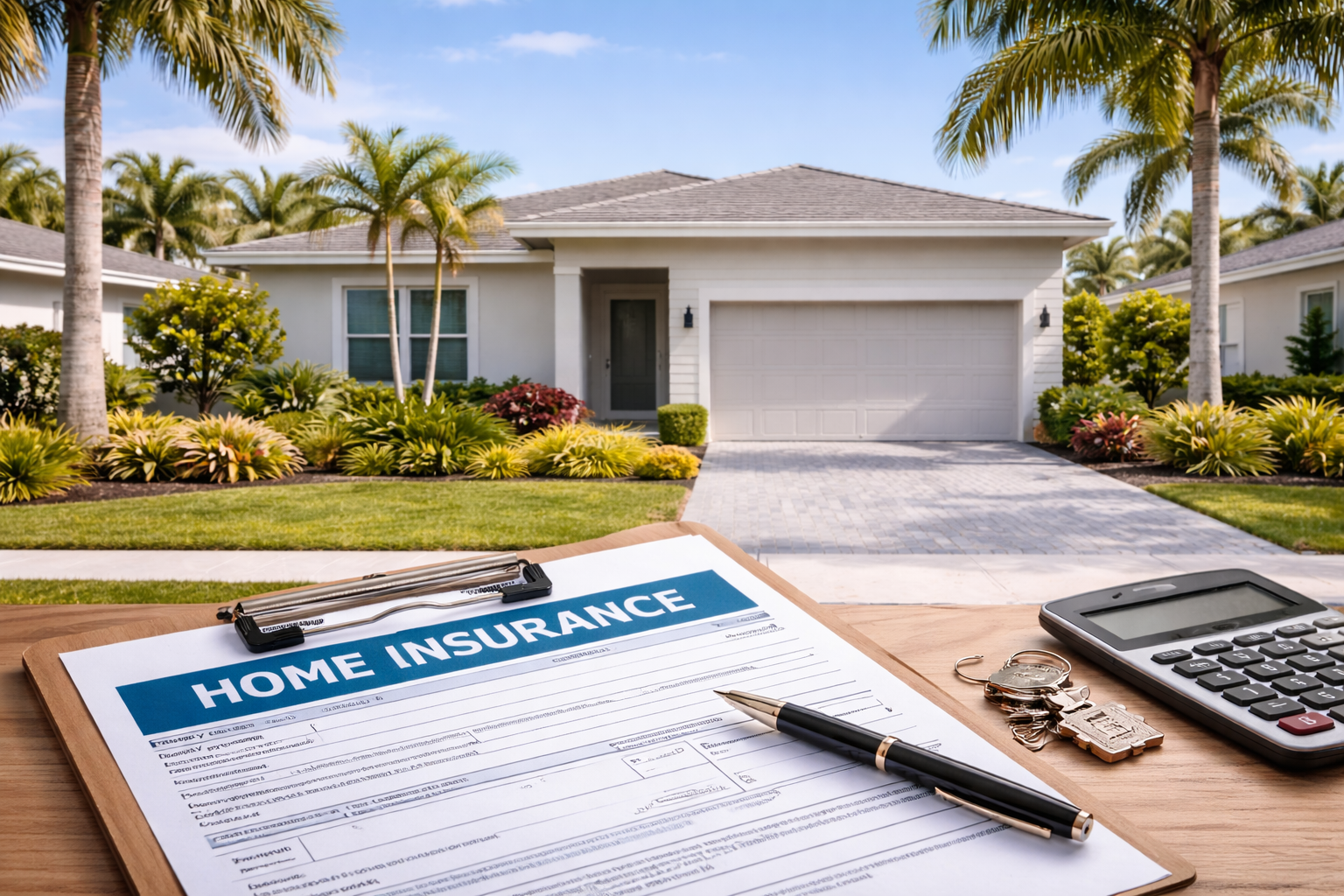
Homeowners insurance has quietly become one of the most important—and unpredictable—factors in real estate decisions across South Florida. While prices, inventory, and interest rates tend to dominate headlines, insurance costs are increasingly influencing whether deals move forward or fall apart. Now, a new nationwide effort to collect detailed insurance data could significantly change how this market operates.

Florida is at the center of this initiative, with regulators seeking deeper visibility into claims, cancellations, and policy trends. For buyers, sellers, and homeowners in Palm Beach County, this is more than a policy update—it’s a shift toward greater transparency in a part of the transaction that has often felt uncertain.

Understanding what’s changing—and how it affects real-world decisions—is becoming essential for anyone planning to buy or sell in today’s market.

A Closer Look at What Regulators Are Trying to Solve

The core issue driving this initiative is simple: insurance markets have become harder to predict. Rising storm risk, increased construction costs, and evolving underwriting standards have created inconsistencies across different areas—even within the same county.

To address this, regulators are now requiring insurers to provide detailed data on:

• Claims history and frequency
• Policy cancellations and non-renewals
• Active policies and coverage distribution
• Discounts tied to property improvements like storm mitigation

This information will be analyzed at a much more localized level, sometimes down to ZIP codes. That level of detail matters, especially in South Florida, where conditions can vary significantly between coastal and inland communities.

For example, a property in Wellington may be evaluated very differently from one closer to the coast in Boca Raton, even if home values are similar.

Start Comparing Homes That Actually Fit Your Criteria

If you're evaluating options in Palm Beach County or South Florida, browsing homes by city can help you quickly understand pricing, condition, and location tradeoffs.

Explore Homes by City

Why This Data Matters More in South Florida Than Anywhere Else

South Florida has been one of the most affected regions when it comes to insurance instability. Premium increases, carrier exits, and stricter underwriting have all played a role in reshaping the market.

This new data collection effort is designed to identify patterns that weren’t previously visible at scale.

For instance:

• Are certain areas seeing more cancellations than others?
• Are claims increasing in specific types of properties?
• Are mitigation upgrades actually reducing risk and costs?

These answers could directly influence how insurers price policies and decide where to offer coverage moving forward.

For homeowners in Palm Beach County, this could mean clearer expectations over time—but also more precise risk-based pricing.

How Insurance Is Now Affecting Real Estate Transactions

In today’s market, insurance is no longer a back-end consideration. It is part of the initial decision-making process.

Buyers are increasingly asking:

• What will insurance cost on this home?
• Will the property qualify for coverage?
• Are there upgrades needed to secure a policy?

Sellers are facing a different set of challenges. Properties with older roofs, outdated systems, or limited mitigation features may encounter resistance—not because of the home itself, but because of the insurance implications.

This is especially relevant in South Florida, where inspection reports and insurance underwriting are closely tied.

The result is a shift in how properties are evaluated. Condition, age, and construction quality are now directly linked to marketability in ways that weren’t as prominent before.

What This Means for Buyers and Sellers in South Florida

For buyers, this increased transparency could be a positive development. More detailed data should lead to clearer expectations and fewer surprises during the transaction process.

However, it also means that risk will be assessed more precisely. Properties in higher-risk areas—or with features that increase exposure—may carry higher insurance costs.

For sellers, preparation is becoming more strategic. Homes that demonstrate resilience—such as updated roofs, impact windows, or other storm-resistant features—may have a measurable advantage.

This is not just about pricing anymore. It’s about positioning a property in a way that aligns with how insurers evaluate risk.

If you’re considering selling, understanding how your home will be viewed from an insurance standpoint is just as important as understanding its market value. You can start by reviewing your position here.

Get a Better Sense of What Your Home Could Command

If you’re starting to think about selling, checking your home’s current value can help you understand pricing expectations and how your property may fit today’s market.

Check Your Home Value

Looking Ahead: What to Expect Over the Next Few Years

The data being collected now will not produce immediate changes, but it will shape future decisions.

Regulators plan to analyze multiple years of data to identify trends and guide policy adjustments. A public report is expected in the coming years, which could influence everything from underwriting standards to legislative action.

For South Florida, this likely means:

• More defined pricing differences between areas
• Greater emphasis on property condition and mitigation
• Continued integration of insurance into real estate decisions

While this may add another layer of complexity, it also introduces more clarity into a system that has often felt unpredictable.

Conclusion: A More Transparent—but More Structured—Market

The push for deeper insurance data is ultimately about visibility. Regulators are trying to understand where risks are concentrated and how coverage is evolving.

For buyers and sellers in South Florida, that visibility will influence how decisions are made moving forward. Insurance is no longer a secondary factor—it is a core part of the transaction.

Those who understand how it impacts pricing, eligibility, and long-term ownership will be better positioned to navigate the market effectively.

As the data begins to shape policy and pricing, the real estate landscape in Palm Beach County will continue to evolve—becoming more structured, more data-driven, and more closely tied to risk than ever before.

Keep Exploring South Florida Real Estate

If you're comparing communities, researching home values, or trying to better understand the South Florida market, reviewing local resources can help put each city and neighborhood into context.


About the Authors

Chris and Sue Kull are South Florida real estate professionals with more than three decades of experience helping buyers, sellers, and property owners navigate real estate decisions throughout Palm Beach County and surrounding communities.

Their work emphasizes local insight, practical guidance, and clear information to help people make informed decisions at every stage of the process.

You can find additional community guides, search tools, and market resources at TheKullGroup.com.
April 3, 2026

Delray Beach Real Estate Through a Daily Lens: How the City Functions Once You’re Actually Living There

thekullgroup/delray-beach-fl-suburban-home-palm-trees-neighborhood-view

Delray Beach Real Estate Through a Daily Lens: How the City Functions Once You’re Actually Living There

Delray Beach, FL real estate is often evaluated based on location and property type, but for most long-term homeowners, the more relevant question is simpler: how does everyday life actually work here?

That question shapes decisions in a way that pricing and features alone cannot. Commutes, errands, neighborhood layout, and how consistently a city operates over time all play a role in whether a move feels manageable or frustrating.

For buyers, sellers, and those relocating into Palm Beach County, Delray Beach sits in a position where daily functionality becomes a defining factor. It offers a mix of older and newer development, a layout that supports routine, and a level of consistency that can make long-term living more predictable than in less structured areas.

Understanding how Delray Beach operates on a day-to-day basis—not just how it looks on paper—provides a clearer framework for making real estate decisions that hold up over time.


Living in Delray Beach, FL

Delray Beach is located between Boca Raton and Boynton Beach, with direct access to major north-south routes like I-95 and Federal Highway. That placement allows residents to move between cities without being fully dependent on one central hub.

From a practical standpoint, Delray Beach functions as a mid-density city with multiple activity centers rather than one concentrated core.

Daily living is shaped by:

  • A mix of residential neighborhoods spread east to west
  • Commercial corridors that support routine errands
  • Access points that connect to neighboring cities without excessive detours

Housing varies across the city, but not unpredictably. You’ll find:

  • Condos and townhomes closer to main roads and commercial areas
  • Single-family neighborhoods with established layouts
  • Gated and HOA-managed communities alongside less regulated areas

What stands out is how the city supports routine. Grocery stores, services, and basic needs are distributed in a way that reduces the need for long or complex travel.

Compared to Boca Raton, Delray Beach tends to feel slightly less structured. Compared to Boynton Beach, it often feels more established. That middle ground contributes to a sense of manageability for long-term residents.


Delray Beach, FL Real Estate Market Overview

The Delray Beach, FL real estate market reflects the same balance seen in daily living—steady, layered, and influenced by location within the city rather than broad swings.

Pricing is influenced by:

  • Proximity to the coast
  • Age and condition of the property
  • Level of community structure (HOA vs. non-HOA)

Inventory typically includes:

  • Entry-level condos and attached housing
  • Mid-range single-family homes
  • Higher-end properties closer to coastal areas or with upgrades

Compared to nearby cities:

  • Pricing often falls between Boynton Beach and Boca Raton
  • Inventory diversity is broader than more tightly planned areas
  • Market movement tends to be consistent rather than abrupt

Buyers evaluating Delray Beach often compare it directly with surrounding markets. The decision is rarely made in isolation.

From a practical perspective, the market rewards alignment. Homes that fit clearly within their price category and condition level tend to move without excessive friction. Properties that fall outside those expectations often require adjustment.


Buying a Home in Delray Beach, FL

Buying in Delray Beach requires a focus on how the property will function within your daily routine, not just how it compares visually to other options.

Evaluating Location Within the City

The east-west divide matters.

  • Eastern areas offer closer proximity to coastal access and established neighborhoods
  • Western areas provide more space and newer development but require more driving

This tradeoff affects:

    • Commute patterns
    • Access to services
    • Overall time spent in transit

Start Comparing Homes That Actually Fit Your Criteria

If you're evaluating options in Palm Beach County or South Florida, browsing homes by city can help you quickly understand pricing, condition, and location tradeoffs.

Explore Homes by City

Property Types and Practical Tradeoffs

Most buyers encounter three main categories:

  • Condos and townhomes with HOA oversight
  • Single-family homes in established neighborhoods
  • Newer homes in managed communities further inland

Each comes with a different balance of cost, maintenance, and control.

For example:

  • Condos may reduce maintenance but introduce association rules
  • Older homes may offer flexibility but require updates
  • Newer homes provide consistency but often at higher cost

HOA and Community Structure

A significant portion of Delray Beach properties fall within HOA-managed environments.

This affects:

  • Monthly costs
  • Property use
  • Approval processes

Buyers relocating from areas without HOA prevalence may need to adjust expectations, as these structures are common across Palm Beach County.


Timing and Decision Flow

Delray Beach supports a steady pace of decision-making.

Buyers typically:

  • Compare multiple properties across nearby cities
  • Evaluate how each option fits into their daily routine
  • Make decisions based on long-term practicality rather than short-term pressure

This creates a process that is structured rather than rushed.


Selling a Home in Delray Beach, FL

For sellers, positioning a property within the context of daily functionality is essential.

Understanding the Buyer’s Perspective

Buyers evaluating Delray Beach are often asking:

  • How will this location affect my routine?
  • How far are basic services?
  • How consistent is the surrounding area?

Homes that answer these questions clearly tend to attract stronger interest.

Get a Better Sense of What Your Home Could Command

If you’re starting to think about selling, checking your home’s current value can help you understand pricing expectations and how your property may fit today’s market.

Check Your Home Value

Pricing Within a Regional Context

Delray Beach does not exist in isolation. Buyers are often comparing it directly to:

  • Boca Raton for more structured environments
  • Boynton Beach for lower entry costs

Pricing must reflect this comparison.

Homes priced without regard to nearby alternatives may struggle to gain traction.


Preparation and Presentation

Preparation is less about visual impact and more about clarity.

This includes:

  • Clean, functional spaces
  • Addressing visible maintenance concerns
  • Ensuring the home aligns with expectations for its category

Buyers are evaluating usability as much as appearance.


Market Timing and Behavior

Buyer behavior in Delray Beach tends to be measured.

Decisions are often based on:

  • Comparative evaluation
  • Practical considerations
  • Long-term fit

Sellers who recognize this dynamic tend to position their homes more effectively.


Frequently Asked Questions About Delray Beach, FL Real Estate

Is Delray Beach expensive to live in?

Delray Beach generally falls between higher-cost areas like Boca Raton and more affordable markets like Boynton Beach. Costs vary by location and property type, with coastal areas commanding higher prices. Condos and older homes may provide more accessible options.


Is Delray Beach good for families?

Delray Beach can be a practical choice for families, particularly those seeking a balance between structure and flexibility. Neighborhoods vary, so selecting an area that aligns with daily needs is important. The city’s layout supports routine living without requiring excessive travel.


How far is Delray Beach from major employment centers?

Delray Beach provides access to employment hubs both north and south. Commute times depend on traffic patterns and route selection, but the city’s location allows for flexibility. This makes it a workable option for those commuting across Palm Beach and Broward counties.


What types of homes are common in Delray Beach?

The housing mix includes condos, townhomes, and single-family residences. Many properties are part of HOA communities, though non-HOA options exist. This variety allows buyers to choose based on cost, maintenance preferences, and level of control.


Is Delray Beach a good place to buy or sell a home?

It can be, depending on how the property fits within the broader market. Buyers benefit from a range of options, while sellers benefit from consistent demand when pricing aligns with expectations. Outcomes depend on how well the property matches practical needs.


Conclusion

Delray Beach works best for individuals who prioritize routine, consistency, and manageable day-to-day living.

It is not defined by extremes. Instead, it offers a middle ground—between structure and flexibility, between higher and lower price points, and between coastal and inland living.

For buyers, the key is understanding how a property will function over time. For sellers, it’s recognizing how those same considerations shape buyer decisions.


When evaluated through that lens, Delray Beach becomes less about features and more about fit. And in a market like Palm Beach County, that distinction often determines whether a decision holds up over the long term.

Keep Exploring South Florida Real Estate

If you're comparing communities, researching home values, or trying to better understand the South Florida market, reviewing local resources can help put each city and neighborhood into context.


About the Authors

Chris and Sue Kull are South Florida real estate professionals with more than three decades of experience helping buyers, sellers, and property owners navigate real estate decisions throughout Palm Beach County and surrounding communities.

Their work emphasizes local insight, practical guidance, and clear information to help people make informed decisions at every stage of the process.

You can find additional community guides, search tools, and market resources at TheKullGroup.com.
April 3, 2026

Boca Raton Big Picture: How it Fits Within Palm Beach County Real Estate Decisions

thekullgroup/boca-raton-fl-suburban-home-palm-trees-driveway

Boca Raton Big Picture: How it Fits Within Palm Beach County Real Estate Decisions

When evaluating Boca Raton, FL real estate, the question is rarely just about the city itself. For most buyers and relocators, the real decision is comparative—how Boca Raton fits alongside nearby options like Delray Beach, Boynton Beach, and West Palm Beach, and whether it aligns with daily logistics, budget, and long-term plans.

Boca Raton occupies a specific position within Palm Beach County. It is more structured than many surrounding areas, more consistent in its planning, and often more expensive as a result. That combination attracts buyers who prioritize predictability and access, but it also requires a clearer understanding of tradeoffs.

For someone unfamiliar with South Florida, Boca Raton is not simply a destination—it’s one option within a network of cities that function differently depending on commute routes, housing stock, and lifestyle preferences. Understanding where it sits geographically and practically is what makes the difference between a good decision and a mismatched one.


Living in Boca Raton, FL

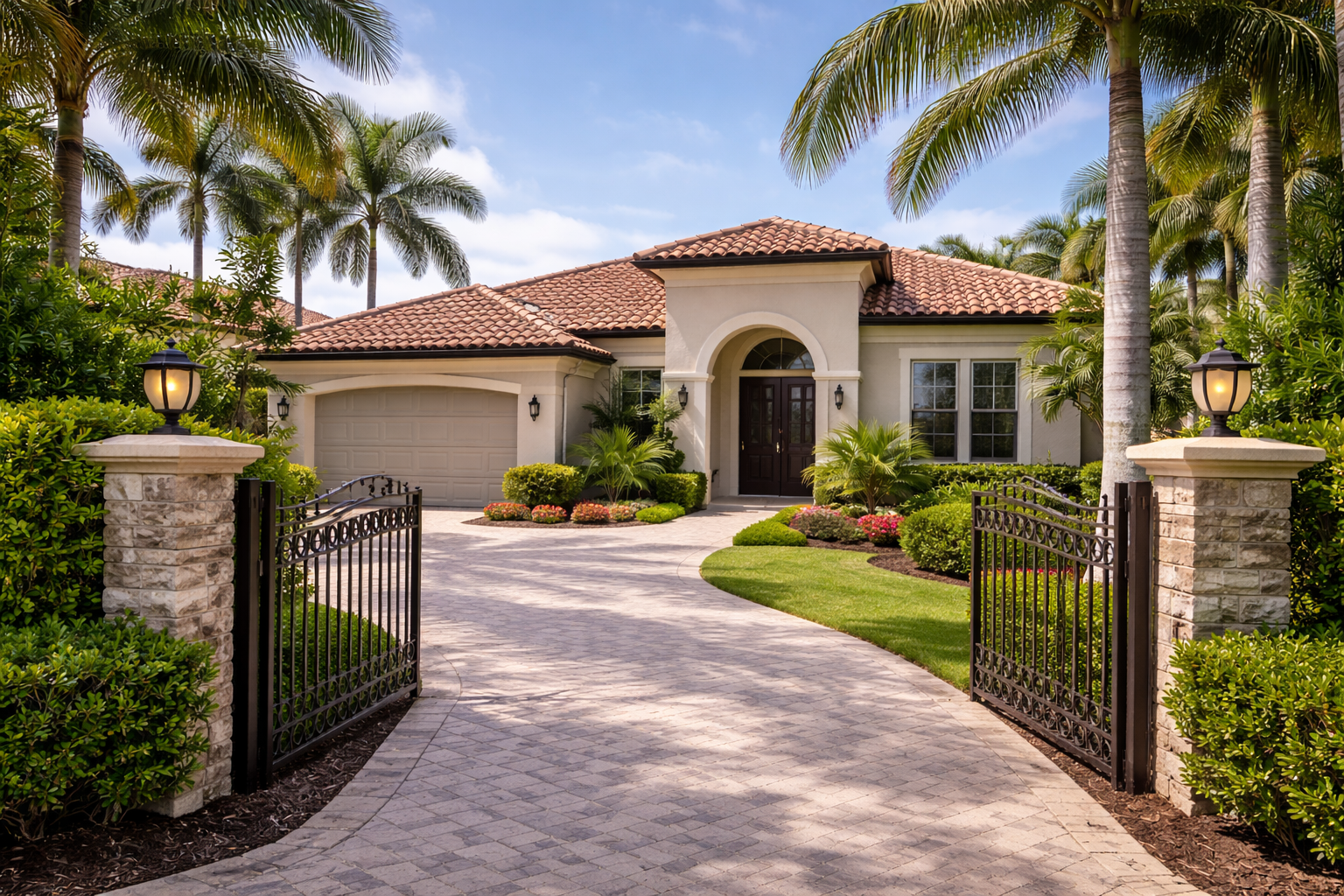
Geographically, Boca Raton sits in the southern portion of Palm Beach County, directly bordering Broward County. This location creates flexibility. Residents can move north toward West Palm Beach or south toward Fort Lauderdale without being fully committed to either direction.

Compared to nearby cities, Boca Raton tends to feel more controlled. Development is organized, roadways are predictable, and commercial areas are intentionally placed. That structure is noticeable when compared to:

  • Delray Beach, which blends older layouts with newer development
  • Boynton Beach, which has more variation in planning and density
  • West Palm Beach, which includes more urban pockets and mixed-use areas

Housing follows a similar pattern. Boca Raton offers:

  • Condo communities near major corridors
  • Subdivisions with consistent layouts
  • Gated neighborhoods with defined entry points

From a practical standpoint, daily life is efficient but not particularly walkable. Most errands require driving, though traffic patterns are generally manageable if routes are chosen carefully.

For relocators, Boca Raton often serves as a midpoint option—more structured than some areas, less dense than others.


Boca Raton, FL Real Estate Market Overview

The Boca Raton, FL real estate market is shaped by consistency rather than rapid fluctuation. Compared to nearby markets, pricing tends to remain elevated but stable.

When evaluating it alongside surrounding cities, a few patterns emerge:

  • Boca Raton typically carries a higher baseline price than Boynton Beach
  • It aligns more closely with Delray Beach in certain segments, though often with more uniformity
  • It differs from West Palm Beach by offering fewer urban-style properties and more planned communities

Inventory exists across multiple tiers, but not all tiers offer the same level of accessibility. Entry points are usually found in:

  • Condo and townhouse communities
  • Older single-family homes
  • Properties located further from the coast

The tradeoff is straightforward: greater structure and consistency often come at a higher cost.

Market activity tends to reward properties that are positioned correctly within their category. Buyers are not just comparing homes—they are comparing cities, commute patterns, and overall value across Palm Beach County.

Start Comparing Homes That Actually Fit Your Criteria

If you're evaluating options in Palm Beach County or South Florida, browsing homes by city can help you quickly understand pricing, condition, and location tradeoffs.

Explore Homes by City

Buying a Home in Boca Raton, FL

From a buyer’s perspective, Boca Raton requires a practical evaluation of how it compares to nearby alternatives.

Understanding the Regional Tradeoff

Choosing Boca Raton over another city often comes down to prioritizing:

  • Organization and planning
  • Predictable neighborhood structure
  • Access to both Palm Beach and Broward County

Compared to:

  • Delray Beach: more mixed development and a different balance of older and newer areas
  • Boynton Beach: generally more affordable but less uniform
  • West Palm Beach: more urban influence and broader variation

Buyers need to decide whether Boca Raton’s structure justifies its cost relative to these options.


Property Types and Accessibility

Most buyers entering Boca Raton encounter:

  • Condominiums with HOA requirements
  • Townhomes in managed communities
  • Single-family homes at higher price points or requiring updates

This creates a decision point between:

  • Lower-cost entry with HOA involvement
  • Higher-cost ownership with more space or independence

HOA Considerations

A significant portion of Boca Raton properties are governed by associations.

This affects:

  • Monthly expenses
  • Property usage
  • Approval processes

Buyers relocating from areas without HOAs often need to adjust expectations, as these structures are common throughout Palm Beach County.


Commute and Daily Logistics

Boca Raton’s location allows for flexible commuting, but outcomes depend on direction.

  • Traveling south toward Fort Lauderdale can be manageable depending on timing
  • Moving north toward West Palm Beach is often more predictable
  • East-west travel varies based on proximity to major roads

For buyers working remotely or with flexible schedules, this location provides balance. For those with fixed commutes, route analysis becomes more important.


Selling a Home in Boca Raton, FL

For sellers, positioning a property within the broader regional context is essential.

Competing Beyond City Limits

Buyers evaluating Boca Raton are often comparing it to nearby cities at the same time.

This means sellers are not only competing locally but regionally.

A buyer considering Boca Raton may also be evaluating:

  • Delray Beach for similar pricing with different layout
  • Boynton Beach for lower entry costs
  • West Palm Beach for urban proximity

Understanding this comparison set helps inform pricing and presentation.

Get a Better Sense of What Your Home Could Command

If you’re starting to think about selling, checking your home’s current value can help you understand pricing expectations and how your property may fit today’s market.

Check Your Home Value

Pricing Strategy Reflects Market Position

Boca Raton’s structured environment creates clear expectations.

Homes that align with those expectations—both in condition and price—tend to move efficiently.

Properties that are priced based on assumption rather than comparison often experience slower activity.


Preparation and Presentation

Preparation is less about creating a standout impression and more about meeting buyer expectations.

This includes:

  • Clean, functional presentation
  • Addressing visible maintenance issues
  • Aligning with community standards where applicable

Buyers in this market are typically evaluating value in a comparative way rather than reacting emotionally.


Timing and Buyer Behavior

Unlike more volatile markets, Boca Raton tends to attract buyers who are deliberate.

They often:

  • Compare multiple cities before deciding
  • Evaluate commute patterns
  • Consider long-term practicality

This results in a process that is steady rather than rushed.


Frequently Asked Questions About Boca Raton, FL Real Estate

Is Boca Raton expensive to live in?

Boca Raton generally sits at a higher price point than many nearby cities, though costs vary depending on property type and location. Condos and older homes may provide more accessible entry points, while newer or larger properties increase overall expense. Compared to Boynton Beach, it is typically more expensive, while aligning more closely with certain areas of Delray Beach.


Is Boca Raton good for families?

Boca Raton can work well for families who value structured environments and organized communities. Many neighborhoods are designed with consistency in mind. However, buyers should compare it to nearby options, as other cities may offer similar functionality at different price points or with varying levels of flexibility.


How far is Boca Raton from major employment centers?

Boca Raton provides access to both Palm Beach and Broward County employment hubs. Travel times depend on direction and timing, but the city’s position allows for commuting flexibility. This makes it a practical option for individuals working across multiple regions.


What types of homes are common in Boca Raton?

The housing mix includes condos, townhomes, and single-family residences. Many properties are located within HOA-managed communities, though non-HOA options exist. Compared to nearby cities, Boca Raton tends to have more consistent development patterns.


Is Boca Raton a good place to buy or sell a home?

It can be, depending on how it fits within a buyer’s broader evaluation of Palm Beach County. Buyers benefit from structure and predictability, while sellers benefit from consistent demand. Success depends on aligning expectations with how the city compares to nearby alternatives.


Conclusion

Boca Raton occupies a specific role within Palm Beach County. It is not the most affordable option, nor the most flexible—but it provides a level of consistency and geographic balance that appeals to many buyers.

For those relocating or evaluating the region, the key is comparison. Understanding how Boca Raton fits relative to nearby cities allows for more informed decisions.

Some will prioritize lower cost elsewhere. Others will prioritize structure and location here.

When the decision is made with that context in mind, the outcome tends to be more practical—and more sustainable over time.

Keep Exploring South Florida Real Estate

If you're comparing communities, researching home values, or trying to better understand the South Florida market, reviewing local resources can help put each city and neighborhood into context.


About the Authors

Chris and Sue Kull are South Florida real estate professionals with more than three decades of experience helping buyers, sellers, and property owners navigate real estate decisions throughout Palm Beach County and surrounding communities.

Their work emphasizes local insight, practical guidance, and clear information to help people make informed decisions at every stage of the process.

You can find additional community guides, search tools, and market resources at TheKullGroup.com.
April 2, 2026

Boca Raton Ownership Patterns: A Measured Approach to Privacy, Control, and Long-Term Real Estate Decisions

thekullgroup/boca-raton-fl-private-home-gated-community-driveway

Boca Raton Ownership Patterns: A Measured Approach to Privacy, Control, and Long-Term Real Estate Decisions

Boca Raton, FL real estate tends to reward a specific type of buyer—one who prioritizes control over their environment and takes a long-term view of ownership. This is not a market built around urgency or short-term opportunity. Instead, it operates through structure, consistency, and defined boundaries that influence how properties are used, maintained, and valued over time.

For homeowners, buyers, and those relocating into Palm Beach County, Boca Raton presents a decision framework that goes beyond price and location. The core question becomes: how much control do you want over your property, and how much structure are you willing to accept in return?

That balance—between independence and regulation—shapes nearly every ownership experience in Boca Raton. Understanding it early allows for more deliberate decisions, fewer surprises, and a clearer path toward long-term equity.


Living in Boca Raton, FL

Boca Raton’s layout reflects a deliberate approach to planning. Coastal neighborhoods to the east are more established and compact, while western areas provide more space but often within managed communities. This distribution creates distinct living environments that differ not only in appearance but in how ownership is experienced.

In practical terms, privacy in Boca Raton is layered.

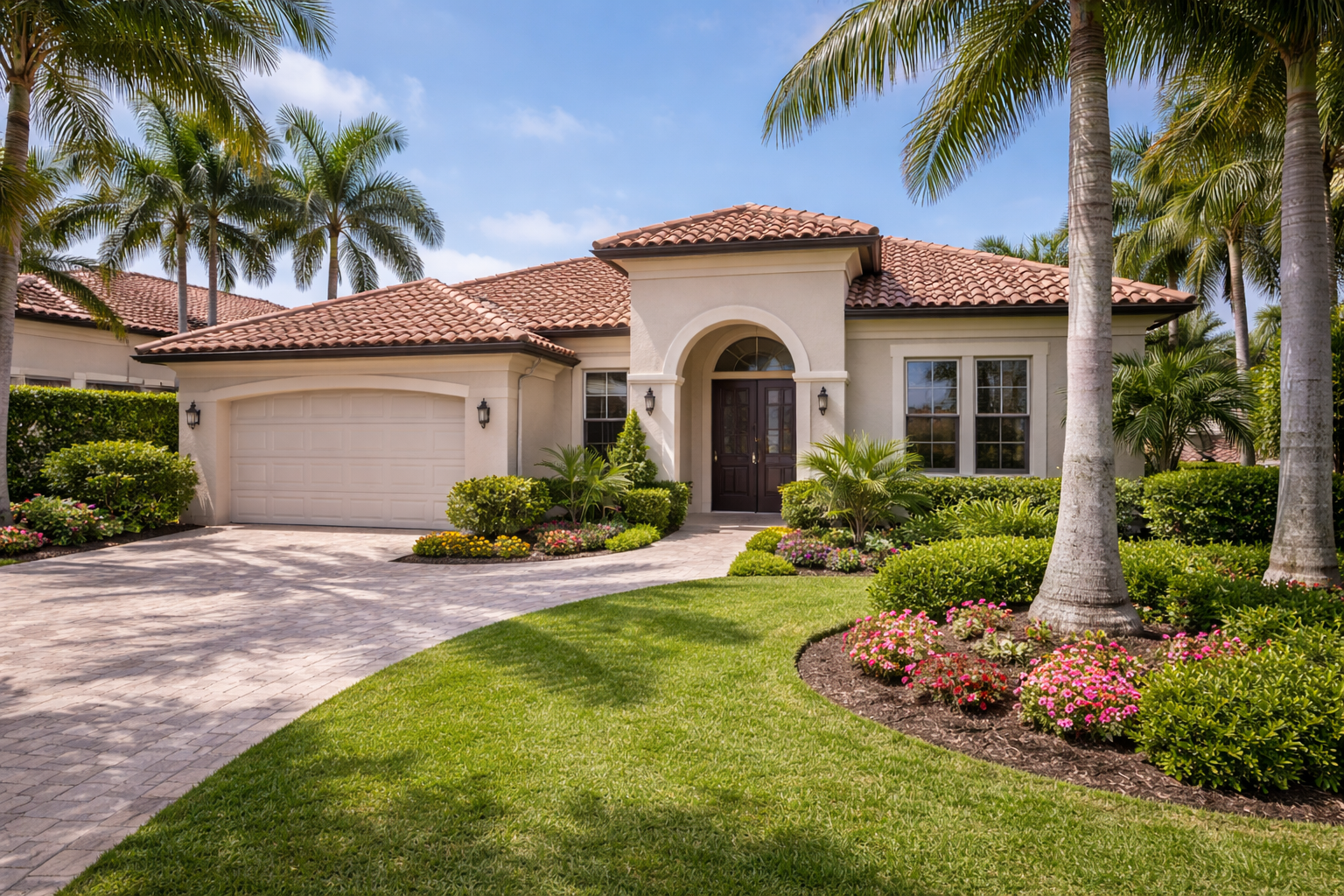
Physical spacing between homes is one component, but governance plays an equally important role. A property within a gated community may offer controlled access and visual consistency, yet also impose restrictions on exterior changes, occupancy, or usage. Conversely, a non-HOA neighborhood may allow for more flexibility but introduces variability in how surrounding properties are maintained.

Housing types reinforce this structure:

  • Condominiums with shared oversight and limited autonomy
  • Townhomes with moderate control and defined standards
  • Single-family homes ranging from highly regulated communities to more independent neighborhoods

Day-to-day life reflects these differences. Some areas prioritize uniformity and predictability. Others allow for individual expression, with less oversight but more variation.

For residents, selecting a neighborhood is less about preference alone and more about aligning with a specific ownership framework.


Boca Raton, FL Real Estate Market Overview

The Boca Raton, FL real estate market operates with a layered consistency. Pricing is not driven solely by size or location—it is influenced by how much control a property offers and how structured the surrounding community is.

Broadly, the market can be segmented into:

  • High-control environments with strict governance and maintained standards
  • Moderate-control neighborhoods with guidelines but some flexibility
  • Low-control areas where ownership is less restricted but less predictable

Each segment attracts a different type of buyer, which in turn stabilizes demand across categories.

Inventory tends to move steadily rather than abruptly. Properties aligned with buyer expectations—whether that means strong HOA structure or minimal restrictions—tend to find their audience without excessive volatility.

From a pricing standpoint, there is a clear tradeoff:

  • Increased control often correlates with higher costs and ongoing fees
  • Reduced oversight may lower entry costs but introduces variability in long-term outcomes

This creates a market where decision-making is less reactive and more comparative. Buyers are evaluating not just homes, but systems of ownership and how those systems align with their priorities.

Start Comparing Homes That Actually Fit Your Criteria

If you're evaluating options in Palm Beach County or South Florida, browsing homes by city can help you quickly understand pricing, condition, and location tradeoffs.

Explore Homes by City

Buying a Home in Boca Raton, FL

Approaching Boca Raton as a buyer requires a structured evaluation process, particularly for those focused on long-term ownership.

Defining Control Preferences

Before narrowing down properties, buyers benefit from identifying their position on the control spectrum:

  • Full governance: gated communities, strict HOAs, consistent environments
  • Balanced governance: moderate rules with some flexibility
  • Independent ownership: minimal restrictions, greater autonomy

This decision influences not only the type of property but also long-term satisfaction.


Property Types and Their Implications

Condominiums and townhomes typically involve higher levels of oversight. Maintenance responsibilities are shared, and usage is often regulated.

Single-family homes offer more variation. Within HOA communities, standards remain enforced. Outside of them, ownership becomes more flexible, though less uniform.

Newer developments tend to emphasize control and consistency, while older neighborhoods may provide more independence but require greater personal oversight.


Privacy as a Functional Outcome

Privacy in Boca Raton is not purely spatial. It is also administrative.

A property within a controlled community may offer predictable surroundings and limited external disruption. A property outside of such a structure may provide more freedom but requires tolerance for variability.

Buyers who prioritize privacy often evaluate both physical layout and governance simultaneously.


Measured Decision-Making

The Boca Raton market supports a deliberate pace. Buyers who take time to compare options, evaluate tradeoffs, and align decisions with long-term goals tend to navigate the process more effectively.

This is not a market where quick decisions consistently produce better outcomes. It favors those who approach it with patience and clarity.


Selling a Home in Boca Raton, FL

For sellers, understanding how buyers interpret control and privacy is essential to positioning a property correctly.

Aligning Presentation with Structure

Properties within highly regulated communities should be presented with an emphasis on:

  • Consistency
  • Maintenance standards
  • Predictable environment

Properties in less controlled areas should highlight:

  • Flexibility
  • Space
  • Individual ownership advantages

Misalignment between these factors and marketing can reduce buyer interest.

Get a Better Sense of What Your Home Could Command

If you’re starting to think about selling, checking your home’s current value can help you understand pricing expectations and how your property may fit today’s market.

Check Your Home Value

Pricing Within Defined Expectations

Buyers in Boca Raton tend to evaluate properties within structured categories. Pricing that does not align with these categories can create hesitation.

A home in a highly controlled environment will be compared against similar properties with similar governance. The same applies to less regulated neighborhoods.

Accurate positioning reduces time on market and supports stronger outcomes.


Preparation Reflects Ownership Type

Preparation requirements vary depending on the level of oversight.

In HOA communities, compliance with community standards is critical. In non-HOA areas, preparation focuses more on individual property condition and surrounding environment.


Buyer Behavior and Timing

Buyer activity in Boca Raton is typically measured and comparison-driven. Rather than reacting quickly, buyers tend to evaluate multiple options before making decisions.

This creates a dynamic where timing is less about urgency and more about alignment. Sellers who recognize this tend to adjust expectations and strategies accordingly.


Frequently Asked Questions About Boca Raton, FL Real Estate

Is Boca Raton expensive to live in?

Boca Raton generally carries a higher cost structure than many surrounding areas, though pricing varies widely by property type and location. Condominiums and older homes may offer more accessible entry points, while gated communities and updated properties increase costs. Ongoing expenses, including HOA fees and insurance, should be considered alongside purchase price when evaluating affordability.


Is Boca Raton good for families?

Boca Raton can be a practical choice for families who value structured environments and consistent community standards. Many neighborhoods provide organized layouts and maintained surroundings. However, the level of governance varies, so selecting the right area is important for aligning with family preferences and long-term plans.


How far is Boca Raton from major employment centers?

Boca Raton is positioned between several employment hubs, including West Palm Beach and Fort Lauderdale. Commute times depend on traffic conditions and route selection, but the location allows for access in multiple directions. This flexibility supports a range of work arrangements.


What types of homes are common in Boca Raton?

The housing mix includes condominiums, townhomes, and single-family residences. Many properties are located within HOA-managed communities, though independent neighborhoods are also available. This range allows buyers to choose based on their preference for structure, privacy, and control.


Is Boca Raton a good place to buy or sell a home?

Boca Raton can support both buyers and sellers when expectations align with market structure. Buyers benefit from clearly defined ownership categories, while sellers benefit from consistent demand. Outcomes depend on how well decisions are aligned with long-term objectives rather than short-term conditions.


Conclusion

Boca Raton is well-suited for individuals who approach real estate with a long-term perspective and a preference for measured decision-making. It is not a market defined by speed or speculation, but by structure and consistency.

Buyers who understand their priorities around privacy and control tend to navigate the market more effectively. Sellers who recognize how those factors influence value are better positioned to achieve stable outcomes.

In this environment, ownership is less about immediate gains and more about sustained positioning. When decisions are made with that mindset, the result is a more predictable and controlled real estate experience

Keep Exploring South Florida Real Estate

If you're comparing communities, researching home values, or trying to better understand the South Florida market, reviewing local resources can help put each city and neighborhood into context.


About the Authors

Chris and Sue Kull are South Florida real estate professionals with more than three decades of experience helping buyers, sellers, and property owners navigate real estate decisions throughout Palm Beach County and surrounding communities.

Their work emphasizes local insight, practical guidance, and clear information to help people make informed decisions at every stage of the process.

You can find additional community guides, search tools, and market resources at TheKullGroup.com.
April 2, 2026

Finding Your Entry Point in Boca Raton

thekullgroup/boca-raton-fl-entry-level-home-neighborhood-street-view

Finding Your Entry Point in Boca Raton, FL Real Estate Without Overextending

Boca Raton, FL real estate tends to carry a reputation for high-end living, but that doesn’t mean it’s out of reach for buyers who approach it strategically. The reality is more nuanced. There are pockets within Boca Raton where entry points exist—you just have to understand where to look, what tradeoffs come with them, and how those decisions affect long-term ownership.

For buyers, sellers, and those relocating into Palm Beach County, Boca Raton sits in a unique position. It’s more structured and established than some nearby markets, but still offers a range of price points depending on property type, location, and condition.

This isn’t a market where you casually browse and stumble into a deal. It’s one where practical evaluation—budget, expectations, and flexibility—determines whether Boca Raton fits your plan or stretches it too far.

Start Comparing Homes That Actually Fit Your Criteria

If you're evaluating options in Palm Beach County or South Florida, browsing homes by city can help you quickly understand pricing, condition, and location tradeoffs.

Explore Homes by City

Living in Boca Raton, FL

Boca Raton is positioned along South Florida’s coastline, between Delray Beach and Deerfield Beach, with direct access to I-95 and the Turnpike. That location matters more than most people expect. It gives residents the ability to move between employment centers without being directly in the congestion of larger metro areas.

From a daily standpoint, the city is organized, clean, and regulated. Zoning and planning have shaped a consistent environment—something that stands out compared to less structured areas nearby.

Housing varies, but not randomly. You’ll see:

  • Condo and townhouse communities closer to main corridors
  • Established single-family neighborhoods inland
  • Gated communities with HOA oversight
  • Older homes mixed with updated or renovated properties

What becomes clear quickly is that Boca Raton is not one uniform market. The difference between east and west, newer versus older construction, and HOA versus non-HOA areas creates distinct living experiences.

For practical buyers, this means you’re not just choosing a city—you’re choosing a specific version of it.


Boca Raton, FL Real Estate Market Overview

The Boca Raton, FL real estate market operates with a level of consistency that appeals to buyers who value predictability. It’s not as volatile as some emerging areas, but that stability often comes with higher baseline pricing.

Inventory tends to move in cycles, but one constant remains: well-priced homes in livable condition attract attention quickly.

From a practical standpoint, the market breaks down into tiers:

  • Entry-level condos and townhomes
  • Mid-range single-family homes, often older or further west
  • Higher-end properties with upgrades, location advantages, or amenities

Buyers looking for a workable entry point often find themselves weighing condition versus location. A home that needs updating may offer a better price but requires upfront investment. A move-in-ready property typically commands a premium.

Sellers operate within this same structure. Homes that align with buyer expectations tend to move efficiently. Properties that miss the mark on pricing or presentation can sit longer than expected, even in an otherwise active market.


Buying a Home in Boca Raton, FL

Approaching Boca Raton as a buyer requires a clear understanding of what you’re willing to compromise on.

Where Entry Points Typically Exist

Most accessible opportunities tend to fall into a few categories:

  • Condos with HOA structures
  • Older single-family homes that haven’t been recently updated
  • Properties located further west, away from the coastal premium

These are not “discount” options—they are simply different tradeoffs.


The Role of HOAs

A large percentage of Boca Raton properties fall within HOA-managed communities. This affects both cost and lifestyle.

Buyers should expect:

  • Monthly or quarterly fees
  • Rules regarding property use and appearance
  • Approval processes in some communities

While HOAs can maintain consistency, they also add another layer of evaluation.


Condition vs. Price Decisions

One of the most common decision points is whether to:

  • Buy a lower-priced home that needs work
  • Pay more upfront for a move-in-ready property

In Boca Raton, this decision is not just about preference—it’s about financial positioning.

Renovation costs, timelines, and contractor availability all factor into whether a “deal” actually makes sense.


Timing Matters More Than Buyers Expect

Inventory shifts can affect both availability and negotiation leverage.

Buyers entering the market without urgency often have more flexibility, while those working within tight timelines may need to prioritize speed over optimization.


Selling a Home in Boca Raton, FL

For sellers, the Boca Raton market rewards accuracy more than ambition.

Pricing Strategy Is Not Flexible

Overpricing tends to have a sharper impact here than in less structured markets. Buyers are informed and often comparing multiple properties within the same category.

A home that enters the market at the wrong price point can:

  • Sit longer than expected
  • Require reductions
  • Attract less favorable offers

Get a Better Sense of What Your Home Could Command

If you’re starting to think about selling, checking your home’s current value can help you understand pricing expectations and how your property may fit today’s market.

Check Your Home Value

Presentation Still Matters—But Differently

In this market, presentation isn’t about making a home look impressive. It’s about making it feel aligned with buyer expectations.

That includes:

  • Clean, functional spaces
  • Neutral presentation
  • Addressing obvious maintenance issues

Buyers in Boca Raton are often evaluating value in a practical way. If something feels off, it impacts how they price the home in their mind.


Buyer Psychology Is Structured

Unlike more speculative markets, Boca Raton buyers tend to follow a more methodical process.

They are:

  • Comparing multiple properties
  • Evaluating HOA implications
  • Considering long-term ownership

Sellers who understand this tend to position their homes more effectively.


Frequently Asked Questions About Boca Raton, FL Real Estate

Is Boca Raton expensive to live in?

Boca Raton generally sits above average in terms of cost, especially compared to inland areas. However, the range is wide. Condo communities and older properties can provide more accessible entry points, while updated homes and prime locations increase pricing significantly. The key is aligning expectations with what each price range realistically delivers.


Is Boca Raton good for families?

Boca Raton can work well for families, particularly those looking for structured neighborhoods and consistent community standards. Many areas offer organized layouts and access to amenities. However, costs and HOA involvement should be factored in when evaluating long-term suitability.


How far is Boca Raton from major employment centers?

Boca Raton provides reasonable access to nearby employment hubs such as West Palm Beach, Fort Lauderdale, and even parts of Miami, depending on commute tolerance. Travel time varies based on traffic patterns and route selection, but the location offers flexibility compared to more isolated areas.


What types of homes are common in Boca Raton?

The housing mix includes condos, townhomes, and single-family residences, with a strong presence of HOA-managed communities. Older homes are common in certain areas, while newer construction exists in more limited pockets. This range allows buyers to choose based on budget, condition, and lifestyle preferences.


Is Boca Raton a good place to buy or sell a home?

It can be, depending on timing and positioning. Buyers benefit from a structured market with clear value tiers, while sellers benefit from consistent demand—if pricing and presentation are handled correctly. It’s not a market that rewards guesswork on either side.


Conclusion

Boca Raton works best for buyers who approach the market with a clear plan and realistic expectations. It’s not about finding the lowest price—it’s about identifying where your budget aligns with livable options and long-term value.

For some, that means starting with a condo or townhouse. For others, it means accepting an older home with potential. The key is understanding the tradeoffs rather than avoiding them.

In a market like this, practical decisions tend to outperform emotional ones. When buyers and sellers operate with that mindset, the process becomes more predictable—and ultimately more successful.

Keep Exploring South Florida Real Estate

If you're comparing communities, researching home values, or trying to better understand the South Florida market, reviewing local resources can help put each city and neighborhood into context.


About the Authors

Chris and Sue Kull are South Florida real estate professionals with more than three decades of experience helping buyers, sellers, and property owners navigate real estate decisions throughout Palm Beach County and surrounding communities.

Their work emphasizes local insight, practical guidance, and clear information to help people make informed decisions at every stage of the process.

You can find additional community guides, search tools, and market resources at TheKullGroup.com.
April 2, 2026

The Real Cost of Selling a Home in Wellington, FL: What Sellers Often Miss Until It’s Too Late

thekullgroup/wellington-fl-home-selling-cost-breakdown-table

The Real Cost of Selling a Home in Wellington, FL: What Sellers Often Miss Until It’s Too Late

When most homeowners in Wellington start thinking about selling, the first number they focus on is the expected sale price.

But the more important number—the one that actually impacts your outcome—is what you walk away with after everything is paid.

That’s where many sellers get caught off guard.

Selling a home in Palm Beach County involves multiple layers of cost, some obvious and others less visible. Understanding those upfront can help you price correctly, avoid surprises, and make stronger decisions throughout the process.


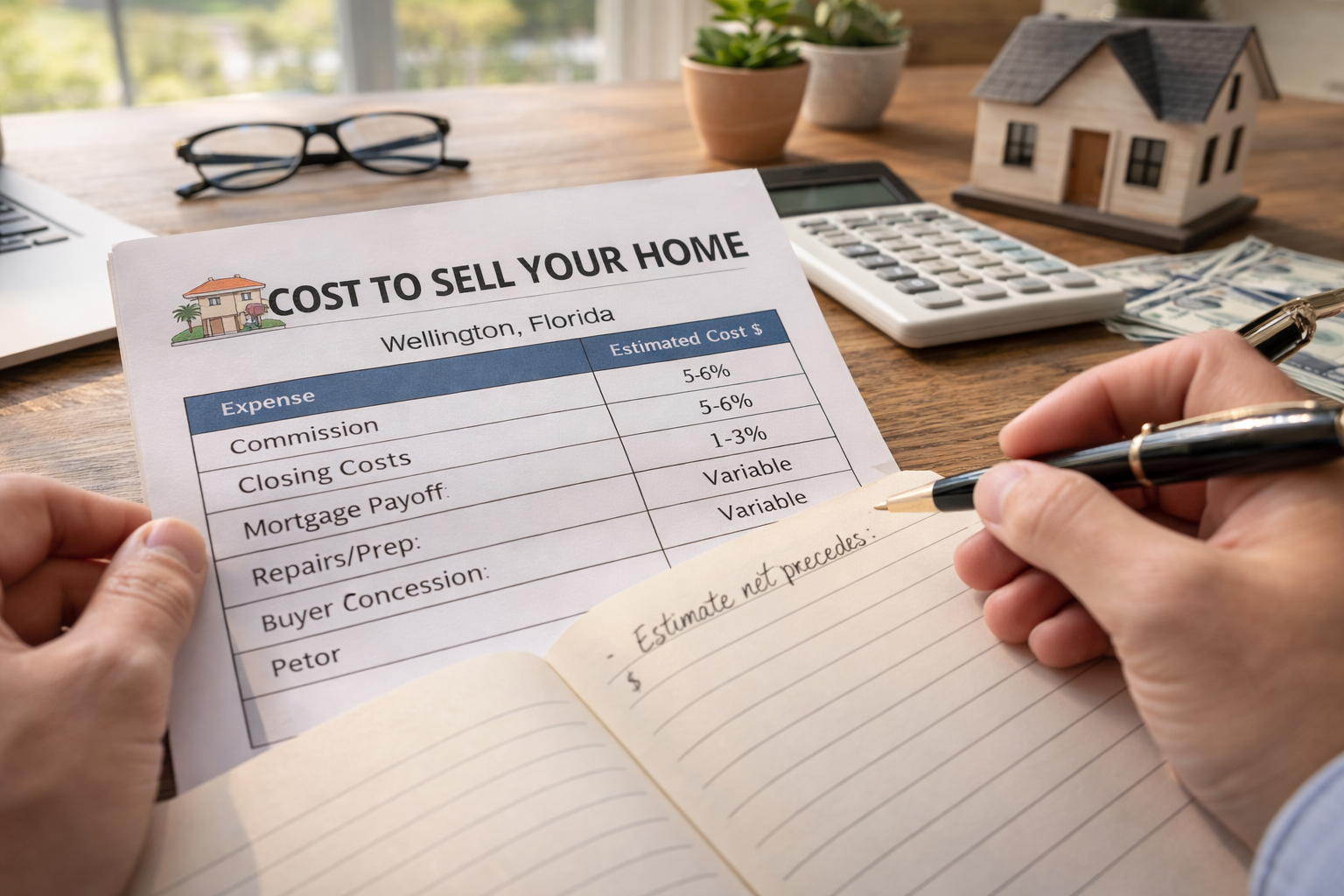
The Difference Between Sale Price and Net Proceeds

A home might sell for a strong number, but that doesn’t mean that’s what you take home.

Your net proceeds are affected by:

  • Agent compensation
  • Closing costs
  • Taxes and prorations
  • Repairs and concessions
  • Mortgage payoff

In real-world transactions, sellers often focus too heavily on price and not enough on net outcome—which is what actually matters. The Largest Expense: Agent Compensation

In most Wellington transactions, the largest cost is the commission paid to the agents involved.

What This Typically Covers

  • Marketing and exposure
  • Negotiation strategy
  • Transaction management
  • Coordination with lenders, title, and buyers

While this is often discussed as a percentage, the real value comes down to how effectively the home is positioned and negotiated.

A well-executed strategy can often offset the cost by improving the final sale price or terms.

Get a Better Sense of What Your Home Could Command

If you’re starting to think about selling, checking your home’s current value can help you understand pricing expectations and how your property may fit today’s market.

Check Your Home Value

Closing Costs Sellers Should Expect

Beyond commission, there are standard closing costs that sellers in Florida typically pay.

Title and Settlement Fees

These include:

  • Title insurance (commonly paid by the seller in Florida)
  • Closing agent fees
  • Document preparation

Government and Recording Fees

These are tied to:

  • Transfer of ownership
  • Official recording of the transaction

Prorated Expenses

Items such as:

  • Property taxes
  • HOA dues

…are divided between buyer and seller based on the closing date.


Mortgage Payoff: The Number That Changes Everything

Your existing loan balance plays a major role in your final outcome.

At closing, your mortgage is paid off directly from the sale proceeds.

What Sellers Often Overlook

  • Payoff amounts may include interest up to the closing date
  • There may be additional lender fees
  • Timing can affect final payoff totals

This is why accurate payoff information is critical early in the process.


Repairs, Updates, and Pre-Sale Preparation

Not all costs are tied to closing. Some occur before the home even hits the market.

Common Pre-Listing Expenses

  • Minor repairs
  • Paint and touch-ups
  • Landscaping improvements
  • Cleaning and staging

In Wellington, where presentation plays a major role in buyer perception, these adjustments can influence both speed of sale and pricing.


Buyer Concessions and Negotiations

This is one of the least predictable—but most impactful—cost categories.

During negotiations, buyers may request:

  • Closing cost assistance
  • Repairs or credits
  • Price adjustments based on inspections

How This Affects Your Bottom Line

Even if your home sells at a strong price, concessions can reduce your net proceeds.

This is where negotiation strategy becomes critical.


The Hidden Cost of Time on Market

One cost that rarely gets discussed upfront is the financial impact of time.

If a home sits on the market longer than expected, sellers may face:

  • Additional mortgage payments
  • Ongoing utilities and maintenance
  • Price reductions

In Palm Beach County, where buyers are often comparing multiple options, pricing and presentation directly affect how quickly a home moves.


Insurance and Carrying Costs

While your home is listed, you’re still responsible for:

  • Homeowners insurance
  • Property taxes
  • HOA fees (if applicable)

These carrying costs can add up, especially if the sale timeline extends.


Misconceptions About Selling Costs

There are several assumptions that can lead to inaccurate expectations.

“I’ll Just Subtract Commission and That’s It”

In reality, there are multiple layers of cost beyond commission.


“I Can Avoid Costs by Doing Less Preparation”

Skipping preparation often leads to lower offers or longer time on market, which can cost more in the long run.


“Buyers Will Accept the Home As-Is”

Even in strong markets, buyers still negotiate—especially after inspections.


What Sellers in Wellington Often Underestimate

From experience, there are a few areas that consistently catch sellers off guard.

HOA-Related Costs

Some communities have:

  • Transfer fees
  • Application fees
  • Capital contributions

These vary by neighborhood and should be confirmed early.

Start Comparing Homes That Actually Fit Your Criteria

If you're evaluating options in Palm Beach County or South Florida, browsing homes by city can help you quickly understand pricing, condition, and location tradeoffs.

Explore Homes by City

Insurance Considerations

Buyers in South Florida pay close attention to:

  • Roof age
  • Wind mitigation features

If issues come up, they can affect negotiations.


Market Positioning

Overpricing a home can lead to:

  • Fewer showings
  • Longer time on market
  • More aggressive negotiations later

This often results in a lower net outcome than pricing correctly from the start.


A More Accurate Way to Estimate Your Net

Instead of focusing only on price, it’s more effective to think in terms of:

  • Expected sale range
  • Total cost structure
  • Likely negotiation scenarios

This creates a more realistic picture of what you’ll actually walk away with.


How Strategy Impacts Your Final Outcome

Two homes with similar features can produce very different results based on:

  • Pricing approach
  • Marketing quality
  • Negotiation handling
  • Timing of the sale

In Wellington’s market, where buyers are often informed and selective, execution matters as much as the property itself.


Final Thoughts

Selling a home isn’t just about getting it under contract—it’s about maximizing your net result while minimizing surprises.

The more clearly you understand the full cost structure, the better positioned you are to:

  • Price strategically
  • Negotiate effectively
  • Move forward with confidence

In a market like Palm Beach County, where small differences can have large financial impacts, that clarity matters.


Frequently Asked Questions

How much does it cost to sell a home in Wellington, FL?

Costs vary, but typically include agent compensation, closing costs, and potential repairs or concessions.

Do sellers pay closing costs in Florida?

Yes, sellers commonly cover certain closing expenses, including title-related costs.

What is the biggest expense when selling?

Agent compensation is usually the largest single cost.

Can I reduce my selling costs?

Some costs are negotiable, but cutting corners can affect your final sale outcome.

Do I need to make repairs before selling?

Not always, but addressing key issues can improve pricing and reduce negotiation pressure.

Are HOA fees part of closing costs?

Some communities have transfer or administrative fees that apply at closing.

How do I estimate my net proceeds?


A detailed breakdown that includes all costs and payoff amounts provides the most accurate estimate.

Keep Exploring South Florida Real Estate

If you're comparing communities, researching home values, or trying to better understand the South Florida market, reviewing local resources can help put each city and neighborhood into context.


About the Authors

Chris and Sue Kull are South Florida real estate professionals with more than three decades of experience helping buyers, sellers, and property owners navigate real estate decisions throughout Palm Beach County and surrounding communities.

Their work emphasizes local insight, practical guidance, and clear information to help people make informed decisions at every stage of the process.

You can find additional community guides, search tools, and market resources at TheKullGroup.com.

April 2, 2026

Rental Applications in Wellington, FL: Why the Questionnaire Matters More Than Most Renters Think

thekullgroup/rental-application-documents-south-florida-home


Rental Applications in Wellington, FL: Why the Questionnaire Matters More Than Most Renters Think

If you’re planning to rent a home in Wellington or anywhere in Palm Beach County, you’ll likely be asked to complete a rental questionnaire or full application before you’re even considered.

For many renters, this feels excessive—especially if they’ve already expressed strong interest in a property.

But from the landlord’s perspective, this step isn’t just a formality. It’s a critical screening tool that helps determine who will be living in the property, how reliable they are, and whether they’re a good fit for the lease terms.

Understanding how this process works—and why it’s taken seriously—can make a meaningful difference in how quickly and successfully you secure a rental.


What a Rental Questionnaire Is Really Evaluating

At a basic level, a rental questionnaire collects information about your financial and personal background.

But in practice, it’s doing something more specific: helping landlords assess risk.

Most applications in South Florida will look at:

  • Income stability
  • Credit history
  • Rental history
  • Employment consistency
  • Number of occupants
  • Pets (if applicable)

This information allows landlords to make a decision that goes beyond first impressions or initial conversations.


Why This Process Is More Important in Palm Beach County

In markets like Wellington, rental demand can be highly competitive—especially during peak relocation seasons and equestrian events.

That means landlords often receive multiple applications for the same property.

In these situations, the questionnaire becomes a sorting mechanism.

It helps answer questions like:

  • Who is most likely to pay on time?
  • Who has a stable employment background?
  • Who is least likely to create issues during the lease term?

From a landlord’s perspective, the goal is not just filling the property—it’s minimizing risk over time.

Start Comparing Homes That Actually Fit Your Criteria

If you're evaluating options in Palm Beach County or South Florida, browsing homes by city can help you quickly understand pricing, condition, and location tradeoffs.

Explore Homes by City

What Actually Happens After You Submit an Application

Many renters assume that once they submit a questionnaire, the decision is immediate.

In reality, there’s usually a review process that includes:

Background and Credit Checks

Landlords or property managers verify financial history and look for patterns—not just isolated numbers.


Income Verification

This may involve pay stubs, employment letters, or direct employer confirmation.


Rental History Review

Previous landlords may be contacted to confirm:

  • Payment consistency
  • Property condition upon move-out
  • Lease compliance

Comparative Evaluation

If multiple applicants are being considered, your application is evaluated alongside others—not in isolation.

This is where small differences can influence the outcome.


Common Misconceptions About Rental Questionnaires

There are several assumptions that can lead renters to underestimate this process.

“If I Can Afford the Rent, That’s Enough”

Income matters—but it’s only one piece of the evaluation. Consistency and history carry just as much weight.


“My Credit Doesn’t Matter for Renting”

While standards may differ from mortgage lending, credit is still a factor—especially in higher-priced rentals.


“First Come, First Served”

In competitive markets like Wellington, landlords typically choose the strongest overall application—not the first one submitted.


“Small Issues Won’t Be Noticed”

Even minor inconsistencies can raise questions, especially if the landlord is comparing multiple applicants.


Mistakes That Can Hurt Your Chances of Approval

Understanding what not to do is just as important as knowing what to include.

Incomplete Applications

Missing information can delay processing or signal a lack of preparedness.


Inconsistent Financial Details

If income, employment, or account information doesn’t align, it can create hesitation.


Waiting Too Long to Submit

In fast-moving rental markets, delays can mean losing the opportunity entirely.


Not Preparing Supporting Documents

Being ready with documentation can make your application more competitive.


How to Strengthen Your Rental Application

If you want to improve your chances, there are a few practical steps that can make a difference.

Present Clear, Verifiable Income

Providing clean, easy-to-understand documentation helps reduce uncertainty for the landlord.


Maintain a Strong Payment History

Even if your credit isn’t perfect, demonstrating consistent payments can work in your favor.


Be Transparent About Potential Concerns

Addressing issues upfront—rather than hoping they go unnoticed—can build trust.


Respond Quickly During the Process

Delays in communication can shift attention to other applicants.


The Role of HOAs in Wellington Rentals

One unique factor in Wellington and surrounding areas is the presence of homeowner associations.

Even if a landlord approves your application, you may still need to go through HOA screening.

This can include:

  • Additional applications
  • Background checks
  • Approval timelines

This extra layer can extend the process and should be factored into your planning.

Get a Better Sense of What Your Home Could Command

If you’re starting to think about selling, checking your home’s current value can help you understand pricing expectations and how your property may fit today’s market.

Check Your Home Value

What Landlords Are Really Looking For

Beyond the paperwork, landlords are evaluating predictability.

They want to feel confident that:

  • Rent will be paid consistently
  • The property will be maintained
  • Lease terms will be followed

Your application should make that outcome feel as certain as possible.


Why This Process Feels More Intense Than Expected

For many renters—especially those relocating from other states—the level of screening in South Florida can feel more involved.

This is largely due to:

  • Higher property values
  • Greater financial exposure for landlords
  • Strong competition for well-located homes

As a result, landlords tend to be more thorough in their evaluations.


Final Thoughts

Rental questionnaires aren’t just paperwork—they’re part of a broader decision-making process that determines who ultimately gets approved.

In a market like Palm Beach County, where demand can be high and inventory competitive, understanding how this process works can give you a meaningful advantage.

The goal isn’t just to apply—it’s to present yourself as the most reliable and low-risk option available.


Frequently Asked Questions

Why do landlords require a rental questionnaire?

To evaluate financial stability, rental history, and overall reliability.

How long does the approval process take?

It varies, but can take several days depending on background checks and HOA requirements.

Can I be denied based on credit?

Yes, depending on the landlord’s criteria and the competitiveness of the application pool.

What income is typically required to rent?

Many landlords look for income that is at least 2.5–3 times the monthly rent.

Do all rentals require HOA approval in Wellington?

Not all, but many communities do require an additional screening process.

Can I improve my chances after applying?

Responding quickly and providing complete documentation can help strengthen your position.

Is a rental questionnaire legally required?

It’s not mandated, but it’s a standard practice for landlords and property managers.

Keep Exploring South Florida Real Estate

If you're comparing communities, researching home values, or trying to better understand the South Florida market, reviewing local resources can help put each city and neighborhood into context.


About the Authors

Chris and Sue Kull are South Florida real estate professionals with more than three decades of experience helping buyers, sellers, and property owners navigate real estate decisions throughout Palm Beach County and surrounding communities.

Their work emphasizes local insight, practical guidance, and clear information to help people make informed decisions at every stage of the process.

You can find additional community guides, search tools, and market resources at TheKullGroup.com.