
Insights, strategy, and real estate guidance across Palm Beach County.

Feb. 20, 2026

Before You Co-Sign That Mortgage: What Every Florida Homeowner Should Consider First

thekullgroup/south-florida-family-discussing-mortgage-co-signing-decision

Before You Co-Sign That Mortgage: What Every Florida Homeowner Should Consider First

Helping someone buy a home can feel like one of the most meaningful gifts you can give. In South Florida’s competitive real estate market, where home prices have risen steadily and affordability remains a challenge, it’s not uncommon for parents, grandparents, or close relatives to be asked to co-sign a mortgage.

But before you co-sign that mortgage, it’s important to fully understand what you’re agreeing to — because co-signing is not simply offering moral support. It creates a legal and financial obligation that can impact your credit, borrowing power, and long-term financial flexibility.

At The Kull Group, we’ve seen firsthand how well-intentioned decisions can either help families build wealth together — or create stress that lingers for years. If you’re considering co-signing a loan for a home purchase in Florida, here’s what you need to know.

See What’s on the Market Right Now

If you're researching homes in Palm Beach County or anywhere in South Florida, explore current listings by city and see what’s available right now.

Explore Homes by City

What Does It Actually Mean to Co-Sign a Mortgage?

Co-signing a mortgage means you are legally agreeing to repay the loan if the primary borrower cannot. You are not a backup reference. You are not simply endorsing the borrower’s character. You are equally responsible for the debt.

If payments are missed, the lender can pursue you for repayment. If the loan goes into default, you are liable for the balance. In many cases, the mortgage may appear on your credit report just as if you had taken out the loan yourself.

This is especially relevant in today’s housing environment. Analysts project continued home price increases in the coming year, and rising prices mean larger loan amounts — which means larger obligations for anyone attached to that mortgage.

Co-signing is often motivated by generosity. But generosity should be paired with clear-eyed understanding.


Why Are More Families Considering Co-Signing?

Over the last five years, home prices have climbed significantly nationwide — and South Florida has been no exception. Higher purchase prices combined with elevated interest rates have made qualification more challenging for younger buyers.

Common scenarios where co-signers become involved include:

  • First-time buyers with limited credit history

  • Young professionals with strong income but short employment history

  • Borrowers carrying student loan debt

  • Self-employed buyers with variable income documentation

  • Buyers rebuilding credit

Lenders use credit score, income stability, debt-to-income ratio, and financial history to assess risk. When a borrower falls slightly short, a financially stable co-signer can strengthen the application.

In many cases, this is how families help the next generation access homeownership sooner rather than later.

But the decision should never be made lightly.

How Co-Signing Impacts Your Credit and Borrowing Power

One of the most misunderstood aspects of co-signing is how it affects your personal financial profile.

If you co-sign a mortgage:

  • The loan may appear on your credit report

  • Your debt-to-income ratio could increase

  • Your borrowing capacity may decrease

  • Missed payments can damage your credit score

  • Default could create long-term financial consequences

Even if the primary borrower pays perfectly on time, lenders evaluating your future loan application may count that mortgage payment against you.

For example, if you later want to refinance your own home, purchase investment property, or apply for a line of credit, the co-signed mortgage could reduce what you qualify for.

In short, co-signing can limit your financial flexibility.


The “Notice to Cosigner” — Read It Carefully

Federal law requires lenders to provide a document commonly known as the “Notice to Cosigner.” This form outlines your responsibilities and makes it clear that:

  • You are responsible if the borrower does not pay

  • The lender can collect from you without first attempting collection from the borrower

  • Late payments may be reported on your credit

This notice exists for a reason. It is not boilerplate paperwork. It is a direct statement of risk.

Before signing anything, review every document carefully — and consider having a financial advisor or attorney review it with you.


Smart Questions to Ask Before You Agree

If someone asks you to co-sign a mortgage, pause and have an honest financial discussion. Even if it feels uncomfortable.

Ask for:

  • Proof of income

  • Recent bank statements

  • Credit report

  • List of current debts

  • Monthly budget breakdown

  • Savings and emergency fund details

This is not about mistrust. It is about clarity.

A borrower who is financially ready for homeownership should be prepared to share documentation and have a mature conversation about the responsibility involved.


Consider the Full Scope of Risk

When co-signing, you are not just evaluating today’s situation. You are evaluating what could happen over the next 5, 10, or even 30 years.

Ask yourself:

  • What if the borrower loses their job?

  • What if there is a medical emergency?

  • What if the borrower relocates unexpectedly?

  • What if property values shift?

  • What if the borrower and co-borrower (if applicable) separate?

Life is unpredictable. A mortgage is long-term.

Before signing, determine whether you could comfortably afford to make the full mortgage payment if necessary — without harming your own retirement planning, savings goals, or lifestyle.

If the answer is no, that does not make you unsupportive. It makes you financially prudent.


Alternatives to Co-Signing

Sometimes co-signing feels like the only solution, but there may be other options:

  • Larger down payment assistance

  • Gifted funds for closing costs

  • Waiting 6–12 months to strengthen credit

  • Paying down other debts to improve debt-to-income ratio

  • Exploring FHA, VA, or USDA loan programs

  • Purchasing a lower-priced property

In some cases, patience is the best strategy. A delayed purchase that is financially secure may be healthier than a rushed purchase supported by fragile structure.

Curious What Your Home Might Be Worth?

Home values across Palm Beach County and South Florida change constantly. See what buyers may currently be willing to pay for homes in your neighborhood.

Check Your Home Value

Family Dynamics and Long-Term Relationships

Co-signing blends money with family — and that combination can be complicated.

Even with strong relationships, financial stress can create tension. Clear written agreements and transparent communication help protect both parties.

Discuss expectations up front:

  • Who covers maintenance costs?

  • Who pays property taxes and insurance?

  • What happens if the borrower wants to sell?

  • What is the long-term plan for refinancing to remove the co-signer?

Ideally, there should be a strategy for the borrower to refinance the mortgage solely into their own name once their credit and income profile strengthen.

Without that plan, you could remain tied to the loan far longer than anticipated.


Florida-Specific Considerations

In South Florida, homeownership comes with additional carrying costs beyond the mortgage:

  • Property taxes

  • Homeowners insurance

  • Flood insurance (in certain areas)

  • HOA or condo fees

  • Maintenance and hurricane preparedness

Make sure the borrower’s budget accounts for all these expenses — not just principal and interest.

Insurance costs in particular have been a major factor in Florida’s housing market. If insurance premiums rise, can the borrower absorb the increase?

As a co-signer, you are indirectly tied to these realities.


When Co-Signing Makes Sense

Despite the risks, co-signing is not inherently negative. In some cases, it can be a strategic wealth-building tool.

It may make sense when:

  • The borrower has strong income but short credit history

  • There is clear documentation of financial stability

  • A refinance exit strategy is established

  • The co-signer can comfortably absorb risk

  • The purchase is within a conservative budget

When structured thoughtfully, co-signing can accelerate generational wealth creation through real estate ownership.

The key word is thoughtfully.


Final Thoughts

Before you co-sign that mortgage, pause and evaluate the full picture. Helping someone achieve homeownership is admirable — but it should never come at the cost of your own financial stability.

Understand the obligation. Review the documentation. Vet the borrower. Evaluate your capacity to handle worst-case scenarios.

Homeownership builds wealth over time, but only when it is grounded in financial stability and careful planning.

The most supportive decision is not always the fastest one. It’s the one made with clarity.

Real Estate Resources for South Florida

If you're researching homes or following the South Florida real estate market, exploring listings and property values can provide helpful context for understanding local neighborhoods and housing trends across Palm Beach County.


About the Authors

Chris and Sue Kull are South Florida real estate professionals with more than three decades of experience helping buyers, sellers, and property owners navigate the housing market throughout Palm Beach County and surrounding communities.

Their work focuses on providing clear information, local market insight, and practical guidance so clients can make confident real estate decisions. Over the years they have built a trusted network of industry professionals—including lenders, inspectors, contractors, and legal specialists—to support every stage of the real estate process.

You can explore additional resources, community guides, and real estate tools at www.TheKullGroup.com.

If you have questions about buying, selling, or understanding the local real estate market, you can reach out through our contact page.
Feb. 20, 2026

Plan Smart Before Your Next Home Project: A Strategic Approach for Florida Homeowners

thekullgroup/south-florida-home-maintenance-planning-budget-projects.

Plan Smart Before Your Next Home Project: A Strategic Approach for Florida Homeowners

Owning a home in South Florida comes with incredible benefits — sunshine year-round, strong property values, and vibrant communities. But with those benefits comes responsibility. Whether you live in Palm Beach County, Broward, or anywhere across the state, thoughtful planning around home improvements can protect your investment and position you competitively if you ever decide to sell.

At The Kull Group, we regularly walk through homes with buyers and sellers who are surprised by what matters most in today’s market. Strategic budgeting for home projects isn’t just about maintenance — it’s about protecting equity, avoiding costly surprises, and making smart financial decisions long before a “For Sale” sign ever goes up.

If you’re considering updates, repairs, or long-term improvements, here’s how to approach your next home project the right way.


Why Budgeting Matters More Than Ever in Florida

Florida homeowners face unique property challenges — humidity, hurricanes, salt air exposure, insurance requirements, and aging systems. Even well-maintained homes require consistent attention.

The biggest mistake homeowners make is reacting instead of planning. A roof leak becomes urgent. An HVAC system fails in August. A plumbing issue becomes a weekend emergency.

Smart homeowners flip the script.

Instead of asking, “What broke?” they ask, “What will need attention over the next 1, 3, or 5 years?”

This proactive mindset helps:

  • Preserve property value

  • Reduce emergency repair costs

  • Improve insurability

  • Increase buyer appeal

  • Protect long-term equity


Step 1: Evaluate Your Home Like a Buyer Would

The most effective way to prioritize projects is to step outside your homeowner mindset and look at your property objectively.

Walk through your home as if you were seeing it for the first time. Take notes.

Ask yourself:

  • Does the roof look clean and solid?

  • Are there visible cracks in exterior stucco?

  • Is the driveway showing wear?

  • Do fixtures feel dated?

  • Are smoke detectors current?

  • Does the landscaping look intentional or neglected?

Write down every potential project — large and small. Even minor updates matter.

In South Florida real estate, presentation and perceived maintenance strongly influence buyer confidence. A home that “feels cared for” commands stronger offers than one that appears deferred.


Step 2: Categorize Projects by Priority

Not all projects carry equal weight. Organizing them correctly helps you allocate money wisely.

1. Structural & Safety Repairs (Top Priority)

These are non-negotiable. They protect both your family and your investment.

Examples:

  • Roof repairs or replacement

  • Electrical panel updates

  • Plumbing leaks

  • Foundation issues

  • Rewiring

  • Hurricane protection upgrades

  • Smoke detector replacement

In Florida, roof condition and insurance compliance are particularly critical. Buyers and insurers scrutinize these items closely.

2. Preventative Maintenance (Mid-Level Priority)

These projects extend the life of systems and prevent larger costs later.

Examples:

  • HVAC servicing

  • Gutter cleaning

  • Exterior caulking

  • Window resealing

  • Drain line maintenance

  • Water heater flushing

Routine maintenance may not feel exciting, but it directly supports long-term property value.

3. Cosmetic Improvements (Lower Priority)

These updates improve aesthetics but don’t protect structural integrity.

Examples:

  • Interior paint

  • Cabinet hardware updates

  • Countertop replacement

  • Lighting fixture upgrades

  • Landscaping refresh

Cosmetic updates can improve marketability, but they should come after structural needs are addressed.

Curious What Your Home Might Be Worth?

Home values across Palm Beach County and South Florida change constantly. See what buyers may currently be willing to pay for homes in your neighborhood.

Check Your Home Value

Step 3: Research Costs Before Committing

Before allocating funds, gather realistic cost estimates.

Large-scale project pricing varies dramatically based on:

  • Home size

  • Materials

  • Labor market conditions

  • Permit requirements

  • Scope of work

For major projects like roof replacement or foundation repair, obtain in-person estimates from licensed local contractors.

Online averages are helpful starting points, but nothing replaces a professional site visit.


Step 4: Follow the 1% Rule for Annual Maintenance

A widely accepted guideline is to set aside 1% of your home’s value annually for maintenance and repairs.

For example:

  • $400,000 home → $4,000 per year

  • $700,000 home → $7,000 per year

In Florida, where climate exposure accelerates wear, this guideline is especially important.

This reserve fund protects you from sudden financial stress and allows you to address issues before they escalate.


Step 5: Build a 10% Contingency Buffer

Even well-planned projects can uncover hidden issues.

Water damage behind drywall. Mold behind tile. Wiring that isn’t up to code.

As a rule of thumb, add 10% to your projected budget to account for unexpected costs.

If a contractor quotes $10,000, plan for $11,000.

This cushion reduces stress and prevents half-finished projects due to budget overruns.


Step 6: Align Projects With Long-Term Goals

Before approving a project, ask:

  • Am I planning to sell within 1–3 years?

  • Is this upgrade for lifestyle enjoyment?

  • Will this improve insurability?

  • Does this increase resale value?

  • Does this reduce ongoing maintenance?

If you’re preparing to sell, focus on high-impact, confidence-building improvements — roof, mechanical systems, neutral paint, curb appeal.

If you’re staying long-term, prioritize durability and efficiency.


Florida-Specific Considerations

Homeownership in South Florida carries unique project considerations:

Hurricane Preparedness

Impact windows, shutters, reinforced garage doors, and updated roofs can reduce insurance costs and increase buyer appeal.

Insurance Compliance

Many carriers now require updated roofs and electrical panels. Proactive upgrades may protect coverage eligibility.

Energy Efficiency

Improved insulation, updated HVAC systems, and modern windows can lower cooling costs — a strong selling point in Florida’s climate.

Outdoor Living

In South Florida real estate, patios, pools, and landscaping significantly influence buyer perception.


When Large Projects Feel Overwhelming

Major expenses like roof replacement or full kitchen renovation can feel intimidating.

If you’re unsure whether to proceed:

  1. Request multiple quotes.

  2. Discuss timeline flexibility.

  3. Explore financing options.

  4. Evaluate resale impact.

Sometimes deferring a cosmetic renovation while prioritizing structural upgrades is the smarter financial decision.


Preparing for a Future Sale

Even if selling isn’t on your immediate horizon, planning today protects tomorrow’s value.

Buyers look for:

  • Move-in readiness

  • Updated mechanical systems

  • Clean inspection reports

  • Insurance-friendly features

  • Signs of consistent maintenance

Homes with documented upkeep often command stronger offers and shorter days on market.


The Psychology of Maintenance

Well-maintained homes create emotional security.

Buyers feel confident. Sellers feel prepared. Negotiations remain smoother.

Deferred maintenance, on the other hand, creates doubt — and doubt affects price.

Strategic budgeting is not about spending more. It’s about spending intentionally.


Smart Budgeting Checklist

✔ Conduct annual home walk-through
✔ Create a written project list
✔ Categorize by priority
✔ Obtain professional estimates
✔ Set aside 1% annually
✔ Add 10% contingency buffer
✔ Prioritize structural and safety upgrades
✔ Align projects with long-term goals


Final Thoughts

Homeownership is both a lifestyle and a financial strategy. Thoughtful budgeting protects more than your property — it protects your equity, your peace of mind, and your flexibility for future decisions.

Whether you’re maintaining your current home or positioning yourself for a future sale, a structured approach to planning ensures you stay ahead of repairs rather than reacting to them.

Smart preparation today leads to stronger outcomes tomorrow.


Explore Homes Across Palm Beach County

If you're researching homes in South Florida, these communities offer a range of neighborhoods and lifestyles. Browse current listings by city:

Real Estate Resources for South Florida

If you're researching homes or following the South Florida real estate market, exploring listings and property values can provide helpful context for understanding local neighborhoods and housing trends across Palm Beach County.

Search Homes by City See Your Home Value


About the Authors

Chris and Sue Kull are South Florida real estate professionals with more than three decades of experience helping buyers, sellers, and property owners navigate the housing market throughout Palm Beach County and surrounding communities.

Their work focuses on providing clear information, local market insight, and practical guidance so clients can make confident real estate decisions. Over the years they have built a trusted network of industry professionals—including lenders, inspectors, contractors, and legal specialists—to support every stage of the real estate process.

You can explore additional resources, community guides, and real estate tools at www.TheKullGroup.com.

If you have questions about buying, selling, or understanding the local real estate market, you can reach out through our contact page.
Feb. 20, 2026

Considering a Move West? How Loxahatchee, FL Real Estate Compares for Relocating Buyers

thekullgroup/loxahatchee-fl-relocation-acreage-home-commute-guide

Considering a Move West? How Loxahatchee, FL Real Estate Compares for Relocating Buyers

Introduction

Loxahatchee, FL real estate often enters the conversation when buyers begin looking just beyond Palm Beach County’s more traditional suburban communities. For people unfamiliar with the area, the name may not carry the same recognition as Wellington, Boca Raton, or West Palm Beach. Yet for many relocating buyers, Loxahatchee represents a deliberate decision: more land, fewer density pressures, and a different daily rhythm.

If you are evaluating a move to South Florida and comparing housing options, understanding how Loxahatchee fits into the regional landscape is essential. This is not a coastal condo market or a tightly planned suburban grid. It is a land-oriented residential area defined by acreage, drivability, and space between neighbors.

This guide breaks down what Loxahatchee offers, how it compares to nearby alternatives, and what buyers and sellers should know before making a relocation decision

See What’s on the Market Right Now

If you're researching homes in Palm Beach County or anywhere in South Florida, explore current listings by city and see what’s available right now.

Explore Homes by City

Living in Loxahatchee, FL

Loxahatchee sits west of Wellington and Royal Palm Beach in Palm Beach County. It occupies a transitional space between suburban development and rural preservation. For buyers relocating from other states—or from denser parts of South Florida—this location is a key part of the appeal.

Unlike master-planned communities, Loxahatchee is characterized by one-acre and larger lots. Streets are more spread out. Commercial plazas are not typically within walking distance. Daily life is car-dependent, and errands are often grouped together in planned trips.

For commuters, travel times matter. From central Loxahatchee, reaching:

  • Wellington typically takes 10–20 minutes depending on location.

  • West Palm Beach can range from 25–40 minutes.

  • I-95 access points require a drive east before connecting to major corridors.

  • Fort Lauderdale and Boca Raton involve longer, more structured commute planning.

For some buyers, that added drive time is a trade-off worth making in exchange for land and privacy. For others who prioritize walkability or short commutes, nearby communities such as Royal Palm Beach or Wellington may feel more aligned.

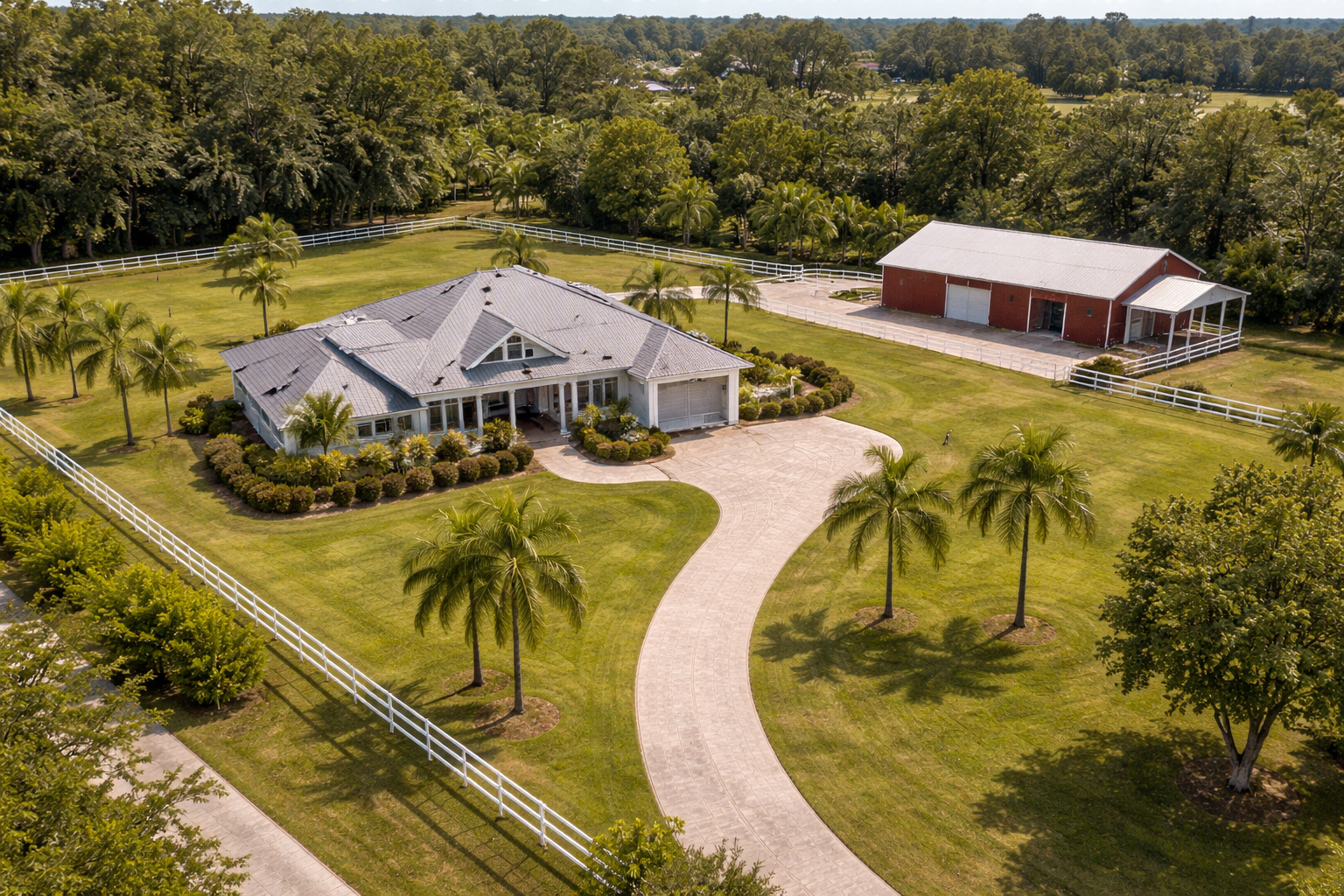
Housing styles in Loxahatchee are primarily single-family homes on larger parcels. Many properties include detached garages, barns, workshops, or additional storage buildings. Architectural styles vary, as development occurred over time rather than within uniform subdivisions.

Community atmosphere is independent and practical. Residents tend to value flexibility in property use, outdoor space, and reduced density. This makes Loxahatchee particularly appealing to:

  • Buyers relocating from urban centers seeking breathing room.

  • Families wanting larger yards.

  • Remote workers who do not need daily highway commutes.

  • Individuals seeking fewer HOA restrictions.


Loxahatchee, FL Real Estate Market Overview

The Loxahatchee real estate market operates differently from coastal condo markets or dense suburban neighborhoods. Activity tends to be steady rather than rapid.

Pricing trends reflect land value as much as the structure itself. Buyers often compare cost-per-acre along with interior square footage. Because lot sizes are larger, purchase prices can appear higher than some neighboring communities—but the land component changes the value equation.

Inventory conditions fluctuate, but turnover is generally moderate. Many homeowners move to Loxahatchee intending to stay longer-term, which can limit the number of available listings at any given time.

Market tone is measured. Homes may remain available longer than high-demand suburban properties, but buyers here are typically intentional. They evaluate infrastructure, lot elevation, drainage, fencing, and well/septic systems alongside cosmetic features.

Compared to Wellington:

  • Wellington offers more structured neighborhoods and community amenities.

  • Loxahatchee provides larger parcels and fewer density constraints.

Compared to Royal Palm Beach:

  • Royal Palm Beach features more traditional suburban planning.

  • Loxahatchee emphasizes space over proximity.

Understanding these differences is critical for relocation buyers making long-term decisions.


Buying a Home in Loxahatchee, FL

For buyers new to the area, expectations should align with rural-style property ownership.

Common property types include:

  • One-acre single-family homes.

  • Larger estate-style properties.

  • Equestrian-oriented parcels.

  • Homes with detached workshops or barns.

Unlike many suburban communities, some properties rely on well water and septic systems. Road conditions may vary depending on location. Buyers should factor in maintenance responsibilities that differ from HOA-managed neighborhoods.

New construction exists but is less concentrated than in master-planned developments. Build timelines and customization options can vary.

Commute planning is one of the most important relocation considerations. Buyers working in:

  • Downtown West Palm Beach

  • Boca Raton

  • Fort Lauderdale

  • Miami

should test drive potential routes during peak hours. While the added commute is manageable for many, it should be a deliberate choice rather than an afterthought.

Buyers comparing Loxahatchee to Wellington often evaluate:

  • Larger lot sizes vs. community amenities.

  • Lower density vs. proximity to shopping.

  • Fewer restrictions vs. HOA governance.

Clarity about daily routines helps determine whether Loxahatchee aligns with lifestyle needs.


Selling a Home in Loxahatchee, FL

For sellers, relocation-driven buyers form a meaningful segment of demand. Many prospective purchasers are unfamiliar with the area and require education about property infrastructure.

Preparation should focus on:

  • Clear documentation of well and septic systems.

  • Property boundary clarity.

  • Drainage and grading details.

  • Outbuilding condition and permitting status.

Pricing strategy benefits from emphasizing acreage and usable land rather than relying solely on square footage comparisons to suburban homes.

Because buyers are often relocating, they may require additional information about:

  • Nearby shopping corridors.

  • School access.

  • Hospital proximity.

  • Commute patterns.

Homes that address these questions upfront tend to generate stronger engagement.

Market timing psychology differs from more speculative markets. Transactions often move forward after thorough evaluation rather than rapid bidding cycles.

Curious What Your Home Might Be Worth?

Home values across Palm Beach County and South Florida change constantly. See what buyers may currently be willing to pay for homes in your neighborhood.

Check Your Home Value

Frequently Asked Questions About Loxahatchee, FL Real Estate

Is Loxahatchee expensive to live in?
Loxahatchee pricing reflects larger lot sizes and land value. While some properties may cost more than homes in denser communities, buyers receive additional space and flexibility. Costs may include well and septic maintenance. Overall expense depends on acreage, home condition, and commute considerations.

Is Loxahatchee good for families?
Families who prioritize yard space and outdoor flexibility often appreciate Loxahatchee. Larger lots provide room for recreation and privacy. However, errands and activities typically require driving, so families accustomed to walkable environments should evaluate daily logistics carefully.

How far is Loxahatchee from major employment centers?
Loxahatchee is west of major highways. Reaching West Palm Beach generally takes 25–40 minutes. Boca Raton and Fort Lauderdale involve longer commutes. Buyers should assess route patterns based on work location and peak traffic hours.

What types of homes are common in Loxahatchee?
Most homes are single-family residences on one-acre or larger parcels. Many include detached garages, barns, or workshops. Architectural styles vary widely because development occurred over decades rather than in uniform phases.

Is Loxahatchee a good place to buy or sell a home?
Loxahatchee works well for buyers seeking space and long-term residency. Sellers often attract relocation buyers valuing land. Success depends on realistic pricing and clear communication about property features.


Conclusion

For buyers unfamiliar with Palm Beach County, Loxahatchee represents a specific lifestyle choice. It offers land, privacy, and lower density at the cost of longer commutes and reduced walkability.

Compared to Wellington or Royal Palm Beach, it emphasizes space over structured amenities. For remote professionals, land-focused homeowners, or families prioritizing yard size, that trade-off can feel worthwhile.

Relocation decisions are rarely about price alone. They involve daily routines, commute comfort, maintenance expectations, and long-term goals. Loxahatchee appeals to those who approach housing as a lifestyle framework rather than simply a location.

Making an informed decision starts with understanding how the area fits into the broader South Florida landscape—and how that alignment supports your long-term plans.

Real Estate Resources for South Florida

If you're researching homes or following the South Florida real estate market, exploring listings and property values can provide helpful context for understanding local neighborhoods and housing trends across Palm Beach County.


About the Authors

Chris and Sue Kull are South Florida real estate professionals with more than three decades of experience helping buyers, sellers, and property owners navigate the housing market throughout Palm Beach County and surrounding communities.

Their work focuses on providing clear information, local market insight, and practical guidance so clients can make confident real estate decisions. Over the years they have built a trusted network of industry professionals—including lenders, inspectors, contractors, and legal specialists—to support every stage of the real estate process.

You can explore additional resources, community guides, and real estate tools at www.TheKullGroup.com.

If you have questions about buying, selling, or understanding the local real estate market, you can reach out through our contact page.

Feb. 19, 2026

Loxahatchee, FL Real Estate for Those Who Value Space, Privacy and Staying Power

thekullgroup/ChatGPT_Image_Feb_19

Loxahatchee, FL Real Estate for Those Who Value Space, Privacy and Staying Power

Introduction

Loxahatchee, FL real estate appeals to a specific kind of buyer—someone who thinks in decades, not seasons. This is not a market driven by flash or urgency. It attracts homeowners who prioritize privacy, usable land, and long-term equity over convenience-driven trends. Located in western Palm Beach County, Loxahatchee offers a distinct ownership experience built around space, discretion, and patience.

For buyers relocating from denser coastal cities, the shift can feel intentional and strategic. For current homeowners, the area represents stability and a quieter approach to wealth accumulation. Sellers here are often not pressured; they are selective. Transactions move forward when alignment exists, not when momentum dictates.

This guide explores Loxahatchee through a long-horizon lens—examining how people live here, how the market behaves over time, and what ownership means in a community where privacy is not an upgrade—it’s the baseline.

See What’s on the Market Right Now

If you're researching homes in Palm Beach County or anywhere in South Florida, explore current listings by city and see what’s available right now.

Explore Homes by City

Living in Loxahatchee, FL

Loxahatchee sits west of Wellington and Royal Palm Beach, stretching toward the edges of Palm Beach County’s more developed corridors. Unlike traditional suburban layouts, the area is defined by larger parcels, unpaved roads in certain sections, and a more rural framework that prioritizes land over density.

Neighborhoods here are not built around retail clusters or walkable commercial hubs. Daily life is drivability-based. Residents plan errands, make intentional trips into Wellington or West Palm Beach, and return home to environments that feel physically and visually separate from commercial activity.

Housing styles reflect that independence. Many properties sit on one-acre or larger lots. Detached homes dominate, often with long driveways, fencing, detached garages, barns, workshops, or guest structures. Some communities operate under light HOA governance; others maintain minimal restrictions. The result is flexibility—owners shape their property usage based on personal priorities.

Lifestyle in Loxahatchee tends to revolve around home-centered routines. Outdoor space is functional rather than decorative. Yards are used, not simply landscaped. Privacy fences, hedges, and distance between neighbors reinforce the area’s defining trait: separation without isolation.

For many homeowners, that separation is not just aesthetic—it’s psychological. The absence of congestion, close-quarter building patterns, and constant neighborhood turnover fosters a sense of continuity. People move here intending to stay.


Loxahatchee, FL Real Estate Market Overview

The Loxahatchee real estate market behaves differently from higher-density Palm Beach County areas. It does not typically reflect rapid cycles or speculative swings. Instead, it trends gradually, influenced by land value, replacement cost, and steady demand from buyers seeking space.

Pricing perception in Loxahatchee often centers on land-to-home ratio. Buyers evaluate acreage, zoning flexibility, and property usability alongside the residence itself. Inventory is typically more limited than in traditional subdivisions because large-parcel ownership turns over less frequently.

Market activity tends to feel measured. Homes may remain available longer than properties in high-demand coastal neighborhoods, but when the right buyer identifies a fit, negotiations often proceed thoughtfully rather than competitively.

The tone of the market favors stability. Sellers who price based on long-term value positioning—not short-term peaks—tend to attract qualified buyers who understand the area’s intrinsic appeal. Equity accumulation here is tied to land scarcity and lifestyle durability, not quick appreciation narratives.

Over time, Loxahatchee has seen gradual infrastructure improvements and incremental development around its perimeter, but core areas maintain their rural character. That balance between modest evolution and preserved space is part of the market’s strength.


Buying a Home in Loxahatchee, FL

Buyers entering the Loxahatchee market should expect a process that prioritizes clarity over speed. Properties are diverse—two homes on adjacent streets may vary significantly in lot preparation, drainage systems, fencing, outbuildings, and maintenance history.

Common property types include single-family homes on one-acre or larger parcels, equestrian-oriented estates, and custom-built residences designed for multigenerational living or business-from-home flexibility. New construction exists but is less uniform than in master-planned communities.

Local considerations are practical. Many properties utilize well water and septic systems. Road conditions can vary. Zoning allowances may permit agricultural use, detached structures, or home-based operations. Understanding these variables is critical for buyers evaluating long-term suitability.

HOAs are not universal, and where they do exist, they tend to focus on maintenance standards rather than architectural conformity. For buyers seeking fewer restrictions, this can be appealing. For those preferring structured oversight, careful neighborhood selection is necessary.

Patience is central to purchasing in Loxahatchee. Buyers who approach the process strategically—prioritizing land condition, drainage quality, structural durability, and long-term maintenance cost—position themselves for sustainable ownership. This is not a market for impulse decisions. It rewards due diligence.


Selling a Home in Loxahatchee, FL

Selling in Loxahatchee requires understanding buyer psychology. Prospective homeowners here are typically intentional and research-driven. They are not seeking trend alignment; they are seeking permanence.

Preparation should focus on function and infrastructure. Clear property boundaries, documented system maintenance (roof, well, septic), and transparent zoning details can significantly influence buyer confidence. Visual presentation matters, but practical readiness matters more.

Pricing strategy benefits from context rather than comparison alone. Because parcel sizes and property features vary, direct comparables can be limited. Sellers who emphasize land value, privacy advantages, and structural longevity often resonate more effectively with qualified buyers.

Market timing psychology differs from urban environments. Sellers are less likely to face high-pressure decision windows. Instead, transactions often unfold through thoughtful negotiation between parties who both view the property as a long-term commitment.

The result can be smoother closings grounded in shared expectations rather than urgency.

Curious What Your Home Might Be Worth?

Home values across Palm Beach County and South Florida change constantly. See what buyers may currently be willing to pay for homes in your neighborhood.

Check Your Home Value

Frequently Asked Questions About Loxahatchee, FL Real Estate

Is Loxahatchee expensive to live in?
Loxahatchee pricing reflects land size and property type. While some homes command higher price points due to acreage, buyers often perceive value in the additional space and flexibility. Cost considerations extend beyond purchase price to include well, septic, and land maintenance. For those seeking privacy and long-term stability, many feel the tradeoff is balanced.

Is Loxahatchee good for families?
Families who prioritize room to grow, outdoor space, and predictable surroundings often find Loxahatchee appealing. Larger lots provide space for recreation and hobbies, while the quieter environment supports structured daily routines. The area may not suit those seeking walkable amenities, but it works well for households valuing independence.

How far is Loxahatchee from major employment centers?
Loxahatchee is within commuting distance of Wellington, Royal Palm Beach, and West Palm Beach. Most residents rely on personal vehicles. Commute times vary depending on traffic patterns and exact location within the area. Many homeowners balance longer drives with the benefit of returning to a quieter residential environment.

What types of homes are common in Loxahatchee?
Single-family homes on one-acre or larger parcels are most common. Many properties include additional structures such as barns, workshops, or guest quarters. Architectural styles vary from ranch-style homes to custom builds. Uniform subdivision layouts are less prevalent compared to nearby communities.

Is Loxahatchee a good place to buy or sell a home?
Loxahatchee can be well-suited for buyers and sellers who value long-term ownership. Buyers benefit from land-centered equity potential and privacy. Sellers often attract selective purchasers aligned with the area’s pace. The market favors thoughtful preparation and realistic positioning over speculation.


Conclusion

Loxahatchee is not designed for rapid turnover or short-term positioning. It is a market shaped by land, privacy, and deliberate ownership. Buyers who relocate here often do so with a clear understanding of how they want to live—and an expectation that their property will support that vision for years.

Sellers operate with similar patience. Transactions occur when values align, not when headlines dictate.

For those evaluating Palm Beach County through a long-horizon lens, Loxahatchee represents stability rooted in space. Decisions here benefit from careful planning, realistic expectations, and an appreciation for the kind of ownership that compounds quietly over time.

Real Estate Resources for South Florida

If you're researching homes or following the South Florida real estate market, exploring listings and property values can provide helpful context for understanding local neighborhoods and housing trends across Palm Beach County.


About the Authors

Chris and Sue Kull are South Florida real estate professionals with more than three decades of experience helping buyers, sellers, and property owners navigate the housing market throughout Palm Beach County and surrounding communities.

Their work focuses on providing clear information, local market insight, and practical guidance so clients can make confident real estate decisions. Over the years they have built a trusted network of industry professionals—including lenders, inspectors, contractors, and legal specialists—to support every stage of the real estate process.

You can explore additional resources, community guides, and real estate tools at www.TheKullGroup.com.

If you have questions about buying, selling, or understanding the local real estate market, you can reach out through our contact page.

Feb. 18, 2026

Florida Housing Market Opens 2026 With Renewed Momentum

thekullgroup/south-florida-housing-market-january-2026-update-kull-group

Florida Housing Market Opens 2026 With Renewed Momentum

Florida’s housing market began 2026 with encouraging signs of renewed activity, offering both buyers and sellers a clearer picture of where the year may be headed. According to the latest statewide data, closed sales increased in both the single-family and condo-townhouse categories compared to a year ago. At the same time, new listings rose and pending sales posted significant year-over-year gains.

For homeowners and buyers across South East Florida—including Palm Beach County, Broward County, and the greater coastal corridor—this early momentum suggests a market that is stabilizing rather than overheating. After several years of volatility driven by rate swings, migration shifts, and affordability pressures, January’s performance reflects something different: balance beginning to re-emerge.

Inventory is expanding, buyers appear more active, and sellers are entering the market with renewed confidence. While one month does not define an entire year, the data offers insight into what may shape the 2026 spring selling season and beyond.


Closed Sales Increase Across Property Types

January showed measurable improvement in closed sales across Florida. Single-family home transactions rose year over year, while condo and townhouse closings also posted gains. Closed sales typically reflect contracts written weeks or months earlier, meaning that increased activity likely began building in late 2025.

For South East Florida markets such as Wellington, Boca Raton, Delray Beach, and West Palm Beach, this trend aligns with what many local professionals observed toward the end of last year: buyers re-engaging as affordability conditions improved modestly.

The growth in closed transactions is meaningful for several reasons:

  • It signals buyer confidence returning to the marketplace.

  • It reflects improved contract-to-close consistency.

  • It supports price stability when paired with balanced inventory.

Importantly, these increases are occurring alongside slightly moderating median prices in some segments, which suggests the market is adjusting rather than accelerating unsustainably.

See What’s on the Market Right Now

If you're researching homes in Palm Beach County or anywhere in South Florida, explore current listings by city and see what’s available right now.

Explore Homes by City

New Listings Reach Multi-Year Highs

One of the most notable aspects of January’s data is the surge in new listings. Single-family homes saw a substantial year-over-year increase in fresh inventory, while condo-townhouse listings also rose.

Expanded inventory benefits the market in several ways:

  • Buyers gain more choice and negotiating flexibility.

  • Sellers compete on condition and pricing strategy.

  • Overall market health improves through transaction flow.

In Palm Beach County and surrounding South Florida communities, this improved inventory gives buyers who were sidelined in prior years an opportunity to re-enter without the intense competition that defined the pandemic-era housing cycle.

That said, increased listings do not automatically mean oversupply. The key variable is absorption—how quickly those homes move into pending status.


Pending Sales Point to Continued Activity

January also marked continued year-over-year growth in new pending sales. Pending sales are often viewed as a forward-looking indicator of market momentum because they reflect current buyer demand.

Several consecutive months of increasing pending activity suggest that buyer interest is not simply a short-term reaction but part of a broader recalibration.

For sellers in South East Florida, this is encouraging. It indicates that homes priced appropriately and presented well are finding buyers. For buyers, it signals that while inventory is improving, quality listings may still move efficiently.

Pending growth combined with rising listings supports a balanced dynamic rather than a sharp shift toward either extreme.


Median Prices Show Modest Adjustments

While sales activity rose, median prices showed modest softening in some categories compared to the previous year. These adjustments are relatively measured and reflect normalization rather than distress.

Moderating prices can:

  • Improve affordability margins for buyers.

  • Reduce upward pressure on insurance and tax calculations.

  • Encourage transaction flow by narrowing expectation gaps.

In South East Florida real estate markets, price moderation often varies by property type. Single-family homes in desirable neighborhoods may hold value more firmly, while condo markets—particularly where inventory has expanded more significantly—may experience greater negotiation flexibility.

This nuanced environment reinforces the importance of localized pricing strategy.


Inventory Levels: What They Mean for Buyers and Sellers

Supply levels in January indicate a more balanced environment overall. Single-family homes are moving toward a neutral supply range, while condos and townhouses reflect higher inventory levels.

For buyers:

  • Increased supply may allow more time for decision-making.

  • Negotiation leverage may improve in select segments.

  • Inspection and financing contingencies are more common again.

For sellers:

  • Proper pricing is critical.

  • Condition and presentation matter more in competitive segments.

  • Overpricing may lead to extended days on market.

Balanced inventory supports sustainable price behavior and healthier transaction volume over time.

Curious What Your Home Might Be Worth?

Home values across Palm Beach County and South Florida change constantly. See what buyers may currently be willing to pay for homes in your neighborhood.

Check Your Home Value

Affordability Conditions Compared to Last Year

One reason behind January’s improved activity is the relative improvement in affordability compared to early 2025. While mortgage rates remain higher than pandemic-era lows, incremental improvements combined with income adjustments and moderating prices are helping some buyers return to the market.

Buyers who were previously hesitant may now feel:

  • More clarity on monthly payment ranges.

  • Less urgency but greater confidence.

  • Improved budget alignment with current pricing.

This shift in sentiment can meaningfully impact spring and summer activity if momentum continues.


What This Means for South East Florida Specifically

South East Florida remains influenced by several unique drivers:

  • Continued domestic migration.

  • Ongoing international interest.

  • Diverse employment sectors including healthcare, finance, hospitality, and logistics.

Markets such as Wellington, Boca Raton, and Palm Beach Gardens often experience steady demand due to lifestyle appeal and established infrastructure.

January’s statewide trends mirror what we are seeing locally: more realistic pricing, more listings, and buyers stepping forward with intention rather than urgency.

The market appears less reactive and more deliberate.


Sellers: Strategy Matters in a Balanced Market

In a market with expanding inventory, sellers must adjust expectations.

Key considerations include:

  • Pricing in line with current comparable sales rather than peak pricing.

  • Completing deferred maintenance before listing.

  • Ensuring strong photography and digital presence.

Homes that are thoughtfully prepared and competitively priced are still attracting strong interest. Those that rely on scarcity psychology may sit longer.

The early 2026 data suggests sellers who align with market realities are being rewarded with consistent activity.


Buyers: Opportunity With Caution

Buyers in 2026 are navigating a market that offers more choice than recent years but still requires discipline.

Practical advice includes:

  • Obtain full lender pre-approval before touring extensively.

  • Evaluate total monthly cost including insurance and taxes.

  • Avoid assuming further price declines are guaranteed.

Balanced markets reward preparedness. Buyers who understand their purchasing power and act decisively on well-priced properties will likely find success.


Looking Ahead: Sustainability Over Surge

The most encouraging aspect of January’s data is not just the increase in sales—it is the combination of sales growth with expanding inventory and modest price adjustments.

This pattern supports:

  • Sustainable growth rather than speculative acceleration.

  • Improved long-term stability.

  • Reduced volatility compared to prior cycles.

While it remains too early to define the full trajectory of 2026, early indicators point toward a healthier and more predictable housing environment.

For South East Florida homeowners and buyers alike, predictability often matters more than rapid appreciation.


Final Thoughts

Florida’s housing market opened 2026 with measurable strength: more closed sales, more listings, and a notable increase in pending contracts. These indicators suggest that buyers are re-engaging and sellers are returning to the market with confidence.

For South East Florida communities, the early-year data reflects a transition toward balance. Inventory expansion is providing options, while buyer demand appears steady rather than speculative.

A stable, sustainable market benefits everyone—buyers seeking clarity, sellers seeking alignment, and long-term homeowners building equity over time.

As we move deeper into the year, the focus will remain on absorption rates, affordability trends, and consumer confidence. If early momentum continues, 2026 may represent not a dramatic rebound, but a meaningful reset toward healthy housing activity across the state.

Real Estate Resources for South Florida

If you're researching homes or following the South Florida real estate market, exploring listings and property values can provide helpful context for understanding local neighborhoods and housing trends across Palm Beach County.


About the Authors

Chris and Sue Kull are South Florida real estate professionals with more than three decades of experience helping buyers, sellers, and property owners navigate the housing market throughout Palm Beach County and surrounding communities.

Their work focuses on providing clear information, local market insight, and practical guidance so clients can make confident real estate decisions. Over the years they have built a trusted network of industry professionals—including lenders, inspectors, contractors, and legal specialists—to support every stage of the real estate process.

You can explore additional resources, community guides, and real estate tools at www.TheKullGroup.com.

If you have questions about buying, selling, or understanding the local real estate market, you can reach out through our contact page.
Feb. 18, 2026

Young Buyers Feel the Squeeze as Wage Growth Slows in 2026

thekullgroup/south-florida-first-time-home-buyer-affordability-2026-kull-group

Young Buyers Feel the Squeeze as Wage Growth Slows in 2026

For years, homeownership has been a defining milestone for younger adults across South East Florida and beyond. But as wage growth slows and housing costs remain elevated, many first-time buyers are finding that the path to ownership feels longer than it did just a few years ago. While headlines often focus on mortgage rates or inventory levels, a quieter but equally important force is shaping the market: income growth.

Recent research shows that wage gains among young adults have cooled to some of the weakest levels in nearly a decade. For buyers in their mid-20s to early 30s, this slowdown is especially challenging. Without meaningful income growth, it becomes harder to save for a down payment, qualify for financing, or feel confident taking on long-term housing expenses. In markets like Palm Beach County, Wellington, Boca Raton, and the greater South Florida region, the combination of high housing costs and flatter career progression is delaying homeownership for many.

Understanding how slower wage growth impacts young buyers helps clarify what we may see in 2026 and beyond—and how buyers, sellers, and families can respond strategically.

See What’s on the Market Right Now

If you're researching homes in Palm Beach County or anywhere in South Florida, explore current listings by city and see what’s available right now.

Explore Homes by City

Slowing Wage Growth and Its Impact on Young Adults

Income growth for workers between the ages of 25 and 29 has cooled significantly compared to the strong post-pandemic rebound years. While wages are still rising in many sectors, the pace has slowed, and job mobility has tightened. Younger professionals often rely on job changes and promotions to accelerate earnings. When that upward mobility slows, purchasing power does too.

At the same time, unemployment rates among the youngest working adults remain noticeably higher than for mid-career professionals. That imbalance places additional pressure on entry-level buyers who are still building credit, savings, and career stability.

In practical terms, this means:

  • Longer timelines to accumulate down payments

  • More difficulty qualifying for higher price points

  • Increased sensitivity to monthly payment changes

  • Greater reliance on co-buying or family support

Across South Florida real estate markets, we are seeing this translate into delayed household formation. Many young adults are choosing to remain with family longer, share rentals, or postpone buying altogether while waiting for income stability to improve.


High Housing Costs Compound the Challenge

Slower wage growth alone would be manageable if housing prices were declining sharply. But in many South East Florida communities, home values remain relatively strong, even in periods of moderation.

Over the last decade, home prices have climbed steadily. Even where appreciation has slowed, baseline pricing remains far higher than it was for previous generations of buyers entering the market.

For young buyers in Wellington, Royal Palm Beach, West Palm Beach, and surrounding areas, affordability challenges include:

  • Higher home prices relative to income

  • Rising insurance costs

  • Property taxes that reflect elevated valuations

  • Increased competition from established buyers

This creates a gap between aspiration and readiness. Many first-time buyers are financially responsible but still short of the savings cushion required to move confidently into ownership.


Delayed Household Formation and Market Ripple Effects

One notable trend emerging from slower wage growth is the increase in adults under 35 living with parents or delaying independent housing. Compared to a decade ago, millions more young adults are staying home longer or sharing living arrangements.

From a housing market perspective, this impacts:

  • Entry-level home demand

  • Starter home turnover

  • Rental market pressure

  • Household formation rates

When first-time buyers delay purchasing, sellers of smaller homes may see longer marketing times. Builders targeting entry-level buyers may adjust pricing or incentives. At the same time, move-up buyers may hesitate if they rely on strong starter-home demand to sell their current property.

In South Florida, this dynamic contributes to a more measured pace of transactions rather than a collapse in demand. The desire for homeownership remains strong, but the timeline is shifting.


Young Buyers Are Adjusting Their Strategy

Despite these challenges, younger buyers are not abandoning the goal of homeownership. Instead, many are adapting.

Some trends emerging among Gen Z and younger millennials include:

1. Co-Buying With Friends or Siblings

Shared ownership allows buyers to split costs and enter the market sooner. This approach requires clear legal agreements but is becoming more common in higher-cost markets.

2. Investing in Financial Markets First

Younger adults are increasingly turning to stock investing as a way to grow savings faster while delaying a home purchase.

3. Expanding Geographic Search Areas

Buyers who initially target highly competitive neighborhoods may look to surrounding communities where pricing is more attainable.

4. Using Government-Backed Loan Options

FHA and VA programs remain valuable tools for buyers with limited down payments, though income stability remains key.

These adjustments show that younger buyers are not disengaged. They are recalibrating.

Curious What Your Home Might Be Worth?

Home values across Palm Beach County and South Florida change constantly. See what buyers may currently be willing to pay for homes in your neighborhood.

Check Your Home Value

rt="5370" data-end="5373" />

What This Means for Sellers in 2026

For homeowners considering selling in South East Florida, understanding this wage dynamic is essential.

If your likely buyer pool includes first-time or younger buyers, realistic pricing and thoughtful presentation matter more than ever. Buyers who feel financially stretched will be highly selective.

Sellers should consider:

  • Pricing aligned with current affordability thresholds

  • Offering flexibility on closing timelines

  • Preparing homes to minimize perceived future expenses

  • Highlighting energy efficiency or lower insurance impacts

Well-positioned homes will still attract interest. But emotional pricing based on peak conditions may limit activity in a market where income growth has slowed.


How the Broader Economy Could Shift the Narrative

While wage growth has cooled, it is not stagnant across all sectors. A few positive developments could meaningfully change the outlook:

  • Stronger labor market expansion

  • Reduced inflation pressure

  • Improved job mobility

  • Gradual mortgage rate stabilization

If even two or three of these factors improve simultaneously, buyer confidence could rise quickly. Young adults tend to reenter the market once they feel career stability and income trajectory improving.

The key takeaway is that today’s delays may not represent permanent demand loss—just postponed participation.


South Florida’s Unique Position

South East Florida real estate continues to attract domestic migration, international buyers, and lifestyle-driven relocations. These demand drivers help stabilize pricing even when certain buyer segments slow down.

Communities like Wellington, Boca Raton, Delray Beach, and Palm Beach Gardens benefit from:

  • Employment diversity

  • Healthcare and professional services growth

  • Ongoing infrastructure development

  • Lifestyle appeal

While young local buyers may be pausing, other buyer segments remain active. This creates a market that is cooling selectively rather than broadly declining.


Practical Advice for Young Buyers in Today’s Environment

If you are under 35 and considering buying in 2026, focus on readiness rather than headlines.

Build Financial Cushion

Strong savings beyond the down payment improve flexibility and confidence.

Engage a Lender Early

Pre-approval clarifies true purchasing power and highlights areas for credit improvement.

Avoid Emotional Comparisons

Comparing today’s rates to pandemic-era lows is counterproductive. Markets shift in cycles.

Think Long-Term

Homeownership remains a long-term wealth-building strategy. Short-term wage slowdowns may not define a 10- to 20-year ownership horizon.


What to Watch in 2026

As we move through 2026, three indicators will shape how young buyers reengage:

  1. Labor market stability

  2. Inflation trends affecting household budgets

  3. Consumer confidence levels

If these improve modestly, pent-up demand from younger buyers could gradually return to the market.


Final Thoughts

Slower wage growth is clearly delaying some young buyers in South East Florida. High housing costs combined with flatter career progression make entry into homeownership more challenging than it was in previous cycles.

However, the underlying desire to own remains strong. Young adults are adapting rather than abandoning their goals. They are saving longer, partnering creatively, and waiting for stronger footing.

For buyers, patience and preparation are essential. For sellers, understanding the financial reality of the next generation of homeowners allows for smarter positioning.


The housing market does not move in a straight line. It responds to economic pressure, adjusts, and then finds equilibrium. As income growth regains momentum, many of today’s sidelined buyers will likely reenter the market with clarity and intention.

Real Estate Resources for South Florida

If you're researching homes or following the South Florida real estate market, exploring listings and property values can provide helpful context for understanding local neighborhoods and housing trends across Palm Beach County.


About the Authors

Chris and Sue Kull are South Florida real estate professionals with more than three decades of experience helping buyers, sellers, and property owners navigate the housing market throughout Palm Beach County and surrounding communities.

Their work focuses on providing clear information, local market insight, and practical guidance so clients can make confident real estate decisions. Over the years they have built a trusted network of industry professionals—including lenders, inspectors, contractors, and legal specialists—to support every stage of the real estate process.

You can explore additional resources, community guides, and real estate tools at www.TheKullGroup.com.

If you have questions about buying, selling, or understanding the local real estate market, you can reach out through our contact page.

Feb. 18, 2026

South East Florida Housing Outlook 2026: The 3 Market Forces Buyers and Sellers Cannot Ignore

thekullgroup/south-east-florida-housing-market-outlook-2026

South East Florida Housing Outlook 2026: The 3 Market Forces Buyers and Sellers Cannot Ignore

After a year that many expected would deliver a meaningful rebound, 2025 instead reminded everyone just how interconnected the housing market is with broader economic signals. In South East Florida, buyers remained cautious, sellers adjusted expectations, and affordability conversations became more nuanced than simple rate-watching.

As we move toward 2026, three major forces are positioned to shape how the housing market behaves across Palm Beach County, Broward County, and Miami-Dade: consumer confidence, mortgage rate direction, and federal policy shifts.

For homeowners considering selling, buyers preparing to enter the market, and investors tracking long-term trends, understanding these forces is more important than reacting to weekly headlines. At The Kull Group, we focus on clarity over noise. Here’s what to watch in 2026 — and what it could mean locally.

See What’s on the Market Right Now

If you're researching homes in Palm Beach County or anywhere in South Florida, explore current listings by city and see what’s available right now.

Explore Homes by City

1. Consumer Confidence: The Psychology Behind Demand

Real estate is not purely financial. It is emotional, psychological, and often timing-driven. Consumer confidence plays a major role in how willing people are to make large financial commitments like purchasing a home.

Throughout 2025, economic uncertainty weighed heavily on buyers nationwide. Concerns about inflation, job security, trade tensions, and the overall cost of living created hesitation. Even in markets where inventory improved slightly, buyer traffic did not always follow.

In South East Florida, we saw this firsthand:

  • Showings increased in some neighborhoods but contracts lagged.

  • Buyers requested longer due diligence periods.

  • Negotiations became more detailed and payment-focused.

Confidence affects housing demand in several ways:

  • Job Stability: Buyers want reassurance about income continuity.

  • Inflation Perception: When grocery and gas prices feel stable, households feel more secure.

  • Stock Market Performance: Investment portfolios influence down payment decisions.

  • News Cycle Tone: Negative economic narratives often delay purchasing behavior.

If 2026 delivers consistent labor market strength and easing inflation pressure, housing demand could reaccelerate — even without dramatic mortgage rate drops.

However, if uncertainty lingers, activity may remain selective rather than explosive.

For sellers in South Florida, this means pricing strategy will remain crucial. Buyers will engage when they feel financially confident — not just when they see a listing.


2. Mortgage Rate Direction: Stability Matters More Than Perfection

Mortgage rates remain one of the most watched variables in the housing market. However, the key for 2026 may not be how low rates fall — but how stable they become.

Forecasts suggest rates may remain within a moderate band rather than return to the historic lows of 2020–2021. Several factors influence this:

  • Federal Reserve policy

  • Inflation trends

  • Labor market strength

  • 10-year Treasury yield movement

  • Demand for mortgage-backed securities

In South East Florida, rate stability often matters more than rate perfection.

Why?

Because buyers can adjust to predictable costs. What disrupts demand is volatility — sudden swings that change payment calculations from one month to the next.

If rates settle into a steady range in 2026:

  • Buyers regain budgeting clarity.

  • Builders can forecast demand more accurately.

  • Sellers experience more consistent showing activity.

  • Mortgage professionals can structure more reliable financing strategies.

There’s also growing evidence that lower rates alone do not automatically trigger surges in demand. Rate relief combined with stronger consumer confidence has a much more powerful effect.

In Palm Beach County and surrounding areas, affordability is a layered equation:

  • Mortgage rate

  • Insurance premiums

  • Property taxes

  • HOA fees

  • Maintenance costs

A modest rate drop without improvement in the broader affordability basket may not be enough to unlock sidelined buyers.


3. Federal Policy: The Wild Card for 2026

Federal policy discussions gained momentum in 2025 and will likely continue shaping housing conversations in 2026.

Topics that remain active include:

  • Immigration reform

  • Tariff policy

  • Housing supply initiatives

  • Proposed long-term mortgage products (such as 40- or 50-year terms)

  • Development regulations

  • Insurance and financial oversight

South East Florida is uniquely sensitive to federal policy changes because:

  • It is a high-growth migration destination.

  • International buyer activity plays a role in demand.

  • Construction and development are major economic drivers.

  • Insurance regulation directly impacts affordability.

For example:

  • Changes in immigration policy can affect labor supply in construction.

  • Tariffs may influence material costs for builders.

  • Lending structure adjustments can change how buyers qualify.

  • Regulatory changes can influence development pace and inventory.

After a volatile 2025, the market has become more policy-aware. Buyers are asking broader questions. Sellers are monitoring macroeconomic shifts more closely.

2026 will likely reward those who understand how national decisions translate into local pricing behavior.


What This Means for South East Florida Buyers

If you’re planning to purchase in 2026, here’s how these forces may affect you:

1. Confidence Matters More Than Timing Headlines
Waiting for the “perfect” moment often leads to paralysis. Instead, focus on personal readiness — credit stability, budget clarity, and long-term ownership plans.

2. Payment Comfort Drives Decisions
With rates expected to stabilize rather than collapse, clarity about monthly affordability will matter more than chasing minor fluctuations.

3. Policy Awareness Helps with Planning
Insurance requirements, lending programs, and local regulations can shift quickly. Staying informed provides leverage.


What This Means for South East Florida Sellers

For homeowners considering listing in 2026:

1. Strategic Pricing Is Critical
Buyers are analytical. Overpricing in a cautious confidence environment can extend time on market.

2. Preparation Still Wins
Homes that present cleanly, address maintenance, and reflect current buyer expectations perform better — especially when sentiment is mixed.

3. Understand the Buyer’s Psychology
Buyers today are comparing not only homes but also overall financial exposure. Transparency about insurance, improvements, and condition reduces friction.


A Market Reset, Not a Market Collapse

The 2025 housing market did not deliver the bounce many predicted. However, it did not collapse either. Instead, it recalibrated.

Inventory normalized in certain segments. Buyers regained negotiation leverage. Builders adjusted incentives. Sellers recalculated expectations.

2026 may represent a year of measured stability rather than dramatic swings.

In South East Florida, long-term fundamentals remain strong:

  • Population growth

  • Desirability of climate and lifestyle

  • Employment diversification

  • Infrastructure investment

  • Ongoing migration from higher-tax states

But fundamentals do not override psychology. That’s why monitoring confidence, rates, and policy together provides the clearest lens.

Curious What Your Home Might Be Worth?

Home values across Palm Beach County and South Florida change constantly. See what buyers may currently be willing to pay for homes in your neighborhood.

Check Your Home Value

The Bottom Line for 2026

Housing markets rarely turn on one variable. They respond to clusters of influence.

In 2026, watch for:

  • Consumer confidence stabilization

  • Mortgage rate predictability

  • Policy clarity

If those three align positively, South East Florida real estate could experience steady, sustainable growth rather than speculative surges.

For buyers and sellers alike, the key strategy is not reaction — it’s preparation.

Real Estate Resources for South Florida

If you're researching homes or following the South Florida real estate market, exploring listings and property values can provide helpful context for understanding local neighborhoods and housing trends across Palm Beach County.


About the Authors

Chris and Sue Kull are South Florida real estate professionals with more than three decades of experience helping buyers, sellers, and property owners navigate the housing market throughout Palm Beach County and surrounding communities.

Their work focuses on providing clear information, local market insight, and practical guidance so clients can make confident real estate decisions. Over the years they have built a trusted network of industry professionals—including lenders, inspectors, contractors, and legal specialists—to support every stage of the real estate process.

You can explore additional resources, community guides, and real estate tools at www.TheKullGroup.com.

If you have questions about buying, selling, or understanding the local real estate market, you can reach out through our contact page.
Feb. 18, 2026

Can Assumable Mortgages Help South Florida Buyers Navigate Higher Rates?

thekullgroup/south-florida-home-assumable-mortgage-strategy-2026

Can Assumable Mortgages Help South Florida Buyers Navigate Higher Rates?

For homeowners who purchased during the pandemic-era housing surge, mortgage rates often started with a “2” or low “3.” For buyers entering today’s market, those numbers can feel almost mythical. In South East Florida, where property values remain resilient and demand continues across Palm Beach, Broward, and Miami-Dade counties, today’s mortgage rates significantly affect affordability calculations.

But there is a strategy that can, in certain situations, bridge the gap between yesterday’s rates and today’s market: the assumable mortgage.

An assumable mortgage allows a buyer to take over a seller’s existing home loan — including the remaining balance, repayment schedule, and most importantly, the interest rate. In a higher-rate environment, this can dramatically change monthly payment projections. However, while the concept sounds simple, the execution is anything but.

As the marketing director for The Kull Group, working with buyers and sellers throughout South East Florida, we believe clarity matters. Assumable mortgages are real. They can create meaningful savings. But they also require cash, patience, and careful planning.

Let’s break down what this strategy means for Florida real estate in 2026 and beyond.

See What’s on the Market Right Now

If you're researching homes in Palm Beach County or anywhere in South Florida, explore current listings by city and see what’s available right now.

Explore Homes by City

What Is an Assumable Mortgage?

An assumable mortgage is a home loan that can be transferred from the current homeowner to a qualified buyer. Instead of securing a new mortgage at current rates, the buyer assumes the seller’s existing loan.

The critical detail: most conventional mortgages are not assumable. However, many government-backed loans are.

These typically include:

  • FHA loans (Federal Housing Administration)

  • VA loans (Department of Veterans Affairs)

In 2020 and 2021, a meaningful share of new mortgages were FHA and VA loans. Many of those loans carry rates below 4%, and some are even below 3%. In today’s environment, that difference can translate into substantial long-term savings.

For a South Florida buyer comparing a 6.5% loan to a 2.75% assumed loan, the impact on monthly payments and lifetime interest is significant.

But the math is only part of the story.


Why Assumable Mortgages Matter in South Florida

In South East Florida, affordability is shaped by more than interest rates. Buyers must account for:

  • Property insurance premiums

  • Property taxes

  • HOA dues

  • Maintenance costs

When rates increase, the pressure compounds. That’s why assumable mortgages are drawing attention again — especially in higher-value coastal and suburban markets like Boca Raton, Wellington, Delray Beach, and Palm Beach Gardens.

From a seller’s perspective, offering an assumable loan can:

  • Differentiate a listing in a competitive neighborhood

  • Expand the buyer pool

  • Strengthen negotiating leverage

  • Potentially justify pricing confidence

From a buyer’s perspective, the attraction is straightforward: lower payments, greater predictability, and long-term savings.

However, there are two major hurdles.


The Equity Gap: The Cash Requirement Most Buyers Overlook

Here’s where assumable mortgages become more complex.

When a buyer assumes a mortgage, they are only assuming the remaining loan balance — not the current market value of the home.

Let’s walk through an example relevant to South Florida:

  • A home purchased in 2021 for $500,000

  • Original FHA loan at 2.75%

  • Remaining mortgage balance today: $440,000

  • Current market value: $700,000

If a buyer wants to assume that loan, they must cover the difference between the sale price and the loan balance.

That means:

  • Purchase price: $700,000

  • Loan balance: $440,000

  • Required cash or secondary financing: $260,000

This “equity gap” is the largest barrier.

While buyers can seek secondary financing, those loans often carry higher interest rates and stricter terms. Many lenders are cautious about large second-position loans.

As a result, assumable mortgages tend to work best for buyers who:

  • Have significant cash reserves

  • Are bringing equity from another home sale

  • Have long-term investment goals

  • Value rate savings over liquidity

For many first-time buyers, the cash requirement makes this strategy difficult.


The Approval Process: Not Always Smooth

Even when buyers have the financial capacity, the assumption process requires lender approval.

Mortgage servicers must evaluate the buyer’s creditworthiness. In theory, there are timelines governing how long this review should take. In practice, delays can occur.

Why?

Lenders generate more revenue by originating new loans at current rates than by maintaining lower-rate legacy loans. While they must process assumptions, they may not prioritize them.

Buyers and sellers in South Florida should expect:

  • Extended underwriting timelines

  • Detailed documentation requirements

  • Administrative fees

  • Potential backlogs

This means contracts must be structured carefully. Closing timelines may need flexibility.

At The Kull Group, we emphasize preparation. Buyers must enter an assumable transaction understanding that patience is part of the strategy.

Curious What Your Home Might Be Worth?

Home values across Palm Beach County and South Florida change constantly. See what buyers may currently be willing to pay for homes in your neighborhood.

Check Your Home Value

How Sellers Can Leverage Assumable Loans

One of the most overlooked aspects of this strategy is seller awareness.

Many homeowners do not realize:

  • They have an assumable FHA or VA loan

  • Their rate is significantly below today’s market

  • That feature could attract strong buyer interest

In South Florida’s diverse market, this can be a meaningful marketing advantage — particularly in neighborhoods where multiple listings compete for attention.

However, sellers must consider:

  • VA entitlement implications (for veteran sellers)

  • Extended closing timelines

  • Buyer qualification risk

When positioned correctly, an assumable mortgage becomes more than a financing detail — it becomes part of the property’s value proposition.


Does This Strategy Unlock Florida’s Housing Market?

Some housing economists argue that wider adoption of assumable mortgages could improve housing turnover.

Many homeowners hesitate to sell because they do not want to lose their ultra-low mortgage rates. If buyers can assume those rates, sellers may feel more comfortable listing.

In theory, this could ease inventory constraints in parts of Florida.

However, the equity gap limits scalability. In rapidly appreciating markets like Palm Beach County, that cash requirement remains the biggest obstacle.

Assumable mortgages are powerful — but they are not a universal solution.


Who Benefits Most From Assumable Mortgages?

In our experience across South East Florida, the buyers most likely to benefit include:

  • Move-up buyers selling a previous property

  • Relocating buyers with strong liquidity

  • Investors focused on long-term holds

  • Buyers prioritizing payment stability

Those least likely to benefit:

  • Buyers with minimal cash reserves

  • Buyers needing fast closings

  • Highly leveraged purchasers

As with any strategy, alignment matters.


Strategic Considerations for South Florida Buyers

If you’re exploring an assumable mortgage in South Florida, consider these steps:

  1. Confirm Loan Type
    Verify whether the existing mortgage is FHA or VA and confirm it is assumable.

  2. Obtain Loan Details
    Remaining balance, interest rate, monthly payment, and servicer contact.

  3. Calculate the Equity Gap
    Understand your true cash requirement.

  4. Consult a Lender Early
    Credit qualification still applies.

  5. Prepare for Timeline Flexibility
    Build realistic closing expectations.

A lower interest rate can generate substantial savings — but only if the overall transaction structure makes financial sense.


A Balanced View for 2026 Buyers and Sellers

Higher mortgage rates have changed the psychology of the housing market. Buyers are more analytical. Sellers must be more strategic.

Assumable mortgages offer one pathway forward — particularly in markets like South Florida, where appreciation has been strong and long-term ownership remains attractive.

But they are not shortcuts.

They require capital.
They require patience.
They require proper structuring.

For the right buyer profile, assuming a 2.75% mortgage in a 6% environment can create lasting financial advantages. For others, traditional financing, rate buydowns, or creative negotiation strategies may be more practical.

At The Kull Group, our role is to help clients evaluate all available tools — not chase headlines, but assess real-world feasibility.

The goal is always the same: informed decisions that support long-term financial stability.

Real Estate Resources for South Florida

If you're researching homes or following the South Florida real estate market, exploring listings and property values can provide helpful context for understanding local neighborhoods and housing trends across Palm Beach County.


About the Authors

Chris and Sue Kull are South Florida real estate professionals with more than three decades of experience helping buyers, sellers, and property owners navigate the housing market throughout Palm Beach County and surrounding communities.

Their work focuses on providing clear information, local market insight, and practical guidance so clients can make confident real estate decisions. Over the years they have built a trusted network of industry professionals—including lenders, inspectors, contractors, and legal specialists—to support every stage of the real estate process.

You can explore additional resources, community guides, and real estate tools at www.TheKullGroup.com.

If you have questions about buying, selling, or understanding the local real estate market, you can reach out through our contact page.

Feb. 17, 2026

Loxahatchee, FL Real Estate: Where Practical Buyers Find Space, Stability, and Room to Grow

thekullgroup/loxahatchee-fl-real-estate-entry-point-properties-kull-group

Loxahatchee, FL Real Estate: Where Practical Buyers Find Space, Stability, and Room to Grow

Loxahatchee, FL real estate has steadily gained attention from buyers who want a different ownership experience than what dense coastal areas offer. Instead of vertical living and tightly packed neighborhoods, Loxahatchee provides horizontal space — larger lots, fewer immediate neighbors, and the ability to shape daily routines without constant outside pressure. For many buyers, the appeal isn’t based on trends but on practicality and long-term livability.

Located in western Palm Beach County, Loxahatchee has evolved from a sparsely populated rural area into a growing residential option for homeowners who prioritize independence and flexibility. Buyers relocating from more congested regions often find that Loxahatchee offers an easier entry point into ownership without sacrificing access to essential services, employment centers, or surrounding cities.

This guide explores how Loxahatchee has changed over time, what buyers and sellers should expect, and why the area continues to attract homeowners focused on stability rather than speculation. Understanding how Loxahatchee functions today provides valuable clarity for anyone considering ownership in this evolving part of South Florida.

Curious What Your Home Might Be Worth?

Home values across Palm Beach County and South Florida change constantly. See what buyers may currently be willing to pay for homes in your neighborhood.

Check Your Home Value

Living in Loxahatchee, FL

Loxahatchee sits west of Wellington and Royal Palm Beach, forming part of Palm Beach County’s western residential corridor. The area is largely car-dependent, but that structure contributes to its appeal. Instead of dense intersections and constant activity, daily travel involves predictable routes and less congestion. Residents often plan their schedules intentionally, grouping errands and travel to maintain efficiency.

Housing in Loxahatchee reflects its origins. Many properties are situated on larger parcels of land, offering physical separation between homes. Unlike master-planned developments with uniform layouts, Loxahatchee neighborhoods often feel organic. Homes vary in size, style, and orientation, creating a sense that ownership here is individualized rather than standardized.

Daily life moves at a consistent, manageable pace. Residents prioritize function over convenience-driven density. Outdoor space plays a larger role in everyday routines, whether through gardening, recreation, or simply having room to expand. For homeowners seeking predictability and independence, Loxahatchee provides an environment that supports long-term routines rather than constant adjustment.

Loxahatchee, FL Real Estate Market Overview

The Loxahatchee real estate market reflects steady interest from buyers who value space and flexibility. Instead of rapid turnover driven by short-term demand, the area attracts buyers planning to remain for extended periods. This ownership mindset influences how properties enter and leave the market.

Inventory conditions fluctuate based on broader regional trends, but Loxahatchee generally offers more varied entry points than denser urban markets. Buyers often evaluate properties based on land size, usability, and long-term suitability rather than purely interior finishes. This perspective shapes pricing and transaction timelines.

Market activity tends to follow a measured rhythm. Well-maintained homes attract attention, but transactions typically reflect thoughtful decision-making rather than urgency. Buyers often conduct careful comparisons, and sellers who understand this mindset tend to experience smoother negotiations. Loxahatchee’s market rewards preparation and realistic expectations.

Buying a Home in Loxahatchee, FL

Buyers entering the Loxahatchee real estate market should expect variety. Property sizes differ significantly, and each home offers distinct advantages depending on buyer priorities. Some buyers seek manageable lots with existing infrastructure, while others prefer larger parcels that provide long-term flexibility.

Common property types include single-family homes on individual lots, custom-built residences, and properties designed to accommodate outdoor activities or expansion. Many homes prioritize function, offering space for storage, recreation, or future additions.

Local considerations differ from more structured communities. Some areas operate independently without formal homeowners associations, allowing owners greater autonomy. Buyers relocating from HOA-governed neighborhoods often find this flexibility appealing. However, independence also requires thoughtful evaluation of maintenance responsibilities and long-term planning.

Timing plays an important role in the buying process. Buyers who approach the market with patience often find opportunities that align closely with their needs. Because Loxahatchee attracts ownership-focused buyers, properties frequently transition between owners who share similar long-term perspectives.

Selling a Home in Loxahatchee, FL

Selling property in Loxahatchee requires understanding buyer motivations. Buyers are often drawn by practical considerations such as land use, privacy, and long-term stability. Sellers who present their properties clearly and honestly tend to attract serious interest.

Preparation significantly influences buyer perception. Addressing maintenance issues, organizing outdoor areas, and ensuring accessibility all help buyers visualize ownership. Because buyers prioritize functionality, presentation should highlight usability rather than cosmetic enhancements alone.

Pricing strategy benefits from alignment with current market conditions rather than comparisons to unrelated areas. Buyers evaluating Loxahatchee typically conduct detailed research and expect realistic pricing. Sellers who recognize this mindset often achieve smoother transactions and fewer disruptions.

Market timing psychology also differs from faster-paced markets. Buyers enter Loxahatchee deliberately, and sellers who remain flexible in their expectations tend to experience more favorable outcomes. The process reflects thoughtful alignment rather than urgency.

Frequently Asked Questions About Loxahatchee, FL Real Estate

Is Loxahatchee expensive to live in?
Loxahatchee offers a range of ownership options depending on property size, location, and features. Many buyers find that Loxahatchee provides more space for their investment compared to denser Palm Beach County areas. Costs vary based on individual priorities, but buyers often perceive the value in terms of flexibility, privacy, and long-term usability rather than purely price comparisons.

Is Loxahatchee good for families?
Many families are drawn to Loxahatchee because of its predictable environment and available space. Larger properties allow for outdoor activities and personal flexibility. The area supports consistent routines, which appeals to households seeking stability and independence in their living environment.

How far is Loxahatchee from major employment centers?
Loxahatchee is within commuting distance of employment hubs such as West Palm Beach, Wellington, and surrounding areas. Most residents rely on personal vehicles for transportation, and commute times vary depending on schedule and route selection. Many homeowners accept the commute in exchange for greater residential flexibility.

What types of homes are common in Loxahatchee?
Single-family homes on individual lots represent the majority of housing in Loxahatchee. Property sizes vary significantly, and many homes include outdoor space that supports a range of uses. Custom-built homes and individually designed properties contribute to the area’s diverse housing landscape.

Is Loxahatchee a good place to buy or sell a home?
Loxahatchee can be an excellent choice for buyers and sellers who prioritize long-term ownership. Buyers benefit from flexibility and space, while sellers who prepare thoughtfully can attract serious buyers. Success depends on understanding local expectations and aligning decisions with realistic goals.

See What’s on the Market Right Now

If you're researching homes in Palm Beach County or anywhere in South Florida, explore current listings by city and see what’s available right now.

Explore Homes by City

Conclusion

Loxahatchee represents a practical ownership environment shaped by independence, flexibility, and long-term thinking. Buyers who choose the area often do so intentionally, seeking stability rather than short-term opportunity. Sellers benefit from a market defined by thoughtful decision-making rather than speculation.

The area’s continued evolution reflects broader changes in how people approach ownership. As Palm Beach County grows, Loxahatchee remains attractive to buyers who want space, predictability, and room to shape their environment. For homeowners focused on long-term usability rather than immediate trends, Loxahatchee offers a setting that supports sustainable ownership decisions.

Real Estate Resources for South Florida

If you're researching homes or following the South Florida real estate market, exploring listings and property values can provide helpful context for understanding local neighborhoods and housing trends across Palm Beach County.


About the Authors

Chris and Sue Kull are South Florida real estate professionals with more than three decades of experience helping buyers, sellers, and property owners navigate the housing market throughout Palm Beach County and surrounding communities.

Their work focuses on providing clear information, local market insight, and practical guidance so clients can make confident real estate decisions. Over the years they have built a trusted network of industry professionals—including lenders, inspectors, contractors, and legal specialists—to support every stage of the real estate process.

You can explore additional resources, community guides, and real estate tools at www.TheKullGroup.com.

If you have questions about buying, selling, or understanding the local real estate market, you can reach out through our contact page.

Feb. 16, 2026

Mortgage Readiness in South Florida: Why Preparation Matters More Than Perfect Timing in 2026

thekullgroup/south-florida-homebuyer-mortgage-readiness-2026-kull-group

Mortgage Readiness in South Florida: Why Preparation Matters More Than Perfect Timing in 2026

South Florida real estate continues to attract buyers from across the country, but entering the market successfully in 2026 depends less on predicting mortgage rates and more on preparation. Buyers who focus on mortgage readiness rather than waiting for ideal rate conditions are finding themselves in stronger positions when opportunities appear. In a competitive environment where inventory remains limited and demand continues to evolve, preparation can make the difference between hesitation and confident action.

For buyers in South Florida, mortgage readiness is about clarity — understanding financial limits, anticipating monthly costs, and working with lenders early. This preparation allows buyers to move forward with confidence instead of reacting to shifting headlines or speculation about interest rates. Real estate decisions in this region often favor those who are organized and informed rather than those who wait for perfect market conditions.

This guide explores how mortgage readiness shapes buying opportunities in 2026, what buyers should focus on before entering the market, and how preparation helps align financial decisions with long-term ownership goals. Whether someone is buying for the first time or returning to the market after several years, readiness remains one of the most valuable advantages.

See What’s on the Market Right Now

If you're researching homes in Palm Beach County or anywhere in South Florida, explore current listings by city and see what’s available right now.

Explore Homes by City

Understanding Mortgage Readiness in Today’s Market

Mortgage readiness means more than simply qualifying for a loan. It involves understanding how homeownership fits within overall financial priorities and long-term plans. Buyers who approach the process thoughtfully are better equipped to navigate market conditions without unnecessary stress.

In South Florida, housing demand continues to reflect strong migration, lifestyle appeal, and long-term ownership interest. This demand means that well-prepared buyers often have more flexibility and confidence when evaluating properties. Mortgage readiness provides structure, allowing buyers to focus on homes that align with both financial comfort and lifestyle needs.

Preparation also helps reduce uncertainty. Buyers who know their financial range can make decisions based on realistic expectations rather than assumptions. This clarity supports smoother transactions and allows buyers to move forward when the right opportunity appears.

Why Waiting for Lower Rates Isn’t Always the Best Strategy

Many buyers focus heavily on mortgage rates, assuming that waiting for lower rates will significantly improve affordability. While interest rates influence monthly payments, they are only one part of the overall picture. Home values, competition, and availability also play important roles in determining affordability.

In South Florida, where demand remains consistent, waiting for lower rates can sometimes create unintended challenges. If rates decline, increased buyer activity may lead to greater competition and upward pressure on prices. This can offset potential savings from lower borrowing costs.

Buyers who prepare early are positioned to act when conditions align with their personal goals. Mortgage readiness allows buyers to evaluate opportunities based on long-term value rather than reacting solely to rate fluctuations. This approach provides flexibility and supports more confident decision-making.

The Importance of Early Conversations With Lenders

Speaking with a lender early in the process provides valuable insights into financial readiness. Lenders help buyers understand loan options, documentation requirements, and realistic price ranges. These conversations provide clarity long before property searches begin.

Early lender engagement also allows buyers to address potential issues proactively. Credit adjustments, documentation preparation, and budgeting strategies can all be refined in advance. This preparation helps ensure that buyers are fully prepared when they find a home that meets their needs.

In competitive markets like South Florida, preparation often translates into smoother transactions. Sellers and agents value buyers who demonstrate financial readiness, and pre-approval strengthens a buyer’s position when submitting offers.

Understanding Monthly Payment Comfort

Mortgage readiness involves more than qualifying for a maximum loan amount. Buyers benefit from understanding what monthly payment feels comfortable within their overall financial structure. This includes considering housing costs alongside other financial priorities.

South Florida homeownership includes expenses beyond mortgage payments, such as insurance, property taxes, and maintenance. Buyers who plan for these factors are better prepared for long-term ownership.

Clarity about monthly affordability allows buyers to make decisions that align with both present needs and future goals. This preparation supports financial stability and ensures that homeownership remains sustainable over time.

Loan Options and Assistance Programs

Many buyers benefit from exploring different loan programs designed to support homeownership. FHA, VA, and USDA loans offer options for buyers with varying financial profiles. These programs can provide flexibility in down payment requirements and qualification standards.

South Florida buyers may also have access to assistance programs that support ownership readiness. These programs help expand access to homeownership while providing structured financial pathways.

Understanding available options allows buyers to make informed decisions and choose loan structures that align with their financial goals. Professional guidance helps ensure that buyers select the best path for their individual situation.

How Mortgage Readiness Benefits Sellers and the Market

Mortgage-ready buyers contribute to smoother real estate transactions. Sellers benefit from working with prepared buyers who understand financial expectations and timelines. This clarity reduces uncertainty and supports efficient closings.

Prepared buyers also help stabilize market activity. When buyers enter the market with clear financial understanding, transactions reflect realistic expectations rather than speculation.

South Florida’s real estate market continues to benefit from this structured approach. Mortgage readiness supports balanced activity while allowing buyers and sellers to navigate transactions with confidence.

Curious What Your Home Might Be Worth?

Home values across Palm Beach County and South Florida change constantly. See what buyers may currently be willing to pay for homes in your neighborhood.

Check Your Home Value

Frequently Asked Questions About Mortgage Readiness in South Florida

What does mortgage readiness mean?
Mortgage readiness refers to being financially and logistically prepared to obtain a home loan. This includes understanding credit standing, loan options, monthly affordability, and documentation requirements. Preparation helps buyers move forward confidently.

Should buyers wait for lower mortgage rates?
Waiting for lower rates is not always the best strategy. Market conditions, home values, and competition also influence affordability. Buyers benefit from focusing on preparation rather than timing rate changes.

Why is lender pre-approval important?
Pre-approval demonstrates financial readiness and helps buyers understand realistic price ranges. It strengthens buyer credibility and supports smoother transactions.

How does mortgage readiness help buyers in competitive markets?
Prepared buyers can act confidently when opportunities appear. This readiness provides flexibility and helps buyers navigate competitive environments effectively.

Is mortgage readiness important for long-term financial stability?
Yes, preparation helps ensure that ownership aligns with financial comfort and long-term goals. This clarity supports sustainable homeownership.

Conclusion

Mortgage readiness has become one of the most important factors shaping real estate decisions in South Florida. Buyers who focus on preparation gain clarity, flexibility, and confidence when entering the market. Rather than waiting for ideal conditions, prepared buyers can evaluate opportunities based on long-term value and personal financial comfort.

As the market continues to evolve, readiness remains a powerful advantage. Buyers who understand their financial position, engage with lenders early, and approach ownership thoughtfully are better equipped to navigate real estate decisions. Preparation helps transform uncertainty into confidence, allowing buyers to pursue ownership with clarity and long-term stability in mind.

Real Estate Resources for South Florida

If you're researching homes or following the South Florida real estate market, exploring listings and property values can provide helpful context for understanding local neighborhoods and housing trends across Palm Beach County.


About the Authors

Chris and Sue Kull are South Florida real estate professionals with more than three decades of experience helping buyers, sellers, and property owners navigate the housing market throughout Palm Beach County and surrounding communities.

Their work focuses on providing clear information, local market insight, and practical guidance so clients can make confident real estate decisions. Over the years they have built a trusted network of industry professionals—including lenders, inspectors, contractors, and legal specialists—to support every stage of the real estate process.

You can explore additional resources, community guides, and real estate tools at www.TheKullGroup.com.

If you have questions about buying, selling, or understanding the local real estate market, you can reach out through our contact page.