Insights, strategy, and real estate guidance across Palm Beach County.

June 29, 2026

Is It Time to Move Into a Lower-Maintenance Home in South Florida?

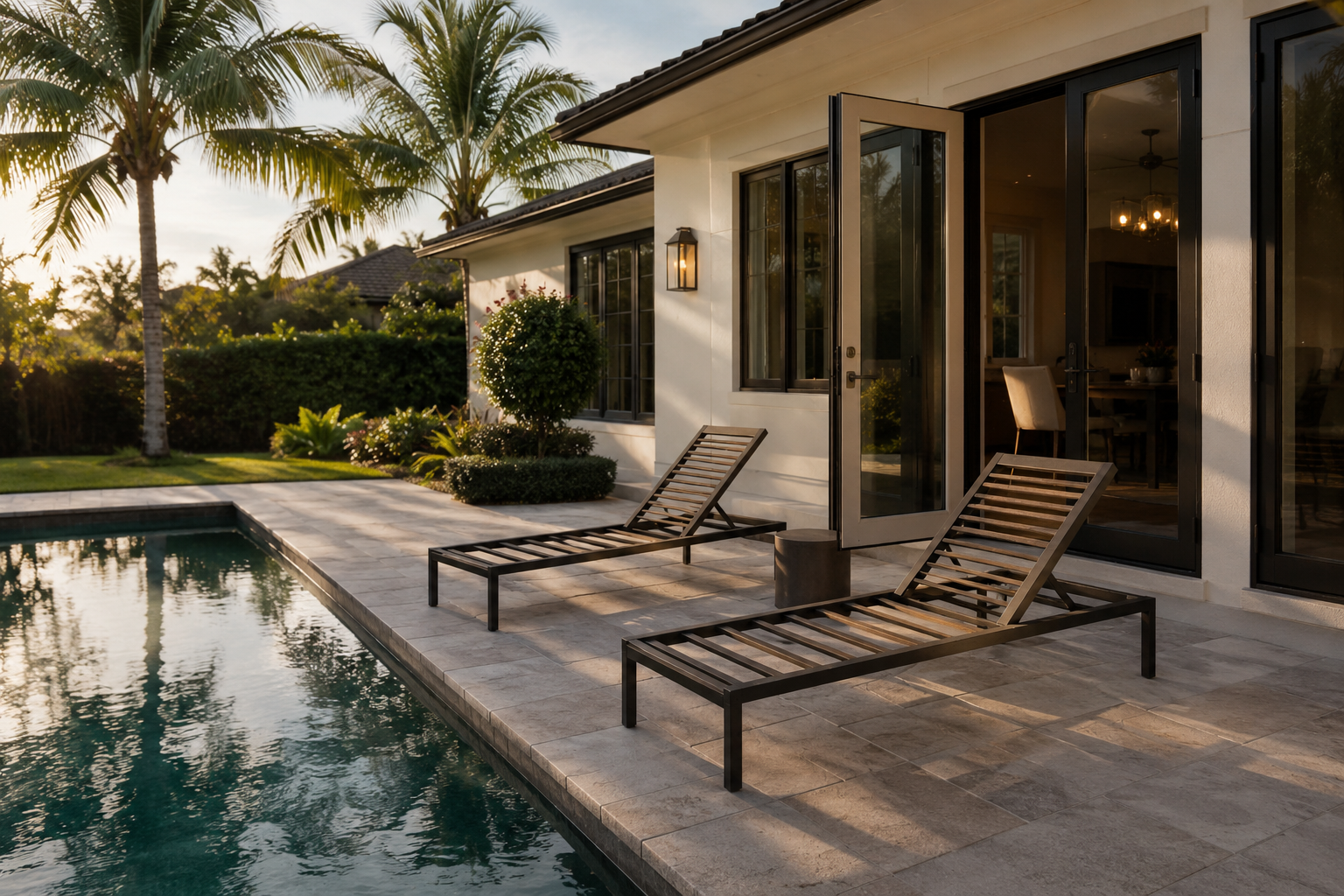
Sun-faded back patio in Palm Beach Gardens with still pool and empty lounge chairs in late afternoon light, suggesting ownership transition.

Is It Time to Move Into a Lower-Maintenance Home in South Florida?

Most South Florida homeowners do not wake up one morning and decide they are ready for a lower-maintenance home. The decision forms more quietly than that. It begins as a roof estimate that lands higher than expected. An insurance renewal that no longer feels temporary. A Saturday spent coordinating the pool company, the landscaper, the AC technician, and the person who is supposed to look at the screen enclosure before hurricane season begins again.

None of those moments, by itself, usually changes a homeowner's mind.

But together, over time, they change the relationship between the homeowner and the house.

That is the part many people miss. The question is not always whether the property is still valuable, livable, beautiful, or emotionally meaningful. In many cases, it is all of those things. The more important question is whether the home still gives back in proportion to what it now requires.

For many Palm Beach County homeowners, especially those who purchased years ago in Wellington, Royal Palm Beach, Boynton Beach, Lake Worth, Boca Raton, or nearby communities, the answer has started to shift. The home may still be strong on paper. The equity may be significant. The neighborhood may still be familiar. But the day-to-day ownership experience has changed. What once felt like stability may now feel like management. What once felt like pride may now feel like obligation.

That shift rarely announces itself as a real estate decision at first. It shows up as fatigue. It shows up as delay. It shows up as the quiet thought that the house now occupies more mental space than it should.

For homeowners considering what a lower-maintenance move might look like — including newer communities along the Palm Beach County to Port St. Lucie corridor — the real question is rarely, "Should I move?" It is usually more honest than that:

Has the ownership equation already changed, even if I have not fully admitted it yet?

The Ownership Friction Curve: Why the House Starts to Feel Different

One of the clearest patterns we see after decades of working with South Florida homeowners is that people rarely move because of one single problem. They move because the amount of friction around ownership gradually increases until the home no longer feels aligned with the life they are actually living.

That pattern can be understood as the Ownership Friction Curve.

Early in ownership, the effort feels justified. The yard, the pool, the extra rooms, the larger footprint, and the familiar neighborhood all feel connected to a season of life that makes sense. Maintenance is part of the bargain. Improvements feel like investments. Repairs feel like normal stewardship. Even large expenses can feel manageable because the home still serves the household in obvious ways.

But over time, the balance can change.

The house may not be used the same way. Children may be grown. Work patterns may have changed. Travel may matter more. Weekends may feel more valuable. Health, energy, time, and simplicity may carry more weight than they did when the home was purchased. Meanwhile, the property itself moves in the opposite direction. Systems age. Insurance costs rise. Vendors become harder to manage. Storm preparation becomes more demanding. The home requires more attention at the same moment the homeowner wants to give less of life back to the property.

That is the curve.

The home does not become wrong all at once. The effort-to-reward ratio changes gradually until the homeowner begins to feel that ownership has become too operational.

This is why many people struggle to name the issue clearly. They are not unhappy with the house in a simple way. They may still love parts of it. They may still feel attached to the street, the view, the layout, the memories, or the identity of having built a life there. But beneath that attachment, the ownership experience has become heavier.

That heaviness is not imaginary. In South Florida, it is often structural.

Why South Florida Makes Ownership Pressure More Intense

Owning a home in South Florida is different from owning in many other parts of the country. The climate alone changes the maintenance equation. Heat, humidity, salt air, heavy rain, tropical storm exposure, and year-round system usage create a level of wear that national maintenance timelines often understate.

Roofs age under intense sun and storm exposure. HVAC systems work harder because cooling is not seasonal here. Exterior paint, irrigation, pool equipment, screen enclosures, landscaping, and drainage all require sustained attention. A home in Palm Beach County does not simply sit passively between repairs. It is constantly responding to the environment.

Then there is insurance.

For many homeowners in Wellington, Royal Palm Beach, Boynton Beach, Lake Worth, and Boca Raton, insurance is no longer a quiet background expense. It has become one of the most emotionally charged parts of the ownership conversation. A renewal notice can change the feeling of the home even when nothing about the home itself has changed. The payment is higher. The coverage may be more complicated. The inspection requirements may feel more intrusive. The uncertainty becomes part of ownership.

Hurricane preparation adds another layer. It is not only the storm itself. It is the annual cycle surrounding the storm: trimming trees, checking shutters, reviewing generators, staging supplies, documenting property condition, watching forecasts, calling vendors, and wondering what will need attention afterward. For homeowners who have managed that cycle for many years, the burden is not only physical. It is mental.

That mental load matters.

It is the part of ownership that rarely appears on a spreadsheet. It does not show up in a mortgage calculation. It does not appear in a Zestimate, a tax bill, or a price-per-square-foot comparison. But it is present every time the homeowner thinks, "I need to handle that," before the day has even begun.

In South Florida, the cost of ownership is not only financial. It is operational.

The Day the House Quietly Changed Jobs

There is often a moment, even if the homeowner does not recognize it at the time, when the house quietly changes jobs.

At first, the home serves the owner. It provides space, stability, privacy, family rhythm, entertainment, and identity. The yard is worth it. The pool is worth it. The extra rooms are worth it. The repairs are part of maintaining something that still feels deeply connected to the life being lived inside it.

Then, slowly, the role reverses.

The homeowner begins serving the house.

The calendar starts to organize around vendors. The weekend starts with maintenance. The insurance renewal becomes an event. The roof, AC, pool heater, landscaping, irrigation, shutters, windows, and exterior repairs begin competing for attention. The property becomes less of a backdrop for life and more of a system that must be managed.

Nothing dramatic has to happen for this shift to be real.

The home can still be beautiful. It can still be valuable. It can still be full of history. It can still be the place where important chapters happened.

But if the home now requires more from you than it gives back to your current life, the relationship has changed.

That is the emotional core of many lower-maintenance moves. People do not always struggle to leave the house itself. They struggle to leave the version of life the house once represented. They remember when the property fit perfectly. They remember the season when the space, the yard, the neighborhood, and the responsibility all made sense.

But homes do not only need to be evaluated against the life that existed when they were purchased. They also need to be evaluated against the life being lived now.

That is where many South Florida homeowners begin to see the decision differently.

A question worth sitting with: If your current home had no maintenance cycle, no insurance uncertainty, no vendor coordination, no storm preparation, and no major systems approaching replacement, would it still feel like the right fit for how you actually want to live over the next five to ten years?

If the answer is not immediate, the ownership equation may already be shifting. Explore what a lower-maintenance move could look like from here.

The Ownership Pressure Stack: The Pattern Most Homeowners Recognize

Lower-maintenance moves rarely begin with a single trigger. They usually begin with a stack.

Each item in the stack may be manageable on its own. That is what makes the decision so difficult to name. A higher insurance renewal can be absorbed. A roof inspection can be scheduled. A landscaper can be replaced. Hurricane preparation can be handled again. A pool repair can be paid. Another vendor can be called.

But eventually, the homeowner stops evaluating each item separately and starts feeling the total weight of the pattern.

That is the Ownership Pressure Stack.

For many Palm Beach County homeowners, it includes some combination of the following:

  • Insurance premiums that have increased significantly, often more than once
  • A roof, HVAC system, water heater, pool system, or major appliance approaching replacement
  • Recurring vendor coordination that now occupies more time than expected
  • Hurricane preparation that feels more demanding each year
  • Landscaping, irrigation, exterior paint, or screen enclosure issues that never fully disappear
  • HOA increases, reserve concerns, or community maintenance questions
  • Unused rooms or outdoor spaces that no longer justify the upkeep
  • Equity that has grown substantially but remains locked inside the current property
  • A growing desire for simplicity that feels hard to admit because the current home is still "good"

The important point is not that every homeowner experiences every item. The important point is that the pressure usually becomes visible only after several of them accumulate together.

A homeowner may tolerate one or two friction points for years. But when the roof timeline, insurance renewal, AC age, storm preparation, vendor fatigue, and unused space all begin speaking at the same time, the conversation changes.

That is often when people begin searching for lower-maintenance homes, downsizing options, newer construction communities, or moves from Palm Beach County toward Port St. Lucie. But by the time that search begins, the decision is usually not as early as it appears.

The search is often confirmation.

The internal work has already started.

The Simplification Threshold: When the Current Home No Longer Matches the Next Chapter

There is another pattern that shows up repeatedly in simplify conversations: the homeowner is not necessarily trying to escape the current home. They are trying to align the next stage of life with a different ownership structure.

That point of recognition is the Simplification Threshold.

The Simplification Threshold is reached when the practical burden of the current home begins to outweigh the emotional comfort of staying exactly where you are.

This does not mean the homeowner stops caring about the home. In many cases, the opposite is true. The attachment is real. The memories are real. The pride of ownership is real. The financial strength of the property may also be real.

But another truth becomes harder to ignore: the home may have been right for a previous version of life and less right for the version that is forming now.

That is a difficult sentence for many people to say out loud.

It is especially difficult in South Florida, where long-term homeowners may be sitting on substantial equity, favorable memories, and a deep sense of familiarity. Selling can feel less like a transaction and more like an admission that a chapter has changed. That emotional reality deserves respect. It is one reason the decision often takes longer than the numbers suggest it should.

But the numbers still matter.

For homeowners who purchased fifteen, twenty, or thirty years ago, the current property may contain significant equity. That equity can sometimes be repositioned into a newer, lower-maintenance home with a different cost structure, a different lifestyle profile, and less operational pressure. For some, that means moving from Palm Beach County into newer communities along the Port St. Lucie corridor. For others, it may mean staying closer to Wellington, Lake Worth, Boynton Beach, Boca Raton, or Royal Palm Beach but choosing a home that better reflects how they live now.

The key is not the destination first.

The key is clarity.

What role should the next home play? Should it create less work? Reduce storm-related stress? Lower vendor coordination? Preserve equity? Improve monthly predictability? Create easier travel flexibility? Reduce unused space? Keep proximity to family while removing maintenance obligations?

Those are not only real estate questions. They are life design questions.

What Lower-Maintenance Living Actually Changes

Lower-maintenance living is often misunderstood as simply moving into a smaller home. That is too narrow.

A lower-maintenance home is not defined only by square footage. It is defined by how much less operational friction it creates.

For some homeowners, that may mean a smaller single-family home. For others, it may mean newer construction with updated systems. For others, it may mean a managed community where landscaping, exterior maintenance, or certain amenities are handled through the HOA. For others, it may mean a similar-sized home on a smaller lot with less exterior responsibility. In some cases, homeowners move into a home that is not dramatically smaller at all — but the ownership experience is dramatically lighter.

That distinction matters because many people resist the word "downsizing." They hear it as loss. Less space. Less identity. Less independence. Less status. Less of the life they built.

But the real opportunity is not always downsizing.

It is right-sizing the ownership experience.

A newer home may push major system replacements further into the future. Updated building standards may improve insurance conversations. Smaller lots may reduce landscaping complexity. Managed communities may remove recurring vendor coordination. Newer roofs, windows, HVAC systems, plumbing, electrical components, and appliances can create a different sense of predictability. Community amenities may replace private maintenance obligations. The homeowner may still enjoy outdoor living, privacy, comfort, and space — without carrying the same operational load.

For many South Florida homeowners, the most meaningful change is not visible in listing photos.

It is the absence of the old list.

The call that does not have to be made. The vendor that does not have to be chased. The Saturday that does not begin with a repair. The storm season preparation that feels less complicated. The insurance conversation that becomes more manageable. The background awareness that something is always pending begins to quiet down.

That is why many people who make this move describe the first year in a lower-maintenance home not as a dramatic lifestyle upgrade, but as a gradual realization.

They did not fully understand how much energy the old home was taking until it stopped taking it.

Why the Equity Conversation Is Often Clear Before the Emotional Decision Is

In many simplify conversations, the financial picture is easier to understand than the emotional one.

A homeowner may know the current home has appreciated. They may know demand remains strong. They may know the property could sell well. They may know a lower-maintenance move is financially possible. They may even know, quietly, that the current ownership experience has become heavier than they want it to be.

And still, they hesitate.

That hesitation is not irrational. It is normal.

A home is not only an asset. It is a container for identity, memory, routine, and continuity. The decision to sell can feel like it asks more than a financial question. It can feel like it asks whether a season of life is truly complete.

This is why many homeowners spend months or years saying, "We're not quite ready," even when the numbers suggest the move could make sense. What they often mean is not that the finances are unclear. What they mean is that the emotional permission has not caught up with the practical reality.

That gap is important.

It is the space between knowing and acting.

In South Florida, that gap can become expensive because the current property does not stop aging while the decision waits. Insurance may continue rising. Major systems may move closer to replacement. Roof timelines may become more urgent. Deferred maintenance may become more visible to buyers. The next home may become more expensive. The opportunity to reposition equity may change.

This does not mean every homeowner should rush. A rushed decision is rarely the right decision.

But waiting should be conscious.

There is a difference between waiting because staying is still the right choice and waiting because the decision feels emotionally difficult to name.

That is where a clear planning conversation can help. Not a sales conversation. A planning conversation. What is the home worth now? What would it likely cost to stay another year? What major systems are approaching? What does the insurance picture look like? What would a realistic lower-maintenance replacement actually cost? What communities would preserve the lifestyle pieces that matter most while reducing the ownership burden?

Clarity does not force a decision.

It removes the fog around one.

Why Palm Beach County Homeowners Are Looking North

For many homeowners in Palm Beach County, the lower-maintenance conversation increasingly includes the corridor north toward Port St. Lucie. That does not mean every homeowner belongs there. It does mean the corridor has become part of the strategic conversation for people who want newer housing, different cost structures, and a lower-friction ownership experience without leaving South Florida entirely.

The appeal is not only price.

For many homeowners, the appeal is replacement value. Newer communities can offer updated construction, more predictable system lifecycles, different HOA structures, newer roofs, modern layouts, and community designs that reduce the burden of private maintenance. The move may preserve many of the lifestyle features people value — outdoor living, community amenities, access to coastal areas, family proximity, and South Florida weather — while changing the ownership experience attached to those features.

That is why the Palm Beach County to Port St. Lucie conversation should not be reduced to "moving farther north."

It is more accurately a conversation about trading one kind of ownership structure for another.

For a Wellington homeowner, that may mean moving from a larger older home with a pool, mature landscaping, and aging systems into a newer community with fewer private maintenance obligations. For a Royal Palm Beach homeowner, it may mean unlocking equity from a long-held property and moving into a home with a more predictable cost horizon. For a Boynton Beach or Lake Worth homeowner, it may mean reducing the burden of insurance uncertainty, roof age, and exterior upkeep. For a Boca Raton homeowner, it may mean recognizing that the value of the current home creates choices that did not exist a decade ago.

The right move depends on the person, the property, the equity position, the timing, and the lifestyle goal.

But the underlying question is consistent:

Can the next home preserve what you value while removing what has become too heavy?

The Maintenance-to-Freedom Ratio

One of the most useful ways to think about this decision is through the Maintenance-to-Freedom Ratio.

Every home asks for something. The question is whether what it asks for still feels proportionate to what it gives back.

A larger home may be worth the work when the space is actively used, the lifestyle fits, and the responsibilities feel connected to a clear purpose. But when the same home requires more time, more coordination, more money, and more mental attention while fewer parts of the property are meaningfully used, the ratio begins to shift.

That shift is often subtle at first.

The guest rooms are used less. The yard feels larger than necessary. The pool requires attention even when it is not used much. The garage stores things that no longer matter. The upstairs rooms are entered less often. The maintenance schedule remains the same or increases, even as the practical benefit decreases.

That is when the home begins to feel inefficient emotionally, not just financially.

A lower-maintenance move improves the ratio when it reduces the work required to sustain daily life while preserving the parts of homeownership that still matter. The objective is not to eliminate responsibility entirely. That is not realistic. The objective is to make responsibility feel proportionate again.

For many homeowners, that is the real definition of simplifying.

Not giving up.

Not stepping down.

Not shrinking life.

Reducing the amount of life consumed by managing the property.

How to Know Whether the Decision Is Becoming Real

Most homeowners expect the decision to simplify to feel obvious when it arrives. In practice, it often feels more like a series of small signals that become harder to ignore.

You may notice that conversations about the house have changed. Instead of talking about improvements with excitement, you talk about repairs with fatigue. Instead of imagining how to use the space, you think about what it takes to maintain it. Instead of feeling energized by the property, you feel aware of what it will ask from you next.

You may also notice that the idea of moving no longer feels impossible. It may still feel complicated. It may still feel emotional. But it no longer feels absurd. That shift matters.

For many homeowners, the decision becomes real when they stop asking, "Could we stay?" and start asking, "What would staying actually cost us?"

That cost is not only financial.

It may include another year of insurance increases. Another year closer to a roof replacement. Another hurricane season. Another round of vendor coordination. Another year of unused space. Another year of equity remaining inactive. Another year of weekends shaped by the property instead of by the life the homeowner wants next.

When viewed honestly, staying is not always the neutral choice. Sometimes staying is an active decision to continue carrying the same structure, the same risk, the same maintenance cycle, and the same emotional weight.

That does not make staying wrong.

It simply means staying deserves the same level of analysis as moving.

What This Means for Buyers and Sellers in South Florida

For sellers in South Florida, especially long-term homeowners in Palm Beach County, the lower-maintenance conversation is not only about selling high. It is about understanding what the current home is still costing — financially, operationally, and emotionally — and whether the equity inside that property could serve the next chapter more effectively somewhere else.

The strongest decisions usually begin with a clear view of three things: the current home's realistic market value, the likely cost of staying another one to three years, and the available lower-maintenance alternatives that would actually fit the homeowner's life. Without those three pieces, the decision remains abstract. With them, it becomes easier to see whether the current home still makes sense.

For buyers, especially those coming from larger or older homes, the lesson is equally important. The right lower-maintenance home is not simply the newest home or the smallest home. It is the home whose structure, systems, location, community, monthly cost, and responsibility profile align with the way life is actually going to be lived.

That means evaluating more than price and square footage. It means looking at roof age, insurance profile, HOA structure, exterior maintenance responsibilities, replacement timelines, commute patterns, family proximity, amenities, and the practical rhythm of daily life.

A lower-maintenance home should not merely be easier to buy.

It should be easier to live in.


Frequently Asked Questions About Moving Into a Lower-Maintenance Home in South Florida

How do I know if my current home has become high-maintenance by South Florida standards?

The clearest sign is not one individual expense. It is the accumulation of responsibility. If you are managing multiple recurring vendors, facing higher insurance renewals, watching major systems approach replacement, preparing heavily each hurricane season, and using less of the home than you once did, the property may have become high-maintenance relative to your current life. In South Florida, some maintenance pressure is normal. The more important question is whether the total burden still feels proportionate to what the home gives back.

Is moving into a lower-maintenance home the same thing as downsizing?

No. Downsizing usually refers to reducing square footage. Lower-maintenance living refers to reducing ownership friction. Some homeowners move into smaller homes, but others move into similar-sized homes with newer systems, smaller lots, managed exterior responsibilities, better insurance profiles, or community structures that reduce day-to-day maintenance. The goal is not necessarily less space. The goal is less operational weight.

Why are Palm Beach County homeowners considering Port St. Lucie for lower-maintenance living?

Many Palm Beach County homeowners consider Port St. Lucie because newer communities may offer updated construction, different price points, newer systems, modern layouts, and lower-friction ownership structures. For some homeowners, the move allows them to reposition equity from an older Palm Beach County property into a home that better fits the next stage of life. It is not the right answer for everyone, but it has become an important option for homeowners who want to remain in South Florida while reducing maintenance pressure.


Many homeowners assume they will know exactly when it is time to simplify. They expect a clear moment when the decision announces itself.

That is rarely how it happens.

More often, the decision forms quietly. The insurance renewal creates a pause. The roof estimate feels heavier than expected. The AC replacement moves from future concern to present reality. The vendor schedule becomes exhausting. The rooms feel less used. The storm preparation cycle returns again. The house still looks familiar, but the relationship has changed.

Eventually, the question is no longer whether the home is good.

The question is whether it is still the right structure for the life you want next.

For many South Florida homeowners, that is the beginning of the simplify conversation. Not panic. Not pressure. Not a rushed decision. Just clarity.

If you are beginning to recognize your own situation in this pattern, the next step is not necessarily to sell. The next step is to understand your options with real numbers and a realistic view of what lower-maintenance living could actually look like from where you are now.

Start with the Palm Beach County to Port St. Lucie transition strategy, explore what a lower-maintenance move could look like, or find out what your current Palm Beach County home may be worth in today's market.
How to Know Whether the Decision Is Becoming Real

Most homeowners expect the decision to simplify to feel obvious when it arrives. In practice, it often feels more like a series of small signals that become harder to ignore.

You may notice that conversations about the house have changed. Instead of talking about improvements with excitement, you talk about repairs with fatigue. Instead of imagining how to use the space, you think about what it takes to maintain it. Instead of feeling energized by the property, you feel aware of what it will ask from you next.

You may also notice that the idea of moving no longer feels impossible. It may still feel complicated. It may still feel emotional. But it no longer feels absurd. That shift matters.

For many homeowners, the decision becomes real when they stop asking, "Could we stay?" and start asking, "What would staying actually cost us?"

That cost is not only financial.

It may include another year of insurance increases. Another year closer to a roof replacement. Another hurricane season. Another round of vendor coordination. Another year of unused space. Another year of equity remaining inactive. Another year of weekends shaped by the property instead of by the life the homeowner wants next.

When viewed honestly, staying is not always the neutral choice. Sometimes staying is an active decision to continue carrying the same structure, the same risk, the same maintenance cycle, and the same emotional weight.

That does not make staying wrong.

It simply means staying deserves the same level of analysis as moving.

What This Means for Buyers and Sellers in South Florida

For sellers in South Florida, especially long-term homeowners in Palm Beach County, the lower-maintenance conversation is not only about selling high. It is about understanding what the current home is still costing — financially, operationally, and emotionally — and whether the equity inside that property could serve the next chapter more effectively somewhere else.

The strongest decisions usually begin with a clear view of three things: the current home's realistic market value, the likely cost of staying another one to three years, and the available lower-maintenance alternatives that would actually fit the homeowner's life. Without those three pieces, the decision remains abstract. With them, it becomes easier to see whether the current home still makes sense.

For buyers, especially those coming from larger or older homes, the lesson is equally important. The right lower-maintenance home is not simply the newest home or the smallest home. It is the home whose structure, systems, location, community, monthly cost, and responsibility profile align with the way life is actually going to be lived.

That means evaluating more than price and square footage. It means looking at roof age, insurance profile, HOA structure, exterior maintenance responsibilities, replacement timelines, commute patterns, family proximity, amenities, and the practical rhythm of daily life.

A lower-maintenance home should not merely be easier to buy.

It should be easier to live in.


Frequently Asked Questions About Moving Into a Lower-Maintenance Home in South Florida

How do I know if my current home has become high-maintenance by South Florida standards?

The clearest sign is not one individual expense. It is the accumulation of responsibility. If you are managing multiple recurring vendors, facing higher insurance renewals, watching major systems approach replacement, preparing heavily each hurricane season, and using less of the home than you once did, the property may have become high-maintenance relative to your current life. In South Florida, some maintenance pressure is normal. The more important question is whether the total burden still feels proportionate to what the home gives back.

Is moving into a lower-maintenance home the same thing as downsizing?

No. Downsizing usually refers to reducing square footage. Lower-maintenance living refers to reducing ownership friction. Some homeowners move into smaller homes, but others move into similar-sized homes with newer systems, smaller lots, managed exterior responsibilities, better insurance profiles, or community structures that reduce day-to-day maintenance. The goal is not necessarily less space. The goal is less operational weight.

Why are Palm Beach County homeowners considering Port St. Lucie for lower-maintenance living?

Many Palm Beach County homeowners consider Port St. Lucie because newer communities may offer updated construction, different price points, newer systems, modern layouts, and lower-friction ownership structures. For some homeowners, the move allows them to reposition equity from an older Palm Beach County property into a home that better fits the next stage of life. It is not the right answer for everyone, but it has become an important option for homeowners who want to remain in South Florida while reducing maintenance pressure.


Many homeowners assume they will know exactly when it is time to simplify. They expect a clear moment when the decision announces itself.

That is rarely how it happens.

More often, the decision forms quietly. The insurance renewal creates a pause. The roof estimate feels heavier than expected. The AC replacement moves from future concern to present reality. The vendor schedule becomes exhausting. The rooms feel less used. The storm preparation cycle returns again. The house still looks familiar, but the relationship has changed.

Eventually, the question is no longer whether the home is good.

The question is whether it is still the right structure for the life you want next.

For many South Florida homeowners, that is the beginning of the simplify conversation. Not panic. Not pressure. Not a rushed decision. Just clarity.

If you are beginning to recognize your own situation in this pattern, the next step is not necessarily to sell. The next step is to understand your options with real numbers and a realistic view of what lower-maintenance living could actually look like from where you are now.

Start with the Palm Beach County to Port St. Lucie transition strategy, explore what a lower-maintenance move could look like, or find out what your current Palm Beach County home may be worth in today's market.
June 16, 2026

Delray Beach FL Real Estate Lifestyle and Ownership Fit

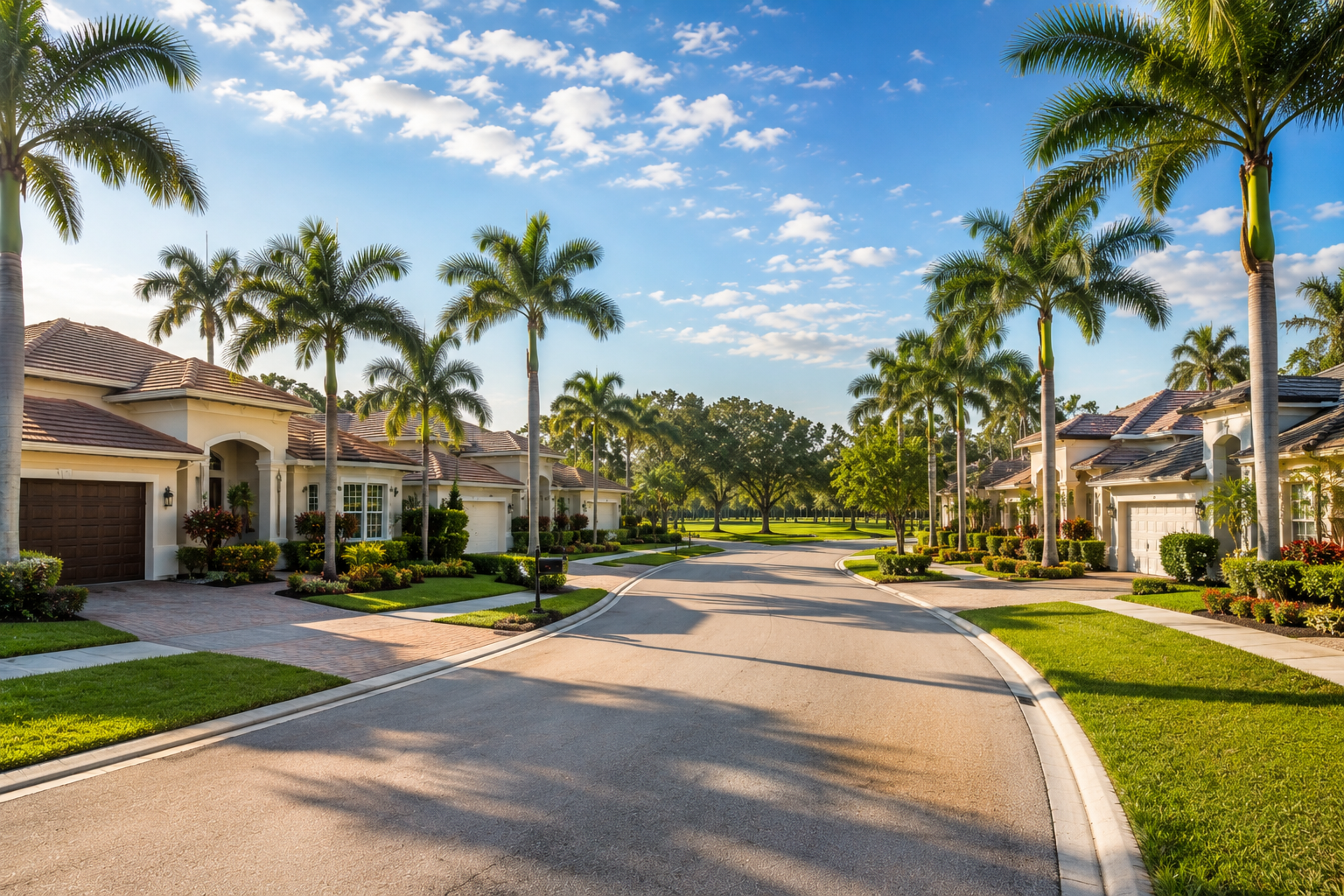
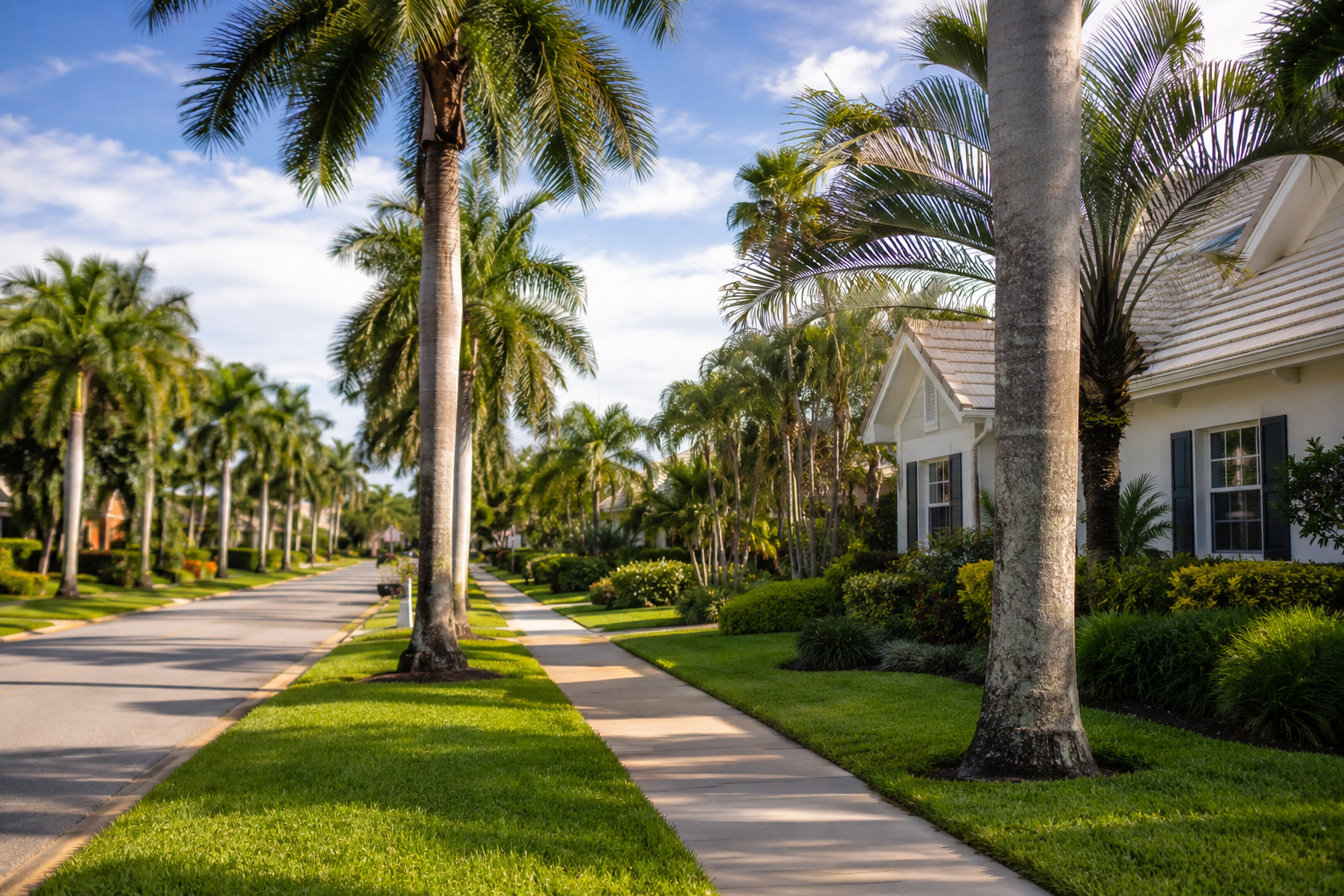
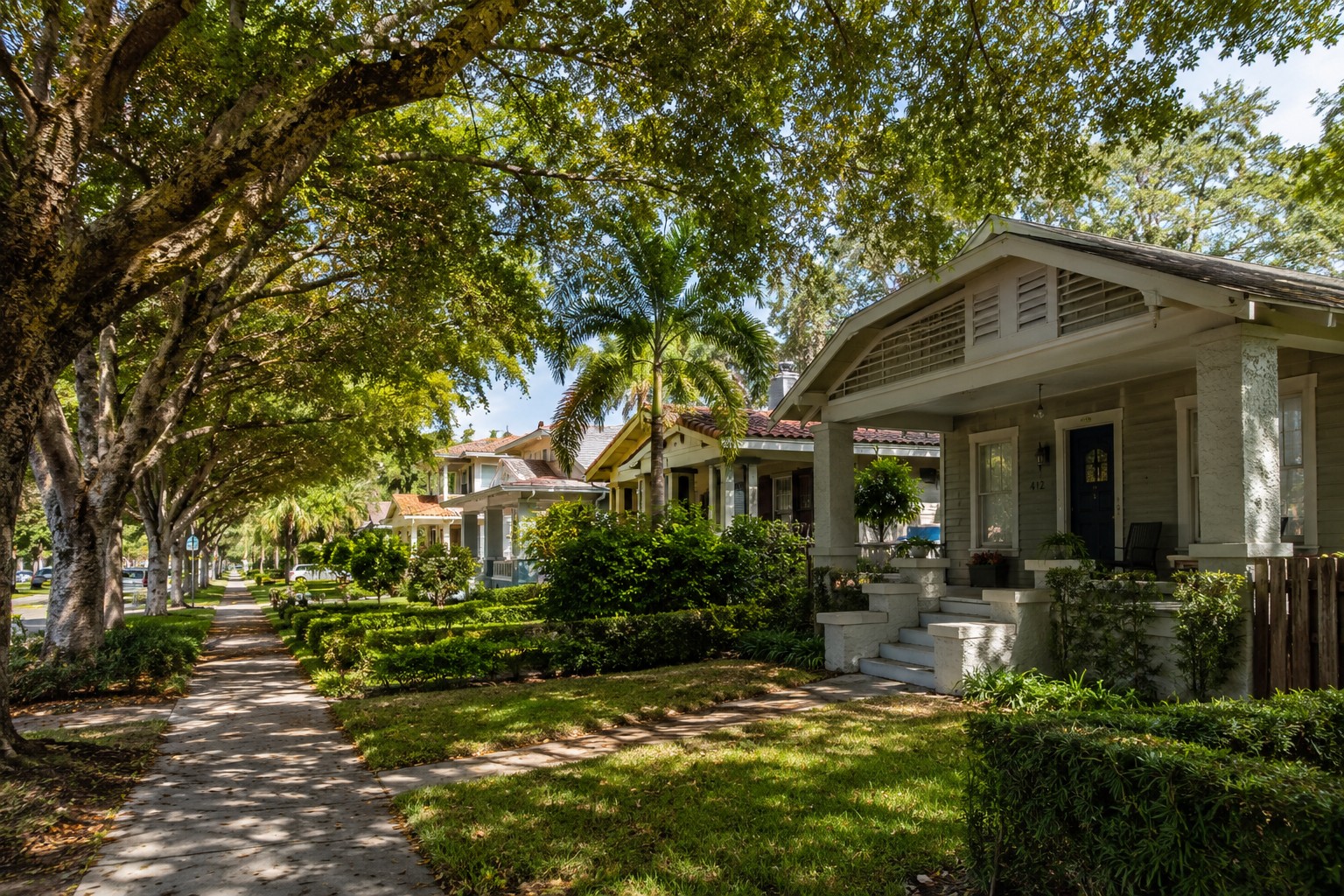
Photorealistic residential neighborhood scene representing everyday life in Delray Beach, Florida. The image features mature royal palms, attractive single-family homes, landscaped yards, pedestrian-friendly sidewalks, and the relaxed residential atmosphere commonly found throughout Palm Beach County.

Delray Beach FL Real Estate and the Difference Between Visiting a City and Living in One

People rarely move to Delray Beach because they dislike it.

The more interesting question is why some people move to Delray Beach and remain there for decades while others eventually discover they were attracted to an idea that fit them better on vacation than it did in everyday life.

That distinction matters because Delray Beach FL real estate is often evaluated through a lens that naturally favors first impressions. Buyers visit Atlantic Avenue. They spend an afternoon near the beach. They experience the city during a weekend getaway, a relocation trip, or a seasonal visit when South Florida is operating at its most attractive.

Those impressions are not inaccurate.

They are simply incomplete.

After helping buyers and sellers throughout Palm Beach County for more than three decades, one pattern appears often enough to become predictable. The people who are happiest with their Delray Beach decision are usually not the people who fell in love with Delray Beach itself. They are the people who correctly understood how Delray Beach would fit the routine they were already living.

That sounds like a subtle difference.

In practice, it explains a surprising amount of buyer satisfaction, seller success, and long-term ownership confidence.

Delray Beach occupies a unique position within Palm Beach County. It attracts retirees, working professionals, seasonal residents, second-home owners, downsizers, relocating families, and longtime South Florida residents looking for a different lifestyle. Yet those groups are often seeking completely different things from the same city.

Understanding those differences is usually more valuable than understanding the city itself.

The Delray Beach Misconception That Appears Most Often

One misconception appears repeatedly among relocating buyers.

People believe they are choosing between houses.

In reality, they are choosing between routines.

The house is simply the physical location where that routine unfolds.

This becomes especially visible in Delray Beach because the city offers multiple versions of itself.

A buyer looking at a property near Atlantic Avenue may be imagining a life that includes regular walks downtown, spontaneous dinners, beach access, local events, and a stronger connection to activity. Another buyer looking at a property farther west may be imagining something completely different: quieter streets, larger living spaces, more structured communities, easier parking, and a more predictable residential environment.

Both buyers are purchasing Delray Beach.

Both buyers may be purchasing homes at similar price points.

Yet they are purchasing entirely different ownership experiences.

One reason Delray Beach creates comparison fatigue is that many people do not realize how many different lifestyles exist within the same municipal boundaries.

The city feels cohesive from the outside.

The ownership experience often feels very different from neighborhood to neighborhood.

That difference rarely becomes obvious during a showing.

It becomes obvious on an ordinary Tuesday six months after closing.

That is when buyers discover whether they chose a property that complements their routine or one that quietly fights against it.

Why Atlantic Avenue Influences Ownership Behavior More Than Most Buyers Expect

Most discussions about Delray Beach focus on Atlantic Avenue as a destination.

What often goes unexamined is how Atlantic Avenue changes the behavior of people who live nearby.

After years of watching buyers settle into Delray Beach, a recurring pattern becomes clear.

Many people overestimate or underestimate how often proximity influences participation.

Some buyers arrive believing downtown will become part of everyday life.

They imagine frequent dinners, coffee meetings, beach walks, evening outings, and regular interaction with the city's social core.

For many residents, that is exactly what happens.

The convenience lowers friction.

When activity is nearby, activity happens more often.

The city becomes integrated into daily life rather than reserved for special occasions.

But another pattern emerges as well.

Some buyers discover that once work schedules return, guests leave, and everyday responsibilities resume, their actual routine looks different than their imagined one.

Downtown remains attractive.

It remains valuable.

It simply becomes something they use occasionally rather than constantly.

That realization does not necessarily create regret.

It does, however, change how people evaluate the premium they paid to be near it.

The opposite pattern appears just as frequently.

Buyers who choose locations farther away often assume they will drive downtown whenever they want to enjoy it.

Then life intervenes.

The drive is not long.

The parking is manageable.

Nothing becomes difficult.

Yet the additional effort creates just enough friction to reduce spontaneity.

The result is a lifestyle that gets used less frequently than expected.

This is one reason location decisions in Delray Beach can be difficult to evaluate through simple distance measurements.

The value of proximity is often measured less by minutes and more by behavior.

People consistently underestimate how strongly convenience influences habits.

East Delray and West Delray Are Not Competing Choices

Buyers frequently approach East Delray versus West Delray as though one side is objectively superior.

That framing usually leads to confusion.

The more useful question is which side aligns with the buyer's priorities.

East Delray often attracts buyers who want access.

Access to the beach.

Access to downtown.

Access to a recognizable city center.

Access to the social and recreational opportunities that drew them to Delray Beach in the first place.

That access typically comes with tradeoffs.

Housing stock may be older.

Lots may be smaller.

Parking may require more consideration.

Seasonal activity may be more noticeable.

The city feels alive.

Not everyone wants that level of engagement every day.

West Delray often appeals to a different temperament.

Residents may prioritize residential calm, community amenities, golf environments, gated neighborhoods, or simply a lifestyle that feels slightly more removed from the activity center.

Interestingly, some of the happiest long-term Delray Beach residents live farther from the areas that first attracted them to the city.

They enjoy knowing Atlantic Avenue exists.

They enjoy using it.

They simply do not require it outside their front door.

One pattern that emerges repeatedly is that buyers who understand this distinction before purchasing usually make stronger decisions than buyers who attempt to maximize every variable simultaneously.

Delray Beach rewards prioritization.

The city becomes harder to navigate when buyers expect beach proximity, downtown convenience, residential quiet, larger lots, lower maintenance, privacy, and value optimization to all occur in the same location.

Those goals often pull in different directions.

The most successful buyers decide which matter most.

The Difference Between Experiencing Delray Beach and Owning in Delray Beach

Another recurring pattern involves the difference between experiencing a city and owning property within it.

Visitors naturally focus on what they can see.

Owners eventually focus on what they must manage.

Those are not the same things.

Delray Beach ownership can involve considerations that receive little attention during the excitement of a home search.

Insurance requirements.

Association structures.

Building reserves.

Property maintenance.

Age of major systems.

Seasonal weather exposure.

Long-term upkeep costs.

These factors rarely determine whether a buyer falls in love with a property.

They often determine whether a buyer remains happy with the decision years later.

One observation that surfaces repeatedly among longtime homeowners is that ownership satisfaction tends to increase when expectations are realistic from the beginning.

People rarely become frustrated by obligations they anticipated.

They become frustrated by obligations they never considered.

That is why ownership clarity often matters as much as property selection itself.

Understanding what life looks like after closing creates better outcomes than focusing exclusively on what the property looks like before closing.

Why Some People Never Leave Delray Beach

When buyers first begin comparing communities throughout Palm Beach County, they often focus on features.

People who stay in Delray Beach for twenty years or more rarely talk about features.

They talk about familiarity.

They talk about convenience.

They talk about how the city fits their life without requiring constant adjustment.

One pattern becomes apparent after watching long-term ownership decisions unfold across South Florida. People often move because they are attracted to a place. They stay because that place makes everyday life easier.

Delray Beach has a tendency to create that outcome for certain personalities.

The city provides enough activity to avoid feeling isolated. It provides enough residential stability to avoid feeling chaotic. Residents can participate in the city when they want to and step away from it when they do not.

That flexibility becomes increasingly valuable over time.

Many longtime residents describe using Delray Beach differently than they did when they first arrived. The restaurants they frequent change. Their favorite parts of the city evolve. The activities that originally attracted them become less important. Yet they remain because the city continues to support the next stage of life without requiring a complete lifestyle reset.

That adaptability may be one of Delray Beach's least discussed strengths.

The city often grows with its residents.

People who initially valued nightlife later appreciate convenience. People who once focused on beach access become more interested in walkability, social connections, or maintenance simplicity. People who arrived for one reason often discover entirely different reasons to stay.

That evolution is difficult to see during a home search.

It becomes visible only after years of ownership.

Why Some Owners Eventually Decide Delray Beach Is Not the Right Fit

The opposite pattern deserves equal attention.

Not everyone who moves to Delray Beach stays.

Understanding why is often just as useful as understanding why people remain.

One recurring reason is expectation mismatch.

Buyers occasionally purchase a version of Delray Beach that aligns with an imagined lifestyle rather than an actual one.

They may prioritize proximity to activity they rarely use. They may underestimate how much privacy matters to them. They may discover that seasonal traffic affects them more than expected. They may realize they wanted a quieter environment, larger property, simpler ownership structure, or different pace of life.

In many cases, the city itself is not the problem.

The mismatch exists between expectations and reality.

Another pattern appears among buyers who arrive from highly structured communities. Delray Beach has personality. It has variation. Neighborhoods differ. Housing stock differs. Ownership experiences differ. Some residents appreciate that character. Others eventually prefer the consistency found in communities that operate with fewer variables.

There are also homeowners who discover that their priorities changed.

A city that felt energizing at one stage of life may feel busier at another. A location that once felt ideal may become less important as routines evolve. A property that seemed manageable can eventually feel larger or more demanding than desired.

These outcomes are normal.

They are reminders that real estate decisions are rarely permanent. They are reflections of how life changes over time.

The strongest decisions account for that possibility from the beginning.

The Seasonal Ownership Reality Many Buyers Underestimate

One of the more predictable observations among South Florida homeowners involves the difference between seasonal ownership and full-time ownership.

People often assume the distinction is primarily about how frequently they occupy the property.

In practice, the distinction is usually about how they think about ownership.

Seasonal owners tend to value simplicity.

They want properties that can remain unattended without creating constant concern. They appreciate lock-and-leave convenience, manageable maintenance obligations, predictable expenses, and easy access when they are in town.

Full-time residents often evaluate properties differently.

They spend more time considering daily errands, neighborhood rhythm, traffic patterns, service providers, maintenance requirements, insurance, and long-term livability.

Both groups purchase property in Delray Beach.

Both groups can be extremely satisfied.

The challenge occurs when buyers evaluate homes using the wrong framework.

One recurring pattern involves second-home buyers focusing heavily on vacation experiences while underestimating ownership realities. Another involves full-time residents prioritizing occasional conveniences while overlooking the factors that will affect them every week.

Delray Beach supports both lifestyles exceptionally well.

The important question is understanding which lifestyle is actually being purchased.

Golf Communities, Downtown Buyers, and the Migration Patterns That Repeat

Certain buyer movements occur often enough throughout Palm Beach County that they become recognizable.

One involves residents leaving golf-oriented communities in search of greater flexibility.

Some homeowners eventually discover they enjoy having access to golf more than having their lifestyle organized around it. They begin seeking communities that provide activity options without centering daily life around a single recreational environment.

Delray Beach often becomes part of that conversation.

Another pattern moves in the opposite direction.

Residents who initially embraced downtown proximity sometimes decide they want more privacy, more space, more residential calm, or a stronger community structure. They remain in Palm Beach County but transition toward communities that feel less active and more predictable.

Neither movement represents a better decision.

Both reflect evolving priorities.

What makes Delray Beach unique is that it frequently sits in the middle of these transitions.

The city attracts people seeking more engagement while also serving as a departure point for those seeking something quieter.

That position creates a remarkably diverse ownership base.

Retirees, professionals, seasonal residents, entrepreneurs, downsizers, and second-home owners often find themselves sharing the same city for entirely different reasons.

Understanding which group a buyer naturally belongs to usually clarifies the decision more effectively than analyzing property features alone.

Delray Beach, Boca Raton, and Boynton Beach Are Solving Different Problems

One of the most common comparison exercises throughout South Palm Beach County involves Delray Beach, Boca Raton, and Boynton Beach.

These comparisons are often framed around pricing, amenities, or location.

The more useful comparison focuses on behavior.

Boca Raton frequently appeals to buyers seeking structure, predictability, institutional strength, and a highly polished environment. Many residents appreciate the consistency that comes with that identity.

Delray Beach often attracts people looking for something slightly different.

The city tends to feel more expressive, more personality-driven, and more centered around a visible downtown culture. Residents frequently describe a stronger sense of local identity and participation.

Boynton Beach enters the conversation when buyers prioritize value, accessibility, and practical ownership considerations. For some households, the ability to obtain more space or reduce acquisition costs outweighs the lifestyle distinctions that Delray Beach provides.

The mistake is assuming these cities compete directly.

In many cases they are solving different problems.

A buyer choosing Delray Beach over Boca Raton is often making a lifestyle decision rather than a financial one. A buyer choosing Boynton Beach over Delray Beach may be prioritizing value rather than identity. A buyer choosing Boca may be prioritizing predictability over atmosphere.

Understanding which problem a city solves is often more useful than comparing amenities.

What This Means for Buyers and Sellers in South Florida

For buyers, Delray Beach rewards self-awareness.

The city offers enough variety that nearly every buyer can find a version of Delray Beach they appreciate. The challenge is identifying which version aligns with the way they actually live.

One of the strongest patterns observed over time is that buyers who make decisions based on routine generally outperform buyers who make decisions based on excitement.

Excitement is important.

It often initiates the search.

Routine determines whether the decision remains satisfying years later.

The buyers who tend to be happiest ask practical questions.

How often will I use downtown?

How much maintenance do I actually want?

How important is walkability?

How much privacy do I need?

How often will I host guests?

What parts of my current routine am I trying to improve?

Those questions usually produce better outcomes than asking which neighborhood is hottest or which property seems most exciting.

For sellers, the implications are equally important.

Successful positioning in Delray Beach is rarely about promoting the city in broad terms. Buyers already know the city is desirable.

The stronger strategy is helping buyers understand who the property fits.

A downtown-adjacent property attracts a different buyer than a western gated-community residence. A seasonal condominium solves different problems than a full-time single-family home. A renovated coastal property creates a different ownership experience than an established neighborhood residence farther inland.

The more clearly those differences are communicated, the easier it becomes for buyers to recognize themselves in the property.

That clarity reduces hesitation.

It reduces uncertainty.

Most importantly, it helps align expectations with reality before the transaction occurs.

That alignment is often the foundation of long-term satisfaction.

Long-Term Livability Comes From Matching the City to the Season of Life

One observation becomes increasingly clear when looking at long-term ownership patterns throughout Delray Beach.

The people who remain happiest with their decision are usually not the people who found the perfect property.

They are the people who found a property that continued to fit as life changed.

Real estate decisions often begin with current needs.

Long-term satisfaction usually depends on future flexibility.

A professional purchasing a home in their forties may eventually evaluate the city differently in their sixties. A seasonal resident may become a full-time resident. A family home may become too large after children move away. A couple who once prioritized activity may later prioritize simplicity.

Delray Beach tends to perform well across these transitions because it offers multiple ownership paths within the same city.

Residents can move closer to downtown, farther from downtown, into a condominium, into a single-family residence, into a gated community, or into a lower-maintenance environment without necessarily leaving the community they have become attached to.

That flexibility explains why many owners remain connected to Delray Beach even as their housing needs evolve.

The city often allows people to change properties without completely changing lifestyle.

Not every community provides that option.

When buyers think beyond the initial purchase and consider how the city may fit future stages of life, they tend to make stronger decisions from the beginning.

The Real Question Behind Delray Beach FL Real Estate

The most useful question is rarely whether Delray Beach is a good place to live.

For many people, it clearly is.

The more important question is whether Delray Beach supports the specific life someone is trying to build.

That distinction explains why two buyers can tour the same neighborhoods, visit the same restaurants, walk the same streets, and reach completely different conclusions.

Each person arrives with different priorities.

Each person values different tradeoffs.

Each person defines convenience, privacy, activity, community, maintenance, and quality of life differently.

Delray Beach succeeds because it accommodates many of those priorities simultaneously.

The challenge is understanding which version of the city aligns with the buyer rather than assuming every version will.

After decades of helping buyers and sellers throughout Palm Beach County, one pattern continues to repeat.

The strongest real estate decisions occur when people stop asking which city is best and start asking which city best supports the life they actually live.

That is where meaningful clarity usually begins.

Frequently Asked Questions About Living in Delray Beach FL

Do most people move to Delray Beach for the beach or for the lifestyle?

While beach access attracts many buyers initially, long-term residents often describe lifestyle convenience as the reason they remain. Delray Beach provides access to the beach, downtown activity, dining, social opportunities, and residential neighborhoods within a relatively compact area. Buyers who stay happiest over time are usually those whose daily routines align with the city's overall rhythm rather than those focused solely on one feature.

What is the biggest mistake buyers make when choosing Delray Beach?

A common mistake is evaluating Delray Beach based on a visit rather than a routine. Buyers sometimes focus on what feels exciting during a weekend trip without fully considering how they will actually use the city after moving. The strongest decisions typically come from understanding daily habits, desired lifestyle patterns, maintenance expectations, and how often certain amenities will realistically be used.

Keep Exploring South Florida Real Estate

If you're comparing communities, evaluating lifestyle tradeoffs, or trying to better understand how different parts of South Florida align with your long-term goals, reviewing additional local resources can help create clearer perspective.


About the Authors

Chris and Sue Kull are South Florida real estate professionals with more than three decades of experience helping buyers, sellers, and property owners navigate real estate decisions throughout Palm Beach County and surrounding communities.


June 12, 2026

Move to a Newer South Florida Home Without Paying More

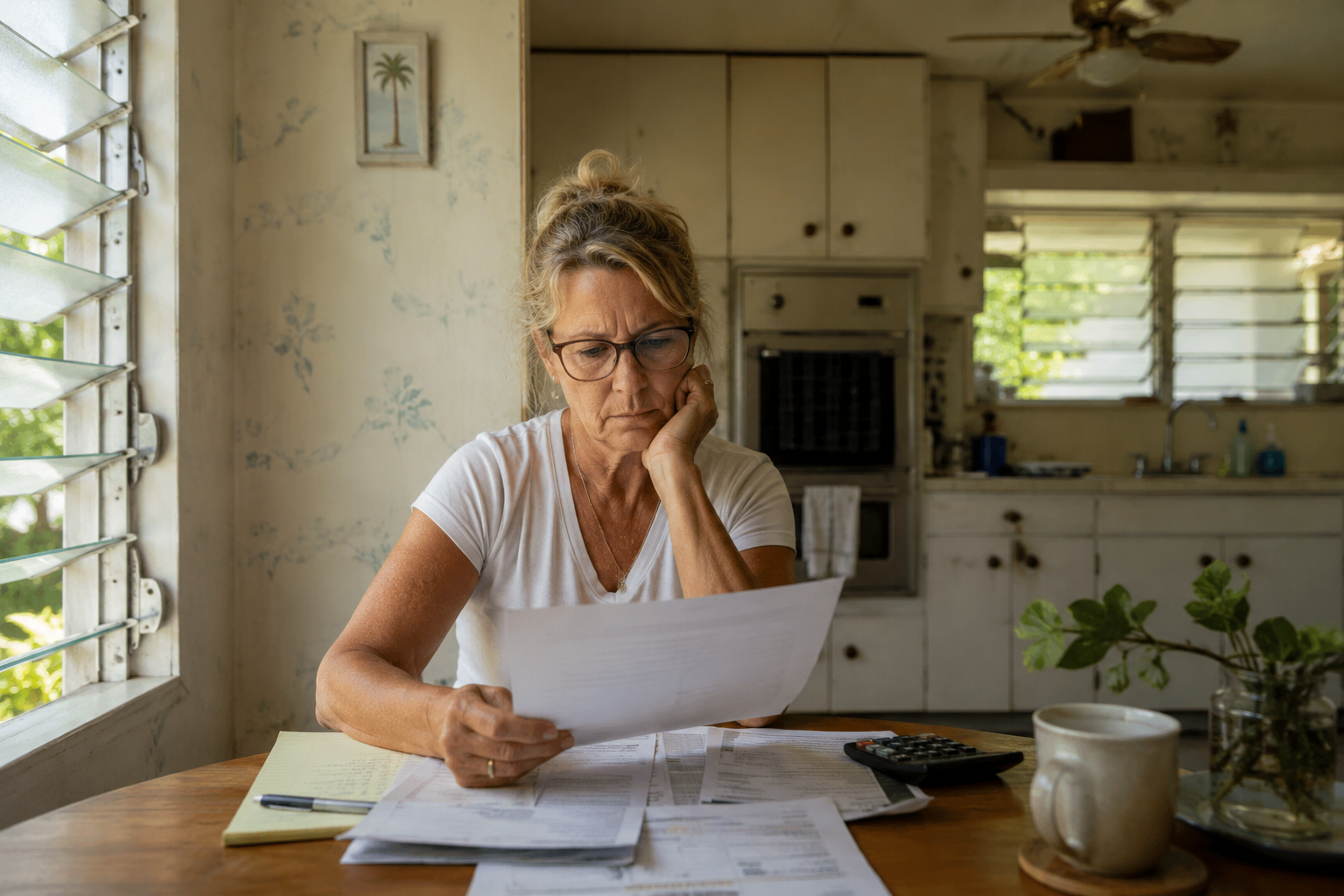
A Palm Beach County homeowner sits at a kitchen table reviewing household documents in an older South Florida home. The image reflects the financial and lifestyle decisions many long-term homeowners face when considering whether to remain in their current property or transition to a newer, lower-maintenance home.

Can You Move Into a Newer Home in South Florida Without Increasing Your Expenses?

It's a question that doesn't always get asked out loud, but it surfaces quietly in a lot of conversations with long-term South Florida homeowners. The house is paid down — maybe paid off. The equity is real. But so are the insurance bills, the maintenance cycles, and the creeping awareness that the financial structure of staying is starting to feel less efficient than it once did. At the same time, moving feels risky. What if a newer home costs more to carry? What if the math doesn't work? That uncertainty is exactly why many homeowners sit with the question for months or years without actually running the numbers.

The financial case for staying put isn't always as strong as it looks on the surface. And the financial case for moving isn't always as complicated as it feels before you work through it carefully.

Why "Staying Is Cheaper" Isn't Always True Anymore

For a long time, the logic held. If you'd owned your South Florida home for fifteen or twenty years, you'd absorbed the price appreciation, locked in a manageable tax basis, and largely forgotten what it felt like to have a significant mortgage payment. That stability felt like financial efficiency. In many cases, it was.

The past several years have disrupted that assumption in ways that are still settling. Florida homeowners insurance has restructured in ways that have materially changed the monthly cost of ownership for thousands of households — not as a temporary spike but as a sustained new baseline. Older homes, particularly those built before modern wind-resistance code standards, tend to carry disproportionate insurance premiums relative to their value. A home in Lake Worth built in the 1970s and a newer home in a community with updated construction standards are not equivalent insurance risks, and the premium gap reflects that.

Add in property tax trajectory — especially for homeowners whose assessed value has climbed while Save Our Homes caps have deferred but not eliminated long-term exposure — and the actual monthly cost of staying in an older home starts to look different than the surface number suggests. This is one of the patterns we've observed repeatedly: homeowners who believe their costs are stable are often absorbing gradual increases in insurance, maintenance, and repair that don't arrive in a single bill but accumulate steadily across twelve months.

The financial efficiency of staying isn't measured by what you pay in mortgage principal. It's measured by total cost of ownership — and for many South Florida homeowners, that total has shifted more than they've fully accounted for.

How Equity Changes the Math on Moving

The amount of equity sitting in South Florida homes after the appreciation cycle of the past decade is significant for a meaningful portion of long-term owners. That equity is doing one thing right now: it's maintaining its value inside the home while the home continues to generate maintenance demands, insurance costs, and operational friction. For some homeowners, that's a reasonable arrangement. For others, it's capital that could be working differently.

One of the questions worth sitting with is whether a move — specifically into a newer, lower-maintenance property — could actually reduce monthly carrying costs rather than increase them. The intuition says no. The intuition assumes that moving means a larger mortgage, higher taxes, and increased expenses. That's sometimes true. It's not always true.

A homeowner with significant equity who sells and buys a newer home at a comparable or modestly higher price point may find that reduced insurance premiums on newer construction, lower near-term maintenance demands, and better energy efficiency in a modern home meaningfully offset any increase in mortgage payment. The net monthly cost — accounting for everything, not just principal and interest — is sometimes lower in a newer home than in an older one they believed was "affordable" to stay in.

If you haven't had a current estimate of your home's equity position in the past year, that's where the conversation usually needs to start. Knowing what your home is worth in today's Palm Beach County market is what makes the rest of the financial comparison possible. Without that number, everything else is approximation.

If You're Thinking About Moving, It Usually Starts Here

Most homeowners don't randomly decide to move. It builds over time. If you're starting to think about selling and moving into something newer or easier to maintain, it usually comes down to one of these situations. Choose the one that feels closest to you.

Your home is starting to feel like too much to manage →

Maintenance, repairs, or simply keeping up with everything may be taking more time and energy than you want to keep giving.

You're trying to make a smarter financial move →

You may be thinking about reducing expenses, using your equity differently, or moving into a home that fits your long-term plans better.

You want something newer, simpler, and easier to live in →

Many homeowners reach a point where they want less maintenance, a more efficient layout, and a home that feels easier day to day.

The Cost Categories Most Homeowners Don't Add Up

The honest calculation requires more line items than most homeowners carry in their heads. Monthly mortgage or carrying cost is the number people cite. It's rarely the number that tells the complete financial story of a property.

Roof replacement cycles in South Florida are real. A home that needs a roof in the next three to five years is carrying a deferred liability that belongs in any financial comparison. Same with HVAC systems, electrical panels, plumbing infrastructure in older builds, and the cumulative cost of storm preparation — shutters, generators, the annual ritual of securing a property before a season that now feels longer and more intense than it did a decade ago.

Homeowners in communities like Royal Palm Beach or comparable established Palm Beach County neighborhoods sometimes find that their total annual ownership costs — when maintenance, insurance, deferred repairs, and updates are honestly counted — run considerably higher than the monthly mortgage payment implies. The gap between perceived cost and actual cost is one of the most consistent patterns in how South Florida homeowners evaluate their housing situation.

Newer construction sidesteps many of these deferred costs, at least in the near term. Modern wind-rated roofing systems, impact-resistant windows that satisfy current insurance requirements, updated electrical infrastructure, and energy-efficient HVAC equipment don't eliminate the need for maintenance — but they do reset the timeline and reduce the near-term financial exposure that older homes carry as background risk.

This isn't an argument that newer is always better. It's an observation that the financial comparison needs to account for what the current home will realistically require over the next five to ten years, not just what it costs today.

What the Move Actually Looks Like Financially

When a homeowner with meaningful equity runs a serious financial comparison — sale proceeds, closing costs, new purchase price, financing terms, insurance differential, and projected maintenance — the result is sometimes genuinely surprising. Not always in the direction they expected.

Some homeowners discover the move improves their monthly financial position. Others find it's essentially neutral with meaningfully improved livability. Some find the numbers don't support a move right now, but they have a clearer picture of when they might. All three of those outcomes are more useful than continuing to operate on assumptions that haven't been tested against real numbers.

The people who benefit most from working through this carefully are not homeowners who are certain they want to move. They're homeowners who are uncertain — who want to understand whether the financial logic supports a transition before they've committed emotionally to one direction or the other. Getting to a clear picture before making a decision is the entire point of the analysis. For homeowners in that position, understanding what a financially driven move in South Florida actually involves is a reasonable place to start building that clarity.

What This Means for Buyers and Sellers in South Florida

For homeowners considering a sale, the financial framing matters as much as the emotional one. Many sellers enter the process focused on what they'll net from the sale. The more complete question is what the net proceeds enable — and whether the housing situation on the other side of the transaction improves the total financial picture or simply shifts its components around.

Sellers who've owned for a long time frequently underestimate their negotiating position. Significant equity, a home in a desirable established neighborhood, and a motivated but patient approach to timing tend to produce better outcomes than sellers who feel urgency or who make decisions reactively. The financial case for moving is strongest when it's made from a position of clarity, not pressure.

For buyers transitioning from older homes, the new-construction and newer-resale market in Palm Beach County offers more options than it did three years ago. Inventory has shifted. Some communities that had little availability have opened up. Understanding what's genuinely available in the price range that your equity unlocks — and how the carrying costs of those homes compare to what you're paying now — is the core financial question that deserves a real answer before any other decision gets made.

The broader pattern we've observed is that homeowners who treat this as a financial analysis first — not an emotional decision about the house they've lived in, not a fear-based response to insurance costs, not a reactive move triggered by a bad storm season — tend to make transitions they feel more settled about twelve months later. The emotional elements matter. But grounding them in accurate financial comparison is what keeps the decision from feeling regrettable.

Frequently Asked Questions

Can moving into a newer home actually reduce my total monthly costs in South Florida?

It depends on the specific comparison, but for homeowners with significant equity in older properties, it's more common than most people expect. Newer construction often carries lower insurance premiums, reduced near-term maintenance demands, and better energy efficiency — which collectively offset part or all of any increase in mortgage payment. The calculation requires honest accounting of what your current home actually costs annually, including deferred maintenance and insurance trajectory, not just your current mortgage or carrying cost.

How do I know if my South Florida home equity is enough to make a financial move realistic?

Equity position is the starting point for any honest financial comparison, but the number that matters isn't just total equity — it's net proceeds after closing costs and any repairs, applied against the realistic purchase price of the property type you'd be moving into. Many homeowners are surprised to discover their equity position is more workable than they assumed. Getting a current home value estimate is what makes the rest of the analysis concrete rather than speculative.

Keep Exploring South Florida Real Estate

If you're trying to better understand whether staying, selling, or simplifying makes sense, exploring more South Florida real estate guidance can help create clarity before making a major decision.


About the Authors

Chris and Sue Kull are South Florida real estate professionals with more than three decades of experience helping homeowners, buyers, sellers, and relocating families navigate real estate decisions throughout Palm Beach County and surrounding communities.

June 12, 2026

West Palm Beach FL Real Estate: What Living Here Feels Like

Tree-lined residential street in a West Palm Beach historic neighborhood with older bungalow homes and mature canopy

West Palm Beach, FL Real Estate: What Living Here Actually Feels Like Before You Commit

Most people who end up in West Palm Beach didn't start there. They started somewhere else in Palm Beach County — maybe they were circling Jupiter or Palm Beach Gardens to the north, or weighing Boca Raton to the south — and West Palm kept surfacing as the comparison point. That pattern says something worth paying attention to. This is the city people use to calibrate everything else in the county, and yet it's consistently the city people understand the least accurately before they move in.

West Palm Beach is urban in a way most of Palm Beach County simply is not. It's not urban in the way Miami or Fort Lauderdale are urban, but it carries the friction, the energy, and the ownership tradeoffs of a real city center — which matters enormously depending on what stage of life you're in, what kind of daily pace you actually want, and how much of your week you're prepared to spend managing the logistics that come with that density.

After more than three decades of helping buyers and sellers throughout Palm Beach County, one thing stands out about West Palm Beach decisions specifically: the gap between what people imagine before they commit and what they discover after they've closed is wider here than almost anywhere else in South Florida. Understanding why that gap exists — and how to close it before making a decision — is what this piece is for.

The Urban Texture Most Buyers Don't Anticipate

Clematis Street and the downtown waterfront don't fully explain what it feels like to own property here. What actually shapes daily life in West Palm Beach is the way urban density creates ownership friction at ordinary moments — navigating parking near CityPlace on a Friday evening, the ambient noise level in neighborhoods that sit close to the downtown corridor, or the way traffic on Okeechobee Boulevard changes your morning routine depending on exactly where your home sits relative to it.

None of that is inherently bad. For people who genuinely want walkability, cultural programming, and proximity to dining and arts without a thirty-minute drive each way, West Palm delivers in a way very few Palm Beach County cities can. But one pattern we've observed repeatedly is that buyers are drawn to downtown imagery long before they've honestly evaluated whether they actually enjoy urban living day to day. The waterfront looks extraordinary from a distance. It's also a working city center with real urban rhythms, and those rhythms follow you home regardless of which neighborhood you're in.

This ownership friction tends to be most pronounced for buyers arriving from suburban environments — Jupiter, Palm Beach Gardens, Wellington — who are attracted by what West Palm Beach offers culturally but haven't stress-tested whether urban lifestyle alignment is genuinely compatible with how they move through the world. The discovery that it isn't usually comes three to six months after closing, not before.

Neighborhood Identity Premium: Why West Palm Beach Isn't One Market

West Palm Beach is not one experience. It's several stacked within a few miles of each other, and landing in the wrong neighborhood for your life creates a kind of low-grade dissatisfaction that's difficult to name but easy to feel.

El Cid and Flamingo Park draw buyers who want architectural character that newer construction elsewhere in the county simply cannot replicate — bungalows, mature tree canopy, historic district designation, and a neighborhood identity premium that holds value with a specific buyer profile. That premium is real, but so are the ownership realities beneath it: maintenance cycles on older structures, update costs that compound over time, and an insurance environment that has become meaningfully more complicated for pre-code Florida homes.

SoSo — South of Southern — has attracted sustained renovation energy over the past decade, and values there have tracked accordingly. Northwood Village carries its own identity: arts-adjacent, independently commercial, with a street-level texture that feels genuinely distinct from anything in the county's more polished corridors. For buyers who prioritize neighborhood identity over neighborhood polish, these pockets offer something that can't be found in planned communities further north or west.

Further west toward Military Trail and the Turnpike corridor, the character shifts considerably. Those communities feel suburban — more like Greenacres or Lake Worth in daily texture — and pricing often reflects the tradeoff. Buyers who want the West Palm Beach address without the downtown intensity sometimes settle in these areas, but they frequently find they've also traded away the walkability and urban energy that justified the city's appeal in the first place.

For anyone comparing neighborhoods within the city, browsing by area helps make the pricing spread and property type differences concrete before narrowing a search.

Explore Homes by City

If you're comparing areas, home types, or neighborhood environments, browsing homes by city can help put pricing and location tradeoffs into perspective.

Explore Homes by City

Why West Palm Beach Has Been One of Palm Beach County's Most Misunderstood Markets

For years, West Palm Beach occupied an awkward position in Palm Beach County's market narrative — overshadowed by the island to its east and outpaced by the suburban growth engines to its north. That dynamic has shifted meaningfully, and the forces behind the shift matter for anyone evaluating the city's long-term ownership trajectory.

Brightline's downtown station changed the city's geographic equation in a way that took time to fully register. A buyer who lives within reasonable distance of the station isn't just buying into West Palm Beach — they're buying access to Miami, Boca, and Fort Lauderdale in a way that reframes what "location" means in practical terms. That connectivity premium gets priced into certain pockets of downtown and near-downtown real estate, and it's not going away.

The remote-work migration wave that reshaped South Florida broadly between 2020 and 2023 brought a specific buyer profile to West Palm Beach: research-oriented, lifestyle-motivated buyers from the Northeast — New York, New Jersey, Connecticut, Massachusetts — who were accustomed to urban living and actively seeking it in a lower-tax, warmer environment. That migration accelerated demand in walkable, character-rich neighborhoods and created price compression in areas that previously had more inventory breathing room. Many of those buyers landed well. Some discovered that South Florida's version of urban living carries its own friction that didn't appear in the research phase.

Historic inventory constraints have also shaped the market in ways that aren't immediately obvious. West Palm Beach has a finite supply of genuinely distinctive historic properties in desirable neighborhoods. That scarcity creates a different demand dynamic than what exists in cities with more land available for new development. Buyers waiting for a specific combination of neighborhood, property type, and price point in El Cid or Flamingo Park can find themselves waiting considerably longer than they anticipated — which itself is market information worth understanding before anchoring a search to that target.

Insurance pressure has complicated the ownership calculus for older properties more sharply here than in newer suburban communities. That's not a reason to avoid West Palm Beach, but it is a material factor in how total ownership cost compares to alternatives — and it's one that some buyers only fully absorb after they've received their first renewal notice.

What Migration Patterns Reveal About Geographic Fit

The buyer profile arriving in West Palm Beach from outside South Florida has evolved. Earlier waves of Northeast migration leaned toward retirees and seasonal residents. The more recent wave has skewed younger — working professionals, families with school-age children, remote workers with flexible schedules — and that demographic shift has created different demand patterns, different neighborhood priorities, and different friction points.

One pattern we've observed repeatedly among Northeast relocators is that buyers who come from genuinely urban environments — Manhattan, Brooklyn, Boston proper — tend to adapt to West Palm Beach's downtown texture more quickly and more comfortably than buyers who describe themselves as "from New York" but actually lived in suburban Westchester or northern New Jersey. The self-identification doesn't always match the lifestyle reality, and the gap matters when evaluating geographic fit for a city with West Palm Beach's particular density level.

Buyers arriving from the Midwest or from car-dependent Southern cities frequently underestimate how much walkability will matter to them once they're living here. Several buyers have described the same experience: they bought further west to save on price, then spent a year driving to the urban experiences they'd moved to West Palm Beach for, then wished they'd prioritized proximity differently. Walkability often becomes more valuable after ownership than buyers expect before purchase — which is a pattern worth building into the decision architecture before closing, not after.

Lifestyle migration, as a broader category, tends to succeed most clearly when buyers have been honest about which specific lifestyle elements they're actually trying to access and how often. West Palm Beach's appeal is most durable for buyers who want regular, not occasional, access to what the city offers.

Patterns We've Observed Among West Palm Beach Buyers

After working with buyers throughout Palm Beach County for more than three decades, certain West Palm Beach decision patterns appear consistently enough to be worth naming directly.

Buyers relocating from major Northeastern cities adapt to West Palm Beach's downtown energy more readily than almost any other buyer profile. The urban texture feels familiar in a way that doesn't require adjustment — they've already calibrated to density, noise, parking friction, and city rhythms. Their challenges tend to emerge elsewhere: the insurance environment, the summer climate intensity, and the way South Florida property maintenance demands differ from what they managed in the Northeast.

Historic-home buyers almost universally focus on character first and maintenance realities later. The architectural appeal of El Cid or Flamingo Park is genuine — these neighborhoods carry something that can't be replicated in newer construction. But buyers who don't build a realistic maintenance budget into their purchase plan from the beginning frequently find themselves managing unexpected costs during the first two years of ownership. The character is worth it for the right buyer. The right buyer is one who goes in with open eyes about what older construction in a South Florida climate actually requires.

Buyers coming from suburban Palm Beach County communities — Gardens, Jupiter, Wellington — who move to West Palm Beach for lifestyle reasons often discover that commute friction matters more after closing than it did before. When the daily routine was being imagined, the idea of having restaurants and cultural programming nearby felt dominant. Once ownership begins, the reality of driving into or through downtown on a Tuesday morning for a work commitment recalibrates that math.

One additional pattern worth noting: buyers who purchase in West Palm Beach with a clear geographic anchor — a specific neighborhood they researched thoroughly, a commute route they drove at 8am on a weekday, a property type they compared against real alternatives — tend to report significantly higher satisfaction two and three years in than buyers who made decisions based primarily on price availability or general area appeal.

What This Means for Buyers and Sellers in South Florida

For buyers, West Palm Beach requires more intentional decision-making than most Palm Beach County cities. The market is not monolithic — pricing, property condition, neighborhood character, and lifestyle experience vary more sharply here than in cities with more homogeneous housing stock. A buyer who hasn't clearly defined what they're optimizing for can land in a neighborhood that technically matches their stated criteria while missing what they actually needed. That mismatch is more common here than in simpler suburban markets, and it's more consequential to reverse.

Seller positioning in West Palm Beach depends heavily on which part of the city is in play. Historic district properties command attention from a specific buyer profile that prioritizes character and location over turnkey condition — and pricing strategies that account for that demand type tend to outperform strategies built on pure square-footage comps. Properties in transitional corridors attract investor and renovation-minded buyers who underwrite differently. Suburban-scale properties on the western edges compete in a broader market that includes neighboring cities, and sellers who price based on the West Palm Beach name rather than honest competitive analysis sometimes find their timeline extended in ways they didn't anticipate.

The broader South Florida buyer pool has become more sophisticated about Palm Beach County geography. Remote-work migration brought a research-oriented buyer cohort that asks better questions and compares more carefully. That shift has raised the baseline expectation for what good guidance looks like — and it means that buyers comparing West Palm Beach against Palm Beach Gardens real estate are weighing genuinely different ownership experiences, not just price differentials. Understanding how those experiences actually diverge is what makes a long-term decision feel grounded rather than approximate.

For both buyers and sellers, the most consequential variable is accuracy: accurate expectations about what a specific neighborhood actually delivers, accurate understanding of which buyer pool a given property attracts, and accurate comparison logic when evaluating how West Palm Beach stacks up against the realistic alternatives on the table.

Long-Term Livability and the Ownership Arc

Buyers who land in the right part of West Palm Beach with clear expectations tend to stay, and tend to stay satisfied. The city has enough cultural infrastructure, enough walkable texture in the right neighborhoods, and enough genuine energy to sustain daily life in a way that more suburban Palm Beach County cities can't replicate. That's not a value judgment about which environment is better — it's an honest observation about what different environments actually offer over time, and for whom.

Long-term ownership in West Palm Beach also means engaging honestly with the insurance environment, which has affected South Florida broadly but has particular implications for the older housing stock concentrated here. Buyers entering the market with pre-code properties should build realistic insurance cost projections into their purchase analysis from the beginning — not as a reason to walk away from the right property, but as a real factor in how total cost of ownership compares to alternatives in newer construction markets.

The city's ongoing downtown investment, continued redevelopment corridor activity, and the sustained connectivity premium attached to the Brightline station suggest a long-term trajectory that supports ownership value. But trajectory and daily ownership experience are different things. Buyers exploring West Palm Beach real estate who understand both — what the city is moving toward and what it actually feels like to live there now — make decisions that hold up over time rather than decisions that made sense in a research document but struggled under the weight of daily life.

Frequently Asked Questions

Is West Palm Beach a good place to buy real estate right now?

It depends on where within the city and what the buyer is genuinely optimizing for. Historic district neighborhoods and walkable urban corridors carry demand profiles that have remained durable even as the broader market has shifted. The western suburban edges compete in a more price-sensitive environment with less differentiation. Buyers who've defined their lifestyle priorities clearly and understand the neighborhood-level differences within West Palm Beach are in a substantially better position to find real opportunity than buyers treating it as a single, uniform market.

How does West Palm Beach compare to Palm Beach Gardens for families relocating to South Florida?

They serve genuinely different lifestyle orientations. Palm Beach Gardens trends more suburban — newer construction, planned communities, school district infrastructure that draws families who want that structure and predictability. West Palm Beach offers more architectural variety, urban energy, and walkable texture, but daily life requires real tolerance for city-level density and older housing maintenance realities. Families who want neighborhood identity, cultural proximity, and walkable daily routines often find West Palm Beach compelling; families prioritizing school zoning, newer construction, and quieter rhythms tend to land more comfortably in Gardens.

Keep Exploring South Florida Real Estate

If you're comparing communities, evaluating lifestyle tradeoffs, or trying to better understand how different parts of South Florida align with your long-term goals, reviewing additional local resources can help create clearer perspective.


About the Authors

Chris and Sue Kull are South Florida real estate professionals with more than three decades of experience helping buyers, sellers, and property owners navigate real estate decisions throughout Palm Beach County and surrounding communities.

June 10, 2026

What Market Conditions Mean for South Florida Homeowners

residential street scene in Wellington Florida featuring well-kept single-family homes, mature palm trees, manicured lawns, and warm afternoon light. The image represents the practical ownership decisions many Palm Beach County homeowners face as market conditions, insurance costs, maintenance responsibilities, and housing choices evolve.

What Today’s Market Conditions Really Mean for Everyday Homeowners

Today’s market conditions are not showing up in South Florida homes only through prices, rates, or headlines. They are showing up in quieter ways: a homeowner hesitating before replacing a roof, a buyer asking harder questions about insurance, a seller wondering why showings feel different than they did two years ago, a downsizer realizing that a smaller home may not create the simple financial relief they expected.

That is the part many homeowners miss.

The market is not just changing what homes are worth. It is changing how people behave around the decision to stay, sell, buy, wait, repair, relocate, or simplify. In Palm Beach County, where insurance pressure, property age, HOA environments, storm preparation, commute patterns, and replacement-home costs all overlap, those decisions have become more layered than they used to be.

A homeowner can have equity and still feel uncertain.

That uncertainty deserves interpretation, not hype.

The Market Is Sending Signals Through Behavior

Most homeowners look for market conditions in the obvious places. They check online estimates. They notice a neighbor’s sale price. They hear something about interest rates. They may compare today’s market to the extraordinary conditions of 2021 and 2022, when many homes seemed to sell quickly and buyers often had less room to pause.

But the clearest signals are often behavioral.

Buyers are still buying. Families still need more space. Retirees still relocate. Job changes still create movement. South Florida still attracts people for lifestyle, weather, family, work, and long-term planning. The difference is that buyers are studying risk more carefully before they act.

That changes the feel of the market.

A buyer who once focused heavily on layout, finishes, and neighborhood may now spend more time thinking about roof age, insurance eligibility, flood considerations, HOA costs, monthly carrying expenses, inspection findings, and future resale confidence. A home can show well and still face harder questions if the ownership costs feel uncertain.

For sellers, this means today’s market is less forgiving of assumptions. A home does not have to be perfect, but the pricing, condition, and presentation need to reflect how buyers are evaluating decisions now. The issue is not simply whether a seller wants a strong price. Most do. The issue is whether the asking price matches the confidence level buyers need in the current environment.

That is a different market than the one many homeowners still have in their minds.

Strong Equity Does Not Always Create Simple Choices

Many long-time Palm Beach County homeowners are in a position that looks strong from the outside. They may have owned for years. They may have meaningful equity. Their mortgage may be low compared with today’s payment environment.

On paper, that sounds like flexibility.

In real life, it can feel more complicated.

A homeowner may know the current home is becoming too much to maintain. The yard takes more time. The insurance renewal feels heavier. The roof conversation keeps getting postponed. The house has rooms that are barely used. The stairs are less convenient. The family situation has changed. The neighborhood still feels familiar, but the home no longer supports daily life the way it once did.

Then the replacement question appears.

Where would we go?

That question stops many people.

A smaller home, villa, condominium, or active-adult community may reduce some responsibilities, but it may also introduce different costs, HOA rules, insurance structures, monthly fees, or location tradeoffs. A homeowner can sell a valuable property and still discover that the next move is not as financially simple as expected.

This is why equity alone is not the full story. Equity creates options, but it does not automatically create clarity.

The strongest decisions usually happen when homeowners look at the entire ownership picture: current value, future repairs, insurance exposure, lifestyle fit, replacement options, timing pressure, and the emotional cost of staying in a home that is slowly becoming harder to manage.

Many Sellers Are Still Adjusting to Today’s Buyer

One of the most common disconnects in changing markets is expectation lag.

Homeowners remember the market that formed their expectations. Buyers respond to the market they are actually facing.

That gap matters.

Some sellers still carry impressions from the faster, more emotional market conditions of recent years. They remember multiple-offer stories. They remember neighbors receiving strong prices. They remember buyers moving quickly because they were afraid of missing out.

Today’s buyer may still be motivated, but the motivation is often filtered through more caution.

In South Florida, that caution can show up before a buyer ever writes an offer. A roof question may affect whether they schedule a showing. Insurance uncertainty may affect whether they continue interest after the first visit. An inspection item that might have been ignored during a hotter market may now become a meaningful negotiation point. HOA fees, assessments, flood zones, older systems, storm protection, and maintenance history can all influence confidence.

That does not mean homes cannot sell well.

They can.

But the strongest sellers are usually not the ones chasing yesterday’s market. They are the ones willing to understand today’s buyer behavior before they choose a pricing strategy, improvement plan, or timing decision.

There is a calm advantage in seeing the market clearly before the market corrects the expectation for you.

What This Means for Buyers and Sellers in South Florida

For buyers and sellers in South Florida, today’s conditions are less about a simple shift from “seller’s market” to “buyer’s market” and more about a change in how decisions are being tested.

Buyers are testing monthly affordability. Sellers are testing whether their home still commands confidence. Homeowners are testing whether staying continues to make sense. Downsizers are testing whether less house actually means less complexity. Relocating families are testing whether the lifestyle they want is still aligned with commute patterns, school zones, insurance costs, and available inventory.

That is why broad market commentary often falls short. Palm Beach County real estate is not one uniform experience.

A newer home in Wellington with updated systems, storm protection, and a manageable HOA environment may create a different buyer response than an older property requiring major updates. A coastal property may carry different insurance and flood considerations than a western community. A long-time homeowner in Royal Palm Beach may face a different decision than a buyer comparing Boca Raton, Lake Worth, Boynton Beach, or Palm Beach Gardens.

Even within the same area, two properties can create very different ownership realities.

Homeowners watching Wellington homes for sale can see this clearly. Price is only one part of the comparison. Age, updates, lot maintenance, insurance profile, community structure, commute convenience, and monthly obligations all shape what a home really means to the person who owns it.

For The Kull Group, this is where interpretation matters. The work is not just helping someone react to the market. It is helping them understand what the market is asking them to consider before pressure builds.

Understand What Your Home May Be Worth

If this topic is making you think about your own property, checking your home’s current value can help put the local market into perspective.

Check Your Home Value

Waiting Can Create More Variables, Not More Clarity

Waiting is not automatically a mistake. Sometimes the best decision is to stay put, gather information, watch the market, and avoid moving before the next step is clear.

But there is a pattern that shows up repeatedly.

A homeowner becomes uncomfortable with the current situation. Not uncomfortable enough to act. Just uncomfortable enough to start paying attention.

The insurance renewal feels higher than expected. The house needs work. The roof may have a few years left, but nobody feels fully confident about it. The home is still livable, but it takes more effort. The next move feels uncertain, so the decision gets postponed.

Six months later, the same questions are still there.

A year later, there may be more of them.

That is the hidden cost of waiting without a plan. It can allow more variables to enter the decision. Repair costs can change. Buyer expectations can change. Insurance conversations can change. Replacement-home affordability can change. Family needs can become less flexible. The homeowner may not have made a bad decision by waiting, but they may be surprised that waiting did not make the decision easier.

It simply delayed the moment when the tradeoffs had to be understood.

In South Florida, where ownership costs and property responsibilities can shift quickly, clarity is often more valuable than prediction. The goal is not always to sell immediately. The goal is to know what staying, selling, improving, or preparing would actually mean before circumstances narrow the options.

The Real Question Is Whether the Home Still Fits the Life Around It

Market conditions matter. So do rates, inventory, buyer demand, insurance, and pricing trends.

But for everyday homeowners, the most practical question is usually closer to home.

Does this property still fit the life being lived inside it?

That question can be uncomfortable because it does not always have an obvious answer. A home may still be loved and still be too much. It may still be valuable and still feel limiting. It may still be affordable compared with buying something else and still create stress through maintenance, layout, location, or uncertainty.

Some homeowners should stay. Some should prepare. Some should sell before the home becomes harder to manage. Some should improve the property before testing the market. Some should do nothing until the replacement plan is clearer.

The mistake is treating all of those situations as if they are the same.

Today’s market conditions are not telling every South Florida homeowner to make the same move. They are telling homeowners to stop relying on assumptions that may no longer match buyer behavior, ownership costs, or their own stage of life.

That is where experienced guidance becomes useful. Not pressure. Not prediction. Interpretation.

FAQs

Should I wait for the South Florida market to improve before making a decision?

Waiting can be reasonable if your home still works, your costs are manageable, and you have no urgent reason to move. The risk is waiting without understanding what could change. Insurance renewals, repair needs, buyer expectations, and replacement-home costs can all shift the real decision. A better starting point is clarifying your options before assuming time will make the choice easier.

Why does my home feel harder to own even though values are still strong?

Strong value does not remove ownership pressure. Many South Florida homeowners have equity but still face higher insurance costs, aging systems, HOA requirements, storm preparation, maintenance fatigue, or uncertainty about where they would go next. The stress often comes from the gap between what the home is worth and what it now requires from the owner. That gap is where many decisions become emotional.

Keep Exploring South Florida Real Estate

If you're researching market trends, comparing communities, or trying to better understand how broader real estate topics affect local decisions, reviewing more South Florida resources can help put the market into context.


About the Authors

Chris and Sue Kull are South Florida real estate professionals with more than three decades of experience helping buyers, sellers, and property owners navigate real estate decisions throughout Palm Beach County and surrounding communities.

June 9, 2026

Lake Worth FL Living: Real Fit, Routines, and Tradeoffs

Quiet Lake Worth Florida street with older homes, mature palm trees, sidewalks, and warm South Florida afternoon light.

What It Is Like to Live in Lake Worth FL Over Time

Understanding what is it like to live in Lake Worth FL requires more than deciding whether the city looks interesting, affordable, convenient, or close enough to the coast. Lake Worth is one of those Palm Beach County communities where the answer depends heavily on how someone actually lives.

Some buyers are drawn to the older neighborhoods, local personality, coastal access, and less uniform feel. Others need time to understand the tradeoffs that come with that same variety. Daily life can feel connected, practical, creative, imperfect, and highly location-specific.

That is why Lake Worth should not be evaluated only by price, commute distance, or beach proximity. The better question is whether the city’s rhythm matches a person’s routines, ownership tolerance, and long-term expectations. In that sense, Lake Worth is not simply a place to compare. It is a place to interpret carefully.

Lake Worth Rewards People Who Understand Variety

Lake Worth does not behave like a neatly packaged suburb. That is one of the first things buyers need to understand.

The city has older homes, established streets, varied architecture, denser pockets, quieter residential areas, coastal influence, local businesses, and neighborhoods that can feel very different from one another within a short drive. For some buyers, that variety is exactly the appeal. It feels more real. Less manufactured. More connected to the older fabric of Palm Beach County.

For others, the same variety creates hesitation.

After years of helping buyers compare South Florida communities, one pattern becomes clear: Lake Worth decisions rarely fail because buyers misunderstood a listing. They fail when buyers misunderstood their own tolerance for variety.

A buyer may love the idea of character but still want predictable streets. They may want an older home but not older-home maintenance. They may like the energy of an established area but prefer quieter routines. They may want coastal access but still need parking, convenience, insurance confidence, and a home that does not require constant attention.

That is where Lake Worth becomes a fit question rather than a simple search question.

Looking at Lake Worth homes for sale is most useful when buyers study the home and the setting together. The property matters, but so does the street, the surrounding homes, the parking pattern, the distance to daily errands, and the feeling of the neighborhood at different times of day.

Lake Worth often works best for people who are comfortable with a city that has texture. It may feel less natural for someone who wants every part of the community to feel polished, uniform, and predictable.

The Daily Experience Changes by Location More Than People Expect

One misconception about Lake Worth is that it can be understood as one lifestyle.

It cannot.

Daily life east of I-95 can feel different from daily life farther west. Areas closer to downtown and the coastal side may appeal to someone who values local movement, older streets, beach access, restaurants, and a stronger sense of place. Other parts of Lake Worth feel more suburban, more practical, or more connected to everyday Palm Beach County routines than to a coastal lifestyle image.

That distinction matters because many buyers begin with a broad idea of Lake Worth before they understand the internal differences.

Someone may say they want Lake Worth because they like the idea of local personality. But what they actually need may be a quiet street, a one-story home, easier access to work, and a property that will not overwhelm them with repairs. Another buyer may care less about uniformity and more about being near activity, older architecture, and a community that feels less controlled.

Both buyers may be looking in Lake Worth.

They should not be looking at Lake Worth the same way.

This is where comparison fatigue begins. The city name stays the same, but the ownership experience changes. A home can feel connected and lively. Another can feel more tucked away. Another can feel convenient but less emotionally distinct. None of those experiences are automatically better. They are simply different versions of what Lake Worth can be.

People who make stronger decisions usually begin by understanding their routines. Where do they drive every day? How often will they actually go east? How much neighborhood activity feels comfortable? How much home maintenance are they willing to accept? Do they want older-home character, or do they mainly want value and location?

Explore Homes by City

If you're comparing areas, home types, or neighborhood environments, browsing homes by city can help put pricing and location tradeoffs into perspective.

Explore Homes by City

Older-Home Appeal Comes With Ownership Reality

Lake Worth can be appealing because it has homes with personality. That is also why ownership expectations matter so much.

In many Palm Beach County communities, buyers are mostly comparing floor plans, lot sizes, school zones, community fees, and commute routes. In Lake Worth, especially in older areas, the conversation often goes deeper. Roof age, electrical updates, plumbing, windows, drainage, insurance history, permitted improvements, and long-term maintenance all deserve attention.

That does not mean older homes should be avoided.

It means they should be understood.

One recurring buyer pattern is easy to recognize. At first, people focus on charm, price, and location. The deeper questions usually arrive later, sometimes after they have already become emotionally attached to the house.

What will this property ask for over the next five years?

How much updating has already been done?

Will insurance be straightforward or complicated?

Is the buyer comfortable managing the home’s age, systems, and ongoing maintenance?

Does the appeal of the home outweigh the responsibility attached to it?

Those questions are not meant to make the decision feel negative. They make the decision more honest.

Lake Worth’s housing variety creates opportunity, but opportunity without interpretation can lead to mismatch. A home may look like a smart buy because the price feels attractive compared with nearby areas. But if the ownership experience does not match the buyer’s tolerance for repairs, updates, or uncertainty, the value may not feel as comfortable after closing.

The strongest Lake Worth decisions usually happen when buyers separate attraction from readiness. Liking the home is one part of the decision. Understanding what it will require is another.

The Lake Worth Fit Test Is Really About Tolerance

A useful way to evaluate Lake Worth is to ask three questions before getting too focused on any single home.

How much variety do I actually want around me?

Lake Worth can feel expressive, established, and locally textured. Some buyers love that because it feels different from newer master-planned areas. Others realize they prefer consistency more than they expected. The city rewards people who are comfortable with neighborhood variation, older surroundings, and a less uniform daily environment.

How much ownership responsibility am I willing to manage?

This question matters in South Florida generally, but it matters more when buyers are considering homes with age, prior renovations, or varying levels of maintenance. A buyer who wants low stress may still find the right fit in Lake Worth, but they need to be honest about condition, insurance, systems, and future upkeep.

Does this location support my real routine?

Many buyers like the idea of being near activity, coastal access, or central Palm Beach County routes. The better test is daily use. If work, errands, family, schools, healthcare, recreation, and weekend habits align with the location, Lake Worth can feel very practical. If those routines pull in a different direction, the city may feel less convenient than it looked on a map.

This fit test matters because Lake Worth often creates emotional interest before it creates complete clarity.

People may feel drawn to the city. The harder and more useful question is whether they are drawn to the lifestyle that comes with the specific home, street, and ownership profile they are considering.

Lake Worth Is Not the Same Decision as a Western Suburb

Lake Worth often gets compared with nearby Palm Beach County communities because buyers are trying to balance budget, location, home condition, and daily comfort. Those comparisons can be useful, but only if they are made honestly.

A buyer comparing Lake Worth with a more western suburban area may not be choosing only between two sets of houses. They may be choosing between two different kinds of daily life.

Lake Worth may offer more local texture, older neighborhoods, coastal access, and a stronger sense of established place. A western community may offer more uniform residential surroundings, larger planned neighborhoods, different lot patterns, and a quieter suburban rhythm.

That is why buyers also reviewing Royal Palm Beach homes for sale are often not just comparing prices. They are comparing how they want everyday life to feel.

Neither choice is automatically better.

Lake Worth may fit someone who wants proximity, personality, access, and older-neighborhood character. Royal Palm Beach may fit someone who wants more suburban predictability, a different pace, and a community layout that feels easier to read quickly. Other nearby cities may create still different tradeoffs.

The mistake is assuming the best choice is the one with the better listing.

In real life, the better choice is usually the one where the buyer’s routines, tolerance, budget, and ownership expectations line up most naturally.

What This Means for Buyers and Sellers in South Florida

For buyers, Lake Worth requires a different kind of attention than a simple home search provides. Price matters, but price does not explain daily fit. Location matters, but location alone does not explain neighborhood rhythm. Character matters, but character does not remove the need to evaluate condition.

Buyer caution often appears when one part of the decision feels strong and another part remains unclear. A buyer may like the price but hesitate over repairs. They may like the neighborhood personality but wonder about noise or parking. They may like the home’s charm but need more confidence about insurance, roof age, or long-term maintenance.

Those hesitations are not necessarily objections. Often, they are signals that the buyer needs clearer interpretation.

For sellers, Lake Worth positioning should be specific. A home should not be presented as if it fits every buyer. Some homes appeal because they are updated and easier to manage. Some appeal because they offer character, location, lot utility, or access to local activity. Others need careful explanation because the right buyer must understand both the appeal and the ownership requirements.

Sellers sometimes assume buyers will automatically value the same things they have appreciated for years. Sometimes they will. But buyers also need confidence. They want to understand what has been maintained, what may need attention, how the home compares with alternatives, and what kind of lifestyle the property realistically supports.

That is why calm positioning is stronger than hype. Lake Worth does not need exaggerated language. It needs accurate interpretation.

Long-Term Livability Depends on Routine Alignment

Many buyers begin with preference.

They want charm. They want convenience. They want value. They want access. They want something with more personality than a newer suburban subdivision. Those preferences are useful, but they are not enough.

Long-term livability depends on routine alignment.

That means asking how the city will feel on ordinary days, not just during a showing. Where will someone park? Which roads will they use most? How far are the places they actually visit? Will the property feel manageable after the first year? Does the neighborhood feel right at night, on weekends, during season, and during normal weekday routines?

This is where Lake Worth can either become a very strong fit or a slow source of friction.

For people who value character, access, and local identity, the city may feel more rewarding over time. It can provide a sense of place that some newer areas do not offer in the same way. For people who need uniformity, quiet predictability, and newer-home simplicity, parts of Lake Worth may feel more complicated than expected.

Area mismatch usually does not happen because someone made an irrational choice.

It happens because they chose based on one attractive feature and underestimated the daily experience attached to it.

After decades of helping people evaluate Palm Beach County communities, one lesson remains consistent: the right city is not always the one that looks best in a search. It is the one that keeps making sense after normal life begins.

Lake Worth can be a strong choice. It can also be the wrong choice for the wrong buyer. The difference usually comes down to whether the person understands not only the city, but themselves.

FAQ

How do I know if Lake Worth FL fits my daily lifestyle?

Lake Worth FL may fit your lifestyle if you value local character, established neighborhoods, coastal access, and practical Palm Beach County convenience. The important question is whether the specific location matches your routines. Buyers should consider commute routes, parking, neighborhood rhythm, home condition, maintenance expectations, and how the area feels at different times of day before deciding.

What should Lake Worth sellers understand before listing?

Lake Worth sellers should understand which buyers their home naturally serves. Some properties appeal because of updates, location, character, access, or lot utility. Others need careful explanation around age, maintenance, or improvement history. Strong positioning does not make the home sound right for everyone. It helps the right buyers understand the lifestyle fit and ownership value clearly.

Keep Exploring South Florida Real Estate

If you're comparing communities, evaluating lifestyle tradeoffs, or trying to better understand how different parts of South Florida align with your long-term goals, reviewing additional local resources can help create clearer perspective.


About the Authors

Chris and Sue Kull are South Florida real estate professionals with more than three decades of experience helping buyers, sellers, and property owners navigate real estate decisions throughout Palm Beach County and surrounding communities.

June 9, 2026

When an Easier South Florida Home Begins to Make Sense

A well-maintained single-story South Florida home with palm trees, clean landscaping, and an easy-living design in a quiet Wellington neighborhood.

When an Easier South Florida Home Begins to Make Sense

Many South Florida homeowners never reach a single moment where they suddenly decide to move.

The thought usually arrives quietly. It shows up while preparing for hurricane season again. While coordinating another repair estimate. While reading insurance renewal paperwork that feels more complicated than it used to. While standing in a garage filled with things that made sense for a different season of life.

The house itself may not be the problem.

In fact, many homeowners still like their home. They may like the neighborhood, the memories, the privacy, the familiar routes, and the years they have built there. What changes is the relationship with ownership.

A property that once felt manageable begins asking for more attention, more money, more planning, and more energy than it used to. The question is not always whether the home is still good. The question is whether the responsibility attached to it still fits the life the homeowner wants to live now.

The First Sign Is Often Relief, Not Urgency

After decades of conversations with Palm Beach County homeowners, one pattern appears often. The first emotion is rarely excitement about a different home.

It is relief.

Relief when they imagine less yard work. Relief when they think about newer systems, impact windows, a simpler layout, or a home that does not require as many weekend projects. Relief when the mental checklist feels shorter in their imagination than it does in their current house.

That feeling is easy to dismiss because it does not sound like a real estate decision yet. It sounds like a passing thought. A quiet preference. A private admission that the home may be asking for more than they want to keep giving.

In Palm Beach County, homeownership carries a particular kind of weight. Heat, moisture, storm preparation, roof age, landscaping, insurance questions, pool care, and long-term upkeep all have a way of turning a once-manageable home into a larger responsibility.

For some Wellington homeowners, the shift becomes noticeable when larger lots, older systems, or long-standing maintenance routines start feeling heavier than they used to. Looking at homes for sale in Wellington can help clarify whether the issue is the current home itself or the level of responsibility attached to it.

When Ownership Fatigue Becomes Invisible

One of the most overlooked parts of this decision is that ownership fatigue rarely feels dramatic.

Most homeowners adapt.

The landscaping gets harder, but they adjust. Storm preparation becomes more work, but they adjust. Insurance inspections become more frequent, but they adjust. Small repairs become larger projects, but they adjust.

Over time, the effort starts to feel normal.

That normalization can make it difficult to recognize how much energy the home is actually consuming. Many long-term South Florida homeowners are surprised when they begin considering simpler housing options because they realize they have been managing more than they admitted.

Not one crisis.

Accumulation.

A roof concern here. A drainage issue there. A landscaping project. A pool repair. A room that no longer gets used. A garage that needs to be cleared. A renewal notice that raises new questions. None of these things may be enough on its own to force a move. Together, they change the emotional experience of ownership.

Before making any major decision, many owners benefit from understanding their current equity position through a Palm Beach County home value review, because value clarity often turns a vague thought into a more grounded conversation.

If You’re Thinking About Moving, It Usually Starts Here

Most homeowners don’t randomly decide to move. It builds over time. If you’re starting to think about selling and moving into something newer or easier to maintain, it usually comes down to one of these situations. Choose the one that feels closest to you.

Your home is starting to feel like too much to manage →

Maintenance, repairs, or simply keeping up with everything may be taking more time and energy than you want to keep giving.

You’re trying to make a smarter financial move →

You may be thinking about reducing expenses, using your equity differently, or moving into a home that fits your long-term plans better.

You want something newer, simpler, and easier to live in →

Many homeowners reach a point where they want less maintenance, a more efficient layout, and a home that feels easier day to day.

A Good Home Can Still Stop Fitting Your Life

A home does not have to fail in order to stop fitting your life.

That is one of the most important realizations in this entire process. Many homeowners assume moving requires a major problem. A failing roof. A financial emergency. A life event. A home that no longer works at all.

In reality, some of the healthiest moves happen before a crisis exists.

The home may still be beautiful. The neighborhood may still be desirable. The memories may still matter. But if maintaining the property requires more energy than the lifestyle it provides in return, the equation has changed.

Recognizing that shift is not dissatisfaction. It is awareness.

Many homeowners we speak with begin the conversation by defending the house. They explain that it has been a good home, that they have taken care of it, that the location still works, that they are not desperate to leave. Often, all of that is true.

But then the conversation changes.

They talk about the projects they no longer want to manage. The rooms they rarely use. The weekends that seem to disappear into upkeep. The quiet stress that appears every time another maintenance item gets added to the list.

The home is not necessarily wrong.

The fit has changed.

In Boynton Beach, some homeowners begin comparing older single-family homes with newer communities, villas, townhomes, or lower-maintenance options because they want less operational responsibility. Reviewing Boynton Beach homes with easier living features can help homeowners see what a simpler next step might realistically look like.

The Home Is Rarely What Homeowners Talk About First

Something interesting happens during many homeowner conversations.

People often think they are coming to discuss real estate.

They rarely start there.

Instead, they begin talking about time. The landscaping they no longer enjoy maintaining. The storm preparation that feels more exhausting every year. The repair projects that never seem fully completed. The rooms they no longer use the same way. The uncertainty they feel every time insurance paperwork arrives.

The conversation sounds like it is about a house.

In reality, it is usually about lifestyle.

The property simply becomes the place where that lifestyle friction shows up.

After helping Palm Beach County homeowners navigate these decisions for decades, one pattern appears repeatedly: people often believe they are searching for a different home when they are actually searching for a different experience of ownership.

That distinction changes everything.

Because once the conversation becomes about ownership rather than square footage, better decisions usually follow. A homeowner may still want comfort, privacy, space, and familiarity. They may not want the same amount of maintenance, financial unpredictability, physical effort, or planning that came with the current property.

For many South Florida owners, the realization is simple but significant: the next home does not need to be smaller in every way. It needs to be easier in the ways that matter most.

Easier systems. Easier landscaping. Easier storm preparation. Easier insurance profile. Easier daily routines. Easier ownership.

That is why exploring moving into a simpler South Florida home can be less about rushing to sell and more about understanding whether a different ownership structure would create more peace, control, and flexibility.

The Three Questions That Usually Create Clarity

Durable housing decisions usually become clearer when homeowners stop asking only one question.

Most people start with value. That makes sense. A homeowner needs to know what the property may be worth, what equity may be available, and what kind of financial options could exist after a sale.

But value alone does not explain the whole decision.

A home can be valuable and still feel heavy. A property can have strong equity and still require too much attention. A neighborhood can still be desirable while the daily ownership experience has become more complicated than the homeowner wants to keep managing.

That is why three questions often create better clarity:

What does the home provide?

Comfort, familiarity, space, location, privacy, memories, routine, and financial stability all matter. A home that still provides meaningful value should not be dismissed lightly.

What does the home require?

This is where many South Florida homeowners begin to see the decision differently. The home may require roof planning, insurance review, storm preparation, pool care, landscaping, repairs, cleaning, physical effort, financial attention, and emotional bandwidth. None of those responsibilities may be unreasonable by themselves. Together, they may become the real issue.

Are those two things still in balance?

This is often the question that reveals the answer. If the home still gives more than it requires, staying may make sense. If the home requires more than the homeowner wants to keep giving, simplifying may deserve serious consideration.

This framework is useful because it removes pressure. It does not tell a homeowner to sell. It does not assume that moving is the right answer. It simply helps separate the value of the home from the weight of owning it.

For many homeowners, that is the missing piece.

What This Means for Buyers and Sellers in South Florida

For sellers, this decision deserves more care than a quick pricing conversation. The current home may have strong value, but timing, preparation, repairs, insurance concerns, buyer expectations, and the next-home plan all need to work together.

A rushed sale can create regret. Waiting too long can create a different kind of pressure.

For buyers, especially homeowners who are also selling, the next purchase should be judged differently. Square footage alone is not the point. The better question is whether the next home reduces the specific pressures that made the current home feel too heavy.

That may mean newer construction. It may mean a smaller lot. It may mean a one-story layout, updated systems, impact protection, an HOA-maintained exterior, or a location that makes daily life simpler.

The tradeoffs deserve honest interpretation. A lower-maintenance community may reduce exterior responsibility, but it may come with HOA rules and fees. A newer home may reduce near-term repair concerns, but location, insurance profile, and monthly costs still matter. A smaller property may feel easier, but only if the layout and lifestyle actually fit.

Experienced guidance matters because this is not only a financial decision. It is emotional, operational, and local. South Florida homeowners need to understand not just what their home may sell for, but what kind of move would actually improve life after the sale.

What Homeowners Often Discover Too Late

One lesson appears repeatedly among homeowners who eventually make a successful move.

The stress was rarely caused by one repair bill.

It was rarely caused by one insurance increase.

It was rarely caused by one maintenance issue.

The pressure came from accumulation.

Small responsibilities that felt manageable individually slowly combined into something heavier. Many homeowners spend years evaluating these issues one at a time. Only later do they realize they were experiencing the combined weight of all of them at once.

That realization often creates clarity.

Not because it automatically means they should move. Because it finally helps them understand what they have actually been reacting to.

This is where a calm decision process matters. The right question is not simply, “Should I sell?” It is also, “What is the current home requiring from me, and is that requirement still reasonable for the life I want?”

For some homeowners, the answer points toward staying. They may decide to make targeted improvements, simplify the property, hire more help, or wait until timing feels better.

For others, the answer points toward preparation. Not panic. Not urgency. Preparation.

That may include understanding value, identifying repairs that matter to buyers, avoiding unnecessary improvements, studying realistic next-home options, and deciding what kind of ownership would feel lighter without creating new stress.

Clarity Usually Comes Before Readiness

Many homeowners wait for certainty before they ask questions. That can make the process feel heavier than it needs to be.

You do not have to be ready to sell to begin understanding your options. In fact, the strongest decisions often start before there is pressure. A homeowner can review value, likely buyer expectations, repair priorities, moving timelines, and realistic next-home choices without committing to anything.

That early clarity can be calming. It separates emotion from assumption. It shows whether selling now, waiting, improving the current home, or watching the market makes the most sense.

Sometimes the answer is to stay.

Sometimes it is to prepare slowly.

Sometimes it becomes clear that the home has been asking too much for too long.

The strongest housing decisions are rarely made when homeowners feel pressure. They are usually made when homeowners gain clarity.

Clarity about what the home provides.

Clarity about what the home requires.

Clarity about whether those two things are still in balance.

For some homeowners, that clarity confirms staying exactly where they are. For others, it reveals that the house is still a good house, but no longer the right fit for the life they want to live.

After decades of helping Palm Beach County homeowners evaluate these choices, one thing remains remarkably consistent. The best decisions rarely begin with a desire to leave. They begin with a desire to live more comfortably, more simply, and with less unnecessary weight.

Most people do not move because they want a different house. They move because they want a different relationship with homeownership.

FAQ

How do I know if I should move to a lower-maintenance home in South Florida?

You may be ready to explore a lower-maintenance home if your current house still has value but feels harder to manage than it used to. Common signs include growing frustration with repairs, yard care, insurance questions, storm preparation, unused space, or layouts that no longer fit daily life. The decision should not start with pressure to sell. It should start with understanding your home’s value, your likely next options, and whether a simpler home would actually reduce stress.

Should I sell now or wait if my home feels like too much work?

Waiting can make sense if the home is manageable and you are not clear on your next step. But waiting without a plan can create problems if repairs, insurance costs, or market conditions become more difficult later. A calm first step is to review your current home value, likely preparation needs, and realistic moving options. That gives you a clearer choice between staying, improving, preparing slowly, or moving into something easier before the decision feels forced.

Keep Exploring South Florida Real Estate

If you're trying to better understand whether staying, selling, or simplifying makes sense, exploring more South Florida real estate guidance can help create clarity before making a major decision.


About the Authors

Chris and Sue Kull are South Florida real estate professionals with more than three decades of experience helping homeowners, buyers, sellers, and relocating families navigate real estate decisions throughout Palm Beach County and surrounding communities.

June 6, 2026

Living in Wellington FL: What the Community Actually Feels Like Over Time

Beautiful residential neighborhood in Wellington, Florida featuring palm tree lined streets, manicured landscaping, well-maintained homes, open green spaces, and sunny South Florida weather.


Living in Wellington FL: What the Community Actually Feels Like Over Time

Wellington doesn't announce itself the way coastal Palm Beach County communities do. There's no ocean view, no beachside restaurant strip, no obvious landmark that makes someone stop and say they've arrived somewhere. What Wellington has instead is harder to photograph and easier to feel after six months of living there: a particular rhythm. Quiet enough to decompress in, structured enough to stay active, and organized around a kind of outdoor life that doesn't require leaving the community to access it. For buyers trying to understand what daily life actually looks like in western Palm Beach County — not the listing descriptions, not the lifestyle photography, but the morning routine and the evening drive and the question of whether this place will still feel right three years from now — that rhythm is the thing worth understanding first.

The Geographic Reality and What It Changes

Wellington sits inland, roughly ten miles west of the coast, and that distance does more than affect the drive to the beach. It changes the insurance profile. It changes the flood zone picture for many properties. It changes the heat, the wind exposure, and the kind of maintenance cycle a homeowner lives inside. Buyers relocating from northern states sometimes underestimate how much the inland location shapes the ownership experience — not negatively, but differently than they expected.

The trade is a real one. You give up the immediate proximity to the water that communities like Palm Beach, Delray, or Boynton offer. What you gain is more land per dollar, newer infrastructure in many areas, and a community that was largely built out in a controlled way rather than layered across decades of unplanned growth. The street grid is legible. The neighborhoods have an internal logic. That doesn't make Wellington better than its coastal neighbors — it makes it distinct, and distinction matters when buyers are trying to figure out where they actually fit.

The western edge of Wellington bleeds into Loxahatchee, and that boundary matters for buyers comparing the two. Homes for sale in Loxahatchee often come with larger lot sizes and a more rural character — fewer HOA structures, more land, less community programming. Wellington itself is more organized, more amenitized, and more oriented around established neighborhood associations. Neither is a better answer. They attract genuinely different buyers, and someone who thrives in one can find the other frustrating for reasons they didn't anticipate before moving.

What Daily Life Actually Looks Like

The equestrian identity is real, but it isn't the whole story. Wellington is home to the Winter Equestrian Festival and carries a significant horse community that shapes the land use, the road patterns, and the seasonal population in ways that non-equestrian residents notice even if they're not participating. January through April, the population density increases. Traffic on Pierson Road and South Shore Boulevard changes. The character of the community shifts slightly toward the seasonal and the transactional, then settles back after spring.

For year-round residents, the rhythm is more domestic than that. Wellington Regional Medical Center anchors the healthcare side. The school system — served by the Palm Beach County School District — draws families who've done the research and landed here deliberately, often comparing Wellington to communities further north or east before committing. The grocery infrastructure is solid. The commute to downtown West Palm Beach runs twenty to thirty minutes depending on direction and time of day, which is manageable but not trivial for someone doing it five days a week.

What the community does particularly well is make the outdoors accessible without requiring a car trip to get there. The trail system, the community parks, the tennis and pickleball facilities, the proximity to conservation areas on the western edge — these aren't amenities people use once and forget. They're the reason residents describe Wellington as a place that supports an active daily life in a way that feels structural rather than incidental. That matters over time in a way it's hard to appreciate from a listing description.

The Ownership Experience Over Time

Wellington's housing stock is predominantly single-family, with a significant portion of that inventory sitting inside HOA-governed communities. That's not unusual for South Florida, but the HOA environment in Wellington is worth understanding before purchase rather than after. Communities here vary significantly in what they govern, what they cost, and how actively they enforce standards. An established community like Olympia — one of Wellington's larger and more amenitized neighborhoods — carries a full HOA structure with its own rules, fees, and approval processes that shape ownership in ways that go well beyond the monthly number on a listing. A buyer moving from a state where HOA living is uncommon can find the adjustment meaningful — not just financially, but in terms of what they can do with the property, when they can do it, and what that governance feels like year after year.

The roof age conversation that runs through most of South Florida applies here too. Properties built in the 1990s and early 2000s — which represents a significant portion of Wellington's inventory — are hitting the age window where insurance carriers are asking harder questions. A buyer who falls in love with a home in that vintage range should understand what a roof replacement costs in the current contractor market, what it means for insurance continuity, and how it affects their carrying cost calculation. This isn't Wellington-specific. It's a South Florida reality. But in a market where a lot of the inventory falls in a particular age band, it comes up more often than buyers expect.

Sellers in Wellington are navigating a buyer pool that is more cost-literate than it was three years ago. The buyers looking at homes for sale in Wellington FL today are asking about wind mitigation reports, HOA reserve health, and insurance quotes before making offers — not as afterthoughts. Properties that are prepared for that scrutiny move. Properties that aren't tend to sit longer than sellers expect, often for reasons that have nothing to do with price.

What This Means for Buyers and Sellers in South Florida

For buyers, Wellington presents a specific kind of value proposition that requires honest self-assessment. The community works exceptionally well for families with school-age children, for equestrian households, for people who want an active outdoor lifestyle without the premium of coastal proximity, and for buyers who prioritize newer infrastructure and planned community design over the character and variability of older neighborhoods. It works less well for buyers who will feel the coast's absence acutely, who find HOA governance constraining, or who are commuting eastward daily and underestimating what that drive adds up to across a year.

The price per square foot in Wellington has historically offered more space for the dollar than comparable coastal communities, and that gap has attracted buyers who stretched their budget to get a larger home. The risk in that trade is that ownership costs — insurance, HOA, maintenance on a larger property — can compound in ways that make the monthly picture look different than it did at closing. Buyers who run the full cost calculation before committing, rather than after, tend to have a more stable ownership experience over time.

For sellers, Wellington's strongest asset is the depth and specificity of its buyer pool. People who want this community tend to want it deliberately — they've compared it against Royal Palm Beach, against Boca Raton's western communities, against the closer-in suburbs of West Palm. That deliberateness means motivated buyers when the property is right. It also means that buyers who've done the research will notice quickly when something doesn't add up — a deferred roof, an HOA with thin reserves, a flood zone designation that wasn't disclosed clearly. Preparation matters here more than in markets where buyers are making faster, more emotional decisions.

Explore Homes by City

If you're comparing areas, home types, or neighborhood environments, browsing homes by city can help put pricing and location tradeoffs into perspective.

Explore Homes by City

Who Wellington Is Actually Built For

The community attracts a particular kind of buyer consistently enough that the pattern is recognizable. Families who've prioritized school quality and outdoor space over proximity to the coast. Equestrian households for whom the land use and facility access justify every other tradeoff. Retirees and pre-retirees who want an active community with genuine infrastructure — medical, recreational, social — without the density and noise of urban Palm Beach County. Remote workers and dual-income households who can absorb the inland location because they're not commuting daily.

It tends to work less well for buyers who romanticize the idea of western Palm Beach County without fully accounting for what they're trading. The heat is real in summer. The drive to the beach is real year-round. The HOA environment is real in ways that show up in daily decisions, not just annual fees. None of that is disqualifying — but it matters enough that buyers who discover it after closing rather than before tend to recalibrate their satisfaction with the decision.

Wellington also attracts a meaningful number of buyers who come for a season and decide to stay. The Winter Equestrian Festival draws a temporary population every year that overlaps significantly with a buyer population — people who spend January through April here, fall in love with the pace and the access, and start making permanent plans. That seasonal-to-permanent pipeline has shaped the community's ownership culture in ways that make it feel more intentional than accidental. People here chose it. That tends to produce neighbors who maintain their properties, engage with their communities, and take the long view on what the area is worth protecting.

The Long-Term Livability Question

Ten years into Wellington ownership, the things people describe as having held up are almost always the same: the school system, the outdoor access, the relative quiet, and the sense that the community was built to function rather than just to sell. The things that surprise people — on the difficult side — are the compounding costs of maintaining a larger home in a South Florida climate, the seasonal rhythm that changes the community's character for four months of the year, and the commute that felt manageable at the time of purchase and less manageable after five years of doing it.

None of that is unique to Wellington. South Florida ownership has its own cost structure regardless of which community a buyer chooses. What's worth knowing is that Wellington tends to reward buyers who thought carefully about long-term fit before committing — and produces friction for buyers who made the decision quickly based on what the house looked like rather than what the life would feel like.

That's not a small distinction. Most people who ended up in the wrong community for the wrong reasons knew something felt off before they closed. They just didn't have language for it yet — and didn't slow down long enough to find out.

Frequently Asked Questions

Is Wellington FL a good place to live if you're not involved in the equestrian community?

Yes — the equestrian identity shapes the land use and seasonal character of Wellington, but the majority of year-round residents have no direct connection to the horse community. The schools, parks, recreational facilities, and neighborhood infrastructure function independently of equestrian activity. What non-equestrian residents notice most is the seasonal population increase from January through April and the land-use decisions that preserve open space throughout the community. For families, active households, and remote workers, Wellington's livability doesn't depend on equestrian participation.

How does Wellington compare to nearby communities for long-term ownership value?

Wellington tends to offer more square footage per dollar than coastal Palm Beach County communities, with a trade-off of increased distance from the water and a more HOA-structured ownership environment. Compared to Loxahatchee immediately to the west, Wellington carries more community infrastructure and amenities but less land per property and more governance. The long-term value case is strongest for buyers who use what Wellington offers — the schools, the outdoor access, the organized community environment — rather than buyers treating it primarily as a price-driven compromise on their way to somewhere else.

Keep Exploring South Florida Real Estate

If you're comparing communities, evaluating lifestyle tradeoffs, or trying to better understand how different parts of South Florida align with your long-term goals, reviewing additional local resources can help create clearer perspective.


About the Authors

Chris and Sue Kull are South Florida real estate professionals with more than three decades of experience helping buyers, sellers, and property owners navigate real estate decisions throughout Palm Beach County and surrounding communities.

June 6, 2026

When the Cost of Staying Starts to Feel Like the Reason to Leave

The Kull Group

When the Cost of Staying Starts to Feel Like the Reason to Leave

The insurance renewal arrives. The number is different — not slightly different, significantly different — and for a moment the homeowner just sits with it. They don't call their agent immediately. They don't panic. They do something quieter: they start doing math they hadn't planned to do, about a decision they hadn't planned to make. That's the moment this market has created for thousands of South Florida homeowners right now. Not a crisis, exactly. More like a slow realization that the cost of owning the home has become its own kind of pressure — separate from the mortgage, separate from the neighborhood, separate from whether they still love the place. Insurance is where it surfaces first. But the forces underneath it are broader, and they're changing what moving to, staying in, and eventually leaving South Florida actually costs.

What the Insurance Number Is Really Telling You

When a South Florida homeowner sees their premium climb thirty or forty percent at renewal, the first instinct is usually to shop carriers. Sometimes that works. More often, it reveals something the homeowner didn't want to know: the number isn't an anomaly. It's the new floor.

The Florida insurance market didn't fracture because of one bad storm season or one mismanaged carrier. It fractured because the underlying math stopped working. Reinsurance costs rose sharply. Private carriers did the math and left. Citizens absorbed what remained, and then began managing its own exposure in ways that pushed costs back toward policyholders. Homeowners who bought based on what insurance cost in 2021 or 2022 are now operating in a fundamentally different financial environment — one that nobody told them was coming when they signed the closing documents.

The harder thing to absorb isn't the dollar amount. It's the permanence. This isn't a temporary market disruption with a predictable recovery. The actuarial reality of coastal Florida property has repriced, and that repricing is durable. Some carriers will return as the market stabilizes. The legacy pricing won't come with them.

What that means practically: a property that penciled out clearly at purchase often doesn't pencil out the same way now. For some owners that gap is manageable. For others — particularly those on fixed incomes, or those who stretched at purchase — it changes the conversation entirely. Not just about insurance. About whether the property still makes sense to hold.

The Costs That Don't Show Up Until You're Already In

Insurance gets the attention because it arrives in the mailbox. The rest of the ownership cost picture assembles itself more quietly.

Flood insurance is its own separate policy — federal or private — and for properties in or near FEMA-designated flood zones, it layers meaningful cost onto the monthly carrying load independent of homeowners coverage. Zone reclassifications happen more often than buyers realize. A property outside a flood zone at purchase can be reclassified after a FEMA map update, triggering a new lender requirement the buyer never anticipated. That reclassification doesn't change the house. It changes what the house costs to own.

Then there are the maintenance rhythms that coastal living imposes — the ones no inspection report fully captures. Salt air works on everything. Roofs age faster in South Florida than in most of the country. HVAC systems run nearly year-round and cycle through their useful life accordingly. Pool equipment, irrigation systems, exterior paint — all of it operates under conditions that compress timelines. An older home near water will cost more per square foot to maintain than a comparable property inland. Not enormously more in any single month. Meaningfully more across years of ownership, in a way that compounds without announcing itself.

HOA fees are their own category. In well-funded, reserve-healthy communities, they represent genuine stability — shared infrastructure maintained, surprises managed collectively. In communities where reserves have been deferred — and there are more of those than buyers realize, particularly in older buildings affected by the post-Surfside legislation — the monthly number on the listing is a floor, not a ceiling. Special assessments materialize. Sometimes large ones. The buyer who didn't ask about reserve funding at purchase absorbs that discovery later, at full cost, without warning.

None of this arrives all at once. A buyer closes, feels settled, and then watches the true carrying cost of the property assemble itself across twelve to eighteen months of ownership. By then the move has happened. The boxes are unpacked. The adjustment becomes something they absorb rather than something they decided.

What This Means for Buyers and Sellers in South Florida

For buyers, the practical implication is that the decision-making frame has to change. The question used to be: can I afford the mortgage? The question now is: can I afford the property — mortgage, insurance, flood coverage, HOA, and realistic maintenance — at what those things actually cost today, not what they cost two or three years ago when the listings were written?

That reframe changes which properties make financial sense and which ones create quiet pressure over time. A purchase price that looks lower can carry higher total monthly cost than a higher-priced property in a preferred wind zone with a newer roof and better flood zone classification. The listing price and the ownership cost are two separate conversations, and treating them as the same one is where a lot of South Florida buyers find themselves in trouble eighteen months after closing.

For sellers, the ownership cost environment has reshaped the buyer pool in ways that feel subtle but matter at the negotiating table. Today's active buyers in South Florida are more insurance-literate than they were three years ago. They're requesting wind mitigation reports before making offers. They're running insurance quotes as part of their due diligence, not as an afterthought. Properties with updated roofs, documented wind mitigation features, and favorable flood zone designations are moving differently than properties without those characteristics — not just in price, but in how many buyers are willing to make an offer at all.

There's a psychology at work on the seller side too. Some owners are holding properties longer than they'd otherwise choose because the friction of moving feels high relative to the gain. But there's a cost to that calculus that doesn't always get calculated: when insurance and carrying costs begin compressing monthly cash flow or equity, staying has its own price. The market right now is full of homeowners running that math quietly, without telling their neighbors.

What tends to produce regret on both sides is the same thing: a decision made without the complete cost picture. The buyer who discovered their insurance situation after closing. The seller whose showing traffic stalled for reasons that had nothing to do with price. The cost of ownership in South Florida isn't context anymore. For a lot of transactions, it's the story.

The Homeowner Who Didn't Plan to Be Here

There's a particular kind of seller appearing in the Palm Beach County market right now who didn't expect to be thinking about this.

They bought well. They have equity. They're not in financial distress — nothing dramatic happened. But something has shifted in the relationship between them and the property. The insurance renewal triggered a conversation with their spouse that went longer than it used to. The HOA sent a letter about a coming assessment. The roof is nine years old and they know what that means for the next renewal cycle. None of it is catastrophic in isolation. Together, it's changed the weight of the thing.

This is especially true for the buyers who came to South Florida specifically for simplicity — retirement households, seasonal residents, families who relocated from the Northeast or Midwest looking for warmth and a lower overhead life. For them, the accumulation of ownership complexity cuts against the original reason they moved. The house is the same house. The neighborhood is the same neighborhood. But the experience of owning it has drifted from what they imagined, and that drift is hard to name out loud without sounding like you're complaining about paradise.

What usually follows isn't a panicked rush to sell. It's something slower — a quieter recalibration of whether the property still fits the life being built around it. That question doesn't get answered by looking at Zillow. It gets answered by understanding what staying genuinely costs, what the market would actually yield on a sale, and what the realistic options look like right now — not based on what the market was doing two years ago, but on what it's doing today.

Understand What Your Home May Be Worth

If this topic is making you think about your own property, checking your home's current value can help put the local market into perspective.

Check Your Home Value

Where the Cost Picture Is Still Manageable — and Why That Matters

Cost pressure reshapes behavior. It doesn't always reshape it accurately.

Some buyers are pulling back from South Florida broadly because they've absorbed the general anxiety without running specific numbers. Some sellers are anchored to a version of the market that no longer exists. Both responses feel rational in the moment. Neither tends to produce good outcomes.

The insurance story in South Florida is real — but it isn't uniform. Newer construction built to post-2002 or post-2004 hurricane code carries meaningful insurance advantages over older homes with weaker structural profiles. Condominiums above certain floors in well-maintained buildings often carry lower insurance exposure than single-family homes with aging roofs. Western Palm Beach County communities with less direct coastal exposure present different risk profiles than barrier island or waterfront properties. The cost environment isn't the same everywhere. It's the same conversation, with very different answers depending on where and what you're looking at.

Specificity is what separates a workable decision from a reactive one right now.

Buyers who understand what they're actually buying — not just the square footage and the finishes, but the insurance profile, the flood zone status, the roof age and its implications for the next renewal cycle — are the ones making purchases that hold up over time. Sellers who understand how those same factors affect their buyer pool are the ones pricing and preparing their properties to actually transact, rather than sitting on the market wondering why the interest isn't converting.

What tends to happen is this: a buyer who pulled back in 2023 because they heard Florida insurance was impossible ends up watching a neighbor close on a well-built 2006 home in a western community at a reasonable carrying cost. A seller who held on because they were anchored to a 2022 comp watches the window narrow while their roof ages another year toward the threshold that starts costing them buyers. The market doesn't wait for people to feel ready. It just keeps moving, and the clarity that felt optional becomes expensive to delay.

The Question Underneath the Decision

Most costly housing mistakes in South Florida share a common feature. They happened after a narrow conversation.

The buyer asked about price and didn't ask about insurance exposure. The seller asked about timing and didn't ask why the showings weren't converting. The family relocating from out of state asked about school districts and HOA amenities and didn't ask about reserve funding or roof age or what their flood zone designation would mean for their lender. The information was available. The conversation just didn't reach it.

Insurance costs alone can swing the affordability of a South Florida property by several hundred dollars a month — sometimes more — depending on construction type, roof condition, flood zone classification, and which carriers are currently willing to write in that area. That's not a footnote. In a market where carrying costs have become as consequential as purchase price, the complete financial profile of a property is the due diligence. Not an add-on to it.

Understanding that profile — before a decision, not after — is what separates moves that hold up from moves that create slow regret. The cost of staying. The cost of moving. The cost of deciding too quickly. The cost of waiting past the moment when the decision was obvious. In South Florida right now, all of those have real prices. Most people find out which one they paid after they've already paid it.

Explore South Florida Real Estate by City

If you're comparing areas, home types, or market conditions, browsing homes by city can help put local pricing and location tradeoffs into perspective.

Explore Homes by City

Frequently Asked Questions

How much can homeowners insurance actually affect the affordability of a South Florida home?

More than most buyers anticipate before closing. In South Florida, annual premiums on a single-family home can range from under $3,000 to well over $15,000 depending on location, roof age, construction type, flood zone, and available carriers. A property with an older roof or significant coastal exposure might carry $800 to $1,200 per month in combined insurance costs alone — a variable that doesn't appear in the listing price. Running actual insurance quotes before making an offer, not after, is one of the most consequential steps a buyer can take in the current market.

If ownership costs have gotten heavy, how do I know whether selling now actually makes sense?

The timing question is almost never just about the market. It's about the gap between what staying costs and what moving would yield — and whether that gap is widening or narrowing over time. In South Florida, sellers with well-maintained properties, updated roofs, and clean flood zone designations are often better positioned than they assume. Serious buyers are still active and they know how to read an insurance profile. Understanding your current equity position alongside your actual monthly carrying costs tends to clarify the decision far more than following market headlines does.

Keep Exploring South Florida Real Estate

If you're researching market trends, comparing communities, or trying to better understand how broader real estate topics affect local decisions, reviewing more South Florida resources can help put the market into context.


About the Authors

Chris and Sue Kull are South Florida real estate professionals with more than three decades of experience helping buyers, sellers, and property owners navigate real estate decisions throughout Palm Beach County and surrounding communities.

May 24, 2026

Lake Worth FL Home Selling With Local Lifestyle Context

Palm-lined residential street in Lake Worth Florida with manicured landscaping and a well-kept South Florida home in bright daylight.

Selling a Home in Lake Worth FL Starts With Understanding Fit

For many homeowners, selling a home in Lake Worth FL is not only a pricing decision. It is often connected to how the property, the neighborhood, and the daily routine still fit the way life is actually being lived. Lake Worth has layers. Some owners value the character, proximity, and older-home personality. Others eventually feel the weight of upkeep, insurance concerns, layout limitations, or changing household needs.

That is where the decision becomes more nuanced than a simple market question. Compared with more uniform suburban areas nearby, Lake Worth can feel more varied from one pocket to another. A home may have strong appeal to one buyer and feel less practical to another. Sellers who understand that difference are usually better prepared to position the property clearly, without overexplaining or guessing.

Lake Worth Is Best Understood Through Daily Routine

Lake Worth is not a city people experience the same way from every address. Daily life can feel very different depending on where the home sits, how the streets connect, how close the owner is to major roads, and how much older-home maintenance is part of the equation.

Some buyers are drawn to the character and convenience. They like established neighborhoods, mature landscaping, and a setting that feels less newly manufactured. For those buyers, Lake Worth can make emotional sense quickly. They are not always looking for perfect symmetry. They may be looking for location, personality, and a home that feels grounded in a real neighborhood.

Other buyers hesitate. They may compare Lake Worth with newer-feeling communities or more predictable suburban layouts. That does not make the city weaker. It means fit matters. A buyer reviewing Lake Worth homes for sale is often sorting through more than price. They are trying to understand what ownership will feel like after the closing.

Ownership Realities Shape Buyer Confidence

Older homes can carry charm, but charm does not erase practical concerns. Roof age, insurance eligibility, electrical updates, plumbing condition, impact protection, drainage, HVAC age, and exterior maintenance all affect how buyers respond. In South Florida, those items are not side details. They influence confidence.

A seller may see a well-loved home. A buyer may see future decisions.

That gap is where positioning matters. Not every issue needs to be solved before listing, but every meaningful issue needs to be understood. A home that is priced and presented with awareness can feel far more trustworthy than a home that appears polished on the surface but leaves buyers uncertain about what they are inheriting.

Lake Worth home values and ownership decisions often depend on this practical layer. Two homes with similar square footage can produce very different buyer reactions if one feels easier to insure, maintain, and update. The Kull Group’s role in this type of conversation is not to make the city sound simpler than it is. It is to help sellers understand how buyers are likely to interpret the property in real-world terms.

How Lake Worth Compares With Nearby Suburban Alternatives

Comparison fatigue is common in Palm Beach County. Buyers rarely look at one city in isolation. They compare lifestyle, price, commute patterns, home age, maintenance expectations, lot size, and the emotional feel of the neighborhood. Lake Worth often enters that comparison as a more layered option.

Someone considering Lake Worth may also be looking west, north, or into communities with a more planned suburban rhythm. A buyer studying Royal Palm Beach homes for sale, for example, may be weighing a different kind of daily experience: wider suburban layouts, different ownership expectations, and a more consistent neighborhood pattern in many areas.

That comparison does not create a winner and loser. It clarifies the tradeoff.

Lake Worth may appeal to buyers who want proximity, character, established streets, or a less standardized housing feel. It may be less comfortable for buyers who want newer systems, predictable layouts, or fewer questions about future updates. Sellers benefit when they understand which buyer is most likely to connect with the home and which buyer may need more practical reassurance.

Explore Homes by City

If you're comparing areas, home types, or neighborhood environments, browsing homes by city can help put pricing and location tradeoffs into perspective.

Explore Homes by City

Seller Positioning Depends on More Than Recent Sales

Comparable sales matter, but they do not explain the whole story in Lake Worth. A seller also has to consider how the home feels against competing options. Is the property easier to maintain than buyers might expect? Does the layout support today’s routines? Are the updates meaningful or mostly cosmetic? Will insurance questions appear early? Does the outdoor space feel useful, or does it feel like another responsibility?

These questions influence buyer behavior before an offer is ever written.

A seller who understands the home’s practical strengths can present them clearly. A seller who understands the likely objections can prepare instead of react. Sometimes that means addressing a repair. Sometimes it means improving documentation. Sometimes it means adjusting expectations around pricing, timing, or negotiation.

There is also an emotional side. Longtime owners often remember the home through years of use, improvement, and attachment. Buyers see the same property through risk, lifestyle fit, and future cost. Good guidance helps translate between those two perspectives without dismissing either one.

What This Means for Buyers and Sellers in South Florida

Lake Worth shows why South Florida real estate decisions are rarely just about square footage. Buyers are often trying to reduce uncertainty. They want to know how a home will live, what it may require, and whether the location supports their routine. Sellers are trying to understand how much of their home’s value is obvious to the market and how much needs to be explained through preparation, pricing, and presentation.

Buyer caution is not always resistance. Sometimes it is a request for clarity.

In Lake Worth, that clarity may involve ownership history, condition, update quality, insurance readiness, and how the property compares with homes in nearby communities. A seller who ignores those concerns may mistake hesitation for lack of interest. A buyer who ignores them may choose a home that feels attractive but becomes harder to own than expected.

This is where The Kull Group’s local interpretation becomes useful. The decision is not only “What is the home worth?” It is also “Who is the home right for, what concerns will they have, and how should the property be understood in the larger Palm Beach County market?”

Long-Term Fit Matters After the Excitement Fades

Early interest can be emotional. Long-term satisfaction is usually more practical.

A buyer may love a Lake Worth home because it has character, location, or a feeling that newer homes do not always provide. After living there, the lasting fit depends on daily details: traffic patterns, maintenance rhythm, storage, layout, outdoor upkeep, storm preparation, and how the home handles changing needs over time.

Sellers should think about that honestly. The strongest positioning does not pretend every home fits every buyer. It identifies the buyer who will understand the property’s strengths and accept its responsibilities with open eyes.

That kind of positioning protects trust. It also reduces wasted energy. When a home is presented with local context, buyers can evaluate it more confidently, and sellers can avoid leaning on generic selling language that does not match the property’s real-world appeal.

Frequently Asked Questions

What should I think about before selling a home in Lake Worth FL?

Start with condition, buyer expectations, and how your home compares with nearby alternatives. In Lake Worth, buyers often look closely at roof age, insurance-related concerns, updates, layout, and maintenance needs. Pricing matters, but so does clarity. A well-positioned home helps buyers understand not only the value, but also what ownership may feel like after closing.

Why do some buyers hesitate when comparing Lake Worth with nearby cities?

Buyer hesitation often comes from uncertainty, not dislike. Lake Worth can offer character, location, and established neighborhoods, but some buyers compare that with newer layouts, more predictable communities, or lower perceived maintenance. The right fit depends on lifestyle, budget, tolerance for upkeep, and daily routine. Clear property information helps buyers decide with more confidence.

Keep Exploring South Florida Real Estate

If you're comparing communities, evaluating lifestyle tradeoffs, or trying to better understand how different parts of South Florida align with your long-term goals, reviewing additional local resources can help create clearer perspective.


About the Authors

Chris and Sue Kull are South Florida real estate professionals with more than three decades of experience helping buyers, sellers, and property owners navigate real estate decisions throughout Palm Beach County and surrounding communities.