Insights, strategy, and real estate guidance across Palm Beach County.

April 9, 2026

What to Do With a Probate Property That Needs Repairs in Florida

Florida probate property authority decision showing legal documents, personal representative role, and real estate sale process

What to Do With a Probate Property That Needs Repairs in Florida

It is common for probate properties to require some level of repair or updating. In many cases, homes have not been maintained for years, and deferred maintenance becomes a key factor in deciding how to move forward.

For attorneys handling probate in Florida, one of the most important questions is whether repairs should be addressed before selling—or whether the property should be sold in its current condition.


Understanding the Condition of the Property

The first step is evaluating the actual condition of the home. Some properties may need only minor improvements, while others require significant repairs that could impact both value and timeline.

Having a clear understanding of condition allows for more informed decision-making.

For a broader overview of probate real estate handling, see: Probate Real Estate Support for Attorneys in Florida


Types of Repairs Commonly Seen in Probate Properties

  • Deferred maintenance (roof, HVAC, plumbing)
  • Outdated interiors (kitchens, bathrooms, flooring)
  • General wear and tear from long-term occupancy
  • Exterior issues such as landscaping or paint

Not all repairs carry the same weight when it comes to market impact.


When Repairs May Make Sense

In some situations, addressing certain repairs can improve marketability and potentially increase the final sale price. This is typically the case when the property is in otherwise good condition and only requires light updates.

However, decisions should be based on realistic expectations rather than assumptions about value.


When Selling As-Is May Be the Better Option

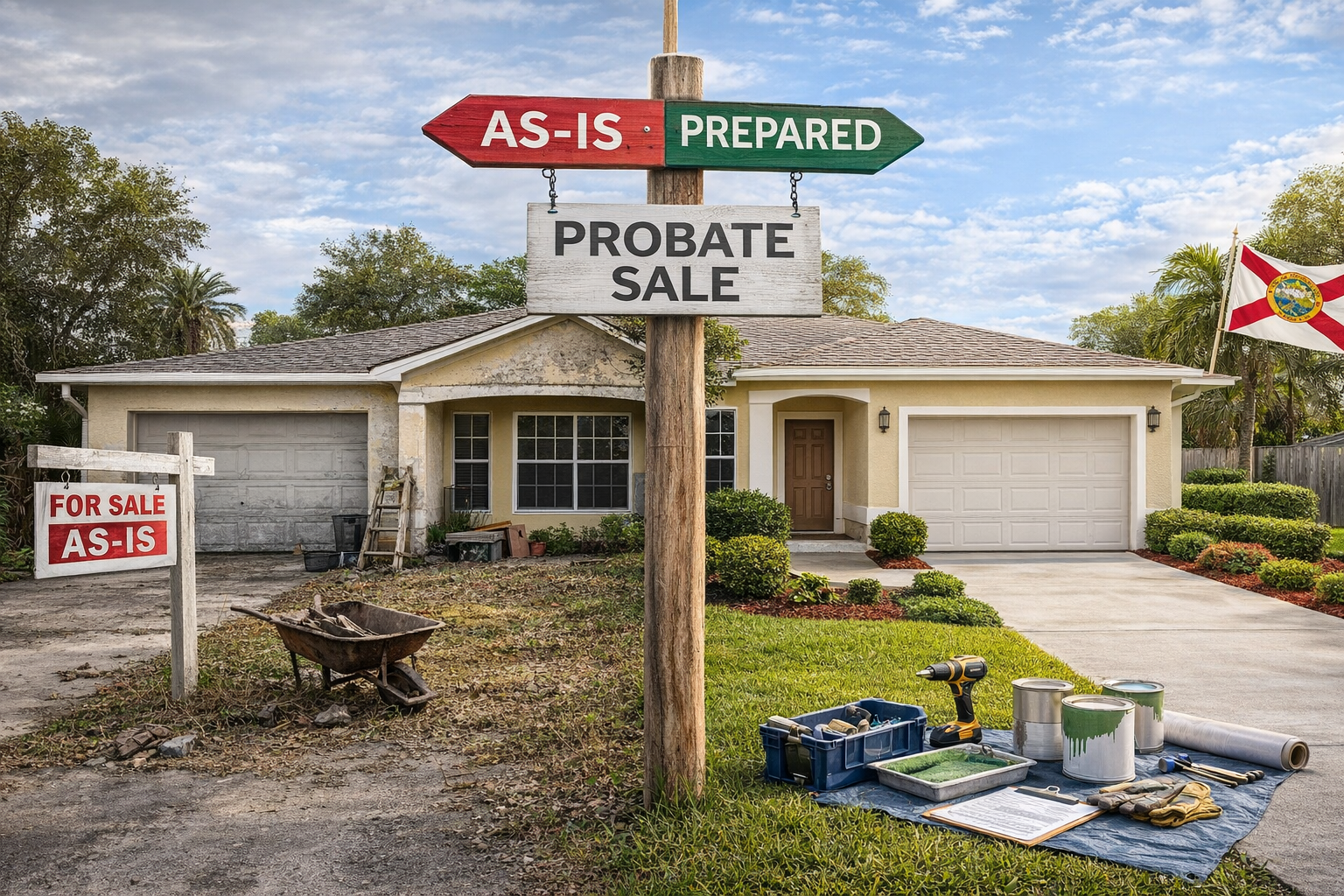
In many probate cases, selling the property as-is is the more practical approach. This avoids the time, cost, and coordination required to complete repairs, especially when the property needs significant work.

This approach can help move the case forward more efficiently, and understanding whether to sell as-is or make repairs is often central to that decision.


Balancing Cost, Time, and Outcome

The decision to repair or sell as-is typically comes down to balancing three factors: cost, time, and potential return. Investing in repairs may increase value, but it also introduces delays and additional complexity.

In probate cases, maintaining momentum is often just as important as maximizing price.


Avoiding Common Mistakes

  • Over-improving the property without a clear return
  • Underestimating repair costs or timelines
  • Delaying decisions while the property incurs carrying costs
  • Lack of agreement between heirs on repair strategy

These mistakes can extend timelines and complicate the process. Understanding how repairs can delay the sale process helps avoid these issues.


Working Through Repairs With Multiple Heirs

When multiple heirs are involved, decisions around repairs can become more complex. Each party may have a different opinion on whether improvements are necessary or worthwhile.

Clear communication and realistic expectations help reduce friction.


Next Steps

If you are handling a probate property that requires repairs, the most effective approach is evaluating the condition, understanding the market, and choosing a strategy that aligns with the goals of the estate.

We regularly work with attorneys on probate properties in various conditions and can help determine the most practical path forward.

Schedule a confidential consultation

April 9, 2026

Who Has Authority to Sell an Inherited Property in Florida?

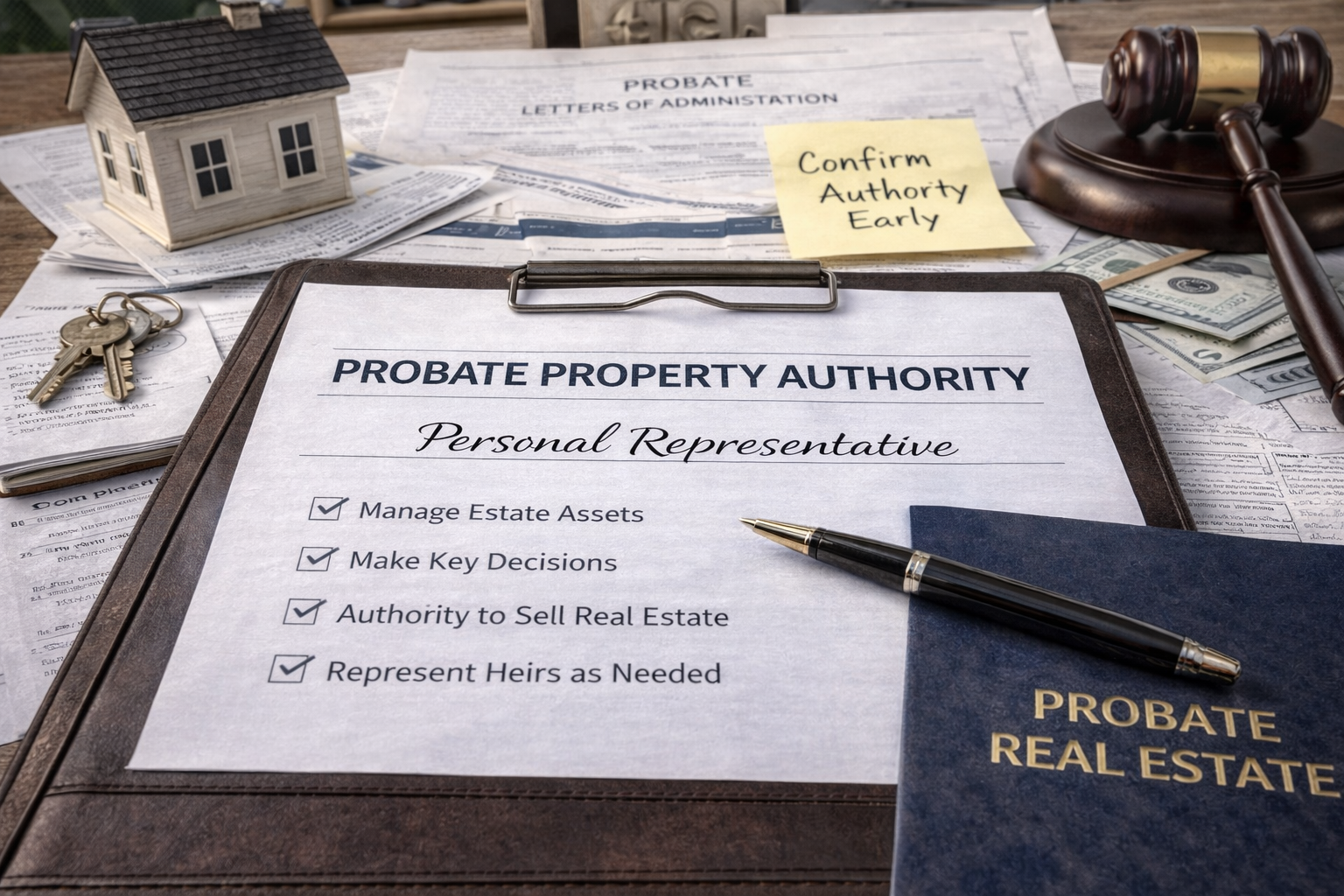
Personal representative reviewing authority and inherited property decisions in Florida probate

Who Has the Authority to Sell a Probate Property in Florida?

One of the first problems families run into with inherited property is not the condition of the home. It is uncertainty around who is actually allowed to make decisions.

A family member may begin discussing repairs. Someone else may want to sell quickly. Another heir may believe nothing can happen until everyone agrees. Meanwhile, the property continues sitting, expenses continue accumulating, and the probate process keeps moving forward whether the family feels organized or not.

That confusion is common because probate real estate decisions do not automatically follow family assumptions. They follow the legal structure established through the estate process.

Understanding who has authority early can prevent delays, reduce conflict, and help the property side of the process move more smoothly once important decisions need to happen.


In Most Florida Probate Cases, the Personal Representative Holds Authority

In Florida, the person typically responsible for handling estate matters is the personal representative, sometimes referred to as the executor.

This individual is formally appointed through probate and is generally responsible for managing estate-related decisions, including the sale of inherited real estate when authorized.

That matters because a probate property cannot move through a normal transaction process until the estate structure is clear enough for decisions to happen properly.

Before listing the home, coordinating repairs, accepting offers, preparing the property, or negotiating terms, the family should understand what authority exists and what approvals may still be required through the probate process.

That does not mean preparation must stop entirely. Many families still begin organizing the property, reviewing condition issues, arranging clean-outs, coordinating inspections, or evaluating timing while the probate process continues moving forward.


Why Authority Issues Create Delays So Quickly

Inherited-property situations often begin emotionally before they become operational.

Family members are discussing memories, fairness, timing, financial concerns, and what they believe should happen with the property. At the same time, probate is trying to establish legal clarity around who can actually make decisions.

Those two realities rarely move at the same pace.

That is why inherited-property situations often become disorganized early:

  • Multiple people begin directing the process at once
  • No one confirms what authority currently exists
  • Repair discussions start before the property strategy is clear
  • One heir assumes decisions require unanimous agreement
  • The property remains untouched while everyone waits for clarity

As carrying costs, insurance concerns, maintenance issues, or vacant-property risks continue building, the lack of structure usually becomes more expensive.


What Heirs Usually Control — and What They Typically Do Not

Heirs are deeply connected to the outcome of the estate, but involvement and authority are not always the same thing.

In many probate situations, heirs:

  • receive updates regarding the estate
  • participate in conversations about timing and goals
  • share opinions regarding repairs, pricing, or preparation
  • benefit financially from the eventual outcome

But disagreements between heirs do not necessarily prevent the process from moving forward once authority is clearly established.

This becomes especially important when one person wants to sell quickly while another wants to hold the property, invest money into repairs, or delay decisions until emotions settle.

Those situations often become more manageable once the family understands both the legal structure and the operational realities attached to the home itself.

Do all heirs have to agree to sell a property in Florida?


Authority Questions Often Turn Into Property Problems

Most probate property delays do not happen because the home cannot sell.

They happen because the process becomes operationally unclear.

One person may authorize contractor estimates while another objects to spending money. A clean-out may begin before personal property decisions are resolved. Repairs may be discussed before anyone understands whether preparing the home would actually improve the final outcome.

Meanwhile, the property itself may still need:

  • junk removal or clean-out coordination
  • estate sale planning
  • handyman repairs
  • contractor estimates
  • roof or insurance review
  • landscaping or exterior maintenance
  • a pre-listing inspection
  • property valuation guidance

Without decision clarity, even simple next steps tend to stall.

The smoother inherited-property situations are usually the ones where authority, communication, attorney coordination, and property planning become organized before pressure forces rushed decisions later.


Authority and Timing Are Closely Connected

Many families assume they cannot do anything with the property until probate is fully complete.

That is not always how inherited-property situations unfold.

While final sale authority depends on the probate structure, families can often begin organizing the property side much earlier. That may include inspections, clean-outs, contractor walkthroughs, repair evaluations, handyman work, inventory assistance, or preparation planning.

That distinction matters because timing affects almost every inherited-property outcome:

  • vacant homes continue aging
  • insurance and utility costs continue
  • market conditions can shift
  • maintenance issues rarely improve by waiting
  • family communication often becomes harder over time

Understanding what can move forward now versus what requires additional probate authority can prevent avoidable delays later.

Review the timeline for selling probate property in Florida

It may also help to understand how probate timing affects listing preparation and sale planning.

Can you sell a probate home before probate is complete?


How Authority Questions Commonly Appear in Palm Beach County

In Palm Beach County, authority-related delays often become more noticeable when the inherited property is vacant, outdated, owned by heirs in multiple states, or carrying substantial ongoing costs.

A larger home in Wellington or Boca Raton may involve insurance requirements, landscaping obligations, deferred maintenance, or preparation decisions that become expensive if no one is clearly coordinating the process.

In other situations, the property may contain years of personal belongings, unresolved repairs, or occupancy concerns that make quick decisions unrealistic.

Local buyer expectations also matter. Some inherited homes benefit from selective preparation before listing, while others are better suited for a simpler as-is strategy depending on condition, location, and timing pressure.

If the property is located locally, these city-specific inherited-property guides may help explain how preparation and buyer expectations vary by market.

Boca Raton inherited property guidance

Boynton Beach inherited property guidance


Talk Through the Property Structure Before Decisions Become Pressured

If your family is still determining who can authorize decisions, what preparation makes sense, or how the inherited property should be handled moving forward, a structured conversation can help separate legal authority from property logistics.

  • Review what preparation may help the property most
  • Identify issues that could delay the process later
  • Compare as-is, preparation, and timing considerations clearly
  • Coordinate real estate questions alongside the probate attorney

The goal is to understand the property, the process, and the available options before pressure builds.

Understand the Property Path


Continue With the Questions That Affect the Next Step

Authority is only one part of the inherited-property process. These guides explain how timing, family coordination, costs, and preparation decisions often connect together once probate real estate begins moving forward.

For a broader overview of inherited-property decisions, attorney coordination, preparation strategy, and local market considerations, you can also return to the main inherited-property guidance hub.

Back to the Inherited Property Guidance Hub


Frequently Asked Questions

Can multiple heirs make decisions about a probate property together?

Family members may communicate and collaborate throughout the process, but probate authority is typically connected to the personal representative appointed through the estate process. Problems often begin when several people start directing repairs, pricing, vendor coordination, or timing decisions before the authority structure is clearly established.

Can inherited-property preparation begin before probate is fully complete?

In many situations, families can still organize inspections, clean-outs, contractor walkthroughs, handyman work, inventory coordination, estate sale planning, or property evaluations while probate is progressing. The important distinction is understanding which activities require final legal authority and which ones help prevent delays later.
April 9, 2026

How Long Does It Take to Sell an Inherited Property in Florida?

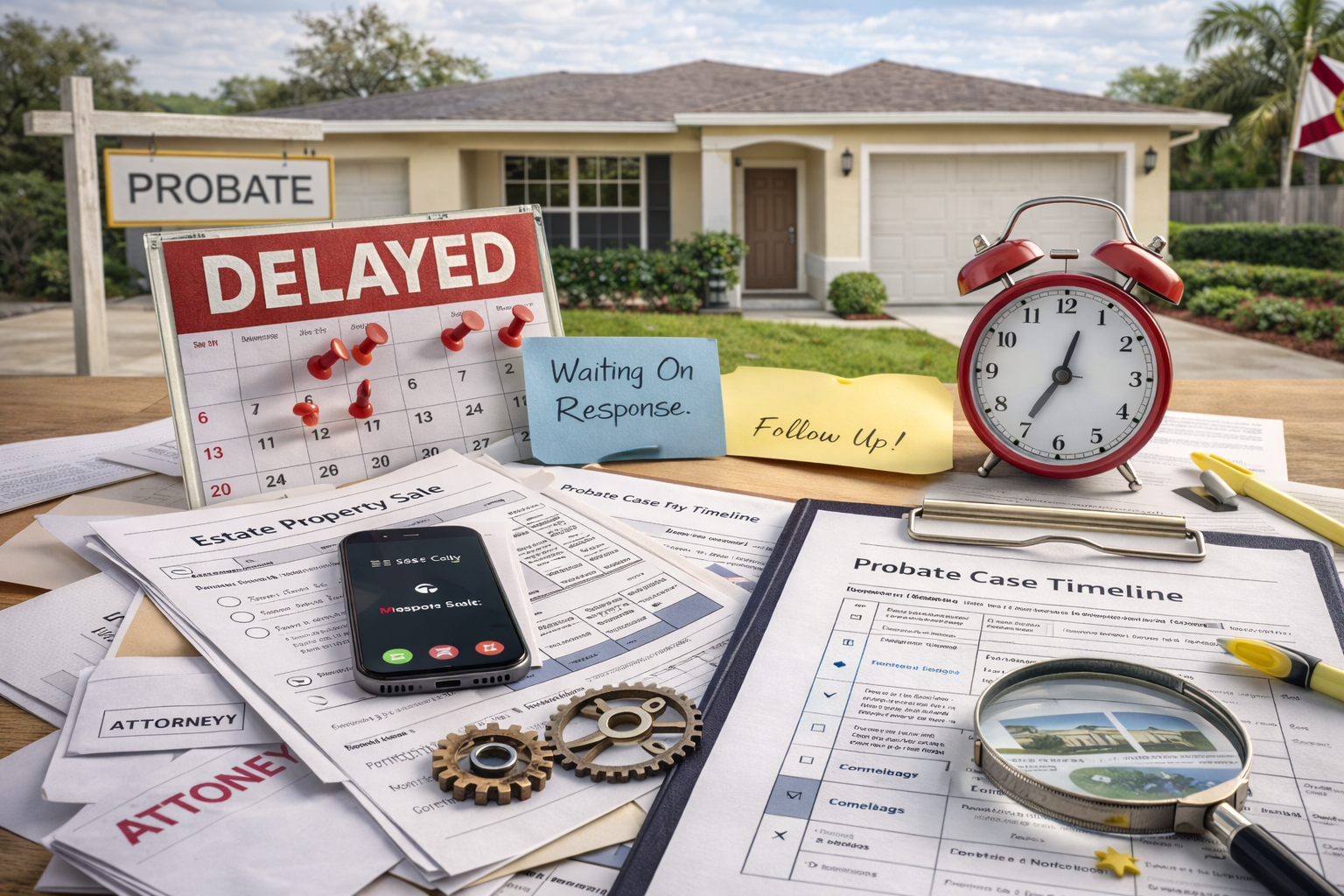
Inherited property timeline and probate home sale process in Florida

Timeline of Selling a Probate Property in Florida

Most families begin looking for a timeline almost immediately.

How long will probate take? When can the property be sold? How quickly can everything finally be resolved?

What they usually discover instead is that probate-property timelines are not driven by a single clock.

They are shaped by a series of decisions, approvals, conversations, preparation steps, and moments where uncertainty either gets resolved — or quietly expands.

That distinction matters because inherited-property situations rarely slow down for only one reason.

They slow down when legal timing, family coordination, property condition, and decision-making all start affecting each other at the same time.


There Is No Single Probate Timeline That Fits Every Property

Some inherited-property situations move relatively smoothly. Others take far longer than the family originally expected.

The difference is rarely explained by the market alone.

Probate timelines are usually influenced by several factors happening simultaneously:

  • when authority is formally established
  • how quickly the property is evaluated
  • whether heirs remain aligned
  • how much preparation the home may require
  • how efficiently decisions are made once options become clear

When those pieces begin aligning early, the process tends to feel organized and manageable.

When they remain unclear, delays start stacking quietly in the background until pressure builds later.


Most Delays Do Not Start With the Court

Families often assume probate timelines are controlled entirely by the legal system.

In reality, many inherited-property delays happen long before the property reaches the market.

The timeline often stretches because:

  • no one fully understands who has authority yet
  • heirs avoid difficult conversations
  • the property condition has not been evaluated
  • the family delays deciding between as-is or preparation strategies
  • repairs, clean-outs, or vendor coordination remain unresolved
  • the property sits while everyone waits for clarity

Those are not always legal barriers.

They are operational gaps.

If authority still feels unclear, it helps to first understand how probate-property authority is usually structured in Florida.

Who has authority to sell a probate property in Florida?


The Probate Timeline Usually Moves in Stages

Although every inherited-property situation is different, most follow a similar sequence.

1. Probate authority is established

A personal representative is formally appointed and gains the ability to begin managing estate-related decisions.

2. The property itself becomes clearer

The family begins understanding:

  • property condition
  • maintenance concerns
  • holding costs
  • buyer expectations
  • likely repair or preparation needs
  • possible pricing range

3. A property strategy is chosen

The family decides whether the inherited property should:

  • be sold as-is
  • receive selective preparation
  • undergo larger renovation coordination
  • be held temporarily

4. The home enters the market

Once authority, preparation, and timing are aligned, the transaction process starts resembling a more traditional sale.

5. Contract and closing

The smoother the earlier stages were handled, the cleaner this stage usually becomes.

Each stage can move efficiently — or become delayed — depending on what clarity existed beforehand.


Condition Problems Often Extend the Timeline Quietly

Inherited homes frequently carry condition issues that families underestimate at first.

The property may still contain years of personal belongings. Deferred maintenance may not become obvious until inspections begin. Insurance concerns, roof issues, landscaping problems, plumbing repairs, or outdated systems may all affect buyer response once the home reaches the market.

That is why the preparation phase often shapes the timeline more than families expect.

Many inherited-property situations require decisions involving:

  • junk removal
  • estate sale coordination
  • contractor walkthroughs
  • handyman work
  • clean-outs
  • repair prioritization
  • pre-listing inspections
  • vendor coordination

The important part is not automatically choosing the fastest option.

The important part is understanding which decisions actually improve the outcome versus which ones simply create additional delay.

Should the inherited property be sold as-is or prepared first?


Heir Alignment Has a Major Impact on Timing

Probate-property timelines often stretch when heirs remain uncertain, misaligned, or emotionally overwhelmed by the process.

One person may want to move quickly while another wants more time. Someone may believe repairs should happen before listing while another prefers a simpler as-is sale.

Sometimes no one wants to be the person forcing the conversation forward.

Meanwhile, the property continues creating responsibilities in the background.

The longer uncertainty lasts, the harder decisions often become.

If multiple heirs are involved, understanding how disagreements typically affect inherited-property situations becomes important early.

Do all heirs have to agree before selling inherited property?


How Probate Timelines Commonly Play Out in Palm Beach County

In Palm Beach County, timelines are often influenced by property condition, coordination complexity, and local buyer expectations.

Inherited homes in Lake Worth or Boynton Beach may need cleanup, maintenance, or preparation before buyers respond well to pricing expectations. Larger homes in other areas may involve landscaping, insurance, vacant-property management, or contractor coordination that extends the preparation phase.

Out-of-state heirs can also increase timing challenges because access, communication, vendor scheduling, and decision-making become harder to coordinate remotely.

In many situations, the timeline improves once the family stops trying to predict an exact closing date and instead focuses on organizing each stage clearly and realistically.

These local inherited-property guides may help explain how preparation and buyer expectations differ by area.

Lake Worth inherited property guidance

Boynton Beach inherited property guidance


Build a Clearer Timeline Before Delays Start Compounding

If your family is trying to understand how long the inherited-property process may realistically take, a structured review can help identify what stage the property is actually in, what decisions remain unresolved, and what may affect timing moving forward.

  • Identify likely preparation or coordination delays early
  • Review condition, repair, and timing considerations clearly
  • Compare as-is versus preparation strategies realistically
  • Coordinate real estate planning alongside the probate attorney

The goal is not to force speed. It is to reduce avoidable delays before pressure builds.

Review the Property Timeline


Continue With the Questions That Shape the Process

Probate timelines are connected to authority, property condition, family coordination, and preparation decisions. These guides explain how those pieces often affect inherited-property situations together.

For a broader overview of inherited-property guidance, preparation strategy, attorney coordination, and local market considerations, you can also return to the main inherited-property hub.

Back to the Inherited Property Guidance Hub


Frequently Asked Questions

How long does it usually take to sell a probate property in Florida?

The timeline depends on probate authority, heir coordination, property condition, preparation needs, and how quickly important decisions are made. Some inherited-property situations move efficiently, while others take longer because unresolved preparation or communication issues continue delaying progress.

What usually causes inherited-property timelines to slow down?

Most delays come from unresolved decisions rather than the market itself. Common issues include unclear authority, heir disagreement, delayed preparation planning, repair uncertainty, vendor coordination problems, and hesitation around whether the property should be sold as-is or prepared before listing.

April 9, 2026

Working With Multiple Heirs When Selling Probate Real Estate in Florida

Florida probate real estate with multiple heirs discussing property decisions, showing coordination and differing priorities

Working With Multiple Heirs When Selling Probate Real Estate in Florida

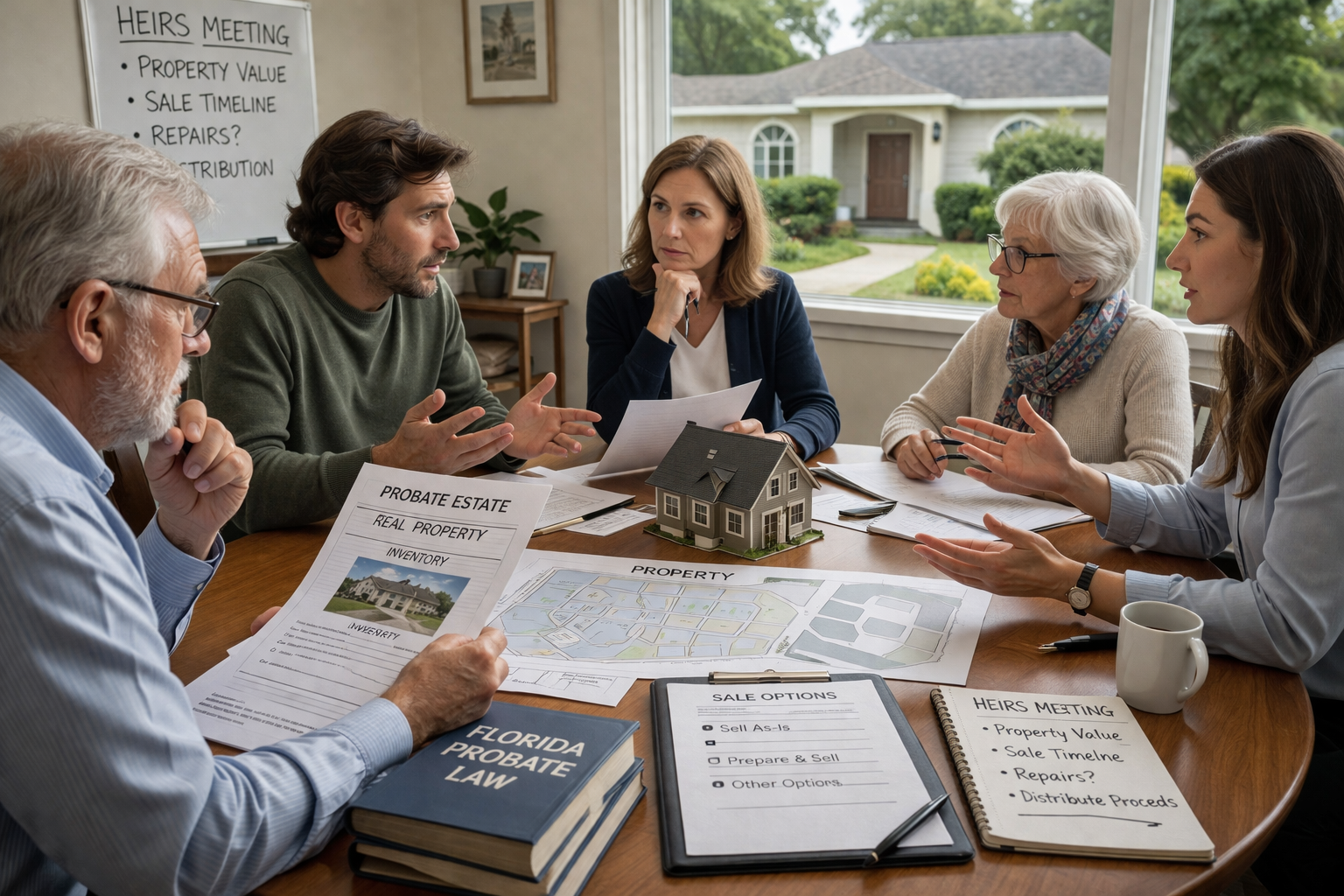
When a probate case involves multiple heirs, the real estate portion often becomes more complex. While selling a property may seem straightforward on the surface, differing priorities, expectations, and timelines can quickly create friction if not addressed early.

For attorneys handling probate in Florida, understanding how to navigate these dynamics is key to keeping the case moving forward efficiently.


Why Multiple Heirs Can Complicate the Process

Each heir may approach the property from a different perspective. Some may prioritize maximizing value, while others may prefer a faster resolution. These differences can slow decision-making and delay progress if there is no clear structure in place.

In many cases, the challenge is not the property itself, but aligning expectations among the parties involved.

For a broader overview of probate real estate handling, see: Probate Real Estate Support for Attorneys in Florida


Common Points of Disagreement

  • Pricing expectations – Differences in perceived property value
  • Timing – Immediate sale versus waiting for a higher price
  • Property condition – Whether to invest in repairs or sell as-is
  • Use of the property – Temporary occupancy versus listing immediately

Without clear direction, these disagreements can extend timelines significantly. Many of these situations contribute directly to what causes delays in probate property sales.


The Importance of Early Alignment

Establishing clarity early in the process helps reduce conflict later. When expectations around value, timing, and strategy are addressed upfront, decisions tend to move more smoothly.

This often involves presenting a realistic picture of the property’s condition and how the market is likely to respond.

For more on valuation: How to Determine the Value of a Probate Property in Florida


Balancing Competing Priorities

In situations with multiple heirs, it is rarely possible to satisfy every preference equally. The focus typically shifts toward finding a practical solution that balances financial outcome with timeline considerations.

In many cases, this means identifying a strategy that is acceptable to all parties, even if it is not the ideal scenario for any single individual.


Reducing Friction During the Sale Process

Once a direction is established, maintaining clear communication becomes critical. Updates, expectations, and next steps should be consistently shared to prevent confusion or second-guessing.

Even small misunderstandings can slow the process when multiple parties are involved.


Choosing the Right Approach for the Property

Decisions around whether to prepare the property or sell it as-is can become more sensitive when multiple heirs are involved. Each party may have a different opinion on how much effort or investment should go into the property.

Grounding this decision in realistic market expectations—and deciding whether to sell as-is or prepare the property—can help move discussions forward.


Keeping the Process Moving

The longer decisions are delayed, the more carrying costs and logistical challenges can build. Establishing a clear path early and maintaining momentum helps prevent unnecessary complications.

In probate cases, steady progress is often more valuable than pursuing a perfect outcome.


Next Steps

If you are working through a probate case involving multiple heirs and real estate, the most effective step is establishing a clear and realistic plan early in the process.

We regularly work with attorneys on situations like this and can help keep the process structured and moving forward.

Schedule a confidential consultation

April 9, 2026

Common Delays When Selling Probate Property in Florida (And How to Avoid Them)

Florida probate property sale delays showing timeline issues, documents, and coordination challenges in real estate process

Common Delays When Selling Probate Property in Florida (And How to Avoid Them)

Delays are one of the most common challenges when a probate case involves real estate. While many cases start with a clear path forward, the property itself often introduces variables that can slow the process down if not addressed early.

For attorneys handling probate in Florida, understanding where delays typically occur—and how to avoid them—can make a meaningful difference in keeping a case on track.


Lack of Early Clarity on Property Value

One of the most frequent sources of delay is uncertainty around the value of the property. Without a clear understanding of realistic market value, decisions tend to stall, and disagreements between parties can develop.

Establishing value early helps create direction and reduces hesitation. Understanding how property value is determined in probate is often the first step in preventing these delays.


Disagreements Between Heirs

When multiple heirs are involved, differing expectations can slow the process significantly. One party may want to sell quickly, while another may want to hold out for a higher price or explore other options.

Without alignment, decisions can be delayed repeatedly, extending timelines unnecessarily. Situations involving working with multiple heirs in probate real estate often require additional coordination to move forward efficiently.


Property Condition Issues

Properties in probate are often not in ideal condition. Deferred maintenance, outdated interiors, or required repairs can complicate the decision of how to bring the property to market.

Delays often occur when there is no clear plan for handling condition-related issues.

For more on this decision: Should Probate Property Be Sold As-Is or Prepared for Market in Florida?


Waiting Too Long to Make Key Decisions

In some cases, delays are not caused by complexity, but by hesitation. Waiting to decide whether to sell, how to price the property, or whether to prepare it can extend timelines while carrying costs continue to accumulate.

Having a structured approach early in the process helps avoid unnecessary delays.


Access and Occupancy Challenges

If the property is occupied or access is limited, showing the home or preparing it for sale can become more difficult. This can slow down listing timelines and reduce buyer interest.

Resolving access issues early helps keep the process moving.


Poor Coordination Between Parties

Even when decisions are clear, lack of coordination between attorneys, representatives, and involved parties can create delays. Missed communication or unclear responsibilities often leads to unnecessary setbacks.

Keeping communication structured and consistent helps prevent this.

For a broader overview of how probate real estate is managed, see: Probate Real Estate Support for Attorneys in Florida.


Balancing Timeline and Outcome

In probate cases, time is often just as important as price. Holding a property longer in pursuit of a higher return can increase carrying costs and extend the case unnecessarily.

Finding the right balance between timing and outcome is key to avoiding delays.


Next Steps

If you are navigating a probate case involving real estate and want to avoid common delays, the most effective step is establishing a clear plan early.

We regularly work with attorneys on probate cases like this and can help keep the property process moving efficiently.

Schedule a confidential consultation

April 9, 2026

How to Determine the Value of a Probate Property in Florida

Florida probate property valuation analysis showing home pricing evaluation, documents, and real estate assessment process

How to Determine the Value of a Probate Property in Florida

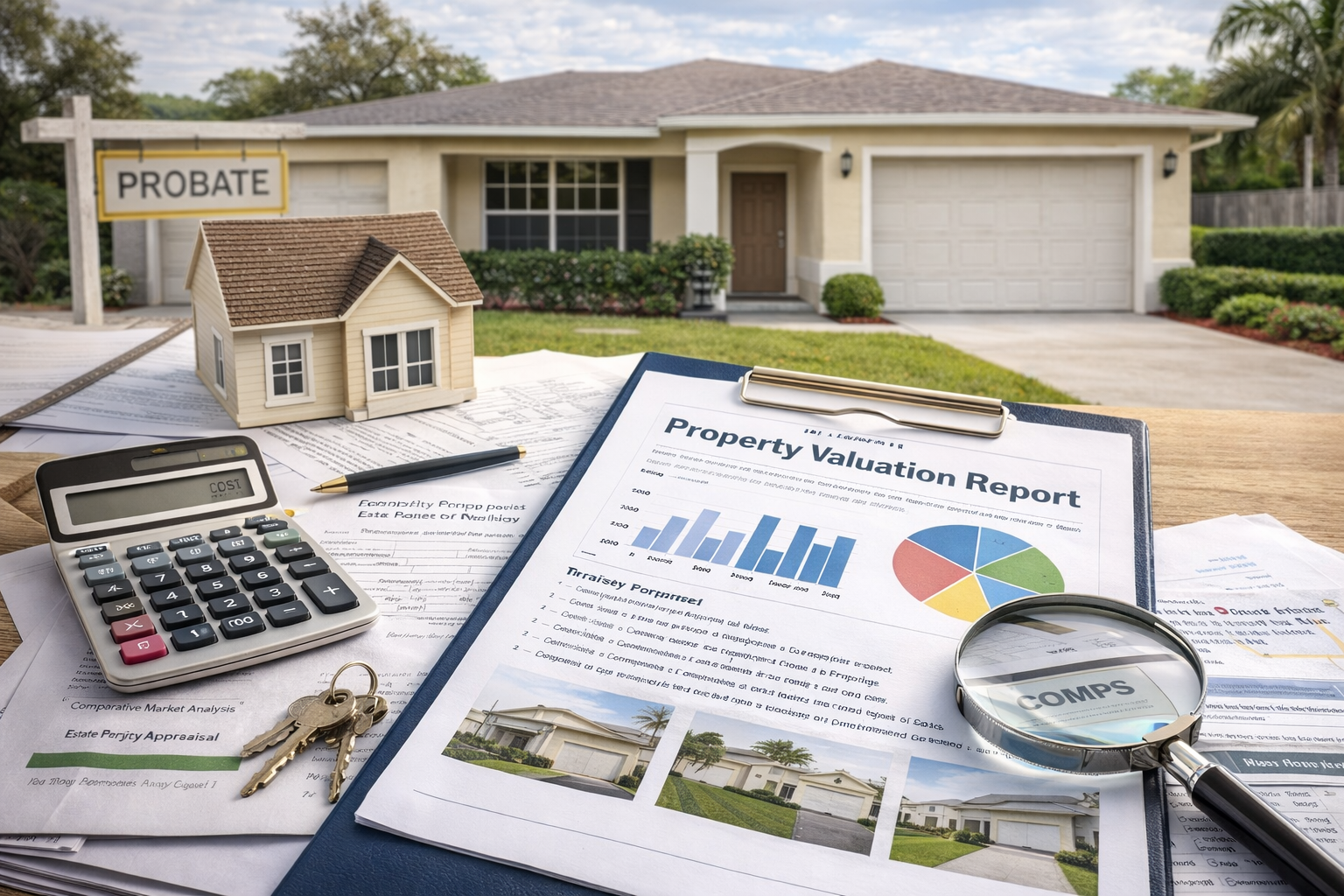
Determining the value of a property in a probate case is one of the most important steps in the entire process. For attorneys handling estates in Florida, valuation affects not only potential sale decisions, but also how expectations are set among heirs and how smoothly the case progresses.

Unlike a typical transaction, probate property valuation often involves additional variables such as condition, deferred maintenance, and differing opinions among interested parties. Establishing a clear, realistic value early can prevent delays and reduce conflict.


Why Accurate Valuation Matters in Probate

Without a clear understanding of value, it becomes difficult to make informed decisions about whether to sell, how to price the property, or whether preparation is justified.

Overestimating value can lead to extended time on market and frustration, while underestimating it can result in leaving equity on the table. In probate cases, both scenarios can create complications that impact the overall timeline.

For a broader overview of how real estate is handled in probate, see: Probate Real Estate Support for Attorneys in Florida.


Key Factors That Influence Value

Several factors affect how a probate property should be valued. These go beyond basic square footage or location and often require a more practical, case-specific evaluation.

  • Property condition – Updated, dated, or requiring repairs
  • Location – Neighborhood demand and surrounding property values
  • Comparable sales – Recent similar sales in the area
  • Market conditions – Current buyer demand and pricing trends
  • Unique characteristics – Waterfront, acreage, or special features

Each of these elements plays a role in determining realistic market value.


Condition vs. Market Expectations

One of the most common challenges in probate valuation is accounting for condition. Many properties have not been updated in years, while others may have deferred maintenance that impacts how buyers perceive value.

In these situations, the valuation should reflect what the market is willing to pay in the property’s current state—not what it could be worth after improvements. Evaluating whether to sell as-is or prepare the property often plays a key role in that determination.


Avoiding Common Valuation Mistakes

  • Relying on outdated or irrelevant comparable sales
  • Ignoring the impact of property condition
  • Pricing based on expectations rather than market reality
  • Failing to adjust for unique property features

These mistakes can lead to delays and unnecessary complications during the sale process.


Balancing Value and Timeline

In probate cases, value is not the only consideration. The timeline also plays an important role. Holding a property longer in pursuit of a higher price can increase carrying costs and extend the duration of the case.

In some situations, a slightly lower price with a faster resolution may be the more practical outcome, especially when factoring in the timeline of selling a probate property.


When Multiple Parties Are Involved

When there are multiple heirs, valuation can become a point of disagreement. One party may believe the property is worth more, while another may prioritize a quicker sale.

Having a clear, objective valuation early helps align expectations and reduce friction between parties.


Next Steps

If you are determining the value of a probate property in Florida, the most effective approach is to base decisions on current market conditions, realistic expectations, and the goals of the estate.

We regularly work with attorneys on probate cases like this and can help establish a clear and practical valuation approach.

Schedule a confidential consultation

April 9, 2026

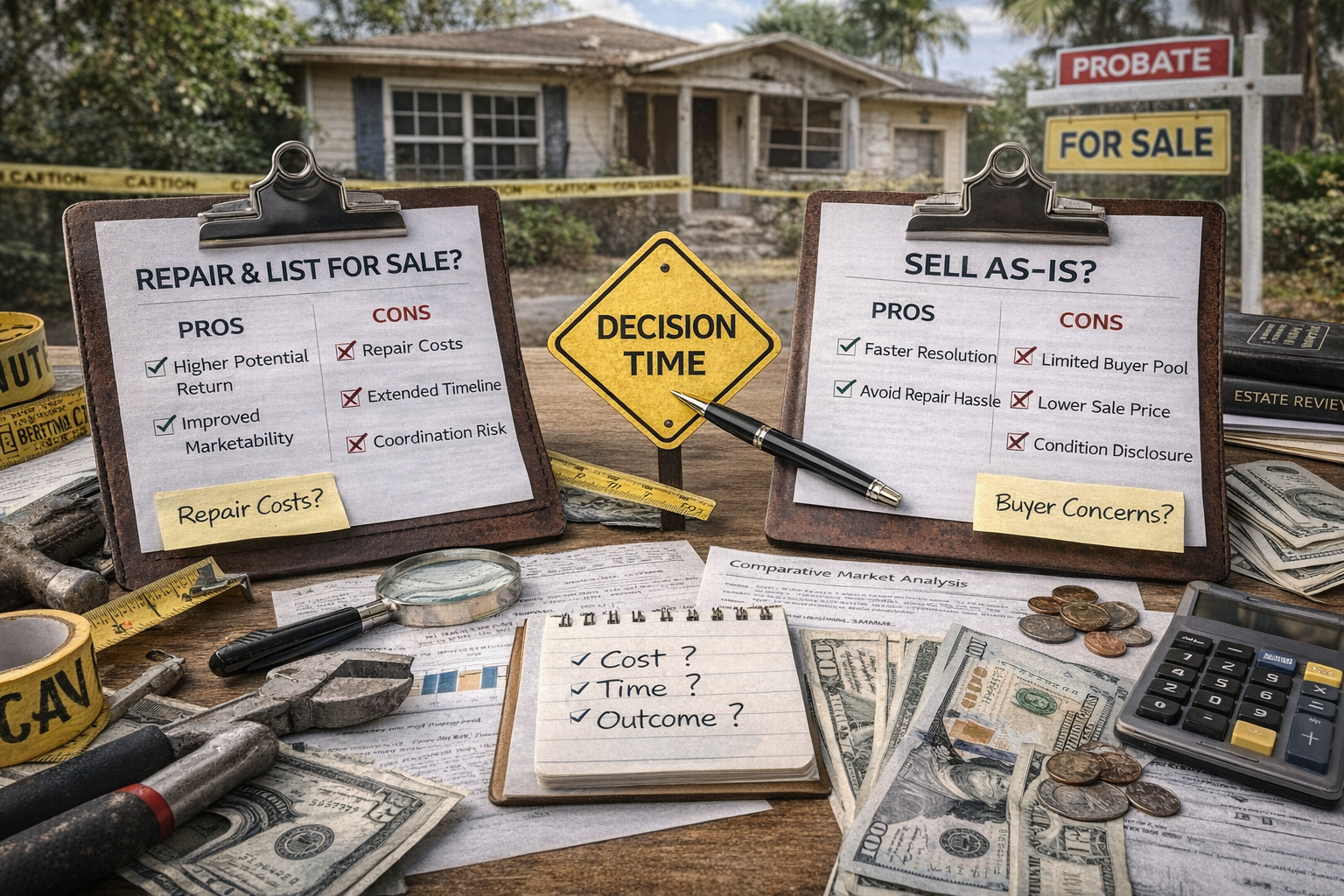
Should You Sell an Inherited Property As-Is in Florida?

Inherited property preparation versus as-is sale decisions in Florida probate

Should Probate Property Be Sold As-Is or Prepared for Market in Florida?

This is usually the point where inherited-property decisions stop feeling theoretical.

The family has likely already spent weeks — sometimes months — trying to understand authority, timing, costs, and what should happen next.

Eventually the conversation narrows into one practical question:

Should the home be sold exactly as it sits, or should time and money be invested into preparing it first?

There is no universal answer because the strongest decision depends on the condition of the property, the family’s financial position, timeline pressure, buyer expectations, and how much coordination everyone is realistically prepared to handle.

That is why this decision often shapes the entire outcome more than families initially expect.


The Simplified Version of This Decision Is Usually Incomplete

Most people first view the situation like this:

  • prepare the property → potentially higher sale price
  • sell as-is → simpler and faster process

That sounds straightforward on paper.

Real inherited-property situations are rarely that clean.

Preparation introduces:

  • time
  • coordination
  • repair exposure
  • vendor management
  • additional carrying costs
  • financial uncertainty

Meanwhile, selling as-is may reduce pressure, simplify the timeline, and eliminate ongoing obligations sooner.

The strongest outcome is not always the option with the highest theoretical sale price.

It is often the option that creates the best balance between timing, stress level, preparation cost, market response, and final net result.


What Selling an Inherited Property As-Is Actually Means

Selling as-is does not automatically mean the property is being “given away.”

It means the home is being positioned honestly based on its current condition without major repair commitments or extensive preparation beforehand.

This path often makes sense when:

  • the property needs substantial repairs
  • the family wants a simpler process
  • holding costs are already becoming expensive
  • multiple heirs are involved
  • the property is being managed remotely
  • funds for improvements are limited

In many inherited-property situations, simplicity itself becomes valuable.

Reducing the timeline, minimizing coordination pressure, and limiting additional spending can sometimes protect the overall outcome better than chasing incremental price increases through extended preparation.

Understand the ongoing costs attached to inherited property


Preparation Does Not Always Mean Full Renovation

One of the biggest misconceptions families have is assuming “preparing the property” automatically means a large renovation project.

Often it means something much more targeted.

Preparation may involve:

  • estate sale coordination
  • personal property clean-outs
  • junk removal
  • light handyman work
  • landscaping cleanup
  • paint or cosmetic improvements
  • pre-listing inspections
  • addressing obvious buyer concerns

Sometimes relatively small improvements create a noticeably stronger buyer response.

Other times, the cost, delay, and coordination effort required to improve the home never fully returns enough value to justify the process.

The goal is not improving the home blindly.

The goal is understanding which preparation decisions actually improve the outcome and which ones simply increase stress and delay.


The Middle Ground Is Often Where Value Starts Leaking Away

The largest problems usually do not come from choosing the “wrong” option.

They come from avoiding the decision altogether.

Families often get stuck between paths:

  • not fully committed to preparing the home
  • not fully comfortable selling as-is
  • waiting for perfect certainty before moving forward

Meanwhile:

  • holding costs continue
  • maintenance continues
  • the property may deteriorate further
  • heir frustration grows
  • the timeline stretches longer

That middle ground initially feels safer because no final decision has been made yet.

In practice, it often becomes the stage where time, money, and clarity slowly start working against the family instead of for them.


This Decision Is Connected to Timing, Costs, and Heir Alignment

Whether an inherited property should be sold as-is or prepared is rarely an isolated question.

It connects directly to:

  • holding costs
  • timeline pressure
  • heir coordination
  • available funds
  • property condition
  • market timing

If those surrounding issues remain unresolved, the property-preparation decision usually becomes heavier and more expensive over time.

These related guides may help explain how those pieces affect inherited-property situations together.

What usually affects inherited-property timelines?

How do disagreements between heirs affect decisions?


How This Commonly Plays Out in Palm Beach County

In Palm Beach County, the gap between inherited-property conditions can be substantial.

Some homes are move-in ready. Others involve deferred maintenance, older systems, insurance concerns, aging roofs, or years of accumulated personal belongings that need to be addressed before buyers respond positively.

In areas like Lake Worth or Boynton Beach, inherited properties may require selective preparation simply to compete effectively with surrounding inventory.

At the same time, some families discover that the coordination effort required to fully prepare the home outweighs the likely financial benefit of waiting.

Out-of-state ownership can increase the complexity further because every repair, inspection, contractor appointment, or clean-out requires remote coordination.

That is often where simpler solutions begin making more practical sense.

These local inherited-property guides may help explain how preparation expectations and buyer behavior differ by area.

Lake Worth inherited property guidance

Boynton Beach inherited property guidance


The Better Question Is Usually About Overall Outcome

Most families initially focus on maximizing sale price.

Over time, the more useful question usually becomes:

Which path creates the strongest overall outcome once timing, costs, coordination, preparation effort, and stress level are all considered together?

That answer is different for every inherited property.

Once the family understands the full picture clearly, the process usually becomes much easier to move forward with confidence.


Compare the As-Is and Preparation Paths Before Spending Time or Money

If your family is trying to determine whether the inherited property should be sold as-is or prepared before listing, a structured review can help clarify what improvements may actually matter, what preparation may not be necessary, and which path realistically fits the situation best.

  • Evaluate condition, repair exposure, and buyer expectations clearly
  • Compare preparation costs against likely outcome differences
  • Review timeline and coordination impact before committing
  • Coordinate property planning alongside the probate attorney

The goal is not to over-improve the property. It is to make the decision with clarity before unnecessary delay builds.

Compare the Property Options


Continue With the Questions That Shape the Process

Inherited-property preparation decisions are closely connected to timing, carrying costs, mortgage obligations, and family coordination. These guides explain how those issues often affect the process together.

For a broader overview of inherited-property guidance, preparation strategy, attorney coordination, and local market considerations, you can also return to the main inherited-property hub.

Back to the Inherited Property Guidance Hub


Frequently Asked Questions

Is it usually better to sell inherited property as-is?

Sometimes. Selling as-is can reduce holding costs, simplify coordination, and shorten the timeline when the property needs significant work or the family wants a cleaner process. In other situations, selective preparation may improve buyer response enough to justify the additional effort.

Does preparing an inherited property always increase the final sale price?

Not always. Some improvements meaningfully strengthen marketability, while others increase cost and delay without creating enough additional value to offset the extra time, coordination, and carrying expenses involved.

April 9, 2026

How Real Estate Is Handled in a Florida Probate Case

Florida probate real estate process with legal documents, house model, and attorney workflow

How Real Estate Is Handled in a Florida Probate Case

When a probate case includes real estate, the property often becomes one of the most important—and sometimes most complex—parts of the process. For attorneys handling estates in Florida, the real estate component is rarely just a transaction. It involves coordination, timing, valuation decisions, and often multiple parties with different expectations.

This overview focuses specifically on how real estate is typically handled within a Florida probate case from a practical standpoint, with an emphasis on clarity, decision-making, and avoiding unnecessary delays.


Understanding the Role of Real Estate in Probate

In many Florida probate cases, the property is either one of the largest assets in the estate or the most time-sensitive one. While financial accounts and other assets may be more straightforward to distribute, real estate introduces additional variables—physical condition, market timing, ownership structure, and ongoing costs.

Because of this, the handling of the property often influences the overall pace of the case. A well-managed real estate process can help move things forward efficiently, while uncertainty or delays can extend timelines significantly.

For a broader look at how real estate support fits into probate cases across the state, see: Probate Real Estate Support for Attorneys in Florida.


Initial Considerations Before Any Sale Decision

Before determining whether the property should be sold, retained, or transferred, several key factors need to be understood clearly.

  • Ownership structure – How the property is titled
  • Mortgage status – Existing loan and payoff requirements
  • Property condition – Market-ready or needs work
  • Occupancy – Whether someone is living in the home
  • Carrying costs – Taxes, insurance, utilities, maintenance

Clarity at this stage prevents delays later.


Establishing Property Value

Determining value early in the process is critical. Without a clear understanding of market value, it becomes difficult to make informed decisions or manage expectations among heirs. A closer look at how to determine the value of a probate property can help guide this step.


Deciding Whether to Sell the Property

Once value and condition are understood, the next step is deciding whether to sell. While selling is common, some estates retain or transfer ownership depending on the situation.

In many cases, this decision comes down to practicality—whether maintaining the property makes sense financially and logistically.


Preparing the Property for Market

If the decision is made to sell, the next step is evaluating whether to prepare the property or sell it as-is. This depends on condition, timeline, and the goals of the estate. Understanding whether to sell as-is or prepare the property can help clarify the best direction.


Managing the Sale Process

Once listed, the process includes marketing, negotiation, and closing—but with additional coordination between attorneys, representatives, and heirs.

Even straightforward cases can slow down if expectations are not aligned early.


Common Challenges That Affect Timing

  • Disagreements between heirs
  • Uncertainty around property value
  • Deferred maintenance
  • Access or occupancy issues
  • Lack of a clear plan

Many of these issues are outlined in common delays when selling probate property, which can significantly impact timelines if not addressed early.


Coordinating With Multiple Parties

Many probate cases involve multiple decision-makers. Without structure, this can lead to delays and stalled decisions. Situations involving working with multiple heirs in probate real estate often require additional coordination to keep the process moving.


Next Steps

If you are handling a probate case involving real estate, the most helpful next step is gaining clarity around value, condition, and the best path forward.

We regularly work with attorneys on probate cases like this and can step in as much or as little as needed.

Schedule a confidential consultation

April 7, 2026

Florida Divorce Buyout Guide | Equity, Refinancing & Keeping the House

divorce home buyout in florida showing equity transfer and refinancing process

A Divorce Buyout Usually Feels Simpler Before the Financial Structure Changes

One person wants to keep the home.

The other wants their equity and a clean financial separation.

At first, a buyout often sounds like the easiest path forward.

No listing process.

No move.

No disruption to the household.

But once the numbers become fully defined, many homeowners realize the buyout itself can become the most financially demanding part of the entire divorce.

Because keeping the property is not just about remaining in the house.

It is about carrying the entire ownership structure alone after the financial framework changes.

What a Divorce Buyout Actually Means

A divorce buyout is often misunderstood as a simple exchange.

One spouse keeps the home.

The other receives their share.

But financially, the transition is much larger than that.

A buyout usually means:

  • assuming full mortgage responsibility
  • compensating the other spouse for their equity position
  • qualifying independently for financing
  • absorbing all future ownership costs alone

That includes:

  • taxes
  • insurance
  • maintenance
  • HOA obligations
  • repair exposure
  • long-term carrying costs

The structure may sound straightforward.

The financial impact rarely is.

Where the Buyout Decision Usually Starts to Shift

Most homeowners initially approach a buyout with one assumption:

“If I can afford the payment, I can keep the house.”

That is usually where the first misunderstanding begins.

Because the decision is not based only on the mortgage payment itself.

It is based on the entire financial position after the buyout is complete.

This is where understanding how equity is actually divided during divorce becomes critical.

The equity number determines the structure of the buyout, not simply what the property feels emotionally worth to either side.

And once the equity position is fully defined, the range of realistic options often becomes much smaller.

The Financial Pressure Most People Don’t See Coming

This is where many buyout situations begin to tighten.

Even when both parties initially agree to the plan, the financial structure may not cooperate.

Because once the ownership transfers to one person, the entire qualification framework changes.

That includes:

  • income requirements
  • debt-to-income ratios
  • credit structure
  • refinancing terms
  • cash required to complete the buyout

Many homeowners discover that wanting to keep the property and qualifying to keep it are two very different realities.

That is why some buyouts stall even after both parties believe the decision has already been made.

Why Buyouts Often Create Conflict Between Both Parties

Buyouts also tend to create a specific kind of pressure inside the divorce itself.

One spouse may assume they will remain in the home.

The other may expect immediate payout and financial separation.

If refinancing delays, financing problems, or equity disputes appear, the gap between those expectations widens quickly.

This is where situations often begin shifting toward what happens when one spouse refuses to move the process forward.

At that stage, the issue stops being purely emotional.

It becomes structural and financial.

How Divorce Buyouts Commonly Play Out Across Palm Beach County

Buyout decisions tend to change significantly depending on the type of property and location involved.

In areas like Boca Raton and Jupiter, higher home values often increase the equity portion of the buyout enough to make refinancing significantly more difficult.

In Palm Beach Gardens, HOA obligations, insurance costs, and community structure often become major deciding factors.

In Wellington, the decision is frequently tied to lifestyle continuity, schools, equestrian property considerations, or maintaining long-term stability for the family.

The concept of a buyout remains the same everywhere.

The feasibility changes based on the financial structure surrounding the property.

When a Divorce Buyout Usually Works Well

Buyouts tend to work best when three things align clearly:

  • the equity position is realistic and fully understood
  • the spouse keeping the property can qualify independently
  • the long-term ownership costs remain sustainable after the divorce

When those pieces align properly, the process can move relatively cleanly and create financial clarity for both parties.

When the Buyout Becomes the Second Problem

Most difficult buyout situations have one thing in common:

The decision was driven emotionally before it was evaluated structurally.

Wanting to remain in the property does not automatically make the ownership sustainable long term.

And forcing a buyout without fully understanding the financial consequences often creates:

  • ongoing financial strain
  • refinancing pressure
  • future resale risk
  • extended divorce conflict
  • ownership instability later

That is why a buyout should never be treated as a shortcut around the larger financial reality.

It is simply one possible path inside it.

The Real Decision

The real question is not:

“Can I keep the house?”

It is:

“Does keeping this property create long-term stability—or does it create a second financial problem after the divorce is already over?”

Once that answer becomes clear, the right direction usually becomes much easier to define.

Trying to understand whether a divorce buyout actually works financially?

See how your home value, equity position, refinance structure, and long-term carrying costs affect what options are realistically sustainable before making the wrong decision.

No pressure. Just a clear real estate conversation.

Request a Divorce Real Estate Consultation

Frequently Asked Questions

How is a divorce buyout calculated in Florida?

A divorce buyout is typically based on the property’s current market value minus the remaining mortgage balance, with each spouse receiving their agreed share of the equity position.

Can one spouse keep the house without refinancing?

In many situations, refinancing is required to remove the other spouse from the mortgage and transfer full financial responsibility to the spouse keeping the property.

April 7, 2026

What Happens If One Spouse Refuses To Sell The House During Divorce In Florida?

spouse refusing to sell house during florida divorce creating legal and financial conflict

You Can’t Force Agreement—But You Can Still Force a Decision

The conversation ends before the decision does.

One person is ready to sell. The other refuses.

At that moment, the house stops being a shared asset and becomes a point of leverage.

What looks like a delay is actually a structural shift—one that changes how the entire situation moves forward from that point on.


Refusal Doesn’t Pause the Outcome

A refusal feels like a block.

It isn’t.

It simply removes cooperation from the process.

Once that happens, the decision no longer depends on alignment—it depends on structure, ownership, timing, and which pressures continue building while the disagreement stays unresolved.

The question becomes:

What happens when one person moves forward emotionally while the property remains financially tied to both?

That is where most situations begin to tighten.


Where the Decision Immediately Moves

Once cooperation disappears, the process narrows around two things:

control and exposure.

This is where who actually has legal and financial rights to the property starts determining what is realistically possible.

From there, the next pressure point appears quickly:

can one party act independently?

That leads directly into whether a sale can happen without full cooperation and where the legal boundaries around ownership actually sit.

At that point, the issue stops being emotional.

It becomes procedural.

And procedural decisions continue moving whether both people are emotionally ready or not.


Why Refusal Happens in the First Place

Refusal is rarely about the house alone.

Most resistance is tied to something underneath the property itself:

  • fear of financial instability
  • attachment to the lifestyle tied to the home
  • concern about losing control of the process
  • disagreement over value, timing, or affordability
  • fear that selling permanently closes a chapter that one person is not ready to let go of

Those pressures are real.

But they do not stop the financial structure from continuing to evolve underneath the disagreement.

That is where many situations begin to deteriorate quietly.


How This Changes Across Palm Beach County

In Palm Beach County, refusal rarely looks identical from one city to the next because the property itself changes the pressure structure.

In higher-equity markets like Boca Raton and Jupiter, disagreement often intensifies because the financial gap tied to the property is larger.

In Delray Beach, the conflict is frequently tied to lifestyle attachment, timing, or preserving access to a specific type of ownership.

In Wellington, refusal is often connected to long-term stability, schools, equestrian property structures, or the cost of replacing the lifestyle attached to the home.

In areas like Loxahatchee and The Acreage, refusal is commonly tied to land use, privacy, animals, equipment, or operational attachment to the property itself.

The pattern stays consistent:

the longer the disagreement lasts, the more the property starts shaping the outcome instead of the people involved.


The Financial Pressure Doesn’t Wait

While one person refuses to move forward, the property continues operating in the background.

The mortgage still exists.

Insurance premiums still renew.

Taxes still accumulate.

Maintenance still compounds.

And over time, something important starts to happen:

delay begins changing leverage.

One side may begin absorbing more cost.

Deferred repairs may start reducing the property’s condition.

Refinancing opportunities may tighten.

Equity positions may shift as the timeline stretches.

What originally felt like “buying time” quietly becomes increased financial exposure for both people.


Why Waiting Rarely Restores Stability

Most people assume delaying the decision preserves flexibility.

In reality, prolonged refusal usually creates the opposite effect.

Because over time:

  • financial fatigue increases
  • negotiating positions harden
  • emotional attachment deepens
  • repair and upkeep pressure compounds
  • the eventual resolution becomes more expensive than it would have been earlier

That is why these situations rarely improve through passive delay alone.

The structure underneath the property keeps moving whether cooperation returns or not.


How These Situations Actually Resolve

Despite the resistance, most situations still resolve through one of the same structural outcomes:

  • clear financial exposure forces a sale decision
  • a buyout becomes the only workable separation structure
  • court involvement overrides the disagreement entirely

But almost none of these outcomes become easier because the process stalled first.

In most cases, delay simply changes who absorbs more pressure while the final direction becomes unavoidable anyway.


The Real Question

This is not really about whether one spouse refuses to sell.

It is about what that refusal actually changes.

Does it create a different outcome?

Or does it simply increase the financial and emotional cost of reaching the same outcome later?

Once that distinction becomes clear, the direction forward usually becomes much easier to define.

Because once cooperation disappears, clarity becomes the only thing preventing the situation from becoming more expensive than it already is.

Stuck in a situation where the next step isn’t agreed on?

See how ownership, equity, timing, and financial exposure determine what options are actually available before the situation becomes harder to unwind.

Request a Divorce Real Estate Consultation

Frequently Asked Questions

What happens if one spouse refuses to sell the house during divorce in Florida?

The process usually shifts into legal and financial pathways where ownership rights, court structure, refinancing ability, or negotiated resolution determine what happens next.

Can a house still be sold if one spouse does not agree?

Yes. Depending on ownership structure and court proceedings, a sale can still move forward even when both parties do not voluntarily agree.