Insights, strategy, and real estate guidance across Palm Beach County.

April 7, 2026

Can One Spouse Sell A House Without The Other In Florida?

one spouse attempting to sell house without consent during florida divorce situation

Ownership Decides What Happens Next—Not Urgency

One person wants the house sold immediately.

The other refuses to sign.

At that point, motivation stops mattering.

The only thing that controls what happens next is ownership—and how that ownership is recognized inside the divorce itself.

Because in situations like this, urgency does not create authority.


Why This Situation Feels Like It Should Move Faster

When one spouse is ready to act and the other is not, the pressure builds quickly.

The house feels stuck.

The timeline feels blocked.

And emotionally, it starts to feel like the person refusing to cooperate is controlling the entire outcome.

But real estate decisions during divorce are not controlled by urgency.

They are controlled by structure.

Ownership.

Title.

Marital rights.

Enforceability.

Those factors determine what can actually happen—not who wants it more.


What Actually Controls the Sale

In most divorce situations, both spouses must participate in the sale of the property.

That requirement is not emotional.

It is structural.

If both parties are on title, both typically must sign.

But even when only one spouse appears on title, that still does not automatically create unilateral control over the property.

Because marital property rules can still create shared financial interest inside the divorce.

This is where many situations become confusing.

Ownership on paper and ownership inside the divorce are not always the same thing.

That distinction is what usually changes the direction of the situation.


Where the Situation Starts Tightening

Once it becomes clear that one person cannot simply move forward alone, the pressure shifts immediately.

The issue is no longer:

“Can we list the house?”

It becomes:

What structure actually controls the decision from here?

This is where the process begins intersecting with what happens when one spouse refuses to cooperate and how that refusal starts affecting timing, leverage, and financial exposure.

From there, the next question usually becomes whether resolution can happen voluntarily—or whether the structure of the divorce eventually overrides the disagreement.

That is where situations begin moving toward whether selling the home is ultimately required at all based on the broader financial outcome.

At that point, the process stops revolving around preference.

It becomes about what is enforceable.


How This Plays Out Across Palm Beach County

The pressure behind these situations changes dramatically depending on the property itself.

In higher-value areas like Boca Raton and Palm Beach Gardens, disagreement is often intensified by larger equity positions and concern over timing the sale incorrectly.

In West Palm Beach and Lake Worth, ongoing carrying costs and affordability pressure tend to force decisions faster because the property continues costing money while the disagreement remains unresolved.

In places like Wellington, refusal is frequently tied to stability, school structure, or maintaining a long-term lifestyle tied to the home itself.

In The Acreage and Loxahatchee, the disagreement is often connected to land use, animals, equipment, or operational attachment to the property rather than the home alone.

The legal structure stays largely the same.

The financial and emotional pressure underneath it changes based on the asset.


What People Miss About “Just Selling the House”

Many people assume listing the property solves the problem.

It doesn’t.

Because without cooperation—or a structure that replaces cooperation—the process usually cannot complete cleanly.

Even if a buyer is found, signatures, agreements, and enforceable authority still matter.

At the same time, the property continues operating in the background while the disagreement stays unresolved.

The mortgage still exists.

Taxes still accumulate.

Insurance still renews.

Maintenance still compounds.

And over time, something important starts happening:

delay begins changing leverage.

One side may begin carrying more financial burden.

Deferred maintenance may start reducing property condition.

Refinancing windows may tighten.

Financial fatigue begins replacing negotiation flexibility.

That is why prolonged disagreement rarely preserves options as well as people expect.


What Actually Moves the Situation Forward

When one spouse cannot act independently, resolution usually comes from one of three directions:

  • both parties eventually align once the numbers become unavoidable
  • one party exits through a structured buyout
  • court structure ultimately defines what happens next

But almost none of these outcomes become easier because the situation stalled first.

In most cases, delay simply changes who absorbs more pressure while the final outcome becomes increasingly difficult to avoid.


The Real Decision

The real question is not:

“Can I sell the house without the other person?”

It is:

“What structure actually controls this property—and how much financial pressure builds while the decision remains unresolved?”

Once that becomes clear, the next step is no longer blocked.

It becomes defined.

Because once cooperation disappears, clarity becomes the only thing preventing the situation from becoming more expensive than it already is.

Trying to figure out what can actually happen in your situation?

See how ownership structure, equity, timing, and financial exposure determine what options are realistically available before the situation becomes harder to unwind.

Request a Divorce Real Estate Consultation

Frequently Asked Questions

Can one spouse sell a house without the other in Florida?

In most situations, no. If both spouses have ownership rights or both appear on title, the sale usually requires participation from both parties unless court structure changes the process.

What happens if one spouse wants to sell and the other does not?

The situation typically shifts into negotiation, buyout discussions, or legal resolution depending on ownership structure, financial exposure, and the broader divorce process.


April 7, 2026

How Is Home Equity Divided In A Florida Divorce?

home equity division during florida divorce showing property value split and financial calculation

The Equity Number Decides More Than the House

Everything feels negotiable—until the numbers are clear.

Before that, both sides are operating on assumptions.

What the home is worth.

How much each person should receive.

Whether keeping the property is realistic.

What sounds manageable in theory often changes the moment the equity is actually calculated.

Because once the number becomes real, the range of possible outcomes usually becomes much smaller.


Why the Equity Number Controls the Entire Direction

Most people think equity is simply a calculation.

It isn’t.

It becomes the financial framework underneath every other decision.

That number determines:

  • whether one person can realistically keep the home
  • how large a buyout would actually need to be
  • how much money each person may walk away with
  • whether selling becomes financially unavoidable

Until equity is clearly defined, every conversation about the property is built on estimation instead of structure.

And in divorce situations, assumptions usually collapse once the numbers are fully exposed.


Why “Fair” Creates More Confusion Than Clarity

Florida follows equitable distribution.

That phrase causes confusion constantly.

Because many people hear “equitable” and immediately assume “equal.”

But equitable distribution is not built around emotional fairness.

It is built around what is legally and financially justified inside the structure of the divorce.

In some situations, equity is divided evenly.

In others, the structure shifts because of contribution, agreements, offsets, or what ultimately happens with the property itself.

The framework allows flexibility.

The numbers do not.

And once the equity position becomes clear, the emotional version of the decision usually begins giving way to the financial one.


Where the Situation Starts Tightening

Once the equity number is established, the next pressure point shows up immediately:

What can each person realistically do with their portion of the outcome?

This is where decisions begin branching into completely different directions.

If one spouse wants to remain in the home, the conversation usually shifts into whether a buyout can actually be structured and sustained.

That is where refinancing ability, affordability, and long-term carrying cost begin replacing emotion as the deciding factor.

If the numbers do not support that path, the focus typically moves toward whether the timing of the sale changes the financial outcome enough to alter the decision.

This is the point most people do not expect:

the equity number does not simply answer a question—it forces the next one.


How This Changes Across Palm Beach County

Equity pressure behaves differently depending on where the property sits.

In higher-value markets like Boca Raton and Jupiter, relatively small valuation shifts can move enormous amounts of equity between both parties.

That means timing, appraisal positioning, and carrying costs often become far more important than people initially expect.

In areas like Palm Springs and Greenacres, the issue is often less about dividing a large equity position and more about whether the property remains financially sustainable after the household structure changes.

In markets like Lake Worth, condition and repair burden can materially influence how much equity is actually available once the home reaches the market.

In Wellington, larger homes, gated communities, and equestrian properties often create situations where the carrying cost begins limiting what options are truly realistic.

The same concept applies everywhere.

The pressure created by the number changes based on the property itself.


The Part Most People Miss About Equity

Equity is not fixed.

It moves.

That movement becomes one of the most underestimated parts of the entire divorce process.

Because while the situation remains unresolved:

  • market values continue changing
  • mortgage balances continue shifting
  • taxes and insurance continue accumulating
  • maintenance costs continue affecting the property

That means waiting does not preserve the outcome.

It actively changes it.

Sometimes gradually.

Sometimes aggressively.

And once delays extend long enough, the financial structure underneath the original plan may no longer exist in the same form.


When the Numbers Reshape the Entire Decision

Before the equity position is calculated, almost every option feels open.

Keeping the home feels possible.

A buyout feels manageable.

Waiting feels harmless.

Then the actual numbers arrive.

And suddenly:

  • the refinance no longer works
  • the buyout becomes too large
  • the carrying cost becomes unsustainable
  • selling becomes less optional than expected

This is the point where the property stops being conceptual.

The structure becomes real.

And once that happens, the emotional version of the plan usually begins collapsing into the financial one.


The Real Decision

The real question is not:

“How is equity divided?”

It is:

“What does this equity position realistically allow each person to do next?”

Because once that answer becomes clear, the direction forward usually stops feeling theoretical.

It becomes defined.

And in most divorce real estate situations, clarity changes the outcome faster than emotion ever does.

Need to understand what your equity position actually means for your situation?

See how your home value, mortgage balance, timing, and carrying costs affect what options are realistically available before making a decision that becomes harder to reverse later.

Request a Divorce Real Estate Consultation

Frequently Asked Questions

Is home equity always split 50/50 in a Florida divorce?

No. Florida follows equitable distribution, which means equity is divided based on what is considered legally and financially appropriate within the divorce—not automatically equally in every situation.

Does the timing of selling the home affect how much equity is available?

Yes. Market movement, mortgage balances, insurance, taxes, maintenance, and carrying costs can all change the amount of equity available before the property is ultimately sold or transferred.

April 7, 2026

Should You Sell Your House Before Or After Divorce In Florida?

timing decision to sell house before or after divorce in florida affecting equity and outcome

Timing Doesn’t Just Affect the Sale—It Changes the Outcome

The decision is rarely just whether to sell the house.

It becomes:

When does selling create the least amount of long-term pressure?

Because before the divorce is finalized, the home is still part of a shared financial structure.

After the divorce is finalized, the property often becomes a lingering connection that continues shaping both sides financially.

That distinction changes more than people expect.

And in many situations, the timing decision quietly becomes the decision that controls everything else.


Why Timing Stops Being a Scheduling Issue

At first, both options usually sound workable.

Sell before the divorce.

Sell after the divorce.

But once the numbers become clearer, timing stops being logistical and starts becoming financial.

Because the timeline directly affects:

  • how long financial overlap continues
  • how much coordination remains necessary
  • how carrying costs continue affecting equity
  • how exposed both parties remain to market movement

That means timing is not neutral.

It actively reshapes the structure surrounding the property.


What Selling Before Divorce Actually Changes

Selling before finalizing the divorce converts the property into a defined financial number.

The house stops operating as a shared asset requiring ongoing coordination.

Instead, the conversation becomes centered around proceeds, equity, and financial separation.

That shift removes one of the largest variables from the process.

It also tends to simplify what happens next because:

  • ongoing ownership costs stop accumulating
  • market exposure is reduced
  • future disagreement tied to the property becomes less likely

This is where whether selling is actually necessary becomes part of the larger decision framework.

Because in some situations, eliminating the property early creates far more flexibility than continuing to carry it through the divorce itself.


What Selling After Divorce Usually Means

Waiting keeps the property connected to both parties longer.

Even after legal issues are resolved, the financial relationship tied to the home may continue operating.

That means:

  • shared obligations remain active
  • decisions still require coordination
  • market conditions continue influencing the outcome
  • future disagreements can continue affecting the timeline

Sometimes this structure is intentional.

For example, one person may remain in the home temporarily for stability, children, or financial transition purposes.

But in many situations, what begins as a short-term delay quietly becomes a longer-term source of friction.

Because unresolved property decisions rarely become easier simply through time alone.


Where Timing Starts Changing the Equity Position

Most people underestimate how quickly timing begins affecting the actual financial outcome.

Because while the property remains unsold:

  • mortgage balances continue shifting
  • insurance and taxes continue accumulating
  • maintenance and repair costs continue impacting the asset
  • market conditions continue moving the value itself

This is why timing connects directly back to how equity is ultimately calculated and divided.

What appears to be a harmless delay can quietly change:

  • how much equity exists
  • who absorbs additional cost
  • which options remain financially workable

In many situations, the timeline itself begins reshaping the outcome before either side fully realizes it.


How This Changes Across Palm Beach County

Timing pressure behaves differently depending on the property and location involved.

In higher-value markets like Boca Raton and Jupiter, even moderate market movement can shift substantial amounts of equity over relatively short periods of time.

That means delays often carry much larger financial consequences than people initially expect.

In areas such as West Palm Beach and Lake Worth, ongoing carrying costs and property condition often begin creating pressure that pushes the decision toward selling sooner.

In Royal Palm Beach, timing decisions are frequently tied to maintaining short-term stability while both parties determine what long-term ownership realistically looks like.

In Wellington, larger homes, gated communities, and equestrian properties can make prolonged holding periods significantly more expensive to sustain.

The calendar is the same everywhere.

The financial pressure behind the timing decision is not.


The Mistake That Quietly Changes the Outcome

Most timing mistakes begin with one assumption:

“Waiting probably won’t change much.”

But almost everything tied to the property continues moving while the decision remains unresolved.

Every month continues carrying:

  • mortgage obligations
  • insurance exposure
  • maintenance responsibility
  • market uncertainty
  • shared financial overlap

That means waiting is not passive.

It actively reshapes the position both sides are standing in.

Sometimes subtly.

Sometimes aggressively.

And once enough time passes, the original plan may no longer work the same way it did when the conversation first started.


When Timing Stops Being Flexible

Before the numbers are clear, timing feels adjustable.

After the financial structure becomes visible, the flexibility usually narrows quickly.

Holding the property longer may:

  • reduce available equity
  • increase financial strain
  • extend conflict between both parties
  • limit future options that once seemed realistic

This is the point where the timing decision becomes less emotional and more structural.

Because eventually the property itself begins forcing clarity.


The Real Decision

The real question is not:

“Should we sell before or after the divorce?”

It is:

“Which timing structure reduces long-term complexity—and which one quietly extends it?”

Once that answer becomes clear, the right direction usually stops feeling uncertain.

It becomes measurable.

Trying to decide when selling actually creates the strongest financial position?

See how timing, equity movement, carrying costs, and market exposure affect what options are realistically available before the decision becomes more expensive to reverse later.

Request a Divorce Real Estate Consultation

Frequently Asked Questions

Is it usually better to sell a house before or after divorce in Florida?

Selling before divorce often simplifies financial separation and reduces ongoing coordination, while selling afterward may extend shared obligations and continued financial overlap.

Does waiting to sell affect the amount of equity available?

Yes. Market movement, mortgage balances, insurance, taxes, maintenance, and carrying costs can all increase or reduce the amount of equity available depending on when the property is sold.

April 7, 2026

What Happens To A House During Divorce In Florida?

what happens to a house during divorce in florida showing possible outcomes and decisions

The House Doesn’t Decide Itself—It Gets Decided

At the beginning, nothing about the house feels settled.

The mortgage still exists.

Both names may still be attached.

The property is still occupied, maintained, and financially active.

From the outside, it can feel like nothing has changed yet.

But underneath the surface, the situation is already moving toward an outcome.

Because during a divorce, the house does not remain neutral indefinitely.

It slowly moves toward whichever direction the financial structure allows.


What Actually Happens First

Before any formal decision is made, the property usually stays exactly where it is:

  • financially active
  • jointly connected
  • still influencing both parties

That means:

  • mortgage payments continue
  • insurance and taxes continue
  • maintenance responsibilities continue
  • financial overlap continues

This is the phase where many people mistakenly believe time is neutral.

It isn’t.

Because while the decision remains unresolved, the financial structure underneath the property keeps moving.


How the Outcome Starts Quietly Taking Shape

The direction the house ultimately takes usually begins forming around two things:

agreement and feasibility.

If both sides align and the numbers support the plan, the process tends to move more cleanly.

If the numbers do not support the plan—or agreement starts breaking down—the situation begins narrowing quickly.

This is where understanding who realistically ends up with the property becomes the next major pressure point.

At the same time, the conversation usually begins shifting toward whether the home eventually needs to be sold in order to fully separate the financial structure.

From this point forward, the outcome typically starts becoming less emotional and more mathematical.


The Three Directions Most Situations Eventually Move Toward

Despite how complicated the situation may initially feel, most divorce real estate situations eventually narrow into one of three outcomes:

  • the home is sold and converted into defined equity
  • one party keeps the property through refinancing or structured buyout
  • the decision is temporarily delayed under specific financial terms

What makes these situations difficult is that people often treat these as equal choices at the beginning.

In reality, the property itself usually determines which path is financially sustainable.

Because eventually:

  • the carrying costs become clearer
  • the equity position becomes defined
  • the affordability gap becomes harder to ignore

That is when the outcome starts becoming less flexible.


Where the Pressure Quietly Builds

While the decision remains unresolved, the property continues operating every single month.

The mortgage still needs to be paid.

Insurance still exists.

Taxes still accumulate.

Maintenance issues still develop.

That creates a slow but important shift:

time itself begins influencing the outcome.

What originally feels like “waiting for clarity” can quietly become:

  • reduced equity
  • extended financial overlap
  • higher carrying costs
  • more difficult negotiations later

This is why unresolved property situations often become harder—not easier—the longer they remain financially connected.


How This Changes Across Palm Beach County

The process itself remains similar throughout South Florida.

The pressure points change depending on the property and location involved.

In areas like West Palm Beach, different property types create very different financial structures, which often changes how quickly the property needs to be resolved.

In Wellington, larger homes, gated communities, and equestrian properties frequently create situations where long-term carrying costs become the defining factor.

In Stuart, waterfront ownership, insurance, and lifestyle attachment often shape how long the property remains part of the process.

In Port St. Lucie, affordability and long-term sustainability usually determine whether remaining in the home is realistic after the household structure changes.

The same overall framework exists everywhere.

The financial pressure shaping the outcome changes from property to property.


The Moment the Situation Usually Changes

Every divorce real estate situation eventually reaches the same turning point.

That moment happens when:

  • the property value becomes clear
  • the equity position is accurately defined
  • the long-term affordability becomes measurable

At that point, the uncertainty surrounding the property usually begins collapsing into a much smaller set of realistic outcomes.

Plans that once sounded workable no longer hold.

Other options suddenly become more practical than expected.

This is the moment where the decision stops being theoretical.

It becomes operational.


Why Delay Rarely Preserves Flexibility

Many people assume postponing the decision protects their options.

In reality, unresolved property situations often lose flexibility over time.

Because as months pass:

  • financial pressure continues building
  • coordination fatigue increases
  • market conditions continue shifting
  • the emotional weight of the property usually intensifies

That means the property rarely sits still waiting for clarity.

It quietly keeps shaping the situation until one direction becomes financially unavoidable.


The Real Question

The real question is not:

“What happens to the house during divorce?”

It is:

“Which direction is this property already pushing the situation toward financially?”

Because once that becomes clear, the next step usually stops feeling uncertain.

It becomes much easier to define.

Trying to understand what direction your property situation is realistically moving toward?

See how your home value, equity position, timing, and carrying costs influence what outcomes are actually sustainable before the situation becomes harder to unwind later.

Request a Divorce Real Estate Consultation

Frequently Asked Questions

What typically happens to a house during a divorce in Florida?

The property is usually sold, transferred to one party through a buyout or refinancing structure, or temporarily held under defined financial terms depending on the situation.

Does the house get decided immediately during divorce?

No. The outcome usually develops over time as the property value, equity position, affordability, and overall financial structure become clearer.

April 7, 2026

Who Gets the House in a Florida Divorce Decision

who gets the house in florida divorce based on financial position and equity distribution

The House Doesn’t Go to a Person—It Goes to a Position

At the beginning, the question sounds simple.

Who gets the house?

But once the process actually begins, that question starts changing shape.

Because the outcome is usually not determined by emotion, attachment, or who wants the home more.

It is determined by position.

Financial position.

Legal position.

Practical position.

And once those pieces become clear, the outcome usually becomes far more defined than people expect.


Why There Is No Automatic Outcome

Many people assume the property automatically goes to one side.

It doesn’t.

Florida does not apply a default rule that automatically awards the home to either spouse.

Instead, the property becomes part of the broader financial structure surrounding the divorce itself.

That means the house is evaluated alongside:

  • income structure
  • debt obligations
  • equity position
  • long-term affordability
  • the practicality of continued ownership

The property is not isolated from the larger situation.

It becomes part of the larger financial equation that eventually determines what is realistic.


What Actually Determines Who Keeps the House

The decision usually narrows around one central question:

Who can realistically carry the property forward once the financial structure changes?

That question usually becomes much larger than simply making the mortgage payment.

Because keeping the home also means carrying:

  • insurance
  • taxes
  • maintenance
  • HOA obligations when applicable
  • future repair exposure
  • the other party’s equity position

This is where many situations begin shifting quickly.

What initially feels emotionally possible sometimes becomes financially unrealistic once the full ownership structure is understood.


Where the Decision Starts Leading Next

Once the question of “who keeps the house” begins becoming clearer, the situation almost immediately moves into the next layer of decisions.

If neither side can realistically support the property long-term, the focus usually shifts toward whether the home ultimately needs to be sold in order to fully separate the financial structure.

If one party wants to remain in the home, the situation usually connects directly into how the property is handled throughout the divorce process itself and what financial restructuring may eventually be required.

This is why the question of “who gets the house” is rarely the final decision.

It becomes the turning point that shapes every decision after it.


Why Ownership Alone Usually Doesn’t Decide It

One of the biggest misconceptions surrounding divorce real estate is the assumption that whoever is on title automatically controls the outcome.

That assumption often collapses quickly.

Because ownership on paper and ownership within the divorce structure are not always treated the same way.

For example:

  • a property in one person’s name may still be treated as shared marital property
  • a jointly owned property may still ultimately transfer to one spouse
  • the financial feasibility of keeping the property may override emotional preference

The title matters.

But by itself, it rarely determines the final outcome.


How This Changes Across Palm Beach County

Throughout Palm Beach County, the same framework applies—but the pressure behind the decision changes depending on the type of property involved.

In higher-value areas like Jupiter and Boca Raton, larger equity positions often make the financial side of the decision significantly more difficult.

In communities like Delray Beach and Juno Beach, lifestyle attachment frequently becomes part of why one party attempts to remain in the property.

In areas such as Wellington, larger homes, gated communities, and equestrian properties often create situations where long-term carrying costs become the deciding factor.

In markets like Port St. Lucie, affordability and sustainability usually determine whether remaining in the property is practical after the household structure changes.

The legal structure stays relatively consistent.

The financial pressure surrounding the property changes dramatically depending on location.


What Usually Changes the Outcome Completely

Every divorce real estate situation eventually reaches the same turning point.

That moment happens when:

  • the property value is clearly defined
  • the equity position is calculated accurately
  • the long-term affordability becomes measurable

Once that happens, the emotional version of the decision usually starts collapsing into a much smaller set of realistic outcomes.

Plans that once felt workable suddenly stop making sense.

Options that originally seemed impossible sometimes become more realistic than expected.

This is the moment where the property stops being an emotional question and starts becoming a structural one.


Why The Outcome Usually Follows Sustainability

In the end, the home typically follows whichever position can sustain it.

Not temporarily.

Long-term.

Because eventually:

  • the mortgage has to be carried
  • the equity has to be resolved
  • the ownership structure has to stabilize

That is why many situations ultimately move toward sale even when one party initially wants to remain in the home.

The numbers eventually define what the structure can realistically support.


The Real Question

The real question is not:

“Who gets the house?”

It is:

“Which financial position actually makes keeping the house sustainable?”

Because once that answer becomes clear, the direction forward usually becomes much easier to define.

Trying to determine whether keeping the home is financially realistic in your situation?

See how your property value, equity position, and long-term affordability shape whether keeping or selling the home actually makes the most sense before the situation becomes harder to unwind later.

Request a Divorce Real Estate Consultation

Frequently Asked Questions

Does one spouse automatically get the house in a Florida divorce?

No. The property is typically handled through equitable distribution and financial feasibility rather than automatic ownership rights.

Can one spouse keep the house after divorce?

Yes, if they can financially support the property long-term and properly resolve the other party’s share of the equity.

April 7, 2026

Do You Have to Sell the House in a Florida Divorce

do you have to sell house in florida divorce showing decision outcomes and options

Not Selling Is a Choice—But It Still Has Consequences

Most people begin from the same assumption.

The house has to be sold.

It feels logical.

Clean break. Split the proceeds. Move forward.

But in a Florida divorce, selling is not automatic.

And once people realize that, the situation becomes more complicated—not less.

Because the moment selling becomes optional, a different question takes over:

What does keeping the house actually require?


What Actually Is—and Isn’t—Required

There is no automatic rule forcing the sale of the home in every divorce situation.

The property is treated as part of the broader financial structure surrounding the marriage itself.

That means the house can ultimately be:

  • sold and converted into equity
  • kept by one party through financial restructuring
  • held temporarily under a defined agreement

All three outcomes are possible.

But none of them avoid consequences.

They simply create different versions of responsibility moving forward.


Why Selling Becomes the Default Outcome So Often

Even though selling is not mandatory, it frequently becomes the final decision anyway.

Not because the law requires it.

Because the structure of the situation eventually pushes people toward clarity.

Once the home is sold:

  • ownership is resolved
  • equity becomes measurable
  • future coordination between both parties is reduced
  • financial separation becomes easier to execute

The property stops being an ongoing variable.

That reduction in complexity is why selling often becomes the practical path—even when it was never the original intention.


Where the Decision Immediately Starts Leading

The moment selling becomes optional, the next decision appears immediately.

If one party wants to remain in the home, the situation quickly connects to how a buyout actually works financially and whether the structure can realistically hold after the divorce is finalized.

If neither side can independently sustain the property long-term, the situation begins moving toward how timing affects the financial outcome and whether delaying the decision improves—or worsens—the situation.

This is usually where people realize that “not selling” is not actually a pause.

It is a different financial strategy entirely.


How This Changes Across Palm Beach County

Throughout Palm Beach County, the pressure behind this decision changes depending on the type of property involved.

In markets like West Palm Beach and Port St. Lucie, affordability often becomes the deciding factor once one household becomes two.

In areas such as Stuart, timing and transition planning often determine whether the property is temporarily held before sale.

In communities like Wellington, larger homes, HOA structures, and long-term carrying costs often force the decision toward financial sustainability rather than emotional preference.

In higher-value areas, selling frequently becomes the cleanest path simply because separating large equity positions becomes easier once the property is liquidated.

The legal framework remains relatively consistent.

The financial pressure surrounding the property changes dramatically by market.


Why Keeping the House Creates Its Own Set of Problems

Many people initially focus only on avoiding the sale.

What they miss is what continues afterward.

Because while the home is still being held:

  • mortgage obligations continue
  • insurance continues
  • maintenance continues
  • equity continues shifting
  • financial coordination usually remains necessary

That means “keeping the house for now” is not a neutral decision.

It actively reshapes the financial structure month after month.

And over time, that pressure usually forces a clearer outcome.


When “We’ll Figure It Out Later” Stops Working

Many situations begin with the intention to delay the decision.

Sometimes that delay is strategic.

Often, it is emotional.

But eventually, the structure begins tightening around reality.

That usually happens when:

  • holding costs become too heavy
  • the buyout structure no longer works
  • market conditions change the equity position
  • continued financial overlap becomes unsustainable

At that point, selling often stops being optional in practice—even if it was technically optional from the beginning.


Why The Decision Eventually Becomes About Sustainability

In the end, the house usually follows the path the financial structure can realistically support.

Not the path people hoped would work.

Because eventually:

  • the ownership structure has to stabilize
  • the equity has to be resolved
  • the costs have to be carried by someone independently

That is why many situations ultimately move toward sale later—even after both parties originally wanted to avoid it.

The numbers eventually remove the flexibility the emotions tried to preserve.


The Real Question

The real question is not:

“Do I have to sell the house?”

It is:

“What does keeping the house continue costing over time—and does the structure still support it?”

Once that answer becomes clear, the right direction usually becomes much easier to define.

Trying to determine whether keeping or selling the home actually makes more sense financially?

See how your property value, equity position, holding costs, and long-term affordability shape which options are realistically sustainable before the situation becomes harder to unwind later.

Request a Divorce Real Estate Consultation

Frequently Asked Questions

Do you have to sell your house during a Florida divorce?

No. The home may be sold, retained by one party, or temporarily held depending on the financial structure and feasibility of the situation.

What happens if neither spouse wants to sell the home?

One spouse may keep the property through a buyout or the property may be held temporarily, but long-term affordability and financial structure usually determine what outcome is sustainable.

April 7, 2026

What Should You Do With Personal Belongings in an Inherited Home?

thekullgroup/what-to-do-with-personal-belongings-in-inherited-home

What Should You Do With Personal Belongings in an Inherited Home?

If you’ve inherited a home, one of the most emotionally and logistically challenging parts of the process often has nothing to do with legal paperwork or property value—it’s deciding what to do with everything inside the house. Furniture, photos, personal items, and years of accumulated belongings can make the situation feel overwhelming, especially when you’re already navigating probate or coordinating with other family members.

It’s common to feel unsure about where to start, how quickly things need to happen, and what the “right” decisions are. The good news is that there is no single correct approach. With a clear plan and realistic expectations, you can work through the process in a way that balances both practical needs and personal considerations.

Direct Answer to the Question

Short answer: Personal belongings in an inherited home are typically sorted, distributed among family members, donated, sold, or removed before the property is sold—but the process can be handled gradually and does not need to be rushed.

The key is having a structured approach so decisions can be made efficiently without creating unnecessary delays.

Why This Situation Happens

When a property is inherited, everything inside the home becomes part of the estate. This can include furniture, personal keepsakes, documents, and everyday household items that have accumulated over many years.

Unlike financial assets, these belongings often carry emotional significance, which can make decisions more difficult. At the same time, practical considerations—such as preparing the home for sale or maintaining the property—require that everything eventually be addressed.

In many cases, multiple heirs are involved, each with their own perspectives on what should be kept, shared, or removed. This combination of emotional and logistical factors is what makes this part of the process uniquely challenging.

What Most People Don’t Realize

Many people underestimate how long it takes to go through an entire home. What seems like a straightforward task can quickly become time-consuming, especially when sorting through personal items that require thought and discussion.

Another common issue is waiting too long to start. Delays in addressing belongings can slow down other decisions, including whether to sell the property or how to prepare it. If multiple people are involved, this can lead to stalled communication and added frustration.

It’s also important to recognize how this step connects to larger decisions about the property. For example, the extent of cleanup required may influence whether you choose to make improvements or sell the home in its current condition. If you're weighing that decision, you may want to review: should you fix up or sell an inherited home as-is in Florida.

If multiple family members are involved in deciding what stays, what goes, and when the property should be sold, that can also affect how quickly the estate moves forward. You may want to review: do all heirs have to agree to sell a property in Florida.

Starting with a plan—even a simple one—can make a significant difference in how manageable the process feels.

Your Options

There are several practical ways to handle personal belongings in an inherited home:

  • Distribute items among family members: Many families begin by identifying meaningful or valuable items that individuals would like to keep.
  • Donate usable belongings: Items that are still in good condition can often be donated, which helps simplify the process while benefiting others.
  • Use an estate cleanout service: For larger or more complex situations, professional services can handle sorting, removal, and disposal efficiently.

Some families also choose to take a phased approach—handling important items first and addressing the remaining contents over time. The right approach depends on your timeline, the size of the property, and how many people are involved in the decision-making process.

What We Typically See in Palm Beach County

In Palm Beach County, inherited homes often contain a wide range of belongings, particularly when the property has been owned for many years. It’s common to see homes with a mix of personal items, older furniture, and everyday household contents that need to be sorted through.

We frequently work with families where some heirs live out of state, which adds another layer of coordination. In these situations, scheduling time to go through the home—or deciding how to handle items remotely—can become one of the biggest challenges.

Another common scenario involves differing opinions among family members. Some may want to move quickly, while others need more time. Having a clear, agreed-upon plan early can help reduce tension and keep the process moving forward.

If you're handling an inherited property in areas like West Palm Beach or surrounding Palm Beach County communities, local property type and condition can also influence how this process unfolds.

In most cases, the families who handle this step most effectively are the ones who approach it with both structure and flexibility.

Next Steps

If you’re trying to figure out what to do with personal belongings in an inherited home, the most helpful step is to start with a simple plan. Identify what needs to be addressed first, decide who is involved in the process, and set realistic expectations for how long it may take.

You don’t need to make every decision at once. Breaking the process into manageable steps can help reduce overwhelm and make it easier to move forward.

It can also help to understand how long probate may affect your timeline overall. For more context, see: how long probate takes in Palm Beach County.

As you work through this, it can also be helpful to understand how these decisions fit into the larger probate process. For a broader overview, you can start here: Probate and inherited property in Palm Beach County.

Every inherited property situation is different, and how you handle belongings can directly impact your timeline and overall outcome.

If you’re dealing with this situation and want help understanding your options, we’re happy to walk you through it.

Learn more about probate and inherited property in Palm Beach County

April 7, 2026

Selling Inherited Property in Florida While Living Out of State

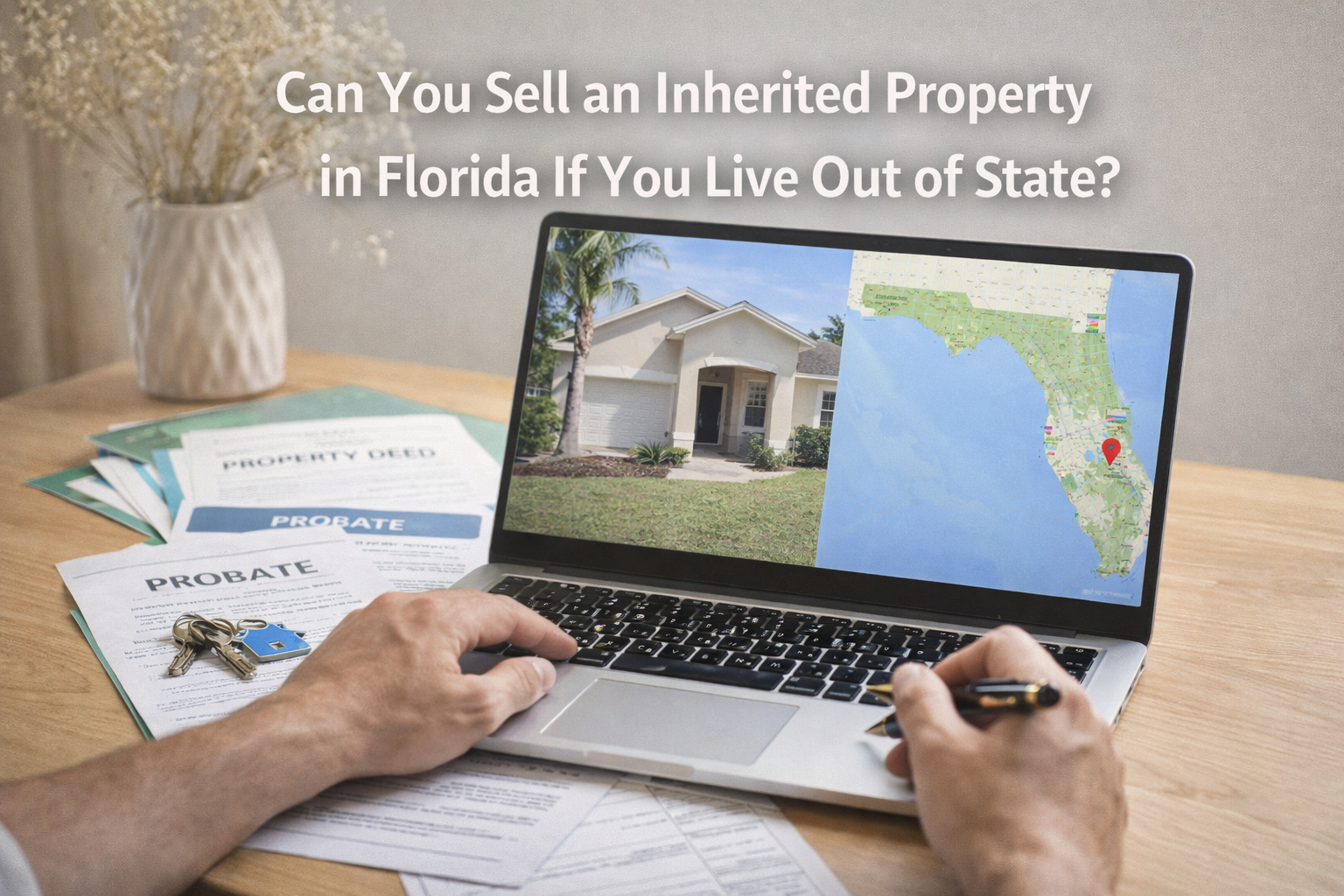
Out-of-state inherited property management and probate home sale in Florida

Can You Sell an Inherited Property in Florida If You Live Out of State?

Yes — inherited property in Florida can absolutely be sold while the owner or heirs live somewhere else.

The legal process is usually manageable remotely.

The practical side is where things become heavier.

Distance changes how quickly decisions happen, how easily the property can be evaluated, and how difficult even simple coordination tasks can become once real responsibilities start building around the home.

That is why out-of-state inherited-property situations often feel more exhausting than families initially expect.

The property is no longer just an asset. It becomes a responsibility that cannot be easily seen, accessed, monitored, or controlled in person.


The Property Can Usually Be Sold Without Living in Florida

Most out-of-state heirs worry initially that they will need to constantly travel back and forth in order to handle the process.

In reality, many parts of the transaction can be coordinated remotely.

Documents can typically be signed electronically. Communication with attorneys, title companies, contractors, and buyers can happen from another state. The actual closing process is often less difficult than people expect.

The larger challenge is usually managing everything surrounding the property itself.

That includes:

  • property access
  • condition evaluation
  • vendor coordination
  • maintenance oversight
  • insurance concerns
  • clean-outs
  • repair decisions
  • holding costs

Distance does not automatically create those problems.

It makes every unresolved problem harder to manage.


Out-of-State Ownership Creates Friction More Than Crisis

Most inherited-property situations managed remotely do not collapse because of one dramatic event.

They become difficult through accumulation.

A delay here. An unanswered maintenance issue there. A contractor appointment that requires coordination. A property concern that no one nearby can easily verify.

Over time, the friction itself becomes exhausting.

That is usually when the family starts realizing the property is consuming more emotional and operational energy than expected.

The financial side also changes quietly in the background while the property is being held.

Review the ongoing costs connected to inherited property in Florida


Distance Makes Uncertainty Harder to Carry

Out-of-state ownership by itself is manageable.

Out-of-state ownership combined with uncertainty is where situations tend to stall.

The process becomes significantly heavier when the family still does not know:

  • the true condition of the property
  • whether repairs are necessary
  • who has authority to act
  • how long the home may need to be carried
  • whether preparing the property even makes financial sense

Without clarity, people tend to wait.

Waiting while managing a property remotely rarely stays neutral for long.

Carrying costs continue. Maintenance continues. Coordination becomes harder. Small unresolved issues often grow larger simply because no one is physically nearby to address them quickly.


The Real Question Usually Changes Over Time

At first, most families ask:

“Can we sell the inherited property while living out of state?”

The answer is almost always yes.

Later, the more important question usually becomes:

“How long do we realistically want to continue managing this property remotely?”

That shift changes the decision-making process considerably.

The conversation stops focusing only on theoretical value and starts focusing on coordination burden, time, stress level, holding costs, and practical control.


Property Condition Usually Determines How Heavy the Situation Feels

An inherited property in excellent condition is usually far easier to manage remotely than one requiring repairs, cleanup, or ongoing oversight.

Out-of-state owners often discover the property may need:

  • junk removal
  • estate sale coordination
  • clean-outs
  • handyman work
  • insurance-related repairs
  • roof or plumbing evaluations
  • contractor coordination
  • pre-listing inspections

Every additional issue increases the amount of remote coordination required.

That is why many out-of-state inherited-property owners eventually begin weighing simplicity more heavily than maximum theoretical sale price.

Sometimes selective preparation improves the outcome meaningfully. Other times, the additional coordination burden outweighs the likely benefit of waiting longer.

Should the inherited property be sold as-is or prepared first?


Multiple Heirs Often Increase the Coordination Difficulty

Out-of-state inherited-property situations become more complicated when several heirs are involved across multiple locations.

One person may live nearby while others are scattered throughout different states. Some may want to keep the home longer while others want the responsibility resolved more quickly.

Meanwhile, the property itself continues requiring decisions.

That is often where delays begin stretching the process longer than anyone intended.

The longer the property remains unresolved, the harder coordination usually becomes.

How do disagreements between heirs affect inherited-property decisions?


How This Commonly Plays Out in Palm Beach County

In Palm Beach County, inherited-property situations involving out-of-state owners often become difficult when homes require ongoing maintenance, insurance attention, cleanup, or property preparation before sale.

In areas like Jupiter or West Palm Beach, property condition, access coordination, and local buyer expectations can quickly influence whether holding the property still makes practical sense.

Some inherited homes remain manageable because they are already in strong condition and the family is aligned.

Others become heavier over time because no one nearby wants to continue carrying operational responsibility for the property.

That is usually when simpler, more organized solutions start becoming more attractive.

These local inherited-property guides may help explain how preparation expectations and buyer behavior vary across different Palm Beach County markets.

Jupiter inherited property guidance

West Palm Beach inherited property guidance


The Goal Is Usually to Reduce Long-Distance Burden

For many out-of-state heirs, the strongest solution is not necessarily the one that creates the absolute highest possible number on paper.

The stronger solution is often the one that balances:

  • financial outcome
  • timeline
  • stress level
  • repair exposure
  • travel demands
  • coordination complexity
  • future responsibility

That is why many out-of-state inherited-property situations eventually move toward the option that creates more simplicity and operational clarity — not just the option that looks theoretically optimal in isolation.


Reduce the Long-Distance Pressure Before the Property Becomes Harder to Manage

If you are handling inherited property in Florida while living out of state, a structured review can help clarify the property condition, coordination requirements, likely costs, and practical options before the situation becomes more difficult to manage remotely.

  • Review realistic holding, preparation, and selling scenarios clearly
  • Evaluate property condition and coordination exposure remotely
  • Compare simplicity versus longer-term carrying strategies
  • Coordinate property planning alongside the probate attorney

The goal is to understand what the property realistically requires before distance turns uncertainty into a longer-term burden.

Review the Remote Property Options


Continue With the Questions That Shape the Process

Out-of-state inherited-property situations are closely connected to preparation decisions, holding costs, authority questions, and family coordination. These guides explain how those issues often affect the process together.

For a broader overview of inherited-property guidance, preparation strategy, attorney coordination, and local market considerations, you can also return to the main inherited-property hub.

Back to the Inherited Property Guidance Hub


Frequently Asked Questions

Can inherited property in Florida be sold while living out of state?

Yes. Most inherited-property transactions can be coordinated remotely, including document signing and communication with attorneys, title companies, and vendors. The larger challenge is usually managing the property condition, coordination, and ongoing responsibilities from a distance.

What usually makes out-of-state inherited-property situations difficult?

Most difficulties come from coordination friction rather than one major issue. Property access, repairs, clean-outs, maintenance oversight, vendor scheduling, and unresolved family decisions often become harder to manage when the owners are not physically nearby.

April 7, 2026

Should You Fix Up or Sell an Inherited Home As-Is in Florida?

fix-up-or-sell-inherited-home-as-is-florida

Should You Fix Up or Sell an Inherited Home As-Is in Florida?

If you’ve inherited a home in Florida, one of the first major decisions you’ll face is whether to invest time and money into fixing it up or sell it in its current condition. It’s not always an easy choice. Emotions, timelines, property condition, and financial considerations all play a role—and often, there’s no obvious answer at first.

Some homes may need only minor updates, while others require significant work. At the same time, you may be dealing with probate timelines, multiple heirs, or the responsibility of maintaining a property you didn’t plan to own. Understanding how to evaluate this decision can help you move forward with more confidence and avoid unnecessary costs or delays.

Direct Answer to the Question

Short answer: Whether you should fix up or sell an inherited home as-is depends on the property’s condition, your available time and resources, and your overall goals. In many cases, selling as-is is the simpler and more practical option, but there are situations where making targeted improvements can improve the outcome.

The right decision comes down to balancing effort, cost, and realistic expectations.

Why This Situation Happens

Inherited homes often reflect years of ownership, which means their condition can vary significantly. Some properties have been well maintained, while others may have deferred maintenance, outdated features, or repairs that were never completed.

When a property becomes part of an estate, heirs are suddenly responsible for evaluating not just its value, but also its condition and what it would take to bring it to market. This is where the question of fixing versus selling as-is naturally comes into play.

At the same time, probate timelines and estate responsibilities can influence how much time is available to make improvements. What might seem like a simple update can become more complex when coordination, logistics, and decision-making are involved.

What Most People Don’t Realize

Many people assume that making improvements will always increase the final sale price enough to justify the cost. In reality, that isn’t always the case.

Not all repairs or updates produce a meaningful return. Some improvements may help with presentation, but others may not significantly change how the property is received by buyers. In some situations, the cost, time, and effort involved in fixing up the home outweigh the potential benefit.

Another factor that often gets overlooked is timing. If the property has ongoing costs—such as taxes, insurance, utilities, or a mortgage—delays can increase overall expenses. If you’re dealing with a property that still has a loan attached, you may want to understand how that impacts your decision: what happens when you inherit a house in Florida with a mortgage.

It’s also worth considering how long you plan to hold the property. If timing is uncertain, this may help: how long probate typically takes in Palm Beach County.

Taking a step back to evaluate both the financial and practical aspects of the situation can help prevent unnecessary work and expense.

Your Options

When deciding how to move forward, there are generally a few paths to consider:

  • Sell the property as-is: This is often the simplest approach. It allows you to avoid upfront costs, reduce the time involved, and move through the process more efficiently.
  • Make selective improvements: In some cases, addressing basic issues—such as cleanup, minor repairs, or improving presentation—can help the property show better without requiring a full renovation.
  • Invest in more extensive updates: This approach may make sense if the home is in a condition where improvements could significantly affect its appeal, but it requires careful evaluation of cost versus potential return.

The best option depends on your specific situation, including the property’s condition, your timeline, and how involved you want to be in the process.

What We Typically See in Palm Beach County

In Palm Beach County, inherited homes often fall into a few common categories. Some are well-kept and need only minimal preparation before being listed. Others may require more attention, particularly if they have not been updated in many years.

We frequently see situations where heirs live out of state and are trying to manage the property remotely. In those cases, coordinating repairs and overseeing improvements can become challenging, which often leads to a preference for a simpler, as-is sale. If that applies to your situation, you may also want to review: selling an inherited property in Florida while living out of state.

It’s also common for multiple heirs to be involved, each with different opinions about what should be done. That can make large-scale improvements more difficult to coordinate. For more on that, see: do all heirs have to agree to sell a property in Florida.

If you’re handling an inherited home in areas like West Palm Beach, Boynton Beach, or surrounding Palm Beach County communities, local market conditions, property type, and neighborhood expectations can all influence whether improvements make sense.

In many of these situations, clarity around the property’s condition and realistic expectations about the outcome make a significant difference in how smoothly the process moves forward.

Next Steps

If you’re trying to decide whether to fix up or sell an inherited home as-is, the most helpful step is to get a clear understanding of the property’s condition and what it would realistically take to prepare it for the market.

From there, you can weigh the time, cost, and effort involved against your goals and timeline. In some cases, a simple approach leads to the best overall outcome. In others, targeted improvements may make sense.

It can also help to understand the full financial picture before making a decision. For more insight, see: what are the costs of selling an inherited property in Florida.

If you want a broader understanding of how probate and inherited property situations work in this area, you can start here: Probate and inherited property in Palm Beach County.

Every inherited property situation is different. The right decision is usually the one that aligns with your timeline, resources, and willingness to manage the process.

If you’re dealing with this situation and want help understanding your options, we’re happy to walk you through it.

Learn more about probate and inherited property in Palm Beach County

April 7, 2026

What Does an Inherited Property Cost to Keep in Florida?

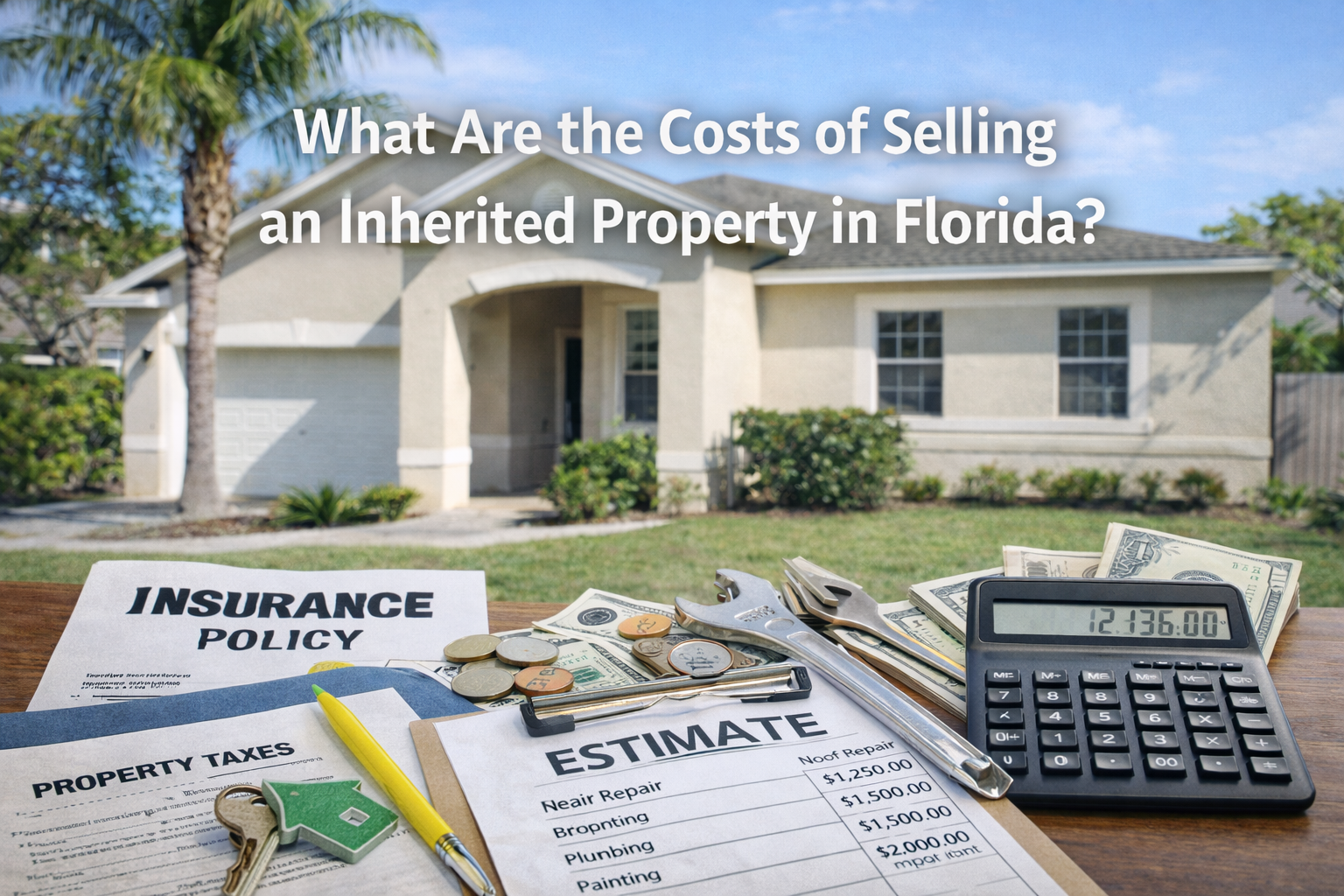
Inherited property costs and probate home expenses in Florida

What Are the Costs of Selling an Inherited Property in Florida?

Most families begin by focusing on value.

What is the home worth? How much could it sell for? Would waiting improve the outcome?

But inherited-property situations usually become more complicated once another question starts entering the conversation:

What is the property quietly costing while decisions are still being made?

That shift changes how families view the entire situation.

The value of the home is visible. The cost of holding it often builds slowly in the background until the financial impact becomes difficult to ignore.


The Largest Costs Often Begin Before the Home Ever Reaches the Market

Most people expect closing costs or commissions.

The less obvious expenses usually begin much earlier.

An inherited property may continue carrying:

  • property taxes
  • insurance premiums
  • utilities
  • lawn or pool maintenance
  • HOA obligations
  • vacant-home upkeep
  • ongoing repair concerns

Some homes also require:

  • junk removal
  • estate sale coordination
  • clean-outs
  • handyman repairs
  • contractor walkthroughs
  • roof or insurance-related work
  • pre-listing inspections

None of these costs usually appear all at once.

They accumulate gradually while the family is still trying to determine what should happen with the property.


Time Is Often the Most Expensive Part

Most inherited-property situations do not become expensive because of one dramatic issue.

They become expensive because uncertainty lasts longer than expected.

Months pass. Decisions remain unresolved. The home continues aging. Maintenance continues. Costs continue building.

Delay rarely stays neutral.

Eventually, the conversation shifts from:

“Should we wait?”

to:

“What has waiting already cost us?”

That is often the point where families realize the property itself has quietly become part of the financial pressure.


Property Condition Usually Changes the Financial Equation

Some inherited homes are ready for market immediately.

Others are not.

A property may still contain years of personal belongings, deferred maintenance, outdated systems, insurance issues, or repairs that affect how buyers respond once the home is listed.

That creates another major decision:

Should the home be sold exactly as it sits, or would preparation improve the outcome enough to justify the additional cost and effort?

That answer depends on:

  • the condition of the home
  • local buyer expectations
  • holding costs
  • repair scope
  • timeline pressure
  • family goals

Some inherited properties benefit from selective preparation. Others are better positioned through a simpler as-is approach that reduces additional expense and coordination.

Should the inherited property be sold as-is or prepared first?


Heir Disagreement Often Increases Costs Quietly

When multiple heirs are involved, costs usually continue regardless of whether the family feels aligned yet.

One person may want to move quickly. Another may believe the home should be kept longer. Someone else may feel uncomfortable making decisions at all.

Meanwhile:

  • utilities continue running
  • insurance remains active
  • maintenance continues
  • vacancy risks increase
  • repair problems often worsen over time

That is why unresolved heir coordination frequently becomes both an emotional issue and a financial one.

The longer decisions remain unclear, the more expensive uncertainty usually becomes.

How do disagreements between heirs affect inherited-property decisions?


Holding Costs Can Change the “Best” Decision

Families sometimes focus only on achieving the highest possible sale price.

But the strongest outcome is not always the one with the highest theoretical number.

The stronger outcome is often the one that balances:

  • timing
  • holding costs
  • repair expense
  • stress level
  • coordination difficulty
  • market conditions
  • family capacity

In some situations, holding the property longer makes sense. In others, the cost of waiting begins reducing the advantage the family hoped to gain by delaying.

That is why inherited-property decisions work best when the property is evaluated as an entire situation — not just a potential sale price.


How Costs Commonly Escalate in Palm Beach County

In Palm Beach County, inherited-property carrying costs can increase quickly depending on location, condition, insurance requirements, and upkeep expectations.

Properties in Delray Beach or West Palm Beach may involve older systems, vacant-home concerns, insurance challenges, or maintenance issues that continue growing while the family delays decisions.

Out-of-state ownership can increase the complexity even further because vendor coordination, inspections, repairs, and property access become harder to manage remotely.

In many situations, the family does not initially realize how much the property is quietly costing until months have already passed.

If the inherited property is being managed remotely, this guide may help explain the additional coordination challenges involved.

Managing inherited property in Florida from out of state

These local inherited-property guides may also help explain how buyer expectations and preparation considerations vary across Palm Beach County markets.

Delray Beach inherited property guidance

West Palm Beach inherited property guidance


Understand What the Property Is Actually Costing Before Delays Continue

If your family is trying to determine whether holding, preparing, or selling the inherited property makes the most sense, a structured review can help clarify which costs are continuing quietly in the background and what options may reduce unnecessary pressure.

  • Review ongoing holding costs and maintenance exposure
  • Compare as-is versus preparation strategies clearly
  • Identify repairs or condition issues affecting buyer response
  • Coordinate property planning alongside the probate attorney

A calm review can help separate emotional pressure from practical property decisions.

Review the Property Costs


Continue With the Questions That Shape the Process

Inherited-property costs are closely connected to preparation decisions, timing, heir coordination, and property condition. These guides explain how those issues often affect the overall outcome together.

For a broader overview of inherited-property guidance, preparation strategy, attorney coordination, and local market considerations, you can also return to the main inherited-property hub.

Back to the Inherited Property Guidance Hub


Frequently Asked Questions

What costs continue while an inherited property sits?

Inherited properties commonly continue carrying taxes, insurance, utilities, lawn care, maintenance, HOA obligations, vacant-home upkeep, and repair exposure while decisions remain unresolved. Additional preparation costs may also appear depending on the condition of the home.

Can delaying inherited-property decisions become expensive?

Yes. In many probate situations, delay increases carrying costs, maintenance exposure, repair needs, and coordination difficulty over time. The financial impact usually grows gradually while the family is still trying to determine the best path forward.