
Insights, strategy, and real estate guidance across Palm Beach County.

Oct. 8, 2025

How Soon Does Your Home Get Listed? The Palm Beach County Answer Isn't the National One

Palm Beach County Homes For Sale

How Soon Does Your Home Get Listed? The Palm Beach County Answer Isn't the National One

You have signed a listing agreement and the obvious question follows: when does this actually go live? The standard answer is a few days, governed mostly by how quickly a photographer can get there.

That answer is right for a single-family home outside an association. For a condominium or a home in a deed-restricted community — which describes an enormous share of Palm Beach County inventory — it can be badly wrong, because the binding constraint is not the photographer. It is a package of association documents that Florida law requires the seller to provide, that has grown substantially since the Surfside reforms, and that the association controls the delivery of.

Three Clocks, Running at Different Speeds

Thinking of this as one timeline is what produces the surprise. There are three, and they overlap.

CLOCK 1  ·  PRESENTATION — days, and mostly within your control
Preparing the home, scheduling photography, and receiving edited images. Roughly two to six days when the property is ready. The variables are photographer availability and how much preparation the home still needs.
CLOCK 2  ·  DOCUMENTS — days to weeks, and controlled by your association
For condominiums and HOA properties, a statutory disclosure package the seller must furnish at their own expense. Associations and management companies respond on their own schedule. This is the clock that surprises people, and the one to start first.
CLOCK 3  ·  STRATEGY — a choice, not a delay
When to go publicly live is now a decision with formal options attached, including delayed marketing. Going live the instant photos arrive is one strategy among several rather than the default.

Clock 1: Preparation and Photography

The original guidance here is sound and worth keeping. Declutter, deep clean, handle minor repairs, and stage if it helps. A prepared home photographs better and shows better, and the effect on first impressions is real.

Typical sequence: one to three days to schedule the shoot depending on availability, one to two days for editing and delivery, and possibly another day for virtual staging or additional edits. Call it two to six days when the home is genuinely ready.

A note on the numbers: the original version of this article gave three different ranges — two to six days, two to seven days, and three to seven days — in the same piece. The honest answer is that it varies, and the variation is driven by your property rather than by an average.

On phone photos: yes, an agent could list immediately with them. Most buyers form their first impression online, and that impression is difficult to revisit. The few days are worth it. What is genuinely worth deciding rather than assuming is how much preparation to do before shooting — that is a real question, and how preparation, timing, and presentation affect negotiation strength is the better frame for it than speed alone.

Clock 2: The Documents Nobody Warns You About

This is the section the national version of this article does not have, and in this county it is often the one that determines your actual launch date.

For condominium resales, Florida Statute 718.503 requires the seller to provide the buyer, at the seller's expense, a package including the declaration of condominium, articles of incorporation, bylaws, rules, the most recent year-end financial information and annual budget, the frequently asked questions and answers document, and the condominium governance form prepared by the state Division.

Since the post-Surfside reforms, that package also includes the milestone inspection report and the association's most recent structural integrity reserve study — or a statement that the association has not completed one — along with a turnover inspection report where applicable. These requirements were added by legislation in 2024 and further amended effective July 1, 2025.

For HOA properties, Section 720.401 requires a disclosure summary in the contract, with specific statutory language. If it is missing or delivered late, the buyer gains a right to void or cancel.

Here is why this belongs at the front of your timeline rather than the middle of your escrow. The buyer's three-day cancellation right runs from delivery of these documents, and the clock restarts if the package is incomplete or a document is superseded. Attorneys who handle these transactions consistently give the same advice: collect the documents before listing, because one missing item can restart the rescission clock and put an otherwise sound contract at risk.

Associations and management companies are not obligated to move at your pace, and requests routinely take longer than sellers expect. If you own in a condominium or HOA community, request the package the day you sign — before the photographer is even scheduled. In practice this is the single most useful thing on this page.

Work Out Which Constraint Is Actually Yours

The right sequence depends entirely on your property type, and getting it backwards costs weeks.

Single-family, no association — the photography clock is your only real constraint, and a few days is a realistic expectation. Condominium or HOA property — start the document request immediately and treat photography as the parallel task, not the critical path. A building three stories or taller — expect the milestone and reserve study documents to matter to buyers as much as anything in your listing, and know their status before you price. If preparation work is still outstanding in any of these cases, that is a separate question worth settling first, since what to repair before selling shapes both the timeline and the price.

Clock 3: When to Go Public Is Now a Decision

The original's answer to whether a home can be shown before listing — "yes, through coming soon or off-market previews, depending on local MLS rules" — is directionally right but predates a formal policy change worth understanding.

Under the Clear Cooperation Policy, a property publicly marketed by a participant must be filed with the MLS within one business day. Alongside it, a policy adopted in March 2025 created a category called delayed marketing exempt listings, which allows a seller to instruct their agent to delay public marketing through IDX and syndication for a period each MLS sets at its own discretion, while the listing remains visible to other agents through the MLS.

Two consequences worth knowing. A seller choosing this route must sign a disclosure documenting informed consent to waive the benefits of immediate public marketing — that requirement exists to make sure the tradeoff is explicit. And one-to-one broker-to-broker conversation about a listing does not trigger public marketing requirements, while multi-brokerage communication does.

Whether any of this serves you depends on your goals and your local MLS's implementation. The point is that "when do we go live" has become a strategic question with named options rather than a purely mechanical one, and it is worth asking your agent to explain the choices rather than assuming there is only one path.

What Is Happening While You Wait

The original's list of behind-the-scenes work holds up and is worth preserving, with local additions:

  • MLS data entry — property details, features, and tax data, all of which need verifying rather than copying.
  • Association coordination — the document package above, plus confirming current dues, any pending special assessments, and rental or occupancy restrictions that affect who can buy.
  • Property verification — tax records, deed status, permit history. Unpermitted work discovered later is a genuine problem; discovered now it is a manageable one.
  • Insurance context — on older homes, knowing the roof age and whether a wind mitigation report exists helps you anticipate what a buyer's carrier will ask.
  • Pricing strategy — not a number but an approach, and the right pricing strategy shifts with market conditions.
  • Marketing preparation — agent outreach, buyer database matching, and campaign materials staged to launch together rather than trickle out.

How This Varies Across the County

Property type drives the timeline more than location does, but the two correlate.

Boca Raton, Delray Beach, and the coastal corridor carry the heaviest concentration of condominium inventory, which means the document clock governs most often — and in buildings of three or more stories, milestone and reserve study status is now part of what buyers evaluate. Wellington and Royal Palm Beach are HOA-dense, so the disclosure summary requirement applies broadly even where units are single-family. Older Lake Worth Beach and West Palm Beach properties are more often outside associations entirely, which makes the fast national timeline realistic — though permit history and system condition deserve verification. Sellers positioning for a move up the Palm Beach to Port St. Lucie corridor are usually coordinating two transactions, where an unexpected two-week document delay on the sale side can disrupt the purchase side entirely.

A pattern worth naming: sellers experience the pre-listing period as dead time and it is the opposite. Almost everything that determines how the first two weeks on market go — price, presentation, whether the documents are ready, whether a known issue has been addressed — is decided before the listing goes live. Once it is live, you are largely reacting. The days that feel like waiting are the days with the most leverage in them, which is precisely why sellers who lose leverage usually lose it before listing.

Curious What Your Home Might Be Worth?

If you're still deciding whether to list at all, a current read on value is the useful first step — and it costs nothing to know before committing to a timeline.

Check Your Home Value

Talk Through Your South Florida Real Estate Options

Sometimes the hardest part of a real estate decision is simply understanding which direction makes the most sense before committing to anything. A conversation can often help create clarity around timing, strategy, and next steps.

Schedule a Consultation

Frequently Asked Questions

Realistically, how long from signing to live?

For a prepared single-family home outside an association, a few days — roughly two to six, driven by photography scheduling and editing. For a condominium or HOA property it depends on how quickly the association produces the required document package, which can extend the timeline considerably and is not something your agent controls. The way to compress it is to request those documents the day you sign and handle preparation and photography in parallel rather than in sequence.

Why do I have to pay for the condo documents?

Because Florida law assigns that cost to the seller. Section 718.503 requires the seller to furnish the buyer a package at the seller's expense, including governing documents, recent financial information and budget, the governance form and FAQ, and since the post-Surfside reforms the milestone inspection report and structural integrity reserve study or a statement that one has not been completed. It is worth doing well rather than minimally: the buyer's three-day cancellation right runs from delivery, and an incomplete package can restart that clock at an inconvenient moment.

Can my home be shown before it goes live publicly?

Generally yes, and there is now a formal framework for it. Alongside the Clear Cooperation Policy, which requires a publicly marketed listing to be filed with the MLS within one business day, a category called delayed marketing exempt listings lets a seller postpone public marketing through IDX and syndication for a period set by the local MLS, while other agents can still see the listing. Choosing this requires a signed disclosure confirming you understand what you are waiving. Ask your agent what your MLS allows and what the tradeoffs are for your specific property — it suits some situations and not others.


About the Authors

Chris and Sue Kull are South Florida real estate professionals with more than three decades of experience helping buyers, sellers, and property owners navigate the housing market throughout Palm Beach County and surrounding communities.

Their work focuses on providing clear information, local market insight, and practical guidance so clients can make confident real estate decisions. Over the years they have built a trusted network of industry professionals—including lenders, inspectors, contractors, and legal specialists—to support every stage of the real estate process.

Nothing here is legal advice, and statutory disclosure requirements change — a Florida real estate attorney is the right source for your specific transaction. You can explore additional resources and real estate tools at www.TheKullGroup.com, or reach out through our contact page.

Oct. 8, 2025

Renovating for Retirement in Palm Beach County: Which Upgrades Actually Pay Back Here

\

Palm Beach County Homes For Sale

Renovating for Retirement in Palm Beach County: Which Upgrades Actually Pay Back Here

Retirement renovation lists tend to open with the same advice: move the bedroom to the first floor, secure the stair treads, add a main-floor bathroom. Sound guidance — for a two-story house in a market where two stories are the norm.

Most Palm Beach County single-family homes are already single-story. Which means a large share of the standard list addresses a problem many local homeowners do not have, while the two upgrades with the most measurable financial return in Florida go unmentioned or buried near the bottom. This is a reordering of that list for the housing stock and the insurance market you actually live in.

Three Tiers, Ranked by How Certain the Payback Is

Renovation advice usually presents every item as equally worthwhile. They are not, and the difference is not cost — it is how confidently anyone can tell you what you get back.

TIER 1  ·  MEASURABLE RETURN — upgrades tied to insurance credits
Roof condition, opening protection, and roof-to-wall connections. Florida law requires insurers to discount the windstorm portion of your premium for verified wind-resistant features. The return is not an estimate — it appears on your renewal.
TIER 2  ·  RETURN IN LIVABILITY — safety and accessibility
Bathrooms, thresholds, lighting, flooring. These are not primarily financial decisions and should not be justified as such. They determine whether the house works for you in fifteen years, which is a different and usually more important question.
TIER 3  ·  UNCERTAIN RETURN — kitchens, curb appeal, garage
Real value, poorly predicted. Most renovation projects recoup meaningfully less than their cost at resale, and any article quoting you a precise dollar figure is quoting a national average that may not describe your property, your neighborhood, or this year.

Tier 1: The Upgrades With Statutory Payback

This is the part the standard list gets most wrong, ranking roof replacement seventh and describing it as something that "improves insurance rates." In Florida the stakes are considerably higher than that.

Roof. On older homes, carriers require a four-point inspection and roof age can determine whether you can obtain coverage at all — not merely what it costs. A roof at the end of its life is not a comfort issue. It is a question of whether the home remains insurable, and therefore whether it remains financeable for a future buyer.

Wind mitigation features. Florida Statute 627.0629 requires insurers to reduce the windstorm portion of a premium for verified wind-resistant features. The qualifying items include hip roof geometry, impact-rated opening protection, reinforced roof-to-wall connections such as straps and clips, enhanced roof deck attachment, and a secondary water barrier. These are documented on the state's Uniform Mitigation Verification Inspection Form by a licensed inspector, and the credits typically last five years.

Two practical points that matter more than any dollar estimate. First, many homes already have qualifying features that are simply undocumented — if you have never had a wind mitigation inspection, you may be paying more than required right now, and the inspection itself is inexpensive. Second, the credits only apply once documented, so after any qualifying improvement you need a new inspection to capture them.

Worth knowing: the state's My Safe Florida Home program has offered inspections at no cost to eligible homeowners and matching grant funds toward opening protection upgrades. Program availability and funding change, so confirm current status rather than assuming.

Because the windstorm portion is often the largest component of a Florida premium, this is where retirement renovation dollars have the clearest and most immediate effect — and it sits directly alongside the other rising carrying costs shaping South Florida housing decisions.

Answer the Bigger Question First

Before choosing renovations, it is worth being honest about whether this is the house you want to be in.

Renovating to age in place makes sense when the home fundamentally suits you and specific things need adapting. It makes considerably less sense when the property itself is the burden — a large lot, a pool, an aging roof, and a yard that all require managing. In that case renovation money is being spent to make a demanding property slightly less demanding. That is the underlying question in whether it is time to move into a lower-maintenance home, and it deserves an answer before you commit to a renovation budget. There is no wrong answer, but spending sixty thousand dollars on a house you will leave in four years is a costly way to discover which one you preferred.

Tier 2: Safety and Accessibility, Adapted for This Housing Stock

The standard list's accessibility advice needs translating for single-story Florida homes, where the risks sit in different places.

Bathrooms are the priority. The original list's suggestions hold up well here: a curbless or low-threshold shower, properly anchored grab bars, a shower seat, and a comfort-height toilet. Grab bars need blocking in the wall — bars mounted into drywall alone are worse than none, because they create false confidence.

Thresholds and transitions replace stairs as the main trip hazard in a single-story home. Sliding door tracks, transitions between tile and carpet, and the step down into a Florida room or garage are the places to look.

Lighting matters more than people expect and costs less than almost anything else on this list. Aging eyes need substantially more light, particularly in hallways, at transitions, and in bathrooms at night.

Flooring. The original's advice about loose boards and worn carpeting is right, and locally the relevant additions are slip resistance on tile and eliminating throw rugs, which are a leading fall hazard and cost nothing to address.

Systems check. A full review of HVAC and major appliances is sensible. One correction: the original list includes oil burners, which is northern boilerplate — oil heat is essentially absent in South Florida. Here the equivalent concerns are the air conditioning system, which runs nearly year-round, the water heater, and the electrical panel.

None of this needs to look institutional. Modern accessible fixtures are largely indistinguishable from standard ones, and doing this work while you are choosing rather than reacting means you get to pick what it looks like.

Tier 3: Presentation Upgrades, Honestly Assessed

The original article attaches specific figures to these — a main-floor suite adding up to $85,000, a kitchen remodel adding $20,000 to $30,000, curb appeal adding up to $15,000, garage doors "often fully recouped." None of those figures carry a source or a date, and we are not going to repeat them as fact. Renovation return data varies by year, region, and property, most projects recoup less than their cost, and a national average is a poor guide to what a specific Palm Beach County home will bring.

What holds up without the numbers:

  • Kitchens influence buyer perception more than most rooms. Targeted updates — appliances, hardware, counters, lighting — generally serve better than gut renovations, and this is precisely where the line between building buyer confidence and over-improving gets crossed.
  • Curb appeal is inexpensive relative to its effect on first impressions. Paint, clean edging, and healthy plantings do most of the work.
  • Garage doors are worth attention here for a reason the original misses: an impact-rated garage door contributes to opening protection, which moves this item into Tier 1 territory if the rest of your openings are protected.
  • Hardscaping in place of lawn genuinely reduces maintenance, which is a real retirement benefit. One local caution the original omits: in a deed-restricted community this almost always requires architectural review approval, and doing it first and asking later can mean removing it at your expense.

On Reverse Mortgages

The original version of this article suggested funding renovations with a reverse mortgage and described it in entirely favorable terms. That treatment is incomplete enough to be worth correcting directly, because the audience for this advice is the audience least able to absorb a mistake.

A reverse mortgage is a real product with legitimate uses. It also carries obligations and costs the original does not mention. The borrower remains responsible for property taxes, homeowners insurance, association dues, and maintaining the home — and failing to meet those obligations can lead to default and foreclosure. There are upfront and ongoing mortgage insurance costs and closing costs. The loan balance grows over time rather than shrinking, which reduces the equity available to you later and the estate that passes to heirs. HECM loans require counseling with a HUD-approved counselor before proceeding, which exists precisely because these tradeoffs need explaining.

We are real estate professionals, not financial advisors, and nothing here is financial advice. If you are considering tapping home equity for any purpose, that conversation belongs with a HUD-approved housing counselor and, ideally, a fee-only financial advisor with no stake in the product. There are also alternatives worth comparing — a home equity line, contractor financing, or simply a smaller project. The right answer depends on facts about your situation that an article cannot know.

How This Varies Across the County

Housing age determines most of what is worth doing.

Older properties in Lake Worth Beach, West Palm Beach, and parts of Boynton Beach are where roof age and opening protection matter most, because those homes frequently predate the building code changes that made newer construction qualify for credits automatically. Boca Raton and Delray Beach add coastal wind exposure, which increases both the premium and the value of mitigating it. Wellington, Royal Palm Beach, and Loxahatchee bring larger lots where the maintenance burden itself often drives the decision, and where architectural review governs exterior changes. Homeowners considering the Palm Beach to Port St. Lucie corridor frequently find newer construction that already carries many wind-resistant features, which removes a category of spending entirely — a comparison worth running before committing to a large renovation.

A pattern we see often enough to name: homeowners renovate for the retirement they imagine and later need something different. The upgrades that consistently hold up are the ones that made the house cheaper and easier to own — a sound roof, protected openings, a bathroom that works, less to maintain. The ones people more often regret are the large discretionary projects undertaken on the assumption of staying put indefinitely. Plans change, and the modest, boring improvements survive the change.

Curious What Your Home Might Be Worth?

Whether renovating or moving makes more sense usually depends on where your property currently sits in the market. A current read on value is the honest starting point for that comparison.

Check Your Home Value

Talk Through Your South Florida Real Estate Options

Sometimes the hardest part of a real estate decision is simply understanding which direction makes the most sense before committing to anything. A conversation can often help create clarity around timing, strategy, and next steps.

Schedule a Consultation

Frequently Asked Questions

Which single upgrade gives the most reliable return in Florida?

For most Palm Beach County homes, addressing roof condition and opening protection. Florida law requires insurers to discount the windstorm portion of a premium for verified wind-resistant features, so the return shows up on your renewal rather than only at resale. Roof age also affects whether a home can be insured at all, which affects whether a future buyer can finance it. Before spending anything, get a wind mitigation inspection — many homes already qualify for credits nobody has documented, and that costs very little to find out.

Should I renovate for accessibility now, or wait until I need it?

Doing it while you are choosing rather than reacting is generally better, for reasons that are practical rather than pessimistic. You get to select finishes, schedule work at your convenience, and spread costs over time instead of arranging modifications urgently after a change in circumstances. Modern accessible fixtures also look like ordinary fixtures, so there is little aesthetic cost to acting early. Start with the bathroom, which is where most of the risk concentrates, and with lighting, which is the cheapest meaningful improvement available.

Does renovating make more sense than moving to something smaller?

It depends on whether the house or the upkeep is the problem. If the home suits you and specific rooms need adapting, renovating usually wins — moving carries transaction costs that a targeted renovation avoids. If the property itself is the burden, renovation money is being spent to make a demanding home marginally less demanding, and a different property may solve it outright. The honest test: list what you would change, price it, then compare against what that budget buys as a down payment somewhere that already works. Run the comparison before deciding rather than after.


About the Authors

Chris and Sue Kull are South Florida real estate professionals with more than three decades of experience helping buyers, sellers, and property owners navigate the housing market throughout Palm Beach County and surrounding communities.

Their work focuses on providing clear information, local market insight, and practical guidance so clients can make confident real estate decisions. Over the years they have built a trusted network of industry professionals—including lenders, inspectors, contractors, and legal specialists—to support every stage of the real estate process.

Nothing here is financial, tax, or legal advice. Decisions about home equity in particular belong with a HUD-approved housing counselor or an independent financial advisor. You can explore additional resources and real estate tools at www.TheKullGroup.com, or reach out through our contact page.
Oct. 8, 2025

What a Real Estate Agent Actually Does Now — and What Changed in 2024

Palm Beach County Homes For Sale

What a Real Estate Agent Actually Does Now — and What Changed in 2024

Articles answering "should I hire an agent" tend to be written by agents, which is worth acknowledging up front, since this one is too. The usual list — expertise, access to listings, a network, negotiation, paperwork — was written for a market that no longer exists in quite that form.

Two things changed it. Technology made listing data broadly public, so access stopped being a differentiator roughly a decade ago. And in August 2024, industry-wide practice changes made agent compensation explicit and negotiable rather than embedded and assumed. When someone has to actively agree to what you cost, the reasons had better be real.

So here is the honest version, including the parts that argue against hiring anyone.

What Actually Changed in August 2024

Two practice changes took effect nationally, and both apply here. If your last transaction predates them, the process will feel different.

Buyers now sign a written representation agreement before touring homes. The agreement has to state the compensation amount or rate conspicuously, and has to make clear that the fee is not set by law and is fully negotiable. Previously this was recommended rather than required, and many buyers toured homes for months without ever discussing what their agent was paid.

Buyer-agent compensation is no longer advertised on the MLS. The fields were removed. Sellers can still offer compensation or a concession — many do — but it is negotiated in the transaction rather than published in advance. Buyer-side compensation can now come from a seller concession, directly from the buyer, or a combination.

The practical effect is that a conversation which used to happen invisibly now happens out loud. That is uncomfortable for some agents and genuinely better for consumers, and it means the value has to be nameable rather than assumed.

Three Reasons That Used to Be the Answer

The traditional list deserves a hard look, because parts of it have quietly stopped being true.

MOSTLY OBSOLETE  ·  "Access to listings"
The claim that the MLS is an exclusive database unavailable to the public has not been accurate for years. Consumer portals carry essentially the same active inventory. What remains genuinely different is depth rather than access — full price-change and days-on-market history, withdrawn and relisted records, expired listings, and detailed comparable sale data. That history is often more useful than the listings themselves, but it is a different claim than the one usually made.
MISSTATED  ·  "Legal expertise"
Agents are not attorneys and providing legal advice is outside our license. What we do is prepare approved contract forms accurately, track deadlines, and recognize when something needs a lawyer. That last part has real value — knowing which questions are legal questions is a skill. Calling it legal expertise is not accurate, and an agent who offers you legal opinions is a warning sign rather than a benefit.
CONTRADICTORY  ·  "Impartial negotiation"
An agent representing you is an advocate, not a neutral party — those are opposites, and the original version of this article claimed both in the same sentence. What you should want is someone who is unemotional about the property while being firmly on your side. Impartiality is what an appraiser provides.

When You Might Genuinely Not Need Full Representation

Worth saying plainly, because an article that concludes everyone needs an agent is an advertisement rather than advice.

If you are selling to a known buyer — a family member, a neighbor, a tenant — much of what an agent does is already handled, and a real estate attorney to paper the transaction may be all you need. If you are an experienced investor transacting regularly in property types you know well, you have already built the pattern recognition representation provides. If your property is genuinely simple, newer construction with clean systems in a homogeneous community with abundant comparable sales, the pricing question is easier and the risk is lower. Representation earns its cost where complexity, unfamiliarity, or exposure is high. Where those are absent, it earns less, and you should expect an honest answer about which situation you are in.

What Still Requires Judgment in This Market

With the obsolete claims set aside, here is where an agent measurably changes outcomes in Palm Beach County specifically. These are local and concrete rather than generic.

Pricing in a market where carrying costs vary widely. Two homes at the same list price can carry very different monthly costs once insurance, taxes, and association dues are counted, which means comparable sales require adjustment rather than averaging. Pricing is also a strategy, not just a number — the approach differs depending on conditions, and how pricing strategy changes in a more competitive market is a genuinely different exercise from pricing in a slow one.

Insurability, which can end a transaction outright. On older properties here, carriers require a four-point inspection and can decline over roof age, plumbing type, or electrical condition. No insurance means no lender funding. Knowing to raise this during the inspection period rather than at day twenty-five is worth more than any negotiating tactic, and it is not something a portal flags for you.

Association documents and their obligations. Reserve funding, pending assessments, rental restrictions, milestone inspection status in buildings that require it. These sit in documents most buyers receive late and read never.

Disclosure exposure on the sell side. Florida's obligations come from case law plus scattered statutes rather than one comprehensive form, and non-disclosure claims can be brought years after closing. Getting this right is risk management, and it is one of the clearer places where sellers lose leverage before ever listing.

Reading inspection findings proportionally. Distinguishing a cosmetic item from a deal-threatening one, and knowing what a given finding will cost, prevents both overreaction and the opposite. Inspection reports are long and undifferentiated by design; knowing what buyers actually react to is what turns a list into a decision.

The professional network point from the original list holds up, with a caveat worth stating: the value is not merely having names. It is knowing which lender handles self-employed files well, which inspector is thorough on older plumbing, and which remediation companies are licensed for the work in question — and having enough ongoing relationship that they answer the phone during a fifteen-day inspection period.

How This Varies Across the County

Where representation matters most tracks with complexity, and complexity is unevenly distributed.

Older Lake Worth Beach and West Palm Beach properties raise the insurance and system-age questions that most often derail transactions, which is where an experienced read pays for itself. Boca Raton and Delray Beach add association-heavy inventory and, in buildings of three or more stories, structural inspection and reserve obligations that materially affect what a unit costs to own. Wellington and Royal Palm Beach bring deed-restricted communities with architectural and rental rules that vary community by community. Buyers exploring the Palm Beach to Port St. Lucie corridor are usually running a two-sided transaction, selling and buying in different submarkets at once, which is the situation where sequencing and timing matter most.

A pattern we notice: people rarely regret the commission. They regret the decision quality. Nobody finishes a transaction wishing they had negotiated a fee harder; they finish wishing they had understood the insurance situation sooner, or priced differently in the first three weeks, or known what the association was about to assess. Fee is the visible number and rarely the expensive one. It is also, now, entirely negotiable and openly stated — so ask.

Talk Through Your South Florida Real Estate Options

Sometimes the hardest part of a real estate decision is simply understanding which direction makes the most sense before committing to anything. A conversation can often help create clarity around timing, strategy, and next steps.

Schedule a Consultation

Curious What Your Home Might Be Worth?

If you're weighing whether to sell, a current read on value is the useful starting point — and it costs nothing to know before you decide anything else.

Check Your Home Value

Frequently Asked Questions

Do I really have to sign an agreement before touring homes?

In most cases involving an agent representing you, yes — a written buyer representation agreement is generally required before touring, and it has to state the compensation clearly and note that the fee is negotiable and not set by law. This is a consumer protection rather than a commitment trap. Read what you are signing, ask about the term length and whether it can be limited to specific properties or a shorter period, and negotiate the rate if you want to. An agent unwilling to discuss any of that is telling you something useful.

Since compensation is off the MLS now, does the buyer always pay their own agent?

No, and this is a common misunderstanding. Sellers can still offer compensation or a concession toward the buyer's agent, and many continue to. What changed is that it is negotiated within the transaction rather than advertised in advance. In practice the fee may come from a seller concession, directly from the buyer, or be split. Because it is now an explicit term, it is worth discussing with your agent and your lender early, since how it is structured can affect your cash to close.

Can I just sell it myself?

You can, and in some situations it makes sense — a known buyer, a simple property, or an experienced seller who transacts regularly. The honest tradeoffs are pricing accuracy, disclosure exposure, and transaction management. Pricing is the one most often underestimated, because the feedback arrives slowly and by then the property has accumulated days on market that affect what buyers offer. If you do go alone, hire a Florida real estate attorney rather than skipping professional help entirely. Disclosure obligations do not depend on whether you used an agent.


About the Authors

Chris and Sue Kull are South Florida real estate professionals with more than three decades of experience helping buyers, sellers, and property owners navigate the housing market throughout Palm Beach County and surrounding communities.

Their work focuses on providing clear information, local market insight, and practical guidance so clients can make confident real estate decisions. Over the years they have built a trusted network of industry professionals—including lenders, inspectors, contractors, and legal specialists—to support every stage of the real estate process.

Nothing here is legal advice, and compensation is always negotiable. You can explore additional resources and real estate tools at www.TheKullGroup.com, or reach out through our contact page.

Oct. 7, 2025

Selling a Home As-Is in Palm Beach County: What It Actually Does, and What It Doesn't

Palm Beach County Homes For Sale

Selling a Home As-Is in Palm Beach County: What It Actually Does, and What It Doesn't

Most articles on this subject treat selling as-is as an unusual step — something distressed sellers do, that narrows your buyer pool to cash investors and signals that a property has problems. That framing comes from markets where as-is is genuinely the exception.

Florida is not one of those markets. The FAR/BAR "AS IS" Residential Contract for Sale and Purchase is one of the most commonly used forms in the state, and nearly every Florida Realtor has worked with it. Here, "as-is" is closer to a default than a red flag. Which means the real questions are not whether to signal distress. They are what the form actually changes, what it leaves entirely untouched, and where sellers get into trouble believing otherwise.

What As-Is Actually Changes

Under Florida's AS IS contract, the seller agrees to make no repairs. The buyer retains an inspection period during which they may investigate the property and cancel for any reason, receiving their deposit back.

That is the whole of it. The seller is relieved of the obligation to repair. The buyer is not relieved of anything, and neither party is relieved of what follows.

Three Things As-Is Does Not Do

Nearly every serious mistake in an as-is sale comes from believing the form does one of these. It does not.

1  ·  IT DOES NOT REMOVE YOUR DUTY TO DISCLOSE
Under Johnson v. Davis, a Florida Supreme Court decision from 1985, a seller who knows of facts materially affecting the property's value that are not readily observable and not known to the buyer has an affirmative duty to disclose them. Florida courts have specifically held that an as-is clause does not waive this duty. Staying silent because the contract says as-is is the single most expensive misunderstanding on this page.
2  ·  IT DOES NOT PREVENT THE BUYER FROM CANCELLING
The inspection period is built into the form. A buyer may cancel during it and recover their deposit. This is not a loophole or a failure of the as-is arrangement — it is how the contract is designed. Sellers who expect as-is to mean "sold, no matter what the inspection finds" have misread it.
3  ·  IT DOES NOT AUTOMATICALLY SIGNAL A PROBLEM PROPERTY
In a state where the form is used routinely across all price points and property conditions, buyers and their agents do not read as-is the way national articles suggest. What signals condition problems is the property itself, the photographs, the disclosure, and the price — not the contract form.

Separate the Contract Question From the Preparation Question

These get conflated constantly, and they are genuinely independent decisions.

The contract question is which form you use — whether you commit to making repairs. The preparation question is what you do to the property before it goes on the market. You can list on an as-is contract and still paint, clean, landscape, and fix the obvious things; plenty of well-prepared homes sell on as-is contracts every week. Conflating the two is how sellers talk themselves into doing nothing at all. If the underlying decision you are wrestling with is how much to invest before listing, that is a different analysis — we covered it separately in selling as-is versus preparing your home first, which is the better starting point if preparation is really what you are deciding.

What Florida Actually Requires You to Disclose

The original version of this article stated that Realtors must follow disclosure rules "under the Consumer Protection Act." That is not the Florida framework, and a seller relying on it would be looking in the wrong place. The correct sources here are different, and worth naming precisely.

Johnson v. Davis establishes the seller's affirmative common-law duty: known facts materially affecting value, not readily observable, not known to the buyer, must be disclosed. Florida courts have reaffirmed that an as-is clause does not waive it.

Section 475.278, Florida Statutes imposes a parallel duty on licensees, requiring disclosure of all known facts that materially affect the value of residential property and are not readily observable to the buyer. It applies to residential sales generally.

Specific statutory disclosures apply regardless of what anyone knows about the property — radon gas disclosure is required by statute in Florida residential contracts, and lead-based paint disclosure is required by federal law for pre-1978 housing.

Worth understanding structurally: Florida does not have a single comprehensive seller disclosure statute of the kind California and New York use. The obligations come from case law plus scattered statutory requirements, which is exactly why sellers underestimate them — there is no one form that, once completed, means you are finished. The practical test most attorneys describe is simple: if you paid someone to fix it, filed a claim on it, or know about it from living there, it is probably something to disclose.

One more thing sellers rarely account for: a non-disclosure claim in Florida is generally subject to a four-year limitations period running from when the buyer discovers or should have discovered the problem. The exposure does not end at closing.

We are not attorneys, and none of this is legal advice. Disclosure questions on a specific property belong with a Florida real estate attorney before you list, not after a claim arrives. This is one of the few areas in a residential transaction where an hour of legal time is genuinely cheap insurance.

When As-Is Makes Sense

The original list of advantages holds up well, and these situations are real:

  • Repairs are not financially possible. If the work required is beyond what you can fund, as-is is not a strategy choice, it is the available path.
  • Speed matters more than price. Cash buyers and investors purchase as-is and can close quickly. You will generally trade price for that speed, and sometimes that trade is correct.
  • You are managing health, capacity, or life circumstances. Selling a home is demanding. Removing the repair-negotiation layer genuinely reduces the load, and that is a legitimate reason on its own.
  • Estate and inherited properties. When you never lived in the home, you may have little knowledge of its condition and no practical way to prepare it. Note that limited knowledge does not eliminate the duty to disclose what you do know.
  • You want a cleaner post-inspection process. As-is reduces line-by-line repair negotiation, though as noted above it does not eliminate the buyer's ability to walk.

The Real Tradeoffs

The drawbacks are real, but they need restating for this market, because two of the five commonly cited ones are misdescribed.

Price. This is the genuine cost. Buyers price in the uncertainty they are accepting, and cash and investor buyers price it aggressively. Whether the discount exceeds what repairs would have cost is the actual question, and it is answerable with real numbers rather than instinct.

Buyer pool. Narrower in practice, though less because of the contract form than because of financing. A property with condition issues affecting habitability may not satisfy lender or insurer requirements, which is what actually removes financed buyers — not the words "as-is" in the listing.

Pricing difficulty. Real and underrated. Too high and the property sits; too low and buyers assume something worse than the truth. This is where local comparable data matters more than any general rule.

Buyer cancellation. Frequently listed as a drawback of as-is. It is not — it is a feature of the contract that exists either way. What actually costs sellers here is a cancellation that comes as a surprise, which is a disclosure and preparation problem rather than a contract problem. Properties that go back on the market after a failed inspection carry a story, and that story affects the next offer. It is one of the clearer examples of how sellers lose negotiation leverage before listing.

Buyer perception. Overstated in Florida specifically, for the reasons above. Condition drives perception; the form does not.

Alternatives Worth Pricing First

Before committing, the original's alternatives are worth taking seriously:

  • Targeted minor work. Paint, landscaping, deep cleaning, and fixture replacement change presentation substantially for modest cost, and none of them commit you to a repair-obligated contract.
  • Deferred-payment repairs. Some contractors will accept payment at closing, which removes the upfront-cost barrier. Get the terms in writing and confirm how the payment is handled at closing.
  • Help with the process itself. If capacity rather than money is the constraint, that is a solvable problem and not a reason to accept a lower price.

The decision that usually matters most is which specific items to address, and the answer is rarely "all of them" or "none." Systems that affect insurability and financing generally repay attention; cosmetic work generally repays presentation. That calculus is the subject of whether to repair before selling, and it is worth running before you decide the contract form.

How This Plays Across the County

Older housing stock in Lake Worth Beach, West Palm Beach, and parts of Boynton Beach is where as-is sales concentrate, largely because roof age, plumbing type, and system condition in those properties raise the insurance and financing questions that make repairs expensive to complete before closing. Boca Raton and Delray Beach see as-is used across the price spectrum, including on high-value properties where the seller simply does not want a repair negotiation. Wellington and Royal Palm Beach add association considerations, since an open violation or a pending assessment travels with the property regardless of contract form. Sellers looking at the Palm Beach to Port St. Lucie corridor for their next purchase often find that selling as-is here and buying with more room north changes the math on both ends.

A pattern we see consistently: sellers choose as-is to avoid a difficult conversation, and it rarely works as avoidance. What a buyer finds in inspection gets discussed either way — the only variable is whether you raised it or they discovered it. Raised early with documentation, an issue is a known quantity priced into an offer. Discovered at day twelve, the same issue reads as something you hoped they would miss, and it costs more than the repair would have. Inspection findings are among the things buyers pay closest attention to, and surprise is the expensive part.

Talk Through Your South Florida Real Estate Options

Sometimes the hardest part of a real estate decision is simply understanding which direction makes the most sense before committing to anything. A conversation can often help create clarity around timing, strategy, and next steps.

Schedule a Consultation

Curious What Your Home Might Be Worth?

Whether an as-is sale makes sense depends heavily on where your property currently sits in the market. A current read on value is the starting point for that comparison.

Check Your Home Value

Frequently Asked Questions

If I sell as-is, do I still have to tell buyers about problems?

Yes. This is the most consequential misunderstanding about as-is sales in Florida. Under Johnson v. Davis, a seller must disclose known facts materially affecting the property's value that are not readily observable to the buyer, and Florida courts have specifically held that an as-is clause does not waive that duty. Licensees carry a parallel obligation under Section 475.278. As-is means you will not repair it. It does not mean you may stay quiet about it, and a non-disclosure claim can generally be brought for years after closing.

Will selling as-is scare off buyers in this market?

Far less than national articles suggest, because the FAR/BAR AS IS contract is one of the most widely used forms in Florida. Buyers and their agents encounter it constantly and do not treat it as a distress signal on its own. What does narrow your buyer pool is condition that affects insurability or financing — roof age, plumbing type, active water intrusion — because those can prevent a financed buyer from closing regardless of contract form. Address the condition question separately from the contract question.

Can a buyer still back out after making an as-is offer?

Yes, during the inspection period, and they can generally recover their deposit. That is how the contract is written rather than a flaw in it. The useful response is not to look for a form that prevents cancellation, but to reduce the chance of a surprise — disclose known issues upfront, consider a pre-listing inspection so you learn what a buyer's inspector will find before they do, and price with the known condition in view. Cancellations mostly follow from discoveries, and discoveries you have already disclosed are much less likely to end a deal.


About the Authors

Chris and Sue Kull are South Florida real estate professionals with more than three decades of experience helping buyers, sellers, and property owners navigate the housing market throughout Palm Beach County and surrounding communities.

Their work focuses on providing clear information, local market insight, and practical guidance so clients can make confident real estate decisions. Over the years they have built a trusted network of industry professionals—including lenders, inspectors, contractors, and legal specialists—to support every stage of the real estate process.

Nothing here is legal advice. Disclosure obligations and contract terms are matters for a Florida real estate attorney. You can explore additional resources and real estate tools at www.TheKullGroup.com, or reach out through our contact page.
Oct. 7, 2025

Valuing a Rental Property in Palm Beach County: Why the Seller's Numbers Aren't Yours

Palm Beach County Home Search

Valuing a Rental Property in Palm Beach County: Why the Seller's Numbers Aren't Yours

Every method for valuing a rental property depends on the same input: what the property costs to operate. Get that number wrong and every formula downstream produces a confident, precise, wrong answer.

In Florida there is a specific and predictable reason investors get it wrong. The two largest expense lines on a rental property — property taxes and insurance — do not carry over from the seller. They reset when the property changes hands, and the tax reset is written into state law rather than left to chance. A pro forma built on the seller's operating statement is not a conservative estimate. It is a different property's arithmetic.

What Resets When You Buy

Before any valuation method, understand which numbers on the seller's statement will not be your numbers.

1  ·  PROPERTY TAXES — reset by statute, not by negotiation
Florida caps annual assessment increases on non-homestead property at 10%, but that cap belongs to the current owner. When you purchase, the cap stays in place for the balance of that tax year and the property is then reassessed at full market value in the year following the sale. If the seller held it a long time, their accumulated cap savings disappear — and the cap does not apply to school district taxes in the first place, which are assessed on full market value regardless.
2  ·  INSURANCE — your policy, your underwriting
A new policy priced on current conditions, roof age, and plumbing type — not a continuation of whatever the seller has been paying. On older properties this line frequently comes in well above the operating statement.
3  ·  ASSOCIATION ASSESSMENTS — current, not historical
Dues change, special assessments arrive, and reserve obligations get funded. Any rental restriction or minimum lease term in the governing documents also affects whether your intended use is even permitted.

The tax point deserves emphasis because it is the one most often missed and the easiest to verify. Exemptions belong to the owner, not the property — they leave with the seller. The Palm Beach County Property Appraiser's own guidance is direct about why a new owner's bill exceeds the previous owner's: on a change of ownership, exemptions come off and the assessed value is reset to just value effective the January 1 after purchase.

One more detail with teeth. A change of ownership or control that does not appear on a recorded deed — a transfer of interests in an entity that holds the property, for instance — still triggers reassessment, and Florida law requires the owner to notify the property appraiser. Failing to do so can produce a lien for back taxes plus interest and a substantial penalty. If you hold property in an LLC and the membership changes, that is a reportable event.

There is also an active policy conversation in Florida about lowering the non-homestead assessment cap. Because that is a moving target, confirm the current rule rather than relying on any article's summary, including this one. What has not changed, and is the point here, is that the cap resets on sale regardless of where it is set.

Build the Expense Side Before You Touch a Formula

Most investors run the valuation math first and refine expenses later. Reverse that, because the formulas are trivial and the inputs are where the money is.

Pull the parcel record and estimate taxes on your likely assessed value rather than the seller's. Get an actual insurance quote on the specific property. Request the association's current budget and any pending assessments. Only then run the numbers. Doing it in this order takes a few extra days and routinely changes the answer by more than any negotiating you will do on price — and it puts the property's real carrying cost alongside the other rising costs reshaping South Florida housing decisions.

Gross vs. Adjusted Rental Income

Gross rental income is everything the property collects before expenses: base rent plus late fees, application fees, pet rent, parking, and any reimbursements. It tells you the size of the revenue line and nothing about whether the deal works.

Adjusted rental income applies a vacancy allowance, because no property is occupied every month of every year. Worth stating plainly, since the original version of this article got it backwards in its own example: adjusted rental income is always lower than gross rental income. A property grossing $15,000 with a five percent vacancy allowance produces adjusted income of about $14,250, not more. If your adjusted figure exceeds your gross figure, something is wrong in the model.

Four Valuation Methods

These are the standard approaches, and using more than one is genuinely useful because they fail in different directions. The illustrative figures below are kept simple for the arithmetic — they are not representative of Palm Beach County price levels, so substitute real local numbers when you run this yourself.

1. Gross Rent Multiplier

The simplest screen. GRM = Purchase Price ÷ Gross Annual Rental Income.

A property at $150,000 generating $15,000 in gross annual rent has a GRM of 10. Lower generally indicates a better income profile, all else equal.

An important correction. The widely repeated version of this explanation says a GRM of 10 means you recoup your investment in ten years. That is not what it means, and believing it will cause you to overpay. GRM uses gross rent, which you never keep — taxes, insurance, maintenance, management, and vacancy all come out first. Using the same numbers as the cap rate example below, net operating income of roughly $7,080 against a $150,000 price implies a simple payback closer to 21 years, not 10. The error understates the horizon by more than double.

GRM is a screening tool for comparing similar properties quickly. It is not a return measure, and it should never be the number you buy on.

2. Income Approach (Cap Rate)

The method that actually matters for income property, because it uses net figures.

NOI = Adjusted Gross Rental Income − Operating Expenses.
Property Value = NOI ÷ Cap Rate.

With adjusted gross rental income of $15,000 and operating expenses of $7,920, NOI is $7,080. At a 5% cap rate, that supports a value of roughly $141,600.

Two cautions. Operating expenses exclude debt service — NOI measures the property, not your financing. And the cap rate is not a fact about the property; it is a market-derived assumption reflecting what buyers currently accept for comparable risk. Change the cap rate assumption by half a point and the valuation moves substantially, which is why the cap rate you use should come from actual recent local transactions rather than a round number.

3. Sales Comparison Approach

Value estimated from recent sales of similar properties. Common in residential, and the approach an appraiser will lean on for a single-family rental regardless of how you underwrote it.

Its weakness is comparability. Two properties at the same price per square foot can carry very different tax bases, insurance profiles, and association obligations — which is exactly the variation this county produces. Price per square foot is a starting point, not a conclusion.

4. Cost Approach

Property Value = Cost to Rebuild − Depreciation + Land Value.

Reconstruction cost of $80,000 less 20% depreciation ($16,000) plus land value of $18,000 gives $82,000. Most useful for new construction and unusual properties where comparable sales are scarce. For a typical rental it is a sanity check rather than a primary method — though in a market where insurance is priced on replacement cost, thinking about rebuild cost has become more relevant than it used to be.

Reading Rental Yield Honestly

Gross rental yield is annual rental income divided by purchase price. Net rental yield uses income after operating expenses. Net is the one worth acting on.

The conventional summary — that high yields indicate strong investment potential — needs qualifying. Yield is compensation for risk, and unusually high yields often reflect something: weaker appreciation prospects, higher turnover, deferred capital needs, or a location the market prices cautiously. A lower-yield property in a stronger submarket can outperform over a long hold. Yield tells you what the property produces now; it does not tell you what it will be worth later, and buying on yield alone is how investors end up owning management problems.

The Expense Line Almost Everyone Underestimates

Beyond taxes and insurance, the item that most often breaks a Florida rental pro forma is capital replacement — roof, HVAC, water heater, plumbing. These are not operating expenses in the accounting sense, so they sit outside NOI and outside most spreadsheet templates entirely.

They still get paid. A property with original systems approaching the end of their service lives carries obligations that no cap rate calculation surfaces, and this is precisely the category that shapes how deferred maintenance is treated before a sale — you are simply on the other side of that transaction. Before you value the income, inventory the systems and their ages, and reserve accordingly. An inspection that documents condition is worth more to an investor than to almost anyone else, because it converts an unknown into a number you can put in the model. It is also where what buyers notice during home inspections becomes your problem twice — once now, once at resale.

How This Varies Across the County

The tax reset hits hardest where the gap between the seller's assessed value and current market value is widest, which means long-held properties in appreciated areas.

Older Lake Worth Beach and West Palm Beach rentals frequently have been in the same hands for many years, so the reassessment jump on sale can be dramatic — and those same properties often carry the capital replacement questions above. Boca Raton and Delray Beach add insurance exposure from coastal proximity to an already elevated cost base. Wellington and Royal Palm Beach include more association-governed inventory, where rental restrictions and minimum lease terms in the governing documents can determine whether your intended strategy is permitted at all — a question to answer before valuation, not after. Investors looking north along the corridor toward Port St. Lucie often find entry prices that produce better yield arithmetic, with the tradeoff being a different tenant market and a different appreciation history.

A pattern worth naming: investors who lose money on a Florida rental usually did not misjudge rent. Rent is the easiest number to verify and the hardest to be badly wrong about. They misjudged the expense side — almost always taxes, insurance, or a capital item they had not priced. The revenue line gets all the attention and produces the fewest surprises.

Explore South Florida Real Estate by City

Because tax base, insurance exposure, and association rules vary so much between communities, comparing what is available area by area gives a far clearer picture than a countywide average.

Explore Homes by City

Talk Through Your South Florida Real Estate Options

Sometimes the hardest part of a real estate decision is simply understanding which direction makes the most sense before committing to anything. A conversation can often help create clarity around timing, strategy, and next steps.

Schedule a Consultation

Frequently Asked Questions

How much will my property taxes actually go up after I buy?

It depends on the gap between the seller's assessed value and current market value, which you can look up on the county parcel record rather than guess at. The mechanics are fixed: the seller's exemptions come off, accumulated non-homestead cap savings are lost, and the property is reassessed at just value effective the January 1 following your purchase. On a long-held property in an appreciated area that difference can be substantial. Use the purchase price as your starting proxy for future assessed value, then confirm the millage and any non-ad valorem assessments for that specific parcel. A CPA or the property appraiser's office is the right source for your situation — we are not tax advisors.

Is GRM or cap rate the better method?

They do different jobs. GRM is a fast screen for comparing similar properties before you invest time in due diligence, and it deliberately ignores expenses, which is both its speed and its blind spot. Cap rate uses net operating income and is the number to underwrite on. Use GRM to build a shortlist and cap rate to decide. What you should not do is treat GRM as a return or payback figure — it uses gross rent, so it will make every deal look roughly twice as good as it is.

Can I just use the seller's operating statement?

Use it as a starting document and verify every line. Rent rolls and historical income are worth having. The expense side needs rebuilding from scratch: taxes on your projected assessed value rather than theirs, an actual insurance quote in your name, current association dues plus any pending assessments, and a realistic capital reserve based on system ages. Sellers are not necessarily being misleading — their numbers are accurate for them. The point is that several of those lines legally reset when ownership changes.


About the Authors

Chris and Sue Kull are South Florida real estate professionals with more than three decades of experience helping buyers, sellers, and property owners navigate the housing market throughout Palm Beach County and surrounding communities.

Their work focuses on providing clear information, local market insight, and practical guidance so clients can make confident real estate decisions. Over the years they have built a trusted network of industry professionals—including lenders, inspectors, contractors, and legal specialists—to support every stage of the real estate process.

Nothing here is tax, legal, or investment advice — a CPA, a Florida real estate attorney, and the county property appraiser are the right sources for your specific situation. You can explore additional resources and real estate tools at www.TheKullGroup.com, or reach out through our contact page. If you currently own, understanding what your property is worth is a useful starting point.

Oct. 7, 2025

Saltwater vs. Chlorine Pools in Palm Beach County: What Matters When You're Inheriting One

Comparison of Saltwater Pool vs. Chlorine Pool showing differences in maintenance, feel, and costs.

Saltwater vs. Chlorine Pools in Palm Beach County: What Matters When You're Inheriting One

Articles on this subject are written for someone building a pool from scratch, weighing two options and picking one. That describes very few people in this county. Pools here are common enough that most Palm Beach County buyers do not choose a system at all — they inherit whatever the previous owner installed, along with its age, its condition, and its running costs.

Which changes the useful question. Not "which is better," but "what am I taking on, and what will it cost me to keep?" The comparison still matters, because it tells you what to expect from the system you are getting. It just is not a decision most readers are actually making.

How Each System Works

A saltwater pool is still a chlorine pool. This surprises people. A salt chlorine generator uses electrolysis to convert dissolved salt into chlorine continuously, then the chlorine reverts to salt and the cycle repeats. You are not swimming in a chemical-free pool; you are swimming in one that manufactures its own sanitizer instead of receiving it by hand.

That produces the qualities owners tend to like: water many people describe as softer on skin and eyes, a steadier sanitizer level than manual dosing achieves, less chlorine odor, and considerably less day-to-day chemical handling. The tradeoffs are equally real — higher upfront equipment cost, a generator cell that is a wear item with a finite life, ongoing electricity draw, and a corrosion risk to metal components that matters more here than almost anywhere.

A traditional chlorine pool takes chlorine directly as tablets, granules, or liquid, with regular testing and adjustment. Its virtues are simplicity and serviceability: low equipment cost, decades of established practice, easy shock treatment when something goes wrong, and troubleshooting that most pool technicians can do without specialized parts. The costs are recurring chemical purchases, more frequent attention, stronger odor from chloramines, more potential for skin and eye irritation, and the need to store pool chemicals safely.

Which Question Are You Actually Asking?

The right information depends on where you are standing, and these three situations lead in different directions.

Buying a home with an existing pool — the system type matters far less than equipment age, safety compliance, and running cost. Skip to what to inspect. Deciding whether to convert an existing chlorine pool to salt — a real option, and the honest answer is that it usually makes sense only if you are already replacing equipment. Wondering whether the pool is worth keeping at all — a more common question than people admit, and part of a larger one about whether it is time to move into a lower-maintenance home. A pool is one of the larger recurring obligations attached to a property, and there is no wrong answer about whether you want it.

The Three Things to Check on a Pool You're Buying

If a pool comes with the house, these decide what you are actually getting. The system type is a distant fourth.

1  ·  EQUIPMENT AGE AND CONDITION
Pump, filter, heater if present, and on a salt system the generator cell — a consumable that typically needs replacement every three to seven years. A pool that looks immaculate can sit on equipment at the end of its life. Ask the age of every component, not just whether it runs today.
2  ·  THE SAFETY FEATURE — a statutory requirement, not an option
Florida's Residential Swimming Pool Safety Act requires residential pools to carry at least one qualifying safety feature. Compliance affects inspection, insurance, and your own liability. Details below — this is the item most often overlooked and the one with the most serious consequences.
3  ·  THE ENCLOSURE AND SURROUNDING METAL
Screen enclosure frames, railings, ladders, light fixtures, and fasteners. Coastal air is already corrosive here; a salt system adds to it. Enclosure condition also matters for insurance and is expensive to replace.

The Safety Requirement Most Guides Skip

Florida's Residential Swimming Pool Safety Act, Chapter 515 of the Florida Statutes, requires that a residential pool have at least one qualifying safety feature. The statute lists several ways to satisfy it, and any one is sufficient:

  • An enclosure isolating the pool from the home that meets the statute's barrier requirements
  • An approved safety pool cover meeting the referenced ASTM standard
  • Exit alarms on all doors and windows providing direct access from the home to the pool, rated at a minimum of 85 decibels at ten feet
  • Self-closing, self-latching devices on all doors providing direct access, with the release mechanism placed no lower than 54 inches above the floor
  • A pool alarm that sounds when it detects entry into the water

Where a barrier is used, the statute specifies its characteristics: at least four feet high measured from the outside, with no gaps, openings, indentations, or protrusions that would let a young child crawl under, squeeze through, or climb over. A wall of the dwelling can form part of the barrier only if it contains no door or window opening to the pool. And the barrier cannot be placed where permanent structures or equipment could be used to climb it — which is why a barrier that was compliant on installation can quietly stop being compliant when someone puts a storage bin or a planter next to it.

Failing to equip a pool with a required safety feature is a criminal violation under the statute, though it provides a cure period during which equipping the pool and completing a drowning prevention education program avoids the penalty.

For a buyer, the practical point is simpler: verify what the property actually has, and confirm it still complies rather than assuming it does because a pool exists and a fence is present. For a seller, an open compliance issue is far better resolved before listing than discovered during inspection — it sits in the same category as the other findings that shape what buyers notice during home inspections. We are not attorneys or code officials; a licensed inspector or your local building department is the authority on whether a specific installation complies.

What It Actually Costs Here

Published cost comparisons for pools almost always assume a seasonal pool — open in May, closed in September, dormant for half the year. That assumption does not hold in Palm Beach County, where a pool runs essentially year-round. Chemical consumption, pump electricity, and equipment wear all continue through months when a northern pool is covered and idle.

The consequence is that national annual estimates understate the real number here, sometimes substantially. Rather than repeat figures that were undated and built on a seasonal assumption, the more useful framing is where the costs sit:

  • Saltwater: higher upfront equipment cost, low recurring chemical cost, ongoing electricity for the generator, and a periodic large expense when the cell needs replacing every three to seven years. Costs are lumpy — low most months, occasionally significant.
  • Chlorine: low upfront cost, steady recurring chemical spending, minimal specialized equipment to replace. Costs are smooth and predictable.

Neither is reliably cheaper over a long hold; they distribute differently. Get current local quotes for chemicals, service, and cell replacement rather than trusting any published range, including a range in an article. And if you are buying, add the pool's running cost to your carrying-cost estimate alongside insurance and taxes — it belongs in the same conversation as the other rising costs reshaping South Florida housing decisions, and it is the one buyers most often leave out entirely.

Maintenance, Adjusted for This Climate

The general maintenance guidance in circulation is sound with one exception worth naming: advice to winterize the pool in colder months does not apply here. South Florida pools are not closed seasonally, which means the maintenance rhythm is continuous rather than cyclical.

Salt systems need salt levels kept in range, generator cell cleaning to prevent scale buildup, attention to pH drift, which these systems are prone to, and regular inspection of metal fittings, ladders, handrails, light housings, and enclosure fasteners for corrosion. That last item deserves more weight here than national guidance gives it, because coastal air is already hard on metal and the salt system compounds it.

Chlorine pools need weekly testing of chlorine and pH, periodic shocking, correct chemical storage in a cool dry place, brushing and vacuuming, and balancing of stabilizer, calcium, and alkalinity. Intense sun degrades chlorine quickly here, which is part of why stabilizer management matters more in this climate than in most.

How This Plays Across the County

Pools are close to standard in much of Palm Beach County, but what surrounds them varies, and that changes the calculation.

Coastal communities around Boca Raton, Delray Beach, and the barrier island areas carry the most salt-air exposure, which puts enclosure and hardware condition near the top of the list — especially on a salt system. Wellington, Royal Palm Beach, and Loxahatchee include larger lots where pools are frequently screened and where enclosure replacement is a meaningful expense on its own. Older Lake Worth Beach and West Palm Beach properties often have pools old enough that equipment and surface condition matter more than which sanitizer is used. Buyers moving north along the corridor toward Port St. Lucie tend to find newer pools with newer equipment, which shifts the question from replacement risk to running cost.

A pattern we see often enough to name: buyers overvalue the pool at purchase and undervalue it at resale. It reads as a lifestyle upgrade during a showing and as a maintenance obligation three years in — and at resale, a pool tends to narrow the buyer pool rather than widen it, since some buyers actively avoid them. That does not make a pool a bad thing to own. It means it should be bought because you will use it, not as an investment thesis.

Explore South Florida Real Estate by City

Because pool prevalence, lot size, and enclosure style vary so much by community, comparing what is actually available area by area gives a clearer picture than any general comparison can.

Explore Homes by City

Talk Through Your South Florida Real Estate Options

Sometimes the hardest part of a real estate decision is simply understanding which direction makes the most sense before committing to anything. A conversation can often help create clarity around timing, strategy, and next steps.

Schedule a Consultation

Frequently Asked Questions

I'm buying a house with a saltwater pool. Should I be worried about corrosion?

Worth inspecting rather than worrying about. Salt systems do accelerate corrosion on metal components, and in a coastal county where salt air already does that, the effects compound. Have the inspector look specifically at the screen enclosure frame and fasteners, ladders and handrails, light housings, and any exposed equipment fittings. Enclosure replacement is expensive enough that its condition should factor into what you offer. A well-maintained salt pool with intact hardware is not a problem; one where nobody has looked in ten years is a question worth answering before closing.

Can I convert a chlorine pool to saltwater?

Yes, and it is a fairly common conversion — a generator is added to the existing plumbing and salt is dissolved into the water. The timing question matters more than the feasibility. Converting usually makes the most financial sense when you are already replacing equipment, since you are paying for installation labor either way. Converting a pool with healthy equipment mostly buys a change in water feel and daily routine at full cost. Also check whether existing metal fixtures and heater components are rated for a salt environment before committing.

Does a pool help or hurt when I sell?

In this market it is closer to neutral than most owners expect. Pools are common enough here that having one is not a strong differentiator, and it narrows the buyer pool somewhat because some buyers specifically avoid the maintenance and the safety considerations with young children. What genuinely helps is a pool in good condition with documented recent service, current equipment, and a compliant safety feature. What hurts is visible neglect or an open compliance issue, both of which invite buyers to wonder what else was deferred.


About the Authors

Chris and Sue Kull are South Florida real estate professionals with more than three decades of experience helping buyers, sellers, and property owners navigate the housing market throughout Palm Beach County and surrounding communities.

Their work focuses on providing clear information, local market insight, and practical guidance so clients can make confident real estate decisions. Over the years they have built a trusted network of industry professionals—including lenders, inspectors, contractors, and legal specialists—to support every stage of the real estate process.

You can explore additional resources, community guides, and real estate tools at www.TheKullGroup.com, or reach out through our contact page. If you currently own, understanding what your home is worth is a useful starting point.

Oct. 7, 2025

Water Damage and Mold in a Palm Beach County Purchase: The Second Inspection That Decides Everything

Palm Beach County Homes For Sale

Water Damage and Mold in a Palm Beach County Purchase: The Second Inspection That Decides Everything

Most guidance on this subject stops at the home inspection. Find the damage, negotiate the repair, close the deal. That sequence is fine in most of the country, and it is incomplete in Florida — because your home inspector is not the party whose opinion determines whether this purchase can happen.

There is a second inspection here, applied by a different party, using different criteria, on a different timeline. It is the one that can end a deal outright, and buyers routinely do not learn it exists until it is already a problem.

Two Inspections, Two Verdicts

Understanding the difference between these is the single most useful thing a Florida buyer can carry into a purchase where moisture is involved.

INSPECTION 1  ·  THE GENERAL HOME INSPECTION — asks "what is wrong with this house?"
Hired by you, works for you, reports comprehensively on condition. Its findings drive your repair negotiation and your decision to proceed. A repaired, documented water issue typically clears here without much difficulty.
INSPECTION 2  ·  THE INSURANCE 4-POINT — asks "will we write this risk at all?"
Required by most Florida carriers on homes roughly twenty years and older. Covers only roof, electrical, plumbing, and HVAC. Not a condition report — an underwriting decision. A carrier can require repairs before binding coverage, exclude a category of loss, or decline the risk entirely.

The consequence is the part buyers miss. Inspectors do not formally pass or fail a home; they document system condition, and an underwriter decides eligibility from it. Which means you can negotiate a water repair successfully, satisfy your inspector completely, and still arrive at closing unable to obtain affordable coverage — and without insurance, your lender will not fund. The deal does not die because of the damage. It dies because of what the damage says about the systems behind it.

Sequence These Correctly, Because Order Matters More Than Effort

Most buyers run the home inspection, negotiate repairs, and address insurance afterward. In this market that order is backwards on older properties.

If the home is roughly twenty years old or more, start the insurance conversation as soon as you are under contract — before your inspection period closes, not after. An agent can tell you quickly whether the plumbing type, roof age, or a visible water history is going to narrow your carrier options. If the home is newer, the conventional sequence is fine. What you are protecting against is the specific failure of discovering at day twenty-five that the property is insurable only at a price that changes what you can afford — a cost that behaves like the other carrying costs reshaping South Florida housing decisions and belongs in your budget from the start.

What Actually Triggers Underwriting Trouble

Water damage matters to a carrier mostly as evidence about the plumbing. Several specific findings narrow carrier options in Florida homes, and they are worth knowing by name because they are common in this county's older housing stock.

  • Polybutylene supply plumbing. Widely installed for a period and now a significant underwriting flag. Many carriers decline outright, and others will write the policy with a water damage exclusion — which is to say, coverage for everything except the thing most likely to happen.
  • Cast iron drain lines. Homes built before the mid-1970s often have them, and they corrode from the inside out over decades. Inspectors note them, and carriers flag them, particularly on older properties where they have never been replaced.
  • Galvanized steel supply lines. They rust internally, restrict flow, and eventually leak. Not an automatic decline everywhere, but they narrow the field.
  • Aging water heaters. Units well past their expected service life draw scrutiny on their own.
  • Active leaks or visible water damage. Staining, soft flooring, and rusted fittings are consistent flags, because they suggest a condition rather than an event.

That last distinction is the one that governs everything else. Insurance is designed for sudden and accidental loss. A slow leak that ran for months is, in underwriting terms, deferred maintenance rather than a covered event — the same category of problem that shapes how deferred maintenance is treated before a sale. When you evaluate a water finding as a buyer, the question is not only what it costs to repair. It is which side of that line it falls on.

The Finding That Follows the House

Here is the consequence almost no buyer anticipates, and it argues for handling a mold finding thoroughly rather than quickly.

When a home is flagged for mold in an inspection or during a sale, that becomes part of the property's history. Carriers scrutinize later mold claims on that property more heavily as a result. The finding does not disappear when you close, and it does not belong only to the seller who disclosed it.

Which means a documented, professionally completed remediation is worth substantially more than a quiet repair and a price reduction. The paperwork — scope of work, licensed remediator invoices, post-remediation verification — is what lets you demonstrate later that the problem was resolved rather than papered over. Take the credit and skip the documentation and you have inherited a history with nothing to set against it.

Worth noting for context: Florida licenses mold assessors and remediators by statute, and the same company generally cannot both assess and remediate the same property within a twelve-month period. If a seller offers to handle a mold issue through a company doing both, that is worth questioning.

Where the Damage Actually Comes From Here

The original version of this article listed basement seepage, crawl space moisture, and overflowing rivers among the causes to watch for. None of those describe Palm Beach County. Homes here are overwhelmingly slab-on-grade without basements, and our flooding comes from storm surge, intense rainfall, drainage and canal capacity, and tidal influence rather than rivers cresting.

The sources that actually matter locally:

  • Roof. Damaged coverings and deteriorated flashing, accelerated by UV exposure and storm activity. Roof age is separately one of the biggest factors in whether a Florida home can be insured at all.
  • Plumbing. Supply and drain line failures, especially in the pipe types listed above. Slow leaks inside walls and under slab are the expensive version because nothing announces them.
  • Air conditioning. In a climate where systems run nearly year-round, condensate drain blockages and pan overflows are a leading and frequently overlooked moisture source. A blocked condensate line also draws underwriter attention on its own.
  • Storm intrusion. Wind-driven rain through openings, roof damage, and surge in exposed areas.
  • Appliances. Water heaters, washing machines, dishwashers, and refrigerator lines.
  • Grading and drainage. Water pooling against the slab, clogged gutters, and downspouts discharging too close to the structure.
  • Envelope and construction quality. Inadequate waterproofing and gaps that let humidity and rain in over time.

Detection advice from the original holds up and is worth keeping: look for staining, discoloration, and peeling paint; treat a musty odor with no visible source as a real signal; read the seller's disclosure carefully; and use a licensed inspector, ideally one with infrared moisture detection. These are among the things buyers notice during home inspections for good reason.

Handling It Once You Have Found Something

A moisture finding is not automatically a reason to walk. Most are manageable. The sequence that works:

  1. Establish whether it is historical or active. A repaired twenty-year-old roof leak and an ongoing supply line failure are different transactions.
  2. Find the source, not just the symptom. Remediation without repair produces the same problem on a schedule.
  3. Get the insurance read early. Before committing to a negotiating position, know whether a carrier will write the home and at what price.
  4. Negotiate repair or credit — but weigh documentation. A seller-completed, licensed remediation with paperwork is often worth more to you than a larger credit, because of the record it creates.
  5. Verify and keep everything. Post-remediation verification, invoices, permits, and scope of work. Store them; you will want them when you sell or file a claim.

A necessary boundary: we are real estate professionals, not inspectors, remediators, insurance agents, or physicians. Underwriting decisions belong with a licensed insurance agent, remediation scope with a licensed Florida remediator, and any question about how an exposure might affect a particular person's health with a doctor. Health responses to mold vary considerably between individuals, and that is not a question a real estate article can answer for you. What we can do is help you read what a finding means for the transaction and decide what to do about it.

How This Varies Across the County

Housing age is the variable that matters most, and it maps onto geography.

Lake Worth Beach, West Palm Beach, and older sections of Boynton Beach and Delray Beach contain much of the housing stock old enough for cast iron drains and dated supply plumbing, and old enough to require a 4-point inspection as a matter of course. Boca Raton's coastal exposure adds roof and wind considerations on top. Wellington and Royal Palm Beach mix newer construction with properties whose original systems are now reaching an age where carriers look closely. Buyers extending north along the corridor toward Port St. Lucie generally encounter newer inventory, which often means an easier insurance path — a real advantage that rarely appears in the price comparison people run when weighing that move.

Something we see often enough to treat as a pattern: buyers who walk away over water damage findings frequently walk away from the wrong houses. A documented, repaired issue on a well-maintained property is a better risk than an untouched home of the same age where nothing has surfaced yet, because in the second case the systems are the same age and nobody has looked. What you want is not a house with no history. It is a house whose history you can read.

Explore South Florida Real Estate by City

Because housing age drives so much of this — plumbing type, roof condition, whether a 4-point inspection applies at all — comparing what is available community by community gives a clearer picture than price alone.

Explore Homes by City

Talk Through Your South Florida Real Estate Options

Sometimes the hardest part of a real estate decision is simply understanding which direction makes the most sense before committing to anything. A conversation can often help create clarity around timing, strategy, and next steps.

Schedule a Consultation

Frequently Asked Questions

My inspector says the water damage was repaired. Am I clear?

Not necessarily, because your inspector and your insurance carrier are answering different questions. The inspector assesses condition; the carrier decides whether to write the risk, and on homes roughly twenty years and older it does that through a 4-point inspection covering roof, electrical, plumbing, and HVAC. A repair that satisfies an inspector can still sit alongside plumbing that narrows your carrier options considerably. Get an insurance quote on the specific property while your inspection period is still open, not after.

The seller offered a credit instead of fixing the mold. Should I take it?

Consider what each option leaves you holding. A credit gives you money and full control over the work. Seller-completed remediation by a licensed Florida remediator gives you documentation — scope, invoices, and post-remediation verification — and because a mold finding becomes part of the property's history, that paperwork has lasting value for future claims and for your own eventual resale. If you take the credit, complete the work through a licensed remediator and keep the records as though the seller had. The mistake is taking a credit and treating the issue as closed.

Can water damage or mold actually stop my mortgage?

Indirectly, and it is a real risk. Lenders require insurance, so if the property cannot be insured at a price you can carry, financing fails regardless of your qualification. Appraisers may also flag active damage affecting habitability, and government-backed loan programs apply property condition standards that active moisture problems can fail. This is why the insurance conversation belongs early. The question is not only whether you qualify for the loan; it is whether the house qualifies.


About the Authors

Chris and Sue Kull are South Florida real estate professionals with more than three decades of experience helping buyers, sellers, and property owners navigate the housing market throughout Palm Beach County and surrounding communities.

Their work focuses on providing clear information, local market insight, and practical guidance so clients can make confident real estate decisions. Over the years they have built a trusted network of industry professionals—including lenders, inspectors, contractors, and legal specialists—to support every stage of the real estate process.

You can explore additional resources, community guides, and real estate tools at www.TheKullGroup.com, or reach out through our contact page. If you currently own and are weighing a move, understanding what your home is worth is a useful starting point.
Oct. 7, 2025

Lawn Care in Palm Beach County: The Rules That Override the Generic Advice

Palm Beach County Homes For Sale

Lawn Care in Palm Beach County: The Rules That Override the Generic Advice

Most lawn care advice assumes you can water when your grass looks thirsty and fertilize when it looks hungry. In Palm Beach County you cannot. When you water is set by a state rule. When you fertilize is set by a county or municipal ordinance with fines attached. And if you live in a deed-restricted community, what your lawn is allowed to look like may be set by your association.

That does not make good technique irrelevant — mowing height, watering depth, and grass selection still decide whether your lawn thrives. It means the technique has to fit inside a set of rules that generic guides never mention, and homeowners who learn them the hard way usually learn them from a code enforcement notice.

Three Rulebooks, Not One

Before any of the practical advice, it helps to know which authority governs what. Three separate rulebooks apply here, and they come from entirely different places.

RULEBOOK 1  ·  WATER MANAGEMENT DISTRICT — when you may irrigate
The South Florida Water Management District's year-round rule, Chapter 40E-24 of the Florida Administrative Code. Permanent, not a drought measure. No irrigation between 10:00 a.m. and 4:00 p.m., and watering limited to two days per week — with a three-day provision available in Palm Beach County. Assigned days generally depend on whether your address is odd or even.
RULEBOOK 2  ·  COUNTY AND MUNICIPAL ORDINANCE — when you may fertilize
A rainy-season blackout on any lawn or landscape fertilizer containing nitrogen or phosphorus. It begins June 1. The end date varies by jurisdiction — many run through September 30, while Palm Beach County's own ordinance is commonly cited as running through October 31. Violations carry real penalties, and they apply to your contractor as well as to you.
RULEBOOK 3  ·  YOUR ASSOCIATION — what it has to look like
Private and contractual rather than governmental, and in a heavily deed-restricted county often the one you hear from first. Standards can cover turf type, permitted plantings, edging, and acceptable condition — enforced by violation notice.

Rulebooks 1 and 2 vary by where exactly you live, including whether your parcel is inside a municipality or in unincorporated county. Confirm your specific watering days and your jurisdiction's blackout dates rather than relying on a general article — including this one.

Know Which Lawn You Are Actually Maintaining

The right level of effort depends on a question most guides skip entirely.

If this is a lawn you plan to live with for years, work toward soil health and the right grass for your conditions — slower, cheaper, and more durable. If you are preparing to sell within a season, the calculation changes: curb appeal matters at the photography stage, but a full sod replacement rarely returns what it costs, and it lands in the same category as other pre-listing spending where the line between building buyer confidence and over-improving is easy to cross. If you are holding a rental or second property, compliance is the priority, because ordinance violations and association notices follow the parcel regardless of who is living there.

Watering: Doing It Well Inside the Rule

Here is the part worth internalizing: the restriction is not working against you. Nearly everything the rule forces you to do is what a good irrigation practice would have chosen anyway, which means compliance and quality point the same direction.

Deep and infrequent beats shallow and often. Two or three permitted days per week naturally produces deeper root growth and better drought resilience than daily light watering would. The restriction pushes you toward the better practice.

Early morning is both correct and required. Watering before 10:00 a.m. reduces evaporation loss and lets blades dry during the day, which limits fungal disease. The rule prohibits irrigation between 10:00 a.m. and 4:00 p.m., so the best window is also the legal one.

Volume matters more than frequency. Roughly three-quarters of an inch to an inch per week is a reasonable target, applied only as needed to supplement rainfall. During the wet season that often means running the system considerably less than your permitted days allow. A rain sensor or soil moisture sensor does this thinking for you and is usually the highest-value irrigation upgrade available.

Overwatering remains the more common error here. It produces shallow roots, invites disease and pests, leaches nutrients out of sandy soil, and raises your bill. In a climate with an intense rainy season, the instinct to add more water is frequently backwards.

Fertilizing: The Blackout Changes the Calendar

This is where generic advice most often puts homeowners on the wrong side of an ordinance. The rule is simple to state: from June 1, you may not apply lawn or landscape fertilizer containing nitrogen or phosphorus until your jurisdiction's blackout ends.

The reasoning is straightforward. South Florida's heaviest rainfall coincides exactly with those months, and nutrients applied to sandy soil during that period largely wash into waterways rather than feeding grass — contributing to algae blooms and, incidentally, wasting the money you spent on the product.

The consequence worth planning around is that fertilizing here is a scheduled decision rather than a responsive one. The productive window is the drier part of the year, so applications get planned in advance rather than triggered by how the lawn looks in August — which is precisely when it looks worst and when you have the fewest options. Second, combination weed-and-feed products are fertilizer for ordinance purposes, so applying one during the blackout because weeds are thriving is precisely the mistake the rule exists to prevent. Weed control without nitrogen or phosphorus remains available during the blackout.

If you use a lawn service, ask directly how they schedule around the blackout. A company operating under Florida's horticultural best management practices will have a clear answer. One that does not is a liability, since enforcement can reach the property owner.

Mowing and Grass Selection for This Climate

The original version of advice like this tells readers to choose between warm-season and cool-season grasses depending on their region. In South Florida that choice does not exist — this is warm-season territory, and cool-season varieties are not a realistic option. The practical decision is among warm-season types, most commonly St. Augustine, along with zoysia, bahia, and bermuda, each with different shade tolerance, wear resistance, water demand, and pest susceptibility.

That changes the mowing advice too. The one-third rule still holds — never remove more than a third of the blade in a single cut — but the target height here is higher than most national guidance implies. St. Augustine in particular is maintained tall, and cutting it short is one of the most common ways homeowners damage a South Florida lawn. Taller blades shade the soil, retain moisture, and crowd out weeds; short ones expose soil to intense sun and invite exactly the problems the original advice warns about.

The standard mowing fundamentals still apply — sharp blades above all, since dull ones tear rather than cut and leave grass open to disease. But height is the variable that actually separates a healthy South Florida lawn from a struggling one, and it is the one most often gotten wrong.

How This Varies Across the County

Lot size, soil, and governing body all shift as you move around Palm Beach County, and so does what lawn care actually involves.

Wellington, Royal Palm Beach, and Loxahatchee include larger parcels and, in places, acreage where irrigation coverage and drainage matter more than manicured turf. Boca Raton, Delray Beach, and Boynton Beach carry a high concentration of deed-restricted communities, which means Rulebook 3 does more work there than the other two. Lake Worth Beach and West Palm Beach include older housing with irrigation systems old enough that condition, not scheduling, is the real question. Buyers looking north along the corridor toward Port St. Lucie often find larger lots, which sounds appealing until you price irrigating and maintaining them — a genuine tradeoff worth running the numbers on rather than assuming.

A pattern we notice often enough to name: the lawn is usually the first thing a homeowner lets slide and the first thing a buyer notices. It sits at the front of the property, it is visible from the street before anyone opens a door, and it reads as a proxy for how the rest of the house has been treated — fairly or not. That perception forms before the showing starts.

Explore South Florida Real Estate by City

Because so much of this varies by municipality — lot size, association standards, even which watering schedule applies — comparing communities directly is more useful than comparing them in the abstract.

Explore Homes by City

Where This Meets Buying and Selling

Two connections are worth drawing, because this is the part we can speak to directly.

If you are selling, lawn condition is presentation rather than value, but presentation affects time on market and first impressions in listing photography. The more consequential item is the irrigation system itself. A system with failed zones, broken heads, or a controller nobody can operate turns up during inspection, and it belongs on the same list as other systems that shape what buyers notice during home inspections. Also worth resolving in advance: any open association violation relating to landscaping, which can complicate an estoppel or a closing at an inconvenient moment. Whether it is worth fixing before listing is the same judgment involved in deciding what to repair before selling.

If you are buying, ask what the lawn will cost to maintain rather than only how it looks. A large irrigated lot in a community with strict turf standards carries a recurring obligation that does not appear in the listing price. For some households that is fine; for others it is the thing that makes a house tiring within two years.

One boundary worth stating plainly: we are real estate professionals, not horticulturists or licensed applicators. Diagnosis of a struggling lawn, pesticide decisions, and compliance specifics belong with a licensed lawn care professional or your UF/IFAS county extension office. What we can help with is what a lawn means in a transaction.

Talk Through Your South Florida Real Estate Options

Sometimes the hardest part of a real estate decision is simply understanding which direction makes the most sense before committing to anything. A conversation can often help create clarity around timing, strategy, and next steps.

Schedule a Consultation

Frequently Asked Questions

How do I find my actual watering days?

They depend on your address and your jurisdiction. The baseline is the water management district's year-round rule — no irrigation from 10:00 a.m. to 4:00 p.m., two days per week, with a three-day option available in Palm Beach County, and assigned days generally split by odd and even addresses. Your municipality or unincorporated county may have adopted something stricter, and if a local ordinance appears to allow more than three days it may simply not have been updated yet. Check with your local government or utility for the schedule tied to your specific address; low-volume and hand watering with a self-cancelling nozzle are typically treated differently.

My lawn looks terrible in July. Can I fertilize it?

Not with anything containing nitrogen or phosphorus. The blackout begins June 1 and runs through the end of the rainy season. Summer decline is also frequently not a nutrient problem — excess water, fungal disease, and pest pressure all peak in the same months and all look like a hungry lawn. Diagnosing before treating matters more here than anywhere, and applying prohibited fertilizer during the blackout exposes you to penalties whether you or a contractor applies it.

Should I replace my lawn before listing my home?

Usually not entirely. Full sod replacement rarely returns its cost, and buyers tend to read a fresh lawn as staging rather than as value. Targeted work generally does better: repairing irrigation zones, resolving bare patches, clean edging, and fresh mulch. The exception is a lawn in genuinely poor condition, which signals neglect and invites buyers to wonder what else was neglected. Get a realistic read on your home's position in the market first, then decide how much presentation spending the situation justifies.


About the Authors

Chris and Sue Kull are South Florida real estate professionals with more than three decades of experience helping buyers, sellers, and property owners navigate the housing market throughout Palm Beach County and surrounding communities.

Their work focuses on providing clear information, local market insight, and practical guidance so clients can make confident real estate decisions. Over the years they have built a trusted network of industry professionals—including lenders, inspectors, contractors, and legal specialists—to support every stage of the real estate process.

You can explore additional resources, community guides, and real estate tools at www.TheKullGroup.com, or reach out through our contact page. If a sale is on your mind, understanding what your home is currently worth is a useful starting point.
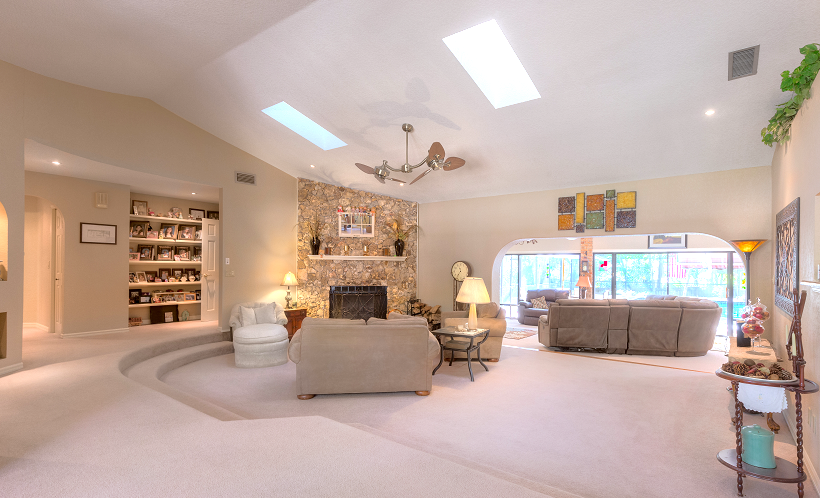
Oct. 7, 2025

Buying a Foreclosure in Palm Beach County: How Florida's Process Actually Works

Palm Beach County Homes For Sale

Buying a Foreclosure in Palm Beach County: How Florida's Process Actually Works

Most foreclosure guides are written to cover all fifty states, which means roughly half of what they describe does not apply to you. They explain judicial and non-judicial foreclosure as though you might encounter either. In Florida you will not. Every foreclosure here moves through the courts, which changes the timeline, the paperwork, and where the actual risk sits.

There is also one specific liability that a national guide will never mention and that matters enormously in a county where a large share of housing sits inside condominium and homeowners associations. It has ended more foreclosure purchases badly than property condition ever has, and it is entirely avoidable if you know to look.

What Florida's Judicial Process Means for a Buyer

A foreclosure begins when a borrower falls behind and the lender moves to recover the property. In Florida that requires filing suit, so the process runs on a court calendar rather than a lender's. It is slower than in non-judicial states, and the slowness works in a buyer's favor in one respect: the case file is public, and a great deal about the property's situation is discoverable before you commit.

One timing detail worth understanding, because it surprises auction bidders. Florida gives the borrower a right of redemption, but a narrow one. Under the statute, the borrower or a holder of a subordinate interest may cure the debt and prevent the sale at any time before the later of the clerk filing the certificate of sale or the time specified in the foreclosure judgment. The clerk typically files that certificate within about a day of the sale, and most judgments state that the right ends there. Florida does not provide the extended post-sale redemption period some other states do — but the window is open right up to the edge of the sale, which means a property you have researched can disappear at the last moment.

The Three Doors, and What Each One Costs You

Foreclosed property reaches buyers through three routes. They are genuinely different transactions with different risk profiles, and most disappointment comes from treating them as one category.

DOOR 1  ·  PRE-FORECLOSURE AND SHORT SALE
The owner still holds title and still has options — cure the debt, sell conventionally, or pursue a short sale if the balance exceeds value. You can inspect, negotiate, and finance normally. The trade-off is uncertainty: a short sale needs lender approval, and timelines stretch unpredictably.
DOOR 2  ·  THE COURT-ORDERED AUCTION
Conducted by the clerk of court, online in Palm Beach County and most Florida counties. Sold as-is, where-is, with no inspection, no warranty, and no walkthrough. A deposit is due immediately and the balance on a very short deadline set by the clerk. Effectively a cash transaction. The deepest discounts and by far the most risk.
DOOR 3  ·  BANK-OWNED (REO)
If no one bids above the lender's position, the property becomes Real Estate Owned and is listed with an agent. You can inspect, include contingencies, cancel if something surfaces, and finance conventionally. Smaller discount, dramatically smaller risk, and the door most owner-occupant buyers should be using.

The honest summary: the discount at auction is compensation for the risks you are accepting, not a market inefficiency you have discovered. Experienced investors bid there because they have priced those risks and can absorb being wrong occasionally. That is a different activity from buying a home to live in.

Be Honest About Which Buyer You Are

The three doors suit genuinely different people, and choosing wrong is where this goes badly.

If you need a place to live, need financing, and cannot absorb a surprise repair bill, Door 3 is your door — REO gives you inspections, contingencies, and a conventional closing. If you have cash, tolerance for uncertainty, and the ability to write off a bad outcome, Door 2 is a legitimate strategy and one that rewards preparation. What almost never works is an owner-occupant buyer at auction, drawn by a discount that exists precisely because inspection and financing are off the table. Before deciding a foreclosure is the path, it is worth comparing against what is currently listed conventionally. In many price bands the gap is narrower than expected once repairs are counted.

The Assessment Trap

This is the part national guides omit, and in Palm Beach County it deserves its own section.

Florida law makes a property owner liable for unpaid association assessments, and an owner who takes title at a foreclosure sale is generally jointly and severally liable with the previous owner for amounts that came due before the transfer. There is a well-known statutory "safe harbor" that caps this exposure at the lesser of twelve months of assessments or one percent of the original mortgage debt — but that protection runs to the first mortgagee and its successors or assignees. It is not a general protection for whoever buys the property.

The practical consequence: a third-party bidder who wins a condominium or HOA property at a court auction can inherit years of unpaid assessments, plus the interest and fees attached to them. On a property that sat delinquent through a slow judicial case, that figure can be substantial enough to erase the discount entirely and then some.

Meanwhile, a buyer purchasing the same property later as bank-owned REO generally is not exposed the same way, because the lender absorbed the safe-harbor amount when it took title. The buyer who paid more got a cleaner position — which inverts the usual assumption that the auction is the better deal.

Two important qualifications, and this is exactly the point at which to involve a lawyer rather than an article. Individual association declarations can alter the outcome, and Florida courts have addressed that question with results depending on the specific documents. And the condominium and HOA statutes differ from one another in ways that matter. The estoppel certificate from the association is the buyer's tool for establishing actual exposure before closing. None of this is legal advice, and we are not attorneys. If you are considering a foreclosure purchase in a deed-restricted community, a Florida real estate attorney reviewing the declaration and the association's ledger before you bid is not an optional expense.

The Rest of the Risk List

The conventional cautions still apply, and they are conventional because they keep proving true:

  • Condition. Deferred maintenance, vandalism, stripped appliances and fixtures, and extended vacancy. In this climate, a vacant house with the air conditioning off is a mold problem accumulating quietly.
  • Financial encumbrances. Unpaid property taxes, utility balances, code enforcement liens, and municipal claims. Not all liens are extinguished by a foreclosure sale, and which ones survive is a title question requiring a professional answer.
  • Title. Ownership disputes and complicated case histories. A title search and title insurance are essential rather than advisable.
  • Limited disclosure. A lender has never lived in the property and typically discloses little. That is not a guarantee of hidden defects — it means the usual information channel is closed and your inspection is carrying more weight than normal.
  • Financing. Auction purchases are effectively cash. REO usually permits conventional financing, though condition can affect what a lender will approve.
  • Timeline. REO closings frequently run long. Bank decision-making does not respond to your moving schedule.
  • Occupancy. Someone may still be living there, and removing them is a legal process with cost and time attached.
  • Appraisal. Condition problems can produce a low appraisal, which affects financing even when you and the seller agree on price.

One correction to the standard framing: guides often list "less competition" as a benefit. In a market with constrained inventory that has not reliably been true. Foreclosures in desirable Palm Beach County locations frequently attract experienced cash investors who move faster than a financed buyer can. Expect competition and be pleasantly surprised if it is absent.

Explore South Florida Real Estate by City

If you're comparing areas, commute patterns, lifestyle differences, or long-term fit, exploring homes by city can help put those tradeoffs into clearer perspective.

Explore Homes by City

What This Looks Like Across the County

Foreclosure activity is not distributed evenly, and neither is the assessment risk.

Condominium inventory concentrated around Boca Raton, Boynton Beach, and the coastal corridor is where the assessment question is sharpest, particularly in buildings carrying structural inspection and reserve obligations — a delinquent unit in a building facing funded repairs can carry exposure well beyond ordinary monthly dues. Wellington and Royal Palm Beach skew toward HOA-governed single-family and townhome communities, where the parallel statute applies with its own technical differences. Older Lake Worth Beach and West Palm Beach housing brings condition questions to the front alongside everything else. Buyers looking north along the corridor toward Port St. Lucie encounter a different mix again, with newer construction and different association structures.

In every one of those situations the discipline is the same: identify what governs the property before you value it. Price is the last question, not the first.

A pattern worth naming, because we see it consistently: buyers drawn to foreclosures are usually responding to a price problem, not a preference for distressed property. They have concluded that conventional inventory has moved beyond them, and a foreclosure looks like the way back in. Sometimes it is. Often the same buyer would do better adjusting location or property type than accepting auction risk to stay in a target neighborhood. That is worth testing honestly before committing to a harder path.

Talk Through Your South Florida Real Estate Options

Sometimes the hardest part of a real estate decision is simply understanding which direction makes the most sense before committing to anything. A conversation can often help create clarity around timing, strategy, and next steps.

Schedule a Consultation

If You Decide to Proceed

Work with an agent who has actually closed these transactions, since the paperwork and timelines differ from a conventional sale. Inspect anything you are permitted to inspect, and treat a vacant property with more suspicion rather than less. Order a title search and buy title insurance. Obtain the association estoppel certificate before you are committed. Understand your financing before you bid rather than after. And build patience into the plan, because judicial timelines are not responsive to your preferences.

The professionals who matter most here are a Florida real estate attorney and a title company. Our role is helping you evaluate whether a specific property makes sense and what it is realistically worth once the risks are priced — not interpreting a declaration or a lien position, which belongs with counsel.

Frequently Asked Questions

Can I get a mortgage on a foreclosure?

For bank-owned REO, usually yes — conventional financing generally applies, though a property in poor condition may not satisfy a lender's requirements without repairs first. Renovation loan products exist for exactly that gap and are worth asking about. Court auction purchases are a different matter: a deposit is due immediately and the balance on a short deadline set by the clerk, which functionally requires cash or pre-arranged funds. If you need a mortgage, the auction is not realistically available to you.

Could I really owe the association money the previous owner never paid?

Potentially yes, and this is the risk most often missed. Florida generally makes a new owner jointly and severally liable for the prior owner's unpaid assessments. The statutory safe harbor that caps this exposure protects the first mortgagee, not a third-party purchaser at auction. Individual association documents can change the result, and the condominium and HOA statutes differ. Request the estoppel certificate and have a Florida attorney review the declaration before bidding — this is genuinely a question for counsel, not an article.

Is a foreclosure actually a good deal?

Sometimes, and less often than the discount suggests. The honest calculation is purchase price plus repairs plus any inherited obligations plus carrying costs during a longer timeline, compared against conventional inventory. Run that comparison before assuming. Foreclosures reward buyers who have priced the risk and can absorb being wrong; they punish buyers who saw a number below market and stopped analyzing there. If the arithmetic still works after you have counted everything, it is a real opportunity.


About the Authors

Chris and Sue Kull are South Florida real estate professionals with more than three decades of experience helping buyers, sellers, and property owners navigate the housing market throughout Palm Beach County and surrounding communities.

Their work focuses on providing clear information, local market insight, and practical guidance so clients can make confident real estate decisions. Over the years they have built a trusted network of industry professionals—including lenders, inspectors, contractors, and legal specialists—to support every stage of the real estate process.

You can explore additional resources, community guides, and real estate tools at www.TheKullGroup.com, or reach out through our contact page. If you currently own and are weighing your options, understanding what your home is worth is a useful starting point.

Oct. 6, 2025

27 Things That Date a Palm Beach County Home — and What You're Actually Allowed to Change

Modern Home Interior

27 Things That Date a Palm Beach County Home — and What You're Actually Allowed to Change

Lists like this one usually present every update as equally available: pick the ones you like, spend a weekend, enjoy a fresher home. That framing works fine in most of the country. It works less well here, because a large share of Palm Beach County housing sits inside deed-restricted communities, and several of the most visible items on any list of this kind require someone else's approval before you touch them.

So the useful version of this list is not ranked by cost. It is sorted by what stands between you and doing it — nothing, an architectural review board, or a licensed trade. All 27 updates are here. They are just organized the way you would actually have to execute them.

One of them also carries a genuine safety condition that most versions of this article omit entirely. That one is covered separately below.

Tier One: Nothing Stands in Your Way

These are interior and cosmetic. In almost every situation you can do them this weekend without asking anyone, and collectively they carry more visual weight than their cost suggests.

  1. Lighting fixtures. Brass chandeliers and fluorescent kitchen boxes date a room faster than almost anything else. Flat LED fixtures or simple pendants modernize and cut energy use at once.
  2. Window treatments. Heavy drapes and vertical blinds close a room down. Cellular shades or light-colored curtains open it up — and in this climate they also help with solar heat gain, which your cooling bill will notice.
  3. Wall finishes. Wood paneling and dated wallpaper disappear under neutral paint. This remains the highest return per dollar on the entire list.
  4. Cabinet hardware. New knobs and pulls in brushed nickel or matte black update a kitchen for the cost of a dinner out.
  5. Interior door hardware. Replacing ornate or brass handles with streamlined versions is the same idea applied throughout the house.
  6. Ceiling fans. Worth doing here for reasons beyond appearance. Low-profile modern fans look better than bulky older units, and in a climate where fans run most of the year the efficiency difference is real rather than theoretical.
  7. Built-in entertainment centers. Large dated built-ins constrain how a room can be arranged. Removing or modifying them opens the space to more layouts.
  8. Thermostats and stray wall fixtures. A programmable or smart thermostat modernizes a wall and earns its cost back in a long cooling season. Remove obsolete wall-mounted hardware while you are at it.
  9. Switch plates and outlet covers. Yellowed and cracked covers read as neglect. Clean replacements cost very little and are noticed more than you would expect.
  10. Bathroom mirrors. A frameless builder mirror can be framed with a kit or swapped for a framed version. Small change, disproportionate effect.
  11. Caulking and grout. Discolored caulk and grout signal a home that has not been maintained, whether or not that is true. Refreshing them reads as care.
  12. Interior doors. Paint hollow-core doors, or replace them with panel or shaker styles. A whole-house change that stays affordable.
  13. Closet doors. Mirrored and louvered doors are era markers. Paneled sliders are not.
  14. Vent covers and registers. Rusted or painted-over registers are a small detail that inspectors and buyers both register.
  15. Flooring. Worn carpet and tired laminate are worth replacing, and luxury vinyl plank suits this region particularly well — it handles humidity and moisture better than carpet, which in a subtropical climate is a functional advantage and not only a stylistic one.

Decide Which Question You Are Answering First

These updates serve two different goals, and the right list changes depending on which one you have.

If you want to enjoy your home more, work down this list in whatever order appeals to you. Cost and taste are the only constraints, and everything in Tier One qualifies. If you are preparing to sell, the calculation is different: cosmetic updates help a home present well, but they are not the items that move an appraisal or an insurance quote in this market. Knowing which of the two you are doing prevents the common outcome of spending real money on updates that photograph beautifully and change the offer very little. If a sale is anywhere in your thinking, a current read on what your home is worth tells you how much of a budget the project actually justifies.

Tier Two: Check With Your Association First

Here is where generic advice becomes a problem. Most exterior updates on a list like this are visible from the street, and in a deed-restricted community that usually means architectural review. Many Palm Beach County associations maintain specific standards for exactly these items — approved styles, finishes, colors, sometimes a single approved supplier.

Doing any of these first and asking later is a genuinely common and entirely avoidable mistake. The association can require removal and reinstallation at your expense, and the fact that your version looks better is not a defense.

  1. House numbers. Frequently governed by community standards specifying font, size, material, and placement.
  2. Mailbox. Often standardized across an entire community, sometimes down to a required model. This one catches more owners than any other on the list.
  3. Doorbell. A video doorbell is a common upgrade and a common friction point, since some associations restrict street-facing cameras.
  4. Exterior lighting. Faded coach lights are worth replacing, but fixture style and finish are often specified.
  5. Exterior paint touch-ups. Approved color palettes are near-universal in deed-restricted communities. Coastal exposure means salt air and UV degrade finishes faster here, so touch-ups come around sooner than in most markets — which makes matching the approved color correctly worth confirming.
  6. Landscaping. Trimming, mulch, and seasonal color are usually unrestricted; removing or adding plant material and hardscape frequently is not. Florida-friendly and drought-tolerant plantings tend to be well received and hold up better through a dry season.
  7. Window screens. Repairing torn screens rarely requires approval, but replacing frames in a different color or style sometimes does.

None of this is an argument against doing them. It is an argument for reading your governing documents first, which takes an afternoon and is considerably cheaper than doing the work twice. If you cannot find the current architectural standards, the management company can provide them.

Tier Three: Bring in a Licensed Professional

These involve electrical or plumbing work. Florida requires licensed trades for much of it, and permits for some. The reason to care extends past safety: unpermitted work becomes a disclosure question when you sell, and it can complicate an appraisal or a buyer's inspection years after you have forgotten about it.

  1. Light switches and dimmers. Rocker switches and dimmers modernize a wall meaningfully. Straightforward work, but it is electrical work.
  2. Faucets and plumbing fixtures. Modern faucets in brushed nickel or matte black update a kitchen or bath immediately. A simple swap is often within homeowner scope; anything touching supply lines or valves is not.
  3. Showerheads. Usually the most homeowner-friendly item in this tier. Rainfall and handheld models are an inexpensive upgrade.
  4. Countertops. Dated tile counters with grout lines are a clear era marker. The original version of this advice suggested replacing them with laminate, and we would push back on that for anyone thinking about resale — solid surface or quartz costs more but is what buyers in this market now expect. Laminate solves the dated-tile problem and creates a different one.

The One That Needs Testing First

  1. Popcorn ceilings.

Textured ceilings are an unmistakable era marker, and plenty of Palm Beach County housing stock is old enough to have them. But the standard advice — scrape them, or keep them painted and maintained — skips something important.

Asbestos was commonly used in spray-applied ceiling texture through the 1970s. The Consumer Product Safety Commission restricted it in ceiling texture products in 1978, but existing stock was legally sold and applied for years afterward, so ceilings installed into the mid-1980s can still contain it. Visual inspection cannot tell you — the fibers are microscopic. Testing is the only way to know.

Intact, undisturbed material generally does not release fibers. The risk comes from disturbing it: scraping, sanding, drilling, or the surface prep that painting often involves. That is what makes the casual version of this advice a problem rather than merely incomplete.

If your home dates from before the mid-1980s and has original textured ceilings, have them tested before any work that would disturb them. If asbestos is present, removal is a job for a licensed abatement contractor, not a weekend project. Encapsulation or covering are sometimes options. This is well outside our expertise and outside a general contractor's — it belongs with a certified asbestos professional.

Explore South Florida Real Estate by City

If you're comparing areas, commute patterns, lifestyle differences, or long-term fit, exploring homes by city can help put those tradeoffs into clearer perspective.

Explore Homes by City

What Actually Moves Value Here

Everything above improves how a home looks and feels. If your goal is enjoyment, that is the whole answer and you can stop reading. If your goal is a stronger sale, an honest counterweight is warranted.

In this market, the items that most affect what a buyer can pay are generally not cosmetic. Roof age and condition, impact-rated windows and doors, the electrical panel, and plumbing condition all feed into insurance pricing — and insurance pricing feeds directly into what a buyer can afford monthly. A beautifully staged home with a twenty-year-old roof and a stack of deferred systems presents well in photographs and negotiates poorly.

That does not make the 27 items pointless. Presentation genuinely affects how long a home sits and how buyers perceive its condition. It means the two categories do different jobs, and the mistake is assuming the cosmetic list substitutes for the structural one.

This plays out differently across the county. Older housing in Lake Worth Beach and parts of Boynton Beach and West Palm Beach is where the cosmetic list has the most to work with and where the systems question matters most, because both are functions of age. Wellington and Royal Palm Beach include newer inventory alongside deed-restricted communities with the most active architectural review, which shifts more of the list into Tier Two. Boca Raton's coastal exposure puts insurance considerations near the front. Buyers looking north along the corridor toward Port St. Lucie encounter newer construction where the dated-features problem is smaller and the relevant question becomes how well recent construction has been maintained.

Something we have watched repeatedly: owners who update cosmetically right before listing usually spend more than owners who addressed the same items gradually over the years they lived there — and enjoy none of it. The updates on this list are cheapest, and most rewarding, when they are not being done under deadline pressure. If you have been putting off a lighting swap for six years, doing it now means you get to live with it.

Talk Through Your South Florida Real Estate Options

Sometimes the hardest part of a real estate decision is simply understanding which direction makes the most sense before committing to anything. A conversation can often help create clarity around timing, strategy, and next steps.

Schedule a Consultation

Frequently Asked Questions

Which of these updates should I do if I'm selling in the next few months?

Prioritize the ones that read as maintenance rather than taste: paint over dated wall finishes, fresh caulk and grout, clean switch plates, working screens, and updated lighting. Buyers interpret these as a home that has been cared for. Avoid taking on anything requiring association approval or a permit on a short timeline, since either can outlast your listing window. And resist large cosmetic spends hoping to offset a deferred roof or aging systems — those get evaluated separately, and cosmetic work does not substitute.

Do I really need approval to change my own mailbox or house numbers?

In a deed-restricted community, frequently yes. Many Palm Beach County associations maintain standards for street-facing items including mailboxes, house numbers, exterior light fixtures, paint colors, and door hardware, and some specify an exact approved model. Approval is usually straightforward when you ask first and a genuine expense when you don't, because the association can require you to undo the work. Your governing documents or management company will have the current standards.

My ceilings are textured and my home is from the 1970s. Can I just paint them?

Have them tested first. Ceilings from that era may contain asbestos, and the surface preparation painting usually involves can disturb the material, which is precisely when fibers become airborne. Intact and undisturbed material is generally not releasing anything, so there is no cause for alarm — but there is cause to test before starting work. Testing is inexpensive relative to the alternative, and if the result is negative you can proceed with an ordinary project and no further concern.


About the Authors

Chris and Sue Kull are South Florida real estate professionals with more than three decades of experience helping buyers, sellers, and property owners navigate the housing market throughout Palm Beach County and surrounding communities.

Their work focuses on providing clear information, local market insight, and practical guidance so clients can make confident real estate decisions. Over the years they have built a trusted network of industry professionals—including lenders, inspectors, contractors, and legal specialists—to support every stage of the real estate process.

You can explore additional resources, community guides, and real estate tools at www.TheKullGroup.com, or reach out through our contact page.